
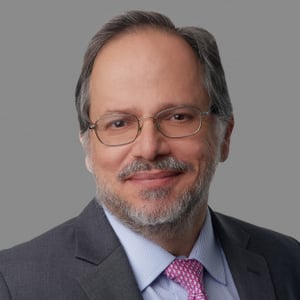
Director of Law & Policy, Environmental Integrity Project
Following Princeton and the University of Chicago Law School, David began practicing law at Paul, Weiss, Rifkind, Wharton & Garrison. Eventually tiring of litigation where the result was a wire transfer from Entity A to Entity B, in the early 1990’s David began his environmental law career at the Massachusetts Attorney General’s Office. Since then, he has litigated dozens of cases under all of the major environmental statutes including, as Sierra Club’s Chief Climate Counsel, initiating and managing Massachusetts v. EPA. Most recently, he has been busy challenging FERC’s permitting of natural gas pipelines and LNG export terminals. Apart from litigation, David has helped lead efforts on both greenhouse gas regulation and global warming legislation (and may be the only person ever invited to testify by both Barbara Boxer and James Inhofe).
He has drafted a range of federal climate legislation, advised states as to their greenhouse gas regulatory authority (and for many years has represented environmental groups defending state GHG regulations from dormant Commerce Clause challenges). David has designed and taught courses on “Environmental Litigation” at Georgetown University Law Center and “Environmental Law and Science” at the William and Mary Law School/Virginia Institute of Marine Science.
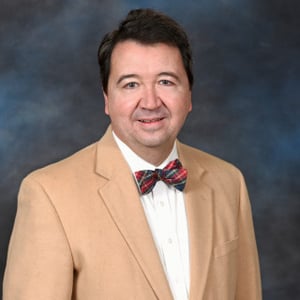
Judge, United States Court of Appeals, Sixth Circuit
John K. Bush is a Circuit Judge on the United States Court of Appeals for the Sixth Circuit.
His chambers are in Louisville, Kentucky. Prior to joining the court, Judge Bush was a partner in the
Louisville office of the firm Bingham Greenebaum Doll (now Dentons Bingham Greenebaum),
where he also was co-chair of the firm’s litigation department. He began his legal practice in the
Washington, D.C. office of Gibson Dunn & Crutcher.
Judge Bush served as a law clerk for Judge J. Smith Henley of the United States Court of
Appeals for the Eighth Circuit. He was graduated summa cum laude from Vanderbilt University,
and cum laude from Harvard Law School. He is an adjunct lecturer at The George Washington
University Law School and the Brandeis School of Law at the University of Louisville.
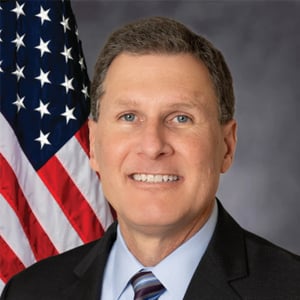
United States Attorney, Eastern District of California
Mr. Grant was appointed by Attorney General Pam Bondi to serve as the United States Attorney for the Eastern District of California beginning on August 11, 2025. Pursuant to 28 U.S.C. § 546(d), he was further appointed by the district court effective December 9, 2025.
Mr. Grant is a veteran of the Department of Justice, having served twice in Washington, D.C.: from 1991 to 1993 as an Attorney-Adviser in the Office of Legal Counsel, and from 2017 to 2021 as a Deputy Assistant Attorney General in the Environment and Natural Resources Division (ENRD). During his tenure at ENRD, he supervised more than a hundred Department litigators advancing the interests of the United States and its agencies in both enforcement and defensive matters, both civil and criminal.
In addition to his service in the Department, Mr. Grant has decades of experience in private practice in Washington, D.C. and Sacramento. That experience includes arguments in the U.S. Supreme Court, the California Supreme Court, and numerous other federal and state courts.
Mr. Grant served as a law clerk to Chief Justice Warren E. Burger (retired) and Associate Justice Clarence Thomas during the Supreme Court’s October 1994 Term. Earlier he served as a law clerk to Judge Edith H. Jones of the U.S. Court of Appeals for the Fifth Circuit in Houston, Texas.
Mr. Grant grew up in Modesto, California and raised his family in Sacramento County. He attended the University of California, Berkeley, from which he earned a bachelor’s degree in economics (1986) and a law degree (1990).
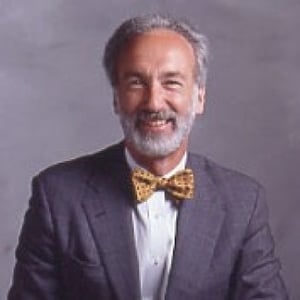
Emeritus Dean and Professor of Law, Lewis & Clark Law School
Professor Huffman joined the law school faculty in 1973, was appointed Acting Dean in 1993 and Dean in 1994, and returned to full time teaching in 2006. Born in Fort Benton, Montana, Jim graduated from Montana State University, the Fletcher School of Law and Diplomacy at Tufts University, and the University of Chicago Law School. He has been a visiting professor at Auckland University in New Zealand, the University of Oregon, the University of Athens in Greece and Universidad Francisco Marroquin in Guatemala. He was also a fellow at the Humane Studies Institute and a Distinguished Bradley Scholar at the Heritage Foundation. Jim serves on the boards of the National Crime Victims Law Institute, the Foundation for Research on Economics and the Environment, the Classroom Law Project, and the Rocky Mountain Mineral Law Foundation. He is a member and former Chair of the Executive Committee of the Environment and Property Rights Practice Group of the Federalist Society. He is a member of the Montana Bar Association and is admitted to practice before the United States Court of Appeals for the Federal Circuit and the United States Supreme Court. He is the author of more than 100 articles and chapters on a wide array of legal topics.
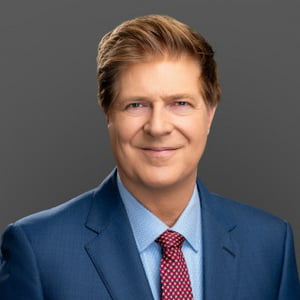
Senior Fellow, Ave Maria School of Law and Host of the Four Boxes Diner Second Amendment Channel
Mark W. Smith is a visiting member of the Senior Common Room, New College, Oxford University and a Visiting Fellow in Pharmaceutical Public Policy and Law in the Department of Pharmacology, Oxford University. Mark is also a Distinguished Scholar and Senior Fellow of Law and Public Policy at the Ave Maria School of Law. He hosts the Four Boxes Diner YouTube Channel (youtube.com/TheFourBoxesDiner), which addresses Second Amendment scholarship, cases, history and related issues, and whose videos have received almost 90 million views. Mark's scholarship has been cited by federal courts and by parties before the United States Supreme Court in Viramontes v. Cook County, New York State Rifle & Pistol Ass’n v. Bruen and in United States v. Rahimi. He is a graduate of the NYU School of Law. Mark is also a New York Times bestselling author who appears frequently in the national media including on the Fox News Channel.
Director of Law & Policy, Environmental Integrity Project
Following Princeton and the University of Chicago Law School, David began practicing law at Paul, Weiss, Rifkind, Wharton & Garrison. Eventually tiring of litigation where the result was a wire transfer from Entity A to Entity B, in the early 1990’s David began his environmental law career at the Massachusetts Attorney General’s Office. Since then, he has litigated dozens of cases under all of the major environmental statutes including, as Sierra Club’s Chief Climate Counsel, initiating and managing Massachusetts v. EPA. Most recently, he has been busy challenging FERC’s permitting of natural gas pipelines and LNG export terminals. Apart from litigation, David has helped lead efforts on both greenhouse gas regulation and global warming legislation (and may be the only person ever invited to testify by both Barbara Boxer and James Inhofe).
He has drafted a range of federal climate legislation, advised states as to their greenhouse gas regulatory authority (and for many years has represented environmental groups defending state GHG regulations from dormant Commerce Clause challenges). David has designed and taught courses on “Environmental Litigation” at Georgetown University Law Center and “Environmental Law and Science” at the William and Mary Law School/Virginia Institute of Marine Science.
Judge, United States Court of Appeals, Sixth Circuit
John K. Bush is a Circuit Judge on the United States Court of Appeals for the Sixth Circuit.
His chambers are in Louisville, Kentucky. Prior to joining the court, Judge Bush was a partner in the
Louisville office of the firm Bingham Greenebaum Doll (now Dentons Bingham Greenebaum),
where he also was co-chair of the firm’s litigation department. He began his legal practice in the
Washington, D.C. office of Gibson Dunn & Crutcher.
Judge Bush served as a law clerk for Judge J. Smith Henley of the United States Court of
Appeals for the Eighth Circuit. He was graduated summa cum laude from Vanderbilt University,
and cum laude from Harvard Law School. He is an adjunct lecturer at The George Washington
University Law School and the Brandeis School of Law at the University of Louisville.
United States Attorney, Eastern District of California
Mr. Grant was appointed by Attorney General Pam Bondi to serve as the United States Attorney for the Eastern District of California beginning on August 11, 2025. Pursuant to 28 U.S.C. § 546(d), he was further appointed by the district court effective December 9, 2025.
Mr. Grant is a veteran of the Department of Justice, having served twice in Washington, D.C.: from 1991 to 1993 as an Attorney-Adviser in the Office of Legal Counsel, and from 2017 to 2021 as a Deputy Assistant Attorney General in the Environment and Natural Resources Division (ENRD). During his tenure at ENRD, he supervised more than a hundred Department litigators advancing the interests of the United States and its agencies in both enforcement and defensive matters, both civil and criminal.
In addition to his service in the Department, Mr. Grant has decades of experience in private practice in Washington, D.C. and Sacramento. That experience includes arguments in the U.S. Supreme Court, the California Supreme Court, and numerous other federal and state courts.
Mr. Grant served as a law clerk to Chief Justice Warren E. Burger (retired) and Associate Justice Clarence Thomas during the Supreme Court’s October 1994 Term. Earlier he served as a law clerk to Judge Edith H. Jones of the U.S. Court of Appeals for the Fifth Circuit in Houston, Texas.
Mr. Grant grew up in Modesto, California and raised his family in Sacramento County. He attended the University of California, Berkeley, from which he earned a bachelor’s degree in economics (1986) and a law degree (1990).
Emeritus Dean and Professor of Law, Lewis & Clark Law School
Professor Huffman joined the law school faculty in 1973, was appointed Acting Dean in 1993 and Dean in 1994, and returned to full time teaching in 2006. Born in Fort Benton, Montana, Jim graduated from Montana State University, the Fletcher School of Law and Diplomacy at Tufts University, and the University of Chicago Law School. He has been a visiting professor at Auckland University in New Zealand, the University of Oregon, the University of Athens in Greece and Universidad Francisco Marroquin in Guatemala. He was also a fellow at the Humane Studies Institute and a Distinguished Bradley Scholar at the Heritage Foundation. Jim serves on the boards of the National Crime Victims Law Institute, the Foundation for Research on Economics and the Environment, the Classroom Law Project, and the Rocky Mountain Mineral Law Foundation. He is a member and former Chair of the Executive Committee of the Environment and Property Rights Practice Group of the Federalist Society. He is a member of the Montana Bar Association and is admitted to practice before the United States Court of Appeals for the Federal Circuit and the United States Supreme Court. He is the author of more than 100 articles and chapters on a wide array of legal topics.
Senior Fellow, Ave Maria School of Law and Host of the Four Boxes Diner Second Amendment Channel
Mark W. Smith is a visiting member of the Senior Common Room, New College, Oxford University and a Visiting Fellow in Pharmaceutical Public Policy and Law in the Department of Pharmacology, Oxford University. Mark is also a Distinguished Scholar and Senior Fellow of Law and Public Policy at the Ave Maria School of Law. He hosts the Four Boxes Diner YouTube Channel (youtube.com/TheFourBoxesDiner), which addresses Second Amendment scholarship, cases, history and related issues, and whose videos have received almost 90 million views. Mark's scholarship has been cited by federal courts and by parties before the United States Supreme Court in Viramontes v. Cook County, New York State Rifle & Pistol Ass’n v. Bruen and in United States v. Rahimi. He is a graduate of the NYU School of Law. Mark is also a New York Times bestselling author who appears frequently in the national media including on the Fox News Channel.
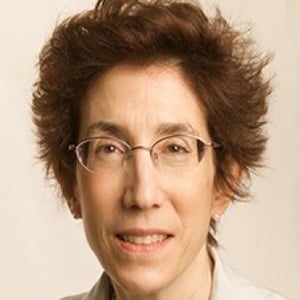
U.S. Court of Appeals, Ninth Circuit
Sandra Segal Ikuta was confirmed as a judge of the U.S. Court of Appeals for the Ninth Circuit on June 19, 2006. She filled a judgeship vacant since September 1, 2000, when Chief Judge Emeritus James R. Browning took senior status.
Before becoming a U.S. Circuit Judge, California Gov. Arnold Schwarzenegger appointed her to be deputy secretary and general counsel of the California Resources Agency in January 2004.
Prior to her political appointment, Judge Ikuta was a partner at the Los Angeles office of O'Melveny & Myers LLP. She joined the law firm in 1990 as an associate and became a partner in 1997. She specialized in environmental and natural resources law and co-chaired the firm's environmental practice group. She previously served as a law clerk for U.S. Supreme Court Justice Sandra Day O'Connor, 1989-90, and Judge Alex Kozinski of the U.S. Court of Appeals for the Ninth Circuit, 1988-89.
Prior to her legal career, Judge Ikuta took an unorthodox career path, which included serving as the first female editor-in-chief of a national martial arts magazine.
She received her J.D. from the University of California at Los Angeles School of Law and a Master of Science from Columbia University School of Journalism. She earned her undergraduate degree from the University of California at Berkeley in 1976.
In addition to her duties as an active U.S. Circuit Judge, Judge Ikuta was an appointed member of the Judicial Conference of the U.S. Advisory Committee on Bankruptcy Rules.
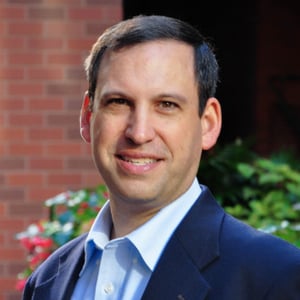
President, Becket Fund for Religious Liberty; Professor of Law and Co-Director of the Center for Religious Liberty, Catholic University; Visiting Professor, Harvard Law School
Mark joined the Becket team in 2011 and splits his time as Associate Professor at The Catholic University of America, Columbus School of Law, and as Visiting Professor at Harvard Law School. Mark teaches constitutional law, religious liberty, torts, and evidence. He has been voted Teacher of the Year three years in a row by the Law School’s Student Bar Association.
Mark has broad experience litigating First Amendment religious exercise and free speech cases. He has represented the winning parties in a variety of Supreme Court First Amendment cases including Hobby Lobby, Little Sisters, Wheaton College, and Holt. In January 2014, Mark argued before the Supreme Court in McCullen v. Coakley, a First Amendment challenge to a Massachusetts speech restriction outside of abortion clinics. The Justices ruled in favor of his clients 9-0. Mark also led a successful eight-year litigation battle against Governor Blagojevich’s effort to force religious pharmacists to distribute the morning-after and week-after pills.
Mark’s academic writing focuses on the First and Fourteenth Amendments, and has appeared in a variety of prestigious journals, including the Harvard Law Review.
Mark is a widely sought after speaker on constitutional issues, particularly concerning abortion and the First Amendment. Professor Rienzi has been invited to discuss these issues at Harvard Law School, Columbia University Law School, Georgetown University Law Center, Boston College Law School, Notre Dame Law School, the National Press Club, and the Capitol. He has been quoted on constitutional law issues on NPR, in the Washington Times, The New York Daily News, and the Chicago Sun-Times. Mark has also been featured on the Kelly File, Fox News Sunday, Your World with Neil Cavuto, Geraldo at Large, CNN Tonight, CNN Live, Andrea Mitchell Reports, and Wall Street Journal Live.
Prior to joining Becket, Mark served as counsel for the litigation department and the intellectual property litigation practice group of WilmerHale LLP. His practice focused on complex civil and appellate litigation with a particular emphasis on intellectual property and First Amendment issues. Prior to joining WilmerHale, he served as law clerk to the Hon. Stephen F. Williams, senior circuit judge for the U.S. Court of Appeals for the D.C. Circuit. Prior to that, Mark was an editor of the Harvard Law Review, and earned his J.D. from Harvard Law School and B.A. from Princeton University, both with honors.
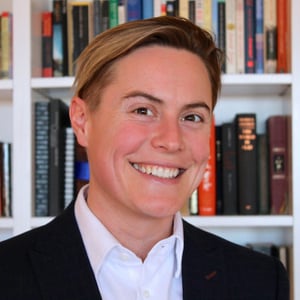
Associate Professor of Legal Studies & Business Ethics, The University of Pennsylvania Wharton School of Business
Amanda Shanor is an Assistant Professor at the University of Pennsylvania Wharton School, where her scholarship focuses on constitutional and administrative law, and in particular the First Amendment.
Shanor is a graduate of Yale Law School and Yale College, and a PhD candidate in law at Yale University. She served as a law clerk to Judges Cornelia T.L. Pillard and Judith W. Rogers on the D.C. Circuit, and Judge Robert W. Sweet in the Southern District of New York. She has taught at both Yale and Georgetown law schools and has published in the New York University Law Review, the Harvard Law Review Forum, and the Yale Law Journal Forum, among others. She is a contributor to Take Care and the co-author of a textbook on counterterrorism law.
Prior to joining the academy, Amanda worked in the National Legal Department of the American Civil Liberties Union on the organization’s Supreme Court litigation, including Masterpiece Cakeshop. Previously, she litigated a number of constitutional and national security cases with Professor David Cole, including Humanitarian Law Project v. Holder, while a fellow at Georgetown.

Thomas M. Siebel Senior Fellow, The Hoover Institution, Stanford University; Gary T. Schwartz Distinguished Professor of Law Emeritus, UCLA School of Law
Eugene Volokh is the Thomas M. Siebel Senior Fellow at the Hoover Institution (Stanford), as well as the Gary T. Schwartz Distinguished Professor of Law Emeritus and Distinguished Research Professor at UCLA School of Law. He recently retired from teaching at UCLA, after 30 years there, and is now focusing on research.
Volokh is the author of the textbooks The First Amendment and Related Statutes (8th ed. 2023), and Academic Legal Writing (5th ed. 2016), as well as over 100 academic law journal articles, mostly on First Amendment law. He is a member of The American Law Institute; the editor-in-chief of the Journal of Free Speech Law; and the creator and coauthor of The Volokh Conspiracy, a leading legal blog founded in 2002 (hosted at the Washington Post from 2014 to 2017 and now at Reason Magazine).
U.S. Court of Appeals, Ninth Circuit
Sandra Segal Ikuta was confirmed as a judge of the U.S. Court of Appeals for the Ninth Circuit on June 19, 2006. She filled a judgeship vacant since September 1, 2000, when Chief Judge Emeritus James R. Browning took senior status.
Before becoming a U.S. Circuit Judge, California Gov. Arnold Schwarzenegger appointed her to be deputy secretary and general counsel of the California Resources Agency in January 2004.
Prior to her political appointment, Judge Ikuta was a partner at the Los Angeles office of O'Melveny & Myers LLP. She joined the law firm in 1990 as an associate and became a partner in 1997. She specialized in environmental and natural resources law and co-chaired the firm's environmental practice group. She previously served as a law clerk for U.S. Supreme Court Justice Sandra Day O'Connor, 1989-90, and Judge Alex Kozinski of the U.S. Court of Appeals for the Ninth Circuit, 1988-89.
Prior to her legal career, Judge Ikuta took an unorthodox career path, which included serving as the first female editor-in-chief of a national martial arts magazine.
She received her J.D. from the University of California at Los Angeles School of Law and a Master of Science from Columbia University School of Journalism. She earned her undergraduate degree from the University of California at Berkeley in 1976.
In addition to her duties as an active U.S. Circuit Judge, Judge Ikuta was an appointed member of the Judicial Conference of the U.S. Advisory Committee on Bankruptcy Rules.
President, Becket Fund for Religious Liberty; Professor of Law and Co-Director of the Center for Religious Liberty, Catholic University; Visiting Professor, Harvard Law School
Mark joined the Becket team in 2011 and splits his time as Associate Professor at The Catholic University of America, Columbus School of Law, and as Visiting Professor at Harvard Law School. Mark teaches constitutional law, religious liberty, torts, and evidence. He has been voted Teacher of the Year three years in a row by the Law School’s Student Bar Association.
Mark has broad experience litigating First Amendment religious exercise and free speech cases. He has represented the winning parties in a variety of Supreme Court First Amendment cases including Hobby Lobby, Little Sisters, Wheaton College, and Holt. In January 2014, Mark argued before the Supreme Court in McCullen v. Coakley, a First Amendment challenge to a Massachusetts speech restriction outside of abortion clinics. The Justices ruled in favor of his clients 9-0. Mark also led a successful eight-year litigation battle against Governor Blagojevich’s effort to force religious pharmacists to distribute the morning-after and week-after pills.
Mark’s academic writing focuses on the First and Fourteenth Amendments, and has appeared in a variety of prestigious journals, including the Harvard Law Review.
Mark is a widely sought after speaker on constitutional issues, particularly concerning abortion and the First Amendment. Professor Rienzi has been invited to discuss these issues at Harvard Law School, Columbia University Law School, Georgetown University Law Center, Boston College Law School, Notre Dame Law School, the National Press Club, and the Capitol. He has been quoted on constitutional law issues on NPR, in the Washington Times, The New York Daily News, and the Chicago Sun-Times. Mark has also been featured on the Kelly File, Fox News Sunday, Your World with Neil Cavuto, Geraldo at Large, CNN Tonight, CNN Live, Andrea Mitchell Reports, and Wall Street Journal Live.
Prior to joining Becket, Mark served as counsel for the litigation department and the intellectual property litigation practice group of WilmerHale LLP. His practice focused on complex civil and appellate litigation with a particular emphasis on intellectual property and First Amendment issues. Prior to joining WilmerHale, he served as law clerk to the Hon. Stephen F. Williams, senior circuit judge for the U.S. Court of Appeals for the D.C. Circuit. Prior to that, Mark was an editor of the Harvard Law Review, and earned his J.D. from Harvard Law School and B.A. from Princeton University, both with honors.
Associate Professor of Legal Studies & Business Ethics, The University of Pennsylvania Wharton School of Business
Amanda Shanor is an Assistant Professor at the University of Pennsylvania Wharton School, where her scholarship focuses on constitutional and administrative law, and in particular the First Amendment.
Shanor is a graduate of Yale Law School and Yale College, and a PhD candidate in law at Yale University. She served as a law clerk to Judges Cornelia T.L. Pillard and Judith W. Rogers on the D.C. Circuit, and Judge Robert W. Sweet in the Southern District of New York. She has taught at both Yale and Georgetown law schools and has published in the New York University Law Review, the Harvard Law Review Forum, and the Yale Law Journal Forum, among others. She is a contributor to Take Care and the co-author of a textbook on counterterrorism law.
Prior to joining the academy, Amanda worked in the National Legal Department of the American Civil Liberties Union on the organization’s Supreme Court litigation, including Masterpiece Cakeshop. Previously, she litigated a number of constitutional and national security cases with Professor David Cole, including Humanitarian Law Project v. Holder, while a fellow at Georgetown.
Thomas M. Siebel Senior Fellow, The Hoover Institution, Stanford University; Gary T. Schwartz Distinguished Professor of Law Emeritus, UCLA School of Law
Eugene Volokh is the Thomas M. Siebel Senior Fellow at the Hoover Institution (Stanford), as well as the Gary T. Schwartz Distinguished Professor of Law Emeritus and Distinguished Research Professor at UCLA School of Law. He recently retired from teaching at UCLA, after 30 years there, and is now focusing on research.
Volokh is the author of the textbooks The First Amendment and Related Statutes (8th ed. 2023), and Academic Legal Writing (5th ed. 2016), as well as over 100 academic law journal articles, mostly on First Amendment law. He is a member of The American Law Institute; the editor-in-chief of the Journal of Free Speech Law; and the creator and coauthor of The Volokh Conspiracy, a leading legal blog founded in 2002 (hosted at the Washington Post from 2014 to 2017 and now at Reason Magazine).

Laurence A. Tisch Professor of Law and Director, Classical Liberal Institute, New York University School of Law; Director, Classical Liberal Institute, Civitas Institute University of Texas at Austin
Richard A. Epstein is the inaugural Laurence A. Tisch Professor of Law at NYU School of Law. Prior to his joining the faculty, he was a visiting law professor at NYU from 2007 through 2009. He served as the Peter and Kirstin Bedford Senior Fellow at the Hoover Institution from 2000 to 2024. Since 2024 to the present he is a senior lecturer at the Civitas Institute at the University of Texas—Austin. Epstein is also the James Parker Hall Distinguished Service Professor of Law Emeritus and a senior lecturer at the University of Chicago. His initial law school appointment was at the University of Southern California from 1968 to 1972. Epstein received an LL.D., h.c. from the University of Ghent, 2003. He has been a member of the American Academy of Arts and Sciences since 1985 and was a Senior Fellow of the Center for Clinical Medical Ethics at the University of Chicago Division of Biological Sciences, also from 1983. to 2022 He served as editor of the Journal of Legal Studies from 1981 to 1991, and of the Journal of Law and Economics from 1991-2001. From 2001 to 2010 he was a director of the John M. Olin Program in Law and Economics at the University of Chicago.
His newest book, The Myth of Birthright Citizenship: What the Fourteenth Amendment Really Says was published in 2026 (Encounter Books). Prior to that he has published many books including, The Dubious Morality of the Modern Administrative State (Roman & Littlefield 2020).Earlier he published th Classical Liberal Constitution: The Uncertain Quest for Limited Government (Harvard 2014) iHis previous books include Design for Liberty: Private Property, Public Administration and the Rule of Law (Harvard 2011); The Case Against the Employee Free Choice Act (Hoover 2009); Supreme Neglect: How to Revive the Constitutional Protection of Property Rights (Oxford 2008); Antitrust Decrees in Theory and Practice: Why Less is More (AEI 2007); Overdose: How Excessive Government Regulation Stifles Pharmaceutical Innovation (Yale University Press. 2006); How Progressives Rewrote the Constitution (Cato 2006); Cases and Materials on Torts (Aspen Law & Business; 8th ed. 2004); Skepticism and Freedom: A Modern Case for Classical Liberalism (University of Chicago, 2003); Torts (Aspen Law & Business 1999); Principles for a Free Society: Reconciling Individual Liberty with the Common Good (Perseus Books, 1998): Mortal Peril: Our Inalienable Rights to Health Care (Addison-Wesley, 1997); Simple Rules for a Complex World (Harvard, 1995); Bargaining With the State (Princeton, 1993); Forbidden Grounds: The Case Against Employment Discrimination Laws (Harvard , 1992); Takings: Private Property and the Power of Eminent Domain (Harvard, 1985); and Modern Products Liability Law (Greenwood Press, 1980). He has also edited(with Catherine M. Sharkey) Cases and Materials on the Law of Torts (10th edition 2012).
Professor Epstein has written numerous articles on a wide range of legal and interdisciplinary subjects. He has taught courses in administrative law, antitrust law, civil procedure, communications, constitutional law, contracts, corporations, criminal law, employment discrimination law, environmental law, food and drug law health law and policy, legal history, labor law, property, real estate development and finance, jurisprudence, labor law; land use planning, patents, individual, estate and corporate taxation, Roman Law; torts, and workers' compensation.
Professor Epstein also writes a regular column for Civitas Institute, which also sponsors his podcast, The Libertarian with Charles C.W. Cooke, and Law Talk, with Cooke and John Yoo. He also does a podcast with John Batchelor. And appears regularly on the Freedom File with Judge Andrew Napolitano.
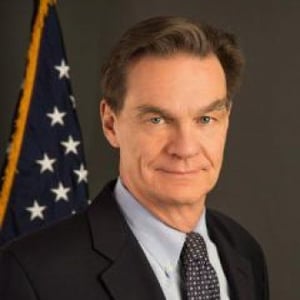
Of Counsel, Bredhoff & Kaiser PLLC
Richard F. Griffin, Jr. is Of Counsel at the Washington, DC law firm of Bredhoff & Kaiser, and has practiced labor law for more than 36 years. Prior to joining the firm, from November 4, 2013 through October 31, 2017, Mr. Griffin was the General Counsel of the National Labor Relations Board (NLRB), nominated by President Obama and confirmed by the U.S. Senate. Before becoming NLRB General Counsel, from January 2012 through August 2013, Mr. Griffin was a NLRB Board Member, recess appointed to that position by President Obama. From 1983 through his appointment as a Board Member, Mr. Griffin worked in the legal department of the International Union of Operating Engineers (IUOE); from September 1994 until January 2012, he was the IUOE’s General Counsel. While IUOE General Counsel, Mr. Griffin was on the AFL-CIO Lawyers Advisory Panel and was a member of the Board of Directors of the AFL-CIO Lawyers Coordinating Committee. From 1981 to 1983, Mr. Griffin served as staff counsel to two NLRB Board Members.
“For exemplary public service and leadership on behalf of America’s workers” Mr. Griffin was named to the National Employment Law Project’s 2016 Honor Roll. He is a Fellow of the College of Labor and Employment Lawyers and of the American Bar Foundation. He graduated from Yale College (BA 1977) and Northeastern University Law School (JD 1981).
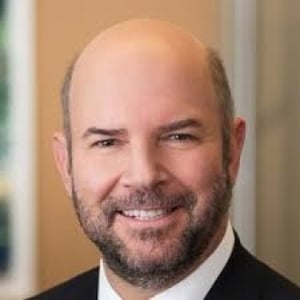
Partner, Morgan, Lewis & Bockius LLP
Philip A. Miscimarra is the former Chairman of the National Labor Relations Board (NLRB). Phil leads the firm’s NLRB special appeals practice and is co-leader of Morgan Lewis Workforce Change, which manages all employment, labor, benefits, and related issues arising from mergers, acquisitions, startups, workforce reductions, and other types of business restructuring. He represents clients on a wide range of labor and employment issues, with a focus on labor-management relations, business acquisitions and restructuring, and employment litigation. Phil is also a Senior Fellow at the University of Pennsylvania's Wharton School and the Wharton Center for Human Resources. He is admitted in Illinois only, and his practice is supervised by DC Bar members.
Phil was named Chairman of the NLRB by President Donald J. Trump on April 24, 2017, after previously serving as Acting Chairman and a Board Member. He was appointed to the NLRB by President Barack Obama on April 9, 2013, and was approved unanimously by the Senate Committee on Health, Education, Labor, and Pensions on May 22, 2013. He was confirmed by voice vote in the US Senate on July 30, 2013, and served from August 7, 2013, to December 16, 2017. Upon the completion of his term, Phil served on the NLRB longer than 26 other board members over the past 30 years.
Phil is the author or co-author of several books involving labor law issues, including The NLRB and Managerial Discretion: Subcontracting, Relocations, Closings, Sales, Layoffs, and Technological Change (2d ed. 2010) (by Miscimarra, Turner, Friedman, Callahan, Conrad, Lignowski and Scroggins); The NLRB and Secondary Boycotts (3d ed. 2002) (by Miscimarra, Berkowitz, Wiener and Ditelberg); and Government Protection of Employees Involved in Mergers and Acquisitions (1989 and 1997 supp.) (by Northrup and Miscimarra); and other publications. He has also testified on labor and employment law issues in the United States Congress.
Chambers USA named Phil one of the leading lawyers for employment law in the United States from 2004 to 2012, based on the views of clients, peers, and other industry professionals. He has been described as a "fantastic lawyer" and "prolific writer," with clients admiring his "multilayered abilities and business savvy" and his "high level of integrity."
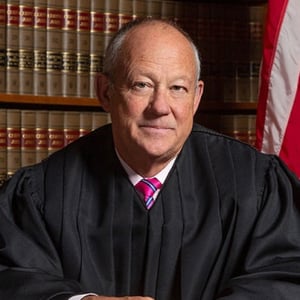
Judge, United States Court of Appeals, Tenth Circuit
Judge Tymkovich, of Denver, Colorado, was nominated to the Tenth Circuit Court of Appeals by President George W. Bush, and confirmed in April 2003. On October 1, 2015 he became Chief Circuit Judge and held this position until October 2022. He was Chair of the US Judicial Conference’s Committee on Judicial Resources from 2011 to 2015. Since 2008 he has been an adjunct professor of law at the University of Colorado School of Law, teaching Election Law. He is a member of the Doyle Inn of Court, the American Law Institute, and the International Society of Barristers. Since he joined the Circuit, Judge Tymkovich has hosted judicial delegations from Russia, Kazakhstan, and Afghanistan, and has also represented the United States in programs at Kiev and Yalta in Ukraine.
Laurence A. Tisch Professor of Law and Director, Classical Liberal Institute, New York University School of Law; Director, Classical Liberal Institute, Civitas Institute University of Texas at Austin
Richard A. Epstein is the inaugural Laurence A. Tisch Professor of Law at NYU School of Law. Prior to his joining the faculty, he was a visiting law professor at NYU from 2007 through 2009. He served as the Peter and Kirstin Bedford Senior Fellow at the Hoover Institution from 2000 to 2024. Since 2024 to the present he is a senior lecturer at the Civitas Institute at the University of Texas—Austin. Epstein is also the James Parker Hall Distinguished Service Professor of Law Emeritus and a senior lecturer at the University of Chicago. His initial law school appointment was at the University of Southern California from 1968 to 1972. Epstein received an LL.D., h.c. from the University of Ghent, 2003. He has been a member of the American Academy of Arts and Sciences since 1985 and was a Senior Fellow of the Center for Clinical Medical Ethics at the University of Chicago Division of Biological Sciences, also from 1983. to 2022 He served as editor of the Journal of Legal Studies from 1981 to 1991, and of the Journal of Law and Economics from 1991-2001. From 2001 to 2010 he was a director of the John M. Olin Program in Law and Economics at the University of Chicago.
His newest book, The Myth of Birthright Citizenship: What the Fourteenth Amendment Really Says was published in 2026 (Encounter Books). Prior to that he has published many books including, The Dubious Morality of the Modern Administrative State (Roman & Littlefield 2020).Earlier he published th Classical Liberal Constitution: The Uncertain Quest for Limited Government (Harvard 2014) iHis previous books include Design for Liberty: Private Property, Public Administration and the Rule of Law (Harvard 2011); The Case Against the Employee Free Choice Act (Hoover 2009); Supreme Neglect: How to Revive the Constitutional Protection of Property Rights (Oxford 2008); Antitrust Decrees in Theory and Practice: Why Less is More (AEI 2007); Overdose: How Excessive Government Regulation Stifles Pharmaceutical Innovation (Yale University Press. 2006); How Progressives Rewrote the Constitution (Cato 2006); Cases and Materials on Torts (Aspen Law & Business; 8th ed. 2004); Skepticism and Freedom: A Modern Case for Classical Liberalism (University of Chicago, 2003); Torts (Aspen Law & Business 1999); Principles for a Free Society: Reconciling Individual Liberty with the Common Good (Perseus Books, 1998): Mortal Peril: Our Inalienable Rights to Health Care (Addison-Wesley, 1997); Simple Rules for a Complex World (Harvard, 1995); Bargaining With the State (Princeton, 1993); Forbidden Grounds: The Case Against Employment Discrimination Laws (Harvard , 1992); Takings: Private Property and the Power of Eminent Domain (Harvard, 1985); and Modern Products Liability Law (Greenwood Press, 1980). He has also edited(with Catherine M. Sharkey) Cases and Materials on the Law of Torts (10th edition 2012).
Professor Epstein has written numerous articles on a wide range of legal and interdisciplinary subjects. He has taught courses in administrative law, antitrust law, civil procedure, communications, constitutional law, contracts, corporations, criminal law, employment discrimination law, environmental law, food and drug law health law and policy, legal history, labor law, property, real estate development and finance, jurisprudence, labor law; land use planning, patents, individual, estate and corporate taxation, Roman Law; torts, and workers' compensation.
Professor Epstein also writes a regular column for Civitas Institute, which also sponsors his podcast, The Libertarian with Charles C.W. Cooke, and Law Talk, with Cooke and John Yoo. He also does a podcast with John Batchelor. And appears regularly on the Freedom File with Judge Andrew Napolitano.
Of Counsel, Bredhoff & Kaiser PLLC
Richard F. Griffin, Jr. is Of Counsel at the Washington, DC law firm of Bredhoff & Kaiser, and has practiced labor law for more than 36 years. Prior to joining the firm, from November 4, 2013 through October 31, 2017, Mr. Griffin was the General Counsel of the National Labor Relations Board (NLRB), nominated by President Obama and confirmed by the U.S. Senate. Before becoming NLRB General Counsel, from January 2012 through August 2013, Mr. Griffin was a NLRB Board Member, recess appointed to that position by President Obama. From 1983 through his appointment as a Board Member, Mr. Griffin worked in the legal department of the International Union of Operating Engineers (IUOE); from September 1994 until January 2012, he was the IUOE’s General Counsel. While IUOE General Counsel, Mr. Griffin was on the AFL-CIO Lawyers Advisory Panel and was a member of the Board of Directors of the AFL-CIO Lawyers Coordinating Committee. From 1981 to 1983, Mr. Griffin served as staff counsel to two NLRB Board Members.
“For exemplary public service and leadership on behalf of America’s workers” Mr. Griffin was named to the National Employment Law Project’s 2016 Honor Roll. He is a Fellow of the College of Labor and Employment Lawyers and of the American Bar Foundation. He graduated from Yale College (BA 1977) and Northeastern University Law School (JD 1981).
Partner, Morgan, Lewis & Bockius LLP
Philip A. Miscimarra is the former Chairman of the National Labor Relations Board (NLRB). Phil leads the firm’s NLRB special appeals practice and is co-leader of Morgan Lewis Workforce Change, which manages all employment, labor, benefits, and related issues arising from mergers, acquisitions, startups, workforce reductions, and other types of business restructuring. He represents clients on a wide range of labor and employment issues, with a focus on labor-management relations, business acquisitions and restructuring, and employment litigation. Phil is also a Senior Fellow at the University of Pennsylvania's Wharton School and the Wharton Center for Human Resources. He is admitted in Illinois only, and his practice is supervised by DC Bar members.
Phil was named Chairman of the NLRB by President Donald J. Trump on April 24, 2017, after previously serving as Acting Chairman and a Board Member. He was appointed to the NLRB by President Barack Obama on April 9, 2013, and was approved unanimously by the Senate Committee on Health, Education, Labor, and Pensions on May 22, 2013. He was confirmed by voice vote in the US Senate on July 30, 2013, and served from August 7, 2013, to December 16, 2017. Upon the completion of his term, Phil served on the NLRB longer than 26 other board members over the past 30 years.
Phil is the author or co-author of several books involving labor law issues, including The NLRB and Managerial Discretion: Subcontracting, Relocations, Closings, Sales, Layoffs, and Technological Change (2d ed. 2010) (by Miscimarra, Turner, Friedman, Callahan, Conrad, Lignowski and Scroggins); The NLRB and Secondary Boycotts (3d ed. 2002) (by Miscimarra, Berkowitz, Wiener and Ditelberg); and Government Protection of Employees Involved in Mergers and Acquisitions (1989 and 1997 supp.) (by Northrup and Miscimarra); and other publications. He has also testified on labor and employment law issues in the United States Congress.
Chambers USA named Phil one of the leading lawyers for employment law in the United States from 2004 to 2012, based on the views of clients, peers, and other industry professionals. He has been described as a "fantastic lawyer" and "prolific writer," with clients admiring his "multilayered abilities and business savvy" and his "high level of integrity."
Judge, United States Court of Appeals, Tenth Circuit
Judge Tymkovich, of Denver, Colorado, was nominated to the Tenth Circuit Court of Appeals by President George W. Bush, and confirmed in April 2003. On October 1, 2015 he became Chief Circuit Judge and held this position until October 2022. He was Chair of the US Judicial Conference’s Committee on Judicial Resources from 2011 to 2015. Since 2008 he has been an adjunct professor of law at the University of Colorado School of Law, teaching Election Law. He is a member of the Doyle Inn of Court, the American Law Institute, and the International Society of Barristers. Since he joined the Circuit, Judge Tymkovich has hosted judicial delegations from Russia, Kazakhstan, and Afghanistan, and has also represented the United States in programs at Kiev and Yalta in Ukraine.
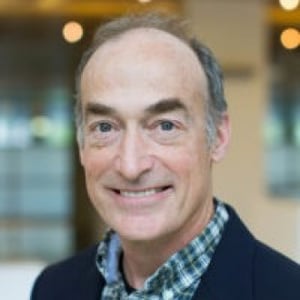
Professor of Law, Georgetown Law
William W. Buzbee is a professor of law at Georgetown University Law Center. In his teaching and scholarship, he specializes in environmental law, legislation and regulation, and administrative law. Recent publications focus on climate regulation, deregulation and law governing agency policy change, and federalism. He also offers seminars on advanced environmental, regulatory, and constitutional law subjects, with his most recent seminar focused on “The Art of Regulatory War.”
Professor Buzbee’s books include the recently published Fighting Westway: Environmental Law, Citizen Activism, and the Regulatory War that Transformed New York City (Cornell University Press 2014) and Preemption Choice: The Theory, Law and Reality of Federalism’s Core Question(Cambridge University Press, hardcover 2009, paperback 2011) (William W. Buzbee editor and contributor). He has been a co-author of the 5th , 6th, 7th and forthcoming 8th editions of Environmental Protection: Law and Policy (Aspen/Wolters Kluwer). Law review scholarship includes publications in New York University Law Review, University of Pennsylvania Law Review, Michigan Law Review, Stanford Law Review (co-authored), Cornell Law Review (co-authored), Duke Law Journal (forthcoming), George Washington Law Review, Iowa Law Review, The Journal of Law and Politics and in an array of other journals, books, news outlets, and blogs. Three of his articles have been named among the 10 best environmental or land use law articles of that year and republished in the Land Use and Environment Law Review. He regularly assists with appellate and Supreme Court environmental, federalism, and regulatory litigation, and also has testified before congressional committees on environmental and regulatory matters. He has published op-eds on regulatory and environmental issues with The New York Times, The Hill, CNN, and been quoted and interviewed by numerous press and media outlets.
Professor Buzbee joined Georgetown from Emory Law School, where he was a professor of law and directed its Environmental and Natural Resources Law Program. He also co-directed Emory’s Center on Federalism and Intersystemic Governance. He has been a visiting professor of law at Columbia, Cornell and Illinois law schools. He has also served as a professor for the Leiden-Amsterdam-Columbia Law School Summer Program in American Law. Professor Buzbee is a founding Member Scholar of the Center for Progressive Reform, a Washington D.C.-based regulatory think tank. Professor Buzbee was awarded the 2007-2008 Emory Williams Teaching Award for excellence in teaching. Professor Buzbee clerked for United States Judge Jose A. Cabranes, and before becoming a professor was an attorney-fellow at the Natural Resources Defense Council, and did environmental, land use and litigation work for the New York City law firm, Patterson, Belknap, Webb & Tyler. JD, Columbia Law School, 1986; BA, Amherst College, magna cum laude, 1983.

Dr. John Eastman is the former Henry Salvatori Professor of Law & Community Service and former Dean at Chapman University's Dale E. Fowler School of Law, where he had been a member of the faculty since 1999, specializing in Constitutional Law, Legal History, and Property. He is a founding director of the Center for Constitutional Jurisprudence, a public interest law firm affiliated with the Claremont Institute that he founded in 1999. He has a Ph.D. in Government from the Claremont Graduate School and a J.D. from the University of Chicago Law School, and a B.A. in Politics and Economics from the University of Dallas. He serves as the Chairman of the Board of the National Organization for Marriage.
Prior to joining the Chapman law faculty, Dr. Eastman served as a law clerk to the Honorable Clarence Thomas, Associate Justice, Supreme Court of the United States, and to the Honorable J. Michael Luttig, Judge, United States Court of Appeals for the Fourth Circuit and practiced law with the national law firm of Kirkland & Ellis. Dr. Eastman has also represented numerous clients in important constitutional law matters and has argued before the Supreme Court. On behalf of the Claremont Institute Center for Constitutional Jurisprudence, he has participated as amicus curiae before the Supreme Court of the United States, U.S. Courts of Appeals, and State Supreme Courts in more than one hundred cases of constitutional significance, including Boy Scouts of America v. Dale, Zelman v. Simmons-Harris (the school vouchers case), Kelo v. New London, Ct. (eminent domain), and Van Orden v. Perry (the 10 Commandments case). He has also appeared as an expert legal commentator on numerous television and radio programs, including C-SPAN, Fox News, PBS, NewsHour, and The O'Reilly Factor.
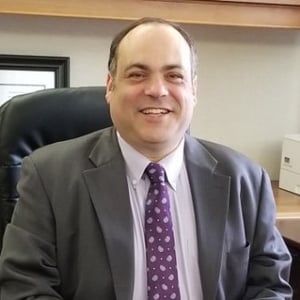
Special Counsel, Office of Special Counsel
Henry Kerner graduated from Harvard Law School and spent 18 years working as a career prosecutor in California. In 2011, he joined the staff of the House Committee on Oversight and Government Reform, the chief investigative committee of the United States House of Representatives. Under Chairman Darrell Issa, and later, Chairman Jason Chaffetz, he led investigations of the federal bureaucracy and fought on behalf of whistleblowers to protect American taxpayers. Mr. Kerner was also the staff director under Ranking Member Sen. John McCain of the Senate Permanent Subcommittee on Investigations, the lead investigative committee of the Senate. He left the Hill in early 2016 and joined Cause of Action Institute as assistant vice president for investigations. Cause of Action is a nonpartisan oversight group committed to exposing waste, fraud and abuse in the federal government. It has worked with whistleblowers and good government groups throughout the country.
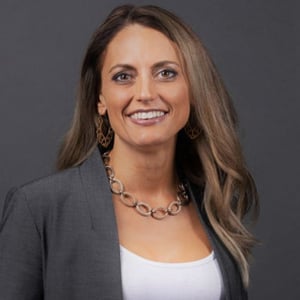
Judge, U.S. Court of Appeals for the Third Circuit
Hon. Jennifer Mascott served as Associate Professor of Law and Director of the Separation of Powers Institute at The Catholic University of America’s Columbus School of Law before her appointment to the federal bench. On July 16, 2025, President Donald J. Trump nominated her to the U.S. Court of Appeals for the Third Circuit (Delaware), and she was confirmed on October 9, 2025.
Prior to her confirmation, Judge Mascott wrote extensively in administrative and constitutional law, statutory interpretation, and the separation of powers. Her scholarship—published in leading journals including the Stanford Law Review, Notre Dame Law Review, and Supreme Court Review—was cited by the U.S. Supreme Court and multiple federal courts. She also contributed Supreme Court commentary for NBC Universal.
Before joining Catholic Law, she was an Assistant Professor and Co-Director of The C. Boyden Gray Center at George Mason University’s Antonin Scalia Law School. In 2022 she became co-author of Beermann, Cass & Diver’s Administrative Law: Cases and Materials (9th ed.). In 2023 she received the Justice Joseph Story Award for excellence in scholarship, teaching, and advancing the rule of law.
Judge Mascott also served as a Council Member of the ABA’s Administrative Law Section and as a Public Member of the Administrative Conference of the United States. She frequently testified before Congress on executive power, regulatory reform, and judicial jurisdiction, and participated in multiple Supreme Court confirmation hearings.
From 2019 to 2021, she took leave from academia to serve as Deputy Assistant Attorney General in the Department of Justice’s Office of Legal Counsel and later as Associate Deputy Attorney General, where she argued federal cases and assisted with Justice Amy Coney Barrett’s confirmation. Earlier in her career, she clerked for Justice Clarence Thomas and for then-Judge Brett M. Kavanaugh on the D.C. Circuit.
Judge Mascott earned her J.D. summa cum laude from the George Washington University Law School and her B.A. from the same institution.
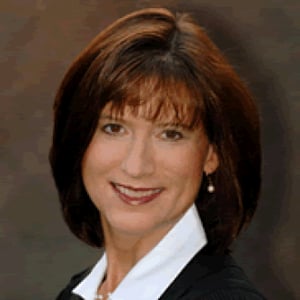
Judge, United States Court of Appeals, Seventh Circuit
Judge Sykes was nominated to the Seventh Circuit by President George W. Bush and confirmed by the Senate in 2004. Prior to her appointment to the federal bench, Judge Sykes served as a justice on the Wisconsin Supreme Court. Governor Tommy G. Thompson appointed her in September 1999 to fill a mid-term vacancy on the state supreme court, and she was elected to a full ten-year term in April 2000. From 1992-1999, Judge Sykes served on the state trial bench in Milwaukee County (elected in 1992 and re-elected in 1998). From 1985-1992, Judge Sykes practiced law with the Milwaukee firm of Whyte & Hirschboeck, S.C., and from 1984-1985, was a law clerk to Federal Judge Terence T. Evans.
Born and raised in the Milwaukee area, Judge Sykes earned a bachelor’s degree in journalism from Northwestern University in 1980 and a law degree from Marquette University Law School in 1984. Between college and law school, Judge Sykes worked as a reporter for The Milwaukee Journal.
Judge Sykes has two sons.
U.S. Court of Appeals, Ninth Circuit
Sandra Segal Ikuta was confirmed as a judge of the U.S. Court of Appeals for the Ninth Circuit on June 19, 2006. She filled a judgeship vacant since September 1, 2000, when Chief Judge Emeritus James R. Browning took senior status.
Before becoming a U.S. Circuit Judge, California Gov. Arnold Schwarzenegger appointed her to be deputy secretary and general counsel of the California Resources Agency in January 2004.
Prior to her political appointment, Judge Ikuta was a partner at the Los Angeles office of O'Melveny & Myers LLP. She joined the law firm in 1990 as an associate and became a partner in 1997. She specialized in environmental and natural resources law and co-chaired the firm's environmental practice group. She previously served as a law clerk for U.S. Supreme Court Justice Sandra Day O'Connor, 1989-90, and Judge Alex Kozinski of the U.S. Court of Appeals for the Ninth Circuit, 1988-89.
Prior to her legal career, Judge Ikuta took an unorthodox career path, which included serving as the first female editor-in-chief of a national martial arts magazine.
She received her J.D. from the University of California at Los Angeles School of Law and a Master of Science from Columbia University School of Journalism. She earned her undergraduate degree from the University of California at Berkeley in 1976.
In addition to her duties as an active U.S. Circuit Judge, Judge Ikuta was an appointed member of the Judicial Conference of the U.S. Advisory Committee on Bankruptcy Rules.
President, Becket Fund for Religious Liberty; Professor of Law and Co-Director of the Center for Religious Liberty, Catholic University; Visiting Professor, Harvard Law School
Mark joined the Becket team in 2011 and splits his time as Associate Professor at The Catholic University of America, Columbus School of Law, and as Visiting Professor at Harvard Law School. Mark teaches constitutional law, religious liberty, torts, and evidence. He has been voted Teacher of the Year three years in a row by the Law School’s Student Bar Association.
Mark has broad experience litigating First Amendment religious exercise and free speech cases. He has represented the winning parties in a variety of Supreme Court First Amendment cases including Hobby Lobby, Little Sisters, Wheaton College, and Holt. In January 2014, Mark argued before the Supreme Court in McCullen v. Coakley, a First Amendment challenge to a Massachusetts speech restriction outside of abortion clinics. The Justices ruled in favor of his clients 9-0. Mark also led a successful eight-year litigation battle against Governor Blagojevich’s effort to force religious pharmacists to distribute the morning-after and week-after pills.
Mark’s academic writing focuses on the First and Fourteenth Amendments, and has appeared in a variety of prestigious journals, including the Harvard Law Review.
Mark is a widely sought after speaker on constitutional issues, particularly concerning abortion and the First Amendment. Professor Rienzi has been invited to discuss these issues at Harvard Law School, Columbia University Law School, Georgetown University Law Center, Boston College Law School, Notre Dame Law School, the National Press Club, and the Capitol. He has been quoted on constitutional law issues on NPR, in the Washington Times, The New York Daily News, and the Chicago Sun-Times. Mark has also been featured on the Kelly File, Fox News Sunday, Your World with Neil Cavuto, Geraldo at Large, CNN Tonight, CNN Live, Andrea Mitchell Reports, and Wall Street Journal Live.
Prior to joining Becket, Mark served as counsel for the litigation department and the intellectual property litigation practice group of WilmerHale LLP. His practice focused on complex civil and appellate litigation with a particular emphasis on intellectual property and First Amendment issues. Prior to joining WilmerHale, he served as law clerk to the Hon. Stephen F. Williams, senior circuit judge for the U.S. Court of Appeals for the D.C. Circuit. Prior to that, Mark was an editor of the Harvard Law Review, and earned his J.D. from Harvard Law School and B.A. from Princeton University, both with honors.
Associate Professor of Legal Studies & Business Ethics, The University of Pennsylvania Wharton School of Business
Amanda Shanor is an Assistant Professor at the University of Pennsylvania Wharton School, where her scholarship focuses on constitutional and administrative law, and in particular the First Amendment.
Shanor is a graduate of Yale Law School and Yale College, and a PhD candidate in law at Yale University. She served as a law clerk to Judges Cornelia T.L. Pillard and Judith W. Rogers on the D.C. Circuit, and Judge Robert W. Sweet in the Southern District of New York. She has taught at both Yale and Georgetown law schools and has published in the New York University Law Review, the Harvard Law Review Forum, and the Yale Law Journal Forum, among others. She is a contributor to Take Care and the co-author of a textbook on counterterrorism law.
Prior to joining the academy, Amanda worked in the National Legal Department of the American Civil Liberties Union on the organization’s Supreme Court litigation, including Masterpiece Cakeshop. Previously, she litigated a number of constitutional and national security cases with Professor David Cole, including Humanitarian Law Project v. Holder, while a fellow at Georgetown.
Thomas M. Siebel Senior Fellow, The Hoover Institution, Stanford University; Gary T. Schwartz Distinguished Professor of Law Emeritus, UCLA School of Law
Eugene Volokh is the Thomas M. Siebel Senior Fellow at the Hoover Institution (Stanford), as well as the Gary T. Schwartz Distinguished Professor of Law Emeritus and Distinguished Research Professor at UCLA School of Law. He recently retired from teaching at UCLA, after 30 years there, and is now focusing on research.
Volokh is the author of the textbooks The First Amendment and Related Statutes (8th ed. 2023), and Academic Legal Writing (5th ed. 2016), as well as over 100 academic law journal articles, mostly on First Amendment law. He is a member of The American Law Institute; the editor-in-chief of the Journal of Free Speech Law; and the creator and coauthor of The Volokh Conspiracy, a leading legal blog founded in 2002 (hosted at the Washington Post from 2014 to 2017 and now at Reason Magazine).
Laurence A. Tisch Professor of Law and Director, Classical Liberal Institute, New York University School of Law; Director, Classical Liberal Institute, Civitas Institute University of Texas at Austin
Richard A. Epstein is the inaugural Laurence A. Tisch Professor of Law at NYU School of Law. Prior to his joining the faculty, he was a visiting law professor at NYU from 2007 through 2009. He served as the Peter and Kirstin Bedford Senior Fellow at the Hoover Institution from 2000 to 2024. Since 2024 to the present he is a senior lecturer at the Civitas Institute at the University of Texas—Austin. Epstein is also the James Parker Hall Distinguished Service Professor of Law Emeritus and a senior lecturer at the University of Chicago. His initial law school appointment was at the University of Southern California from 1968 to 1972. Epstein received an LL.D., h.c. from the University of Ghent, 2003. He has been a member of the American Academy of Arts and Sciences since 1985 and was a Senior Fellow of the Center for Clinical Medical Ethics at the University of Chicago Division of Biological Sciences, also from 1983. to 2022 He served as editor of the Journal of Legal Studies from 1981 to 1991, and of the Journal of Law and Economics from 1991-2001. From 2001 to 2010 he was a director of the John M. Olin Program in Law and Economics at the University of Chicago.
His newest book, The Myth of Birthright Citizenship: What the Fourteenth Amendment Really Says was published in 2026 (Encounter Books). Prior to that he has published many books including, The Dubious Morality of the Modern Administrative State (Roman & Littlefield 2020).Earlier he published th Classical Liberal Constitution: The Uncertain Quest for Limited Government (Harvard 2014) iHis previous books include Design for Liberty: Private Property, Public Administration and the Rule of Law (Harvard 2011); The Case Against the Employee Free Choice Act (Hoover 2009); Supreme Neglect: How to Revive the Constitutional Protection of Property Rights (Oxford 2008); Antitrust Decrees in Theory and Practice: Why Less is More (AEI 2007); Overdose: How Excessive Government Regulation Stifles Pharmaceutical Innovation (Yale University Press. 2006); How Progressives Rewrote the Constitution (Cato 2006); Cases and Materials on Torts (Aspen Law & Business; 8th ed. 2004); Skepticism and Freedom: A Modern Case for Classical Liberalism (University of Chicago, 2003); Torts (Aspen Law & Business 1999); Principles for a Free Society: Reconciling Individual Liberty with the Common Good (Perseus Books, 1998): Mortal Peril: Our Inalienable Rights to Health Care (Addison-Wesley, 1997); Simple Rules for a Complex World (Harvard, 1995); Bargaining With the State (Princeton, 1993); Forbidden Grounds: The Case Against Employment Discrimination Laws (Harvard , 1992); Takings: Private Property and the Power of Eminent Domain (Harvard, 1985); and Modern Products Liability Law (Greenwood Press, 1980). He has also edited(with Catherine M. Sharkey) Cases and Materials on the Law of Torts (10th edition 2012).
Professor Epstein has written numerous articles on a wide range of legal and interdisciplinary subjects. He has taught courses in administrative law, antitrust law, civil procedure, communications, constitutional law, contracts, corporations, criminal law, employment discrimination law, environmental law, food and drug law health law and policy, legal history, labor law, property, real estate development and finance, jurisprudence, labor law; land use planning, patents, individual, estate and corporate taxation, Roman Law; torts, and workers' compensation.
Professor Epstein also writes a regular column for Civitas Institute, which also sponsors his podcast, The Libertarian with Charles C.W. Cooke, and Law Talk, with Cooke and John Yoo. He also does a podcast with John Batchelor. And appears regularly on the Freedom File with Judge Andrew Napolitano.
Of Counsel, Bredhoff & Kaiser PLLC
Richard F. Griffin, Jr. is Of Counsel at the Washington, DC law firm of Bredhoff & Kaiser, and has practiced labor law for more than 36 years. Prior to joining the firm, from November 4, 2013 through October 31, 2017, Mr. Griffin was the General Counsel of the National Labor Relations Board (NLRB), nominated by President Obama and confirmed by the U.S. Senate. Before becoming NLRB General Counsel, from January 2012 through August 2013, Mr. Griffin was a NLRB Board Member, recess appointed to that position by President Obama. From 1983 through his appointment as a Board Member, Mr. Griffin worked in the legal department of the International Union of Operating Engineers (IUOE); from September 1994 until January 2012, he was the IUOE’s General Counsel. While IUOE General Counsel, Mr. Griffin was on the AFL-CIO Lawyers Advisory Panel and was a member of the Board of Directors of the AFL-CIO Lawyers Coordinating Committee. From 1981 to 1983, Mr. Griffin served as staff counsel to two NLRB Board Members.
“For exemplary public service and leadership on behalf of America’s workers” Mr. Griffin was named to the National Employment Law Project’s 2016 Honor Roll. He is a Fellow of the College of Labor and Employment Lawyers and of the American Bar Foundation. He graduated from Yale College (BA 1977) and Northeastern University Law School (JD 1981).
Partner, Morgan, Lewis & Bockius LLP
Philip A. Miscimarra is the former Chairman of the National Labor Relations Board (NLRB). Phil leads the firm’s NLRB special appeals practice and is co-leader of Morgan Lewis Workforce Change, which manages all employment, labor, benefits, and related issues arising from mergers, acquisitions, startups, workforce reductions, and other types of business restructuring. He represents clients on a wide range of labor and employment issues, with a focus on labor-management relations, business acquisitions and restructuring, and employment litigation. Phil is also a Senior Fellow at the University of Pennsylvania's Wharton School and the Wharton Center for Human Resources. He is admitted in Illinois only, and his practice is supervised by DC Bar members.
Phil was named Chairman of the NLRB by President Donald J. Trump on April 24, 2017, after previously serving as Acting Chairman and a Board Member. He was appointed to the NLRB by President Barack Obama on April 9, 2013, and was approved unanimously by the Senate Committee on Health, Education, Labor, and Pensions on May 22, 2013. He was confirmed by voice vote in the US Senate on July 30, 2013, and served from August 7, 2013, to December 16, 2017. Upon the completion of his term, Phil served on the NLRB longer than 26 other board members over the past 30 years.
Phil is the author or co-author of several books involving labor law issues, including The NLRB and Managerial Discretion: Subcontracting, Relocations, Closings, Sales, Layoffs, and Technological Change (2d ed. 2010) (by Miscimarra, Turner, Friedman, Callahan, Conrad, Lignowski and Scroggins); The NLRB and Secondary Boycotts (3d ed. 2002) (by Miscimarra, Berkowitz, Wiener and Ditelberg); and Government Protection of Employees Involved in Mergers and Acquisitions (1989 and 1997 supp.) (by Northrup and Miscimarra); and other publications. He has also testified on labor and employment law issues in the United States Congress.
Chambers USA named Phil one of the leading lawyers for employment law in the United States from 2004 to 2012, based on the views of clients, peers, and other industry professionals. He has been described as a "fantastic lawyer" and "prolific writer," with clients admiring his "multilayered abilities and business savvy" and his "high level of integrity."
Judge, United States Court of Appeals, Tenth Circuit
Judge Tymkovich, of Denver, Colorado, was nominated to the Tenth Circuit Court of Appeals by President George W. Bush, and confirmed in April 2003. On October 1, 2015 he became Chief Circuit Judge and held this position until October 2022. He was Chair of the US Judicial Conference’s Committee on Judicial Resources from 2011 to 2015. Since 2008 he has been an adjunct professor of law at the University of Colorado School of Law, teaching Election Law. He is a member of the Doyle Inn of Court, the American Law Institute, and the International Society of Barristers. Since he joined the Circuit, Judge Tymkovich has hosted judicial delegations from Russia, Kazakhstan, and Afghanistan, and has also represented the United States in programs at Kiev and Yalta in Ukraine.
Professor of Law, Georgetown Law
William W. Buzbee is a professor of law at Georgetown University Law Center. In his teaching and scholarship, he specializes in environmental law, legislation and regulation, and administrative law. Recent publications focus on climate regulation, deregulation and law governing agency policy change, and federalism. He also offers seminars on advanced environmental, regulatory, and constitutional law subjects, with his most recent seminar focused on “The Art of Regulatory War.”
Professor Buzbee’s books include the recently published Fighting Westway: Environmental Law, Citizen Activism, and the Regulatory War that Transformed New York City (Cornell University Press 2014) and Preemption Choice: The Theory, Law and Reality of Federalism’s Core Question(Cambridge University Press, hardcover 2009, paperback 2011) (William W. Buzbee editor and contributor). He has been a co-author of the 5th , 6th, 7th and forthcoming 8th editions of Environmental Protection: Law and Policy (Aspen/Wolters Kluwer). Law review scholarship includes publications in New York University Law Review, University of Pennsylvania Law Review, Michigan Law Review, Stanford Law Review (co-authored), Cornell Law Review (co-authored), Duke Law Journal (forthcoming), George Washington Law Review, Iowa Law Review, The Journal of Law and Politics and in an array of other journals, books, news outlets, and blogs. Three of his articles have been named among the 10 best environmental or land use law articles of that year and republished in the Land Use and Environment Law Review. He regularly assists with appellate and Supreme Court environmental, federalism, and regulatory litigation, and also has testified before congressional committees on environmental and regulatory matters. He has published op-eds on regulatory and environmental issues with The New York Times, The Hill, CNN, and been quoted and interviewed by numerous press and media outlets.
Professor Buzbee joined Georgetown from Emory Law School, where he was a professor of law and directed its Environmental and Natural Resources Law Program. He also co-directed Emory’s Center on Federalism and Intersystemic Governance. He has been a visiting professor of law at Columbia, Cornell and Illinois law schools. He has also served as a professor for the Leiden-Amsterdam-Columbia Law School Summer Program in American Law. Professor Buzbee is a founding Member Scholar of the Center for Progressive Reform, a Washington D.C.-based regulatory think tank. Professor Buzbee was awarded the 2007-2008 Emory Williams Teaching Award for excellence in teaching. Professor Buzbee clerked for United States Judge Jose A. Cabranes, and before becoming a professor was an attorney-fellow at the Natural Resources Defense Council, and did environmental, land use and litigation work for the New York City law firm, Patterson, Belknap, Webb & Tyler. JD, Columbia Law School, 1986; BA, Amherst College, magna cum laude, 1983.
Dr. John Eastman is the former Henry Salvatori Professor of Law & Community Service and former Dean at Chapman University's Dale E. Fowler School of Law, where he had been a member of the faculty since 1999, specializing in Constitutional Law, Legal History, and Property. He is a founding director of the Center for Constitutional Jurisprudence, a public interest law firm affiliated with the Claremont Institute that he founded in 1999. He has a Ph.D. in Government from the Claremont Graduate School and a J.D. from the University of Chicago Law School, and a B.A. in Politics and Economics from the University of Dallas. He serves as the Chairman of the Board of the National Organization for Marriage.
Prior to joining the Chapman law faculty, Dr. Eastman served as a law clerk to the Honorable Clarence Thomas, Associate Justice, Supreme Court of the United States, and to the Honorable J. Michael Luttig, Judge, United States Court of Appeals for the Fourth Circuit and practiced law with the national law firm of Kirkland & Ellis. Dr. Eastman has also represented numerous clients in important constitutional law matters and has argued before the Supreme Court. On behalf of the Claremont Institute Center for Constitutional Jurisprudence, he has participated as amicus curiae before the Supreme Court of the United States, U.S. Courts of Appeals, and State Supreme Courts in more than one hundred cases of constitutional significance, including Boy Scouts of America v. Dale, Zelman v. Simmons-Harris (the school vouchers case), Kelo v. New London, Ct. (eminent domain), and Van Orden v. Perry (the 10 Commandments case). He has also appeared as an expert legal commentator on numerous television and radio programs, including C-SPAN, Fox News, PBS, NewsHour, and The O'Reilly Factor.
Special Counsel, Office of Special Counsel
Henry Kerner graduated from Harvard Law School and spent 18 years working as a career prosecutor in California. In 2011, he joined the staff of the House Committee on Oversight and Government Reform, the chief investigative committee of the United States House of Representatives. Under Chairman Darrell Issa, and later, Chairman Jason Chaffetz, he led investigations of the federal bureaucracy and fought on behalf of whistleblowers to protect American taxpayers. Mr. Kerner was also the staff director under Ranking Member Sen. John McCain of the Senate Permanent Subcommittee on Investigations, the lead investigative committee of the Senate. He left the Hill in early 2016 and joined Cause of Action Institute as assistant vice president for investigations. Cause of Action is a nonpartisan oversight group committed to exposing waste, fraud and abuse in the federal government. It has worked with whistleblowers and good government groups throughout the country.
Judge, U.S. Court of Appeals for the Third Circuit
Hon. Jennifer Mascott served as Associate Professor of Law and Director of the Separation of Powers Institute at The Catholic University of America’s Columbus School of Law before her appointment to the federal bench. On July 16, 2025, President Donald J. Trump nominated her to the U.S. Court of Appeals for the Third Circuit (Delaware), and she was confirmed on October 9, 2025.
Prior to her confirmation, Judge Mascott wrote extensively in administrative and constitutional law, statutory interpretation, and the separation of powers. Her scholarship—published in leading journals including the Stanford Law Review, Notre Dame Law Review, and Supreme Court Review—was cited by the U.S. Supreme Court and multiple federal courts. She also contributed Supreme Court commentary for NBC Universal.
Before joining Catholic Law, she was an Assistant Professor and Co-Director of The C. Boyden Gray Center at George Mason University’s Antonin Scalia Law School. In 2022 she became co-author of Beermann, Cass & Diver’s Administrative Law: Cases and Materials (9th ed.). In 2023 she received the Justice Joseph Story Award for excellence in scholarship, teaching, and advancing the rule of law.
Judge Mascott also served as a Council Member of the ABA’s Administrative Law Section and as a Public Member of the Administrative Conference of the United States. She frequently testified before Congress on executive power, regulatory reform, and judicial jurisdiction, and participated in multiple Supreme Court confirmation hearings.
From 2019 to 2021, she took leave from academia to serve as Deputy Assistant Attorney General in the Department of Justice’s Office of Legal Counsel and later as Associate Deputy Attorney General, where she argued federal cases and assisted with Justice Amy Coney Barrett’s confirmation. Earlier in her career, she clerked for Justice Clarence Thomas and for then-Judge Brett M. Kavanaugh on the D.C. Circuit.
Judge Mascott earned her J.D. summa cum laude from the George Washington University Law School and her B.A. from the same institution.
Judge, United States Court of Appeals, Seventh Circuit
Judge Sykes was nominated to the Seventh Circuit by President George W. Bush and confirmed by the Senate in 2004. Prior to her appointment to the federal bench, Judge Sykes served as a justice on the Wisconsin Supreme Court. Governor Tommy G. Thompson appointed her in September 1999 to fill a mid-term vacancy on the state supreme court, and she was elected to a full ten-year term in April 2000. From 1992-1999, Judge Sykes served on the state trial bench in Milwaukee County (elected in 1992 and re-elected in 1998). From 1985-1992, Judge Sykes practiced law with the Milwaukee firm of Whyte & Hirschboeck, S.C., and from 1984-1985, was a law clerk to Federal Judge Terence T. Evans.
Born and raised in the Milwaukee area, Judge Sykes earned a bachelor’s degree in journalism from Northwestern University in 1980 and a law degree from Marquette University Law School in 1984. Between college and law school, Judge Sykes worked as a reporter for The Milwaukee Journal.
Judge Sykes has two sons.

Climate Change Nuisance Suits
David Bookbinder, John K. Bush, Eric Grant, James L. Huffman, Mark W. Smith
Should climate change responsibility be evaluated in the courts or by the elected policymaking branches?...
Climate Change Nuisance Suits
David Bookbinder, John K. Bush, Eric Grant, James L. Huffman, Mark W. Smith
Should climate change responsibility be evaluated in the courts or by the elected policymaking branches?...
Say What You Will?: Government Compelled Speech
2018 National Lawyers Convention
Washington, DCSay What You Will?: Government Compelled Speech
Sandra Segal Ikuta, Mark L. Rienzi, Amanda Shanor, Eugene Volokh
When can the government require you to speak, or to host speech on your property,...
Say What You Will?: Government Compelled Speech
Sandra Segal Ikuta, Mark L. Rienzi, Amanda Shanor, Eugene Volokh
When can the government require you to speak, or to host speech on your property,...
Joint Employment: The Unintended and Unpredictable 'Employment' Relationship
2018 National Lawyers Convention
Washington, DCJoint Employment: The Unintended and Unpredictable 'Employment' Relationship
Richard A. Epstein, Richard F. Griffin, Philip A. Miscimarra, Timothy M. Tymkovich
The vast web of federal and state laws protecting employees stands or falls on a...
Joint Employment: The Unintended and Unpredictable 'Employment' Relationship
Richard A. Epstein, Richard F. Griffin, Philip A. Miscimarra, Timothy M. Tymkovich
The vast web of federal and state laws protecting employees stands or falls on a...
Independent Agencies: How Independent is Too Independent?
2018 National Lawyers Convention
Washington, DCIndependent Agencies: How Independent is Too Independent?
William W. Buzbee, John C. Eastman, Henry J. Kerner, Jenn L. Mascott, Diane S. Sykes
Justice Scalia put it bluntly in Morrison v. Olson: “There are now no lines.” Morrison,...