
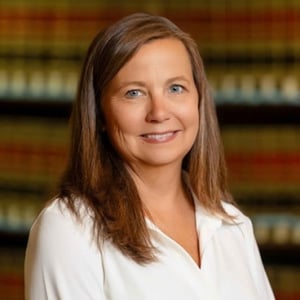
John P. Murphy Foundation Professor of Law and Associate Dean for External Engagement, University of Notre Dame Law School
Nicole Stelle Garnett is the John P. Murphy Foundation Professor of Law at Notre Dame Law School, where she also serves as the Associate Dean for External Engagement and directs the Notre Dame Education Law Project. Her teaching and research focus on education law and policy, religious liberty, and topics related to property law (especially land use and urban development policies). In addition to dozens of articles on these subjects, she is the author of Lost Classroom, Lost Community: Catholic Schools' Importance in Urban America (University of Chicago Press, 2014) and Ordering the City: Land Use, Policing and the Restoration of Urban America (Yale University Press, 2009).
Garnett received her B.A. with distinction in Political Science from Stanford University and her J.D. from Yale Law School. After law school, she clerked for the Honorable Morris S. Arnold of the United States Court of Appeals for the Eighth Circuit and for Associate Justice Clarence Thomas of the Supreme Court of the United States. Before joining the law school faculty in 1999, she worked for two years as a staff attorney at the Institute for Justice, a non-profit public-interest law firm in Washington, D.C., where she helped to defend the constitutionality of the nation's first private-school-choice programs.
At Notre Dame, Garnett is a faculty fellow in the Institute for Educational Initiatives, Kellogg Institute for International Studies, Fitzgerald Institute for Real Estate, and deNicola Center for Ethics and Culture. She also is an elected member of the American Law Institute and a Senior Fellow at the Manhattan Institute.
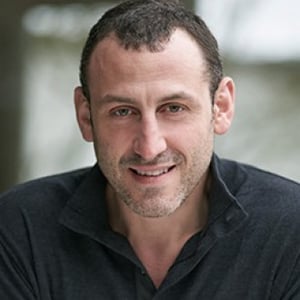
Professor of Law, Northwestern University Pritzker School of Law
Joshua Kleinfeld teaches and writes about political, legal, and moral philosophy, criminal law, and criminal procedure. He also practices law in Northwestern's Juvenile Criminal Defense Clinic. He is a full professor with tenure at the Northwestern Pritzker School of the Law and (by courtesy) in Northwestern’s philosophy department. In 2017-18, he was a visiting professor at Harvard and Stanford Law Schools. He is the recipient of the Bator Award, given annually to one American law professor under the age of 40 who has demonstrated "excellence in legal scholarship, a commitment to teaching, a concern for students, and who has made a significant public impact."
In philosophy, Kleinfeld's research focuses on the idea of "embodied ethical life," as developed in the socio-theoretic tradition of Hegel, Weber, and Durkheim. This tradition aims to understand and critique social life by bringing to light the normative ideas implicit in social practices and institutions. In law, this means that the most interesting philosophical concepts are often those reflected or actualized in legal practice – in the law as judges and lawyers think of it and wield it.
In criminal law and procedure, Kleinfeld has developed a theory known as "reconstructivism," which holds that the chief office of criminal law is not to dole out retributive justice, nor to optimize crime and cost control, but to reconstruct a violated normative order in the wake of a crime. This work, which draws on the thought of Hegel, Durkheim, Jean Hampton, and Antony Duff, develops an alternative to retributive and utilitarian theories of criminal law by focusing on the distinctive social function and sense of justice at work in the criminal system.
Kleinfeld is also involved in practical criminal justice reform. In this vein, he defends children accused of homicide in the Northwestern Juvenile Criminal Defense clinic and assists in litigation efforts meant to reform American criminal law through the courts. He has also developed a view of criminal justice reform known as "democratization," which holds that the root of the American criminal justice crisis is a set of bureaucratic attitudes, structures, and incentives divorced from the American public’s concerns and sense of justice, and that the primary solution is to make criminal justice more community-focused and responsive to lay influences. Working with others, he has developed a number of policy proposals meant to reform American criminal justice in a democratic direction.
Kleinfeld holds a JD from Yale Law School, a PhD in philosophy from the Goethe University of Frankfurt (supervised by Axel Honneth, Klaus Günther, and Rainer Forst), and a BA in philosophy from Yale College. He clerked for Judge J. Harvie Wilkinson on the United States Court of Appeals for the Fourth Circuit; Judge Janice Rogers Brown on the United States Court of Appeals for the D.C. Circuit; and President (chief justice) Aharon Barak of the Supreme Court of Israel. He worked as an Associate at Debevoise & Plimpton LLP in Frankfurt, Germany, in the area of corporate criminal law. Before law school, he worked as a Senior Research Analyst at the White House’s Council on Bioethics.
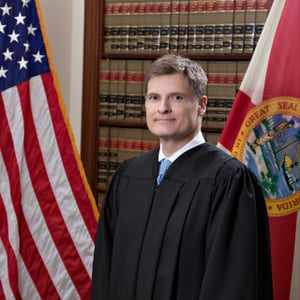
Chief Justice, Florida Supreme Court
Justice Carlos G. Muñiz was appointed to the Florida Supreme Court by Governor Ron DeSantis on January 22, 2019, becoming the 89th Justice since statehood was granted in 1845. Previously, he served as general counsel for the United States Department of Education, where he led the Office of the General Counsel and provided legal and policy advice to the United States Secretary of Education and to other senior department officials.
Justice Muñiz has wide-ranging legal and policy experience from his years as an attorney and consultant in private practice. He served for three years as the deputy attorney general and chief of staff to Florida Attorney General Pam Bondi. In that capacity he was responsible for managing a 400-lawyer staff and overseeing duties that included enforcement and litigation, legislative affairs, and communications.
During this time, Justice Muñiz worked with state attorneys general throughout the country and developed substantial experience in multistate enforcement actions, consumer protection issues, government investigations, and disputes between the states and the federal government.
In addition to his service in the Attorney General’s Office, Justice Muñiz held positions of responsibility throughout Florida state government. He served as deputy general counsel in the Office of Governor Jeb Bush, as a deputy chief of staff and counsel in the Office of the Speaker of the Florida House of Representatives, and as general counsel of the Florida Department of Financial Services.
Justice Muñiz is a graduate of the University of Virginia and of Yale Law School. Upon receipt of his law degree, he clerked for Judge José A. Cabranes of the U.S. Court of Appeals for the Second Circuit and for Judge Thomas A. Flannery of the U.S. District Court for the District of Columbia.
Shareholder, Webber & Thies PC
Mr. Thies has litigated complex commercial disputes and defended class actions throughout the state of Illinois, and in federal courts across the country, including the First, Second, Seventh, and Tenth Circuits. He has represented clients in numerous trials and arbitrations, including serving as part of a trial team winning a $64 million judgment after a jury verdict in the Northern District of New York.
Prior to joining Webber & Thies, Mr. Thies was an associate at Sidley Austin LLP (2013-2018) and clerked for Chief Judge James F. Holderman of the United States District Court for the Northern District of Illinois (2011-2013) and for Judge Jerry Smith of the United States Court of Appeals for the Fifth Circuit (2010-2011).
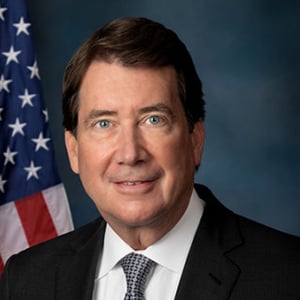
United States Senator, Tennessee
United States Senator Bill Hagerty was elected to the U.S. Senate in 2020 and is currently serving his first term representing the state of Tennessee. His committee assignments include: U.S. Senate Committee on Banking, Housing, & Urban Affairs; U.S. Senate Committee on Foreign Relations; U.S. Senate Committee on Appropriations; and the U.S. Senate Committee on Rules & Administration. Prior to his election to the U.S. Senate, Hagerty served as the U.S. Ambassador to Japan.
Hagerty is a life-long businessman. He started his business career with the Boston Consulting Group, where his work took him to five continents, including three years based in Tokyo, Japan. He later became a venture capital and private equity investor where he invested in and served as an executive and board member of a wide range of companies, including ones listed on the New York Stock Exchange and NASDAQ. From 2011 to 2014, Hagerty took leave from his business career to serve as a member of the Governor’s Cabinet and Commissioner of the Tennessee Department of Economic and Community Development.
Hagerty, an Eagle Scout, is originally from Sumner County, Tennessee. Today, he and his wife Chrissy are both active volunteers in several community and civic organizations, and live in Davidson County, Tennessee. They are the parents of four children.
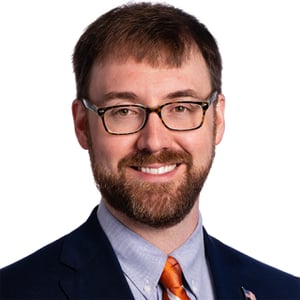
Senior Legal Fellow, Courts and the Constitution, Legal Policy Center, The Heritage Foundation
Zack is a Senior Legal Fellow of Courts and the Constitution at The Heritage Foundation.
He previously served for several years as an Assistant United States Attorney in the Northern District of Florida. Prior to that, he spent two years as an associate in the Washington, D.C. office of Cleary Gottlieb Steen & Hamilton, which he joined after clerking for the Hon. Emmett R. Cox on the United States Court of Appeals for the Eleventh Circuit.
Smith received his undergraduate, master’s, and law degrees from the University of Florida. During law school, Smith served as the Editor in Chief of the Florida Law Review and served on the executive boards of several student organizations, including the UF Chapter of the Federalist Society.

Former Chief Justice, Arizona Supreme Court
Scott Bales served on the Arizona Supreme Court for fourteen years, including as Chief Justice from July 2014 until July 2019. After retiring from the Court, he was the Executive Director of the Institute for the Advancement of the American Legal System at the University of Denver through July 2020. He now consults on appellate matters and internal investigations and serves as a neutral.
He is the immediate past Chair of the Council of the ABA’s Section on Legal Education and serves on the Council of the American Law Institute and the Board of Trustees for the National Conference of Bar Examiners. He previously chaired the Appellate Judges Conference of the ABA’s Judicial Division. Justice Bales has often taught courses at the law schools at Arizona State University and the University of Arizona.
Before his appointment to the Court, he had practiced law in Arizona for nearly 20 years as a private and public lawyer. He was a partner in Phoenix firms that later became Osborn Maledon P.A. and Lewis Roca Rothgerber Christie. He also served as Arizona’s Solicitor General from 1999-2001 and as a Deputy Assistant Attorney General for the U.S. Department of Justice’s Office of Policy Development from 1998-1999, a Special Investigative Counsel for the Justice Department’s Inspector General from 1995-97, and as a federal prosecutor.
He clerked for Justice Sandra Day O’Connor on the U.S. Supreme Court and Judge Joseph T. Sneed III on the Ninth Circuit Court of Appeals. After graduating from Michigan State University with degrees in history and economics, he received a master’s degree in economics and his law degree from Harvard.
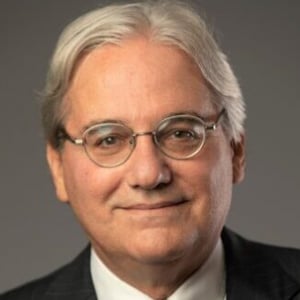
Clinical Professor of Law, Cornell Law School
William A. Jacobson is a Clinical Professor of Law and Director of the Securities Law Clinic.
He is a 1981 graduate of Hamilton College and a 1984 graduate of Harvard Law School. At Harvard he was Senior Editor of the Harvard International Law Journal and Director of Litigation for the Harvard Prison Legal Assistance Project.
Prior to joining the Cornell law faculty in 2007, Professor Jacobson had a highly successful civil litigation and arbitration practice in Providence, Rhode Island, concentrating in investment, employment, and business disputes in the securities industry, including many high profile cases reported in leading newspapers and magazines.
Professor Jacobson has argued cases in numerous federal and state courts, including the Courts of Appeal for the First, Fifth and Sixth Circuits, and the Rhode Island Supreme Court.
Professor Jacobson has a national reputation as a leading practitioner in securities arbitration. He was Treasurer, and is a former member of the Executive Committee and Board of Directors of the Public Investors Arbitration Bar Association, a professional organization of attorneys dedicated to protecting public investors. He frequently is quoted in national media on issues related to investment fraud and investor protection, and in the past has served as one of a small number of private practice attorneys who trained new arbitrators for the Financial Industry Regulatory Authority.
Professor Jacobson is co-author of the Securities Arbitration Desk Reference (Thomson-Reuters), updated annually.
Professor Jacobson also is the founder and publisher of Legal Insurrection, a popular politics and law website. He is frequently quoted in the media on political and legal topics, has authored many Op-Eds in major publications, and appears on television and radio to discuss politics and the law.

MD, JD, Georgetown Scholar
Nicholas D. Lawson, M.D., J.D., is a disability advocate and a person with a disability having lived experience of disability discrimination as a psychiatry resident. He is also a Georgetown Law Scholar and an aspiring disability studies professor who writes about disability rights issues within the academic medical and legal literatures. Dr. Lawson draws from an interdisciplinary background in medicine, law, research, and clinical care to critically appraise expert authorities on persons with disabilities and to fight medical models that contribute to disability oppression. Lawson is particularly interested in reducing structural stigma, in the inclusion of persons with disabilities in positions of leadership and within the professions, and in negative rights and privacy issues.
Lawson’s contributions to law reviews include “To Be a Good Lawyer, One Has to Be a Healthy Lawyer”: Lawyer Well-Being, Discrimination, and Discretionary Systems of Discipline in the Georgetown Journal of Legal Ethics. The Article critiqued professional wellness (aka well-being) policies encouraging surveillance and reporting of persons suspected of having mental health conditions and disabilities. Dr. Lawson’s more recent Article, Suicide Screening and Surveillance of Students, Discrimination, and Privacy: The Garrett Lee Smith Memorial Act, is forthcoming in the Journal of Law and Education. It argues that suicide surveillance policies in high schools, colleges, and universities are counterproductive and lead to discrimination on the basis of suicidality. Lawson argues that institutions can “support” persons with disabilities, including mental health conditions, by complying with disability affirmative action requirements under the Rehabilitation Act, including persons with disabilities in leadership positions, and by investing in disability studies programs and courses within their academic curriculums.
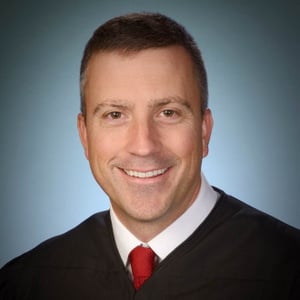
Judge, United States District Court, District of Columbia
Judge Trevor N. McFadden was appointed to the United States District Court for the District of Columbia in 2017. He received his B.A. in 2001 from Wheaton College, IL, magna cum laude. In 2006, he received his J.D. from the University of Virginia School of Law, where he graduated Order of the Coif and was an editor for the Virginia Law Review.
Following graduation from law school, Judge McFadden clerked for Judge Steven Colloton, U.S. Court of Appeals for the Eighth Circuit. He then joined the U.S. Department of Justice, where he served as Counsel to the Deputy Attorney General and as Assistant U.S. Attorney in the District of Columbia. Judge McFadden subsequently became a partner at Baker & McKenzie LLP in Washington, DC, where he focused on white collar investigations. He is also co-author of a treatise, Corporate Settlement Tools: DPAs, NPAs, and Cooperation Agreements.
After four years in private practice, Judge McFadden returned to the U.S. Department of Justice, where he was Deputy Assistant Attorney General and acted as the second-in-command of the Department's Criminal Division. As Deputy Assistant Attorney General, he managed the Division's Fraud and Appellate Sections.
Judge McFadden also has extensive experience in law enforcement. He served as an officer with the Fairfax County, VA, Police Department and as a deputy sheriff in Madison County, VA.
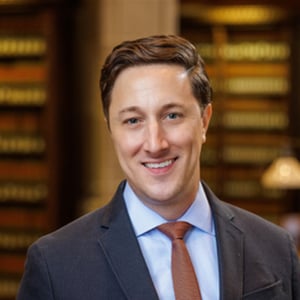
Professor of Law, Notre Dame Law School
Professor Derek Muller is a nationally-recognized scholar in the field of election law. His research focuses on the role of states in the administration of federal elections, the constitutional contours of voting rights and election administration, the limits of judicial power in the domain of elections, and the Electoral College.
He has published more than two dozen academic works, and his op-eds have appeared in the New York Times, the Los Angeles Times, and the Wall Street Journal. He has testified before Congress, and he is a contributor at the Election Law Blog. He is a co-author on a Federal Courts casebook published by Carolina Academic Press. He is also the co-reporter on a new Restatement of the Law, Election Litigation, an effort led by the American Law Institute.
Professor Muller teaches Election Law, Civil Procedure, and Evidence.
United States Senator, Tennessee
United States Senator Bill Hagerty was elected to the U.S. Senate in 2020 and is currently serving his first term representing the state of Tennessee. His committee assignments include: U.S. Senate Committee on Banking, Housing, & Urban Affairs; U.S. Senate Committee on Foreign Relations; U.S. Senate Committee on Appropriations; and the U.S. Senate Committee on Rules & Administration. Prior to his election to the U.S. Senate, Hagerty served as the U.S. Ambassador to Japan.
Hagerty is a life-long businessman. He started his business career with the Boston Consulting Group, where his work took him to five continents, including three years based in Tokyo, Japan. He later became a venture capital and private equity investor where he invested in and served as an executive and board member of a wide range of companies, including ones listed on the New York Stock Exchange and NASDAQ. From 2011 to 2014, Hagerty took leave from his business career to serve as a member of the Governor’s Cabinet and Commissioner of the Tennessee Department of Economic and Community Development.
Hagerty, an Eagle Scout, is originally from Sumner County, Tennessee. Today, he and his wife Chrissy are both active volunteers in several community and civic organizations, and live in Davidson County, Tennessee. They are the parents of four children.
Senior Legal Fellow, Courts and the Constitution, Legal Policy Center, The Heritage Foundation
Zack is a Senior Legal Fellow of Courts and the Constitution at The Heritage Foundation.
He previously served for several years as an Assistant United States Attorney in the Northern District of Florida. Prior to that, he spent two years as an associate in the Washington, D.C. office of Cleary Gottlieb Steen & Hamilton, which he joined after clerking for the Hon. Emmett R. Cox on the United States Court of Appeals for the Eleventh Circuit.
Smith received his undergraduate, master’s, and law degrees from the University of Florida. During law school, Smith served as the Editor in Chief of the Florida Law Review and served on the executive boards of several student organizations, including the UF Chapter of the Federalist Society.
United States Senator, Tennessee
United States Senator Bill Hagerty was elected to the U.S. Senate in 2020 and is currently serving his first term representing the state of Tennessee. His committee assignments include: U.S. Senate Committee on Banking, Housing, & Urban Affairs; U.S. Senate Committee on Foreign Relations; U.S. Senate Committee on Appropriations; and the U.S. Senate Committee on Rules & Administration. Prior to his election to the U.S. Senate, Hagerty served as the U.S. Ambassador to Japan.
Hagerty is a life-long businessman. He started his business career with the Boston Consulting Group, where his work took him to five continents, including three years based in Tokyo, Japan. He later became a venture capital and private equity investor where he invested in and served as an executive and board member of a wide range of companies, including ones listed on the New York Stock Exchange and NASDAQ. From 2011 to 2014, Hagerty took leave from his business career to serve as a member of the Governor’s Cabinet and Commissioner of the Tennessee Department of Economic and Community Development.
Hagerty, an Eagle Scout, is originally from Sumner County, Tennessee. Today, he and his wife Chrissy are both active volunteers in several community and civic organizations, and live in Davidson County, Tennessee. They are the parents of four children.
Senior Legal Fellow, Courts and the Constitution, Legal Policy Center, The Heritage Foundation
Zack is a Senior Legal Fellow of Courts and the Constitution at The Heritage Foundation.
He previously served for several years as an Assistant United States Attorney in the Northern District of Florida. Prior to that, he spent two years as an associate in the Washington, D.C. office of Cleary Gottlieb Steen & Hamilton, which he joined after clerking for the Hon. Emmett R. Cox on the United States Court of Appeals for the Eleventh Circuit.
Smith received his undergraduate, master’s, and law degrees from the University of Florida. During law school, Smith served as the Editor in Chief of the Florida Law Review and served on the executive boards of several student organizations, including the UF Chapter of the Federalist Society.
United States Senator, Tennessee
United States Senator Bill Hagerty was elected to the U.S. Senate in 2020 and is currently serving his first term representing the state of Tennessee. His committee assignments include: U.S. Senate Committee on Banking, Housing, & Urban Affairs; U.S. Senate Committee on Foreign Relations; U.S. Senate Committee on Appropriations; and the U.S. Senate Committee on Rules & Administration. Prior to his election to the U.S. Senate, Hagerty served as the U.S. Ambassador to Japan.
Hagerty is a life-long businessman. He started his business career with the Boston Consulting Group, where his work took him to five continents, including three years based in Tokyo, Japan. He later became a venture capital and private equity investor where he invested in and served as an executive and board member of a wide range of companies, including ones listed on the New York Stock Exchange and NASDAQ. From 2011 to 2014, Hagerty took leave from his business career to serve as a member of the Governor’s Cabinet and Commissioner of the Tennessee Department of Economic and Community Development.
Hagerty, an Eagle Scout, is originally from Sumner County, Tennessee. Today, he and his wife Chrissy are both active volunteers in several community and civic organizations, and live in Davidson County, Tennessee. They are the parents of four children.
Senior Legal Fellow, Courts and the Constitution, Legal Policy Center, The Heritage Foundation
Zack is a Senior Legal Fellow of Courts and the Constitution at The Heritage Foundation.
He previously served for several years as an Assistant United States Attorney in the Northern District of Florida. Prior to that, he spent two years as an associate in the Washington, D.C. office of Cleary Gottlieb Steen & Hamilton, which he joined after clerking for the Hon. Emmett R. Cox on the United States Court of Appeals for the Eleventh Circuit.
Smith received his undergraduate, master’s, and law degrees from the University of Florida. During law school, Smith served as the Editor in Chief of the Florida Law Review and served on the executive boards of several student organizations, including the UF Chapter of the Federalist Society.
Former Chief Justice, Arizona Supreme Court
Scott Bales served on the Arizona Supreme Court for fourteen years, including as Chief Justice from July 2014 until July 2019. After retiring from the Court, he was the Executive Director of the Institute for the Advancement of the American Legal System at the University of Denver through July 2020. He now consults on appellate matters and internal investigations and serves as a neutral.
He is the immediate past Chair of the Council of the ABA’s Section on Legal Education and serves on the Council of the American Law Institute and the Board of Trustees for the National Conference of Bar Examiners. He previously chaired the Appellate Judges Conference of the ABA’s Judicial Division. Justice Bales has often taught courses at the law schools at Arizona State University and the University of Arizona.
Before his appointment to the Court, he had practiced law in Arizona for nearly 20 years as a private and public lawyer. He was a partner in Phoenix firms that later became Osborn Maledon P.A. and Lewis Roca Rothgerber Christie. He also served as Arizona’s Solicitor General from 1999-2001 and as a Deputy Assistant Attorney General for the U.S. Department of Justice’s Office of Policy Development from 1998-1999, a Special Investigative Counsel for the Justice Department’s Inspector General from 1995-97, and as a federal prosecutor.
He clerked for Justice Sandra Day O’Connor on the U.S. Supreme Court and Judge Joseph T. Sneed III on the Ninth Circuit Court of Appeals. After graduating from Michigan State University with degrees in history and economics, he received a master’s degree in economics and his law degree from Harvard.
Clinical Professor of Law, Cornell Law School
William A. Jacobson is a Clinical Professor of Law and Director of the Securities Law Clinic.
He is a 1981 graduate of Hamilton College and a 1984 graduate of Harvard Law School. At Harvard he was Senior Editor of the Harvard International Law Journal and Director of Litigation for the Harvard Prison Legal Assistance Project.
Prior to joining the Cornell law faculty in 2007, Professor Jacobson had a highly successful civil litigation and arbitration practice in Providence, Rhode Island, concentrating in investment, employment, and business disputes in the securities industry, including many high profile cases reported in leading newspapers and magazines.
Professor Jacobson has argued cases in numerous federal and state courts, including the Courts of Appeal for the First, Fifth and Sixth Circuits, and the Rhode Island Supreme Court.
Professor Jacobson has a national reputation as a leading practitioner in securities arbitration. He was Treasurer, and is a former member of the Executive Committee and Board of Directors of the Public Investors Arbitration Bar Association, a professional organization of attorneys dedicated to protecting public investors. He frequently is quoted in national media on issues related to investment fraud and investor protection, and in the past has served as one of a small number of private practice attorneys who trained new arbitrators for the Financial Industry Regulatory Authority.
Professor Jacobson is co-author of the Securities Arbitration Desk Reference (Thomson-Reuters), updated annually.
Professor Jacobson also is the founder and publisher of Legal Insurrection, a popular politics and law website. He is frequently quoted in the media on political and legal topics, has authored many Op-Eds in major publications, and appears on television and radio to discuss politics and the law.
MD, JD, Georgetown Scholar
Nicholas D. Lawson, M.D., J.D., is a disability advocate and a person with a disability having lived experience of disability discrimination as a psychiatry resident. He is also a Georgetown Law Scholar and an aspiring disability studies professor who writes about disability rights issues within the academic medical and legal literatures. Dr. Lawson draws from an interdisciplinary background in medicine, law, research, and clinical care to critically appraise expert authorities on persons with disabilities and to fight medical models that contribute to disability oppression. Lawson is particularly interested in reducing structural stigma, in the inclusion of persons with disabilities in positions of leadership and within the professions, and in negative rights and privacy issues.
Lawson’s contributions to law reviews include “To Be a Good Lawyer, One Has to Be a Healthy Lawyer”: Lawyer Well-Being, Discrimination, and Discretionary Systems of Discipline in the Georgetown Journal of Legal Ethics. The Article critiqued professional wellness (aka well-being) policies encouraging surveillance and reporting of persons suspected of having mental health conditions and disabilities. Dr. Lawson’s more recent Article, Suicide Screening and Surveillance of Students, Discrimination, and Privacy: The Garrett Lee Smith Memorial Act, is forthcoming in the Journal of Law and Education. It argues that suicide surveillance policies in high schools, colleges, and universities are counterproductive and lead to discrimination on the basis of suicidality. Lawson argues that institutions can “support” persons with disabilities, including mental health conditions, by complying with disability affirmative action requirements under the Rehabilitation Act, including persons with disabilities in leadership positions, and by investing in disability studies programs and courses within their academic curriculums.
Judge, United States District Court, District of Columbia
Judge Trevor N. McFadden was appointed to the United States District Court for the District of Columbia in 2017. He received his B.A. in 2001 from Wheaton College, IL, magna cum laude. In 2006, he received his J.D. from the University of Virginia School of Law, where he graduated Order of the Coif and was an editor for the Virginia Law Review.
Following graduation from law school, Judge McFadden clerked for Judge Steven Colloton, U.S. Court of Appeals for the Eighth Circuit. He then joined the U.S. Department of Justice, where he served as Counsel to the Deputy Attorney General and as Assistant U.S. Attorney in the District of Columbia. Judge McFadden subsequently became a partner at Baker & McKenzie LLP in Washington, DC, where he focused on white collar investigations. He is also co-author of a treatise, Corporate Settlement Tools: DPAs, NPAs, and Cooperation Agreements.
After four years in private practice, Judge McFadden returned to the U.S. Department of Justice, where he was Deputy Assistant Attorney General and acted as the second-in-command of the Department's Criminal Division. As Deputy Assistant Attorney General, he managed the Division's Fraud and Appellate Sections.
Judge McFadden also has extensive experience in law enforcement. He served as an officer with the Fairfax County, VA, Police Department and as a deputy sheriff in Madison County, VA.
Professor of Law, Notre Dame Law School
Professor Derek Muller is a nationally-recognized scholar in the field of election law. His research focuses on the role of states in the administration of federal elections, the constitutional contours of voting rights and election administration, the limits of judicial power in the domain of elections, and the Electoral College.
He has published more than two dozen academic works, and his op-eds have appeared in the New York Times, the Los Angeles Times, and the Wall Street Journal. He has testified before Congress, and he is a contributor at the Election Law Blog. He is a co-author on a Federal Courts casebook published by Carolina Academic Press. He is also the co-reporter on a new Restatement of the Law, Election Litigation, an effort led by the American Law Institute.
Professor Muller teaches Election Law, Civil Procedure, and Evidence.

Academic Freedom and Freedom of Expression: Will the proposed accreditation standard support freedom of thought at law schools?
Necessary & Proper Episode 82: The D.C. Crime Bill: What Happens Next?
Bill Hagerty, Zack Smith
In November 2022, the District of Columbia City Council passed the Revised Criminal Code Act...
The D.C. Crime Bill: What Happens Next?
Bill Hagerty, Zack Smith
In November 2022, the District of Columbia City Council passed the Revised Criminal Code Act...
The D.C. Crime Bill: What Happens Next?
Bill Hagerty, Zack Smith
In November 2022, the District of Columbia City Council passed the Revised Criminal Code Act...
The D.C. Crime Bill: What Happens Next?
TeleforumTopics
ABA Rejects Removing LSAT Requirement for Accreditation, Urges SCOTUS to Adopt Ethics Code
ABA President Submits Comment on Proposed Treasury Rule ABA President Deborah Enix-Ross recently submitted a...
Topics
The Latest at the ABA
The Council of the ABA Section of Legal Education and Admissions to the Bar is...
Topics
Pricier Burgers, Fewer Workers: California’s FAST Recovery Act will hike restaurant prices, destroy jobs, and exacerbate inflation—all in the name of handing power to big unions.
Wages are rising, the job market is tight, prices are surging. Across the country, voters...
Breakout Panel: ABA Accreditation of Law Schools
Scott Bales, William Jacobson, Nicholas Lawson, Trevor N. McFadden, Derek T. Muller
The U.S. Department of Education provides oversight of postsecondary institutions or program accreditation by reviewing...
Breakout Panel: ABA Accreditation of Law Schools
Tenth Annual Executive Branch Review
Washington, DC