
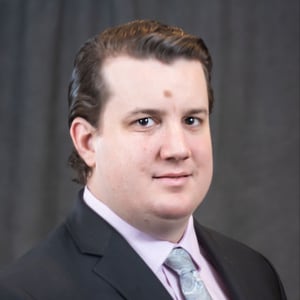
Counsel, Liberty Justice Center
Reilly Stephens is Counsel at Liberty Justice Center, a national nonprofit public-interest litigation firm that brings cases around the country to protect economic liberty, educational freedom, property rights, free speech, and other fundamental rights..
Prior to joining LJC, Reilly was a legal associate in the Cato Institute’s Center for Constitutional Studies. During law school, he served as a law clerk at the Institute for Justice and for the Competitive Enterprise Institute’s Center for Class Action Fairness.
A native of Baltimore, Reilly holds a J.D. from the Georgetown University Law Center, where he served as Senior Articles Editor of the Georgetown Journal of Law & Public Policy, and an M.A. in International Relations from the University of St. Andrews, Scotland.
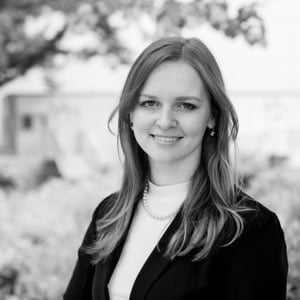
Amicus Attorney, The Foundation for Individual Rights and Expression
Abby joined FIRE after her tenure at the Becket Fund for Religious Liberty, where she litigated First Amendment student group cases from coast to coast. She also worked at a trial litigation boutique in southern California. Abby has filed briefs on the First Amendment in state and federal court at the trial and appellate court levels, including before the U.S. Supreme Court.
Abby received her B.S. in economics and her B.A. in Chinese language and literature from the University of Pittsburgh, where she graduated summa cum laude. During college, she also spent a year at Tsinghua University as a Boren Fellow. She later received her J.D. from the University of Chicago Law School, where she won the 2018 Hinton Moot Court Competition. After law school, Abby clerked for the Honorable Michael B. Brennan on the Seventh Circuit Court of Appeals in Milwaukee, Wisconsin. She is admitted to practice in New York and California, as well as several federal appellate courts and the U.S. Supreme Court.
Abby lives outside Dallas, Texas, with her husband and family. They enjoy reading together, volunteering with their local church, and continuing to fix their leaky pool.
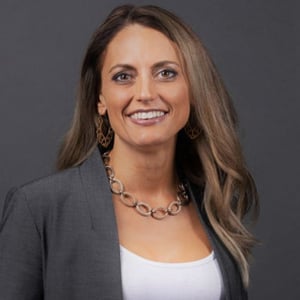
Judge, U.S. Court of Appeals for the Third Circuit
Hon. Jennifer Mascott served as Associate Professor of Law and Director of the Separation of Powers Institute at The Catholic University of America’s Columbus School of Law before her appointment to the federal bench. On July 16, 2025, President Donald J. Trump nominated her to the U.S. Court of Appeals for the Third Circuit (Delaware), and she was confirmed on October 9, 2025.
Prior to her confirmation, Judge Mascott wrote extensively in administrative and constitutional law, statutory interpretation, and the separation of powers. Her scholarship—published in leading journals including the Stanford Law Review, Notre Dame Law Review, and Supreme Court Review—was cited by the U.S. Supreme Court and multiple federal courts. She also contributed Supreme Court commentary for NBC Universal.
Before joining Catholic Law, she was an Assistant Professor and Co-Director of The C. Boyden Gray Center at George Mason University’s Antonin Scalia Law School. In 2022 she became co-author of Beermann, Cass & Diver’s Administrative Law: Cases and Materials (9th ed.). In 2023 she received the Justice Joseph Story Award for excellence in scholarship, teaching, and advancing the rule of law.
Judge Mascott also served as a Council Member of the ABA’s Administrative Law Section and as a Public Member of the Administrative Conference of the United States. She frequently testified before Congress on executive power, regulatory reform, and judicial jurisdiction, and participated in multiple Supreme Court confirmation hearings.
From 2019 to 2021, she took leave from academia to serve as Deputy Assistant Attorney General in the Department of Justice’s Office of Legal Counsel and later as Associate Deputy Attorney General, where she argued federal cases and assisted with Justice Amy Coney Barrett’s confirmation. Earlier in her career, she clerked for Justice Clarence Thomas and for then-Judge Brett M. Kavanaugh on the D.C. Circuit.
Judge Mascott earned her J.D. summa cum laude from the George Washington University Law School and her B.A. from the same institution.
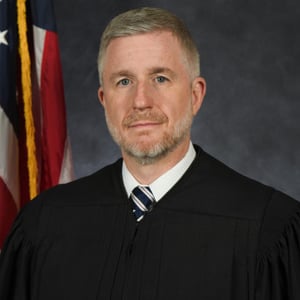
Judge, United States Court of Appeals, Third Circuit
Judge Paul Matey was appointed to the United States Court of Appeals for the Third Circuit in 2019 by President Trump.
Before his judicial service, Judge Matey was a partner at Lowenstein Sandler in New Jersey where he practiced complex commercial litigation and criminal defense. Earlier, Judge Matey was the Senior Vice President, General Counsel and Secretary for University Hospital Newark, an academic medical center and teaching hospital.
He also served as the Deputy Chief Counsel to Governor Chris Christie, and as an Assistant United States Attorney in the District of New Jersey, where he was awarded the Justice Department’s Director’s Award for Superior Performance. He also practiced at the Washington D.C. firm of Kellogg, Hansen, Todd, Figel & Frederick, and served as a law clerk to judges on the United States Court of Appeals for the Third Circuit and the United States District Court for the District of New Jersey.
He earned his bachelor’s degree from the University of Scranton, a Jesuit University, in 1993, and his juris doctorate, summa cum laude, from Seton Hall University School of Law in 2001, where he served as Editor-in-Chief of the Seton Hall Law Review.
In 2019, Judge Matey was elected to membership in the American Law Institute and, since 2020, has lectured on administrative law and the American legal history at Seton Hall.
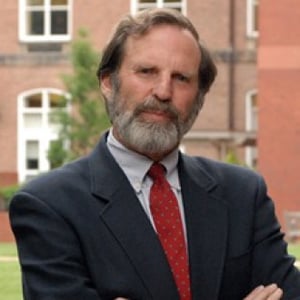
Adjunct Professor, George Washington University Law School
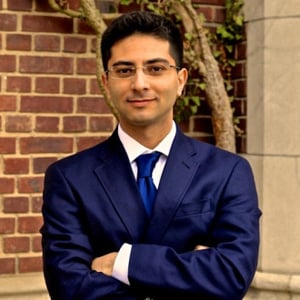
Associate Professor of Law, University of Notre Dame Law School
Sherif Girgis joined Notre Dame Law School in 2021. Prior to joining Notre Dame Law, Sherif practiced law at Jones Day in Washington, D.C., where he focused on appellate and complex civil litigation. Before that, Girgis served as a law clerk to Justice Samuel Alito, Jr., of the U.S. Supreme Court and Judge Thomas B. Griffith of the U.S. Court of Appeals for the D.C. Circuit. Now completing his Ph.D. in philosophy at Princeton, Girgis earned his J.D. at Yale Law School, where he served as an editor of the Yale Law Journal and won the Felix S. Cohen Prize for best paper in legal philosophy. Before law school, he earned a master's degree (B.Phil.) in philosophy from the University of Oxford as a Rhodes Scholar, and his bachelor's degree in philosophy from Princeton, Phi Beta Kappa and summa cum laude. Girgis is coauthor of What Is Marriage? Man and Woman: A Defense, cited in a dissent in United States v. Windsor, and Debating Religious Liberty and Discrimination, released by Oxford University Press in 2017. His work at the intersection of philosophy and law--including criminal law, constitutional liberties, and jurisprudence--has appeared in academic and popular venues including the Yale Law Journal, the Virginia Law Review, the University of Pennsylvania Law Review, the Harvard Journal of Law and Public Policy, the American Journal of Jurisprudence, the Cambridge Companion to Philosophy of Law, The New York Times, and The Wall Street Journal.
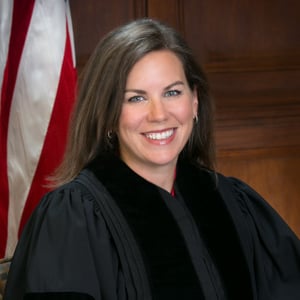
Judge, United States Court of Appeals, Eleventh Circuit
Britt C. Grant is a judge on the U.S. Court of Appeals for the Eleventh Circuit. Judge Grant was appointed to the federal bench in August 2018 after serving as a Justice on the Supreme Court of Georgia. Prior to her judicial appointment, she served as the Solicitor General of Georgia and practiced in the Washington, D.C. office of Kirkland & Ellis. Upon graduation from law school, Judge Grant served as a law clerk to then-Judge Brett M. Kavanaugh of the U.S. Court of Appeals for the District of Columbia Circuit. She earned her J.D., with distinction, from Stanford Law School, where she was the Co-Founder of the Stanford National Security and the Law Society, and the President of the Stanford Law chapter of the Federalist Society. Before enrolling in law school, Judge Grant served in The White House in a variety of domestic policy roles as well as on the staff of Congressman Nathan Deal. Judge Grant earned her B.A., summa cum laude, from Wake Forest University, where she was inducted into Phi Beta Kappa. She now lives in Atlanta, Georgia with her husband and three children.
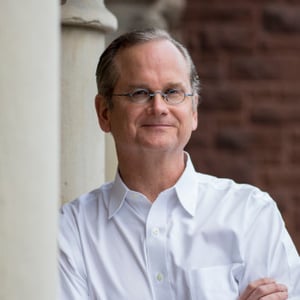
Roy L. Furman Professor of Law and Leadership, Harvard Law School
Lawrence Lessig is the Roy L. Furman Professor of Law and Leadership at Harvard Law School. Prior to returning to Harvard, he taught at Stanford Law School, where he founded the Center for Internet and Society, and at the University of Chicago. He clerked for Judge Richard Posner on the 7th Circuit Court of Appeals and Justice Antonin Scalia on the United States Supreme Court.
Lessig is a founding board member of Creative Commons and serves on the Scientific Board of AXA Research Fund. A member of the American Academy of Arts and Sciences and the American Philosophical Association, he has received numerous awards including a Webby, the Free Software Foundation's Freedom Award, Scientific American 50 Award, and Fastcase 50 Award.
Cited by The New Yorker as “the most important thinker on intellectual property in the Internet era,” Lessig has focused much of his career on law and technology, especially as it affects copyright. His current work addresses “institutional corruption”—relationships which, while legal, weaken public trust in an institution—especially as that affects democracy.
His books include: Fidelity & Constraint: How the Supreme Court Has Read the American Constitution (2019), America, Compromised (2018), Republic, Lost v2 (2015), Republic, Lost: How Money Corrupts Congress—and a Plan to Stop It (2011), Remix: Making Art and Commerce Thrive in the Hybrid Economy (2008), Code v2 (2006), The Future of Ideas (2001), and Code and Other Laws of Cyberspace (1999).
Lessig holds a BA in economics and a BS in management from the University of Pennsylvania, an MA in philosophy from Cambridge University, and a JD from Yale.
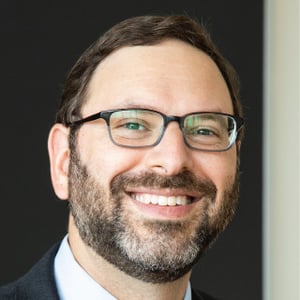
Antonin Scalia Professor of Law, Harvard Law School
Stephen E. Sachs is the Antonin Scalia Professor of Law at Harvard Law School, where he teaches civil procedure, conflict of laws, and seminars on constitutional law. His research focuses on the law and theory of constitutional interpretation, the jurisdiction of state and federal courts, the history of procedure and private law, and the role of the general common law in the U.S. legal system.
Sachs has authored numerous articles, essays, and book chapters. He is an elected member of the American Law Institute, an adviser to the ALI’s project on the Restatement of the Law (Third), Conflict of Laws, a former member of the Judicial Conference’s Advisory Committee on Appellate Rules, and a founding member of the Academic Freedom Alliance.
In 2020, Sachs received the Federalist Society’s Joseph Story Award, which recognizes a young academic who has demonstrated excellence in legal scholarship, a commitment to teaching, a concern for students, and who has made a significant public impact in a manner that advances the rule of law in a free society.
Sachs previously taught at Duke University School of Law and as a visiting professor at the University of Chicago Law School. Before entering academia, he practiced in the Washington, D.C., litigation group of Mayer Brown LLP, and he clerked for Chief Justice John G. Roberts Jr. as well as for Judge Stephen F. Williams of the U.S. Court of Appeals for the D.C. Circuit.
Sachs received his J.D. from Yale Law School, where he was executive editor of the Yale Law Journal and served both as executive editor and articles editor of the Yale Law & Policy Review. A Rhodes Scholar, he graduated from Oxford University with a first-class BA (Hons) degree in philosophy, politics, and economics. He received his A.B. degree summa cum laude in history from Harvard University, earning the Sophia Freund Prize.
Sachs is a licensed attorney in Massachusetts and the District of Columbia, and he is authorized to practice before the D.C. Circuit, the Second Circuit, the Seventh Circuit, and the Supreme Court of the United States.
Judge, U.S. Court of Appeals for the Third Circuit
Hon. Jennifer Mascott served as Associate Professor of Law and Director of the Separation of Powers Institute at The Catholic University of America’s Columbus School of Law before her appointment to the federal bench. On July 16, 2025, President Donald J. Trump nominated her to the U.S. Court of Appeals for the Third Circuit (Delaware), and she was confirmed on October 9, 2025.
Prior to her confirmation, Judge Mascott wrote extensively in administrative and constitutional law, statutory interpretation, and the separation of powers. Her scholarship—published in leading journals including the Stanford Law Review, Notre Dame Law Review, and Supreme Court Review—was cited by the U.S. Supreme Court and multiple federal courts. She also contributed Supreme Court commentary for NBC Universal.
Before joining Catholic Law, she was an Assistant Professor and Co-Director of The C. Boyden Gray Center at George Mason University’s Antonin Scalia Law School. In 2022 she became co-author of Beermann, Cass & Diver’s Administrative Law: Cases and Materials (9th ed.). In 2023 she received the Justice Joseph Story Award for excellence in scholarship, teaching, and advancing the rule of law.
Judge Mascott also served as a Council Member of the ABA’s Administrative Law Section and as a Public Member of the Administrative Conference of the United States. She frequently testified before Congress on executive power, regulatory reform, and judicial jurisdiction, and participated in multiple Supreme Court confirmation hearings.
From 2019 to 2021, she took leave from academia to serve as Deputy Assistant Attorney General in the Department of Justice’s Office of Legal Counsel and later as Associate Deputy Attorney General, where she argued federal cases and assisted with Justice Amy Coney Barrett’s confirmation. Earlier in her career, she clerked for Justice Clarence Thomas and for then-Judge Brett M. Kavanaugh on the D.C. Circuit.
Judge Mascott earned her J.D. summa cum laude from the George Washington University Law School and her B.A. from the same institution.
Judge, United States Court of Appeals, Third Circuit
Judge Paul Matey was appointed to the United States Court of Appeals for the Third Circuit in 2019 by President Trump.
Before his judicial service, Judge Matey was a partner at Lowenstein Sandler in New Jersey where he practiced complex commercial litigation and criminal defense. Earlier, Judge Matey was the Senior Vice President, General Counsel and Secretary for University Hospital Newark, an academic medical center and teaching hospital.
He also served as the Deputy Chief Counsel to Governor Chris Christie, and as an Assistant United States Attorney in the District of New Jersey, where he was awarded the Justice Department’s Director’s Award for Superior Performance. He also practiced at the Washington D.C. firm of Kellogg, Hansen, Todd, Figel & Frederick, and served as a law clerk to judges on the United States Court of Appeals for the Third Circuit and the United States District Court for the District of New Jersey.
He earned his bachelor’s degree from the University of Scranton, a Jesuit University, in 1993, and his juris doctorate, summa cum laude, from Seton Hall University School of Law in 2001, where he served as Editor-in-Chief of the Seton Hall Law Review.
In 2019, Judge Matey was elected to membership in the American Law Institute and, since 2020, has lectured on administrative law and the American legal history at Seton Hall.
Adjunct Professor, George Washington University Law School

Michigan Supreme Court Finds Confession of 18-Year-Old Inadmissible
Reilly Stephens
The Michigan Supreme Court’s recent decision in People v. Stewart revisits the longstanding debate about...
Topics
LePage v. Center for Reproductive Medicine, P.C.
On February 16, 2024, the Alabama Supreme Court held 7-2 in LePage v. Center for...
Topics
The Patent Eligibility Restoration Act (PERA): A Proposal for Section 101 Reform
Patents currently operate under a two-tiered system. Some novel inventions are allowed the benefits of...
Panel IV: Constitutions, Elections, and Procedure – (How) Can We Change How We Separate Powers?
2024 National Student Symposium
Cambridge, MATopics
Does Texas Have The Right to Defend Its Border?
The state of Texas has taken bold steps to secure its southern border and stem...
Topics
United States v. Pheasant: A Rare Bird That Might Be a Good Vehicle to Revive the Nondelegation Doctrine
Respected jurists and scholars alike have lamented that the Constitution’s prohibition against Congress transferring its...
Virginia Supreme Court Rules State Constitution Includes Expansive Protections of Religious Exercise
Abigail Smith
In Vlaming v. West Point School Board, a former teacher’s lawsuit was given new life...
Topics
The Invisible American Founding
Five years ago, the 1619 Project opened a new battle over how our children learn...
DC-Wide FedSoc Rupe Debate - Crossing the Line: Are Agencies Defying the Constitution?
Jenn L. Mascott, Paul B. Matey, Alan B. Morrison
Please join each of The Federalist Society’s local DC-area Student Chapters, Lawyers Chapters and Practice...
DC-Wide FedSoc Rupe Debate - Crossing the Line: Are Agencies Defying the Constitution?
Washington, DC