
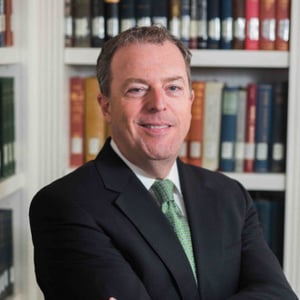
Vice President of Washington Operations and Dean of the Van Andel Graduate School of Government, Hillsdale College
Matthew Spalding is the Kirby Professor in Constitutional Government at Hillsdale College and the Dean of the Van Andel Graduate School of Government at Hillsdale College’s Washington, D.C., campus. As Vice President for Washington Operations, he also oversees the Allan P. Kirby, Jr. Center for Constitutional Studies and Citizenship and the academic and educational programs of Hillsdale in the nation’s capital.
He is the best-selling author of We Still Hold These Truths: Rediscovering Our Principles, Reclaiming Our Future, which details America’s core principles, shows how they have come under assault by modern progressive-liberalism, and lays out a strategy to recover them. Spalding is also executive editor of The Heritage Guide to the Constitution, a line-by-line analysis of each clause of the U.S. Constitution. His other books include A Sacred Union of Citizens: Washington’s Farewell Address and the American Character; Patriot Sage: George Washington and the American Political Tradition; and The Founders’ Almanac: A Practical Guide to the Notable Events, Greatest Leaders & Most Eloquent Words of the American Founding.
Prior to joining Hillsdale, Dr. Spalding was vice president of American Studies at The Heritage Foundation and founding director of its B. Kenneth Simon Center for Principles and Politics. He is a Fellow at the Claremont Institute for the Study of Statesmanship and Political Philosophy, and serves on the boards of the Steamboat Institute and the Philadelphia Society.
He received his B.A. from Claremont McKenna College and his M.A. and Ph.D. in government from the Claremont Graduate School. In addition to teaching at Hillsdale, he has taught at George Mason University, the Catholic University of America, and Claremont McKenna College. He and his wife Elizabeth, a Hillsdale alumna, reside with their two children in Arlington, Virginia.
Professor, Christopher Newport University
Dr. Jeffry Morrison is Professor of American Studies at Christopher Newport University in Newport News, Virginia, and Director of Academics at the federal government’s James Madison Foundation in Alexandria, Virginia. He graduated with distinction from Boston College and from Georgetown University, where he earned the M.A. and Ph.D. in Government. Dr. Morrison has also held faculty positions at Princeton University, the U.S. Air Force Academy, Georgetown University, and Regent University. He has published as author or editor five books on American political culture, including The Political Philosophy of George Washington (Johns Hopkins University Press, 2009), and chapters, articles, and reviews in numerous scholarly publications in fields including history, political science, and religion. He has lectured at colleges and historic sites throughout the United States and in England (Hertford College, Oxford), and made media appearances on radio, in journalism, and on television (C-SPAN and the BBC).
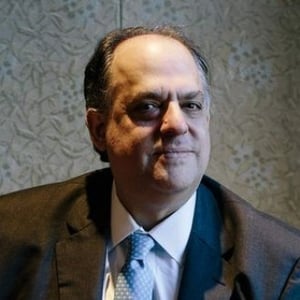
Director of Litigation and Senior Attorney, Hamilton Lincoln Law Institute
Theodore H. Frank is director at the Hamilton Lincoln Law Institute and the Center for Class Action Fairness. Frank founded and ran CCAF as a non-profit, public interest law firm in 2009.
Frank has won several landmark appeals and tens of millions of dollars for consumers and other plaintiffs through his class action work. Adam Liptak of The New York Times calls Frank “the leading critic of abusive class action settlements” and the American Lawyer Litigation Daily referred to him as “the indefatigable scourge of underwhelming class action settlements.”
Previously, Frank clerked for the Honorable Frank H. Easterbrook on the Seventh Circuit Court of Appeals, and was a litigator at firms in Washington and Los Angeles and a resident fellow at the American Enterprise Institute. Frank is a frequent public speaker and has testified before Congress multiple times on legal issues. He has been profiled by The Wall Street Journal, Forbes, GQ, and the ABA Journal, among other publications.
In 2008, Frank was elected to membership in the American Law Institute. He also serves on the Executive Committee of the Federalist Society Litigation Practice Group. Frank graduated from The University of Chicago Law School in 1994 with high honors and as a member of the Order of the Coif and the Law Review. He is a member of the District of Columbia Bar and the state bars of California and Illinois.
Litigation and Alternative Dispute Resolution Practice Group Member, Bodman PLC
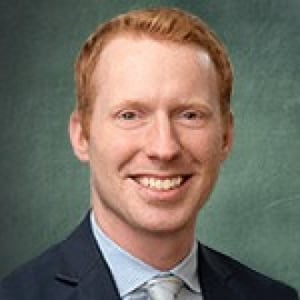
Mr. Rheaume is a member of Bodman's Litigation and Alternative Dispute Resolution Practice Group. He represents clients involved in complex commercial litigation matters and serves as local counsel for national and international law firms.
Mr. Rheaume has been selected to the Michigan Super Lawyers® Rising Stars list since 2013 for business litigation. Prior to joining Bodman, he served as a law clerk to Justice Stephen J. Markman of the Michigan Supreme Court. Based on this experience, Mr. Rheaume is an integral team member of the firm's Appellate Law Practice Group. He has written appellate and amicus briefs in state and federal appellate courts, including the United States Supreme Court.
Mr. Rheaume is President of The Federalist Society-Michigan Chapter. He serves on the alumni board of the Sigma Chi Fraternity of Michigan State University. He is also a board member of the Detroit Economic Club's Young Leader Program.
Mr. Rheaume graduated from Michigan State University College of Law ranked first in his class. While there, he served as an associate editor on The Michigan State Law Review and received Jurisprudence Awards for outstanding achievement in Secured Transactions, Professional Responsibility, Insurance Law, Construction Law, Decedents Estates & Trusts, Bankruptcy, Negotiations, and Income Taxation.
Litigation and Alternative Dispute Resolution Practice Group Member, Bodman PLC
Mr. Kangas is a member of Bodman PLC’s Litigation and ADR Group. He represents diverse clients in complex commercial disputes in both state and federal courts.
Prior to joining Bodman, Mr. Kangas clerked for Hon. Ralph B. Guy, Jr. of the U.S. Court of Appeals for the Sixth Circuit and Hon. Stephen J. Murphy, III of the U.S. District Court for the Eastern District of Michigan. As a law student, he interned with Chief Justice Robert P. Young of the Michigan Supreme Court and Hon. Robert H. Cleland of the U.S. District Court for the Eastern District of Michigan.
While in law school, Mr. Kangas served as Editor of the Michigan Journal of Gender and Law, as President of the Catholic Law Students Association, and as Publicity Chair of the Federalist Society. He also served as a volunteer Student Attorney with the University of Michigan Law School’s Unemployment Insurance Project. Following law school, Mr. Kangas was accepted into the Georgetown Center for the Constitution's Originalism seminar.
Prior to practicing law, Mr. Kangas founded a presentation consulting firm, advising professionals and organizations on persuasive and impactful presentation skills.
Director, Project on Criminal Justice, Cato Institute
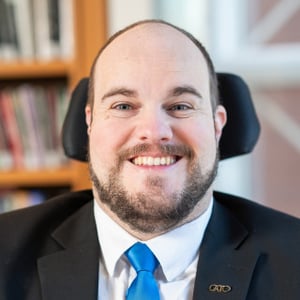
Matthew Cavedon is the Director of the Cato Institute’s Project on Criminal Justice. He focuses on reforming plea-driven mass adjudication, ensuring police accountability, and defending constitutional criminal originalism. Cavedon’s scholarship has been published (or is forthcoming in) publications including the Arizona State Law Journal, Cato Supreme Court Review, Seattle University Law Review, and Georgetown Journal of Law and Public Policy. Formerly a Georgia public defender and fellow at the Institute for Justice, Cavedon has taught law school courses on criminal law and procedure, as well as the First Amendment. Cavedon clerked for a U.S. district court and the Supreme Court of Georgia. He came to Cato following a fellowship at the Emory University Center for the Study of Law and Religion.
Professor of Law, Notre Dame Law School
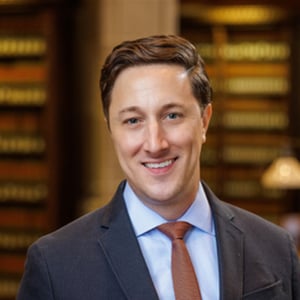
Professor Derek Muller is a nationally-recognized scholar in the field of election law. His research focuses on the role of states in the administration of federal elections, the constitutional contours of voting rights and election administration, the limits of judicial power in the domain of elections, and the Electoral College.
He has published more than two dozen academic works, and his op-eds have appeared in the New York Times, the Los Angeles Times, and the Wall Street Journal. He has testified before Congress, and he is a contributor at the Election Law Blog. He is a co-author on a Federal Courts casebook published by Carolina Academic Press. He is also the co-reporter on a new Restatement of the Law, Election Litigation, an effort led by the American Law Institute.
Professor Muller teaches Election Law, Civil Procedure, and Evidence.
Director and Professor, School of Civic and Economic Thought and Leadership, Arizona State University
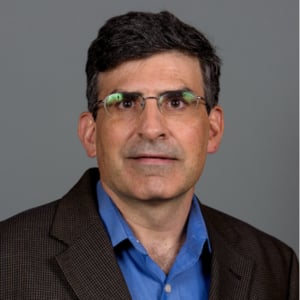
Paul Carrese is the founding director of the School of Civic and Economic Thought and Leadership at Arizona State University. For nearly two decades he was a professor of political science at the U.S. Air Force Academy, and co-founded a new honors program blending liberal arts education and leadership education. He is author of The Cloaking of Power: Montesquieu, Blackstone, and the Rise of Judicial Activism, and co-editor of three other books – on George Washington, constitutionalism, and American grand strategy. His most recent book is Democracy in Moderation: Montesquieu, Tocqueville, and Sustainable Liberalism. He has held fellowships at Oxford University as a Rhodes Scholar; Harvard University; the University of Delhi (as a Fulbright fellow); and the James Madison Program, Politics Department, Princeton University. He served on the founding advisory board of the Program on Public Discourse at University of North Carolina Chapel Hill, and currently is co-leading a national study funded by the NEH and US Department of Education on improving American history and civics education in K-12 schools with partners from Harvard and Tufts Universities and iCivics.
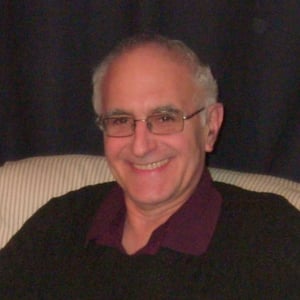
Nancy Reeves Dreux Professor of Political Science, The University of Notre Dame
Michael Zuckert (B.A., Cornell University; PhD, University of Chicago, 1974) is Nancy Reeves Dreux Professor, and Department Chair of Political Science at University of Notre Dame. Professor Zuckert teaches graduate and undergraduate courses in Political Philosophy and Theory, American Political Thought, American Constitutional Law, American Constitutional History, Constitutional Theory, and Philosophy of Law. His advising specialties are graduate programs in political science.
Professor Zuckert has published extensively on a variety of topics, including George Orwell, Plato, Shakespeare, and contemporary liberal theory. He is currently finishing a book called Completing the Constitution: The Post-Civil War Amendments and is co-authoring another book on Machiavelli and Shakespeare. He has been commissioned to write the volume on John Rawls for a series on Twentieth Century Political Philosophy. He co-authored and co-produced public radio series Mr. Adams and Mr. Jefferson: A Nine Part Drama for the Radio. He also was senior scholar for Liberty! (1997), a six hour public television series on the American Revolution, and served as senior advisor on the PBS series on Benjamin Franklin (2002) and Alexander Hamilton (2007). He is currently head of the new Tocqueville Center for the Study of Religion in American Public Life.
Zuckert has received grants from NEH, the Woodrow Wilson Center, Earhart Foundation and NSF, and has taught at Carleton College, Cornell University, Claremont Men’s College, Fordham University, the University of Minnesota, the University of Michigan at Ann Arbor, and the University of Chicago.
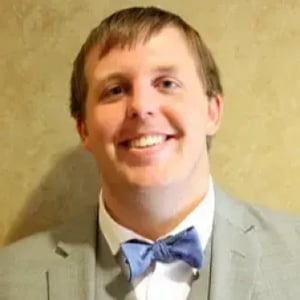
UC Foundation Assistant Professor, U.T. Chattanooga
Director of Litigation and Senior Attorney, Hamilton Lincoln Law Institute
Theodore H. Frank is director at the Hamilton Lincoln Law Institute and the Center for Class Action Fairness. Frank founded and ran CCAF as a non-profit, public interest law firm in 2009.
Frank has won several landmark appeals and tens of millions of dollars for consumers and other plaintiffs through his class action work. Adam Liptak of The New York Times calls Frank “the leading critic of abusive class action settlements” and the American Lawyer Litigation Daily referred to him as “the indefatigable scourge of underwhelming class action settlements.”
Previously, Frank clerked for the Honorable Frank H. Easterbrook on the Seventh Circuit Court of Appeals, and was a litigator at firms in Washington and Los Angeles and a resident fellow at the American Enterprise Institute. Frank is a frequent public speaker and has testified before Congress multiple times on legal issues. He has been profiled by The Wall Street Journal, Forbes, GQ, and the ABA Journal, among other publications.
In 2008, Frank was elected to membership in the American Law Institute. He also serves on the Executive Committee of the Federalist Society Litigation Practice Group. Frank graduated from The University of Chicago Law School in 1994 with high honors and as a member of the Order of the Coif and the Law Review. He is a member of the District of Columbia Bar and the state bars of California and Illinois.

George Washington: Not Just Another Founder | American Cincinnatus
Matthew Spalding, Jeffry Morrison
In this episode of the FedSoc Films Podcast Dr. Matthew Spalding (Hillsdale College), Dr. Jeffry...
Courthouse Steps Oral Argument: TransUnion LLC v. Ramirez
Theodore "Ted" Frank
On March 30, 2021, the Supreme Court will hear oral argument in the case of TransUnion...
Courthouse Steps Oral Argument: TransUnion LLC v. Ramirez
TeleforumState Court Docket Watch: Council of Organizations and Others for Education About Parochiaid v. State of Michigan
Thomas J. Rheaume, Gordon J. Kangas
Michigan’s Supreme Court confirmed that the state’s constitution permits reimbursement to religious schools for costs...
State Court Docket Watch: Commonwealth of Pennsylvania v. Alexander
Matthew P. Cavedon
Pennsylvania’s highest court has extinguished the automobile exception to the warrant requirement. No warrant is...
Republican Party of Pennsylvania v. Degraffenreid - Post-Decision SCOTUScasat
Derek T. Muller
On February 22, 2021, by a 6-3 vote, the Supreme Court denied cert in Repubulican...
Montesquieu’s Constitution | The Philosophers Behind the Founders
Paul Carrese, Michael P. Zuckert
Who was Baron de Montesquieu and which of his ideas made it into America’s founding...
Topics
State Fiscal Discipline Protects Our System of Dual Sovereignty
The Framers reached a counterintuitive conclusion when authoring the Constitution: Citizens’ liberties are safer when...
How the Founders’ Natural Law Theory Illuminates the Original Meaning of Free Exercise
Kody Cooper
In Fulton v. City of Philadelphia, the Supreme Court will consider whether Philadelphia’s 2018 policy...
Topics
How to Research the Constitutionality of Impeaching Former Presidents
Recently I’ve pivoted from 38 years of writing books and law review articles to spending...