
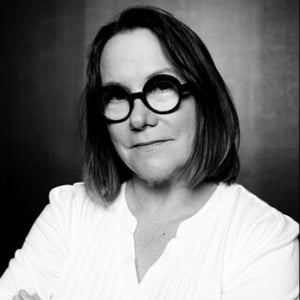
Independent Analyst, None
Allison Hayward most recently served as the Head of Case Selection at the Oversight Board. Previously, she was a Commissioner at the California Fair Political Practices Commission, a Board Member at the Office of Congressional Ethics, and an Assistant Professor of Law at George Mason University School of Law. She also previously worked as Chief of Staff and Counsel in the office of Federal Election Commission Commissioner Bradley A. Smith and practiced election law in California and in Washington DC.
In 1994-1995, Professor Hayward was a judicial clerk for the Honorable Danny J. Boggs, United States Court of Appeal for the Sixth Circuit.
She is a member of the State Bar of California and the District of Columbia Bar.
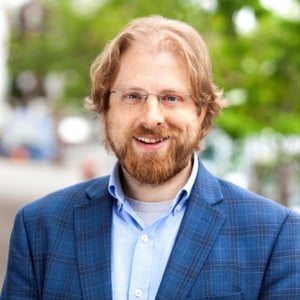
Senior Fellow and Academic Director, Penn Carey Law School
Gus Hurwitz is a Senior Fellow and the Academic Director of the Center for Technology, Innovation & Competition and the University of Pennsylvania Carey Law School where he is working to develop academic and scholarly programs at the intersecution of law, technology, and policy.
He is also Director of Law & Economics Programs at the International Center for Law & Economics (ICLE), a think tank based in Portland, Oregon, where he directs its law and economics-focused research program and helps to translate academic research into applied policy issues.
Hurwitz's research focuses on the regulation of technology, including administrative and regulatory law, antitrust law, torts and products liability, and media law - alongside cognate fields. Inrecent years he has worked on an AI standardization initiative with Seoul National University, a UNICEF-organized study of broadband deployment to public schools in Rwanda, and a book on conglomerate and ecosystems theories of antitrust.
He has published over 30 articles and book chapters, two books (one on cybersecurity law & policy, one on media regulation in the digital era) and have two more in process, over 100 shorter writings (op-eds, shorter analyses, blog posts, &c), hosted over 100 podcast episodes, and regularly appear or am quoted in popular media (including the NY Times, Wall Street Journal, Washington Post, and Associated Press). His work has been cited by legislators, federal courts of appeals, and federal regulatory agencies.
He was previously a full professor and founding director of the Governance & Technology Center at the University of Nebraska, prior to which he was the inaugural research fellow at the Center for Technology, Innovation & Competition (CTIC). From 2007 to 2010, he was a trial attorney with the U.S. Department of Justice Antitrust Division in the Telecommunications and Media Enforcement Section.
He also is, or has been, affiliated with the Classical Liberal Institute at New York University School of Law, the National Security Institute at George Mason University, and the American Enterprise Institute (AEI).
Before attending law school, Hurwitz worked at Los Alamos National Lab and interned at the Naval Research Lab. During this time his work was recognized by the Federal Laboratory Consortium, Los Alamos National Lab, IEEE & ACM, Corporation for Education Network Initiatives in California, R&D Magazine, and even the Guinness Book of World Records.
A current list of Hurwitz’s publications is available on his website: GusHurwitz.net.
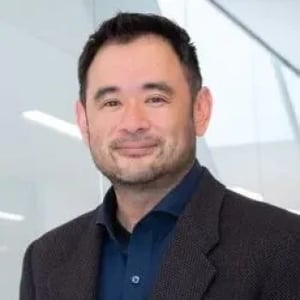
John Homer Kapp Professor of Law, Case Western Reserve University School of Law
Raymond Ku is the John Homer Kapp Professor of Law at Case Western Reserve University School of Law. He has also served as Associate Dean for Academic Affairs and Co-Director of Case’s Center for Law, Technology and the Art. He received his J.D., cum laude, from New York University School of Law where he was a Leonard Boudin First Amendment Fellow in the Arthur Garfield Hays Civil Liberties Program, and his A.B. with Honors from Brown University where he was the recipient of the Philo Sherman Bennet Prize for the best political science thesis discussing the principles of free government. Professor Ku clerked for the Honorable Timothy K. Lewis, United States Court of Appeals for the Third Circuit. He then practiced constitutional, intellectual property, and antitrust law with Gibson, Dunn & Crutcher, LLP, and First Amendment/media and intellectual property law with Levine Pierson Sullivan & Koch, L.L.P., both in Washington, D.C. He has taught at Cornell Law School, Seton Hall University School of Law, Thomas Jefferson School of Law, and St. Thomas University School of Law.
An internationally recognized scholar, Professor Ku writes on legal issues impacting individual liberty, creativity, and technology. His areas of expertise include Constitutional Law, Cyberlaw, Privacy and Copyright. His articles appear in the law reviews and journals of Berkeley, Chicago, Georgetown, Minnesota, Vanderbilt, and Wisconsin among others, and he is the lead author of the first casebook devoted exclusively to the study of cyberspace law. Professor Ku was the 2009 recipient of the Case Western Reserve University Law Alumni Association’s Distinguished Teacher Award, and voted Professor of the Year by the graduating class of 2009.
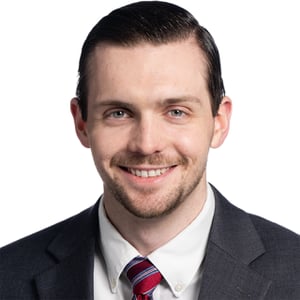
Senior Research Associate, Edwin Meese III Center for Legal and Judicial Studies, The Heritage Foundation
Seth Lucas is a Senior Research Associate at The Heritage Foundation’s Edwin Meese III Center for Legal and Judicial Studies. Before joining Heritage, Seth served as a Paralegal at Alliance Defending Freedom, where he supported attorneys in litigation across the United States that sought to advance academic freedom and religious liberty.
Seth is a graduate of Patrick Henry College and is currently enrolled as a part-time juris doctorate candidate at George Mason University’s Antonin Scalia Law School.
Independent Analyst, None
Allison Hayward most recently served as the Head of Case Selection at the Oversight Board. Previously, she was a Commissioner at the California Fair Political Practices Commission, a Board Member at the Office of Congressional Ethics, and an Assistant Professor of Law at George Mason University School of Law. She also previously worked as Chief of Staff and Counsel in the office of Federal Election Commission Commissioner Bradley A. Smith and practiced election law in California and in Washington DC.
In 1994-1995, Professor Hayward was a judicial clerk for the Honorable Danny J. Boggs, United States Court of Appeal for the Sixth Circuit.
She is a member of the State Bar of California and the District of Columbia Bar.

Chief Economist, The Phoenix Center for Advanced Legal & Economic Public Policy Studies
George S. Ford is the chief economist for the Phoenix Center for Advanced Legal and Economic Public Policy Studies, a nonprofit 501(c)(3) research organization that studies broad public-policy issues related to governance, social and economic conditions, with a particular emphasis on the law and economics of the digital age.
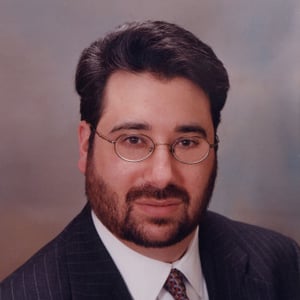
President, Phoenix Center for Advanced Legal and Economic Public Policy Studies
Lawrence J. Spiwak is President of the Phoenix Center for Advanced Legal & Economic Public Policy Studies, a non-profit 501(c)(3) organization that studies broad public-policy issues related to governance, social and economic conditions, with a particular emphasis on the law and economics of the digital age. Mr. Spiwak is a prolific scholar whose work is frequently cited by policymakers, major news media and academic journals around the world, and is in the top 1.3%of authors downloaded on the Social Science Research Network. Mr. Spiwak currently serves as the co-chair of the Federal Communications Bar Association’s (FCBA) committee responsible for overseeing the FEDERAL COMMUNICATIONS LAW JOURNAL and is a member of the program committee of the Telecommunications Policy Research Conference (“TPRC”). Mr. Spiwak is also the recipient of the FCBA’s Distinguished Service Award. Prior to joining the Phoenix Center, Mr. Spiwak was a Senior Attorney with the Competition Division in the FCC’s Office of General Counsel from 1994-1998. While in college, Mr. Spiwak was accepted into the Presidential Stay-In School program where he was responsible for delivering classified and confidential material among senior White House and Reagan Administration officials and received a full FBI security clearance. Mr. Spiwak received his B.A. with Special Honors from the George Washington University and his J.D. from the Benjamin N. Cardozo School of Law. Mr. Spiwak is a member in good standing of the bars of New York, Massachusetts, the District of Columbia, and the U.S. Court of Appeals for the D.C. Circuit.

Laurence A. Tisch Professor of Law and Director, Classical Liberal Institute, New York University School of Law; Senior Fellow, The Civitas Institute, University of Texas at Austin
Richard A. Epstein is the inaugural Laurence A. Tisch Professor of Law at NYU School of Law. Prior to his joining the faculty, he was a visiting law professor at NYU from 2007 through 2009. He served as the Peter and Kirstin Bedford Senior Fellow at the Hoover Institution from 2000 to 2024. Since 2024 to the present he is a senior lecturer at the Civitas Institute at the University of Texas—Austin. Epstein is also the James Parker Hall Distinguished Service Professor of Law Emeritus and a senior lecturer at the University of Chicago. His initial law school appointment was at the University of Southern California from 1968 to 1972. Epstein received an LL.D., h.c. from the University of Ghent, 2003. He has been a member of the American Academy of Arts and Sciences since 1985 and was a Senior Fellow of the Center for Clinical Medical Ethics at the University of Chicago Division of Biological Sciences, also from 1983. to 2022 He served as editor of the Journal of Legal Studies from 1981 to 1991, and of the Journal of Law and Economics from 1991-2001. From 2001 to 2010 he was a director of the John M. Olin Program in Law and Economics at the University of Chicago.
His newest book, The Myth of Birthright Citizenship: What the Fourteenth Amendment Really Says was published in 2026 (Encounter Books). Prior to that he has published many books including, The Dubious Morality of the Modern Administrative State (Roman & Littlefield 2020).Earlier he published th Classical Liberal Constitution: The Uncertain Quest for Limited Government (Harvard 2014) iHis previous books include Design for Liberty: Private Property, Public Administration and the Rule of Law (Harvard 2011); The Case Against the Employee Free Choice Act (Hoover 2009); Supreme Neglect: How to Revive the Constitutional Protection of Property Rights (Oxford 2008); Antitrust Decrees in Theory and Practice: Why Less is More (AEI 2007); Overdose: How Excessive Government Regulation Stifles Pharmaceutical Innovation (Yale University Press. 2006); How Progressives Rewrote the Constitution (Cato 2006); Cases and Materials on Torts (Aspen Law & Business; 8th ed. 2004); Skepticism and Freedom: A Modern Case for Classical Liberalism (University of Chicago, 2003); Torts (Aspen Law & Business 1999); Principles for a Free Society: Reconciling Individual Liberty with the Common Good (Perseus Books, 1998): Mortal Peril: Our Inalienable Rights to Health Care (Addison-Wesley, 1997); Simple Rules for a Complex World (Harvard, 1995); Bargaining With the State (Princeton, 1993); Forbidden Grounds: The Case Against Employment Discrimination Laws (Harvard , 1992); Takings: Private Property and the Power of Eminent Domain (Harvard, 1985); and Modern Products Liability Law (Greenwood Press, 1980). He has also edited(with Catherine M. Sharkey) Cases and Materials on the Law of Torts (10th edition 2012).
Professor Epstein has written numerous articles on a wide range of legal and interdisciplinary subjects. He has taught courses in administrative law, antitrust law, civil procedure, communications, constitutional law, contracts, corporations, criminal law, employment discrimination law, environmental law, food and drug law health law and policy, legal history, labor law, property, real estate development and finance, jurisprudence, labor law; land use planning, patents, individual, estate and corporate taxation, Roman Law; torts, and workers' compensation.
Professor Epstein also writes a regular column for Civitas Institute, which also sponsors his podcast, The Libertarian with Charles C.W. Cooke, and Law Talk, with Cooke and John Yoo. He also does a podcast with John Batchelor. And appears regularly on the Freedom File with Judge Andrew Napolitano.
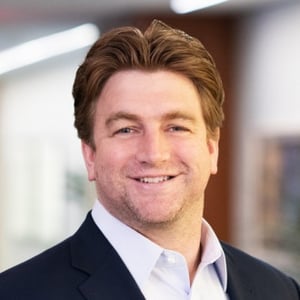
Founding Partner, Lodestar Law and Economics PLLC
Josh is the founder of Lodestar Law and Economics, PLLC. On January 1, 2013, the U.S. Senate unanimously confirmed Wright as a Commissioner of the Federal Trade Commission (FTC). He is a leading scholar in antitrust law, economics, intellectual property, regulation, and consumer protection, and has published more than 100 articles and book chapters, co-authored a leading antitrust casebook, and edited several book volumes focusing on these issues. Commentators have recognized Wright as “widely considered his generation’s greatest mind on antitrust law,” and his academic work ranks him as one of the most cited antitrust academics in the world. Wright was also awarded the Paul M. Bator Award by the Federalist Society in 2014 to “an academic who demonstrated excellence in legal scholarship, a commitment to teaching, a concern for students, and who has made a significant public impact.” Wright also served as the Executive Director of the Global Antitrust Institute, the world’s premiere academic institute focused upon antitrust education for judges and regulators and has taught hundreds of judges and thousands of regulators from dozens of countries.
Wright’s practice focuses upon helping clients solve complex competition, consumer protection, and regulatory problems by providing legal and economic analysis, strategic advice and counseling, and economic expert testimony.
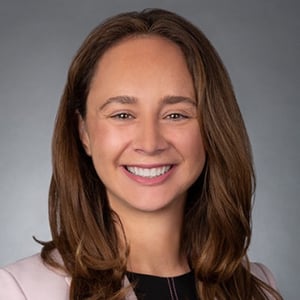
Partner, Kirkland & Ellis LLP
Elyse Dorsey is a partner in the Washington, D.C., office of Kirkland & Ellis LLP. Elyse's practice encompasses a wide array of antitrust and competition matters across the globe. She is uniquely situated to advise clients in domestic and international competition matters, given her combination of government and private practice experience.
Elyse has a focus in cutting edge competition issues, as well as privacy, data security, and consumer protection matters. She has represented clients across levels of government, from state agencies to the U.S. Supreme Court. Prior to joining Kirkland, Elyse served as Counsel to the Assistant Attorney General at the U.S. Department of Justice's Antitrust Division. Her work at the Antitrust Division covered a spectrum of legal and policy matters, including IP and technology issues, the Division's appellate and amicus brief programs, and its international and competition policy efforts. Elyse joined the Division from the U.S. Federal Trade Commission, where she served as Attorney Advisor to Commission Noah Joshua Phillips. While at the Commission, she advised on key cases, matters, and policies affecting industries across the economy--from digital and tech to pharmaceuticals and hospitals and more.
Elyse is a recognized thought leader in the antitrust and competition communities. She has been a frequent nominee and recipient of antitrust writing awards for her scholarship in this space. She has also served as an adjunct professor at George Mason University's Scalia Law School for several years, helping to launch their Antitrust LL.M. program; and she previously served as a visiting scholar at the University of Virginia.
Laurence A. Tisch Professor of Law and Director, Classical Liberal Institute, New York University School of Law; Senior Fellow, The Civitas Institute, University of Texas at Austin
Richard A. Epstein is the inaugural Laurence A. Tisch Professor of Law at NYU School of Law. Prior to his joining the faculty, he was a visiting law professor at NYU from 2007 through 2009. He served as the Peter and Kirstin Bedford Senior Fellow at the Hoover Institution from 2000 to 2024. Since 2024 to the present he is a senior lecturer at the Civitas Institute at the University of Texas—Austin. Epstein is also the James Parker Hall Distinguished Service Professor of Law Emeritus and a senior lecturer at the University of Chicago. His initial law school appointment was at the University of Southern California from 1968 to 1972. Epstein received an LL.D., h.c. from the University of Ghent, 2003. He has been a member of the American Academy of Arts and Sciences since 1985 and was a Senior Fellow of the Center for Clinical Medical Ethics at the University of Chicago Division of Biological Sciences, also from 1983. to 2022 He served as editor of the Journal of Legal Studies from 1981 to 1991, and of the Journal of Law and Economics from 1991-2001. From 2001 to 2010 he was a director of the John M. Olin Program in Law and Economics at the University of Chicago.
His newest book, The Myth of Birthright Citizenship: What the Fourteenth Amendment Really Says was published in 2026 (Encounter Books). Prior to that he has published many books including, The Dubious Morality of the Modern Administrative State (Roman & Littlefield 2020).Earlier he published th Classical Liberal Constitution: The Uncertain Quest for Limited Government (Harvard 2014) iHis previous books include Design for Liberty: Private Property, Public Administration and the Rule of Law (Harvard 2011); The Case Against the Employee Free Choice Act (Hoover 2009); Supreme Neglect: How to Revive the Constitutional Protection of Property Rights (Oxford 2008); Antitrust Decrees in Theory and Practice: Why Less is More (AEI 2007); Overdose: How Excessive Government Regulation Stifles Pharmaceutical Innovation (Yale University Press. 2006); How Progressives Rewrote the Constitution (Cato 2006); Cases and Materials on Torts (Aspen Law & Business; 8th ed. 2004); Skepticism and Freedom: A Modern Case for Classical Liberalism (University of Chicago, 2003); Torts (Aspen Law & Business 1999); Principles for a Free Society: Reconciling Individual Liberty with the Common Good (Perseus Books, 1998): Mortal Peril: Our Inalienable Rights to Health Care (Addison-Wesley, 1997); Simple Rules for a Complex World (Harvard, 1995); Bargaining With the State (Princeton, 1993); Forbidden Grounds: The Case Against Employment Discrimination Laws (Harvard , 1992); Takings: Private Property and the Power of Eminent Domain (Harvard, 1985); and Modern Products Liability Law (Greenwood Press, 1980). He has also edited(with Catherine M. Sharkey) Cases and Materials on the Law of Torts (10th edition 2012).
Professor Epstein has written numerous articles on a wide range of legal and interdisciplinary subjects. He has taught courses in administrative law, antitrust law, civil procedure, communications, constitutional law, contracts, corporations, criminal law, employment discrimination law, environmental law, food and drug law health law and policy, legal history, labor law, property, real estate development and finance, jurisprudence, labor law; land use planning, patents, individual, estate and corporate taxation, Roman Law; torts, and workers' compensation.
Professor Epstein also writes a regular column for Civitas Institute, which also sponsors his podcast, The Libertarian with Charles C.W. Cooke, and Law Talk, with Cooke and John Yoo. He also does a podcast with John Batchelor. And appears regularly on the Freedom File with Judge Andrew Napolitano.
Founding Partner, Lodestar Law and Economics PLLC
Josh is the founder of Lodestar Law and Economics, PLLC. On January 1, 2013, the U.S. Senate unanimously confirmed Wright as a Commissioner of the Federal Trade Commission (FTC). He is a leading scholar in antitrust law, economics, intellectual property, regulation, and consumer protection, and has published more than 100 articles and book chapters, co-authored a leading antitrust casebook, and edited several book volumes focusing on these issues. Commentators have recognized Wright as “widely considered his generation’s greatest mind on antitrust law,” and his academic work ranks him as one of the most cited antitrust academics in the world. Wright was also awarded the Paul M. Bator Award by the Federalist Society in 2014 to “an academic who demonstrated excellence in legal scholarship, a commitment to teaching, a concern for students, and who has made a significant public impact.” Wright also served as the Executive Director of the Global Antitrust Institute, the world’s premiere academic institute focused upon antitrust education for judges and regulators and has taught hundreds of judges and thousands of regulators from dozens of countries.
Wright’s practice focuses upon helping clients solve complex competition, consumer protection, and regulatory problems by providing legal and economic analysis, strategic advice and counseling, and economic expert testimony.

Courthouse Steps Decision: NetChoice Cases
Allison R. Hayward
Two cases involving NetChoice, a company that represents social media giants like Facebook, Twitter, Google,...
Déjà Vu all over again? The Return of Network Neutrality
Justin (Gus) Hurwitz, Raymond Ku
In 2002, under Chairman Michael Powell, the FCC passed the Cable Modem Order which classified...
Federal Law and State Common Law Preemption Questions at the Texas Supreme Court
Seth Lucas
Courts are divided on whether federal regulations of rail carriers preempt state common law negligence...
Courthouse Steps Oral Argument: NetChoice Cases
Allison R. Hayward
Two cases involving NetChoice, a company that represents social media giants like Facebook, Twitter, Google,...
Law and Economics of Net Neutrality
George Ford, Lawrence J. Spiwak
According to the Telecommunications Act of 1996, the policy of the United States shall be...
Topics
New Legal Analysis: Regulatory Implications of Turning Internet Platforms Into Common Carriers
The content moderation policies of major internet platforms like Facebook and X (formerly Twitter) have...
A Change in Direction for the Federal Trade Commission?
Lawrence J. Spiwak
While antitrust and regulation are supposed to be two sides of the same coin,[1] there...
Topics
In Response to Lawrence Spiwak
Recently, the Federalist Society published Mr. Lawrence Spiwak’s blog post aptly titled “In Response to...
Deep Dive Episode 162 – Is Common Carrier the Solution to Social-Media Censorship?
Richard A. Epstein, Joshua D. Wright, Elyse Dorsey
Recently, Big Tech companies have come under fire from all sides for their content moderation...
Is Common Carrier the Solution to Social-Media Censorship?
A Regulatory Transparency Project Webinar