

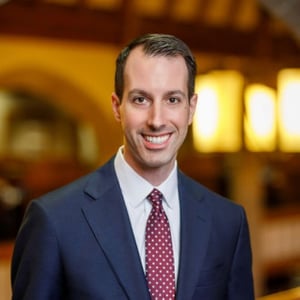
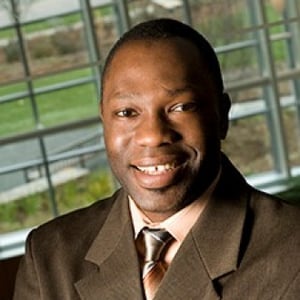
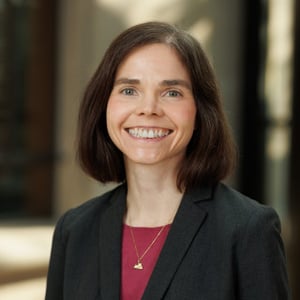
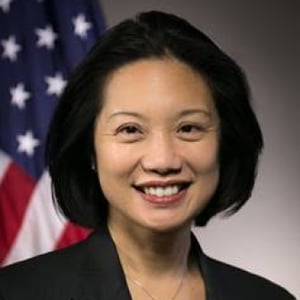
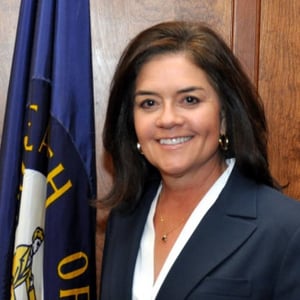
Tara Leigh Grove is the Vinson & Elkins Chair in Law at the University of Texas School of Law. Grove graduated summa cum laude from Duke University and magna cum laude from Harvard Law School, where she served as the Supreme Court Chair of the Harvard Law Review. Grove clerked for Judge Emilio Garza on the U.S. Court of Appeals for the Fifth Circuit, and then spent four years as an attorney for the U.S. Department of Justice, Civil Division, Appellate Staff, where she argued fifteen cases in the courts of appeals.
Grove’s research focuses on the federal judiciary, interpretive theory, and the constitutional separation of powers. She has published with such prestigious law journals as the Harvard Law Review, the Yale Law Journal, the Columbia Law Review, the University of Pennsylvania Law Review, the New York University Law Review, the University of Chicago Law Review, the Virginia Law Review, the Texas Law Review, the Cornell Law Review, the Northwestern University Law Review, and the Vanderbilt Law Review. Grove has received awards for both her research and her teaching.
In 2021, Grove served on the Presidential Commission on the Supreme Court of the United States, a bipartisan commission created by President Biden and charged with examining proposals for Supreme Court reform. Since 2022, Grove has worked on the Princeton Initiative on Reclaiming the Constitutional Powers of Congress, which brings together former members of Congress, political scientists, and law professors. Grove serves as the Co-Chair of the section on the Appointments Process for the Princeton Initiative. Grove is a co-author of Low & Jeffries' Federal Courts and the Law of Federal-State Relations, a leading federal courts casebook, and she has served as the Chair of the Federal Courts Section of the Association of American Law Schools. Grove has been a visiting professor at both Harvard Law School and Northwestern Pritzker School of Law.




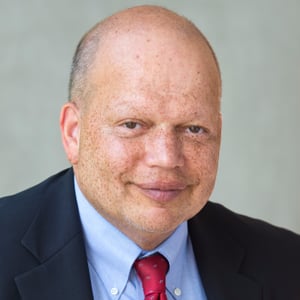







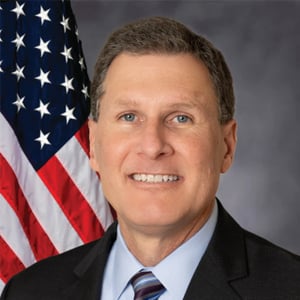
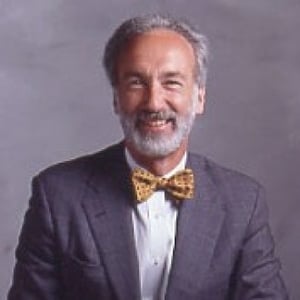
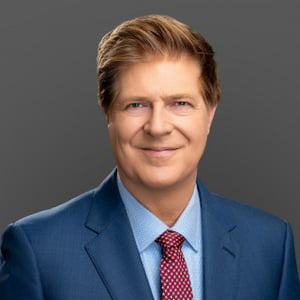
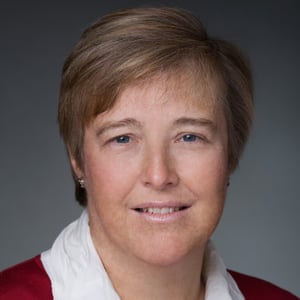




Panel: Is Everything Political?
Christian R. Burset, Guy-Uriel Charles, Tara Leigh Grove, Joshua Kleinfeld, Stephen E. Sachs
On January 3-4, 2020, the Federalist Society hosted its 22nd annual Faculty Conference at the...
Deep Dive Episode 71 – Accounting for Race 101: Virginia Universities and Racial Preferences
Althea Nagai, Hans A. Von Spakovsky, Theodore M. Shaw, Linda L. Chavez, Todd F. Gaziano
On September 10, 2019, The Federalist Society hosted a luncheon cosponsored with the Center...
Accounting for Race 101: Virginia Universities and Racial Preferences
Linda L. Chavez, Todd F. Gaziano, Will Hild, Althea Nagai, Theodore M. Shaw, Hans A. Von Spakovsky
On September 10, 2019, The Federalist Society hosted a luncheon cosponsored with the Center for...
Alphabet Soup: EEOC v. OCR v. DOL OFCCP
Gail L. Heriot, Erik S. Jaffe, Kenneth L. Marcus, Theodore M. Shaw, Timothy Taylor
The seventh annual Executive Branch Review Conference took place on May 8, 2019, at the...
Examining 21st Century Law Enforcement
Robert Hur, Jessie K. Liu, Dean Reuter, G. Zachary Terwilliger
The law enforcement landscape is ever-changing, with modern issues such as the challenges associated with electronically...
Fintech Licensing and the OCC Charter
Brian Knight, Margaret Liu
Innovations in financial technology have enabled financial services to be provided in new ways and...
Climate Change Nuisance Suits
David Bookbinder, John K. Bush, Eric Grant, James L. Huffman, Mark W. Smith
Should climate change responsibility be evaluated in the courts or by the elected policymaking branches?...
The Current Landscape of Telecommunications Law
Kathleen Ham, Nuala O'Connor, Ajit V. Pai, Jerry E. Smith, K. Dane Snowden, Jamie Susskind
The Trump administration has emphasized the importance of ensuring existing regulations are not stifling innovation...
Criminal Justice Trends and Potential Reform
Daniel Cameron, Robert M. Duncan, Andrew G. English, Lou Anna Red Corn, Danny C. Reeves
On October 29, 2018, the Federalist Society's Kentucky lawyers chapters hosted the second annual Kentucky...
The Student Right to Counsel
Mike S. Adams, KC Johnson, Adam Kissell
Note from the Editor: This article argues that a student right to counsel in quasi-criminal...