
Shareholder, Farney Daniels, PC
Jonathan B. Baker is Professor of Law at American University Washington College of Law, where he teaches courses primarily in the areas of antitrust and economic regulation. He served as the Chief Economist of the Federal Communications Commission from 2009 to 2011, and as the Director of the Bureau of Economics at the Federal Trade Commission from 1995 to 1998. Previously, he worked as a Senior Economist at the President’s Council of Economic Advisers, Special Assistant to the Deputy Assistant Attorney General for Economics in the Antitrust Division of the Department of Justice, an Assistant Professor at Dartmouth's Amos Tuck School of Business Administration, an Attorney Advisor to the Acting Chairman of the Federal Trade Commission, and an antitrust lawyer in private practice. Professor Baker is the co-author of an antitrust casebook, a past Editorial Chair of Antitrust Law Journal, and a past member of the Council of the American Bar Association’s Section of Antitrust Law. He has published widely in the fields of antitrust law and policy and industrial organization economics. In 2004 he received American University’s Faculty Award for Outstanding Scholarship, Research, and Other Professional Accomplishments, and in 1998 he received the Federal Trade Commission’s Award for Distinguished Service. He has a J.D. from Harvard and a Ph.D. in economics from Stanford University.
Richard W. Pogue Professor of Law, University of Michigan Law School
Professor Daniel Crane is the Richard W. Pogue Professor of Law. He served as the associate dean for faculty and research from 2013 to 2016. He teaches Contracts, Antitrust, Antitrust and Intellectual Property, and Legislation and Regulation.
Crane previously was a professor of law at Yeshiva University's Benjamin N. Cardozo School of Law and a visiting professor at New York University School of Law and the University of Chicago Law School. In spring 2009, he taught antitrust law on a Fulbright Scholarship at the Universidade Católica Portuguesa in Lisbon.
Crane's work has appeared in the University of Chicago Law Review, the California Law Review, the Michigan Law Review, the Georgetown Law Journal, and the Cornell Law Review, among other journals. He is the author of several books on antitrust law, including Antitrust (Aspen, 2014), The Making of Competition Policy: Legal and Economic Sources (Oxford University Press, 2013), and The Institutional Structure of Antitrust Enforcement (Oxford University Press, 2011).

Chief Judge, United States Court of Appeals, Fifth Circuit
Jennifer Walker Elrod is the Chief Judge of the United States Court of Appeals for the Fifth Circuit. She was nominated to the Fifth Circuit in 2007, and she served as a Circuit Judge on the court until assuming the role of Chief Judge in October 2024. Prior to serving as a Circuit Judge, Chief Judge Elrod was appointed and then twice elected Judge of the 190th District Court of Harris County, Texas, where she spent over five years presiding over more than 200 jury and non-jury trials.
Chief Judge Elrod graduated cum laude from Harvard Law School, where she was an active member of the Harvard Federalist Society, an Ames Moot Court finalist, and a Senior Editor of the Harvard Journal of Law & Public Policy. She clerked for the Honorable Sim Lake in the Southern District of Texas. Before serving as a judge, Chief Judge Elrod worked in private practice, focusing on civil litigation, antitrust, and employment matters.
She has been repeatedly recognized for her work as a jurist, as well as for her pro bono work and contributions to the community. She has been named the 2022 Texas Review of Law & Politics’ Jurist of the Year, the 2018 Harvard Federalist Society’s Alumni of the Year, the 2016–17 Texas Association of Civil Trial and Appellate Specialists’ Appellate Judge of the Year, and the 2008 Mexican-American Bar Association of Texas’s Judge of the Year.
Chief Judge Elrod is actively engaged in the academic and legal communities. Chief Judge Elrod currently serves on the Board of Directors and as the Jurist-in-Residence at the South Texas College of Law, where she teaches civil procedure and First Amendment law. She is also a member of the American Law Institute and of the Board of Advisors for the Harvard Journal of Law & Public Policy, and she is a former member of the Board of Regents of her alma mater, Baylor University, and the Board of Visitors at Brigham Young University Law School. She previously served as the Chair of the Codes of Conduct Committee for the Judicial Conference of the United States. She has also served as the M.D. Anderson Visiting Public Service Professor at the Texas Tech University School of Law and as Jurist-in-Residence at Brigham Young University Law School, and she has taught legal writing at the University of Houston Law Center. She presented the Lewis F. Powell, Jr. Distinguished Lecture at the Washington and Lee University School of Law and is a frequent speaker on the topics of trial and appellate procedure, ethics, employment law, and constitutional law. Chief Judge Elrod also serves on the board of the Garland R. Walker Inn of Court, and co-produces an annual musical CLE, for which her pupilage group has won multiple national awards.
Chief Judge Elrod’s publications include: Trial by Siri: AI Comes to the Courtroom; Don’t Mess with Texas Judges: In Praise of the State Judiciary; For Good: Enriching Your Practice and Your Life Through Pro Bono and Community Service; Is the Jury Still Out?: A Case for the Continued Viability of the American Jury; and W(h)ither the Jury? The Diminishing Role of the Jury Trial in our Legal System.
Partner, Cooley
Rob McDowell advises telecommunications, media and technology clients on their most significant regulatory, legal and business matters. As a former commissioner of the Federal Communications Commission (FCC) and a highly regarded industry leader, Rob has been at the forefront of the most complex and groundbreaking issues facing telecommunications.
Mr. McDowell was first appointed to the FCC by President George W. Bush in 2006 and again by President Obama in 2009. He was unanimously confirmed both times by the US Senate. During his tenure, Mr. McDowell led efforts to expand consumer access to spectrum through his work on the two largest wireless auctions in US history at the time, played a key role in the 2009 digital television transition and led efforts to establish the first federal civil rights rule in a generation by creating a ban on racially discriminatory practices in broadcast advertising. He also worked extensively on several large and complex mergers, including Sirius/XM and Comcast/NBC-Universal.
He is an advocate for internet freedom, serving on the US delegation to the 2012 World Conference on International Telecommunications and exposing an international bid to regulate vital aspects of the Internet through multilateral treaty-based organizations. Mr. McDowell authored an op-ed in the Wall Street Journal opposing multilateral internet regulation that led to a resolution passed unanimously in the House and Senate, as well as the ultimate defeat of the international bid at a treaty negation in Dubai later that year.
Prior to the FCC, Mr. McDowell was senior vice president for CompTel, the Competitive Telecommunications Association, where he led advocacy efforts before several government agencies, the White House and Congress.
Mr. McDowell is often called upon for speaking engagements and frequently appears on TV and radio. He has written opinion pieces for many high-profile publications, including the Wall Street Journal and Washington Post.
Partner, Antitrust and Competition, Wilson Sonsini Goodrich & Rosati
Maureen Ohlhausen is a partner in the Washington, D.C., office of Wilson Sonsini Goodrich & Rosati, where she advises industry-leading clients on complex antitrust and litigation matters, with a focus on high-profile cases. Sought after for her depth of experience on antitrust and Federal Trade Commission (FTC)-related issues, Maureen is known for her relationships with officials in the U.S. and abroad.
After finishing law school and clerking at the U.S. Court of Appeals for the D.C. Circuit, Maureen joined the FTC in 1997. She held a series of roles at the agency over the next 12 years, rising to the position of Director of the FTC Office of Policy Planning, where she led the agency’s work on e-commerce and headed the FTC’s Internet Access Task Force, which produced an influential report analyzing competition and consumer protection legal issues in the broadband and internet sectors. She then went into private practice at a leading telecommunications law firm, where she headed the FTC practice group.
In 2012, Maureen was confirmed by the Senate as a Commissioner of the FTC and was appointed Acting Chairman in January 2017, a role she held until May 2018. As Acting Chairman, Maureen directed all aspects of the agency’s antitrust work, including merger review, conduct enforcement, and all consumer protection enforcement, with an emphasis on privacy and technology issues. Under her leadership, the FTC won several influential merger challenges in court and reached a number of key digital privacy settlements.
To date, Maureen is the only FTC Commissioner to have received the Robert Pitofsky Lifetime Achievement Award in recognition of her contributions to the FTC.
Following the end of her term at the FTC, and immediately prior to joining Wilson Sonsini, Maureen was chair of the global antitrust and competition practice at Baker Botts, based in that firm’s Washington, D.C., office.
A recognized thought leader, Maureen is a frequent author and speaker, and is often quoted by leading print and broadcast media on antitrust, FTC, and privacy and data security matters. She has published dozens of articles on antitrust, privacy, intellectual property, regulation, FTC litigation, telecommunications, and international law issues in prestigious publications. During her tenure at the FTC and in private practice, she testified more than two dozen times before Congress, including before the Senate Commerce Committee and the House Energy and Commerce Antitrust Sub-Committee. She also testified before the Antitrust Modernization Commission.
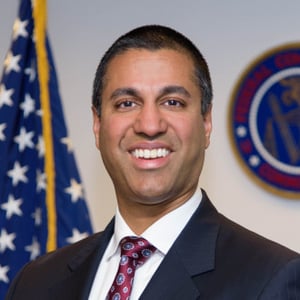
Nonresident Fellow, American Enterprise Institute
Ajit Pai, a former chairman of the Federal Communications Commission (FCC), is a nonresident fellow at the American Enterprise Institute, where he focuses on issues pertaining to technology and innovation, telecommunications regulatory policy, and market-based incentives for investment in broadband deployment. Concurrently, he is a partner at Searchlight Capital Partners, a global investment firm.
Mr. Pai’s distinguished career at the FCC includes two leadership roles following presidential appointments. He was appointed commissioner by President Barack Obama in 2012, designated chairman by President Donald Trump in 2017, and twice confirmed by the US Senate. While at the helm of the FCC, Mr. Pai had a transformative impact on the future of US technology and communications policy, implementing major initiatives to help close the digital divide; advance US leadership in 5G and other wireless technologies; promote innovation; protect consumers, public safety, and national security; and make the agency itself more open, transparent, and data-driven.
Earlier in his career, Mr. Pai served in various public-sector positions in the FCC’s Office of General Counsel, the US Department of Justice, the US Senate Judiciary Committee, and the US District Court for the Eastern District of Louisiana. He also worked as a partner at Jenner & Block and associate general counsel at Verizon Communications.
Mr. Pai graduated with honors from Harvard University, where he received a bachelor’s degree, and from the University of Chicago Law School, where he received a law degree and was an editor on the University of Chicago Law Review.

Co-Chairman, The Federalist Society for Law and Public Policy Studies
Leonard is Co-Chairman and former Executive Vice President of the Federalist Society, joining the organization over 25 years ago. Since that time he has been instrumental in helping the organization top 70,000, focusing on the growth of lawyers membership, operations and activities advancing limited, constitutional government. In addition to his work at the Society, Leonard has advised President Trump on judicial selection, assisted with the Gorsuch and Kavanaugh Supreme Court selection and confirmation process, and served as a member of the transition team. He also organized the outside coalition efforts in support of the Roberts and Alito U.S. Supreme Court confirmations. Leonard was appointed by President George W. Bush to three terms to the U.S. Commission on International Religious Freedom as chairman. He was also a U.S. Delegate to the UN Council and UN Commission on Human Rights during the Bush Administration. Leonard was the recipient of the 2009 Bradley Prize, along with the other founders and directors of the Federalist Society, for his work in advancing freedom and the rule of law. He is the coeditor of Presidential Leadership: Rating the Best and the Worst in the White House, as well as the author of opinion editorials in the New York Times,The Wall Street Journal, and Washington Post. Leonard holds degrees from Cornell University and Cornell Law School. He presently resides in Northern Virginia, where he and his wife Sally have raised their seven children.
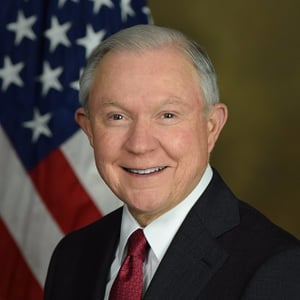
Former United States Attorney General
Jeff Sessions served as the 84th Attorney General of the United States from February 9, 2017 until November 7, 2018.
Prior to becoming Attorney General, Mr. Sessions served as a United States Senator for Alabama since 1996. As a United States Senator, he focused his energies on maintaining a strong military, upholding the rule of law, limiting the role of government, and providing tax relief to stimulate economic growth and to empower Americans to keep more of their hard-earned money.
Mr. Sessions was born in Selma, Alabama on December 24, 1946, and grew up in Hybart, the son of a country store owner. Growing up in the country, Sessions was instilled with certain core values – honesty, hard work, belief in God and parental respect – that define him today. In 1964, he became an Eagle Scout and thereafter received the Distinguished Eagle Scout Award. After attending school in nearby Camden, Sessions attended Huntingdon College in Montgomery, graduating with a Bachelor of Arts degree in 1969. He received a Juris Doctorate degree from the University of Alabama in 1973. Sessions served in the United States Army Reserve from 1973 to 1986, ultimately attaining the rank of Captain. He still considers that period to be one of the most rewarding chapters of his life.
Sessions’ interest in the law led to a distinguished legal career, first as a practicing attorney in Russellville, Alabama, and then in Mobile. Following a two-year stint as Assistant United States Attorney for the Southern District of Alabama (1975-1977), Sessions was nominated by President Reagan in 1981 and confirmed by the Senate to serve as the United States Attorney for the Southern District of Alabama, a position he held for 12 years. Sessions was elected Alabama Attorney General in 1995, serving as the State’s chief legal officer until 1996, when he entered the United States Senate.
Sessions and his wife, Mary Blackshear Sessions, originally of Gadsden, Alabama, have three children, Mary Abigail Reinhardt, Ruth Sessions Walk, and Sam. They have seven granddaughters, Jane Ritchie, Alexa, Gracie, Sophia, Hannah, Joanna, and Phoebe, and three grandsons, Jim Beau, Lewis, and Nicholas.
Senior Democratic Counsel, Communications and Technology Policy, U.S. House Committee on Energy and Commerce
Shawn Chang is currently Senior Democratic Counsel on Communications and Technology Policy for the Committee on Energy and Commerce of the U.S. House of Representatives serving Ranking Member Henry Waxman (D-CA).
Prior to joining Ranking Member Waxman’s staff, Shawn served as the deputy policy director of Free Press. He also served as legislative assistant to Rep. Tammy Baldwin (D-Wis.), Rep. Diane E. Watson (D-Calif.) and, Rep Patsy T. Mink (D-Hawaii). He holds his bachelor’s degree from the Georgetown University School of Foreign Service and received his J.D. from George Washington University Law School.
Policy Counsel, Consumers Union
Partner, Cooley
Rob McDowell advises telecommunications, media and technology clients on their most significant regulatory, legal and business matters. As a former commissioner of the Federal Communications Commission (FCC) and a highly regarded industry leader, Rob has been at the forefront of the most complex and groundbreaking issues facing telecommunications.
Mr. McDowell was first appointed to the FCC by President George W. Bush in 2006 and again by President Obama in 2009. He was unanimously confirmed both times by the US Senate. During his tenure, Mr. McDowell led efforts to expand consumer access to spectrum through his work on the two largest wireless auctions in US history at the time, played a key role in the 2009 digital television transition and led efforts to establish the first federal civil rights rule in a generation by creating a ban on racially discriminatory practices in broadcast advertising. He also worked extensively on several large and complex mergers, including Sirius/XM and Comcast/NBC-Universal.
He is an advocate for internet freedom, serving on the US delegation to the 2012 World Conference on International Telecommunications and exposing an international bid to regulate vital aspects of the Internet through multilateral treaty-based organizations. Mr. McDowell authored an op-ed in the Wall Street Journal opposing multilateral internet regulation that led to a resolution passed unanimously in the House and Senate, as well as the ultimate defeat of the international bid at a treaty negation in Dubai later that year.
Prior to the FCC, Mr. McDowell was senior vice president for CompTel, the Competitive Telecommunications Association, where he led advocacy efforts before several government agencies, the White House and Congress.
Mr. McDowell is often called upon for speaking engagements and frequently appears on TV and radio. He has written opinion pieces for many high-profile publications, including the Wall Street Journal and Washington Post.
Partner, Antitrust and Competition, Wilson Sonsini Goodrich & Rosati
Maureen Ohlhausen is a partner in the Washington, D.C., office of Wilson Sonsini Goodrich & Rosati, where she advises industry-leading clients on complex antitrust and litigation matters, with a focus on high-profile cases. Sought after for her depth of experience on antitrust and Federal Trade Commission (FTC)-related issues, Maureen is known for her relationships with officials in the U.S. and abroad.
After finishing law school and clerking at the U.S. Court of Appeals for the D.C. Circuit, Maureen joined the FTC in 1997. She held a series of roles at the agency over the next 12 years, rising to the position of Director of the FTC Office of Policy Planning, where she led the agency’s work on e-commerce and headed the FTC’s Internet Access Task Force, which produced an influential report analyzing competition and consumer protection legal issues in the broadband and internet sectors. She then went into private practice at a leading telecommunications law firm, where she headed the FTC practice group.
In 2012, Maureen was confirmed by the Senate as a Commissioner of the FTC and was appointed Acting Chairman in January 2017, a role she held until May 2018. As Acting Chairman, Maureen directed all aspects of the agency’s antitrust work, including merger review, conduct enforcement, and all consumer protection enforcement, with an emphasis on privacy and technology issues. Under her leadership, the FTC won several influential merger challenges in court and reached a number of key digital privacy settlements.
To date, Maureen is the only FTC Commissioner to have received the Robert Pitofsky Lifetime Achievement Award in recognition of her contributions to the FTC.
Following the end of her term at the FTC, and immediately prior to joining Wilson Sonsini, Maureen was chair of the global antitrust and competition practice at Baker Botts, based in that firm’s Washington, D.C., office.
A recognized thought leader, Maureen is a frequent author and speaker, and is often quoted by leading print and broadcast media on antitrust, FTC, and privacy and data security matters. She has published dozens of articles on antitrust, privacy, intellectual property, regulation, FTC litigation, telecommunications, and international law issues in prestigious publications. During her tenure at the FTC and in private practice, she testified more than two dozen times before Congress, including before the Senate Commerce Committee and the House Energy and Commerce Antitrust Sub-Committee. She also testified before the Antitrust Modernization Commission.

Judge, U.S. Court of Appeals, District of Columbia Circuit
Judge Sentelle was appointed United States Circuit Judge in October 1987, served as Chief Judge from February 11, 2008 until February 11, 2013, and took senior status on February 12, 2013. He is a 1968 graduate of the University of North Carolina Law School. Following law school, he practiced with the firm of Uzzell & DuMont until he became an Assistant U.S. Attorney in Charlotte, N.C. in 1970. From 1974 to 1977, he served as a North Carolina State District Judge but left the bench in 1977 to become a partner with the firm of Tucker, Hicks, Sentelle, Moon & Hodge. In 1985, Judge Sentelle joined the U.S. District Court, Western District of North Carolina, in Asheville, where he served until his appointment to the D.C. Circuit. Judge Sentelle was the Presiding Judge of the Special Division for the Purpose of Appointing Independent Counsels (1992-2006). He also served as the Chair of the U.S. Judicial Conference's Executive Committee (2010-2013). Judge Sentelle served for over 20 years as President of the Edward Bennett Williams Inn of the American Inns of Court.
Executive Vice President of Public Affairs, Policy and Communica, Verizon Communications
Thomas J. Tauke is executive vice president - Public Affairs, Policy and Communications, a position he has held since May 2004. In this role, Tauke oversees media relations, employee communications, reputation management, philanthropy, corporate responsibility and external relations for Verizon. As the company's senior policy executive, he is responsible for the development of Verizon's public policy positions and advocacy at the local, state, federal, and international levels. He serves as a member of Verizon's Leadership Council.
Before joining NYNEX (a predecessor company of Verizon) in 1991, Tauke was a member of Congress, representing Iowa's Second Congressional District in the United States House of Representatives. During his congressional service from 1979 to 1991, he was a member of the Telecommunications Subcommittee. He served on the Energy and Commerce, Education and Labor, and Small Business Committees, as well as the Select Committee on Aging. He also was on the Pepper Commission on Comprehensive Health Care, the Infant Mortality Commission and the Biomedical Ethics Board.
Tauke served as a member of the Iowa General Assembly from 1975 to 1979.
Tauke is a past chairman of the U.S. Telecom Association where he is currently on the Board of Directors and is a member of the executive committee. He is chairman of the board of Home Technology Systems, Inc., in Dubuque, Iowa; serves as vice-chair of the Board of the Business Industry Political Action Committee; is member of the Board of Directors of Connected Nation, which partners with public and private entities to encourage broadband connectivity, and serves as chair of the Executive Committee of the Board of Jobs for America's Graduates, an organization that supports mentoring, job-training and education for young people; sits on the board of the U.S. Chamber of Commerce; and is chairman of the Board of Regents of Loras College in Dubuque, Iowa.
Tauke received a Bachelor of Arts degree from Loras College in 1972 and a Juris Doctorate from the University of Iowa College of Law in 1974.
Tauke and his wife, Beverly, have two children, Joseph and Elizabeth.
Partner, Mayer Brown LLP
Howard Waltzman focuses his practice on communications and Internet law and commercial transactions in the United States and other key international markets. He represents some of the nation's leading communications service providers, manufacturers, and trade associations in commercial transactions, as well as in regulatory and legislative matters, including with respect to Internet services, spectrum policy, privacy, video programming, wireline competition, and communications-related homeland security. He also represents investors on these and other communications-related matters.
Howard's experience includes drafting regulatory pleadings, comments and license applications; legislation, Congressional testimony, and legislative history; and commercial agreements. He appears personally before Members of Congress, Cabinet department officials, FCC Commissioners, and key Congressional and FCC staff. Howard also advises clients and assists them in presenting their positions during major FCC rulemakings, throughout the legislative process, and in the context of commercial transactions. He represents clients on matters involving the International Telecommunication Union's rules and procedures.
Prior to joining Mayer Brown in 2007, Howard served as Chief Counsel, Telecommunications and the Internet, for the U.S. House Energy and Commerce Committee (2003-2006) and as Telecommunications Counsel (2001-2003). Prior to working for the House Energy and Commerce Committee, he served as General Counsel for Senator Sam Brownback (1996-2001).
General Counsel, Hyperloop One
Marvin Ammori is the General Counsel of Hyperloop One.
He is widely regarded as one of the top lawyers and political strategists in the US, and is best known for leading the most important, successful, and unlikely political victories determining the Internet’s future, including the net neutrality campaigns. Time Magazine calls him “a prominent First Amendment lawyer and Internet policy expert,” the San Jose Mercury News calls him “a well-known advocate for Internet freedom,” while Fast Company calls him Silicon Valley’s “go-to First Amendment guy.” In private practice, he has represented Apple, Google, Dropbox, eBay, Automattic, Tumblr, Twitter, the National Association of Realtors, and others. He helped them stop “inevitable” legislation and to overcome widely believed “impossible” odds on issues of international significance, even when few in DC saw a path to victory.
For his pioneering work advancing Internet freedom, Ammori has been named to POLITICO 50’s “list of thinkers, doers, and dreamers” “transforming politics,” Washingtonian Magazine’s “Tech Titans,” Fast Company Magazine’s “100 Most Creative People in Business,” one of the top five tech lawyers by the World Technology Network, and is a recipient of the Nyan Cat Medal of Internet Awesomeness. His work has been profiled on the front pages of the Philadelphia Inquirer, the Wall Street Journal, and the Washington Post.
Ammori helped lead the online movement that killed the proposed SOPA bill in 2012 as well as the movements defending network neutrality. He was a key organizational and intellectual force behind the FCC’s Comcast/BitTorrent decision in 2008 (he authored the complaint) and the key advocate behind the White House and FCC’s decision to back strong “Title II” rules in 2015. Etsy CEO Chad Dickerson has called him the “net neutrality whisperer”; Tim Wu wrote that Ammori “deserves enormous credit for leading the march to Title II”; and Kickstarter’s communications head declared that, “No one deserves more credit for the Net neutrality victory than” Ammori. Reviewing the decade-long fight for net neutrality, Salon’s Matt Stoller wrote, “if there’s one person who really operated with superb strategic insight and tenacity this whole time, it would be superlawyer Marvin Ammori.”
Ammori has published articles in the New York Times, USA Today, the Atlantic, Wired, Slate, Forbes, and the Harvard Law Review, and authored a book On Internet Freedom. He has appeared as an expert on CNN, MSNBC, ABC, NPR, and other TV and radio outlets. Ammori has also keynoted conferences in Germany, Portugal, Brussels, Taiwan, has spoken at TEDx U-Michigan,three Federalist Society National Lawyer Conventions, and has testified before several government bodies.
Ammori has also served as a Senior Fellow to the Democracy Fund, as well as a Future Tense and Schwartz Fellow at New America, one of the nation’s most prominent think tanks. He serves on the boards of the nonprofit advocacy groups Fight for the Future, Demand Progress, and Engine Advocacy. He also serves as an Affiliate Scholar of the Stanford Law School Center for Internet & Society. Ammori was a Term Member of the Council on Foreign Relations and a Fellow of the Americas Business Council Foundation. In 2008, he served as an advisor to the Obama campaign and the transition team.
Chief Judge, United States Court of Appeals, Fifth Circuit
Jennifer Walker Elrod is the Chief Judge of the United States Court of Appeals for the Fifth Circuit. She was nominated to the Fifth Circuit in 2007, and she served as a Circuit Judge on the court until assuming the role of Chief Judge in October 2024. Prior to serving as a Circuit Judge, Chief Judge Elrod was appointed and then twice elected Judge of the 190th District Court of Harris County, Texas, where she spent over five years presiding over more than 200 jury and non-jury trials.
Chief Judge Elrod graduated cum laude from Harvard Law School, where she was an active member of the Harvard Federalist Society, an Ames Moot Court finalist, and a Senior Editor of the Harvard Journal of Law & Public Policy. She clerked for the Honorable Sim Lake in the Southern District of Texas. Before serving as a judge, Chief Judge Elrod worked in private practice, focusing on civil litigation, antitrust, and employment matters.
She has been repeatedly recognized for her work as a jurist, as well as for her pro bono work and contributions to the community. She has been named the 2022 Texas Review of Law & Politics’ Jurist of the Year, the 2018 Harvard Federalist Society’s Alumni of the Year, the 2016–17 Texas Association of Civil Trial and Appellate Specialists’ Appellate Judge of the Year, and the 2008 Mexican-American Bar Association of Texas’s Judge of the Year.
Chief Judge Elrod is actively engaged in the academic and legal communities. Chief Judge Elrod currently serves on the Board of Directors and as the Jurist-in-Residence at the South Texas College of Law, where she teaches civil procedure and First Amendment law. She is also a member of the American Law Institute and of the Board of Advisors for the Harvard Journal of Law & Public Policy, and she is a former member of the Board of Regents of her alma mater, Baylor University, and the Board of Visitors at Brigham Young University Law School. She previously served as the Chair of the Codes of Conduct Committee for the Judicial Conference of the United States. She has also served as the M.D. Anderson Visiting Public Service Professor at the Texas Tech University School of Law and as Jurist-in-Residence at Brigham Young University Law School, and she has taught legal writing at the University of Houston Law Center. She presented the Lewis F. Powell, Jr. Distinguished Lecture at the Washington and Lee University School of Law and is a frequent speaker on the topics of trial and appellate procedure, ethics, employment law, and constitutional law. Chief Judge Elrod also serves on the board of the Garland R. Walker Inn of Court, and co-produces an annual musical CLE, for which her pupilage group has won multiple national awards.
Chief Judge Elrod’s publications include: Trial by Siri: AI Comes to the Courtroom; Don’t Mess with Texas Judges: In Praise of the State Judiciary; For Good: Enriching Your Practice and Your Life Through Pro Bono and Community Service; Is the Jury Still Out?: A Case for the Continued Viability of the American Jury; and W(h)ither the Jury? The Diminishing Role of the Jury Trial in our Legal System.
Partner, Cooley
Rob McDowell advises telecommunications, media and technology clients on their most significant regulatory, legal and business matters. As a former commissioner of the Federal Communications Commission (FCC) and a highly regarded industry leader, Rob has been at the forefront of the most complex and groundbreaking issues facing telecommunications.
Mr. McDowell was first appointed to the FCC by President George W. Bush in 2006 and again by President Obama in 2009. He was unanimously confirmed both times by the US Senate. During his tenure, Mr. McDowell led efforts to expand consumer access to spectrum through his work on the two largest wireless auctions in US history at the time, played a key role in the 2009 digital television transition and led efforts to establish the first federal civil rights rule in a generation by creating a ban on racially discriminatory practices in broadcast advertising. He also worked extensively on several large and complex mergers, including Sirius/XM and Comcast/NBC-Universal.
He is an advocate for internet freedom, serving on the US delegation to the 2012 World Conference on International Telecommunications and exposing an international bid to regulate vital aspects of the Internet through multilateral treaty-based organizations. Mr. McDowell authored an op-ed in the Wall Street Journal opposing multilateral internet regulation that led to a resolution passed unanimously in the House and Senate, as well as the ultimate defeat of the international bid at a treaty negation in Dubai later that year.
Prior to the FCC, Mr. McDowell was senior vice president for CompTel, the Competitive Telecommunications Association, where he led advocacy efforts before several government agencies, the White House and Congress.
Mr. McDowell is often called upon for speaking engagements and frequently appears on TV and radio. He has written opinion pieces for many high-profile publications, including the Wall Street Journal and Washington Post.

David McIntosh is a leader for the principles of limited constitutional government and individual freedom. He is president of the Club for Growth, the leading advocate for economic liberty.
Former Congressman David McIntosh represented Indiana's 2nd Congressional District in the United States Congress from 1995-2001. As a Freshman, David chaired the Subcommittee on Regulatory Relief. He passed the Congressional Review Act and held extensive oversight and field hearings to build a record of public support for regulatory relief initiatives in energy, biotechnology, pharmaceutical, healthcare, transportation and technology sectors. Another issue that he championed was the elimination of the marriage penalty in the Federal Tax Code.
David served during the Reagan administration as special assistant to Attorney General Edwin Meese III, and as special assistant to President Reagan for Domestic Affairs. During the first Bush administration, he served as executive director of the President's Council on Competitiveness and assistant to the Vice President. The Competitiveness Council coordinated the cost/benefit review of major regulations and promoted legal reform measures.
David is a co-founder of the Federalist Society for Law and Public Policy and serves on the Board of Directors. He remains active with several free market and conservative think tanks and grassroots organizations. David has also had stints at the Hudson Institute and as a Professor of Economics at Ball State School of Business.
Prior to the Club for Growth, David was a partner at Mayer Brown, LLP in Washington, DC.
David graduated from the University of Chicago Law School in 1983, and Yale University, BA, cum laude, in 1980. He and his wife, Ruthie, are the proud parents of Ellie age 17 and Davey age 13.
President & CEO, National Cable & Telecommunications Association
President and Co-Founder, Public Knowledge
Gigi Sohn is an internationally known communications attorney. In September 2001, she founded Public Knowledge with Laurie Racine (then President of the Center for the Public Domain) and activist/author David Bollier.
Gigi serves as PK's chief strategist, fundraiser and public face. She is frequently quoted in the New York Times, Washington Post and Wall Street Journal, as well as in trade and local press. Gigi has been published in the Washington Post, Variety, CNET and Legal Times. In addition, she has appeared on numerous television and radio programs, including the Today Show, The McNeil-Lehrer Report, C-SPAN's Washington Journal and National Public Radio's All Things Considered and Morning Edition.
Gigi is a Senior Adjunct Fellow at the Silicon Flatirons Center for Law, Technology and Entrepreneurship at the University of Colorado and a Senior Fellow at the University of Melbourne Faculty of Law, Graduate Studies Program in Australia. She has been a Non-Resident Fellow at the University of Southern California Annenberg Center, and an Adjunct Professor at Georgetown University and at the Benjamin N. Cardozo School of Law, Yeshiva University.
Gigi served as a Project Specialist in the Ford Foundation's Media, Arts and Culture unit and as Executive Director of the Media Access Project, a public interest law firm that represents citizens' rights before the FCC and the courts. In 1997, President Clinton appointed Gigi to serve as a member of his Advisory Committee on the Public Interest Obligations of Digital Television Broadcasters. In May 2006, the Electronic Frontier Foundation gave Gigi its Internet "Pioneer" Award.
Gigi currently serves on the board of the Telecommunications Policy Research Conference (TPRC) and Broadcasters' Child Development Center (BCDC). She is a member of the advisory board of the Future of Music Coalition and the Center for Public Integrity's "Well Connected" Telecommunications Project. Gigi served on the District of Columbia Bar Board of Governors from 1997-2000.
Gigi holds a B.S. in Broadcasting and Film, Summa Cum Laude, from the Boston University College of Communication and a J.D. from the University of Pennsylvania Law School.
Burton Craige Distinguished Professor of Jurisprudence, UNC School of Law
Michael Gerhardt joined the Carolina Law faculty in 2005 and serves as the Burton Craige Distinguished Professor of Jurisprudence. His teaching and research focuses on constitutional conflicts between presidents and Congress. Gerhardt is the author of six books, including leading treatises on impeachment, appointments, presidential power, Supreme Court precedent, and separation of powers. He has written more than a hundred law review articles and dozens of op eds in the nation’s leading news publications, including SCOTUSblog, The New York Times, and Washington Post. His book, The Forgotten Presidents (Oxford University Press 2013), was named by The Financial Times as one of the best non-fiction books of 2013. He was inducted into the American Law Institute in 2016. Gerhardt attended the University of Chicago Law School, where he graduated order of the coif and served as a research assistant to both Phil Kurland and Cass Sunstein and as one of the two student editors of The Supreme Court Review. After law school, he clerked for Chief District Judge Robert McRae of the U.S. District Court of the Western District of Tennessee and Judge Gilbert Merritt of the U.S. Court of Appeals for the Sixth Circuit. He served as Deputy Media Director of Al Gore’s first Senate campaign, practiced law for three years for two boutique litigation firms in Washington and Atlanta, and taught for more than a decade at William & Mary Law School before joining Carolina Law.
Gerhardt’s extensive public service has included his testifying more than a dozen times before Congress, including as the only joint witness in the Clinton impeachment proceedings in the House; speaking behind closed doors to the entire House of Representatives about the history of impeachment in 1998; and serving as special counsel to the Senate Judiciary Committee for seven of the nine sitting Supreme Court justices. In 2015, he became the first legal scholar to be asked by the Library of Congress to serve as its principal adviser in revising the official United States Constitution Annotated. In 2019, the Order of the Coif named Gerhardt as its Distinguished Visitor for 2020, an award given to only one law professor each year for outstanding legal scholarship.

Former President & CEO, The Federalist Society for Law and Public Policy Studies
Eugene B. Meyer, former President and CEO of the Federalist Society, has served as Executive Director, CEO, and/or President of the organization for more than 40 years. He is responsible for shepherding the organization from a small group of law students to a community of 90,000 lawyers, law students, academics, judges, and others interested in the rule of law. The Society now includes a Student Chapter at nearly every ABA-accredited law school in the country and Lawyers Chapters in 220 major cities across the nation. Gene earned his B.A. in history at Yale in 1975 and his M.A. in political science from the London School of Economics in 1976. Gene currently serves on the boards of the U.S. Chess Center, the Holman Foundation, the Sarah Scaife Foundation, and the advisory board of the Adam Smith Society. He holds the title of International Chess Master.
Writer, Washington Bureau, Los Angeles Times
David G. Savage has covered the Supreme Court and legal issues for the Los Angeles Times in the Washington bureau since 1986. He has covered the Senate confirmation hearings for all of the nine justices, from Antonin Scalia to Elena Kagan. In addition to writing about the court’s work, he has written on the legal battles that have raged in Washington, from the Clinton impeachment in the 1990s to the Florida recount after 2000 presidential election, the “war on terrorism” in the years after the 9/11 attacks, and more recently, on voting rights and gay marriage. He joined The Times in 1981 and was an education writer on the Metro staff for five years.
Former United States Senator, Commonwealth of Pennsylvania
Partner, Wise Carter Child & Caraway -- Jackson, Miss.

Distinguished Senior Fellow and Antonin Scalia Chair in Constitutional Studies, Ethics and Public Policy Center
Edward Whelan is a Distinguished Senior Fellow of the Ethics and Public Policy Center and holds EPPC’s Antonin Scalia Chair in Constitutional Studies. He is the longest-serving President in EPPC’s history, having held that position from March 2004 through January 2021.
Mr. Whelan directs EPPC’s program on The Constitution, the Courts, and the Culture. His areas of expertise include constitutional law and the judicial confirmation process. As a contributor to National Review Online’s Bench Memos blog, he has been a leading commentator on nominations to the Supreme Court and the lower courts and on issues of constitutional law. He has written essays and op-eds for leading newspapers—including the Wall Street Journal, the New York Times, and the Washington Post—opinion journals, and academic symposia and law reviews. The National Law Journal has named Mr. Whelan among its “Champions and Visionaries” in the practice of law in D.C.
Mr. Whelan is co-editor of three volumes of Supreme Court Justice Antonin Scalia’s work: Scalia Speaks: Reflections on Law, Faith, and Life Well Lived (Crown Forum, 2017), a New York Times bestselling collection of speeches by Justice Scalia; On Faith: Lessons from an American Believer (Crown Forum, 2019), a collection of Justice Scalia’s writings on faith and religion; and The Essential Scalia: On the Constitution, the Courts, and the Rule of Law (Crown Forum, 2020), a collection of Justice Scalia’s views on legal issues.
Mr. Whelan, a lawyer and a former law clerk to Justice Scalia, has served in positions of responsibility in all three branches of the federal government. From just before the terrorist attacks of September 11, 2001, until joining EPPC in 2004, Mr. Whelan was the Principal Deputy Assistant Attorney General for the Office of Legal Counsel in the U.S. Department of Justice. In that capacity, he advised the White House Counsel’s Office, the Attorney General and other senior DOJ officials, and departments and agencies throughout the executive branch on difficult and sensitive legal questions. Mr. Whelan previously served on Capitol Hill as General Counsel to the U.S. Senate Committee on the Judiciary. In addition to clerking for Justice Scalia, he was a law clerk to Judge J. Clifford Wallace of the U.S. Court of Appeals for the Ninth Circuit.
In 1981 Mr. Whelan graduated with honors from Harvard College and was inducted into Phi Beta Kappa. He received his J.D. magna cum laude in 1985 from Harvard Law School, where he was a member of the Board of Editors of the Harvard Law Review.
For more on Mr. Whelan’s background, see this interview.
Professor of Law, University of Colorado Law School
Paul Campos left a position with a Chicago law firm to begin his teaching career at Colorado Law School in 1990. As a scholar, he has focused on constitutional law and legal theory. His graduate studies in English literature, which culminated in a thesis on Shakespeare's King Lear, provided him with rigorous training in literary theory that has been helpful in his current work in constitutional interpretation. He has written several well-regarded law review articles in this area, including "Against Constitutional Theory," published in the Yale Journal of Law and Humanities, and "Advocacy in Scholarship," published in the California Law Review. Both of these articles have been noted as major critiques of the political and normative orientation of current constitutional theory. Professor Campos' regular column for the Rocky Mountain News (distributed by the Scripps Howard News Service), written for a general audience on political, social, and legal issues, has developed a considerable following. A packed house, drawn by his provocative take on a wide range of topics, attended his presentation of the 27th Annual Austin W. Scott, Jr. Lecture entitled "The Obesity Myth & The Lewinsky Scandal," which was based on his latest book project. His second book, Jurismania: The Madness of American Law, critiques the American legal system. Professor Campos also served as the first director of CU law school's Byron R. White Center for the Study of American Constitutional Law.

U.S. Court of Appeals, Seventh Circuit
Frank H. Easterbrook is a judge of the United States Court of Appeals for the Seventh Circuit and a Senior Lecturer at the Law School of the University of Chicago. He was Chief Judge from 2006–2013. Before joining the court in 1985, he was the Lee andBrena Freeman Professor of Law at the University of Chicago, where he taught and wrote in antitrust, securities, corporate law, jurisprudence, and criminal procedure. He has published The Economic Structure of Corporate Law (with Daniel R. Fischel) and about 100 scholarly articles. He served as Co-Editor of the Journal of Law and Economics from 1982 to 1991 and as a member of the Judicial Conference’s Standing Committee on Rules of Practice and Procedure from 1991 to 1997. Before joining the faculty of the Law School in 1979, Judge Easterbrook was Deputy Solicitor General of the United States. He holds degrees from Swarthmore College (B.A. with high honors, 1970) and the University of Chicago (J.D. cum laude, 1973), and is a member of the American Academy of Arts and Sciences, the American Law Institute, the Mont Pelerin Society, Phi Beta Kappa, and the Order of the Coif.
President, The Catholic University of America

Professor of Law, University of San Diego School of Law
Maimon Schwarzschild is Professor of Law at the University of San Diego, where he has taught
since 1982. He has published extensively on constitutional law, jurisprudence, law and religion,
and civil rights. He is an English barrister and an American lawyer: he was an attorney in the
Civil Rights Division of the US Department of Justice from 1976 to 1981 and practised as a
barrister in London in the 1980s. He was a visiting professor at the Sorbonne for several years,
and has been a visiting professor at the Hebrew University in Jerusalem. He is a Director of the
Institute of Law and Religion at the University of San Diego and a member of the editorial board
of Law and Philosophy. With Gail Heriot he recently co-edited a volume entitled “A Dubious
Expediency: How Race Preferences Damage Higher Education”, published by Encounter Books.
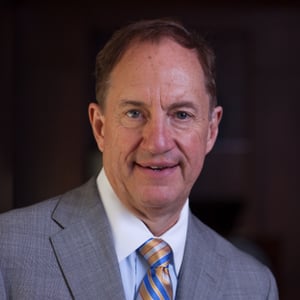
Dean and Professor of Law, Widener University Delaware School of Law
Rod Smolla is Dean and Professor of Law at the Delaware Law School of Widener University, in Wilmington, Delaware. He was previously the 11th President of Furman University, in Greenville, South Carolina, the Dean of the Law School at Washington and Lee University Law School, the Dean of the University of Richmond Law School, the Director of the Institute of Bill of Rights Law at the College of William and Mary, and Senior Fellow and Project Director of the Washington Annenberg Program of Northwestern University. He has also been a faculty member at the DePaul, University of Illinois, and University of Arkansas law schools, and a visiting professor at the Duke, University of Georgia, University of Indiana, Denver University, and University of Melbourne law schools. As an educator, he has been an advocate for experiential learning, including greater emphasis on helping law students develop skills relating to counseling, problem-solving, negotiation, drafting, advocacy, civic engagement, pro bono service, legal ethics, and professionalism. He has emphasized diversity and community outreach and important institutional missions in higher education and legal education.
Smolla is a nationally-known scholar on matters relating to constitutional law, civil rights, freedom of speech, and mass media, particularly matters relating to libel and privacy. He is the author of five multi-volume legal treatises, all published by Thomson Reuters, which are updated twice annually: Law of Defamation; Smolla and Nimmer on Freedom of Speech; Rights and Liabilities in Media Content, Internet, Broadcast, and Print; Federal Civil Rights Acts; and, Law of Lawyer Advertising. He is also author of The First Amendment: Freedom of Expression, Regulation of Mass Media, Freedom of Religion (Carolina Academic Press 1999) (a law school casebook); and co-author of Constitutional Law: Structure and Rights in Our Federal System (6th Edition, 2010, with Dean William Banks). He is the editor each year of the First Amendment Law Handbook, published annually by Thomson Reuters. He was also editor of The Copyright Law Anthology published by Thomson Reuters. He is also the author of may trade and university press books, including Suing the Press: Libel, the Media, and Power (Oxford University Press 1986) (won ABA Silver Gavel Award Certificate of Merit); Jerry Falwell v. Larry Flynt: The First Amendment on Trial (St. Martin's Press 1988); Free Speech in an Open Society (Alfred A. Knopf 1992) (winner of the William O. Douglas Award); Deliberate Intent: A Lawyer Tells the True Story of Murder by the Book (Crown Publishers 1999) (made into a television movie by FX, with Timothy Hutton playing the role of Rod Smolla); The Constitution Goes to College (New York University Press 2010). He was editor of A Year in the Life of the Supreme Court (Duke University Press 1995) (won ABA Civil Gavel Award). Smolla has published over 100 articles in law reviews and other publications.
Smolla has served as Chairman of the Association of American Law Schools Section on Defamation and Privacy Law, as Chairman of the Association of American Law Schools Section on Mass Communications Law, as a member of the American Bar Association Advisory Committee to the Forum on Mass Communications Law, and as a member of the First Amendment Advisory Board to the Media Institute, as the Director of the Annenberg Washington Program Libel Reform Project, and author of the Annenberg Libel Reform Report that emerged from the blue ribbon task force on that project. He served as a Director of the Media General Corporation, and as a Director of the American Arbitration Association. In 2011, he was appointed by Governor Nikki Haley to serve as a Commissioner on the South Carolina Commission of Higher Education, which included within its mission the oversight of all of South Carolina's public universities and colleges, and licensure and programmatic approval for all public and private educational programs within the state.
Smolla has been and remains an active litigator. He has participated as counsel or co-counsel in litigation matters in state and federal courts throughout the nation, and is a frequent advocate, having presented oral argument in numerous state and federal courts, including the Supreme Court of the United States.
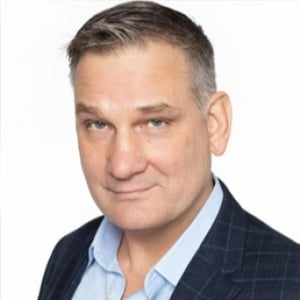
Arthur B. Hanson Professor of Law, William & Mary Law School

Richard and Frances Mallery Professor of Law and Faculty Director, Constitutional Law Center, Stanford Law School
Michael W. McConnell is the Richard and Frances Mallery Professor and Faculty Director of the Constitutional Law Center at Stanford Law School, and a Senior Fellow at the Hoover Institution. From 2002 to 2009, he served as a Circuit Judge on the United States Court of Appeals for the Tenth Circuit. He was nominated by President George W. Bush, a Republican, and confirmed by a Democratic Senate by unanimous consent. McConnell has previously held chaired professorships at the University of Chicago and the University of Utah, and visiting professorships at Harvard and NYU. He teaches courses on constitutional law, constitutional history, First Amendment, and interpretive theory. He has published widely in the fields of constitutional law and theory, especially church and state, equal protection, and separation of powers. His book, “The President Who Would Not Be King: Executive Power Under the Constitution,” was published by Princeton University Press in 2020, based on the Tanner Lectures in Human Values, which he delivered at Princeton in 2019. His latest book, co-authored with Nathan Chapman, “Agreeing to Disagree: How the Establishment Clause Protects Religious Diversity and Freedom of Conscience,” was published by Oxford University Press in mid-2023. McConnell has argued sixteen cases in the United States Supreme Court, most recently Carney v. Adams (2020). defending a provision of the Delaware Constitution requiring political balance on that state’s courts. More recently, he was co-counsel in Gonzalez v. Google. He earned his B.A. from Michigan State University and his J.D. from the University of Chicago, and has received honorary degrees from Notre Dame University and Michigan State. He served as law clerk to Supreme Court Justice William J. Brennan, Jr. and D.C. Circuit Chief Judge J. Skelly Wright. He has been Assistant General Counsel of the Office of Management & Budget, Assistant to the Solicitor General of the Department of Justice, and a member of the President’s Intelligence Oversight Board. He is Senior of Counsel to the law firm Wilson, Sonsini, Goodrich & Rosati, and is co-chair of Meta’s Oversight Review Board.

Thomas M. Siebel Senior Fellow, The Hoover Institution, Stanford University; Gary T. Schwartz Distinguished Professor of Law Emeritus, UCLA School of Law
Eugene Volokh is the Thomas M. Siebel Senior Fellow at the Hoover Institution (Stanford), as well as the Gary T. Schwartz Distinguished Professor of Law Emeritus and Distinguished Research Professor at UCLA School of Law. He recently retired from teaching at UCLA, after 30 years there, and is now focusing on research.
Volokh is the author of the textbooks The First Amendment and Related Statutes (8th ed. 2023), and Academic Legal Writing (5th ed. 2016), as well as over 100 academic law journal articles, mostly on First Amendment law. He is a member of The American Law Institute; the editor-in-chief of the Journal of Free Speech Law; and the creator and coauthor of The Volokh Conspiracy, a leading legal blog founded in 2002 (hosted at the Washington Post from 2014 to 2017 and now at Reason Magazine).

Samuel H. McCoy II Professor of Law, University of Virginia School of Law
John F. Duffy is the Samuel H. McCoy II Professor of Law and Class of 1966 Research Professor of Law at the University of Virginia School of Law, where he teaches administrative law, torts and intellectual property. Professor Duffy has published articles on a wide range of administrative law and regulatory issues in journals such as University of Chicago Law Review, Yale Law Journal, Stanford Law Review, Virginia Law Review, Columbia Law Review, Texas Law Review, Northwestern University Law Review, NYU Law Review, University of Pennsylvania Law Review and the Supreme Court Review. His 1998 article Administrative Common Law in Judicial Review, 77 Tex. L. Rev. 113 (1998), was one of the first articles to criticize the Chevron doctrine as being irreconcilable with § 706 of the APA; it won the American Bar Association’s Scholarship Award in Administrative Law. His 2008 article “Are Administrative Patent Judges Unconstitutional?” was covered on National Public Radio), in the New York Times (Adam Liptak, In One Flaw, Questions on Validity of 46 Judges, May 6, 2008), and in the Wall Street Journal (Dan Slater, Patently Unconstitutional, May 6, 2008). The NYT and WSJ agreed that he was “a different kind of law professor,” “one of the lucky few” whose “writings actually wind up changing the law.”
As an attorney in the courts, Duffy has twice successfully convinced the Supreme Court to overturn lower court doctrines that had been applied in many cases over decades but that were unanimously held to be irreconcilable with Supreme Court precedents. See TC Heartland v. Kraft Foods Group Brands, 581 U.S. 258 (2017); KSR v. Teleflex, 550 U.S. 398 (2007).
Prior to entering legal academics, Duffy clerked on the D.C. Circuit for Stephen Williams and on the Supreme Court for Antonin Scalia. While clerking, he became known as Justice Scalia’s “hapless law clerk,” who had been tasked with unearthing three-quarters of a century of legislative history that made “no difference” to the outcome in an otherwise forgettable case. See Conroy v. Aniskoff, 507 U.S. 511, 527-28 (1993) (Scalia, J., concurring in the judgment).
In earlier days, Duffy enjoyed being a professional blackjack player unwelcome in all Atlantic City casinos and a semi-professional road runner (best marathon time 2:24:33). He holds an A.B. in physics from Harvard and a J.D. from the University of Chicago.

Telecommunications: Communications Law Reform
Jonathan D. Baker, Daniel A. Crane, Jennifer Walker Elrod, Robert M. McDowell, Maureen K. Ohlhausen, Ajit V. Pai
The Telecommunications & Electronic Media Practice Group hosted this panel on "Communications Law Reform" on...
Welcome and Opening Address by Senator Jeff Sessions
Leonard A. Leo, Jefferson B. Sessions
United States Senator Jeff Sessions of Alabama opened the Federalist Society's 2011 National Lawyers Convention with an address...
Telecommunications: Rewriting the Telecomm Act: Has the Time Come?
Shawn H. Chang, Parul P. Desai, Robert M. McDowell, Maureen K. Ohlhausen, David B. Sentelle, Thomas J. Tauke, Howard Waltzman
Address Hon. Thomas J. Tauke, Executive Vice President of Public Affairs, Policy and Communications, Verizon...
Telecommunications: Broadband Policy -- One Year In
Marvin Ammori, Jennifer Walker Elrod, Robert M. McDowell, David M. McIntosh, Kyle E. McSlarrow, Gigi B. Sohn
President Obama was elected after running a very technology-savvy campaign and now promises to continue...
Judicial Confirmations
Michael J. Gerhardt, Simon Heller, Eugene B. Meyer, David G. Savage, Arlen Specter, Michael B. Wallace, Edward Whelan
Senator Arlen Specter and a panel of experts examine the state of the judicial nomination...
Panel III: American Law Schools: Envy of the World or General Motors Before the Fall?
Paul Campos, Frank H. Easterbrook, John Garvey, Maimon Schwarzschild, George Shepherd, Rodney Smolla
This panel discussion took place on January 4, 2008, at the Federalist Society's 10th Annual...
Restricting Parental Speech
James Dwyer, Michael W. McConnell, Jay Alan Sekulow, Eugene Volokh
The Federalist Society's Free Speech & Election Law Practice Group presented this debate at the 2007...
Administrative Common Law and the Original Meaning of Judicial Review Under the APA
John F. Duffy
In 1946 Congress enacted a "comprehensive statement of the right, mechanics, and scope of judicial...