
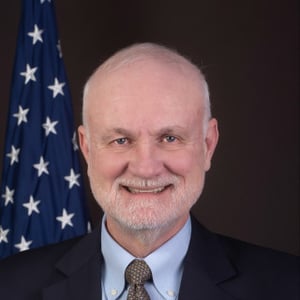
Founding Director of the Center for Energy Law and Policy, William & Mary Law School; Former Chairman, Federal Energy Regulatory Commission; Former Chairman, Virginia State Corporation Commission
Mark Christie is the Founding Director of the Center for Energy Law and Policy at William & Mary Law School. He also teaches courses on energy law at the law school as a visiting professor from practice.
Christie is a former Chairman of the Federal Energy Regulatory Commission (FERC). He served as a FERC commissioner from January 2021 to August 2025, the final seven months as Chairman.
Prior to serving on FERC, Christie was the Chairman of the Virginia State Corporation Commission (Virginia SCC), on which he served as a commissioner for nearly 17 years. He was elected to the Virginia SCC, which regulates utilities, insurance and banking, three times by the Virginia legislature on bipartisan votes.
During Christie’s service as a state regulator, he was elected president of the Organization of PJM States, Inc. (OPSI), an organization of utility regulators representing the 13 states and the District of Columbia which participate in the PJM transmission and markets organization. He served for more than a decade on the OPSI governing board. Christie also served as president of the Mid-Atlantic Conference of Regulatory Utilities Commissioners (MACRUC), a regional chapter of the National Association of Regulatory Utility Commissioners (NARUC).
Former Chairman Christie taught regulatory law for a decade as an adjunct faculty member at the University of Virginia School of Law and constitutional law and government for 20 years in a doctoral program at Virginia Commonwealth University.
Christie received his law degree from Georgetown University and his undergraduate degree from Wake Forest University, where he graduated Magna cum Laude and earned Phi Beta Kappa honors. To help pay for college, he worked as an underground coal miner during summers.
He served as an officer in the U. S. Marine Corps. Semper fi.
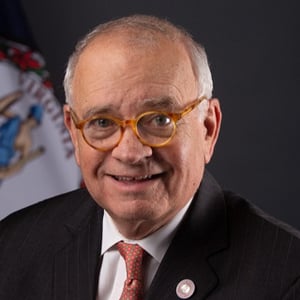
Over the course of a legal career spanning more than four decades, Richard Cullen has built an exemplary record of consequential public service and distinguished private practice.
Mr. Cullen joined McGuireWoods in 1977. His wide-ranging practice has included complex commercial litigation, high profile government investigations, and white-collar defense. He led the firm as Chairman for over ten years.
Since joining McGuireWoods, Mr. Cullen has taken leave several times for significant public service assignments. In 1987, he served as special counsel to U.S. Senator Paul Trible, Jr. during the Iran-Contra investigation. He was appointed by President George H. W. Bush in 1991 as U.S. Attorney for the Eastern District of Virginia, serving until 1993.
In 1997, Governor George Allen appointed Mr. Cullen Attorney General of Virginia to fill the unexpired term of Jim Gilmore, who had resigned to run for governor. Mr. Cullen was a member of George W. Bush’s legal team for the Florida recount during the 2000 presidential election and Vice President Mike Pence’s legal team following the 2016 presidential election. Mr. Cullen has for the last four years served as Counselor to Governor Glenn Youngkin.

Eric V. Hall joined the firm in July of 2019. Eric’s practice focuses on business litigation, constitutional law, school law, church law, and employment. Eric specializes in complex civil litigation, especially trials and appeals. Eric has extensive experience with both jury and bench trials. He has also briefed and argued dozens of cases to the Colorado Court of Appeals, Colorado Supreme Court, and Tenth Circuit Court of Appeals.
Prior to joining Sparks Willson, Eric was a partner with Lewis Roca Rothgerber Christie LLP, where he worked for 18 years. Eric is a native of Colorado Springs. He earned his BA from the College of William and Mary in Virginia, graduating magna cum laude and delivering the valedictory address on behalf of the class of 1991. He earned his MA in 1994 from St. John’s College in Santa Fe, New Mexico. He earned his JD from Notre Dame Law School, graduating summa cum laude in 2000. He clerked for the Honorable David M. Ebel on the Tenth Circuit Court of Appeals for one year immediately after law school.
Eric is a member of the El Paso County Bar Association and has served as its President and a Trustee. He was named “Outstanding Young Lawyer of the Year” in 2005. He is member of the Ben S. Wendelken Inn of Court, the Colorado Bar Association, the Faculty of Federal Advocates, and the Federalist Society. He served on the Colorado Supreme Court Nominating Committee from 2012 to 2018. He is also a co-founder of Thomas MacLaren School, an award-winning charter school located in Colorado Springs School District 11 serving students in grades K-12.
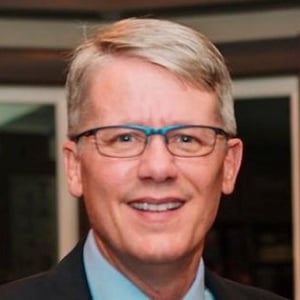
Professor, University of North Carolina at Wilmington
Mike Adams is a professor at the University of North Carolina at Wilmington (UNCW). He writes a weekly column for The Daily Wire and speaks frequently on First Amendment and pro-life issues. After graduating from Mississippi State University in 1993 with a PhD in Criminology, his research emphasized social psychological causes of crime and delinquency. He won the Faculty Member of the Year Award from the Office of the Dean of Students in 1998 and again in 2000. Later, after his involvement in a free speech controversy in the wake of the 9/11 attack his research emphasis shifted to threats to free speech, due process, and academic integrity in higher education. In 2006, he was denied a promotion full professor and filed suit in federal court alleging that UNCW retaliated against him for his criticism the diversity movement in general as well as his criticism of specific policies within his own university. The retaliation lawsuit set up a legal challenge concerning whether Garcetti v. Ceballos (2006), which denied First Amendment protection to public employees who were commenting about their “official duties,” applied to college professors. In Adams v. UNCW (2011), the 4th Circuit Court of Appeals unanimously ruled in his favor. The ruling set up a federal trial on the issue of retaliation, which he also won before a jury in federal district court in Greenville, North Carolina.

Professor of History, Brooklyn College and the CUNY Graduate Center
KC Johnson is professor of history at Brooklyn College and the CUNY Graduate Center, where he has taught since 1999. He has written 13 books on topics in U.S. political history, U.S. foreign policy, and legal and policy debates surrounding campus due process and civil liberties. His Duke lacrosse case blog, Durham-in-Wonderland, was named ABA Journal’s Best Ethics Blog in 2007; and he continues to blog on higher-ed matters at the blog Minding the Campus.
FIRE
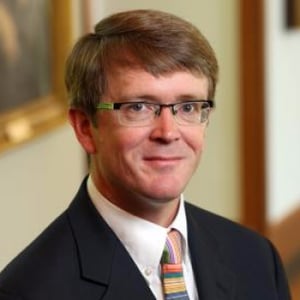
Samuel H. McCoy II Professor of Law, University of Virginia School of Law
John F. Duffy is the Samuel H. McCoy II Professor of Law and Class of 1966 Research Professor of Law at the University of Virginia School of Law, where he teaches administrative law, torts and intellectual property. Professor Duffy has published articles on a wide range of administrative law and regulatory issues in journals such as University of Chicago Law Review, Yale Law Journal, Stanford Law Review, Virginia Law Review, Columbia Law Review, Texas Law Review, Northwestern University Law Review, NYU Law Review, University of Pennsylvania Law Review and the Supreme Court Review. His 1998 article Administrative Common Law in Judicial Review, 77 Tex. L. Rev. 113 (1998), was one of the first articles to criticize the Chevron doctrine as being irreconcilable with § 706 of the APA; it won the American Bar Association’s Scholarship Award in Administrative Law. His 2008 article “Are Administrative Patent Judges Unconstitutional?” was covered on National Public Radio), in the New York Times (Adam Liptak, In One Flaw, Questions on Validity of 46 Judges, May 6, 2008), and in the Wall Street Journal (Dan Slater, Patently Unconstitutional, May 6, 2008). The NYT and WSJ agreed that he was “a different kind of law professor,” “one of the lucky few” whose “writings actually wind up changing the law.”
As an attorney in the courts, Duffy has twice successfully convinced the Supreme Court to overturn lower court doctrines that had been applied in many cases over decades but that were unanimously held to be irreconcilable with Supreme Court precedents. See TC Heartland v. Kraft Foods Group Brands, 581 U.S. 258 (2017); KSR v. Teleflex, 550 U.S. 398 (2007).
Prior to entering legal academics, Duffy clerked on the D.C. Circuit for Stephen Williams and on the Supreme Court for Antonin Scalia. While clerking, he became known as Justice Scalia’s “hapless law clerk,” who had been tasked with unearthing three-quarters of a century of legislative history that made “no difference” to the outcome in an otherwise forgettable case. See Conroy v. Aniskoff, 507 U.S. 511, 527-28 (1993) (Scalia, J., concurring in the judgment).
In earlier days, Duffy enjoyed being a professional blackjack player unwelcome in all Atlantic City casinos and a semi-professional road runner (best marathon time 2:24:33). He holds an A.B. in physics from Harvard and a J.D. from the University of Chicago.

A Fireside Chat with Richard Cullen, Counselor to Governor Glenn Youngkin
Richmond Lawyer Chapter
Richmond, VADress Codes and Sex Discrimination
Colorado Lawyers Chapter
Denver, COTopics
December Is a Good Time to Celebrate the American Revolution
This month includes the anniversary of a historic action taken by the British Crown that...
The Student Right to Counsel
Mike S. Adams, KC Johnson, Adam Kissell
Note from the Editor: This article argues that a student right to counsel in quasi-criminal...
Administrative Common Law and the Original Meaning of Judicial Review Under the APA
John F. Duffy
In 1946 Congress enacted a "comprehensive statement of the right, mechanics, and scope of judicial...