
President, Constitutional Accountability Center
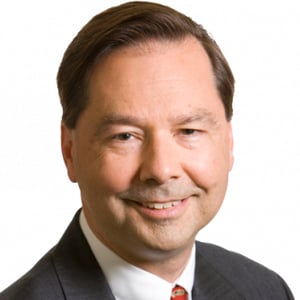
Doug is founder and President of the Constitutional Accountability Center (CAC), a think tank, law firm and action center dedicated to fulfilling the progressive promise of our Constitution's text and history. He previously founded and directed Community Rights Counsel (CRC), CAC's predecessor organization. Doug has represented clients in state and federal appellate courts around the country and he has co-authored more than a dozen briefs filed before the U.S. Supreme Court. He is co-author of three books and lead author of numerous reports and studies. He launched and helped direct (with Earthjustice) the Judging the Environment Project, a comprehensive effort to highlight the environmental stakes in the future of the U.S. Supreme Court and appointments to the federal bench. Doug has appeared on television programs including Nightline, 20/20, Fox News Sunday, and World News Tonight, and radio broadcasts on NPR, CBS News, and Air America. His academic writings have appeared scholarly journals including the Virginia Law Review. His commentary has run in the New Republic, the American Prospect, Slate, and dozens of major papers including the Washington Post, USA Today, and the Los Angeles Times. Doug is a blogger on Huffington Post. Doug received his undergraduate and law degrees from the University of Virginia.
Senior Legal Fellow, Edwin Meese III Institute for the Rule of Law, Advancing American Freedom
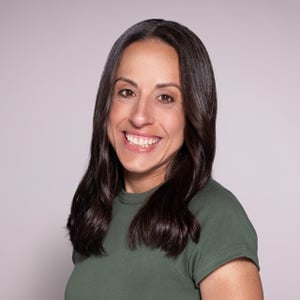
Chief Legal Officer, Paradigm
Vice President 2013-2014, Columbia Student Chapter
Senior Legal Fellow, Edwin Meese III Institute for the Rule of Law, Advancing American Freedom
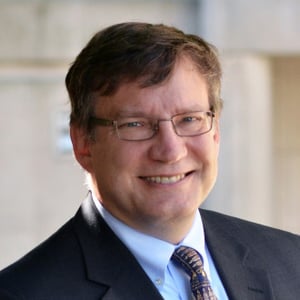
Chairman and Founder, Institute for Free Speech; Josiah H. Blackmore II/Shirley M. Nault Designated Professor of Law, Capital University Law School
Smith has authored over 40 articles on campaign finance reform, appearing in academic publications such as the Yale Law Journal and Georgetown Law Journal, and popular publications such as The Wall Street Journal, USA Today, and National Review. He has appeared on The O’Reilly Factor, Hardball with Chris Matthews, Bill Moyers Journal, the Lehrer News Hour, Fox News Special Report, ABC News, Washington Journal, and numerous other national and local television and radio programs.
As an FEC Commissioner, Smith won plaudits for his integrity and refusal to put partisan interests ahead of his duties, as well as his steadfast support for free speech. For his honesty and integrity, the Wall Street Journal dubbed him, “the only honorable man in this bordello.” Smith now serves as the Josiah H. Blackmore II/Shirley M. Nault Designated Professor of Law at Capital University Law School. He has won numerous awards for his scholarship and teaching, and is a past member of the Advisory Committee to the American Bar Association’s Standing Committee on Election Law. He currently serves on the Editorial Board of the Election Law Journal, and the Editorial Advisory Board of the Harvard Journal of Law and Public Policy. Smith also serves on the Board of Trustees of the Buckeye Institute for Public Policy Studies, is a senior fellow at the Goldwater Institute and is a member of the Board of Scholars of the Mackinac Center for Public Policy. Smith is a cum laude graduate of Harvard Law School and Kalamazoo College and holds an honorary doctorate from Augustana College.
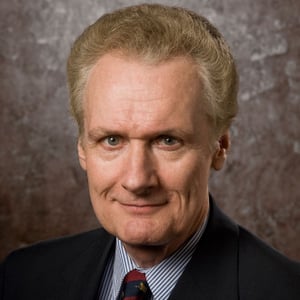
Vice President for Legal Affairs, Cato Institute
Roger Pilon is the Cato’s Institute’s vice president for legal affairs, the founding director of Cato’s Robert A. Levy Center for Constitutional Studies, the inaugural holder of Cato’s B. Kenneth Simon Chair in Constitutional Studies, and the founding publisher of the Cato Supreme Court Review.
Prior to joining Cato, Pilon held five senior posts in the Reagan administration, including at State and Justice, and was a national fellow at Stanford’s Hoover Institution. In 1989 the Bicentennial Commission presented him with its Benjamin Franklin Award for excellence in writing on the U.S. Constitution. In 2001 Columbia University’s School of General Studies awarded him its Alumni Medal of Distinction. Pilon lectures and debates at universities and law schools across the country and testifies often before Congress.
His writing has appeared in the Wall Street Journal, the Washington Post, the New York Times, the Los Angeles Times, Legal Times, National Law Journal, Harvard Journal of Law and Public Policy, Stanford Law and Policy Review, and elsewhere. He has appeared on ABC’s Nightline, CBS’s 60 Minutes II, Fox News Channel, NPR, CNN, MSNBC, CNBC, C-SPAN, and other media.
Pilon holds a BA from Columbia University, an MA and a PhD from the University of Chicago, and a JD from the George Washington University School of Law.
Chancellor's Professor of Law and Political Science, University of California, Irvine School of Law
Professor Richard L. Hasen is Chancellor’s Professor of Law and Political Science at the University of California, Irvine. Hasen is a nationally recognized expert in election law and campaign finance regulation, and is co-author of a leading casebook on election law.
From 2001-2010, he served (with Dan Lowenstein) as founding co-editor of the quarterly peer-reviewed publication, Election Law Journal. He is the author of over 100 articles on election law issues, published in numerous journals including the Harvard Law Review, Stanford Law Review and Supreme Court Review. He was elected to The American Law Institute in 2009 and served as an Adviser on ALI’s law reform project, Principles of Election Law: Resolution of Election Disputes.
Professor Hasen was named one of the 100 most influential lawyers in America by The National Law Journal in 2013, and one of the Top 100 Lawyers in California in 2005 and 2016 by the Los Angeles and San Francisco Daily Journal.
His op-eds and commentaries have appeared in many publications, including The New York Times, The Washington Post, Politico, and Slate. Hasen also writes the often-quoted Election Law Blog, which the ABA Journal named to its “Blawg 100 Hall of Fame” in 2015. His newest book, The Justice of Contradictions: Antonin Scalia and the Politics of Disruption, will be published in 2018 by Yale University Press.
Professor Hasen holds a B.A. degree (with highest honors) from UC Berkeley, and a J.D., M.A., and Ph.D. (Political Science) from UCLA. After law school, Hasen clerked for the Honorable David R. Thompson of the United States Court of Appeals for the Ninth Circuit, and then worked as a civil appellate lawyer at the Encino firm Horvitz and Levy.
From 1994-1997, Hasen taught at the Chicago-Kent College of Law and from 1998-2011 he taught at Loyola Law School, Los Angeles, where he was named the William H. Hannon Distinguished Professor of Law in 2005. He joined the UC Irvine School of Law faculty in July 2011, and is a faculty member of the UC Irvine Jack W. Peltason Center for the Study of Democracy.
Partner, Gibson, Dunn & Crutcher LLP
Matthew D. McGill is a partner in the Washington, D.C. office of Gibson, Dunn & Crutcher and Co-Chair of the firm’s Judgment and Arbitral Award Enforcement and Betting and Gaming practice groups. He also is a member of the firm’s Appellate and Constitutional Law and Sports Law practice groups.
A three-time “Litigator of the Week” (The AmLaw Litigation Daily) Mr. McGill has been ranked by Chambers USA in Nationwide Appellate Law and recognized by The National Law Journal as a “Litigation Trailblazer” for his pioneering work enforcing judgments against foreign sovereigns. In 2020, he successfully negotiated a $335 million resolution of terrorism claims against the Republic of Sudan arising from the 1998 bombings of the U.S. Embassies in Kenya and Tanzania. Previously, he successfully resolved NML Capital’s multi-billion dollar claims against the Republic of Argentina after what the Financial Times called “the trial of the century in sovereign debt restructuring.” He currently represents clients in public enforcement matters against the governments of the Democratic Republic of Congo, Iran, Pakistan, Spain, and Venezuela.
An accomplished appellate advocate, Mr. McGill has participated in 23 cases before the Supreme Court of the United States, prevailing in 17, including several high-profile triumphs over foreign sovereigns:
Opati v. Republic of Sudan (2020) – Mr. McGill successfully argued before the Supreme Court on behalf of victims of the 1998 bombings of the U.S. Embassies in Kenya and Tanzania and secured a ruling that “unanimously reinstated as much as $4.3 billion in punitive damages awarded against Sudan” (New York Times) setting the stage for the resolution of the Embassy bombing claims and the United States’ delisting of Sudan as a state-sponsor of terrorism.
Puerto Rico v. Franklin California Tax-Free Trust (2016) – Arguing before the Supreme Court on behalf of creditors that found themselves on the leading edge of Puerto Rico’s debt crisis, Mr. McGill successfully defended an injunction invalidating Puerto Rico’s emergency municipal bankruptcy legislation. The ruling protected bondholders against the “chance that the territory could write its own bankruptcy plan” (Wall Street Journal) and ensured that Congress would retain control over Puerto Rico’s fiscal rescue.
Bank Markazi v. Peterson (2016) – In this important separation-of-powers case, Mr. McGill represented victims of the 1983 Beirut Marine Corps Barracks Bombing who hold judgments against Iran. Ruling in favor of the Beirut Marines, the Supreme Court rejected arguments from Iran’s central bank that Congress had impermissibly invaded the province of the Judicial Branch by authorizing victims of terrorism to seize certain central bank assets. The ruling allowed nearly $2 billion to be distributed to Iran’s victims.
Argentina v. NML Capital, Ltd. (2014) – The Supreme Court’s decision in this case confirmed the availability of broad discovery to enforce judgments against foreign sovereigns, empowering creditors to seek information concerning the debtor nation’s assets anywhere in the world.
At the intersection of sports and gaming, Mr. McGill led the effort of the Governor of New Jersey to legalize sports wagering in the Garden State, culminating in the Supreme Court’s “historic decision” (Sports Illustrated) in Murphy v. NCAA that struck down the federal law that had prohibited states other than Nevada from legalizing sports betting. By establishing that the federal government has no power to “dictate[] what a state legislature may and may not do,” this “landmark ruling” (USA Today) safeguards the power of States to govern themselves and cleared the path for States across the country to legalize sports wagering.
Later, when the U.S. government announced in 2019 that it was abandoning its longstanding position that the Wire Act of 1961 prohibits only certain forms of sports wagering, Mr. McGill led the legal challenge to the new government policy. Representing the technology provider for the internet-based operations of the New Hampshire Lottery, Mr. McGill secured a judgment that the Wire Act covered only sports betting, and successfully defended that judgment on appeal. The ruling safeguarded “the entire online gambling industry as well as multi-state lotteries such as Powerball” (Am Law Litigation Daily) from an arbitrary change in government policy. For his work toward legalizing sports wagering and confining the Wire Act to its intended scope, Mr. McGill has been recognized by Law360 as a Sports Law “MVP” and “2020 Sports & Entertainment Trailblazer” by The National Law Journal.
Mr. McGill also maintains an active pro bono practice. He currently represents three adoptive couples in a constitutional challenge to the Indian Child Welfare Act, and he represents persons born in American Samoa in their constitutional challenge to a federal statute that designates them “non-citizen nationals.”
Prior to joining Gibson Dunn, Mr. McGill served as a Bristow Fellow in the Office of the Solicitor General at the U.S. Department of Justice. He clerked for the Hon. Joseph M. McLaughlin of the U.S. Court of Appeals for the Second Circuit and the Hon. John G. Roberts, Jr. of the U.S. Court of Appeals for the D.C. Circuit.
Mr. McGill earned a Bachelor of Arts degree, magna cum laude, from Dartmouth College in 1996. In 2000, he graduated from Stanford Law School, where he was elected to the Order of the Coif.
Mr. McGill is licensed to practice in New York and the District of Columbia and he has been admitted to practice before the Supreme Court of the United States, the United States Courts of Appeals for the First, Second, Third, Fourth, Fifth, Ninth, Tenth, Eleventh, District of Columbia, and Federal Circuits, and the United States District Courts for the District of Columbia and the Southern District of New York.
Chairman and Founder, Institute for Free Speech; Josiah H. Blackmore II/Shirley M. Nault Designated Professor of Law, Capital University Law School
Smith has authored over 40 articles on campaign finance reform, appearing in academic publications such as the Yale Law Journal and Georgetown Law Journal, and popular publications such as The Wall Street Journal, USA Today, and National Review. He has appeared on The O’Reilly Factor, Hardball with Chris Matthews, Bill Moyers Journal, the Lehrer News Hour, Fox News Special Report, ABC News, Washington Journal, and numerous other national and local television and radio programs.
As an FEC Commissioner, Smith won plaudits for his integrity and refusal to put partisan interests ahead of his duties, as well as his steadfast support for free speech. For his honesty and integrity, the Wall Street Journal dubbed him, “the only honorable man in this bordello.” Smith now serves as the Josiah H. Blackmore II/Shirley M. Nault Designated Professor of Law at Capital University Law School. He has won numerous awards for his scholarship and teaching, and is a past member of the Advisory Committee to the American Bar Association’s Standing Committee on Election Law. He currently serves on the Editorial Board of the Election Law Journal, and the Editorial Advisory Board of the Harvard Journal of Law and Public Policy. Smith also serves on the Board of Trustees of the Buckeye Institute for Public Policy Studies, is a senior fellow at the Goldwater Institute and is a member of the Board of Scholars of the Mackinac Center for Public Policy. Smith is a cum laude graduate of Harvard Law School and Kalamazoo College and holds an honorary doctorate from Augustana College.
Independent Analyst, None
Allison Hayward most recently served as the Head of Case Selection at the Oversight Board. Previously, she was a Commissioner at the California Fair Political Practices Commission, a Board Member at the Office of Congressional Ethics, and an Assistant Professor of Law at George Mason University School of Law. She also previously worked as Chief of Staff and Counsel in the office of Federal Election Commission Commissioner Bradley A. Smith and practiced election law in California and in Washington DC.
In 1994-1995, Professor Hayward was a judicial clerk for the Honorable Danny J. Boggs, United States Court of Appeal for the Sixth Circuit.
She is a member of the State Bar of California and the District of Columbia Bar.
President, JCN
Carrie Campbell Severino is the president of the JCN, and co-author with Mollie Hemingway of the bestselling book Justice on Trial: The Kavanaugh Confirmation and the Future of the Court. As a go-to expert on the confirmation process, Mrs. Severino has been extensively quoted in the media. She regularly appears on television, including FOX, CNN, MSNBC, C-SPAN, and ABC’s This Week.
Severino writes and speaks on a wide range of judicial issues, including the constitutional limits on government, the federal nomination process, and state judicial selection. She has testified before Congress on constitutional questions and briefed Senators on judicial nominations, and regularly files briefs in high-profile Supreme Court cases. She was a law clerk to Supreme Court Justice Clarence Thomas and to Judge David B. Sentelle of the U.S. Court of Appeals for the D.C. Circuit, and is a graduate of Harvard Law School (J.D.), Duke University (B.A., Biology), and Michigan State University (M.A., Linguistics).
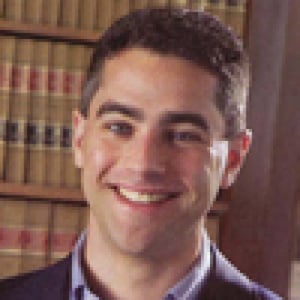
Associate Professor of Law, University of Colorado Law School
Scott Moss joined CU Law School in 2007 after six years as an attorney in New York City and three years as a professor at Marquette Law School, where he was the 2007 recipient of the James D. Ghiardi Faculty Award for Outstanding Teaching, Student Body Support, and Scholarship. In New York, Professor Moss was a law clerk to U.S. District Judge Constance Baker Motley and then a plaintiff's employment lawyer at Outten & Golden LLP, the largest plaintiff-side employment law practice in the country, where he litigated individual and class action cases of discrimination, harassment, and minimum/overtime wage violations. He also has argued and briefed appeals of employment cases and has undertaken pro bono projects such as First Amendment right-to-protest litigation with the New York Civil Liberties Union, low-income worker clinics in lower Manhattan, and court-sponsored mediations for pro se litigants. Professor Moss received his J.D. (magna cum laude) in 1998 from Harvard Law School, where he was a Senior Editor of the Harvard Civil Rights-Civil Liberties Law Review; his B.A. (Economics) and M.A. (Media Studies) are from Stanford University. Professor Moss's research interests have included employment law, discrimination, constitutional law, various civil procedure rules, and economic analysis of all of the preceding topics.
B.A., Stanford
M.A., Stanford
J.D., Harvard
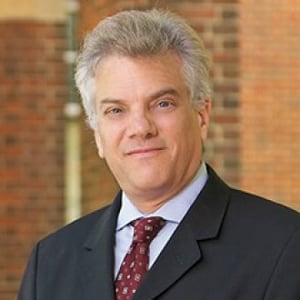
Sudler Family Professor of Constitutional Law, New York University School of Law
Richard H. Pildes is one of the nation’s leading scholars of constitutional law and a specialist in legal issues affecting democracy. He is a Member of the American Academy of Arts and Sciences and the American Law Institute, and has received recognition as a Guggenheim Fellow and a Carnegie Scholar. His acclaimed casebook, The Law of Democracy: Legal Structure of the Political Process (now in its fourth edition), helped create an entirely new field of study in the law schools. The Law of Democracy systematically explores legal and policy issues concerning the structure of democratic elections and institutions, such as the role of money in politics, the design of election districts, the regulation of political parties, the design of voting systems, the representation of minority interests in democratic institutions, and similar issues. He has written extensively on the rise of political polarization in the United States, the Voting Rights Act, the dysfunction of America’s political processes, the role of the Supreme Court in overseeing American democracy, the powers of the American President and Congress, and he has criticized excessively “romantic” understandings of democracy. In addition to his scholarship on these issues, he has written on national-security law, the design of the regulatory state, and American constitutional history and theory.
Respect for his expertise in these areas is reflected in frequent citations of his work in U.S. Supreme Court opinions, the translation of his work into many languages, and his frequent public lectures and appearances around the world, including his nomination with the NBC News Team for an Emmy Award for coverage of the 2000 Presidential election litigation.
His work has been translated and published in Chinese, French, Spanish, and Portuguese. In addition to his scholarship, Professor Pildes plays an active role litigating in these areas. He has won two cases before the United States Supreme Court, including a 2015 victory in Alabama Democratic Conference v. Alabama, a case involving race and redistricting. He served as counsel to a group of former chairmen of the Securities and Exchange Commission in litigation defending the constitutionality of the Sarbanes-Oxley Act; as counsel in election litigation to the Puerto Rico Electoral Commission; as counsel to the government of Puerto Rico; as a federal court-appointed independent expert on voting rights litigation; and as counsel in successful Supreme Court litigation that challenged the way the United States Tax Court operated. He was also a senior legal advisor to the 2008 and 2012 campaigns of President Obama.
Pildes received his A.B. in physical chemistry summa cum laude from Princeton, and his J.D. magna cum laude from Harvard, where he served as Supreme Court Note Editor on the Harvard Law Review. He clerked for Judge Abner J. Mikva of the U.S. Court of Appeals for the District of Columbia Circuit and for Justice Thurgood Marshall of the U.S. Supreme Court. After practicing law in Boston, he began his academic career at the University of Michigan Law School, before joining the NYU School of Law in 2001.

Judge, United States Court of Appeals, Eighth Circuit
David Stras became a judge on the United States Court of Appeals for the Eighth Circuit on January 31, 2018. Before serving on the Eighth Circuit, Judge Stras was an Associate Justice of the Minnesota Supreme Court, a position he occupied from July 1, 2010 until his appointment to the Eighth Circuit.
Prior to becoming a judge, Stras was a member of the faculty of the University of Minnesota Law School from 2004 through 2010. He taught and wrote in the areas of federal courts and jurisdiction, constitutional law, criminal law, and law and politics.
Judge Stras received his Bachelor of Arts degree, with highest distinction, in 1995 and his Master of Business Administration in 1999, both from the University of Kansas. He also received his law degree from the University of Kansas School of Law in 1999, where he served as Editor-in-Chief of the Criminal Procedure Edition of the Kansas Law Review.
Following law school, Stras clerked for The Honorable Melvin Brunetti of the United States Court of Appeals for the Ninth Circuit and then for The Honorable J. Michael Luttig of the United States Court of Appeals for the Fourth Circuit.
From 2001 to 2002, he practiced white-collar criminal and appellate litigation with the Washington, D.C., office of Sidley Austin Brown & Wood. Following his year in practice, he clerked for The Honorable Clarence Thomas of the Supreme Court of the United States.
Chancellor's Professor of Law and Political Science, University of California, Irvine School of Law
Professor Richard L. Hasen is Chancellor’s Professor of Law and Political Science at the University of California, Irvine. Hasen is a nationally recognized expert in election law and campaign finance regulation, and is co-author of a leading casebook on election law.
From 2001-2010, he served (with Dan Lowenstein) as founding co-editor of the quarterly peer-reviewed publication, Election Law Journal. He is the author of over 100 articles on election law issues, published in numerous journals including the Harvard Law Review, Stanford Law Review and Supreme Court Review. He was elected to The American Law Institute in 2009 and served as an Adviser on ALI’s law reform project, Principles of Election Law: Resolution of Election Disputes.
Professor Hasen was named one of the 100 most influential lawyers in America by The National Law Journal in 2013, and one of the Top 100 Lawyers in California in 2005 and 2016 by the Los Angeles and San Francisco Daily Journal.
His op-eds and commentaries have appeared in many publications, including The New York Times, The Washington Post, Politico, and Slate. Hasen also writes the often-quoted Election Law Blog, which the ABA Journal named to its “Blawg 100 Hall of Fame” in 2015. His newest book, The Justice of Contradictions: Antonin Scalia and the Politics of Disruption, will be published in 2018 by Yale University Press.
Professor Hasen holds a B.A. degree (with highest honors) from UC Berkeley, and a J.D., M.A., and Ph.D. (Political Science) from UCLA. After law school, Hasen clerked for the Honorable David R. Thompson of the United States Court of Appeals for the Ninth Circuit, and then worked as a civil appellate lawyer at the Encino firm Horvitz and Levy.
From 1994-1997, Hasen taught at the Chicago-Kent College of Law and from 1998-2011 he taught at Loyola Law School, Los Angeles, where he was named the William H. Hannon Distinguished Professor of Law in 2005. He joined the UC Irvine School of Law faculty in July 2011, and is a faculty member of the UC Irvine Jack W. Peltason Center for the Study of Democracy.
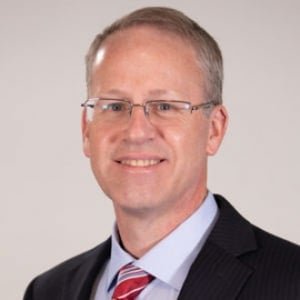
Senior Attorney, DC, Pacific Legal Foundation
Steve Simpson joined PLF in 2019 to head up its Separation of Powers practice group.
Steve’s career in public interest law started at the Institute for Justice in 2001, where he litigated free speech, campaign finance, and economic liberty cases. Among other high-profile cases in which Steve was involved, he was co-counsel in Arizona Free Enterprise Club’s Freedom Club PAC v. Bennett, IJ’s successful Supreme Court challenge to Arizona’s public financing law for political campaigns. He was the lead litigator in SpeechNow.org v. FEC, a joint effort between IJ and the Institute for Free Speech that led to the creation of super PACs. And he was co-counsel in Swedenburg v. Kelly, IJ’s successful Supreme Court challenge to New York’s ban on the interstate shipping of wine.
In 2013, Steve moved into the policy arena as the Ayn Rand Institute’s director of Legal Studies, where he spent five years writing and speaking on a wide variety of legal and cultural issues. From there, he moved back into law as senior litigation counsel at the New Civil Liberties Alliance in Washington, D.C.
Steve has spoken and written on a wide variety of legal and policy issues. He has testified in Congress and briefed congressional staffers. He has been interviewed on scores of television and radio programs, including PBS News Hour, Stossel, and The Rubin Report. His writings have appeared in many publications, including The Wall Street Journal and The Washington Post. In 2014, Steve was a Lincoln Fellow at the Claremont Institute. He is the editor of Defending Free Speech (ARI Press, 2016).
Steve earned his law degree magna cum laude from New York Law School in 1994. Following law school, he clerked for a federal district judge in the Southern District of Florida and spent several years as a litigator at Shearman & Sterling.
When he’s not at work or spending time with his wife and three daughters, Steve can usually be found mucking around in the woods at his cabin on Shenandoah Mountain.

Thomas M. Siebel Senior Fellow, The Hoover Institution, Stanford University; Gary T. Schwartz Distinguished Professor of Law Emeritus, UCLA School of Law
Eugene Volokh is the Thomas M. Siebel Senior Fellow at the Hoover Institution (Stanford), as well as the Gary T. Schwartz Distinguished Professor of Law Emeritus and Distinguished Research Professor at UCLA School of Law. He recently retired from teaching at UCLA, after 30 years there, and is now focusing on research.
Volokh is the author of the textbooks The First Amendment and Related Statutes (8th ed. 2023), and Academic Legal Writing (5th ed. 2016), as well as over 100 academic law journal articles, mostly on First Amendment law. He is a member of The American Law Institute; the editor-in-chief of the Journal of Free Speech Law; and the creator and coauthor of The Volokh Conspiracy, a leading legal blog founded in 2002 (hosted at the Washington Post from 2014 to 2017 and now at Reason Magazine).

Citizens United and the Future of Campaign Finance Law
PhiladelphiaDISCLOSE Act – The Legislative “Fix” to Citizens United
Allison R. Hayward
Brought to you by the Free Speech & Election Law Practice Group The Federalist Society takes...
Justice Stevens’ Retirement & Filling the Vacancy
Carrie Campbell Severino, Scott Moss, Richard H. Pildes, David R. Stras
Updated: 9 AM, May 5, 2010 On Friday, April 9, 2010, Justice John Paul Stevens...
Citizens United v. Federal Election Commission
Richard Hasen, Steve Simpson, Eugene Volokh
On January 21, 2010, the Supreme Court announced its decision in Citizens United v. FEC. ...
The Citizens United v. FEC: Campaign Finance Implications for Colorado
Colorado Lawyers Chapter
Denver, COCitizens United
Citizens United, Corporate Personhood, and the Rebirth of the First Amendment
Citizens United: The End of Democracy or Free Speech Restored?
Citizens United and Its Effect on the Electoral Process
Los AngelesCampaign Finance & Corporate ‘Personhood’: A Review Of Citizens United
Cleveland