
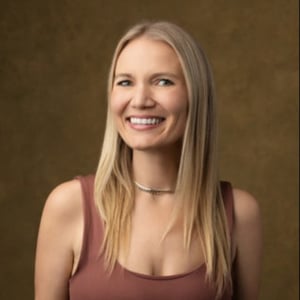
Constitutional Scholarship Director and Senior Legal Analyst, Pacific Legal Foundation
Anastasia Boden is Director of Constitutional Scholarship at Pacific Legal Foundation, where she leads the organization’s Supreme Court commentary and directs scholarly analysis in support of the firm’s litigation. She has represented entrepreneurs and small businesses nationwide in challenges to onerous licensing regimes, anti-competitive titling restrictions, Certificate of Need (“competitor’s veto”) laws, and other forms of unnecessary red tape that block economic opportunity.
Prior to this role, Anastasia developed nearly a dozen constitutional challenges to Certificate of Need laws across the country, helping spur legislative reform in Montana, Pennsylvania, and West Virginia. Her victories include a ruling invalidating Houston’s busking restrictions, multiple appellate decisions expanding access to the courts for civil rights plaintiffs, and the legislative repeal of Virginia’s happy-hour advertising ban.
Her writings on law and liberty have been featured in USA Today, The Washington Post, The Wall Street Journal, the Los Angeles Times, the Chicago Tribune, Forbes, and more, and she has appeared on Headline News, CBS News, Fox News, ReasonTV, Newsmax, and John Stossel. In 2020, she was featured on Libertarian Party presidential candidate Jo Jorgensen’s Supreme Court shortlist.
Anastasia earned her BA with dean’s honors from the University of California, Santa Barbara, and her JD from Georgetown University Law Center, where she was research assistant to Professor Randy E. Barnett—the “intellectual godfather” of the constitutional challenge to Obamacare. She is the co-creator of the podcast Dissed, about infamous Supreme Court dissents. She authors the biweekly newsletter SCOTUS Scoop and the column, “In Dissent” for SCOTUSblog.
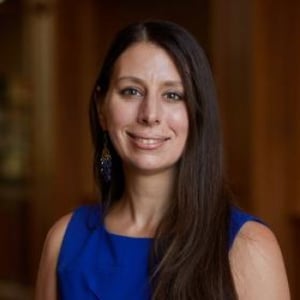
Prof. Sheley joined the College of Law in 2018. Before coming to OU she was an Assistant Professor at the University of Calgary Faculty of Law. She has also served as a Visiting Associate Professor at the George Washington University Law School and an Olin-Searle Fellow at Georgetown University Law Center. Prior to academia she practiced for several years in the litigation group of the Washington, D.C. offices of Gibson, Dunn & Crutcher LLP. While in practice she was commended by the Humane Society of the United States for her pro bono work in the prosecution of dog fighting sponsors. She is proud to have served on the Board of Directors of the Alberta Animal Rescue Crew Society.
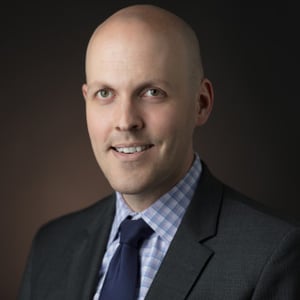
Partner, Barr & Klein PLLC
Steve Klein, a partner at Barr & Klein PLLC, is an experienced free speech attorney who has successfully fought for the First Amendment rights of his clients against local, state and federal regulators. As a lobbyist, Steve’s advocacy has led to the successful amendment of state laws to respect political engagement and prevented the enactment of laws that burden it. Steve has published articles in several legal journals, and his commentary has appeared in The Wall Street Journal, The Washington Times, The Detroit News, and other outlets. Steve earned a bachelors degree in politics at Hillsdale College and a law degree from Ave Maria School of Law, where he served as Managing Editor of the Ave Maria Law Review. He is licensed to practice law in the District of Columbia, Illinois and Michigan.
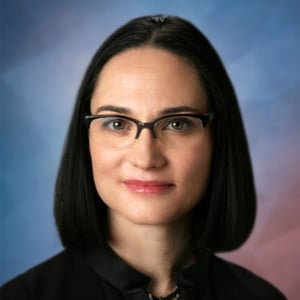
Alida graduated from Duke University with a degree in history and earned her J.D. from the Georgetown University Law Center.
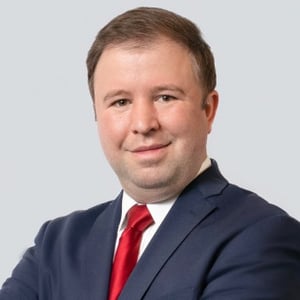
Partner, Wiley Rein LLP
Tom has over 15 years’ experience in private practice and public service at the federal and state levels representing clients in high-stakes appellate and regulatory litigation matters. Tom has argued appeals in the Fourth, Fifth, Ninth, D.C. and Federal Circuits, and the West Virginia Supreme Court of Appeals.
Prior to joining Wiley, Tom was the General Counsel at the Federal Communications Commission (FCC), where he served as the agency’s chief legal officer and briefed dozens of appeals – personally arguing two – in the federal courts of appeals in constitutional and administrative law challenges to the FCC’s orders. Tom managed a team of over 70 attorneys and staff and provided consultation and advice on a wide range of practice areas relating to the FCC’s work, including administrative law, appellate and trial litigation, bankruptcy, ethics, fiscal law, fraud, labor and employment, and public records requests. He has spent his career advising clients on all stages of federal agency rulemaking, adjudication, and litigation, in fields ranging from communications to environmental law to securities to labor and employment. He frequently speaks and writes on legal issues and his articles have appeared in the Wall Street Journal, Washington Post, National Review, Forbes, and Newark Star-Ledger.
Partner, Wiley Rein LLP
Tom has over 15 years’ experience in private practice and public service at the federal and state levels representing clients in high-stakes appellate and regulatory litigation matters. Tom has argued appeals in the Fourth, Fifth, Ninth, D.C. and Federal Circuits, and the West Virginia Supreme Court of Appeals.
Prior to joining Wiley, Tom was the General Counsel at the Federal Communications Commission (FCC), where he served as the agency’s chief legal officer and briefed dozens of appeals – personally arguing two – in the federal courts of appeals in constitutional and administrative law challenges to the FCC’s orders. Tom managed a team of over 70 attorneys and staff and provided consultation and advice on a wide range of practice areas relating to the FCC’s work, including administrative law, appellate and trial litigation, bankruptcy, ethics, fiscal law, fraud, labor and employment, and public records requests. He has spent his career advising clients on all stages of federal agency rulemaking, adjudication, and litigation, in fields ranging from communications to environmental law to securities to labor and employment. He frequently speaks and writes on legal issues and his articles have appeared in the Wall Street Journal, Washington Post, National Review, Forbes, and Newark Star-Ledger.
Partner, Barr & Klein PLLC
Steve Klein, a partner at Barr & Klein PLLC, is an experienced free speech attorney who has successfully fought for the First Amendment rights of his clients against local, state and federal regulators. As a lobbyist, Steve’s advocacy has led to the successful amendment of state laws to respect political engagement and prevented the enactment of laws that burden it. Steve has published articles in several legal journals, and his commentary has appeared in The Wall Street Journal, The Washington Times, The Detroit News, and other outlets. Steve earned a bachelors degree in politics at Hillsdale College and a law degree from Ave Maria School of Law, where he served as Managing Editor of the Ave Maria Law Review. He is licensed to practice law in the District of Columbia, Illinois and Michigan.
Partner, Duane Morris LLP
William M. (Bill) McSwain practices in the area of litigation with a focus on white-collar criminal matters, internal investigations and complex business litigation. Bill is the immediate past U.S. Attorney for the Eastern District of Pennsylvania (EDPA), which is one of the nation’s most populous districts, with nearly six million people residing within Philadelphia and its eight surrounding counties. As U.S. Attorney, he served as the chief federal law enforcement officer in the EDPA, responsible for all federal criminal prosecutions, investigations and civil litigation involving the United States. He supervised a staff of approximately 300, including more than 140 Assistant U.S. Attorneys, at offices in Philadelphia and Allentown, PA.
Most importantly, Bill is a fighter who knows how to win. For example, as U.S. Attorney, he personally served as lead counsel in United States v Safehouse, in which he challenged Philadelphia’s plan to be the first city in the country to open supervised heroin injection sites. He argued and won the case in the U.S. Court of Appeals for the Third Circuit, which ruled that such sites would violate the federal Controlled Substances Act.
A former U.S. Marine Corps infantry officer and scout/sniper platoon commander, Bill brings an aggressive and creative approach to private practice, representing clients involved in government investigations and high stakes litigation. In particular, he enjoys taking on the challenge of winning seemingly “impossible” cases. He has lived that mindset from the very outset of his legal career.
For example, prior to his service as U.S. Attorney, Bill took on the case of an Iranian immigrant, Ken Hamidi, who was locked in a battle with Intel over emails that Mr. Hamidi has sent to Intel employees. After Mr. Hamidi had lost his case in the trial and intermediate appellate courts with other counsel, Bill took over and argued the case in front of the Supreme Court of California. In Intel Corp. v. Hamidi, 30 Cal.4th 1342 (2003), he won a 4-3 decision that established the legal rules for trespass liability on the Internet, one of the most significant cyberlaw rulings in the United States. Soon thereafter, Bill represented Chester County, Pennsylvania in its dispute regarding the attempted removal of an historic Ten Commandments plaque hanging on the façade of the County Courthouse. After the County lost at trial with other counsel, Bill stepped in and argued the case in front of the U.S. Court of Appeals for the Third Circuit. In Chester County, PA v. Freethought Society, et al., 334 F.3d 247 (3d Cir. 2003), he won a 3-0 decision that preserved the plaque, which is hanging on the Courthouse to this day. In one of his most challenging assignments, Bill began representing the Boy Scouts in 2008 in its dispute with the City of Philadelphia. Facing eviction from its historic headquarters building, the Scouts sued the City, alleging a violation of their First Amendment rights. In Cradle of Liberty Council, Boy Scouts of America v. City of Philadelphia, No. 2:08-cv-02429-RB (E.D. Pa.), Bill won a nationally publicized, three-week jury trial, and even secured a court ruling that the City had to pay the Scouts’ attorney’s fees.
Bill understands that, in a very real sense, anybody or any organization squaring off against the government – especially against the federal government – is an underdog. Bill has a long record of success advocating for clients in those situations. For example, in United States v. Bruno, No. 2:13-cr-00039-LS-6 (E.D. Pa.), he represented a Pennsylvania judge against federal conspiracy, wire fraud and mail fraud charges and won a full acquittal after a two-month jury trial. In United States. v. Brown, No. 2:12-cr-00367-RBS-1 (E.D. Pa.), Bill represented a nationally renowned charter school educator who faced a massive 67-count indictment alleging conspiracy, wire fraud, obstruction of justice and witness tampering. After a two-month trial, the jury acquitted Bill’s client on several counts and deadlocked on the others. The government eventually withdrew all of the deadlocked charges.
His record in the courtroom notwithstanding, Bill is also a thoughtful, intellectually curious strategist who has resolved numerous contentious matters out of court on terms his clients found favorable. He is a graduate of Yale University (B.A., cum laude, 1991) and the Harvard Law School (J.D., 2000), where he was an editor of the Harvard Law Review, won the Ames Moot Court Competition and received the George Leisure Award as the Best Oralist in the Ames Competition. He is an adjunct lecturer in law at the University of Pennsylvania Law School. He began his legal career by clerking for the Hon. Marjorie O. Rendell, U.S. Circuit Judge of the U.S. Court of Appeals for the Third Circuit.
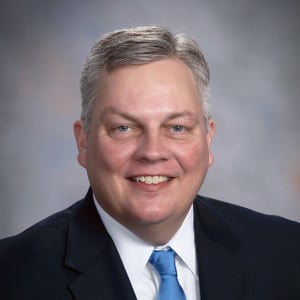
University Professor of Law and Religion and Director of the Eleanor H. McCullen Center for Law, Religion and Public Policy, Villanova University Charles Widger School of Law
Michael P. Moreland was appointed University Professor of Law and Religion and Director of the Eleanor H. McCullen Center for Law, Religion and Public Policy at Villanova University in 2017. Professor Moreland joined the Villanova faculty in 2006 and served as Vice Dean from 2012 to 2015. His research is primarily in the areas of torts, law and religion, constitutional law, and Catholic social thought, and he regularly teaches Torts, First Amendment, seminars in law and religion, and undergraduate courses in ethics.
Professor Moreland is the co-editor of Christianity and Private Law (Routledge, 2021), and his most recent publications include: “The Authority of Tradition: John Henry Newman and Legal Theory” in Christianity and the Making of Irish Law (Routledge, 2025); “Christianity and Torts” in The Oxford Handbook on Christianity and Law, (Oxford University Press, 2023); “Germaneness and Religious Liberty” in the Notre Dame Law Review (2023); “Contingency and Contestation in Christianity and Liberalism” in the Notre Dame Law Review (2023); “Friendship as the Primary Purpose of Law” in The American Journal of Jurisprudence 279 (2022); and “The Moral of Torts” (with Jeffrey Pojanowski) in Christianity and Private Law (Routledge, 2021).
Professor Moreland was a Visiting Professor of Law at the University of Notre Dame and the Mary Ann Remick Senior Visiting Fellow at the Notre Dame Center for Ethics and Culture from 2015 to 2017. He was the Forbes Visiting Fellow at Princeton University in the James Madison Program during academic year 2010-11. He has served as the project leader for grants from the John Templeton Foundation and the Charles Koch Foundation. He serves as the Chair of the Federalist Society’s Religious Liberties Practice Group Executive Committee and the Chair of the Board of Trustees of the Institute for Advanced Catholic Studies at the University of Southern California.
Professor Moreland received his BA in philosophy from the University of Notre Dame, his MA and PhD in theological ethics from Boston College, and his JD from the University of Michigan Law School. Following law school, Professor Moreland clerked for the Honorable Paul J. Kelly Jr., of the United States Court of Appeals for the Tenth Circuit and was an associate at Williams & Connolly LLP in Washington, DC, where he represented clients in First Amendment, professional liability, and products liability matters. Before coming to Villanova, he served as Associate Director for Domestic Policy at the White House under President George W. Bush, where he worked on a range of legal policy issues, including criminal justice, immigration, civil rights, and liability reform.
Temple University James E. Beasley School of Law

State Court Docket Watch: In re Petition for Expungement of the Criminal Records Belonging to T.O.
Anastasia P. Boden
Note from the Editor: The Federalist Society takes no positions on particular legal and public...
Kelly v. United States - Post-Argument SCOTUScast
Erin Sheley
On Jan. 14, 2020, the U.S. Supreme Court heard argument in Kelly v. United States,...
Courthouse Steps Oral Argument: Wire and Federal Program Fraud: A ‘Bridgegate’ Too Far?
Stephen R. Klein
Bridget Anne Kelly and William Baroni were convicted of wire fraud, federal program fraud and...
Courthouse Steps Oral Argument: Wire and Federal Program Fraud: A ‘Bridgegate’ Too Far?
TeleforumCriminal Justice Reform: Reducing Recidivism, Saving Money
Jackson, MSExecutive Power in the Age of Trump
Philadelphia, PennsylvaniaState Court Docket Watch News Clips: 3/15/2016
Pennsylvania Supreme Court justice Michael Eakin has resigned after a public scandal over judicial ethics...
New Jersey Supreme Court Strikes Down Reorganization of the Council on Affordable Housing
Alida Kass
In a highly anticipated decision, the New Jersey Supreme Court rejected Governor Chris Christie’s attempt...
New Jersey Voters Overwhelmingly Approve Constitutional Amendment to Overturn Judicial Pensions Case
Thomas M. Johnson
On Election Day 2012, New Jersey voters overwhelmingly approved the New Jersey Judicial Salary...
Legislative Authority to Adjust Judicial Benefits Under the New Jersey Constitution
Thomas M. Johnson
The Federalist Society for Law and Public Policy Studies is an organization of 40,000 lawyers,...