
Partner, Sullivan & Cromwell LLP
Eric Kadel is engaged in a wide variety of corporate, transactional and regulatory matters. He is a member of the Firm’s Corporate and Finance, Financial Services, Investment Management, Alternative Investment Management, Cybersecurity, and Commodities, Futures and Derivatives Groups. With regard to financings, Mr. Kadel regularly represents participants in capital markets transactions, and dealers and end users in connection with structuring and documenting a wide variety of swaps and other derivatives, including equity, credit default and commodity swaps, options and forwards. Mr. Kadel’s work in the investment management area includes advising public and private investment companies and investment advisers on a wide variety of transactional, regulatory, compliance and other matters, including registration and regulation. Mr. Kadel also advises clients of the Firm regarding developments in the laws regulating the financial services industry and on cybersecurity issues. Mr. Kadel is currently an adjunct professor at George Washington University Law School.
In addition, Mr. Kadel is one of the principal partners in the Firm’s International Trade and Investment practice. He counsels and represents clients on questions about U.S. economic sanctions, including those administered by the Treasury Department’s Office of Foreign Assets Control (“OFAC”), United States antiboycott requirements under the Export Administration Regulations administered and enforced by the Commerce Department’s Office of Antiboycott Compliance within the Bureau of Industry and Security, Bank Secrecy Act/anti‐money laundering laws and the U.S. Foreign Corrupt Practices Act (“FCPA”). Mr. Kadel’s practice includes analysis of proposed transactions and business relationships; due diligence and design and review of compliance procedures and strategies; and internal investigations, voluntary disclosures and government enforcement actions. Mr. Kadel also regularly advises clients regarding questions arising under Exon-Florio and the transaction review process administered by the Committee on Foreign Investment in the United States (“CFIUS”), and has represented clients before CFIUS on many national security reviews.
Partner & Chair, National Security Practice, Wiley Rein LLP
Of Counsel, Sullivan & Cromwell LLP
A member of the Firm’s Financial Services Group, Adam Szubin focuses his practice on financial services and national security, with particular emphasis on economic sanctions, export controls, money laundering and counter terrorism.
Prior to joining Sullivan & Cromwell, Mr. Szubin served for two years as Acting Treasury Department Under Secretary for Terrorism and Financial Intelligence. During his nearly 13 year tenure at the Treasury, Mr. Szubin served as the Director of Treasury’s Office of Foreign Assets Control (OFAC) for nine years and Senior Advisor to the Under Secretary for Terrorism and Financial Intelligence.
As the Acting Under Secretary, he led the policy, enforcement, regulatory, and intelligence functions of the Treasury Department aimed at combating threatening states, international terrorist organizations, proliferators of weapons of mass destruction, narcotics traffickers, and others posing a threat to U.S. national security or foreign policy. As the lead national security official at the Treasury Department, Mr. Szubin also advised the Treasury Secretary and National Security Council on a wide range of economic and security issues, including select matters before the Committee on Foreign Investment in the United States (CFIUS).
Earlier in his career, Mr. Szubin served as Counsel to the Deputy Attorney General at the Department of Justice where he also worked as a trial attorney in the Civil Division and was a member of the Terrorism Litigation Task Force.
Payson J. Treat Distinguished Research Fellow in Contemporary Asia, Hoover Institution
Michael Auslin, PhD, is the Payson J. Treat Distinguished Research Fellow in Contemporary Asia at the Hoover Institution, Stanford University. A historian by training, he specializes in US policy in Asia and geopolitical issues in the Indo-Pacific region.
Auslin is the author of six books, including Asia’s New Geopolitics: Essays on Reshaping the Indo-Pacific and the best-selling The End of the Asian Century: War, Stagnation, and the Risks to the World's Most Dynamic Region. He is a longtime contributor to the Wall Street Journal and National Review, and his writing appears in other leading publications, including the Financial Times, The Spectator, and Foreign Policy. He comments regularly for US and foreign print and broadcast media.
Previously, Auslin was an associate professor of history at Yale University, a resident scholar at the American Enterprise Institute, and a visiting professor at the University of Tokyo. He is a fellow of the Royal Historical Society, the senior advisor for Asia at the Halifax International Security Forum, a senior fellow at London’s Policy Exchange, and a senior fellow at the Foreign Policy Research Institute. Among his honors are being named a Young Global Leader by the World Economic Forum, a Fulbright Scholar, and a German Marshall Fund Marshall Memorial Fellow. He serves on the board of the Wilton Park USA Foundation.
Auslin cohosts the podcast "The Pacific Century" with John Yoo, where they broadly address developments in China and Asia. They discuss the latest politics, economics, law, and cultural news, with a focus on US policy in the region.
Payson J. Treat, for whom Auslin’s current Stanford position is named, held the first professorship at an American university in what was then called Far Eastern history, a post created for him at Stanford in 1906.
Senior Public Policy Advisor, Wiley Rein LLP
Nova Daly, an experienced international investment and trade policy professional, has held senior leadership positions at the U.S. Departments of the Treasury and Commerce, the White House, and the U.S. Senate. Drawing on his experience in the management, development, and implementation of the U.S. economic and national security policies and programs, he provides both high-level insight and deep operational experience to help clients navigate the policy and regulatory environment surrounding cross-border business activities, especially through the Committee on Foreign Investment in the United States (CFIUS).
Partner, CFIUS and Foreign Investment Reviews; National Security; International Trade, Skadden, Arps, Slate, Meagher & Flom LLP and Affiliates
Ambassador Gerrish returned to Skadden in 2020 after serving as the deputy U.S. trade representative for Asia, Europe, the Middle East and Industrial Competitiveness. In this role, he formulated and implemented U.S. trade policy for the regions and issues under his purview, led critically important trade negotiations, and developed and executed strategies to address trade barriers and unfair trade practices in countries around the world. In addition, he was responsible for global trade policy in the areas of intellectual property and innovation. Ambassador Gerrish served as lead negotiator for the U.S.-China Economic and Trade Agreement and played a key role in the negotiation or renegotiation of several other major trade agreements, including the U.S.-Japan Trade Agreement, the U.S.-Japan Digital Trade Agreement, the United States-Mexico-Canada Agreement and the U.S.-Korea Free Trade Agreement. From April 2018 to May 2019, Ambassador Gerrish also served as acting president and chairman of the Export-Import Bank of the United States, where he developed and implemented major policy initiatives, including an increased focus on programs to aid small businesses.
Ambassador Gerrish helps clients navigate challenges and barriers in international trade and investment. He advises on the market access opportunities and compliance challenges presented by trade agreements, and counsels clients on how to address market access issues, trade barriers and unfair trade practices that affect their ability to export to, operate within or invest in other countries. He develops strategies for clients to open or maintain international markets for their products or services, and he advocates on their behalf before the U.S. government and foreign governments. Additionally, Ambassador Gerrish advises clients on how best to structure their operations and supply chains to avoid supply chain disruptions and take advantage of current trade agreements and structures.
Ambassador Gerrish also works with clients in ongoing negotiations relating to international trade agreements, including negotiations at the World Trade Organization and for bilateral trade agreements. He advises clients on how such negotiations may affect their interests and operations and helps them to develop and execute strategies for the negotiations.
Another important part of Ambassador Gerrish’s practice is working closely with clients in matters involving U.S. export controls and U.S. customs laws and regulations. He has helped a broad array of clients in handling compliance issues, interpreting the scope and applicability of the requirements in these areas, developing and implementing company compliance programs, and resolving internal investigations and government enforcement matters.
Ambassador Gerrish has extensive experience assisting companies in complex antidumping, countervailing duty and safeguards cases and in other high-stakes trade disputes before the U.S. government and foreign governments and international institutions. He has litigated hundreds of cases before the U.S. Department of Commerce, U.S. International Trade Commission, U.S. Court of International Trade, U.S. Court of Appeals for the Federal Circuit, North American Free Trade Agreement binational panels and World Trade Organization dispute settlement panels. In addition, Ambassador Gerrish works with clients on national security investigations under Section 232 of the Trade Expansion Act of 1962 and in investigations into unfair trade policies and practices before the U.S. Trade Representative’s Office under Section 301 of the Trade Act of 1974. He has achieved highly successful outcomes for clients in these matters in industries ranging from steel to geosynthetics.
Ambassador Gerrish also assists clients in navigating national security reviews before the Committee on Foreign Investment in the United States (CFIUS). In this capacity, he draws upon his experience at the U.S. Trade Representative’s Office, where he advised on CFIUS reviews and helped to formulate the regulations and policies implementing the Foreign Investment Risk Review Modernization Act.
Ambassador Gerrish is a frequent speaker on international trade topics. He also was previously appointed (and reappointed) by the chief judge of the U.S. Court of International Trade to serve as a member of the court’s Rules Advisory Committee, and he served as co-chair of the International Trade Committee and a board member of the Customs and International Trade Bar Association. Ambassador Gerrish repeatedly has been selected for inclusion in The Best Lawyers in America.

Professor Emeritus of Law, Antonin Scalia Law School, George Mason University
Jeremy A. Rabkin is a Professor Emeritus of Law at the Antonin Scalia Law School, George Mason University. Before joining the faculty in June 2007, he was for over two decades a professor in the Department of Government at Cornell University. Professor Rabkin serves on the board of directors of the Center for Individual Rights, a public interest law firm based in Washington, D.C. Previously he was a board member of the U.S. Institute of Peace and the board of academic advisors of the American Enterprise Institute.
Professor Rabkin’s books include Law Without Nations? (Princeton University Press, 2005). He authored “If You Need a Friend, Don’t Call a Cosmopolitan,” a chapter in Varieties of Sovereignty and Citizenship (Sigal R. Ben-Porath & Rogers M. Smith eds., University of Pennsylvania Press, 2012). His articles have appeared in major law reviews and political science journals and his journalistic contributions in a range of magazines and newspapers, including the Washington Post and the Wall Street Journal.
Baker Botts Fellow in Energy & Environmental Regulatory Affairs, Baker Institute for Public Policy, Rice University
Gabriel Collins is the Baker Botts Fellow in Energy & Environmental Regulatory Affairs at Rice University's Baker Institute. He was previously an associate attorney at Baker Hostetler, LLP, and is the co-founder of the China SignPost™ (洞察中国) analysis portal. Collins has worked in the Department of Defense as a China analyst and as a private sector global commodity researcher, authoring more than 100 commodity analysis reports, both for private clients and for publication.
Collins’ research portfolio is global. His work currently focuses on legal, environmental and economic issues relating to water — including the food-water-energy nexus — as well as unconventional oil and gas development, and the intersection between global commodity markets and a range of environmental, legal and national security issues. His analysis draws from a broad swath of geospatial and other data streams, and often incorporates insights from sources in Chinese, Russian and Spanish.
Collins received his B.A. from Princeton University and a J.D. from the University of Michigan Law School. He is licensed to practice law in Texas.
Managing Director, SCF Partners
Daniel G. West invests in energy services, equipment, and technology companies at SCF Partners in Houston, Texas. He provides equity capital and strategic growth assistance to entrepreneurs and leaders of both start-up ventures and established, growing businesses.
Prior to joining the private sector, Mr. West served as an infantry officer in the United States Marine Corps. As a platoon commander with the 22nd Marine Expeditionary Unit aboard the USS Mesa Verde, he led the Tactical Recovery of Aircraft and Personnel force in support of the NATO aerial campaign over Libya. He then served as executive officer of India Company, 3rd Battalion, 9th Marines as it mentored Afghan forces to assume lead security responsibility and executed counter-narcotics missions in Marjah, Helmand Province, Afghanistan. He also served as a clerk for Judge Laurence H. Silberman on the U.S. Court of Appeals for the D.C. Circuit.
Mr. West holds degrees in law, business administration, and economics from Harvard University, where he served as an editor of the Harvard Law Review and taught undergraduate courses in economics and government. He is a member of the Executive Committee of the International & National Security Law Practice Group of the Federalist Society and a term member of the Council on Foreign Relations.
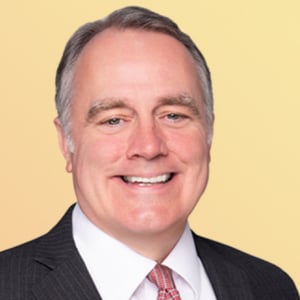
Partner, King & Spalding PLLC
Will Barnette is a partner in the Atlanta office of King & Spalding, where he is a member of the firm’s business litigation practice and class action defense group. During his 30-year career, Will has consistently led clients to successful outcomes in their most sensitive and high exposure class action, MDL, and related regulatory matters. From litigating high-stakes tobacco class actions at the turn of the century, to defending massive data breach litigation in the last decade, and winning several lucrative antitrust opt-out settlements more recently, Will has played a key role in much of the leading complex litigation of the era and led clients to tremendous success on both sides of the “v.” In particular, he has deep experience in litigating consumer, products, and antitrust class actions, commercial disputes, and managing internal investigations.
Prior to rejoining King & Spalding, where he worked earlier in his career, Will served as Associate General Counsel for The Home Depot and was a member of the company’s Legal Senior Leadership Team. As leader of The Home Depot’s commercial litigation team for more than ten years, he was responsible for the company’s most significant commercial and business litigation, which frequently challenged core aspects of the company’s business. During his 21-year tenure with The Home Depot, Will led the successful defense of several hundred class actions, created and led the company’s recovery litigation program, and successfully managed multiple high-profile investigations and favorably resolved significant related regulatory matters, including with the United States Department of Justice, the United States Environmental Protection Agency, and multi-state Attorney General groups.
A recognized thought leader in complex litigation, Will argued before the U.S. Supreme Court in the 2019 term—one of the few in-house counsel to do so. He received the Atlanta Business Chronicle’s Corporate Counsel Award for Advocacy in 2016 and has authored seven law review articles. His recent works, Misunderstanding Original Jurisdiction and There Is No Conservative Case for Class Actions, ranked among the top SSRN downloads in Federal Courts and Jurisdiction. He frequently lectures on class actions, MDL litigation, and internal investigations, and teaches Complex Litigation at the University of Tennessee Winston College of Law, where he earned the Harold C. Warner Outstanding Adjunct Professor Award in 2025.
Will chairs the Board of Georgians for Lawsuit Reform, which was instrumental in passing Georgia’s 2025 tort reform legislation. He also serves as Chair of the Class Actions Section for the State Bar of Georgia and is a former President of the Atlanta Legal Aid Society. Will played varsity college basketball at Sewanee.
Professor Emeritus of Political Science and Professor Emeritus of Public Policy, Univ. of Maryland Baltimore County
George R. La Noue is Professor Emeritus of Political Science and Professor Emeritus of Public Policy at the University of Maryland Baltimore County. He has served as a trial expert in twenty cases involving public procurement preferences. For thirty years, he was Director of the Project on Civil Rights and Public Contracts at UMBC which recently contributed 289 public contracting disparity studies to the Library of Congress. He has been a consultant to nine governments and trial expert in thirty cases where the validity of disparity studies was at issue.
Prof. La Noue can be reached by email at glanoue@umbc.edu.
Payson J. Treat Distinguished Research Fellow in Contemporary Asia, Hoover Institution
Michael Auslin, PhD, is the Payson J. Treat Distinguished Research Fellow in Contemporary Asia at the Hoover Institution, Stanford University. A historian by training, he specializes in US policy in Asia and geopolitical issues in the Indo-Pacific region.
Auslin is the author of six books, including Asia’s New Geopolitics: Essays on Reshaping the Indo-Pacific and the best-selling The End of the Asian Century: War, Stagnation, and the Risks to the World's Most Dynamic Region. He is a longtime contributor to the Wall Street Journal and National Review, and his writing appears in other leading publications, including the Financial Times, The Spectator, and Foreign Policy. He comments regularly for US and foreign print and broadcast media.
Previously, Auslin was an associate professor of history at Yale University, a resident scholar at the American Enterprise Institute, and a visiting professor at the University of Tokyo. He is a fellow of the Royal Historical Society, the senior advisor for Asia at the Halifax International Security Forum, a senior fellow at London’s Policy Exchange, and a senior fellow at the Foreign Policy Research Institute. Among his honors are being named a Young Global Leader by the World Economic Forum, a Fulbright Scholar, and a German Marshall Fund Marshall Memorial Fellow. He serves on the board of the Wilton Park USA Foundation.
Auslin cohosts the podcast "The Pacific Century" with John Yoo, where they broadly address developments in China and Asia. They discuss the latest politics, economics, law, and cultural news, with a focus on US policy in the region.
Payson J. Treat, for whom Auslin’s current Stanford position is named, held the first professorship at an American university in what was then called Far Eastern history, a post created for him at Stanford in 1906.
Senior Public Policy Advisor, Wiley Rein LLP
Nova Daly, an experienced international investment and trade policy professional, has held senior leadership positions at the U.S. Departments of the Treasury and Commerce, the White House, and the U.S. Senate. Drawing on his experience in the management, development, and implementation of the U.S. economic and national security policies and programs, he provides both high-level insight and deep operational experience to help clients navigate the policy and regulatory environment surrounding cross-border business activities, especially through the Committee on Foreign Investment in the United States (CFIUS).
Partner, CFIUS and Foreign Investment Reviews; National Security; International Trade, Skadden, Arps, Slate, Meagher & Flom LLP and Affiliates
Ambassador Gerrish returned to Skadden in 2020 after serving as the deputy U.S. trade representative for Asia, Europe, the Middle East and Industrial Competitiveness. In this role, he formulated and implemented U.S. trade policy for the regions and issues under his purview, led critically important trade negotiations, and developed and executed strategies to address trade barriers and unfair trade practices in countries around the world. In addition, he was responsible for global trade policy in the areas of intellectual property and innovation. Ambassador Gerrish served as lead negotiator for the U.S.-China Economic and Trade Agreement and played a key role in the negotiation or renegotiation of several other major trade agreements, including the U.S.-Japan Trade Agreement, the U.S.-Japan Digital Trade Agreement, the United States-Mexico-Canada Agreement and the U.S.-Korea Free Trade Agreement. From April 2018 to May 2019, Ambassador Gerrish also served as acting president and chairman of the Export-Import Bank of the United States, where he developed and implemented major policy initiatives, including an increased focus on programs to aid small businesses.
Ambassador Gerrish helps clients navigate challenges and barriers in international trade and investment. He advises on the market access opportunities and compliance challenges presented by trade agreements, and counsels clients on how to address market access issues, trade barriers and unfair trade practices that affect their ability to export to, operate within or invest in other countries. He develops strategies for clients to open or maintain international markets for their products or services, and he advocates on their behalf before the U.S. government and foreign governments. Additionally, Ambassador Gerrish advises clients on how best to structure their operations and supply chains to avoid supply chain disruptions and take advantage of current trade agreements and structures.
Ambassador Gerrish also works with clients in ongoing negotiations relating to international trade agreements, including negotiations at the World Trade Organization and for bilateral trade agreements. He advises clients on how such negotiations may affect their interests and operations and helps them to develop and execute strategies for the negotiations.
Another important part of Ambassador Gerrish’s practice is working closely with clients in matters involving U.S. export controls and U.S. customs laws and regulations. He has helped a broad array of clients in handling compliance issues, interpreting the scope and applicability of the requirements in these areas, developing and implementing company compliance programs, and resolving internal investigations and government enforcement matters.
Ambassador Gerrish has extensive experience assisting companies in complex antidumping, countervailing duty and safeguards cases and in other high-stakes trade disputes before the U.S. government and foreign governments and international institutions. He has litigated hundreds of cases before the U.S. Department of Commerce, U.S. International Trade Commission, U.S. Court of International Trade, U.S. Court of Appeals for the Federal Circuit, North American Free Trade Agreement binational panels and World Trade Organization dispute settlement panels. In addition, Ambassador Gerrish works with clients on national security investigations under Section 232 of the Trade Expansion Act of 1962 and in investigations into unfair trade policies and practices before the U.S. Trade Representative’s Office under Section 301 of the Trade Act of 1974. He has achieved highly successful outcomes for clients in these matters in industries ranging from steel to geosynthetics.
Ambassador Gerrish also assists clients in navigating national security reviews before the Committee on Foreign Investment in the United States (CFIUS). In this capacity, he draws upon his experience at the U.S. Trade Representative’s Office, where he advised on CFIUS reviews and helped to formulate the regulations and policies implementing the Foreign Investment Risk Review Modernization Act.
Ambassador Gerrish is a frequent speaker on international trade topics. He also was previously appointed (and reappointed) by the chief judge of the U.S. Court of International Trade to serve as a member of the court’s Rules Advisory Committee, and he served as co-chair of the International Trade Committee and a board member of the Customs and International Trade Bar Association. Ambassador Gerrish repeatedly has been selected for inclusion in The Best Lawyers in America.
Professor Emeritus of Law, Antonin Scalia Law School, George Mason University
Jeremy A. Rabkin is a Professor Emeritus of Law at the Antonin Scalia Law School, George Mason University. Before joining the faculty in June 2007, he was for over two decades a professor in the Department of Government at Cornell University. Professor Rabkin serves on the board of directors of the Center for Individual Rights, a public interest law firm based in Washington, D.C. Previously he was a board member of the U.S. Institute of Peace and the board of academic advisors of the American Enterprise Institute.
Professor Rabkin’s books include Law Without Nations? (Princeton University Press, 2005). He authored “If You Need a Friend, Don’t Call a Cosmopolitan,” a chapter in Varieties of Sovereignty and Citizenship (Sigal R. Ben-Porath & Rogers M. Smith eds., University of Pennsylvania Press, 2012). His articles have appeared in major law reviews and political science journals and his journalistic contributions in a range of magazines and newspapers, including the Washington Post and the Wall Street Journal.
Baker Botts Fellow in Energy & Environmental Regulatory Affairs, Baker Institute for Public Policy, Rice University
Gabriel Collins is the Baker Botts Fellow in Energy & Environmental Regulatory Affairs at Rice University's Baker Institute. He was previously an associate attorney at Baker Hostetler, LLP, and is the co-founder of the China SignPost™ (洞察中国) analysis portal. Collins has worked in the Department of Defense as a China analyst and as a private sector global commodity researcher, authoring more than 100 commodity analysis reports, both for private clients and for publication.
Collins’ research portfolio is global. His work currently focuses on legal, environmental and economic issues relating to water — including the food-water-energy nexus — as well as unconventional oil and gas development, and the intersection between global commodity markets and a range of environmental, legal and national security issues. His analysis draws from a broad swath of geospatial and other data streams, and often incorporates insights from sources in Chinese, Russian and Spanish.
Collins received his B.A. from Princeton University and a J.D. from the University of Michigan Law School. He is licensed to practice law in Texas.
Managing Director, SCF Partners
Daniel G. West invests in energy services, equipment, and technology companies at SCF Partners in Houston, Texas. He provides equity capital and strategic growth assistance to entrepreneurs and leaders of both start-up ventures and established, growing businesses.
Prior to joining the private sector, Mr. West served as an infantry officer in the United States Marine Corps. As a platoon commander with the 22nd Marine Expeditionary Unit aboard the USS Mesa Verde, he led the Tactical Recovery of Aircraft and Personnel force in support of the NATO aerial campaign over Libya. He then served as executive officer of India Company, 3rd Battalion, 9th Marines as it mentored Afghan forces to assume lead security responsibility and executed counter-narcotics missions in Marjah, Helmand Province, Afghanistan. He also served as a clerk for Judge Laurence H. Silberman on the U.S. Court of Appeals for the D.C. Circuit.
Mr. West holds degrees in law, business administration, and economics from Harvard University, where he served as an editor of the Harvard Law Review and taught undergraduate courses in economics and government. He is a member of the Executive Committee of the International & National Security Law Practice Group of the Federalist Society and a term member of the Council on Foreign Relations.
Baker Botts Fellow in Energy & Environmental Regulatory Affairs, Baker Institute for Public Policy, Rice University
Gabriel Collins is the Baker Botts Fellow in Energy & Environmental Regulatory Affairs at Rice University's Baker Institute. He was previously an associate attorney at Baker Hostetler, LLP, and is the co-founder of the China SignPost™ (洞察中国) analysis portal. Collins has worked in the Department of Defense as a China analyst and as a private sector global commodity researcher, authoring more than 100 commodity analysis reports, both for private clients and for publication.
Collins’ research portfolio is global. His work currently focuses on legal, environmental and economic issues relating to water — including the food-water-energy nexus — as well as unconventional oil and gas development, and the intersection between global commodity markets and a range of environmental, legal and national security issues. His analysis draws from a broad swath of geospatial and other data streams, and often incorporates insights from sources in Chinese, Russian and Spanish.
Collins received his B.A. from Princeton University and a J.D. from the University of Michigan Law School. He is licensed to practice law in Texas.
Managing Director, SCF Partners
Daniel G. West invests in energy services, equipment, and technology companies at SCF Partners in Houston, Texas. He provides equity capital and strategic growth assistance to entrepreneurs and leaders of both start-up ventures and established, growing businesses.
Prior to joining the private sector, Mr. West served as an infantry officer in the United States Marine Corps. As a platoon commander with the 22nd Marine Expeditionary Unit aboard the USS Mesa Verde, he led the Tactical Recovery of Aircraft and Personnel force in support of the NATO aerial campaign over Libya. He then served as executive officer of India Company, 3rd Battalion, 9th Marines as it mentored Afghan forces to assume lead security responsibility and executed counter-narcotics missions in Marjah, Helmand Province, Afghanistan. He also served as a clerk for Judge Laurence H. Silberman on the U.S. Court of Appeals for the D.C. Circuit.
Mr. West holds degrees in law, business administration, and economics from Harvard University, where he served as an editor of the Harvard Law Review and taught undergraduate courses in economics and government. He is a member of the Executive Committee of the International & National Security Law Practice Group of the Federalist Society and a term member of the Council on Foreign Relations.

Foreign Policy in the Biden Administration
International & National Security Law Practice Group Teleforum
TeleforumThere Is No Conservative Case for Class Actions
William P. Barnette
A review of The Conservative Case for Class Actions, by Brian T. Fitzpatrick (Chicago), https://press.uchicago.edu/ucp/books/book/chicago/C/bo43233299.html (Read...
The Race Card in ARPA’s Food Supply Deck
George R. La Noue
It is an old aphorism that a prudent person should not watch the making of...
China Policy and the Pacific Trade Pact
Michael R. Auslin, Nova Daly, Jeffrey Gerrish, Jeremy A. Rabkin
President Trump declined to join the Trans-Pacific Trade Partnership but many of China’s neighbors (with...
China Policy and the Pacific Trade Pact
TeleforumChina, the U.S., and Global Climate Policy: Cooperation, or Competition?
Gabriel Collins, Daniel G. West
The Biden Administration recently made headlines by announcing a greenhouse gas emissions reduction target for...
China, the U.S., and Global Climate Policy: Cooperation, or Competition?
Gabriel Collins, Daniel G. West
The Biden Administration recently made headlines by announcing a greenhouse gas emissions reduction target for...
China, the U.S., and Global Climate Policy: Cooperation, or Competition?
Practice Groups Teleforum
Topics
Upping the Ante: Biden’s Indo-Pacific Strategy Carries on Trump’s Legacy
Earlier this year, I wrote about the striking similarities between President Biden’s China strategy and...
Topics
Injunctions Highlight Challenge Targeting China’s Military-Civil Fusion Strategy
This spring, the U.S. District Court for the District of Columbia issued two preliminary injunctions...