
Associate Dean for Administration and Professor of Law, Chapman University School of Law
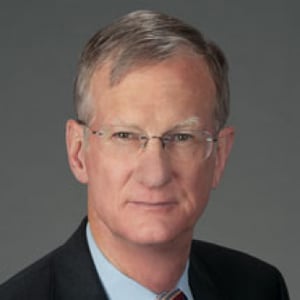
Legal Scholar and Solo Practitioner
Jack received his B.A. in History from the University of Virginia in 1977, graduating with Highest Distinction. After graduating Yale Law School in 1980, he served active duty in the U.S. Army's JAG Corps, rising to the rank of Major, where he represented the United States in more than 250 cases.
He practiced for a decade as an Associate for Bradley Arant in Birmingham, Alabama. He proudly served the State of Alabama in the Office of the Attorney General, both as Deputy and Assistant Attorney General, handling complex civil and criminal litigation cases for the people of Alabama. In 2000, he won the "Best Brief Award" from the National Association of Attorneys General for his brief in a case decided by the U.S. Supreme Court, James Alexander v. Martha Sandoval – a case he won. He was Special Assistant to the Inspector General for the Corporation for National and Community Service, Visiting Legal Fellow for the Center for Judicial and Legal Studies for the Heritage Foundation, Of Counsel at Strickland Brockington Lewis, a solo practitioner, and General Counsel for Indigo Energy.
Most recently, he "re-upped" for military service, volunteering his legal services to the Georgia State Defense Force where twice each month he provided legal services for National Guardsmen who were being deployed. He wore his military uniform for the last time in October 2024.
Jack Park passed away on March 16, 2026.
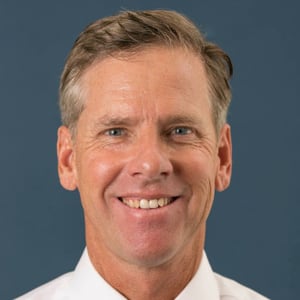
Senior Attorney, Pacific Legal Foundation
David (Dave) Breemer developed a passion for liberty while reading classics such as John Locke’s Two Treatises of Government and Thomas Paine’s The Rights of Man, as he pursued a Master’s Degree in American Political Theory at University of California, Davis. During this time, Dave began to believe that individual freedom and choice is a God-given and inviolable gift that cannot be taken away through governmental power.
Dave then traveled throughout North America for several years as an adventure tour guide, discussing American ideas of freedom with groups of young people form Europe, Australia, and Japan while rafting, skydiving, and hiking in places like Monument Valley, Las Vegas, and Alaska.
In 1998, Dave went to law school at the University of Hawaii where he studied and co-authored several property rights-oriented law reviews with Professor David L. Callies, a noted land use authority. In 2001, Dave graduated summa cum laude from law school, second in his class, and returned to California to work as an attorney for PLF.
Since joining PLF, Dave has worked as an attorney in PLF’s property rights group. In that capacity, he has litigated numerous federal and state court cases vindicating constitutional rights, particularly those related to the ability to use and enjoy private property. Examples include: Knick v. Township of Scott, U.S. Supreme Court No. 17-647; MVA v. Minnesota, U.S. Supreme Court, No. 16-1435; Levin v. City and County of San Francisco, 71 F. Supp. 3d 1072 (N.D. Cal., 2014); Sansotta v. Town of Nags Head, 724 F.3d 533 (4th Cir. 2013); Severance v. Patterson, 390 S.W.3d 705 (Tex. 2012); Severance v. Patterson, 566 F.3d 490 (5th Cir. 2009); Crown Point Dev., Inc. v. City of Sun Valley, 506 F.3d 851 (9th Cir. 2007).
In his time at PLF, Dave has also written many law review articles about the Supreme Court’s property rights jurisprudence. He continues to believe that property rights are vital to securing other rights—such as privacy, self-expression, and financial freedom—and as a result, he continues to be passionate about securing the right to use and enjoy property for all Americans in the courts of this nation.
State of California Attorney General's Office
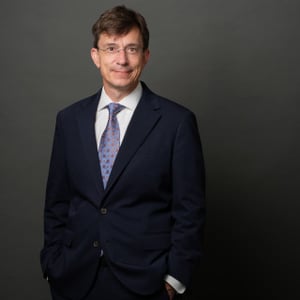
Professor of Law and Executive Director, Law and Economics Center, Antonin Scalia Law School, George Mason University
Donald Kochan is Professor of Law and Executive Director of the Law & Economics Center (LEC). Professor Kochan is an elected member of the American Law Institute (ALI) and serves as an Adviser to ALI's Restatement of the Law Fourth, Property project. Professor Kochan is a Nonresident Scholar at the Center for the Constitution at Georgetown University Law Center, where he was a Visiting Scholar in residence during Fall 2018. Before joining the Antonin Scalia Law School faculty, he was the Parker S. Kennedy Professor in Law at Chapman University’s Dale E. Fowler School of Law from 2004 to 2020. From 2003 to 2004, Professor Kochan was an Olin Fellow at the University of Virginia School of Law. During 2002-2003, he was a Visiting Assistant Professor of Law at George Mason’s Scalia Law School.
Professor Kochan’s scholarship focuses on areas of property law, constitutional law, administrative law, local government law, natural resources and environmental law, and law & economics. He has published several books and more than 50 scholarly articles and essays in well-regarded law journals. His work has been cited in more than a dozen state and federal court opinions, in more than 75 briefs filed in state and federal courts including more than 25 filed in the U.S. Supreme Court, in dozens of books and treatises, and in more than 800 scholarly articles.
Professor Kochan received his JD from Cornell Law School, where he was a John M. Olin Scholar in Law and Economics and managing editor of the Cornell International Law Journal. During law school, he also served as editor and executive editor of the Harvard Journal of Law & Public Policy symposium issues in 1997 and 1998. He received his BA from Western Michigan University, magna cum laude, with majors in both political science and philosophy, where he studied as the John W. Gill Medallion Scholar and was honored as the Presidential Scholar (awarded to the top graduate in the political science department).
After graduating from law school, Professor Kochan was a law clerk to The Honorable Richard F. Suhrheinrich of the United States Court of Appeals for the Sixth Circuit. Following his clerkship, Professor Kochan was an associate with the firm of Crowell & Moring LLP in Washington, D.C., where he specialized in natural resources & environmental law as well as tort, products, and consumer civil litigation & legislative affairs.
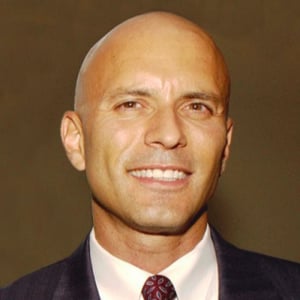
Professor of Law and Public Finance, NSU Florida Shepard Broad College of Law
Tim Canova is a Professor of Law and Public Finance at the NSU Shepard Broad College of Law, with broad experience in law teaching, private practice, and public policy. He teaches Constitutional Law II: First Amendment Law, Corporations, Business Entities, Regulation of Financial Institutions, and a Seminar on Law, Finance, and Markets at Nova. He previously taught at the Chapman University Dale E. Fowler School of Law in Orange, California, where he served as Associate Dean for Academic Affairs and the inaugural Betty Hutton Williams Professor of International Economic Law. He was first granted tenure at the University of New Mexico School of Law and he has taught as a visitor at the University of Arizona and the University of Miami.
Canova's work crosses the disciplines of law, public finance, history, and economics. He has been a leading critic of private central banks, including the Federal Reserve. His work has been published in more than two dozen book chapters and articles in the U.S. and overseas, including in the Oxford University Press, Edward Elgar Publishing, Harvard Law & Policy Review, American Journal of Economics and Sociology, Brooklyn Law Review, Georgetown Journal of Law & Public Policy, and UC Davis Law Review. Canova was an early critic of financial deregulation and the Federal Reserve under Alan Greenspan. In the 1980s, he wrote critically of the federal bailout of Continental Illinois, the nation’s seventh largest commercial bank, and the collapse of the savings & loan industry. In the 1990s, prior to the Asian currency contagion, he argued against the International Monetary Fund’s capital account liberalization program. Throughout the Bush administration, he warned of an impending crisis in the bubble economy. Following the 2008 financial collapse, he lectured and published widely on the causes and consequences of the economic and financial crisis. In 2011, Canova was appointed by Senator Bernie Sanders (I-Vt.) to serve on an Advisory Committee on Federal Reserve Reform with leading economists, including Jeffrey Sachs, Robert Reich, James Galbraith, and Nobel Laureate Joseph Stiglitz.
Canova also writes and advocates in the areas of campaign finance and election reform, a research agenda informed by his 2016 campaign challenging the then chair of the Democratic National Committee for her U.S. House of Representatives seat in a hotly contested election. Canova’s campaign went viral, raising $3.8 million from 209,000 individual donations and setting a record at the time for the highest percentage (76%) of small online donations for any campaign for federal office. The election results were marred by evidence of statistical anomalies, allegations of electronic voting irregularities, and an order by Florida’s 17th Judicial Circuit Court finding that the Broward County Elections Supervisor had illegally destroyed every ballot cast. In 2019, Canova testified to the Florida Advisory Committee of the United States Civil Rights Commission about the systematic electronic disenfranchisement of voters in Florida elections.
Canova received his A.B. degree from Franklin and Marshall College and his J.D. degree, cum laude, from the Georgetown University Law Center. He has a master’s diploma in graduate legal studies from the University of Stockholm where he was a Swedish Institute Visiting Scholar. He previously served as a legislative assistant to the late U.S. Senator Paul E. Tsongas and practiced law in New York City with Gibson, Dunn & Crutcher and Mudge Rose Guthrie Alexander & Ferdon.
Featured Article entitled “Central Bank Independence as Agency Capture: A Review of the Empirical Literature, Banking & Financial Services Policy Report 30:11 (Nov. 2011).
Mercatus Center, George Mason University
New York University School of Law
Former Mildred Van Voorhis Jones Chair in Law, University of Illinois College of Law
The University of Illinois College of Law community mourns the loss of Professor Larry E. Ribstein, the Mildred Van Voorhis Jones Chair, Associate Dean for Research, and Co-Director of the Illinois Business Law and Policy Program, who passed away on December 24, 2011 in Fairfax, Virginia.
A member of the Illinois law faculty since 2002, Ribstein was a prodigious and pioneering scholar across a vast range of subjects, including partnerships and limited liability companies, corporate and securities law, choice of law, financial regulation, white-collar crime, legal ethics, and the legal profession. Among his over 170 publications, he was the author of The Rise of the Uncorporation (Oxford University Press, 2010),The Law Market (Oxford University Press, 2009) (with Erin A. O’Hara), The Sarbanes-Oxley Debate (American Enterprise Institute Press, 2006) (with Henry N. Butler), The Constitution and the Corporation (American Enterprise Institute Press, 1995) (with Butler), leading treatises (including Ribstein & Keatinge on Limited Liability Corporations and Bromberg & Ribstein on Partnerships), and two casebooks (Business Associations (4th ed. 2003, Lexis/Nexis) (with Peter V. Letsou) andUnincorporated Business Entities (4th ed. 2009, Lexis/Nexis) (with Jeffrey M. Lipshaw)). His latest book, The Rise of the Uncorporation, which examines the emergence and significance of non-corporate forms of business organization, was recently described in the Michigan Law Review as a “fascinating” study that “takes the traditional law and economics story of the corporation and turns it on its head.” A prominent commentator on law and business, Ribstein was the founder of Ideoblog (www.ideoblog.org) and the leading contributor to Truth on the Market (www.truthonthemarket.com), which was recently ranked by the ABA Journal as one of the 100 top law blogs.
Professor Ribstein taught a variety of courses at the College of Law, including business organizations, unincorporated business entities, and market regulation. He also taught an innovative colloquium on corporate law that brought together students and leading scholars to discuss current issues in the field.
“Larry was a scholar of incandescent intellect, breathtaking range, and unflagging energy,” said Dean Bruce Smith. “He cared passionately about his students and about transforming legal education to meet the challenges of the twenty-first century. He invested selflessly in the professional development of junior faculty members – whether at Illinois or at other institutions. He cared deeply about the College of Law and contributed incalculably to it through his ideas, his engagement, and his counsel. And he cherished his family with a love that was boundless. Larry was a towering figure and an incomparable person, and he will be dearly missed.”
After earning his B.A. from The Johns Hopkins University and his J.D. from the University of Chicago Law School, Ribstein practiced for three years as an associate at McDermott, Will & Emery in Chicago. He began his teaching career at Mercer University Law School (1975-87), later serving on the faculty at George Mason University School of Law (1987-2002), including as George Mason University Foundation Professor of Law (1993-2002). He also held visiting professorships at New York University Law School, the University of Texas School of Law, Washington University School of Law, and St. Louis University School of Law. He served the legal-academic community in a variety of capacities, including on the Executive Committee of the American Association of Law Schools (AALS) Section on Securities Regulation, as chair of the AALS Section on Agency, Partnership and LLCs, and as editor and co-editor of The Supreme Court Economic Review.
Professor of Law and Public Finance, NSU Florida Shepard Broad College of Law
Tim Canova is a Professor of Law and Public Finance at the NSU Shepard Broad College of Law, with broad experience in law teaching, private practice, and public policy. He teaches Constitutional Law II: First Amendment Law, Corporations, Business Entities, Regulation of Financial Institutions, and a Seminar on Law, Finance, and Markets at Nova. He previously taught at the Chapman University Dale E. Fowler School of Law in Orange, California, where he served as Associate Dean for Academic Affairs and the inaugural Betty Hutton Williams Professor of International Economic Law. He was first granted tenure at the University of New Mexico School of Law and he has taught as a visitor at the University of Arizona and the University of Miami.
Canova's work crosses the disciplines of law, public finance, history, and economics. He has been a leading critic of private central banks, including the Federal Reserve. His work has been published in more than two dozen book chapters and articles in the U.S. and overseas, including in the Oxford University Press, Edward Elgar Publishing, Harvard Law & Policy Review, American Journal of Economics and Sociology, Brooklyn Law Review, Georgetown Journal of Law & Public Policy, and UC Davis Law Review. Canova was an early critic of financial deregulation and the Federal Reserve under Alan Greenspan. In the 1980s, he wrote critically of the federal bailout of Continental Illinois, the nation’s seventh largest commercial bank, and the collapse of the savings & loan industry. In the 1990s, prior to the Asian currency contagion, he argued against the International Monetary Fund’s capital account liberalization program. Throughout the Bush administration, he warned of an impending crisis in the bubble economy. Following the 2008 financial collapse, he lectured and published widely on the causes and consequences of the economic and financial crisis. In 2011, Canova was appointed by Senator Bernie Sanders (I-Vt.) to serve on an Advisory Committee on Federal Reserve Reform with leading economists, including Jeffrey Sachs, Robert Reich, James Galbraith, and Nobel Laureate Joseph Stiglitz.
Canova also writes and advocates in the areas of campaign finance and election reform, a research agenda informed by his 2016 campaign challenging the then chair of the Democratic National Committee for her U.S. House of Representatives seat in a hotly contested election. Canova’s campaign went viral, raising $3.8 million from 209,000 individual donations and setting a record at the time for the highest percentage (76%) of small online donations for any campaign for federal office. The election results were marred by evidence of statistical anomalies, allegations of electronic voting irregularities, and an order by Florida’s 17th Judicial Circuit Court finding that the Broward County Elections Supervisor had illegally destroyed every ballot cast. In 2019, Canova testified to the Florida Advisory Committee of the United States Civil Rights Commission about the systematic electronic disenfranchisement of voters in Florida elections.
Canova received his A.B. degree from Franklin and Marshall College and his J.D. degree, cum laude, from the Georgetown University Law Center. He has a master’s diploma in graduate legal studies from the University of Stockholm where he was a Swedish Institute Visiting Scholar. He previously served as a legislative assistant to the late U.S. Senator Paul E. Tsongas and practiced law in New York City with Gibson, Dunn & Crutcher and Mudge Rose Guthrie Alexander & Ferdon.
Featured Article entitled “Central Bank Independence as Agency Capture: A Review of the Empirical Literature, Banking & Financial Services Policy Report 30:11 (Nov. 2011).
Mercatus Center, George Mason University
New York University School of Law
Former Mildred Van Voorhis Jones Chair in Law, University of Illinois College of Law
The University of Illinois College of Law community mourns the loss of Professor Larry E. Ribstein, the Mildred Van Voorhis Jones Chair, Associate Dean for Research, and Co-Director of the Illinois Business Law and Policy Program, who passed away on December 24, 2011 in Fairfax, Virginia.
A member of the Illinois law faculty since 2002, Ribstein was a prodigious and pioneering scholar across a vast range of subjects, including partnerships and limited liability companies, corporate and securities law, choice of law, financial regulation, white-collar crime, legal ethics, and the legal profession. Among his over 170 publications, he was the author of The Rise of the Uncorporation (Oxford University Press, 2010),The Law Market (Oxford University Press, 2009) (with Erin A. O’Hara), The Sarbanes-Oxley Debate (American Enterprise Institute Press, 2006) (with Henry N. Butler), The Constitution and the Corporation (American Enterprise Institute Press, 1995) (with Butler), leading treatises (including Ribstein & Keatinge on Limited Liability Corporations and Bromberg & Ribstein on Partnerships), and two casebooks (Business Associations (4th ed. 2003, Lexis/Nexis) (with Peter V. Letsou) andUnincorporated Business Entities (4th ed. 2009, Lexis/Nexis) (with Jeffrey M. Lipshaw)). His latest book, The Rise of the Uncorporation, which examines the emergence and significance of non-corporate forms of business organization, was recently described in the Michigan Law Review as a “fascinating” study that “takes the traditional law and economics story of the corporation and turns it on its head.” A prominent commentator on law and business, Ribstein was the founder of Ideoblog (www.ideoblog.org) and the leading contributor to Truth on the Market (www.truthonthemarket.com), which was recently ranked by the ABA Journal as one of the 100 top law blogs.
Professor Ribstein taught a variety of courses at the College of Law, including business organizations, unincorporated business entities, and market regulation. He also taught an innovative colloquium on corporate law that brought together students and leading scholars to discuss current issues in the field.
“Larry was a scholar of incandescent intellect, breathtaking range, and unflagging energy,” said Dean Bruce Smith. “He cared passionately about his students and about transforming legal education to meet the challenges of the twenty-first century. He invested selflessly in the professional development of junior faculty members – whether at Illinois or at other institutions. He cared deeply about the College of Law and contributed incalculably to it through his ideas, his engagement, and his counsel. And he cherished his family with a love that was boundless. Larry was a towering figure and an incomparable person, and he will be dearly missed.”
After earning his B.A. from The Johns Hopkins University and his J.D. from the University of Chicago Law School, Ribstein practiced for three years as an associate at McDermott, Will & Emery in Chicago. He began his teaching career at Mercer University Law School (1975-87), later serving on the faculty at George Mason University School of Law (1987-2002), including as George Mason University Foundation Professor of Law (1993-2002). He also held visiting professorships at New York University Law School, the University of Texas School of Law, Washington University School of Law, and St. Louis University School of Law. He served the legal-academic community in a variety of capacities, including on the Executive Committee of the American Association of Law Schools (AALS) Section on Securities Regulation, as chair of the AALS Section on Agency, Partnership and LLCs, and as editor and co-editor of The Supreme Court Economic Review.

Dr. John Eastman is the former Henry Salvatori Professor of Law & Community Service and former Dean at Chapman University's Dale E. Fowler School of Law, where he had been a member of the faculty since 1999, specializing in Constitutional Law, Legal History, and Property. He is a founding director of the Center for Constitutional Jurisprudence, a public interest law firm affiliated with the Claremont Institute that he founded in 1999. He has a Ph.D. in Government from the Claremont Graduate School and a J.D. from the University of Chicago Law School, and a B.A. in Politics and Economics from the University of Dallas. He serves as the Chairman of the Board of the National Organization for Marriage.
Prior to joining the Chapman law faculty, Dr. Eastman served as a law clerk to the Honorable Clarence Thomas, Associate Justice, Supreme Court of the United States, and to the Honorable J. Michael Luttig, Judge, United States Court of Appeals for the Fourth Circuit and practiced law with the national law firm of Kirkland & Ellis. Dr. Eastman has also represented numerous clients in important constitutional law matters and has argued before the Supreme Court. On behalf of the Claremont Institute Center for Constitutional Jurisprudence, he has participated as amicus curiae before the Supreme Court of the United States, U.S. Courts of Appeals, and State Supreme Courts in more than one hundred cases of constitutional significance, including Boy Scouts of America v. Dale, Zelman v. Simmons-Harris (the school vouchers case), Kelo v. New London, Ct. (eminent domain), and Van Orden v. Perry (the 10 Commandments case). He has also appeared as an expert legal commentator on numerous television and radio programs, including C-SPAN, Fox News, PBS, NewsHour, and The O'Reilly Factor.
Claire Sanders Clements Dean's Professor of Law, UC Berkeley School of Law
William T. Comfort, III Professor of Law, New York University School of Law
Roderick Hills teaches and writes in public law areas, including constitutional law, local government law, land-use regulation, administrative law, and statutory interpretation. His focus in each area is on the rules and policies governing division of powers between central and subcentral governments. He holds bachelor’s and law degrees from Yale University. Following law school, he served as a law clerk for Judge Patrick Higginbotham of the US Court of Appeals for the Fifth Circuit and practiced law in Colorado. Hills previously taught at the University of Michigan Law School from 1994 to 2006. He is a member of the state bar of New York and the U.S. Supreme Court.

Professor of Law, Antonin Scalia Law School, George Mason University
ILYA SOMIN is Professor of Law at George Mason University and the B. Kenneth Simon Chair in Constitutional Studies at the Cato Institute. His research focuses on constitutional law, property law, democratic theory, federalism, and migration rights. He is the author of Free to Move: Foot Voting, Migration, and Political Freedom (Oxford University Press, revised and expanded edition, 2022), Democracy and Political Ignorance: Why Smaller Government is Smarter (Stanford University Press, revised and expanded second edition, 2016), and The Grasping Hand: Kelo v. City of New London and the Limits of Eminent Domain (University of Chicago Press, 2015, rev. paperback ed., 2016), coauthor of A Conspiracy Against Obamacare: The Volokh Conspiracy and the Health Care Case (Palgrave Macmillan, 2013), and co-editor of Eminent Domain: A Comparative Perspective (Cambridge University Press, 2017). Democracy and Political Ignorance has been translated into Italian and Japanese.
Somin’s work has appeared in numerous scholarly journals, including the Yale Law Journal, Stanford Law Review, Northwestern University Law Review, Georgetown Law Journal, Critical Review, and others. Somin has also published articles in a variety of popular press outlets, including the New York Times, Washington Post, Wall Street Journal, Los Angeles Times, CNN, NBC, The Atlantic, USA Today, Boston Globe, US News and World Report, South China Morning Post, National Law Journal and Reason. He has been quoted or interviewed by the New York Times, Washington Post, Wall Street Journal, Time, Newsweek, The Economist, the Christian Science Monitor, the Financial Times, The Guardian, the Associated Press, CBS, MSNBC, NPR, BBC, Reuters, the Canadian Broadcasting Corporation, the Australian Broadcasting Corporation, Radio Free Europe/Radio Liberty, Al Jazeera, and the Voice of America, among other media.
Somin’s writings have been cited in decisions by the United States Supreme Court, multiple state supreme courts and lower federal courts, and the Supreme Court of Israel. He is co-counsel for the plaintiffs in VOS Selections, Inc. v. Trump, a case challenging the constitutionality of President Trump’s “Liberation Day” tariffs. Somin has testified on the use of drones for targeted killing in the War on Terror before the US Senate Judiciary Subcommittee on the Constitution, Civil Rights, and Human Rights. In 2009, he testified on property rights issues at the United States Senate Judiciary Committee confirmation hearings for Supreme Court Justice Sonia Sotomayor. Somin writes regularly for the popular Volokh Conspiracy law and politics blog, now affiliated with Reason magazine (previously affiliated with the Washington Post from 2014 to 2017). From 2006 to 2013, he served as Co-Editor of the Supreme Court Economic Review, one of the country’s top-rated law and economics journals.
Somin has served as a visiting professor at the University of Pennsylvania Law School. He has also been a visiting professor or scholar at the Georgetown University Law Center, the University of Hamburg, Germany, the University of Torcuato Di Tella in Buenos Aires, Argentina, Uriel Reichman University in Israel, and Zhengzhou University in China. He is a University Affiliate of the Schar School of Policy and Government at George Mason University, and an affiliated faculty member of the George Mason University Institute for Immigration Research. Before joining the faculty at George Mason, Somin was the John M. Olin Fellow in Law at Northwestern University Law School in 2002-2003. In 2001-2002, he clerked for the Hon. Judge Jerry E. Smith of the U.S. Court of Appeals for the Fifth Circuit. Professor Somin earned his B.A., Summa Cum Laude, at Amherst College, M.A. in Political Science from Harvard University, and J.D. from Yale Law School.
Chief Judge, United States Court of Appeals, Sixth Circuit
JEFFREY S. SUTTON is the Chief Judge of the United States Court of Appeals for the Sixth Circuit. He has served as Chair of the Federal Judicial Conference Committee on Rules of Practice and Procedure, Chair of the Advisory Committee on Appellate Rules, and Chair of the Supreme Court Fellows Commission. He currently serves as Chair of the Executive Committee of the Judicial Conference of the United States. Since 1993, Chief Judge Sutton has been an adjunct professor at The Ohio State University College of Law, where he teaches seminars on State Constitutional Law, the United States Supreme Court, and Appellate Advocacy. He also teaches a class on State Constitutional Law at Harvard Law School. Among other publications, he is the author of Who Decides? States as Laboratories of Constitutional Experimentation and 51 Imperfect Solutions: States and the Making of American Constitutional Law. He is the co-author of a casebook, State Constitutional Law: The Modern Experience, as well as The Law of Judicial Precedent. He is also the co-editor of The Essential Scalia: On the Constitution, the Courts, and the Rule of Law. In 2006, Chief Judge Sutton was elected to the American Law Institute, and in 2017 he was elected to its Council.
Dr. John Eastman is the former Henry Salvatori Professor of Law & Community Service and former Dean at Chapman University's Dale E. Fowler School of Law, where he had been a member of the faculty since 1999, specializing in Constitutional Law, Legal History, and Property. He is a founding director of the Center for Constitutional Jurisprudence, a public interest law firm affiliated with the Claremont Institute that he founded in 1999. He has a Ph.D. in Government from the Claremont Graduate School and a J.D. from the University of Chicago Law School, and a B.A. in Politics and Economics from the University of Dallas. He serves as the Chairman of the Board of the National Organization for Marriage.
Prior to joining the Chapman law faculty, Dr. Eastman served as a law clerk to the Honorable Clarence Thomas, Associate Justice, Supreme Court of the United States, and to the Honorable J. Michael Luttig, Judge, United States Court of Appeals for the Fourth Circuit and practiced law with the national law firm of Kirkland & Ellis. Dr. Eastman has also represented numerous clients in important constitutional law matters and has argued before the Supreme Court. On behalf of the Claremont Institute Center for Constitutional Jurisprudence, he has participated as amicus curiae before the Supreme Court of the United States, U.S. Courts of Appeals, and State Supreme Courts in more than one hundred cases of constitutional significance, including Boy Scouts of America v. Dale, Zelman v. Simmons-Harris (the school vouchers case), Kelo v. New London, Ct. (eminent domain), and Van Orden v. Perry (the 10 Commandments case). He has also appeared as an expert legal commentator on numerous television and radio programs, including C-SPAN, Fox News, PBS, NewsHour, and The O'Reilly Factor.
Claire Sanders Clements Dean's Professor of Law, UC Berkeley School of Law
William T. Comfort, III Professor of Law, New York University School of Law
Roderick Hills teaches and writes in public law areas, including constitutional law, local government law, land-use regulation, administrative law, and statutory interpretation. His focus in each area is on the rules and policies governing division of powers between central and subcentral governments. He holds bachelor’s and law degrees from Yale University. Following law school, he served as a law clerk for Judge Patrick Higginbotham of the US Court of Appeals for the Fifth Circuit and practiced law in Colorado. Hills previously taught at the University of Michigan Law School from 1994 to 2006. He is a member of the state bar of New York and the U.S. Supreme Court.
Professor of Law, Antonin Scalia Law School, George Mason University
ILYA SOMIN is Professor of Law at George Mason University and the B. Kenneth Simon Chair in Constitutional Studies at the Cato Institute. His research focuses on constitutional law, property law, democratic theory, federalism, and migration rights. He is the author of Free to Move: Foot Voting, Migration, and Political Freedom (Oxford University Press, revised and expanded edition, 2022), Democracy and Political Ignorance: Why Smaller Government is Smarter (Stanford University Press, revised and expanded second edition, 2016), and The Grasping Hand: Kelo v. City of New London and the Limits of Eminent Domain (University of Chicago Press, 2015, rev. paperback ed., 2016), coauthor of A Conspiracy Against Obamacare: The Volokh Conspiracy and the Health Care Case (Palgrave Macmillan, 2013), and co-editor of Eminent Domain: A Comparative Perspective (Cambridge University Press, 2017). Democracy and Political Ignorance has been translated into Italian and Japanese.
Somin’s work has appeared in numerous scholarly journals, including the Yale Law Journal, Stanford Law Review, Northwestern University Law Review, Georgetown Law Journal, Critical Review, and others. Somin has also published articles in a variety of popular press outlets, including the New York Times, Washington Post, Wall Street Journal, Los Angeles Times, CNN, NBC, The Atlantic, USA Today, Boston Globe, US News and World Report, South China Morning Post, National Law Journal and Reason. He has been quoted or interviewed by the New York Times, Washington Post, Wall Street Journal, Time, Newsweek, The Economist, the Christian Science Monitor, the Financial Times, The Guardian, the Associated Press, CBS, MSNBC, NPR, BBC, Reuters, the Canadian Broadcasting Corporation, the Australian Broadcasting Corporation, Radio Free Europe/Radio Liberty, Al Jazeera, and the Voice of America, among other media.
Somin’s writings have been cited in decisions by the United States Supreme Court, multiple state supreme courts and lower federal courts, and the Supreme Court of Israel. He is co-counsel for the plaintiffs in VOS Selections, Inc. v. Trump, a case challenging the constitutionality of President Trump’s “Liberation Day” tariffs. Somin has testified on the use of drones for targeted killing in the War on Terror before the US Senate Judiciary Subcommittee on the Constitution, Civil Rights, and Human Rights. In 2009, he testified on property rights issues at the United States Senate Judiciary Committee confirmation hearings for Supreme Court Justice Sonia Sotomayor. Somin writes regularly for the popular Volokh Conspiracy law and politics blog, now affiliated with Reason magazine (previously affiliated with the Washington Post from 2014 to 2017). From 2006 to 2013, he served as Co-Editor of the Supreme Court Economic Review, one of the country’s top-rated law and economics journals.
Somin has served as a visiting professor at the University of Pennsylvania Law School. He has also been a visiting professor or scholar at the Georgetown University Law Center, the University of Hamburg, Germany, the University of Torcuato Di Tella in Buenos Aires, Argentina, Uriel Reichman University in Israel, and Zhengzhou University in China. He is a University Affiliate of the Schar School of Policy and Government at George Mason University, and an affiliated faculty member of the George Mason University Institute for Immigration Research. Before joining the faculty at George Mason, Somin was the John M. Olin Fellow in Law at Northwestern University Law School in 2002-2003. In 2001-2002, he clerked for the Hon. Judge Jerry E. Smith of the U.S. Court of Appeals for the Fifth Circuit. Professor Somin earned his B.A., Summa Cum Laude, at Amherst College, M.A. in Political Science from Harvard University, and J.D. from Yale Law School.
Chief Judge, United States Court of Appeals, Sixth Circuit
JEFFREY S. SUTTON is the Chief Judge of the United States Court of Appeals for the Sixth Circuit. He has served as Chair of the Federal Judicial Conference Committee on Rules of Practice and Procedure, Chair of the Advisory Committee on Appellate Rules, and Chair of the Supreme Court Fellows Commission. He currently serves as Chair of the Executive Committee of the Judicial Conference of the United States. Since 1993, Chief Judge Sutton has been an adjunct professor at The Ohio State University College of Law, where he teaches seminars on State Constitutional Law, the United States Supreme Court, and Appellate Advocacy. He also teaches a class on State Constitutional Law at Harvard Law School. Among other publications, he is the author of Who Decides? States as Laboratories of Constitutional Experimentation and 51 Imperfect Solutions: States and the Making of American Constitutional Law. He is the co-author of a casebook, State Constitutional Law: The Modern Experience, as well as The Law of Judicial Precedent. He is also the co-editor of The Essential Scalia: On the Constitution, the Courts, and the Rule of Law. In 2006, Chief Judge Sutton was elected to the American Law Institute, and in 2017 he was elected to its Council.
Professor, Dale E. Fowler School of Law, Chapman University
Professor Bell joined the faculty of Fowler School of Law in 1998. Professor Bell specializes in high-tech legal issues and has written a variety of works on intellectual property and Internet law, including the book, Intellectual Privilege: Copyright, Common Law, and the Common Good (2014). He received his Juris Doctor from the University of Chicago Law School in 1993, where he served both as a member of the University of Chicago Law Review and as Articles Editor and cofounder of the University of Chicago Legal Roundtable. After graduating from law school, Professor Bell joined the Silicon Valley law firm of Wilson Sonsini Goodrich & Rosati. He entered teaching in 1995, when he became an Assistant Professor of Law in the Law and Technology Program at the University of Dayton School of Law. During a one year leave of absence from that school, and just prior to joining the Fowler School of Law faculty, he served as Director of Telecommunications and Technology Studies at the Cato Institute in Washington, D.C. Professor Bell joined the faculty of Fowler School of Law in 1998. In addition to writing a steady stream of scholarly works, Professor Bell has appeared on or been quoted in the Wall Street Journal, CNN, Economist, Los Angeles Times, and many other news sources, and starred in several online videos addressing timely legal issues.
New York Times Bestselling Author on Technology and Strategy, and Law
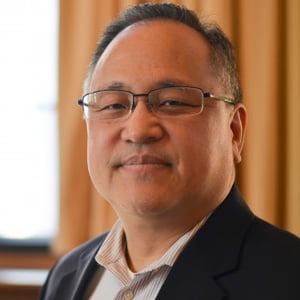
John H. Chestnut Professor of Law, Communication, and Computer & Information Science; Founding Director, Center for Technology, Innovation and Competition, University of Pennsylvania Law School
Christopher S. Yoo is the John H. Chestnut Professor of Law and a Professor at the Annenberg School for Communication and in the Computer & Information Science Department of School of Engineering and Applied Science at the University of Pennsylvania, where he is also the Founding Director of the Center for Technology, Innovation and Competition. He is the author of over one hundred scholarly works and has taught at over a dozen universities around the world. Professor Yoo received his A.B. from Harvard, his M.B.A. from UCLA, and his J.D. from Northwestern University. Before entering the academy, Professor Yoo clerked for Justice Anthony M. Kennedy of the Supreme Court of the United States and practiced law with the predecessor firm to Hogan Lovells under the supervision of now-Chief Justice John G. Roberts, Jr. Before joining the University of Pennsylvania, he taught for eight years at the Vanderbilt Law School. He is frequently called to testify before the U.S. Congress, Federal Trade Commission, Department of Justice Antitrust Division, Federal Communications Commission, foreign governments, and international organizations.
Professor of Law and Public Finance, NSU Florida Shepard Broad College of Law
Tim Canova is a Professor of Law and Public Finance at the NSU Shepard Broad College of Law, with broad experience in law teaching, private practice, and public policy. He teaches Constitutional Law II: First Amendment Law, Corporations, Business Entities, Regulation of Financial Institutions, and a Seminar on Law, Finance, and Markets at Nova. He previously taught at the Chapman University Dale E. Fowler School of Law in Orange, California, where he served as Associate Dean for Academic Affairs and the inaugural Betty Hutton Williams Professor of International Economic Law. He was first granted tenure at the University of New Mexico School of Law and he has taught as a visitor at the University of Arizona and the University of Miami.
Canova's work crosses the disciplines of law, public finance, history, and economics. He has been a leading critic of private central banks, including the Federal Reserve. His work has been published in more than two dozen book chapters and articles in the U.S. and overseas, including in the Oxford University Press, Edward Elgar Publishing, Harvard Law & Policy Review, American Journal of Economics and Sociology, Brooklyn Law Review, Georgetown Journal of Law & Public Policy, and UC Davis Law Review. Canova was an early critic of financial deregulation and the Federal Reserve under Alan Greenspan. In the 1980s, he wrote critically of the federal bailout of Continental Illinois, the nation’s seventh largest commercial bank, and the collapse of the savings & loan industry. In the 1990s, prior to the Asian currency contagion, he argued against the International Monetary Fund’s capital account liberalization program. Throughout the Bush administration, he warned of an impending crisis in the bubble economy. Following the 2008 financial collapse, he lectured and published widely on the causes and consequences of the economic and financial crisis. In 2011, Canova was appointed by Senator Bernie Sanders (I-Vt.) to serve on an Advisory Committee on Federal Reserve Reform with leading economists, including Jeffrey Sachs, Robert Reich, James Galbraith, and Nobel Laureate Joseph Stiglitz.
Canova also writes and advocates in the areas of campaign finance and election reform, a research agenda informed by his 2016 campaign challenging the then chair of the Democratic National Committee for her U.S. House of Representatives seat in a hotly contested election. Canova’s campaign went viral, raising $3.8 million from 209,000 individual donations and setting a record at the time for the highest percentage (76%) of small online donations for any campaign for federal office. The election results were marred by evidence of statistical anomalies, allegations of electronic voting irregularities, and an order by Florida’s 17th Judicial Circuit Court finding that the Broward County Elections Supervisor had illegally destroyed every ballot cast. In 2019, Canova testified to the Florida Advisory Committee of the United States Civil Rights Commission about the systematic electronic disenfranchisement of voters in Florida elections.
Canova received his A.B. degree from Franklin and Marshall College and his J.D. degree, cum laude, from the Georgetown University Law Center. He has a master’s diploma in graduate legal studies from the University of Stockholm where he was a Swedish Institute Visiting Scholar. He previously served as a legislative assistant to the late U.S. Senator Paul E. Tsongas and practiced law in New York City with Gibson, Dunn & Crutcher and Mudge Rose Guthrie Alexander & Ferdon.
Featured Article entitled “Central Bank Independence as Agency Capture: A Review of the Empirical Literature, Banking & Financial Services Policy Report 30:11 (Nov. 2011).
Mercatus Center, George Mason University
Former Mildred Van Voorhis Jones Chair in Law, University of Illinois College of Law
The University of Illinois College of Law community mourns the loss of Professor Larry E. Ribstein, the Mildred Van Voorhis Jones Chair, Associate Dean for Research, and Co-Director of the Illinois Business Law and Policy Program, who passed away on December 24, 2011 in Fairfax, Virginia.
A member of the Illinois law faculty since 2002, Ribstein was a prodigious and pioneering scholar across a vast range of subjects, including partnerships and limited liability companies, corporate and securities law, choice of law, financial regulation, white-collar crime, legal ethics, and the legal profession. Among his over 170 publications, he was the author of The Rise of the Uncorporation (Oxford University Press, 2010),The Law Market (Oxford University Press, 2009) (with Erin A. O’Hara), The Sarbanes-Oxley Debate (American Enterprise Institute Press, 2006) (with Henry N. Butler), The Constitution and the Corporation (American Enterprise Institute Press, 1995) (with Butler), leading treatises (including Ribstein & Keatinge on Limited Liability Corporations and Bromberg & Ribstein on Partnerships), and two casebooks (Business Associations (4th ed. 2003, Lexis/Nexis) (with Peter V. Letsou) andUnincorporated Business Entities (4th ed. 2009, Lexis/Nexis) (with Jeffrey M. Lipshaw)). His latest book, The Rise of the Uncorporation, which examines the emergence and significance of non-corporate forms of business organization, was recently described in the Michigan Law Review as a “fascinating” study that “takes the traditional law and economics story of the corporation and turns it on its head.” A prominent commentator on law and business, Ribstein was the founder of Ideoblog (www.ideoblog.org) and the leading contributor to Truth on the Market (www.truthonthemarket.com), which was recently ranked by the ABA Journal as one of the 100 top law blogs.
Professor Ribstein taught a variety of courses at the College of Law, including business organizations, unincorporated business entities, and market regulation. He also taught an innovative colloquium on corporate law that brought together students and leading scholars to discuss current issues in the field.
“Larry was a scholar of incandescent intellect, breathtaking range, and unflagging energy,” said Dean Bruce Smith. “He cared passionately about his students and about transforming legal education to meet the challenges of the twenty-first century. He invested selflessly in the professional development of junior faculty members – whether at Illinois or at other institutions. He cared deeply about the College of Law and contributed incalculably to it through his ideas, his engagement, and his counsel. And he cherished his family with a love that was boundless. Larry was a towering figure and an incomparable person, and he will be dearly missed.”
After earning his B.A. from The Johns Hopkins University and his J.D. from the University of Chicago Law School, Ribstein practiced for three years as an associate at McDermott, Will & Emery in Chicago. He began his teaching career at Mercer University Law School (1975-87), later serving on the faculty at George Mason University School of Law (1987-2002), including as George Mason University Foundation Professor of Law (1993-2002). He also held visiting professorships at New York University Law School, the University of Texas School of Law, Washington University School of Law, and St. Louis University School of Law. He served the legal-academic community in a variety of capacities, including on the Executive Committee of the American Association of Law Schools (AALS) Section on Securities Regulation, as chair of the AALS Section on Agency, Partnership and LLCs, and as editor and co-editor of The Supreme Court Economic Review.
Dr. John Eastman is the former Henry Salvatori Professor of Law & Community Service and former Dean at Chapman University's Dale E. Fowler School of Law, where he had been a member of the faculty since 1999, specializing in Constitutional Law, Legal History, and Property. He is a founding director of the Center for Constitutional Jurisprudence, a public interest law firm affiliated with the Claremont Institute that he founded in 1999. He has a Ph.D. in Government from the Claremont Graduate School and a J.D. from the University of Chicago Law School, and a B.A. in Politics and Economics from the University of Dallas. He serves as the Chairman of the Board of the National Organization for Marriage.
Prior to joining the Chapman law faculty, Dr. Eastman served as a law clerk to the Honorable Clarence Thomas, Associate Justice, Supreme Court of the United States, and to the Honorable J. Michael Luttig, Judge, United States Court of Appeals for the Fourth Circuit and practiced law with the national law firm of Kirkland & Ellis. Dr. Eastman has also represented numerous clients in important constitutional law matters and has argued before the Supreme Court. On behalf of the Claremont Institute Center for Constitutional Jurisprudence, he has participated as amicus curiae before the Supreme Court of the United States, U.S. Courts of Appeals, and State Supreme Courts in more than one hundred cases of constitutional significance, including Boy Scouts of America v. Dale, Zelman v. Simmons-Harris (the school vouchers case), Kelo v. New London, Ct. (eminent domain), and Van Orden v. Perry (the 10 Commandments case). He has also appeared as an expert legal commentator on numerous television and radio programs, including C-SPAN, Fox News, PBS, NewsHour, and The O'Reilly Factor.
Claire Sanders Clements Dean's Professor of Law, UC Berkeley School of Law
William T. Comfort, III Professor of Law, New York University School of Law
Roderick Hills teaches and writes in public law areas, including constitutional law, local government law, land-use regulation, administrative law, and statutory interpretation. His focus in each area is on the rules and policies governing division of powers between central and subcentral governments. He holds bachelor’s and law degrees from Yale University. Following law school, he served as a law clerk for Judge Patrick Higginbotham of the US Court of Appeals for the Fifth Circuit and practiced law in Colorado. Hills previously taught at the University of Michigan Law School from 1994 to 2006. He is a member of the state bar of New York and the U.S. Supreme Court.
Professor of Law, Antonin Scalia Law School, George Mason University
ILYA SOMIN is Professor of Law at George Mason University and the B. Kenneth Simon Chair in Constitutional Studies at the Cato Institute. His research focuses on constitutional law, property law, democratic theory, federalism, and migration rights. He is the author of Free to Move: Foot Voting, Migration, and Political Freedom (Oxford University Press, revised and expanded edition, 2022), Democracy and Political Ignorance: Why Smaller Government is Smarter (Stanford University Press, revised and expanded second edition, 2016), and The Grasping Hand: Kelo v. City of New London and the Limits of Eminent Domain (University of Chicago Press, 2015, rev. paperback ed., 2016), coauthor of A Conspiracy Against Obamacare: The Volokh Conspiracy and the Health Care Case (Palgrave Macmillan, 2013), and co-editor of Eminent Domain: A Comparative Perspective (Cambridge University Press, 2017). Democracy and Political Ignorance has been translated into Italian and Japanese.
Somin’s work has appeared in numerous scholarly journals, including the Yale Law Journal, Stanford Law Review, Northwestern University Law Review, Georgetown Law Journal, Critical Review, and others. Somin has also published articles in a variety of popular press outlets, including the New York Times, Washington Post, Wall Street Journal, Los Angeles Times, CNN, NBC, The Atlantic, USA Today, Boston Globe, US News and World Report, South China Morning Post, National Law Journal and Reason. He has been quoted or interviewed by the New York Times, Washington Post, Wall Street Journal, Time, Newsweek, The Economist, the Christian Science Monitor, the Financial Times, The Guardian, the Associated Press, CBS, MSNBC, NPR, BBC, Reuters, the Canadian Broadcasting Corporation, the Australian Broadcasting Corporation, Radio Free Europe/Radio Liberty, Al Jazeera, and the Voice of America, among other media.
Somin’s writings have been cited in decisions by the United States Supreme Court, multiple state supreme courts and lower federal courts, and the Supreme Court of Israel. He is co-counsel for the plaintiffs in VOS Selections, Inc. v. Trump, a case challenging the constitutionality of President Trump’s “Liberation Day” tariffs. Somin has testified on the use of drones for targeted killing in the War on Terror before the US Senate Judiciary Subcommittee on the Constitution, Civil Rights, and Human Rights. In 2009, he testified on property rights issues at the United States Senate Judiciary Committee confirmation hearings for Supreme Court Justice Sonia Sotomayor. Somin writes regularly for the popular Volokh Conspiracy law and politics blog, now affiliated with Reason magazine (previously affiliated with the Washington Post from 2014 to 2017). From 2006 to 2013, he served as Co-Editor of the Supreme Court Economic Review, one of the country’s top-rated law and economics journals.
Somin has served as a visiting professor at the University of Pennsylvania Law School. He has also been a visiting professor or scholar at the Georgetown University Law Center, the University of Hamburg, Germany, the University of Torcuato Di Tella in Buenos Aires, Argentina, Uriel Reichman University in Israel, and Zhengzhou University in China. He is a University Affiliate of the Schar School of Policy and Government at George Mason University, and an affiliated faculty member of the George Mason University Institute for Immigration Research. Before joining the faculty at George Mason, Somin was the John M. Olin Fellow in Law at Northwestern University Law School in 2002-2003. In 2001-2002, he clerked for the Hon. Judge Jerry E. Smith of the U.S. Court of Appeals for the Fifth Circuit. Professor Somin earned his B.A., Summa Cum Laude, at Amherst College, M.A. in Political Science from Harvard University, and J.D. from Yale Law School.
Chief Judge, United States Court of Appeals, Sixth Circuit
JEFFREY S. SUTTON is the Chief Judge of the United States Court of Appeals for the Sixth Circuit. He has served as Chair of the Federal Judicial Conference Committee on Rules of Practice and Procedure, Chair of the Advisory Committee on Appellate Rules, and Chair of the Supreme Court Fellows Commission. He currently serves as Chair of the Executive Committee of the Judicial Conference of the United States. Since 1993, Chief Judge Sutton has been an adjunct professor at The Ohio State University College of Law, where he teaches seminars on State Constitutional Law, the United States Supreme Court, and Appellate Advocacy. He also teaches a class on State Constitutional Law at Harvard Law School. Among other publications, he is the author of Who Decides? States as Laboratories of Constitutional Experimentation and 51 Imperfect Solutions: States and the Making of American Constitutional Law. He is the co-author of a casebook, State Constitutional Law: The Modern Experience, as well as The Law of Judicial Precedent. He is also the co-editor of The Essential Scalia: On the Constitution, the Courts, and the Rule of Law. In 2006, Chief Judge Sutton was elected to the American Law Institute, and in 2017 he was elected to its Council.
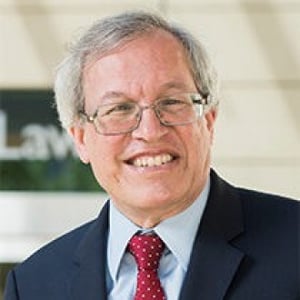
Dean and Jesse H. Choper Distinguished Professor of Law, UC Berkeley School of Law
Erwin Chemerinsky became the 13th Dean of Berkeley Law on July 1, 2017, when he joined the faculty as the Jesse H. Choper Distinguished Professor of Law.
Prior to assuming this position, from 2008-2017, he was the founding Dean and Distinguished Professor of Law, and Raymond Pryke Professor of First Amendment Law, at University of California, Irvine School of Law, with a joint appointment in Political Science. Before that he was the Alston and Bird Professor of Law and Political Science at Duke University from 2004-2008, and from 1983-2004 was a professor at the University of Southern California Law School, including as the Sydney M. Irmas Professor of Public Interest Law, Legal Ethics, and Political Science. He also has taught at DePaul College of Law and UCLA Law School.
He is the author of eleven books, including leading casebooks and treatises about constitutional law, criminal procedure, and federal jurisdiction. His most recent books are, We the People: A Progressive Reading of the Constitution for the Twenty-First Century (Picador Macmillan) published in November 2018, and two books published by Yale University Press in 2017, Closing the Courthouse Doors: How Your Constitutional Rights Became Unenforceable and Free Speech on Campus (with Howard Gillman).
He also is the author of more than 200 law review articles. He writes a regular column for the Sacramento Bee, monthly columns for the ABA Journal and the Daily Journal, and frequent op-eds in newspapers across the country. He frequently argues appellate cases, including in the United States Supreme Court.
In 2016, he was named a fellow of the American Academy of Arts and Sciences. In 2017, National Jurist magazine again named Dean Chemerinsky as the most influential person in legal education in the United States.
Dr. John Eastman is the former Henry Salvatori Professor of Law & Community Service and former Dean at Chapman University's Dale E. Fowler School of Law, where he had been a member of the faculty since 1999, specializing in Constitutional Law, Legal History, and Property. He is a founding director of the Center for Constitutional Jurisprudence, a public interest law firm affiliated with the Claremont Institute that he founded in 1999. He has a Ph.D. in Government from the Claremont Graduate School and a J.D. from the University of Chicago Law School, and a B.A. in Politics and Economics from the University of Dallas. He serves as the Chairman of the Board of the National Organization for Marriage.
Prior to joining the Chapman law faculty, Dr. Eastman served as a law clerk to the Honorable Clarence Thomas, Associate Justice, Supreme Court of the United States, and to the Honorable J. Michael Luttig, Judge, United States Court of Appeals for the Fourth Circuit and practiced law with the national law firm of Kirkland & Ellis. Dr. Eastman has also represented numerous clients in important constitutional law matters and has argued before the Supreme Court. On behalf of the Claremont Institute Center for Constitutional Jurisprudence, he has participated as amicus curiae before the Supreme Court of the United States, U.S. Courts of Appeals, and State Supreme Courts in more than one hundred cases of constitutional significance, including Boy Scouts of America v. Dale, Zelman v. Simmons-Harris (the school vouchers case), Kelo v. New London, Ct. (eminent domain), and Van Orden v. Perry (the 10 Commandments case). He has also appeared as an expert legal commentator on numerous television and radio programs, including C-SPAN, Fox News, PBS, NewsHour, and The O'Reilly Factor.

The Politically Correct University
Richard E. Redding, John J. Park
Professor Richard E. Redding, Associate Dean for Administration and Professor of Law at Chapman University...
Federal Courts Standards for Ripeness and Takings Claims
J. David Breemer, Daniel L. Siegel, Donald J. Kochan
Justiciability doctrines, particularly ripeness, have a particularly important role in takings challenges to permitting decisions. ...
Net Neutrality: How Free Do We Want the Internet?
Orange, CaliforniaPanel 1: Bankruptcy or Bailout?
Barry Adler, Timothy Canova, Garett Jones, Michael E. Levine, Larry Ribstein
Prof. Barry Adler, New York University School of Law Prof. Timothy Canova, Chapman University School...
Panel 1: Bankruptcy or Bailout?
Barry Adler, Timothy Canova, Garett Jones, Michael E. Levine, Larry Ribstein
Prof. Barry Adler, New York University School of Law Prof. Timothy Canova, Chapman University School...
Panel 1: Bankruptcy or Bailout?
12th Annual Faculty Conference
New Orleans, LAFederalism: Federalism and the Economic Crisis
John C. Eastman, Malcolm M. Feeley, Roderick M. Hills, Ilya Somin, Jeffrey S. Sutton
The stimulus bill and other legislation enacted this year has led to a vast expansion...
Federalism: Federalism and the Economic Crisis
John C. Eastman, Malcolm M. Feeley, Roderick M. Hills, Ilya Somin, Jeffrey S. Sutton
The stimulus bill and other legislation enacted this year has led to a vast expansion...
Federalism: Federalism and the Economic Crisis
2009 National Lawyers Convention
Washington, DCThe Great Debate: Left vs. Right Debate the Constitutional Issues of the Day