
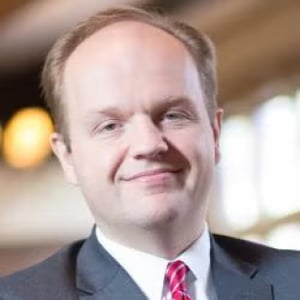
John C. Hutchins Professor of Law; Director, Compliance Risk Management and Financial Integrity Institute; Co-Director, Center for Business Law; Associate Dean of Graduate Studies and Strategic Programs, Case Western Reserve University School of Law
Eric Chaffee is a professor at Case Western Reserve University School of Law, specializing in business law, taxation, and law & technology. He is a recognized educator and prolific writer in his field.
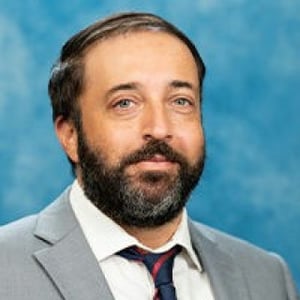
Assistant Professor Law, St. Thomas University College of Law
Itai Fiegenbaum is an Assistant Professor at St. Thomas University College of Law, where he teaches Business Associations and related commercial law courses.

L.L. Stewart Professor of Business Law, University of Oregon School of Law
Professor Manesh's scholarship focuses on the intersections of corporate, contract and LLC law. His work has been cited in leading casebooks and more than 40 court decisions, including opinions of the U.S. Courts of Appeals for the Second, Ninth, and Eleventh Circuits, the Delaware Supreme Court, and the Delaware Court of Chancery. At Oregon Law, he teaches a variety of business law courses encapsulating corporations, LLCs, securities, contracts, and mergers and acquisitions. During his time at Oregon, he has received the Orlando J. Hollis Faculty Teaching Award, the law school's highest teaching honor, and the Herman Award for Outstanding Online Education from University of Oregon Office of the Provost. Prior to joining the Oregon law faculty, Professor Manesh was an attorney in the office of Davis Wright Tremaine LLP, focusing on corporate finance and business transactions. He earned his undergraduate degree in industrial engineering summa cum laude from the University of Arkansas and his law degree magna cum laude from Georgetown University, where he was named Order of the Coif.
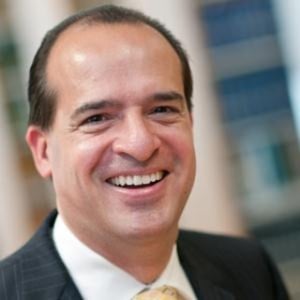
Professor of Law and Rouse Chairholder, Antonin Scalia Law School, George Mason University
Professor Miller holds an Allison and Dorothy Rouse Chair in Law at the Antonin Scalia Law School. An elected member of the American Law Institute and a research member of the European Corporate Governance Institute, Professor Miller is also a Fellow and the Co-Director of the Program on Organizations, Business and Markets at the Classical Liberal Institute at the New York University Law School, an Adjunct Fellow at the Manhattan Institute, and an Affiliated Scholar at the James Wilson Institute on Natural Rights and the American Founding. Prior to joining George Mason University in 2025, Professor Miller was the F. Arnold Daum Chair in Corporate Finance and Law and a Professor of Law at the University of Iowa College of Law, where he had also served as the Associate Dean for Faculty Development.
Professor Miller’s research concerns corporate and securities law, the economic analysis of law, and the philosophy of law. He is particularly interested in applying economic concepts and methods to understand provisions in contracts between sophisticated commercial parties. He has written on material adverse effect clauses under Delaware law, the fiduciary duties of corporate directors, director oversight liability, the history and development of Delaware corporate law, and much more. His articles and working papers are available on his SSRN page.
Professor Miller has been cited by federal and state courts in the United States, including the Delaware Supreme Court and the Delaware Court of Chancery, as well as by the Commercial Court of the United Kingdom and the Ontario Superior Court of Justice (Commercial List) in Canada. Additionally, he is a member of the Committee on Mergers, Acquisitions & Corporate Control Contests and a former chair of the Corporation Law Committee of the New York City Bar Association.
Earlier in his career, Professor Miller was a Professor of Law at the Villanova University School of Law and the Associate Director of the Matthew J. Ryan Center for the Study of Free Institutions and the Public Good at Villanova University. He has been a Visiting Professor of Law at the University of Pennsylvania Law School, a Visiting Assistant Professor of Law at the Cardozo Law School, and an Olin Fellow in Law and Economics at the Columbia Law School.
Before entering academia, Professor Miller was an associate with Wachtell, Lipton, Rosen & Katz. He earned his J.D. from the Yale Law School where he was a Senior Editor of the Yale Law Journal and an Olin Fellow in Law, Economics and Public Policy. He earned his M.A. and M.Phil. degrees in philosophy from Columbia University, where he held a Mellon Fellowship in the Humanities from the Woodrow Wilson National Fellowship Foundation and a Western Civilization Fellowship from the Intercollegiate Studies Institute. He earned his B.A. in philosophy and mathematics from Columbia College.

Cornelius Vanderbilt Chair in Law; Co-Director, Law & Business Program, Vanderbilt University Law School
Professor Rose is a Cornelius Vanderbilt Chair in law and the co-director of the Law and Business Program at Vanderbilt University. She is an expert on corporate and securities law and the institutional design of enforcement regimes. Prior to joining Vanderbilt’s law faculty in 2008, Professor Rose was a law clerk for Judge William Fletcher on the U.S. Court of Appeals for the Ninth Circuit. She then served as a litigation associate with Gibson Dunn & Crutcher in San Francisco for five years, where her practice included the defense of state regulatory proceedings, SEC enforcement actions, and state and federal class action and derivative litigation. Her articles have been published in numerous top journals including Columbia Law Review, University of Chicago Law Review, University of Pennsylvania Law Review, and Northwestern University Law Review.
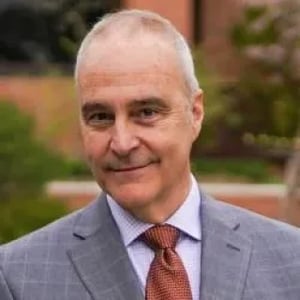
Coleman P. Burke Chair in Environmental Law, School of Law, Case Western Reserve University
Victor B. Flatt is the Coleman P. Burke Chair in Environmental Law and the Associate Director of the Burke Center for Environmental Law at Case Western University School of Law. He also holds an appointment as an Energy Fellow UH Energy at the University of Houston.
Professor Flatt is a recognized expert on environmental law, climate law and energy law, and the intersection of these areas. Since 2019, he has created and taught the first law school courses in the country concerning how law relates to sustainability planning and ESG policies in corporations, offering the courses at UHLC, Vermont Law School and Case Western University School of Law.
His research focuses on environmental legislation and enforcement, with particular expertise in the Clean Air Act, NEPA and Climate. He is co-author of a popular environmental law casebook, and has authored more than 50 law review articles, which have appeared in journals such as the Notre Dame Law Review, Ecology Law Quarterly, The Ohio State Law Journal, Washington Law Review, Houston Law Review and the Carolina Law Review. Seven of his articles have been recognized as finalists or winner of the best environmental law review article of the year, and one was recognized by Vanderbilt University Law School and the Environmental Law Institute as one of the three best environmental articles of 2010, leading to a seminar and panel on the article in a congressional staff briefing.
He has been a Visiting Law Professor at the University of Georgia Law School, the University of Washington Law School and Seattle University School of Law. He has been honored as a Distinguished Environmental Scholar in Residence at Vermont Law School, Pace Law School (Elisabeth Haub Distinguished Scholar) and Widener University Delaware Law School. He was previously the inaugural O’Quinn Chair in Environmental Law at UHLC from 2002-2009, and the Dwight Olds Chair in Law at UHLC from 2017-2023. Professor Flatt was also the inaugural Taft Distinguished Professor in Environmental Law and the Director of the Center for Climate, Energy, Environment, and Economics (CE3) at UNC Chapel Hill School of Law.
Professor Flatt has served on the AALS committees on Natural Resources and Environmental Law and was chair of the AALS Teaching Methods Section. He has served on many other board and committees in his career, including the national board of Lambda Legal and the Law School Admission Council’s Gay and Lesbian Interests section.
Professor Flatt received his B.A. in Chemistry and Math from Vanderbilt University where he was a Harold Stirling Vanderbilt Scholar, and his J.D. from Northwestern University, where he was a John Henry Wigmore Scholar. After graduating from Northwestern, Professor Flatt clerked for the Honorable Danny J. Boggs of the United States Sixth Circuit Court of Appeals.
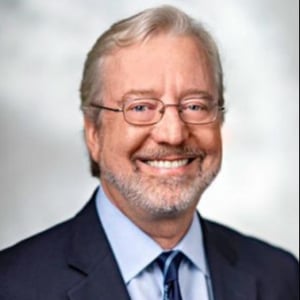
Legal Director and Securities Specialist, Better Markets
Mr. Hall has been with Better Markets since its founding more than 10 years ago, and he serves as its Legal Director and Securities Specialist. His background includes extensive experience in securities and commodities regulation acquired through positions in the Federal government, private practice, and the nonprofit sector.
Mr. Hall oversees a highly accomplished legal team that files amicus briefs in important cases involving financial regulation; initiates litigation or intervenes in cases when necessary to advance the public interest; issues special reports on specific topics surrounding the law and financial regulation; and provides regulatory analysis in the areas of banking, securities, and consumer protection. And his team supports the work of other staff members at Better Markets as they fight for the public interest before the regulatory agencies.
Mr. Hall is one of Better Markets’ most prolific authors, having written or co-written more than 100 comment letters, reports and legal briefs in his nearly decade-long fight for the public interest at the organization.
A sought-after expert for his legal and regulatory expertise, Mr. Hall has testified before Congress and currently serves on the Commission on Sanctions and Fitness of the Certified Financial Planner Board of Standards.
Prior to joining Better Markets in early 2011, Mr. Hall served as Senior Counsel to the Committee on Financial Services of the U.S. House of Representatives. During the Conference leading to passage of the Dodd-Frank Wall Street Reform and Consumer Protection Act, Mr. Hall worked on the titles dealing with securities and derivatives. He also handled other legislative initiatives relating to securities, including corporate governance, limited offering exemptions, the Freedom of Information Act, and the Securities Investor Protection Act.
From 2001 through 2009, Mr. Hall served as counsel to the North American Securities Administrators Association Inc. (NASAA), the association of state securities regulators. He supported all aspects of NASAA’s mission, including regulatory analysis, appellate advocacy, and enforcement. His written work included over 15 amicus briefs addressing a wide range of investor protection issues arising under State and Federal securities law, including four briefs filed in the U.S. Supreme Court. He also advised NASAA on corporate governance and transactional matters.
Mr. Hall began his legal career at the Commodity Futures Trading Commission, where he became Senior Trial Attorney and Associate Director of Enforcement. At the CFTC, he specialized in bringing injunctive actions in federal court against fraudulent commodity sales operations. And for almost a decade in private practice, he handled a wide range of civil litigation matters as well as transactional work in commercial real estate.
Mr. Hall is a graduate of the University of Michigan, and he received his law degree from Georgetown University.
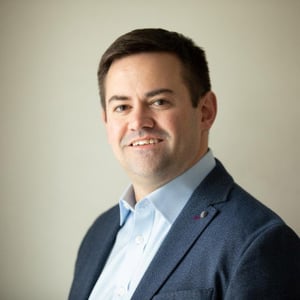
Policy Fellow, Regulatory Policy, Americans for Prosperity Foundation
Marc Marie is a fellow for regulatory policy at Americans for Prosperity, where he focuses on energy, land use, and the administrative state. Before joining Americans for Prosperity, Marc advised early-stage energy companies on regulatory strategy. His government service includes senior counsel at the Department of Justice, Environment and Natural Resources Division; acting deputy solicitor at the Department of the Interior; and counsel to Sen. Mike Lee on the Senate Judiciary Committee, Antitrust Subcommittee.
He holds a Juris Doctor from the University of Maryland and a bachelor's degree from Kenyon College.
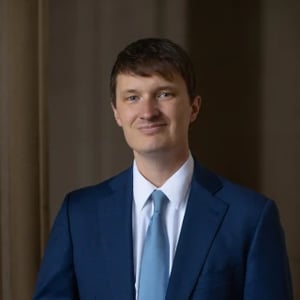
Partner, Boyden Gray PLLC
Trent McCotter is a partner with Boyden Gray PLLC. He previously served as Deputy Associate Attorney General of the United States and as an Assistant U.S. Attorney.
Mr. McCotter maintains an extensive appellate practice. He has considerable experience identifying and briefing cases that draw the Supreme Court’s attention, having persuaded the Court to grant certiorari in numerous cases raising issues of sovereignty, constitutional rights, due process, and criminal law. He has authored and submitted over 60 briefs at the Court.
He has also personally argued more than fifteen federal appeals across the Second, Fourth, Fifth, Sixth, Ninth, Eleventh, Federal, and D.C. Circuits—including once arguing three separate appeals in just four days. He has also twice argued before the 17-judge en banc Fifth Circuit. He has been counsel in over 50 other appeals raising matters from FOIA and the APA to constitutional rights and statutory construction.
As Deputy Associate Attorney General, Mr. McCotter oversaw DOJ’s Civil Appellate and Federal Programs branches, which are responsible for defending nearly all major litigation against the federal government. During his three years as a federal trial attorney in the Eastern District of Virginia’s “Rocket Docket,” Mr. McCotter won the Attorney General’s Award for Distinguished Service.
During his DOJ tenures, Mr. McCotter also assisted with the confirmations of two Supreme Court justices and over a dozen lower-court judges.
Mr. McCotter served as an inaugural clerk to the Hon. Steven J. Menashi on the U.S. Court of Appeals for the Second Circuit and also clerked for the Hon. R. Lanier Anderson III on the U.S. Court of Appeals for the Eleventh Circuit.
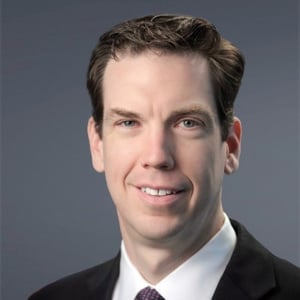
Partner, Fusion Law, PLLC
Paul is the founding partner of Fusion Law, PLLC. He has extensive experience with state, federal, and global regulators building coalitions and implementing policies to promote innovation in financial services. He is responsible for designing and implementing the first state (Arizona) and federal (CFPB) FinTech sandboxes in the United States. He also designed the CFPB no-action letter and trial disclosure policies. He helped found the first global regulatory innovation coalition (Global Financial Innovation Network) and led the founding of the first U.S. regulatory innovation coalition (American Consumer Financial Innovation Network). He served on the Financial Stability Oversight Council subcommittee on digital assets. He also has drafted state-level laws on blockchain and utility tokens.
Paul also has significant enforcement and litigation experience. He led many multi-state consumer protection enforcement matters as Civil Litigation Division Chief at the Arizona Attorney General’s Office.
Prior to his government service, Paul practiced law in the areas of securities litigation and transactional work for approximately six years at two well-known law firms. He also clerked on the U.S. Court of Appeals for the Fourth Circuit.
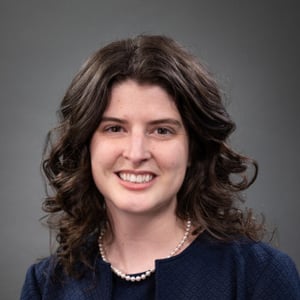
Legal Counsel, Alliance Defending Freedom
Kathleen Barceleau serves as legal counsel for Allied Legal Affairs and Advocacy Strategy at Alliance Defending Freedom. In that role, she works to coordinate and deploy network attorneys to further ADF’s mission and conducts research in support of ADF’s strategic plans.
Before joining ADF, Barceleau was Of Counsel at Fusion Law, where she focused on financial regulation and policy issues. Previously, she served as an Assistant Attorney General for the State of Kansas, where she represented Kansas and its officials in civil rights and constitutional litigation in both state and federal courts. She also served as a law clerk to the Hon. Robert H. Cleland on the U.S. District Court for the Eastern District of Michigan.
Barceleau received her J.D. summa cum laude from Ave Maria School of Law. She is a 2016 Blackstone Fellow. Before law school, Barceleau graduated summa cum laude from Ave Maria University with a Bachelor of Arts in Classics and Early Christian Literature and Economics. Barceleau is admitted to the state bar of Michigan.
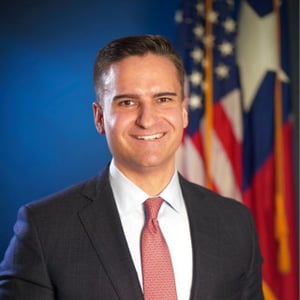
Deputy Attorney General, Civil Litigation, Texas Attorney General
James Lloyd is the Deputy Attorney General for Civil Litigation for the Texas Attorney General. He serves alongside over 600 lawyers and staff across eleven practice groups handling more than 35,000 cases involving the State of Texas. James also serves as Chief of the Antitrust Division, leading the enforcement of state and federal antitrust laws and representing the interests of Texas in national antitrust matters alongside federal enforcers.
James previously practiced at global law firms Sidley Austin LLP and Mayer Brown LLP, managing a range of high-profile matters for public and private companies. He began his legal career as a law clerk to Justice David Medina on the Texas Supreme Court.
James has served in a variety of roles in public service. He is currently an Intelligence Officer in the U.S. Navy Reserve, assigned to the Commander of the U.S. Pacific Fleet. James served on the Presidential Transition Team for President Donald Trump, where he advised on financial regulatory policy and led the transition of the U.S. Securities and Exchange Commission. James previously served at the White House as Senior Writer to President George W. Bush. He was also a member of the national security staff, coordinating policymaking and oversight with senior officials among the Cabinet departments and agencies.
James received his J.D. from The University of Texas School of Law, where he was Articles Editor for the Texas Law Review and a teaching assistant to Admiral Bobby Inman. He earned his bachelor’s degree from Rice University, where he was student body president and received the Joseph Cooper Prize in Public Policy.
A seventh-generation Texan, James comes from a family of litigators, including his mother, his sister, and his father who has served over 18 years on the Texas judiciary. James is Chair of the State Bar of Texas Antitrust and Business Litigation Section and serves on the Executive Committee of The Federalist Society’s Corporations, Securities, and Antitrust Practice Group.
James has spent over a decade as a volunteer attorney for veterans legal clinics in Houston and Austin. He is also a member of the Legal Affairs Roundtable for the Intelligence and National Security Alliance (INSA) and is also a longtime supporter of the Houston Livestock Show and Rodeo, serving on the Mutton Bustin' Committee.
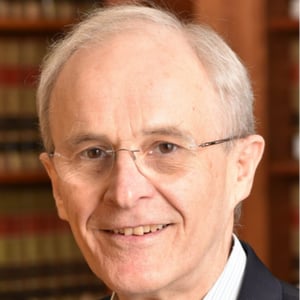
Levin, Mabie & Levin Professor of Law, University of Florida Levin College of Law
Professor Lynn M. LoPucki comes to UF in August 2022 from the UCLA School of Law where he taught Secured Transactions and Business Associations for twenty-two years. His Stakeholder Takeover Project is an effort to provide corporate stakeholders with the information they need to control corporations through markets. For example, the Project website ranks the S&P 500 companies by their greenhouse gas emissions. The UC Davis Law Review published the first Project article, Repurposing the Corporation Through Stakeholder Markets, in February 2022 and will publish the second, Corporate Greenhouse Gas Disclosures, in November.
Professor LoPucki has published more than seventy-five articles in highly regarded law reviews, including the Yale Law Journal, Stanford Law Review, University of Chicago Law Review, University of Michigan Law Review, University of Pennsylvania Law Review, Virginia Law Review, Cornell Law Review, Duke Law Journal, and Northwestern University Law Review. He co-authors three Aspen Casebooks: Business Associations: A Systems Approach (2020) (with Andrew Verstein); Secured Transactions: A Systems Approach (9th edition with Elizabeth Warren and Robert M. Lawless), and Commercial Transactions: A Systems Approach (7th edition with Elizabeth Warren, Daniel L. Keating, Ronald Mann, and Robert M. Lawless).
Since 1994, the Florida-UCLA-LoPucki Bankruptcy Research Database has collected large, public company bankruptcy data and disseminated it to the public and to bankruptcy researchers throughout the world. Those data provided the foundation for Professor LoPucki’s books, Courting Failure: How Competition for Big Cases is Corrupting the Bankruptcy Courts (University of Michigan Press 2005) and Professional Fees in Corporate Bankruptcies: Data, Analysis, and Evaluation (Oxford University Press, 2011) (with Joseph Doherty).
Partner, Fusion Law, PLLC
Paul is the founding partner of Fusion Law, PLLC. He has extensive experience with state, federal, and global regulators building coalitions and implementing policies to promote innovation in financial services. He is responsible for designing and implementing the first state (Arizona) and federal (CFPB) FinTech sandboxes in the United States. He also designed the CFPB no-action letter and trial disclosure policies. He helped found the first global regulatory innovation coalition (Global Financial Innovation Network) and led the founding of the first U.S. regulatory innovation coalition (American Consumer Financial Innovation Network). He served on the Financial Stability Oversight Council subcommittee on digital assets. He also has drafted state-level laws on blockchain and utility tokens.
Paul also has significant enforcement and litigation experience. He led many multi-state consumer protection enforcement matters as Civil Litigation Division Chief at the Arizona Attorney General’s Office.
Prior to his government service, Paul practiced law in the areas of securities litigation and transactional work for approximately six years at two well-known law firms. He also clerked on the U.S. Court of Appeals for the Fourth Circuit.
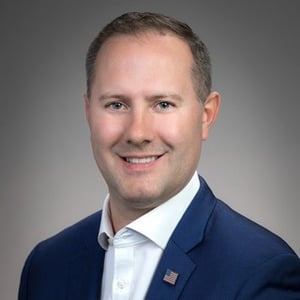
Head of Corporate Governance, Strive Asset Management
Justin Danhof is the Head of Corporate Governance at Strive Asset Management. Previously, he served as General Counsel for the National Center for Public Policy Research, as well as Director of the Center’s Free Enterprise Project. He also worked in the Miami-Dade State’s Attorney’s Office in the Economic Crimes and Cybercrimes Division, for the Massachusetts Alliance for Economic Development and at the U.S. Securities and Exchange Commission.
Mr. Danhof’s work has been widely published and quoted in major newspapers, including the Wall Street Journal, the New York Times, Politico, USA Today, the Los Angeles Times, the San Francisco Chronicle, the Boston Globe, the Christian Science Monitor, and the Washington Post. He has also appeared on the Fox News Channel, One America News Network, and the Fox Business Channel, among others.
Mr. Danhof is a member of the Federalist Society and Christian Legal Society.
Mr. Danhof is a graduate of Bentley University (Waltham, MA), where he received a Bachelor of Science in economics and finance and pitched for three seasons on the school’s NCAA Division II baseball team. Mr. Danhof completed his graduate studies at the University of Miami School of Law where he received his Juris Doctor and Master of Laws in Taxation.
Mr. Danhof is licensed to practice law in New York and Washington, D.C.
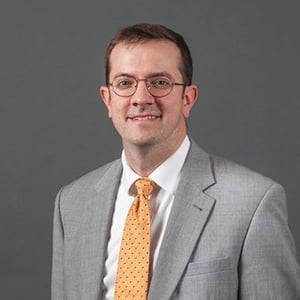
Associate Professor of Law, Antonin Scalia Law School, George Mason University
Associate Professor of Law J.W. Verret joined the Antonin Scalia Law School, George Mason University faculty in 2008. In 2013, he took leave for two years to serve as the Chief Economist and Senior Counsel for the U.S. House Committee on Financial Services. He received his JD and MA in Public Policy from Harvard Law School and the Harvard Kennedy School of Government, respectively, in 2006. While in law school, Professor Verret served an Olin Fellowship in Law and Economics at the Harvard Program on Corporate Governance under the guidance of Prof. Lucian Bebchuk.
Professor Verret then served as a law clerk for Vice-Chancellor John W. Noble of the Delaware Court of Chancery. Prior to joining the faculty at Scalia Law, Professor Verret was an associate in the SEC Enforcement Defense Practice Group at Skadden, Arps in Washington, D.C. He has written extensively on corporate law topics, including Delaware's Guidance, co-written with Chief Justice Myron T. Steele of the Delaware Supreme Court. His academic work has been featured in the Yale Journal on Regulation, The Business Lawyer, the Delaware Journal of Corporate Law, the Stanford Law Review, the University of Pennsylvania Journal of Business Law, and the Virginia Law and Business Review. Professor Verret was selected by the Northwestern Law School Searle Center on Law, Regulation, and Economic Growth for a 2009-2010 Searle-Kaufmann Research Fellowship.
Professor Verret is also a Senior Scholar at the Mercatus Center Working Group on Financial Markets, where he regularly briefs Congressional staff, members of Congress, SEC Commissioners and other financial regulatory agencies on financial regulation topics. He also directs the Corporate Federalism Initiative, where he obtains research grants for a network of students and faculty scholars who study the division between states and the federal government as sources of corporate law. Professor Verret has been invited to testify before various House and Senate Committees four times during the financial crisis of 2009 regarding all of the central provisions of the Obama Administration's 2009 financial regulatory reform proposals. For a full list of Professor Verret's C-Span appearances, including testimony before the U.S. House of Representatives and the U.S. Senate, see http://www.c-spanvideo.org/jwverret.
Professor Verret has been an invited panelist for various television appearances, including an interview on The NewsHour with Jim Lehrer. Professor Verret has been quoted in various media on financial regulation and corporate law topics, including the New York Times, CNN Money, the CNN Political Ticker, CNBC, ABC News, Investor's Business Daily, ESPN.com, The American Banker, The American Lawyer, The Huffington Post, CBS.com, and AP News. Professor Verret's op-eds have been featured in Forbes, The Chicago Tribune, The Orange County Register, and The Wall Street Journal. Professor Verret is also a regular guest contributor to three of the most noted corporate law and financial regulation law blogs: the Harvard Law School Corporate Governance and Financial Regulation Forum, Deallawyers.com, and The Conglomerate.

Laurence A. Tisch Professor of Law and Director, Classical Liberal Institute, New York University School of Law; Senior Fellow, The Civitas Institute, University of Texas at Austin
Richard A. Epstein is the inaugural Laurence A. Tisch Professor of Law at NYU School of Law. Prior to his joining the faculty, he was a visiting law professor at NYU from 2007 through 2009. He served as the Peter and Kirstin Bedford Senior Fellow at the Hoover Institution from 2000 to 2024. Since 2024 to the present he is a senior lecturer at the Civitas Institute at the University of Texas—Austin. Epstein is also the James Parker Hall Distinguished Service Professor of Law Emeritus and a senior lecturer at the University of Chicago. His initial law school appointment was at the University of Southern California from 1968 to 1972. Epstein received an LL.D., h.c. from the University of Ghent, 2003. He has been a member of the American Academy of Arts and Sciences since 1985 and was a Senior Fellow of the Center for Clinical Medical Ethics at the University of Chicago Division of Biological Sciences, also from 1983. to 2022 He served as editor of the Journal of Legal Studies from 1981 to 1991, and of the Journal of Law and Economics from 1991-2001. From 2001 to 2010 he was a director of the John M. Olin Program in Law and Economics at the University of Chicago.
His newest book, The Myth of Birthright Citizenship: What the Fourteenth Amendment Really Says was published in 2026 (Encounter Books). Prior to that he has published many books including, The Dubious Morality of the Modern Administrative State (Roman & Littlefield 2020).Earlier he published th Classical Liberal Constitution: The Uncertain Quest for Limited Government (Harvard 2014) iHis previous books include Design for Liberty: Private Property, Public Administration and the Rule of Law (Harvard 2011); The Case Against the Employee Free Choice Act (Hoover 2009); Supreme Neglect: How to Revive the Constitutional Protection of Property Rights (Oxford 2008); Antitrust Decrees in Theory and Practice: Why Less is More (AEI 2007); Overdose: How Excessive Government Regulation Stifles Pharmaceutical Innovation (Yale University Press. 2006); How Progressives Rewrote the Constitution (Cato 2006); Cases and Materials on Torts (Aspen Law & Business; 8th ed. 2004); Skepticism and Freedom: A Modern Case for Classical Liberalism (University of Chicago, 2003); Torts (Aspen Law & Business 1999); Principles for a Free Society: Reconciling Individual Liberty with the Common Good (Perseus Books, 1998): Mortal Peril: Our Inalienable Rights to Health Care (Addison-Wesley, 1997); Simple Rules for a Complex World (Harvard, 1995); Bargaining With the State (Princeton, 1993); Forbidden Grounds: The Case Against Employment Discrimination Laws (Harvard , 1992); Takings: Private Property and the Power of Eminent Domain (Harvard, 1985); and Modern Products Liability Law (Greenwood Press, 1980). He has also edited(with Catherine M. Sharkey) Cases and Materials on the Law of Torts (10th edition 2012).
Professor Epstein has written numerous articles on a wide range of legal and interdisciplinary subjects. He has taught courses in administrative law, antitrust law, civil procedure, communications, constitutional law, contracts, corporations, criminal law, employment discrimination law, environmental law, food and drug law health law and policy, legal history, labor law, property, real estate development and finance, jurisprudence, labor law; land use planning, patents, individual, estate and corporate taxation, Roman Law; torts, and workers' compensation.
Professor Epstein also writes a regular column for Civitas Institute, which also sponsors his podcast, The Libertarian with Charles C.W. Cooke, and Law Talk, with Cooke and John Yoo. He also does a podcast with John Batchelor. And appears regularly on the Freedom File with Judge Andrew Napolitano.
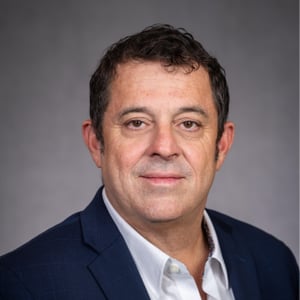
Senior Fellow for Law, Economics, and Technology, The Heritage Foundation; Professor, Florida International University
Mario Loyola is a Senior Fellow for Law, Economics, and Technology at The Heritage Foundation.
Loyola served in the Trump Administration as Associate Director for Regulatory Reform at the White House Council on Environmental Quality. In that role, he was one of the principal drafters of the One Federal Decision policy, which helped to streamline the permitting and environmental review of large infrastructure projects. While at CEQ, he was a member of the U.S. delegation to the USMCA free trade negotiations with Mexico and Canada, as well as the United Nations conference on biodiversity on the high seas. Loyola initially joined the White House in February 2017 as a Presidential Speechwriter, employing his expertise in many areas of foreign and domestic policy.
After beginning his career in M&A and corporate finance law, Loyola served in the Bush 43 Administration as a special assistant to the Undersecretary of Defense for Policy. He left that position to start writing on national defense issues in magazines such as National Review and The Weekly Standard, reporting from the front lines of the war on terrorism in Lebanon, Israel, and Iraq. He finished the Bush Administration as Foreign and Defense Counsel to the U.S. Senate Republican Policy Committee, then under the chairmanship of Senator Kay Bailey Hutchison of Texas. He subsequently moved to Texas and joined the Texas Public Policy Foundation, where he specialized in energy, environment, and federalism.
Loyola is a frequent contributor to The Wall Street Journal, National Review, and The Atlantic, among others. He teaches environmental and administrative law at Florida International University, where he is Founding Director of the Environmental Finance and Risk Management program in FIU’s prestigious Institute of Environment. He received a bachelor’s degree in European history from the University of Wisconsin–Madison and a J.D. from Washington University School of Law.
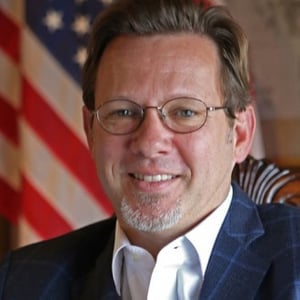
Chairman and Partner, Earth & Water Law Group
Earth & Water Group Founder, Brent Fewell, has over 25 years of experience in public policy, advocacy, and environmental law.
As an environmental lawyer and former corporate executive and senior U.S. EPA official in EPA’s Offices of Water and Congressional and Intergovernmental Relations, Brent brings a wealth of knowledge and unique perspective to his clients in navigating the regulatory and political arenas in Washington DC. As a highly regarded thought leader on environmental policy and governance matters, his counsel and opinions are sought out by corporate and government leaders around the globe. Brent brings unparalleled energy and passion to the issues in a way that few do to help his clients navigate in an increasingly complex and nuanced regulatory environment.
Brent received his B.S. in Wildlife Management from the University of Maine (high distinction), a Masters in Environmental Management from Duke University, and J.D. from Duquesne University School of Law. (Licensed in PA and DC)
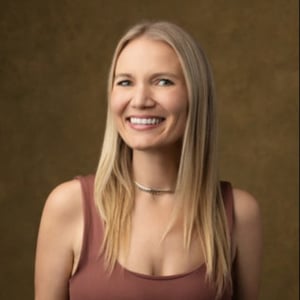
Constitutional Scholarship Director and Senior Legal Analyst, Pacific Legal Foundation
Anastasia Boden is Director of Constitutional Scholarship at Pacific Legal Foundation, where she leads the organization’s Supreme Court commentary and directs scholarly analysis in support of the firm’s litigation. She has represented entrepreneurs and small businesses nationwide in challenges to onerous licensing regimes, anti-competitive titling restrictions, Certificate of Need (“competitor’s veto”) laws, and other forms of unnecessary red tape that block economic opportunity.
Prior to this role, Anastasia developed nearly a dozen constitutional challenges to Certificate of Need laws across the country, helping spur legislative reform in Montana, Pennsylvania, and West Virginia. Her victories include a ruling invalidating Houston’s busking restrictions, multiple appellate decisions expanding access to the courts for civil rights plaintiffs, and the legislative repeal of Virginia’s happy-hour advertising ban.
Her writings on law and liberty have been featured in USA Today, The Washington Post, The Wall Street Journal, the Los Angeles Times, the Chicago Tribune, Forbes, and more, and she has appeared on Headline News, CBS News, Fox News, ReasonTV, Newsmax, and John Stossel. In 2020, she was featured on Libertarian Party presidential candidate Jo Jorgensen’s Supreme Court shortlist.
Anastasia earned her BA with dean’s honors from the University of California, Santa Barbara, and her JD from Georgetown University Law Center, where she was research assistant to Professor Randy E. Barnett—the “intellectual godfather” of the constitutional challenge to Obamacare. She is the co-creator of the podcast Dissed, about infamous Supreme Court dissents. She authors the biweekly newsletter SCOTUS Scoop and the column, “In Dissent” for SCOTUSblog.
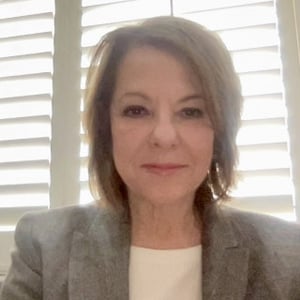
Carol Matheis practices law business litigation and insurance law in Newport Beach, California. She earned her J.D. at Western University College of Law and is a graduate of George Mason University.
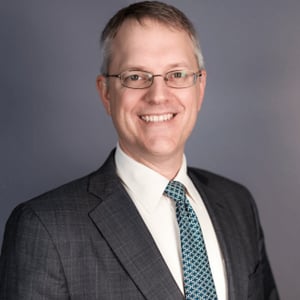
President and General Counsel, New Civil Liberties Alliance
NCLA’s President and General Counsel, Mark Chenoweth, has observed the administrative state up close and personal from perches in all four branches of the federal government. Mark served as the first chief of staff to Congressman Mike Pompeo, as legal counsel to Commissioner Anne Northup at the U.S. Consumer Product Safety Commission, as an attorney advisor in the Office of Legal Policy at the U.S. Department of Justice, and as a law clerk to the Hon. Danny J. Boggs on the U.S. Court of Appeals for the Sixth Circuit.
Mark has worked in several different roles in the private sector as well. He began his legal career in D.C. as a regulatory associate at Wilmer, Cutler & Pickering. He then returned to his home state of Kansas to serve as in-house counsel for Koch Industries. Most recently he spent over four years as general counsel of the Washington Legal Foundation.
Mark is a graduate of Yale College and the University of Chicago Law School, where he co-founded the Institute for Justice Clinic on Entrepreneurship and became a Tony Patiño Fellow. Mark has been widely quoted and/or published in newspapers and websites including the New York Times, San Francisco Chronicle, New Hampshire Union Leader, and Metropolitan Corporate Counsel. He has also had recurring op-eds in the Los Angeles Daily Journal, and at Forbes.com.

Luncheon Panel: Developments in Delaware: DExit, SB21, Musk, and More
Eric C. Chaffee, Itai Fiegenbaum, Mohsen Manesh, Robert T. Miller, Amanda Rose
Prof. Eric Chaffee, John C. Hutchins Professor of Law; Director, Compliance Risk Management and Financial Integrity...
Climate Disclosure Litigation: Examining Legal Battles Against California and the SEC
Victor Flatt, Stephen Hall, Marc Marie, Trent McCotter
A panel of distinguished legal scholars and practitioners will provide an overview of the current...
The 30-Year History of Diluting ERISA’s Fiduciary Duty
Paul N. Watkins, Kathleen Barceleau
Under the Employee Retirement Income Security Act of 1974 (ERISA), fiduciaries have a strict duty...
How Reliable are Corporate ESG Ratings?
James R. Lloyd, Lynn M. LoPucki, Paul N. Watkins, Justin Danhof
Environmental, Social, and Corporate Governance (ESG) investing has grown in popularity in recent years. As...
New Labor Department Rule: Taking on ESG Investment Risk to American Retirement Security
J.W. Verret
A sustained effort by activist investors to align corporate policy and investing with a progressive...
Modernizing the National Environmental Policy Act (NEPA)
Richard A. Epstein, Mario Loyola, Brent A. Fewell
On January 10, the White House Council on Environmental Quality (CEQ) proposed revisions to its...
California Statute Requiring Female Board Directors
Anastasia P. Boden
In 2018, Governor Jerry Brown of California signed a bill that made California the first...
Pension Benefits and The California Rule: Time for It To Go?
Carol M. Matheis
The “California Rule” as it has come to be known, was set forth in the...
Pension Benefits and The California Rule: Time for It To Go?
The “California Rule” as it has come to be known, was set forth in the...
California Public Employees’ Retirement System v. ANZ Securities Post-Decision SCOTUScast
Mark Chenoweth
On June 26, 2017, the Supreme Court decided California Public Employees’ Retirement System v. ANZ...