

Professor of Law, Antonin Scalia Law School, George Mason University
Professor of Law Michael S. Greve joined the faculty of the Antonin Scalia Law School, George Mason University in fall 2012 after having served as John G. Searle Scholar at the American Enterprise Institute (AEI), where he specialized in constitutional law, courts, and business regulation and served as chairman of the Competitive Enterprise Institute. Prior to joining AEI, Greve was founder and co-director of the Center for Individual Rights, a public interest law firm specializing in constitutional litigation.
Greve has served previously as an adjunct professor at a number of universities, including Cornell and Johns Hopkins Universities, and has been a visiting professor at Boston College since 2004. He was awarded a PhD and an MA in government by Cornell University. Greve also earned a Diploma from the University of Hamburg in Germany.
A prolific writer, Greve is the author of nine books and a multitude of articles appearing in scholarly publications, as well as numerous editorials, short articles, and book reviews. He is a frequent speaker for professional and scholarly organizations and has made many appearances on radio and television.
In addition Greve has provided congressional and state legislative testimony, has lobbied and consulted in federal agency proceedings, and has provided litigation services and management in over 30 cases, including matters before the U.S. Supreme Court.

Judge, Arizona Court of Appeals, Division One
The Honorable Jennifer M. Perkins began service on the Arizona Court of Appeals, Division One, on October 30, 2017. At the time of her appointment by Governor Douglas Ducey, Judge Perkins was Assistant Solicitor General for the State of Arizona.
Judge Perkins was born in Portales, New Mexico, and primarily raised in Albuquerque. She attended the prestigious Albuquerque Academy from 1988-1995, before moving to Washington D.C. to attend the Elliott School of International Affairs at the George Washington University as a National Merit Scholar. Therafter, she relocated again to Dallas, Texas, and earned her juris doctor from the SMU Dedman School of Law, graduating cum laude in 2002.
Judge Perkins started her career at the law firm of Browning & Peifer (now Peifer, Hanson, Mullins, and Baker) in Albuquerque, New Mexico. While there, she litigated complex commercial matters including class action plaintiff and defense work, and assisted with employment and contract litigation. In 2003, the judge accompanied the Honorable James O. Browning in transitioning to the federal district court bench, serving as his first law clerk.
After her clerkship, Judge Perkins moved to Arizona to work for the Institute for Justice, Arizona Chapter, a public interest law firm. She spent five years with IJ-AZ litigating civil rights cases in Arizona and across the country. In 2009, the judge became Disciplinary Counsel for the Arizona Commission on Judicial Conduct, where she reviewed and prosecuted ethics complaints against state court judges throughout Arizona. After five years serving the state in this capacity, Judge Perkins entered private practice by joining an appellate law firm in Phoenix. While there, she worked on state and federal appeals involving a wide range of legal subjects, including complex business disputes, property rights, judicial ethics, and personal injury matters.
In January 2015, Judge Perkins joined the Office of the Arizona Attorney General to serve as the first Assistant Solicitor General; in that capacity, she was responsible for oversight of Attorney General Opinions and served as ethics counsel to the entire office. In addition to these two primary roles, the judge assisted on a variety of matters including trial and appellate litigation of election-related matters; federal appellate litigation with the Federalism Unit; state criminal appeals; and drafting amicus briefs on behalf of Arizona in state and federal courts.
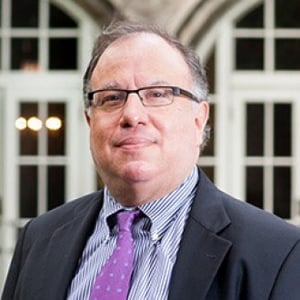
Harold Washington Professor of Law, Northwestern University Pritzker School of Law
Daniel B. Rodriguez, the Harold Washington Professor at the Law School, served as dean of the Law School from January 2012 through August 2018.
His principal academic work is in the areas of administrative law, local government law, statutory interpretation, federal and state constitutional law, and the law-business-technology interface.
Formerly, Professor Rodriguez served as Minerva House Drysdale Regents Chair in Law at the University of Texas-Austin; as a Research Fellow at Rice University’s Baker Institute for Public Policy; as Dean and Warren Distinguished Professor of Law at the University of San Diego School of Law; and, as a Professor of Law at University of California, Berkeley School of Law. He has also served as a visiting professor at several top law schools, including Stanford, Harvard, Columbia, University of Southern California, and Virginia.
Professor Rodriguez was the 2014 President of the Association of American Law Schools (AALS) and is currently serving as chair of the council of the American Bar Association Center for Innovation, a council member of the American Law Institute, and as an advisor to ROSS Intelligence, Inc.
Rodriguez received his law degree, with honors, from Harvard Law School and his undergraduate degree from California State University of Long Beach.
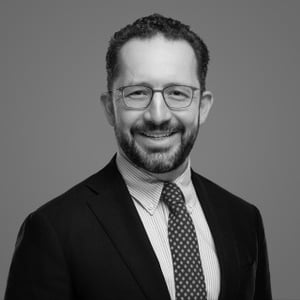
Executive Director, Alliance For Consumers; President & CEO, American Juris Link
O.H. Skinner is the President & CEO of American Juris Link, a nonprofit dedicated to accelerating nonprofit litigation to advance freedom, liberty, and the rule of law. O.H. has a long track record in facilitating strategic nonprofit litigation in his role as the Executive Director at Alliance For Consumers as well as from his time serving Arizona Attorney General Mark Brnovich in senior positions, including as Arizona Solicitor General. O.H. is a graduate of the University of Pennsylvania and Harvard Law School. Prior to joining the Arizona Attorney General's Office, O.H. practiced at WilmerHale and Ropes & Gray in Boston, and clerked for the Hon. J.L. Edmondson of the United States Court of Appeals for the Eleventh Circuit. In 2023, O.H. was a Wasserstein Public Interest Fellow at Harvard Law School, where he counseled students as a Harvard-identified “outstanding public interest attorney.”
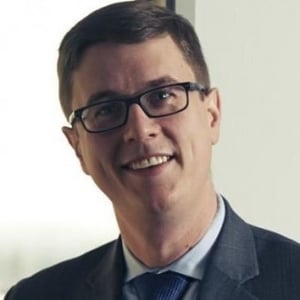
Solicitor General, West Virginia
Michael Williams is the Solicitor General for the State of West Virginia. In that role, Michael represents the State in appeals before state and federal courts, including the U.S. Supreme Court. Michael also coordinates strategic affirmative litigation on the State’s behalf, including litigation against the federal government.
Before joining the Attorney General’s Office, Michael co-led the complex briefing and appeals group at a Michigan boutique firm, representing Fortune 50 companies and others in actions across the country. He also practiced in the litigation groups of two Washington, D.C. firms and clerked with the Appellate Division of the U.S. Attorney’s Office for the District of Maine.
Michael’s work has been honored with a Best Brief Award from the National Associationof Attorneys General and a Leader in the Law Award from Michigan Lawyers Weekly. He often speaks and writes on appellate-related issues.
Michael clerked twice in the Fourth Circuit: once with then-Chief Judge Deborah Chasanow of the U.S. District Court for the District of Maryland and later with Judge G. Steven Agee of the U.S. Court of Appeals for the Fourth Circuit. He attended George Washington University Law School and Bates College.
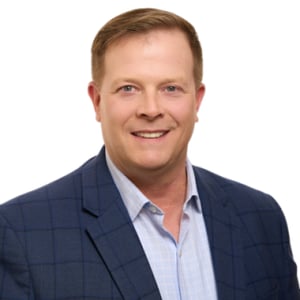
Partner, Secil Law
John Irving brings nearly three decades of experience in white collar criminal defense, government investigations, and high-stakes congressional and corporate inquiries. A former federal prosecutor and trusted advisor within the U.S. Department of Justice and the Environmental Protection Agency, John is known for his calm under pressure, strategic clarity, and unwavering discretion.
His clients have included Members of Congress, senior executives, political appointees, and corporate entities navigating complex criminal, civil, and regulatory matters—including matters that have dominated national headlines. John’s practice today is defined by sophisticated representation in sensitive investigations, classified matters, and strategic crisis response—often involving multiple enforcement authorities.
John served for over a decade in the U.S. Department of Justice, including as an Assistant U.S. Attorney in Washington, D.C., where he prosecuted a wide range of criminal cases and appeared regularly in court. He later served as Counsel to two Deputy Attorneys General and as Counsel to the Assistant Attorney General of DOJ’s Environment and Natural Resources Division, advising on departmental policy and enforcement matters at the highest levels.
Prior to his tenure at DOJ, John served as Investigative Counsel to the (then-named) U.S. House Committee on Government Reform & Oversight and as an Associate Independent Counsel in the investigation of former HUD Secretary Henry Cisneros.
Before joining SECIL Law, John was a Partner at E&W Law, a boutique firm focused on environmental and white-collar litigation, and previously spent over a decade at Holland & Knight LLP in Washington, D.C. There, he was a key member of the firm’s White-Collar Defense, Investigations & Compliance team.
His private practice experience includes:
John’s clients appreciate his deep fluency in government processes, his strategic precision in high-pressure moments, and his ability to quietly resolve matters that others cannot.
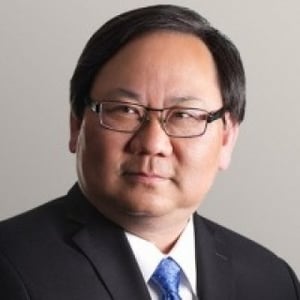
Partner, King & Spalding LLP
Granta Nakayama specializes in energy and environmental issues. A partner in our Environmental practice with a focus on energy, Granta represents companies in a range of regulatory and enforcement matters.
With training as a nuclear engineer and more than a decade of experience as a practicing engineer and technical manager, Granta represents clients with products or services regulated by the Environmental Protection Agency (EPA) and Consumer Product Safety Commission (CPSC), along with state government agencies such as the California Air Resources Board. He defends companies in enforcement actions and litigation involving regulations and rate proceedings, and represents their interests in agency rulemakings and Congressional matters.
From 2005 to 2009, Granta served as Assistant Administrator for the EPA Office of Enforcement and Compliance Assurance. In that role, he led 3,400 employees in a national enforcement and compliance program covering air, water, waste, toxic chemicals and pesticides. During his tenure, EPA achieved record annual pollutant reductions (more than 3 billion pounds) and injunctive relief (over $11 billion).
The National Law Journal has recognized Granta as a 2016 "Energy and Environmental Trailblazer." He has been listed by The Legal 500 every year since 2010, and was recognized as a "Hall of Famer" in both the environmental litigation and regulatory and the rail and road litigation and regulatory sections in 2020. He has also been ranked in each edition of Chambers USA since 2010.
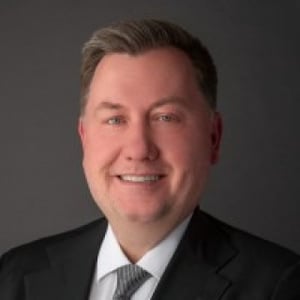
Partner, Sidley Austin LLP
JUSTIN SAVAGE is a global co-leader of the firm’s Environmental, Health, and Safety practice and co-leads the Automotive and Mobility sector team, where he is a leading strategist for companies navigating the intersection of complex regulation, high-stakes litigation, and transformative industry change. For nearly three decades, he has led clients through their most consequential environmental, health, and safety (EH&S) disputes and mobility-sector challenges, earning a reputation as both a trusted counselor and a forceful advocate in the courtroom and the boardroom. A core part of Justin’s practice also focuses on regulatory strategy and market entry, advising emerging technology companies, new market entrants, and established industry leaders on launching new products, technologies, and business models. He regularly counsel clients in emerging fields such as robotics and AI on engaging with regulators, anticipating enforcement and compliance risk, and building defensible regulatory strategies that support growth rather than slow it.
Clients praise Justin as “an excellent litigator… strategically clever and creative… attentive, thoughtful and willing to go above and beyond” (Chambers USA 2025). Chambers USA has ranked him for Band 1 for Environment in District of Columbia (2017–2025) and Band 3 for Transportation: Road (Automotive) in USA—Nationwide (2023–2025).
Justin has won some of the most closely watched EH&S and transportation disputes of the past two decades and guided companies through crises where business continuity, brand reputation, and regulatory survival were on the line. His leadership has been repeatedly recognized: he is a three-time Law360 Environmental “MVP” (2018, 2024, 2025) and a Lawdragon “500 Global Leaders in Crisis Management” (2025-2026). He is the first call for companies facing bet-the-company challenges.
Justin’s clients concentrate in heavily regulated industries, including auto and mobility, aviation, chemicals, data centers, energy, mining, and refining. Justin litigates and counsels across the spectrum of U.S. environmental, transportation, and administrative laws, including the Clean Air Act (Title I, mobile sources, and fuels), incident response, RMP, NHTSA, Clean Water Act, TSCA, CSB investigations, APA claims, FOIA litigation, NEPA, and the Safe Drinking Water Act.
Prior to joining Sidley, Justin served for nearly a decade at the Environmental Enforcement Section of the U.S. Department of Justice, where he led teams in several multi-billion dollar enforcement cases. In his career, Justin has regularly taught on a range of environmental and litigation topics. For several years, Justin served as an instructor at the Justice Department’s National Advocacy Center where he taught hundreds of Assistant U.S. Attorneys and other agency lawyers on topics that included trial advocacy and evidence. Since rejoining private practice, Justin has served eight times as a faculty member for the American Law Institute’s Environmental Litigation program. He also lectured on a range of litigation and trial topics for bar associations and organizations, including serving as an instructor for the FAA on trial advocacy.

Senior Legal Counsel, Pacific Legal Foundation
Before becoming an attorney, James had been a productive member of society working as an exploration geologist in the late 1970s throughout the southwestern United States. However, after several years of dealing with irrational government bureaucrats and environmental policies untethered from reality, James decided that what the world needs is more lawyers — if they are willing to fight for rationality in regulatory regimes, property rights, and liberty.
James attended the University of Arizona College of Law in Tucson, where he served as an editor for the Law Review and received a J.D. degree in 1983. He had previously received a Masters degree in geological sciences from Brown University and an undergraduate degree from Hamilton College in New York. James received the Professional Achievement Award from the University of Arizona Alumni Association in 2018.
James has worked with Pacific Legal Foundation since 1983, litigating cases from Alaska to Florida. He is a member of the Federalist Society’s Environmental Law and Property Rights Practice Group’s Executive Committee, a member of the American College of Real Estate Lawyers, and an honorary member of Owners Counsel of America, an organization comprised of eminent domain attorneys who represent property owners. The Owners Counsel awarded James its Crystal Eagle award in 2013. In 2022, James was awarded the Brigham-Kanner Property Rights Prize at the William & Mary College of Law. The prize is awarded annually to an individual whose work has advanced the cause of property rights and has contributed to the overall awareness of the important role property rights occupy in the broader scheme of individual liberty.
In 2001, James successfully argued a major property rights case, Palazzolo v. Rhode Island, before the United States Supreme Court, a case which affirmed that rights in regulated property do not disappear when land is bought and sold. He has written extensively on all aspects of property rights and environmental law and frequently speaks on these subjects throughout the nation.
When James is not suing the government he enjoys skiing faster than he should, bicycling, hiking, swimming, and spending quality time with his wife, family, and grandchild.
Mr. Burling’s book Nowhere to Live: The Hidden Story of America’s Housing Crisis is available now on Amazon.
James is a member of the bar only in the states of Alaska and California.
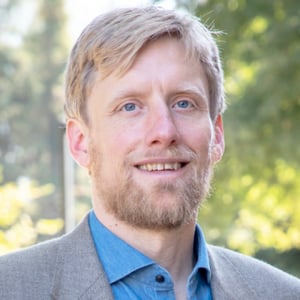
Martin Luther King Jr. Professor of Law, UC Davis School of Law
Professor Elmendorf works in the areas of property law, election law, statutory interpretation, and administrative law, using both doctrinal and empirical methods. He is an authority on California land-use and housing law, and has also done widely noted work on public understanding of housing markets and opinion about housing policy. His research has been published in numerous top law reviews and political science journals, including the Yale Law Journal, Columbia Law Review, University of Chicago Law Review, New York University Law Review, American Journal of Political Science, Journal of Politics, and Political Analysis. It has also been covered by major media outlets including The Atlantic, The Washington Post, Financial Times, Bloomberg News, and CalMatters.
Elmendorf enjoys translating academic research and legal developments for popular audiences. He’s known for breaking down everything from knotty judicial opinions to pending legislation with long Twitter threads, and he’s written articles and op-eds for The Atlantic, Mother Jones, The New York Times, the Los Angeles Times, and the San Francisco Chronicle. Sometimes these various forms of public engagement come together, as when a Twitter thread about a housing controversy in San Francisco led to invited blog posts and op-eds, which he expanded into a law-review article, which engendered statutory reforms, which begat another Twitter thread and a webinar for practitioners.
Beyond the law school, Elmendorf serves on the advisory board of the Abundance Academic Network, a new initiative of Arnold Ventures to advance policy-minded research on housing, transportation, and clean-energy development. He has also served on working groups and task forces convened by the California Department of Housing and Community Development, and on the Legal Advisory Committee of the California Housing Defense Fund. He is an elected member of the American Law Institute.
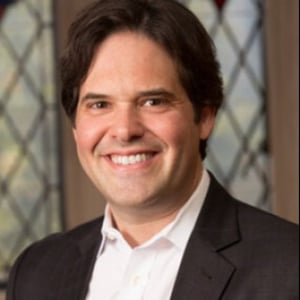
Walter E. Meyer Professor of Property and Urban Law, Yale Law School
David Schleicher is the Walter E. Meyer Professor of Property and Urban Law at Yale Law School and is an expert in local government law, land use, federalism, state and local finance, and urban development. His work has been published widely in academic journals and popular outlets. He recently released a new book, "In a Bad State: Responding to State and Local Fiscal Crises," and has co-authored leading casebooks about local government and property law. Professor Schleicher is also the co-host of the hit podcast, “Digging a Hole: The Legal Theory Podcast.”
Professor Schleicher has been called “the ideal legal scholar of cities” (Edward Glaeser, Harvard University), “the leading lawyer on state and city governments” (Lt. Gov. Richard Ravitch ‘58), and “one of the most brilliant and far-ranging political thinkers of his generation.” (Benjamin Wallace-Wells, The New Yorker). In the press, he has been called “the most important thinker we have on the subject of local government” and “ingenious” by National Review and one of the “most interesting writers on land use” by Washington Monthly. His work has been described as “great but old fashioned” by Vox, “interesting” by The Nation, “clever” by The Economist, “neat” by Slate, “startling” by City Observatory, “excellent” by Forbes, and discussed extensively in The New York Times, The New Yorker, The Atlantic, National Affairs and Reuters, among a number of other places.
Schleicher was previously an Associate Professor of Law at George Mason University School of Law, where he won the university’s Teaching Excellence Award. He has also taught at Georgetown, Harvard, and New York University. He is a 2004 graduate of Harvard Law School. He also holds an MSc in Economics from the London School of Economics and an AB in Economics and Government from Dartmouth College.

Professor of Law, Antonin Scalia Law School, George Mason University
ILYA SOMIN is Professor of Law at George Mason University and the B. Kenneth Simon Chair in Constitutional Studies at the Cato Institute. His research focuses on constitutional law, property law, democratic theory, federalism, and migration rights. He is the author of Free to Move: Foot Voting, Migration, and Political Freedom (Oxford University Press, revised and expanded edition, 2022), Democracy and Political Ignorance: Why Smaller Government is Smarter (Stanford University Press, revised and expanded second edition, 2016), and The Grasping Hand: Kelo v. City of New London and the Limits of Eminent Domain (University of Chicago Press, 2015, rev. paperback ed., 2016), coauthor of A Conspiracy Against Obamacare: The Volokh Conspiracy and the Health Care Case (Palgrave Macmillan, 2013), and co-editor of Eminent Domain: A Comparative Perspective (Cambridge University Press, 2017). Democracy and Political Ignorance has been translated into Italian and Japanese.
Somin’s work has appeared in numerous scholarly journals, including the Yale Law Journal, Stanford Law Review, Northwestern University Law Review, Georgetown Law Journal, Critical Review, and others. Somin has also published articles in a variety of popular press outlets, including the New York Times, Washington Post, Wall Street Journal, Los Angeles Times, CNN, NBC, The Atlantic, USA Today, Boston Globe, US News and World Report, South China Morning Post, National Law Journal and Reason. He has been quoted or interviewed by the New York Times, Washington Post, Wall Street Journal, Time, Newsweek, The Economist, the Christian Science Monitor, the Financial Times, The Guardian, the Associated Press, CBS, MSNBC, NPR, BBC, Reuters, the Canadian Broadcasting Corporation, the Australian Broadcasting Corporation, Radio Free Europe/Radio Liberty, Al Jazeera, and the Voice of America, among other media.
Somin’s writings have been cited in decisions by the United States Supreme Court, multiple state supreme courts and lower federal courts, and the Supreme Court of Israel. He is co-counsel for the plaintiffs in VOS Selections, Inc. v. Trump, a case challenging the constitutionality of President Trump’s “Liberation Day” tariffs. Somin has testified on the use of drones for targeted killing in the War on Terror before the US Senate Judiciary Subcommittee on the Constitution, Civil Rights, and Human Rights. In 2009, he testified on property rights issues at the United States Senate Judiciary Committee confirmation hearings for Supreme Court Justice Sonia Sotomayor. Somin writes regularly for the popular Volokh Conspiracy law and politics blog, now affiliated with Reason magazine (previously affiliated with the Washington Post from 2014 to 2017). From 2006 to 2013, he served as Co-Editor of the Supreme Court Economic Review, one of the country’s top-rated law and economics journals.
Somin has served as a visiting professor at the University of Pennsylvania Law School. He has also been a visiting professor or scholar at the Georgetown University Law Center, the University of Hamburg, Germany, the University of Torcuato Di Tella in Buenos Aires, Argentina, Uriel Reichman University in Israel, and Zhengzhou University in China. He is a University Affiliate of the Schar School of Policy and Government at George Mason University, and an affiliated faculty member of the George Mason University Institute for Immigration Research. Before joining the faculty at George Mason, Somin was the John M. Olin Fellow in Law at Northwestern University Law School in 2002-2003. In 2001-2002, he clerked for the Hon. Judge Jerry E. Smith of the U.S. Court of Appeals for the Fifth Circuit. Professor Somin earned his B.A., Summa Cum Laude, at Amherst College, M.A. in Political Science from Harvard University, and J.D. from Yale Law School.

Managing Partner, Boyden Gray PLLC
Michael Buschbacher is the managing partner of Boyden Gray PLLC. He represents public and private companies, trade associations, non-profits, and individuals in high-stakes litigation and administrative proceedings, with a particular focus on environmental and energy matters.
In addition to trial-level work, Mr. Buschbacher maintains an active appellate practice, both as merits counsel and as counsel for amici curiae. He has written amicus briefs quoted by the Seventh and Ninth Circuits. And his Supreme Court advocacy has been cited by The New Yorker, The New York Times, and E&E News. Mr. Buschbacher’s commentary on legal issues has been published in The Wall Street Journal, Newsweek, and The American Conservative.
Before joining the firm, Mr. Buschbacher served at the U.S. Department of Justice as counsel to the Assistant Attorney General for the Environment and Natural Resources Division. There, he advised senior Department leadership, served as the lead attorney on several lawsuits, and helped draft policy memoranda for the Department on the proper scope and procedure for environmental enforcement. Prior to serving in the government, Mr. Buschbacher was an associate in the D.C. office of Sidley Austin.
Mr. Buschbacher is a former clerk to Judge Alice M. Batchelder of the U.S. Court of Appeals for the Sixth Circuit and to Magistrate Judge Paul R. Cherry of the U.S. District Court for the Northern District of Indiana.
Mr. Buschbacher holds a B.A. in Music and Germanic Studies from Indiana University and a J.D., magna cum laude, from Notre Dame Law School.
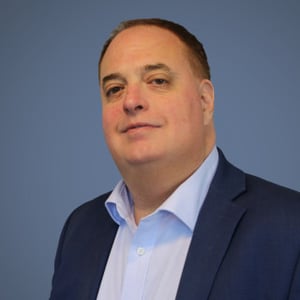
Director of the Center for Energy and Environment and Senior Fellow, Competitive Enterprise Institute
Daren Bakst is Director of the Competitive Enterprise Institute’s Center for Energy and Environment and a Senior Fellow. In this role, he manages, develops, and leads the coalition, advocacy, and research activities of the Center, which is one of the most effective advocates for Free Market Environmentalism.
Before joining CEI as Deputy Director in March, 2023, Daren was a Senior Research Fellow in Environmental Policy and Regulation at the Heritage Foundation, where he played a leading role in the launch of the organization’s new energy and environment center, and created and hosted the Heritage Foundation’s energy and environment podcast the “PowerCast.” During his decade at Heritage, Daren wrote about energy and environmental policy, food and agricultural policy (including editing and co-authoring the book Farms and Free Enterprise), regulation, and trade among other topics.
Daren also worked on environmental policy and regulation at the U.S. Chamber of Commerce, where he was a policy counsel and served as the executive to the association’s Government Oversight, Operations & Consumer Affairs committee, which was responsible for issues such as regulatory process reform. Daren has significant state level experience, working for seven years at the Raleigh, N.C.-based John Locke Foundation, one of the largest state-based, free-market think tanks. As director of legal and regulatory studies, his broad portfolio included energy and environmental policy, regulatory reform, and property rights.
Daren has testified numerous times before Congress, regularly submits comments to federal agencies and has appeared in or been quoted by a wide range of media outlets such as The Wall Street Journal, USA Today, The Washington Times, CNN, Fox Business News, Al-Jazeera America, and U.S. News and World Report. He is a member of the Federalist Society’s Environmental Law and Property Rights Executive Committee and serves on the College Level Advisory Board for Constituting America, an organization that informs and educates about the importance of the U.S. Constitution.
Daren, who hails from Florida, received his bachelor’s and master’s degrees from George Washington University. A licensed attorney, he holds a law degree from the University of Miami and a master of laws degree from American University.
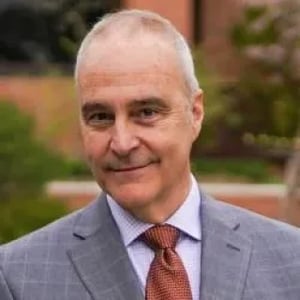
Coleman P. Burke Chair in Environmental Law, School of Law, Case Western Reserve University
Victor B. Flatt is the Coleman P. Burke Chair in Environmental Law and the Associate Director of the Burke Center for Environmental Law at Case Western University School of Law. He also holds an appointment as an Energy Fellow UH Energy at the University of Houston.
Professor Flatt is a recognized expert on environmental law, climate law and energy law, and the intersection of these areas. Since 2019, he has created and taught the first law school courses in the country concerning how law relates to sustainability planning and ESG policies in corporations, offering the courses at UHLC, Vermont Law School and Case Western University School of Law.
His research focuses on environmental legislation and enforcement, with particular expertise in the Clean Air Act, NEPA and Climate. He is co-author of a popular environmental law casebook, and has authored more than 50 law review articles, which have appeared in journals such as the Notre Dame Law Review, Ecology Law Quarterly, The Ohio State Law Journal, Washington Law Review, Houston Law Review and the Carolina Law Review. Seven of his articles have been recognized as finalists or winner of the best environmental law review article of the year, and one was recognized by Vanderbilt University Law School and the Environmental Law Institute as one of the three best environmental articles of 2010, leading to a seminar and panel on the article in a congressional staff briefing.
He has been a Visiting Law Professor at the University of Georgia Law School, the University of Washington Law School and Seattle University School of Law. He has been honored as a Distinguished Environmental Scholar in Residence at Vermont Law School, Pace Law School (Elisabeth Haub Distinguished Scholar) and Widener University Delaware Law School. He was previously the inaugural O’Quinn Chair in Environmental Law at UHLC from 2002-2009, and the Dwight Olds Chair in Law at UHLC from 2017-2023. Professor Flatt was also the inaugural Taft Distinguished Professor in Environmental Law and the Director of the Center for Climate, Energy, Environment, and Economics (CE3) at UNC Chapel Hill School of Law.
Professor Flatt has served on the AALS committees on Natural Resources and Environmental Law and was chair of the AALS Teaching Methods Section. He has served on many other board and committees in his career, including the national board of Lambda Legal and the Law School Admission Council’s Gay and Lesbian Interests section.
Professor Flatt received his B.A. in Chemistry and Math from Vanderbilt University where he was a Harold Stirling Vanderbilt Scholar, and his J.D. from Northwestern University, where he was a John Henry Wigmore Scholar. After graduating from Northwestern, Professor Flatt clerked for the Honorable Danny J. Boggs of the United States Sixth Circuit Court of Appeals.
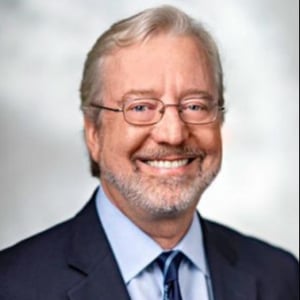
Legal Director and Securities Specialist, Better Markets
Mr. Hall has been with Better Markets since its founding more than 10 years ago, and he serves as its Legal Director and Securities Specialist. His background includes extensive experience in securities and commodities regulation acquired through positions in the Federal government, private practice, and the nonprofit sector.
Mr. Hall oversees a highly accomplished legal team that files amicus briefs in important cases involving financial regulation; initiates litigation or intervenes in cases when necessary to advance the public interest; issues special reports on specific topics surrounding the law and financial regulation; and provides regulatory analysis in the areas of banking, securities, and consumer protection. And his team supports the work of other staff members at Better Markets as they fight for the public interest before the regulatory agencies.
Mr. Hall is one of Better Markets’ most prolific authors, having written or co-written more than 100 comment letters, reports and legal briefs in his nearly decade-long fight for the public interest at the organization.
A sought-after expert for his legal and regulatory expertise, Mr. Hall has testified before Congress and currently serves on the Commission on Sanctions and Fitness of the Certified Financial Planner Board of Standards.
Prior to joining Better Markets in early 2011, Mr. Hall served as Senior Counsel to the Committee on Financial Services of the U.S. House of Representatives. During the Conference leading to passage of the Dodd-Frank Wall Street Reform and Consumer Protection Act, Mr. Hall worked on the titles dealing with securities and derivatives. He also handled other legislative initiatives relating to securities, including corporate governance, limited offering exemptions, the Freedom of Information Act, and the Securities Investor Protection Act.
From 2001 through 2009, Mr. Hall served as counsel to the North American Securities Administrators Association Inc. (NASAA), the association of state securities regulators. He supported all aspects of NASAA’s mission, including regulatory analysis, appellate advocacy, and enforcement. His written work included over 15 amicus briefs addressing a wide range of investor protection issues arising under State and Federal securities law, including four briefs filed in the U.S. Supreme Court. He also advised NASAA on corporate governance and transactional matters.
Mr. Hall began his legal career at the Commodity Futures Trading Commission, where he became Senior Trial Attorney and Associate Director of Enforcement. At the CFTC, he specialized in bringing injunctive actions in federal court against fraudulent commodity sales operations. And for almost a decade in private practice, he handled a wide range of civil litigation matters as well as transactional work in commercial real estate.
Mr. Hall is a graduate of the University of Michigan, and he received his law degree from Georgetown University.
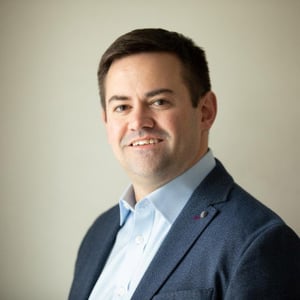
Policy Fellow, Regulatory Policy, Americans for Prosperity Foundation
Marc Marie is a fellow for regulatory policy at Americans for Prosperity, where he focuses on energy, land use, and the administrative state. Before joining Americans for Prosperity, Marc advised early-stage energy companies on regulatory strategy. His government service includes senior counsel at the Department of Justice, Environment and Natural Resources Division; acting deputy solicitor at the Department of the Interior; and counsel to Sen. Mike Lee on the Senate Judiciary Committee, Antitrust Subcommittee.
He holds a Juris Doctor from the University of Maryland and a bachelor's degree from Kenyon College.
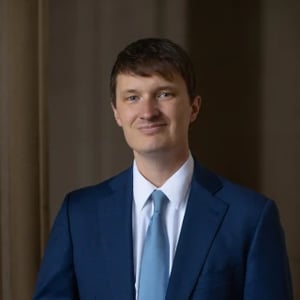
Partner, Boyden Gray PLLC
Trent McCotter is a partner with Boyden Gray PLLC. He previously served as Deputy Associate Attorney General of the United States and as an Assistant U.S. Attorney.
Mr. McCotter maintains an extensive appellate practice. He has considerable experience identifying and briefing cases that draw the Supreme Court’s attention, having persuaded the Court to grant certiorari in numerous cases raising issues of sovereignty, constitutional rights, due process, and criminal law. He has authored and submitted over 60 briefs at the Court.
He has also personally argued more than fifteen federal appeals across the Second, Fourth, Fifth, Sixth, Ninth, Eleventh, Federal, and D.C. Circuits—including once arguing three separate appeals in just four days. He has also twice argued before the 17-judge en banc Fifth Circuit. He has been counsel in over 50 other appeals raising matters from FOIA and the APA to constitutional rights and statutory construction.
As Deputy Associate Attorney General, Mr. McCotter oversaw DOJ’s Civil Appellate and Federal Programs branches, which are responsible for defending nearly all major litigation against the federal government. During his three years as a federal trial attorney in the Eastern District of Virginia’s “Rocket Docket,” Mr. McCotter won the Attorney General’s Award for Distinguished Service.
During his DOJ tenures, Mr. McCotter also assisted with the confirmations of two Supreme Court justices and over a dozen lower-court judges.
Mr. McCotter served as an inaugural clerk to the Hon. Steven J. Menashi on the U.S. Court of Appeals for the Second Circuit and also clerked for the Hon. R. Lanier Anderson III on the U.S. Court of Appeals for the Eleventh Circuit.
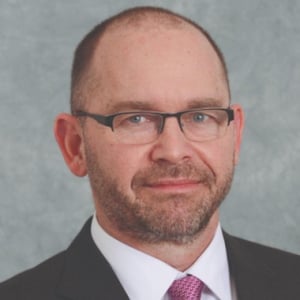
Partner, Paul Hastings
Chris Carr is a partner in the San Francisco office of Paul Hastings LLP and chairs the firm’s Environment and Energy Practice Group. He is widely regarded as one of the leading infrastructure development, environmental, and energy lawyers in the United States. Drawing on his experience with the U.S. Department of the Interior and the U.S. Department of State, Mr. Carr represents businesses, landowners, public agencies, and nonprofits in all areas of environmental and natural resources law, including energy and infrastructure, water, forestry, agriculture, mining, and coastal and marine resources.
In particular, his practice focuses on permitting and litigation under the federal Endangered Species Act (ESA), the Clean Water Act, and the National Environmental Policy Act (NEPA), and their California counterparts: the California ESA, the Porter-Cologne Water Quality Control Act, and the California Environmental Quality Act (CEQA). He has deep expertise and broad experience in local, state, federal, and international laws, regulations, initiatives, and programs addressing climate change and driving the energy transition.
Mr. Carr frequently defends permits, approvals, and environmental review documents for energy and other infrastructure projects in federal and state courts, and defends against “citizen suits” brought under federal and state environmental statutes for all manner of land and resources development.
Mr. Carr was Chair of Morrison and Foerster’s Global Energy & Environment Practice and Co-chair of its Cleantech Practice Group from 2010 – 2017. He is a regular speaker at Berkeley Law and Stanford Law School. Mr. Carr received his J.D. and Ph.D. from the University of California, Berkeley.
He has published widely in the area of environmental regulation, and is frequently interviewed by the broadcast and print media for his views, including:
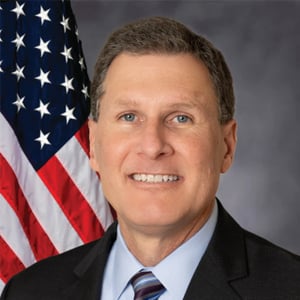
United States Attorney, Eastern District of California
Mr. Grant was appointed by Attorney General Pam Bondi to serve as the United States Attorney for the Eastern District of California beginning on August 11, 2025. Pursuant to 28 U.S.C. § 546(d), he was further appointed by the district court effective December 9, 2025.
Mr. Grant is a veteran of the Department of Justice, having served twice in Washington, D.C.: from 1991 to 1993 as an Attorney-Adviser in the Office of Legal Counsel, and from 2017 to 2021 as a Deputy Assistant Attorney General in the Environment and Natural Resources Division (ENRD). During his tenure at ENRD, he supervised more than a hundred Department litigators advancing the interests of the United States and its agencies in both enforcement and defensive matters, both civil and criminal.
In addition to his service in the Department, Mr. Grant has decades of experience in private practice in Washington, D.C. and Sacramento. That experience includes arguments in the U.S. Supreme Court, the California Supreme Court, and numerous other federal and state courts.
Mr. Grant served as a law clerk to Chief Justice Warren E. Burger (retired) and Associate Justice Clarence Thomas during the Supreme Court’s October 1994 Term. Earlier he served as a law clerk to Judge Edith H. Jones of the U.S. Court of Appeals for the Fifth Circuit in Houston, Texas.
Mr. Grant grew up in Modesto, California and raised his family in Sacramento County. He attended the University of California, Berkeley, from which he earned a bachelor’s degree in economics (1986) and a law degree (1990).
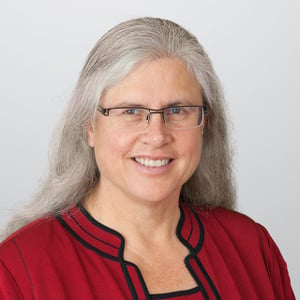
Partner, Holland & Knight
Jennifer Hernandez has practiced land use and environmental law for more than 30 years, and leads Holland & Knight's West Coast Land Use and Environmental Group. Ms. Hernandez divides her time between the firm's San Francisco and Los Angeles offices.
Ms. Hernandez is the only California lawyer ranked by her clients and peers in Chambers USA in the top tier of both land use/zoning and environmental lawyers. In addition, she was recognized as the top environmental litigator of the year in the San Francisco Bay Area by Best Lawyers, and received a California Lawyer of the Year award from the State Bar of California for her work on California's largest and most innovative land use and conservation agreement between her private landowner client and five major environmental organizations, including the Sierra Club and Natural Resources Defense Council. She also has received numerous civil rights awards for her work on overcoming environmentalist opposition to housing and other projects needed and supported by minority communities.
During his tenure as mayor of San Francisco, Willie Brown named October 9, 2002, as "Jennifer Hernandez Day" in San Francisco in honor of her work as a "warrior on the Brownfields" to restore and redevelop former industrial lands. Ms. Hernandez is the longest-serving minority board member (23 years) of the California League of Conservation voters, was appointed by President Clinton to serve as a trustee for the Presidio National Park in San Francisco, and serves on the board of directors for California Forward and Sustainable Conservation.
Ms. Hernandez works for private sector, public agency and nonprofit clients on a broad range of projects in Bay Area, Southern California and Central Valley communities, including infill and master-planned mixed-use housing and commercial projects, university and research facilities, transportation and infrastructure projects, renewable and other energy projects, and local agency plan and ordinance updates. She has written three books, and more than 50 articles, on environmental and land use topics, and regularly teaches land use, environmental and climate law in law and business schools, colleges and seminars. She also serves on the firm's Directors Committee and received the firm's highest honor – the Chesterfield Smith Award – for her community service.
Ms. Hernandez graduated with honors from Harvard University and Stanford Law School, and clerked for Region 20 of the National Labor Relations Board (NLRB) before beginning her land use and environmental law career. Ms. Hernandez is the daughter and granddaughter of steelworkers and was raised in Pittsburg, California. She and her husband live in Berkeley and Los Angeles.
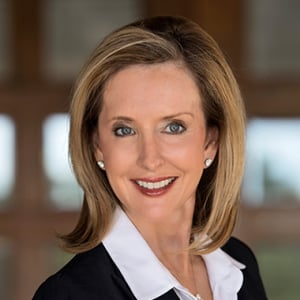
Founder & President, Arizona Strategies
Karrin Taylor Robson is a respected and long-time Arizona business leader and land-use expert. She is Founder and President of Arizona Strategies, a premier land use strategy firm headquartered in Phoenix. Throughout her extensive career, she has entitled more than 35,000 acres including more than 45,000 homes and over 25 million square feet of commercial uses.
Karrin has worked with national organizations representing major landowners and stakeholders across the country to advance balanced federal environmental law and policy on endangered species acts and wetlands issues. In addition, she has advanced multiple public-private partnerships, leveraging private sector capital to deliver public infrastructure and other public benefits.
Karrin has also served on the boards of numerous government, community and economic development organizations. In June 2017, she was appointed by Governor Doug Ducey to the Arizona Board of Regents which is responsible for the governance of the state’s public universities, Arizona State University, Northern Arizona University and the University of Arizona. She served as the Chair of the Joe Foss Institute, Vice Chair of the Greater Phoenix Economic Council, trustee of Boys and Girls Club of Metro Phoenix Foundation, and a board member of the Arizona Chamber of Commerce and invisionAZ. Karrin currently serves as a member of the Civic Leaders Group for the Chief of Staff of the United States Air Force, a member of the Arizona-Mexico Commission and a member of the board of American Council of Trustees and Alumni.
Prior to forming Arizona Strategies, Karrin served as Executive Vice President of DMB Associates, Inc., a Scottsdale based master-planned community developer where she was responsible for ongoing land use entitlement matters and other value-enhancing efforts for its communities and businesses.
Earlier in her career, Karrin was a principal with the law firm of Biskind, Hunt & Taylor, P.L.C., where she practiced in the areas of land use, development and zoning law representing large landowners on significant and complex land use cases.
Her deep Arizona history and professional experience have shaped her perspective on our culture today and helped define her personal priorities. She believes that being actively involved in the community is a prerequisite for being an American.
Through her numerous professional, community and philanthropic commitments, Karrin advocates daily for building and sustaining a dynamic and diverse economy, protecting property rights and creating value in real estate, developing a world-class education system with options for all types of learners, fostering civic engagement and supporting the men and women who serve in our military.
Karrin is the mother of four, a grandmother, and the wife of Ed Robson. In the most recent chapter of her career, Karrin was a candidate for Governor of Arizona.
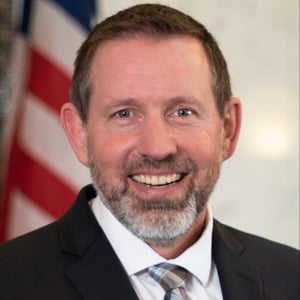
Judge, United States Court of Appeals, Ninth Circuit
Lawrence VanDyke serves as a circuit judge on the U.S. Court of Appeals for the Ninth Circuit. Prior to that appointment in January 2020, he served as a Deputy Assistant Attorney General in the Environment and Natural Resources Division of the United States Department of Justice. Before that, he served consecutively as the Solicitor General of two western states – Nevada and Montana. At the beginning of his legal career, he worked as an attorney in the Appellate and Constitutional Issues practice group at Gibson Dunn & Crutcher, LLP.
Judge VanDyke received his law degree magna cum laude from Harvard Law School, where he was an editor on the Harvard Law Review. He has engineering and theology undergraduate degrees and a masters degree in engineering management. He served as a law clerk to the Honorable Janice Rogers Brown of the United States Court of Appeals for the District of Columbia Circuit. Judge VanDyke and his wife Cheryl live in Reno, Nevada, and they have three children.
Senior Fellow, Center for Energy and Environment, Competitive Enterprise Institute
Marlo Lewis, Jr. is a Senior Fellow at the Competitive Enterprise Institute, where he writes on global warming, energy policy, and other public policy issues. Prior to joining CEI in April 2002, he served as Director of External Relations at the Reason Foundation in Los Angeles, California. During the 106th Congress, Marlo served as Staff Director of the House Government Reform Subcommittee on National Economic Growth, Natural Resources, and Regulatory Affairs.
His interests include the science, economics, and politics of global warming policy; the precautionary principle; environmentalism and religion; and the moral basis of free enterprise. Marlo has been published in The Washington Times, Investors Business Daily, TechCentralStation, National Review, and Interpretation: A Journal of Political Philosophy. He has appeared on various television and radio programs, and his ideas have been featured in radio commentary by Rush Limbaugh and G. Gordon Liddy.
Before joining CEI for his first tenure with the organization in 1993, Marlo served as Research Director for the grassroots organization, Citizens Against Government Waste. Earlier, he was a Staff Consultant to the House Foreign Affairs Subcommittee on International Economic Policy and Trade, a Special Assistant at the State Department Bureau of Inter-American Affairs and Bureau of International Organization Affairs, and a Visiting Assistant Professor of Political Science at Claremont McKenna College. He holds a Ph.D. in Government from Harvard University and a B.A. in Political Science from Claremont McKenna College.

Partner, Baker Hostetler LLP
David Rivkin is a member of the firm's litigation, international and environmental teams and is co-leader of the firm's national appellate practice. He has extensive experience in constitutional, administrative and international law litigation and has been involved in numerous high-profile cases. With his prior experience in the government sector, David draws on a wealth of knowledge when providing compliance advice to companies and handling enforcement proceedings before government agencies on issues arising out of multilateral and unilateral sanctions, the Foreign Corrupt Practices Act (FCPA), anti-boycott issues, bankruptcy and financial fraud matters, and environmental and energy issues.
David has developed and implemented legislative, regulatory and litigation initiatives for two presidential administrations. Over the years, he has published hundreds of articles, op-eds, book reviews and book chapters on a variety of international, legal, constitutional, defense, arms control, foreign policy, environmental and energy issues for various newspapers and magazines, including The Wall Street Journal, The Washington Post, The New York Times, USA Today and The Los Angeles Times, and has been a frequent commentator and guest on TV and radio shows including ABC, CBS, NBC, CNN, Fox News, NPR and PBS.
Partner, Baker & Hostetler LLP
Lee A. Casey focuses on federal environmental, constitutional and international law and Alien Tort Statute issues. He also advises clients on compliance issues under the Foreign Corrupt Practices Act (FCPA), U.S. trade sanctions regimes, and federal ethics requirements. Mr. Casey’s practice includes federal, district and appellate court litigation, as well as matters before federal agencies. Prior to joining BakerHostetler, Mr. Casey was an associate with Hunton & Williams, practicing in international, environmental and constitutional law. From 2004 through 2007 he served as an member of the United Nations Subcommission on the Promotion and Protection of Human Rights.
From 1986 to 1993, Mr. Casey served in various capacities in the federal government, including the Office of Legal Policy (1986-90) and the Office of Legal Counsel (1992-93) at the U.S. Department of Justice and served as Deputy Associate General Counsel at the U.S. Department of Energy (1990-92). The Office of Legal Counsel is responsible for advising the Attorney General and the White House on issues of constitutional law and statutory interpretation. The Office of Legal Policy served as a strategic “think tank” for the Reagan Justice Department and was responsible for reviewing candidates for appointments to the federal bench.
Before joining the government in 1986, Mr. Casey was an associate in the Los Angeles firm of Mitchell, Silberberg & Knupp, practicing in the litigation section, with an emphasis on copyright, contract and First Amendment issues. From 1984 to 1985, Mr. Casey served as Law Clerk to the Honorable Alex Kozinski, then Chief Judge of the United States Claims Court. From 1982 to 1984, he practiced at the Detroit firm of Dykema Gossett, focusing on corporate, securities, commercial and intellectual property litigation, and from 1990 through 1994, he served as an Adjunct Professor of Law at George Mason University School of Law in Arlington, Virginia.
Among the chapters, articles and papers that Mr. Casey has authored or co-authored are: “International Law and the Nation-State at the U.N.,” Reclaiming the Language of Freedom at the United Nations: A Guide for U.S. Policymakers, The Heritage Foundation (2006) (with David B. Rivkin, Jr.); “The Dangerous Myth of Universal Jurisdiction,” A Country I Do Not Recognize (ed. Robert H. Bork) (2005) (with David B. Rivkin, Jr.); “Leashing the Dogs of War,” The National Interest (Fall 2003) (with David B. Rivkin, Jr.); “The Limits of Legitimacy: The Rome Statute’s Unlawful Application to Non-State Parties,” 44 Va.J.Int’l L. 63 (Fall 2003) (with David B. Rivkin, Jr.); “Devil’s Advocates: The Danger of Judging Lawyers By Their Clients,” Policy Review (Feb. and Mar. 2002) (with David B. Rivkin, Jr.); “The Case Against the International Criminal Court,” 25 Fordham Int’l L.J. 840 (2002); “Europe in the Balance: The Alarmingly Undemocratic Drift of the European Union,” Policy Review (June and July 2001) (with David B. Rivkin Jr.); “Against an International Criminal Court,” Commentary, May 1998 (with David B. Rivkin, Jr.); “Federalism (Cont’d.),” Commentary, December 1996 (with David B. Rivkin, Jr.); “Presidents and War Powers: Another View,” Common Sense, Winter 1996 (with David B. Rivkin, Jr.); “How Binding Are Contracts?” The American Enterprise, Nov./Dec. 1993 (with David B. Rivkin, Jr.); and “Pirate Constitutionalism: An Essay in Self-Government,” 8 J. of L. & Politics 477 (1992).
Mr. Casey is a member of the California, Michigan and District of Columbia Bar Associations.

Tazewell Taylor Professor of Law and William H. Cabell Research Professor, William & Mary Law School
Jonathan H. Adler joined the William & Mary law faculty as the Tazwell Taylor Professor of Law and William H. Cabell Research Professor in 2025. Prior to joining the faculty, he was the inaugural Johan Verheij Memorial Professor of Law and the founding Director of the Coleman P. Burke Center for Environmental Law at the Case Western Reserve University School of Law.
Professor Adler is the author or editor of seven books, including Climate Liberalism: Perspectives on Liberty, Property and Pollution (Palgrave, 2023), Marijuana Federalism: Uncle Sam and Mary Jane (Brookings Institution Press, 2020), Business and the Roberts Court (Oxford University Press, 2016) and Rebuilding the Ark: New Perspectives on Endangered Species Act Reform (AEI Press, 2011).
His articles have appeared in publications ranging from the Harvard Environmental Law Review and Yale Journal on Regulation to the Wall Street Journal, New York Times, and Washington Post. He has testified before Congress a dozen times, and his work has been cited in the U.S. Supreme Court. A 2024 study identified Professor Adler as the seventh most cited legal academic in administrative and environmental law from 2019 to 2023.
Professor Adler is a contributing editor to Civitas Outlook and a regular contributor to the popular legal blog, The Volokh Conspiracy. A regular commentator on constitutional and regulatory issues, he has appeared on numerous radio and television programs, ranging from the PBS Newshour and National Public Radio to the Fox News Channel and Entertainment Tonight.
Professor Adler is a senior fellow at the Property & Environment Research Center in Bozeman, Montana. In 2018, Professor Adler was elected to membership in the American Law Institute and helped co-found the organization Checks and Balances. In 2024, Professor Adler was appointed a public member of the Administrative Conference of the United States.
Professor Adler clerked for the Honorable David B. Sentelle on the U.S. Court of Appeals for the District of Columbia Circuit.

From Pork Producers to Suncor: Extraterritoriality and Our Constitutional Structure
Michael S. Greve, Jennifer Perkins, Daniel B. Rodriguez, O.H. Skinner, Michael R. Williams
How far can states go in regulating conduct that has effects outside their borders?At the...
Clearing the Air: Recent Trump Administration Reforms to Environmental Criminal Enforcement
John Irving, Granta Nakayama, Justin Savage
With the growth of the administrative state over the last half-century, an equal expansion has...
State-Level Remedies for the Housing Crisis
James S. Burling, Christopher S. Elmendorf, David Schleicher, Ilya Somin
Many areas of the country are beset by serious housing shortages. State-level regulatory policies...
Explainer Episode 88 - How Congress Can Reform Environmental Regulation and the EPA
Michael Buschbacher, Daren Bakst
In March of 2025, the Competitive Enterprise Institute (CEI) released a major new publication, “Modernizing...
Climate Disclosure Litigation: Examining Legal Battles Against California and the SEC
Victor Flatt, Stephen Hall, Marc Marie, Trent McCotter
A panel of distinguished legal scholars and practitioners will provide an overview of the current...
Panel 1: The Not So Wild West? How Regulations Have Affected Land Use in the Western States
Chris Carr, Eric Grant, Jennifer L. Hernandez, Karrin Taylor Robson, Lawrence VanDyke
The rising cost of housing and the regulatory state are some of the major issues...
EPA Regulation of Fuel Economy: Congressional Intent or Climate Coup?
Marlo Lewis
Note from the Editor:1 This paper assesses EPA’s rule setting standards for motor vehicle greenhouse...
The California Application for a Waiver of Preemption Under the Clean Air Act to Enforce Greenhouse Gas Standards on New Vehicles
In 2002 the California legislature passed A.B. 1493. This law commanded the California Air Resources...
State AGs on Global Warming Litigation
David B. Rivkin, Lee A. Casey
Many state Attorneys General across the country are becoming increasingly involved in global climate change...
Can the Golden State Catch a Greenhouse Waiver?
Jonathan H. Adler
In 2004, the California Air Resources Board (CARB) adopted the nation’s fi rst regulations limiting...