
Supreme Court Correspondent, The Washington Post
Robert Barnes has been a Washington Post reporter and editor since 1987. He joined the paper to cover Maryland politics, and has served in various editing positions including metropolitan editor and national political editor . He has covered the Supreme Court since November 2006. He gave up law school plans for a life in newspapers after taking a journalism class in college. It did not occur to him, as it apparently did to others, that he could do both.
Judge, United States Court of Appeals, Fifth Circuit
Judge Duncan received his B.A. from Louisiana State University in 1994, his J.D. from the Paul M. Hebert Law Center at Louisiana State University in 1997, and his LL.M. from Columbia Law School in 2004.
After graduating from law school, he clerked for Louisiana-based Circuit Judge John Malcolm Duhé Jr. of the United States Court of Appeals for the Fifth Circuit.
From 2008–2012, Duncan served as Appellate Chief for Louisiana's Attorney General's office. From 2012–2014, he served as general counsel of the Becket Fund for Religious Liberty. From 2004-2008, he was an assistant professor of law at the University of Mississippi School of Law.
Before becoming a judge, Duncan practiced at the Washington, D.C. firm of Schaerr Duncan LLP, where he was a founding partner. He was appointed by President Trump to the United States Court of Appeals for the Fifth Circuit on May 1, 2018.

Dr. John Eastman is the former Henry Salvatori Professor of Law & Community Service and former Dean at Chapman University's Dale E. Fowler School of Law, where he had been a member of the faculty since 1999, specializing in Constitutional Law, Legal History, and Property. He is a founding director of the Center for Constitutional Jurisprudence, a public interest law firm affiliated with the Claremont Institute that he founded in 1999. He has a Ph.D. in Government from the Claremont Graduate School and a J.D. from the University of Chicago Law School, and a B.A. in Politics and Economics from the University of Dallas. He serves as the Chairman of the Board of the National Organization for Marriage.
Prior to joining the Chapman law faculty, Dr. Eastman served as a law clerk to the Honorable Clarence Thomas, Associate Justice, Supreme Court of the United States, and to the Honorable J. Michael Luttig, Judge, United States Court of Appeals for the Fourth Circuit and practiced law with the national law firm of Kirkland & Ellis. Dr. Eastman has also represented numerous clients in important constitutional law matters and has argued before the Supreme Court. On behalf of the Claremont Institute Center for Constitutional Jurisprudence, he has participated as amicus curiae before the Supreme Court of the United States, U.S. Courts of Appeals, and State Supreme Courts in more than one hundred cases of constitutional significance, including Boy Scouts of America v. Dale, Zelman v. Simmons-Harris (the school vouchers case), Kelo v. New London, Ct. (eminent domain), and Van Orden v. Perry (the 10 Commandments case). He has also appeared as an expert legal commentator on numerous television and radio programs, including C-SPAN, Fox News, PBS, NewsHour, and The O'Reilly Factor.
Professor from Practice, Georgetown University Law Center
President, Constitutional Accountability Center
Elizabeth is Constitutional Accountability Center’s President. From 2008-2016, she served as CAC's Chief Counsel, representing the Center as well as clients including preeminent constitutional scholars and historians, state and local government organizations, and groups such as the League of Women Voters and the AARP. She frequently participates in Supreme Court litigation and her legal brief writing has been recognized as “exemplary” by the Green Bag Almanac & Reader. Elizabeth has also argued several important cases in the federal courts of appeals on a range of issues, including immigration law, habeas corpus, and sovereign immunity. She joined CAC from private practice at Quinn Emanuel Urquhart & Sullivan in San Francisco, where she was an attorney working with former Stanford Law School Dean Kathleen Sullivan in the firm’s Supreme Court/appellate practice. Previously, Elizabeth was a supervising attorney and teaching fellow at the Georgetown University Law Center appellate litigation clinic, a law clerk for Judge James R. Browning of the U.S. Court of Appeals for the Ninth Circuit, and a lawyer at Pillsbury Winthrop Shaw Pittman, a law firm in Washington. She has appeared as a legal expert for NBC, ABC, PBS, CNN, Fox News, the BBC, Current TV, and NPR, among other outlets. Elizabeth has been quoted extensively in the print media and is a regular contributor to the ABA’s Preview of United States Supreme Court Cases. Her writings have appeared in The New York Times, Reuters, USA Today, Politico, CNN.com, Slate, and on numerous political and legal blogs, such as Huffington Post, SCOTUSblog, and ACSblog. She has also published in the UCLA Journal of Environmental Law & Policy, Syracuse Law Review, The Cato Institute’s Supreme Court Review, and the Yale Journal of International Law. Elizabeth is a graduate of Yale Law School.
Professor of Law, Catholic University of America
Robert Destro served as Assistant Secretary for the Bureau of Democracy, Human Rights, and Labor (DRL). He has a long history as a human rights advocate and civil rights attorney with expertise in elections, employment, and constitutional law. Destro has served on the faculty at Catholic University’s Columbus School of Law since 1982 and served as its interim dean from 1999 to 2001. He was founding director of the Interdisciplinary Program in Law and Religion and served as the Director of the Institute for Policy Research and Catholic Studies from June 2017 to September 2019. He served as a commissioner on the U.S. Commission on Civil Rights from 1983-1989. His legal work includes collaboration with the Peace Research Institute Oslo in a fifteen-year dialogue among Muslim, Christian, and Jewish leaders in the legal, business, and religious fields in the United States and the Middle East as well as efforts promoting the release of political prisoners and prisoners of conscience in the Middle East. He has served as voting rights counsel for the Ohio Secretary of State and has advocated for the first amendment rights of individuals and organizations.
He earned a B.A. from Miami University, Ohio, and a J.D. from the University of California at Berkeley. He is an active member of the Bar in Ohio and California.
The rest of his bio including his publications are available on the Catholic University Faculty page linked here.

Vice President, Edwin Meese III Institute for the Rule of Law, Advancing American Freedom
John G. Malcolm oversees Advancing American Freedom’s work to increase understanding of the Constitution and the rule of law as Vice President of the organization’s Edwin Meese III Institute for the Rule of Law. Malcolm brings to the challenge a wealth of legal expertise and experience in both the public and private sectors.
Prior to joining Advancing American Freedom in 2025, Malcolm was the Vice President of the Institute for Constitutional Government and the Director of the Meese Center for Legal and Judicial Studies at the Heritage Foundation. Prior to joining Heritage in 2012, Malcolm was general counsel at the U.S. Commission on International Religious Freedom, as well as a distinguished practitioner in residence at Pepperdine Law School. From 2004 to 2009, Malcolm was executive vice president and director of worldwide anti-piracy operations for the Motion Picture Association.
Malcolm served as a deputy assistant attorney general in the Department of Justice’s Criminal Division from 2001 to 2004, where he oversaw sections on computer crime and intellectual property, domestic security, child exploitation and obscenity, and special investigations. Immediately prior to that, he was a founding partner in the Atlanta law firm of Malcolm & Schroeder, LLP.
From 1990 to 1997, Malcolm was an assistant U.S. attorney in Atlanta, assigned to the fraud and public corruption section, and also an associate independent counsel, investigating fraud and abuse in the Department of Housing and Urban Development. He was honored with the Director’s Award for Superior Performance for his work in connection with the successful prosecution of Walter Leroy Moody Jr., who assassinated an 11th Circuit judge and the head of the Savannah chapter of the NAACP.
A graduate of Harvard Law School and Columbia College, Malcolm began his career as a law clerk to a federal district court judge and a federal appellate court judge, and as an associate at the Atlanta-based law firm of Sutherland, Asbill & Brennan (new Eversheds Sutherland).
Malcolm, who resides in Washington, D.C., serves on the Board of Trustees of the Washington National Opera and is a Senate-confirmed member of the Board of Directors of the Legal Services Corporation, the largest funder of civil legal aid in the United States.
Former Adjunct Professor of Law; former Special Counsel to the President; former federal prosecutor, Georgetown Law (ret.)
Bill Otis is a former Adjunct Professor of Law at Georgetown University, a one-time federal prosecutor, and a former Special White House Counsel for President George H. W. Bush. After graduating from Stanford Law School, he started his career in the Criminal Division of the Justice Department, then became chief of appeals for the US Attorney's Office for the Eastern District of Virginia. In the 1980's he served on the Department's "Train the Trainer" team, which taught US Attorneys Offices across the county how to implement the then-new Sentencing Reform Act. He has held several posts in the federal government, including Special Assistant to the Secretary of Energy and Counselor to the head of the Drug Enforcement Administration, in addition to the White House post. He has testified before Congress on issues in criminal procedure, illegal drugs, the US Sentencing Commission, and the death penalty, and has given numerous media interviews on those and other subjects. He currently teaches a seminar at Georgetown Law titled "Conservatism in Law in America" with his wife, Federalist Society co-founder Lee Liberman Otis.
William D. Warren Professor of Law, UCLA School of Law
Stephen Bainbridge is the William D. Warren Distinguished Professor of Law at UCLA School of Law, where he currently teaches Business Associations, Advanced Corporation Law, and Mergers and Acquisitions. In past years, he has also taught Corporate Finance, Securities Regulation, Unincorporated Business Associations and Catholic Social Thought and the Law. Professor Bainbridge previously taught at the University of Illinois Law School (1988-1996). He has also taught at Harvard Law School as the Joseph Flom Visiting Professor of Law and Business (2000-2001), and as a visiting professor at La Trobe University in Melbourne (2005 and 2007) and at Aoyama Gakuin University in Tokyo (1999).
In 2008, Bainbridge received the UCLA School of Law's Rutter Award for Excellence in Teaching. In 1990, the graduating class of the University of Illinois College of Law voted him "Professor of the Year."
Professor Bainbridge is a prolific scholar, whose work covers a variety of subjects, but with a strong emphasis on the law and economics of public corporations. He has written over 100 law review articles which have appeared in such leading journals as the Harvard Law Review, Virginia Law Review, Northwestern University Law Review, Cornell Law Review, Stanford Law Review, and Vanderbilt Law Review. Bainbridge has also written 19 books, including seven in multiple editions. His most recent books include: Outsourcing the Board: How Board Service Providers Can Improve Corporate Governance (Cambridge University Press, 2018) (with M. Todd Henderson); Business Associations: Cases and Materials on Agency, Partnerships, and Corporations (Foundation Press, 10th ed., 2018) (with Klein and Ramseyer); Mergers and Acquisitions: A Transactional Perspective (Foundation Press, 2017) (with Iman Anabtawi).
According to Gregory Sisk and Brian Leiter’s rankings of law professors by scholarly impact, Professor Bainbridge was the third most-frequently cited scholar in corporate and securities law for the period 2013-2017. According to Hein Online, Bainbridge is the 29th most frequently cited scholar in their database of legal publications over the last 10 years and the 23rd most cited for the period January 2018 through August 2019. In SSRN.com’s ranking of the top 3000 legal authors by all-time downloads, Bainbridge is ranked 10th. By that metric, he is the highest ranked member of the UCLA law school faculty. In SSRN.com’s ranking of the top 3000 legal authors by all-time citations to their work, Bainbridge is ranked 55th. By that metric, he is the second highest ranked member of the UCLA law school faculty.
Professor Bainbridge has been a Salvatori Fellow with the Heritage Foundation, a member of the American Bar Association’s Committee on Corporate Laws, a member of the Editorial Advisory Board of the Journal of Markets and Morality, and Chair of the Executive Committee of the Federalist Society’s Corporations, Securities & Antitrust Practice Group.
In May 2014, Professor Bainbridge was the Cameron Fellow at the University of Auckland Faculty of Law. He was the Francis G. Pileggi Distinguished Lecturer in Law at Widener University School of Law in September 2005, and a Distinguished Visiting Scholar at the University of Maryland School of Law in November 2005.
In 2008, 2011, and 2012, Professor Bainbridge was named by the National Association of Corporate Directors' Directorship magazine to its list of the 100 most influential people in the field of corporate governance.
His blog, ProfessorBainbridge.com, was named by the ABA Journal as one of the Top 100 Law Blogs of 2007, 2008, 2010, 2011, and 2012.
Professor of Law, University of Notre Dame Law School
Gerard V. Bradley is Professor of Law at the University of Notre Dame, where he teaches Legal Ethics and Constitutional Law. At Notre Dame he directs (with John Finnis) the Natural Law Institute and co-edits The American Journal of Jurisprudence, an international forum for legal philosophy. Bradley has been a Visiting Fellow at the Hoover Institution of Stanford University, and a Senior Fellow of the Witherspoon Institute, in Princeton, New Jersey. He served for many years as President of the Fellowship of Catholic Scholars.
Bradley received his B.A and J.D. degrees from Cornell University, graduating Summa cum laude from the law school in 1980. After serving in the Trial Division of the Manhattan District Attorney’s Office he joined the law faculty at the University of Illinois. He moved to Notre Dame in 1992. Bradley has published over one hundred scholarly articles and reviews. His most recent books are an edited collection of essays titled, Challenges to Religious Liberty in the Twenty-First Century (published by Cambridge University Press in 2012), Essays on Law, Religion, and Morality and Unquiet Americans: U.S. Catholics and the Common Good (both to be published in 2014.) He is currently working on a book about regulating obscenity in the Internet Age.
Professor from Practice, Georgetown University Law Center
Professor of Law, Brooklyn Law School
Professor Tebbe teaches courses on constitutional law, religious freedom, legal theory, and professional responsibility. His scholarship focuses on the relationship between religious traditions and constitutional law, both in the United States and abroad. His articles have appeared in Georgetown Law Journal, Journal of Religion, Michigan Law Review, University of Pennsylvania Law Review, and, most recently, Virginia Law Review. He is a past Chair of the Law and Religion Section of the Association of American Law Schools and he is co-organizer of the Annual Law and Religion Roundtable. He is regularly called on by media outlets to discuss questions of religious freedom and general constitutional law.
Professor Tebbe served as a Visiting Professor of Law at Cornell Law School during the fall of 2012. He joined Brooklyn Law School from St. John's University School of Law, where he received a Dean's Teaching Award. Before teaching, he clerked for Judge John M. Walker Jr. of the U.S. Court of Appeals for the Second Circuit and practiced law at the American Civil Liberties Union and at Davis Polk & Wardwell. He was also a Fulbright Scholar at the University of Cape Town.
Associate Professor of Law, Notre Dame Law School

Senior Scholar, Manhattan Institute; Professor of Law Emerita, University of San Diego
Gail Heriot is a Senior Scholar at the Manhattan Institute, a Professor of Law Emerita at the University of San Diego and the Chairman of the Board of the American Civil Rights Project. She served on the U.S. Commission on Civil Rights for 18 years. Her new book is entitled “Why We Walk on Eggshells: How Our Civil Rights Laws Stifle Our Public Discourse.”

Alexander M. Bickel Professor of Public Law, Yale Law School
Degrees from Davidson College, B.A. summa cum laude, 1973; Harvard University, M.A., 1974; Yale Law School, J.D, 1978. Clerked for Edward Weinfeld, 1978-79; Attorney at Shea & Gardner, 1979-82; Law Professor since 1982, tenured at Georgetown and Yale, visiting professor at Stanford, NYU, Toronto, Harvard, Columbia, Penn, Fordham, Vanderbilt. Author of casebooks on legislation and sexuality, gender and law, as well as monographs on statutory interpretation and the rights of sexual and gender minorities. Author of dozens of articles, by one empirical count a top ten most cited law professors.
Judge, United States Court of Appeals, Fifth Circuit
Judge Duncan received his B.A. from Louisiana State University in 1994, his J.D. from the Paul M. Hebert Law Center at Louisiana State University in 1997, and his LL.M. from Columbia Law School in 2004.
After graduating from law school, he clerked for Louisiana-based Circuit Judge John Malcolm Duhé Jr. of the United States Court of Appeals for the Fifth Circuit.
From 2008–2012, Duncan served as Appellate Chief for Louisiana's Attorney General's office. From 2012–2014, he served as general counsel of the Becket Fund for Religious Liberty. From 2004-2008, he was an assistant professor of law at the University of Mississippi School of Law.
Before becoming a judge, Duncan practiced at the Washington, D.C. firm of Schaerr Duncan LLP, where he was a founding partner. He was appointed by President Trump to the United States Court of Appeals for the Fifth Circuit on May 1, 2018.
Senior Fellow, Governance Studies, The Brookings Institution
William A. Galston holds the Ezra K. Zilkha Chair in the Brookings Institution’s Governance Studies Program, where he serves as a senior fellow. A former policy advisor to President Clinton and presidential candidates, Galston is an expert on domestic policy, political campaigns, and elections. His current research focuses on designing a new social contract and the implications of political polarization.
He is also College Park Professor at the University of Maryland. Prior to January 2006, he was Saul Stern Professor and Acting Dean at the School of Public Policy, University of Maryland, director of the Institute for Philosophy and Public Policy, founding director of the Center for Information and Research on Civic Learning and Engagement (CIRCLE), and executive director of the National Commission on Civic Renewal, co-chaired by William Bennett and Sam Nunn. A participant in six presidential campaigns, he served from 1993 to 1995 as Deputy Assistant to President Clinton for Domestic Policy. From 1969 to 1970 Galston served as a member of the United States Marine Corps and was honorably discharged.
Galston is the author of eight books and more than 100 articles in the fields of political theory, public policy, and American politics. His most recent books are Liberal Pluralism (Cambridge, 2002), The Practice of Liberal Pluralism (Cambridge, 2004), and Public Matters (Rowman & Littlefield, 2005). A winner of the American Political Science Association’s Hubert H. Humphrey Award, he was elected a Fellow of the American Academy of Arts and Sciences in 2004.
Galston has appeared on all the principal television networks and is a frequent commentator on NPR. He writes a weekly column for the Wall Street Journal.

McCormick Professor of Jurisprudence; Director, James Madison Program, Princeton University
Robert P. George is McCormick Professor of Jurisprudence and Director of the James Madison Program in American Ideals and Institutions at Princeton University. He has several times been a Visiting Professor at Harvard Law School. He has served as Chairman of the U.S. Commission on International Religious Freedom and on the U.S. Commission on Civil Rights and the President’s Council on Bioethics. He has also served as the U.S. member of UNESCO’s World Commission on the Ethics of Scientific Knowledge and Technology. He was a Judicial Fellow at the Supreme Court of the United States, where he received the Justice Tom C. Clark Award. A Phi Beta Kappa graduate of Swarthmore, he holds the degrees of J.D. and M.T.S. from Harvard University and the degrees of D.Phil., B.C.L., D.C.L., and D.Litt. from Oxford University, in addition to twenty-one honorary doctorates. He is a recipient of the U.S. Presidential Citizens Medal, the Honorific Medal for the Defense of Human Rights of the Republic of Poland, the Canterbury Medal of the Becket Fund for Religious Liberty, the Bradley Prize, the Irving Kristol Award of the American Enterprise Institute, and Princeton University’s President’s Award for Distinguished Teaching. His books include Making Men Moral: Civil Liberties and Public Morality and In Defense of Natural Law (both published by Oxford University Press), as well as The Clash of Orthodoxies and Conscience and Its Enemies (both published by ISI Books).

John Paul Stevens Professor of Law, Northwestern University School of Law
Andrew Koppelman is John Paul Stevens Professor of Law, Professor (by courtesy) of Political Science, and Philosophy Department Affiliated Faculty at Northwestern University. He received the Walder Award for Research Excellence from Northwestern, the Hart-Dworkin award in legal philosophy from the Association of American Law Schools, and the Edward S. Corwin Prize from the American Political Science Association. His scholarship focuses on issues at the intersection of law and political philosophy. He has written more than 100 scholarly articles and eight books, most recently Burning Down the House: How Libertarian Philosophy Was Corrupted by Delusion and Greed, (St. Martin’s Press). His column appears regularly at The Hill. You can find his recent work at andrewkoppelman.com.

Judge, United States Court of Appeals, Ninth Circuit
Judge O’Scannlain was appointed United States Circuit Judge for the Ninth Circuit by President Reagan on September 26, 1986. He received a J.D. degree in 1963 from Harvard Law School and a B.A. in 1957 from St. John’s University. He also earned the LL.M. (Judicial Process) degree at University of Virginia Law School in 1992. He was awarded the LL.D. (honoris causa) degree by the University of Notre Dame in 2002, the LL.D. (honoris causa) degree by Lewis & Clark College in 2003 and the LL.D. (honoris causa) degree by the University of Portland in 2011.
As a judge on the U.S. Court of Appeals for the Ninth Circuit, Judge O’Scannlain has participated in over 6,000 federal cases and has written hundreds of published opinions on a broad range of subjects including constitutional law, international law, securities law, administrative law, and criminal law. He hears appeals in San Francisco (court headquarters), as well as in Los Angeles (Pasadena), Portland, Seattle, Anchorage and Honolulu. The late Chief Justice Rehnquist appointed Judge O'Scannlain to the Federal Judicial Center's Advisory Committee on Appellate Judge Education. In 2009, Chief Justice Roberts appointed Judge O’Scannlain to the International Judicial Relations Committee of the U.S. Judicial Conference and subsequently appointed him Chairman in 2010.
President George W. Bush appointed Judge O’Scannlain to the Board of Trustees of the James Madison Memorial Fellowship Foundation in 2004. Pope Benedict XVI conferred the Order of Saint Gregory the Great on Judge and Mrs. O’Scannlain in 2007.
Judge O’Scannlain’s professional interests also include judicial administration and reform, and continuing legal education. Judge O’Scannlain is former Chair of the Judicial Division of the American Bar Association and has previously chaired the ABA’s Appellate Judges Conference, its Committee on Appellate Practice, and its 9th Appellate Practice Institute. He has testified before the Senate Judiciary Committee on several occasions, the House Judiciary Subcommittee on Courts and Intellectual Property, and the Commission on Structural Alternatives for the Federal Courts of Appeals on the subject of court reorganization. In addition to serving as a faculty member at numerous federal appellate practice seminars for judges and attorneys, including New York University Law School’s Institute for Judicial Administration, Judge O’Scannlain is an Adjunct Professor at Lewis & Clark Law School where he teaches a seminar on the Supreme Court. He has served as a Moot Court Judge at distinguished law schools across the United States including Harvard, Yale Stanford, Boalt Hall (Berkeley Law), Virginia, Cornell, Notre Dame, Fordham, Alabama, University of Southern California, King Hall (U.C. Davis) and Loyola Marymount University and in China at Xiamen and Renmin Universities.
Between graduation from Harvard and investiture as a federal judge, Judge O’Scannlain was primarily engaged in private law practice. Between 1969 and 1974, he was consecutively the Deputy Attorney General of Oregon, the Public Utility Commissioner of Oregon, and Director of the Oregon Department of Environmental Quality. He retired from the U.S. Army Reserve in 1978 as a Major after 23 years Reserve and National Guard service, including four years as an enlisted man.
A first generation Irish-American son of immigrant parents from Sligo and Derry, Judge O’Scannlain is married to the former Maura Nolan and has eight children: Sean, Jane, Brendan, Kevin, Megan, Christopher, Anne, and Kate, and nineteen grandchildren. His chambers are in the Pioneer Courthouse in Portland, Oregon.

Partner, Wiley Rein, LLP
Megan L. Brown is a partner at Wiley Rein LLP. She has significant litigation, appellate and regulatory experience before state and federal courts and agencies.
Ms. Brown helps businesses respond to federal, state and local regulation and investigations raising administrative law, statutory interpretation, and constitutional issues, including the First Amendment.
President, Americas and Global Chief Legal Officer, Merkle Science
Mary Beth Buchanan is currently President, Americas and Global Chief Legal Officer at Merkle Science. She was former General Counsel for Kraken Cryptocurrency Exchange. She was a partner at Bryan Cave LLP in the firm’s White Collar Defense and Investigations and Securities Litigation and Enforcement Client Service Groups. She concentrated her practice on white collar criminal defense, SEC and FINRA enforcement matters, corporate and accounting fraud, internal investigations, corporate compliance, foreign corrupt practices violations, Congressional investigations and complex civil litigation.
Ms. Buchanan served as the United States Attorney for the Western District of Pennsylvania from September 2001 to November 2009, having been appointed by President George W. Bush. She is the only woman in Pennsylvania's history to be presidentially appointed to this position. As the United States Attorney, Ms. Buchanan oversaw the prosecution of more than 5,000 cases, including corporate and securities fraud, bank fraud, foreign corrupt practices, false claims, money laundering, health care fraud, public corruption and a broad range of violent crimes. Prior to that time, Ms. Buchanan spent more than 13 years as an Assistant United States Attorney litigating criminal, civil and appellate cases.
During her tenure as the United States Attorney, Ms. Buchanan also held several posts at the DOJ, including serving as the director of the Executive Office for United States Attorneys, acting director of the DOJ’s Office on Violence Against Women and chair of the Attorney General’s Advisory Committee. Ms. Buchanan also served on the U.S. Sentencing Commission's Organizational Guidelines Advisory Committee, which made recommendations to the Commission for amendments to the Sentencing Guidelines for Business Organizations.
In his 35 years at the Justice Department and in private practice, Mike Carvin was one of the leading appellate and trial lawyers challenging state and federal regulations on constitutional and statutory grounds, with 10 Supreme Court arguments and numerous high-profile victories. In addition to his numerous cases in the United States Supreme Court, he argued in virtually every federal appeals court. His major cases include the recent constitutional challenge to the Affordable Care Act and the decisions invalidating Sarbanes-Oxley's accounting board, preventing the Justice Department from obtaining monetary relief against the tobacco industry under RICO, overturning the federal government's plan to statistically adjust the census, limiting the Justice Department's ability to create "majority-minority" districts, and upholding Proposition 209's ban on racial preferences in California.
Mike was one of the lead lawyers, and argued before the Florida Supreme Court, on behalf of George W. Bush in the 2000 presidential election Florida recount controversy. He also has represented state governments, financial institutions, telecommunications, and energy companies in "takings," First Amendment, civil rights, and statutory challenges to federal government actions.
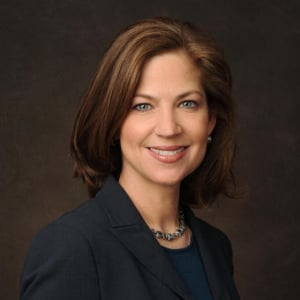
Chief Legal Correspondent, CBS News
Jan Crawford is CBS News' chief legal correspondent and contributes regularly to the "CBS Evening News," "CBS This Morning," and "Face the Nation," as well as CBS News Radio and CBSNews.com.
Crawford joined CBS News in October 2009. She had been a regular contributor to CBS News in 2005 to 2006.
Crawford is a recognized authority on the Supreme Court whose 2007 book, "Supreme Conflict: The Inside Story of the Struggle for the Control of the United States Supreme Court" (Penguin Press), gained critical acclaim and became an instant New York Times Bestseller. She began covering the Court in 1994 for the Chicago Tribune and went on to become a law and political correspondent for all ABC News programs, a Supreme Court analyst for The NewsHour With Jim Lehrer on PBS and a legal analyst for CBS News' "CBS Evening News" and "Face the Nation." She has reported on most of the major judicial appointments and confirmation hearings of the past 15 years and amassed crucial sources in the White House, the Justice Department and Congress along the way.
Chief Justice John Roberts granted his first network television interview to Crawford, just one of the rare interviews she was able to obtain with a total of five of the Court's current members, as well as retired Justice Sandra Day O'Connor. Crawford also sat down with then-86-year-old Justice John Paul Stevens in his first television interview, as well as Justices Clarence Thomas, Antonin Scalia and Stephen Breyer.
Crawford's in-depth reports on the Bush Administration's legal war on terror and her exclusive reports on controversial interrogation techniques used for terror suspects have received wide acclaim and been credited with being a catalyst for congressional hearings. Washingtonian Magazine named her one of Washington's top journalists.
Crawford began her journalistic career at the Tribune in 1987, joining the legal affairs beat in 1993, after her graduation from the University of Chicago Law School. The newspaper awarded Crawford its highest award in 2001, for her role on a team of reporters covering the presidential election of 2000, and the legal battles over the White House. She won the same prize for her 13-part series on the post-civil rights South, a project that brought her back to her native Alabama.
Crawford graduated from the University of Alabama in 1987. She has taught journalism at American University and frequently speaks about the Court to universities, law schools, legal organizations and civic groups across the country. She is a member of the New York Bar. She and her family live in Washington D.C.

Partner, Millbank LLP
Mr. Katyal, the former Acting Solicitor General of the United States, focuses on appellate and complex litigation. He has argued 54 cases before the Supreme Court of the United States.
He has extensive experience in matters of antitrust, corporate, constitutional, securities, technology, criminal, patent, copyright, trademark, ERISA, products liability, labor, employment and tribal law. In the 2022-23 Supreme Court term, he argued five separate cases (nearly 10% of the docket), including winning the landmark voting case Moore v. Harper, which Judge Michael Luttig described as “the most important case for American democracy in the almost two and a half centuries since America’s founding.” Judge Luttig also said Mr. Katyal’s argument “was the single best oral argument I have ever heard made in the Supreme Court of the United States.” His cases include successfully striking down the Guantanamo military tribunals, successfully defending the constitutionality of the Voting Rights Act and successfully defending the Peace Cross in Maryland. His 2017 win in Bristol Myers Squibb v. Superior Court was a landmark victory for personal jurisdiction law and his 2006 win in Hamdan v. Rumsfeld was described by former Acting Solicitor General Walter Dellinger as “simply the most important decision on presidential power and the rule of law ever. Ever.”
From 2010 to 2011, Mr. Katyal served as Acting Solicitor General of the United States, where he argued several major Supreme Court cases involving a variety of issues, such as his successful defense of the constitutionality of the Voting Rights Act of 1965, his victorious defense of former Attorney General John Ashcroft for alleged abuses in the war on terror, his unanimous victory against eight states who sued the nation's leading power plants for contributing to global warming, and a variety of other matters. As Acting Solicitor General, he was responsible for representing the federal government of the United States in all appellate matters before the US Supreme Court and the Courts of Appeals throughout the nation. He served as Counsel of Record hundreds of times in the US Supreme Court. He was also the only head of the Solicitor General's office to argue a case in the US Court of Appeals for the Federal Circuit, on the important question of whether certain aspects of the human genome were patentable.
After graduating from Yale Law School, Mr. Katyal clerked for The Honorable Guido Calabresi of the US Court of Appeals for the Second Circuit as well as for The Honorable Justice Stephen G. Breyer of the US Supreme Court. He also served in the Deputy Attorney General's Office at the Justice Department as National Security Advisor and as Special Assistant to the Deputy Attorney General during 1998-1999.
Mr. Katyal is a best-selling New York Times author and has published dozens of scholarly articles in law journals (including several in the Harvard Law Review and Yale Law Journal), as well as many op-ed articles in publications such as the New York Times and the Washington Post. He has testified numerous times before various committees of both the US House of Representatives and the US Senate.

Professor of Law, Georgetown University Law Center
Nicholas Quinn Rosenkranz teaches constitutional law and federal jurisdiction, and he writes articles for the Harvard Law Review and the Stanford Law Review.
He is currently developing a new theory of constitutional interpretation and judicial review. The first installment, entitledThe Subjects of the Constitution, was published in the Stanford Law Review in May of 2010, and it is among the most downloaded articles about constitutional interpretation, judicial review, and/or federal courts in the history of SSRN. The second installment, The Objects of the Constitution, was published in May of 2011, also in the Stanford Law Review. And the comprehensive version is forthcoming as a book by Oxford University Press.
Rosenkranz has served and advised the federal government in a variety of capacities. He clerked for Judge Frank H. Easterbrook on the U.S. Court of Appeals for the Seventh Circuit (1999-2000) and for Justice Anthony M. Kennedy at the U.S. Supreme Court (October Term 2001). He served as an Attorney-Advisor at the Office of Legal Counsel in the U.S. Department of Justice (November 2002 - July 2004). He often testifies before Congress as a constitutional expert—most recently before the House Financial Services Oversight Subcommittee, regarding the Obama Administration's use of bank settlement agreements to circumvent the Appropriations Clause. He has also filed briefs and presented oral argument before the U.S. Supreme Court. His most recent Supreme Court brief, in Los Angeles v. Patel, was cited by Justice Alito in dissent.
Rosenkranz is a member of the New York Bar and the U.S. Supreme Court Bar. He is a Senior Fellow at the Cato Institute. He serves on the Board of Directors of the Foundation for Individual Rights in Education (FIRE). He is a founding member of Heterodox Academy and a member of its Executive Committee. He also serves on the Board of Directors of the Federalist Society and as the faculty advisor to the Georgetown chapter.
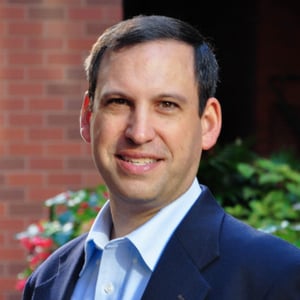
President, Becket Fund for Religious Liberty; Professor of Law and Co-Director of the Center for Religious Liberty, Catholic University; Visiting Professor, Harvard Law School
Mark joined the Becket team in 2011 and splits his time as Associate Professor at The Catholic University of America, Columbus School of Law, and as Visiting Professor at Harvard Law School. Mark teaches constitutional law, religious liberty, torts, and evidence. He has been voted Teacher of the Year three years in a row by the Law School’s Student Bar Association.
Mark has broad experience litigating First Amendment religious exercise and free speech cases. He has represented the winning parties in a variety of Supreme Court First Amendment cases including Hobby Lobby, Little Sisters, Wheaton College, and Holt. In January 2014, Mark argued before the Supreme Court in McCullen v. Coakley, a First Amendment challenge to a Massachusetts speech restriction outside of abortion clinics. The Justices ruled in favor of his clients 9-0. Mark also led a successful eight-year litigation battle against Governor Blagojevich’s effort to force religious pharmacists to distribute the morning-after and week-after pills.
Mark’s academic writing focuses on the First and Fourteenth Amendments, and has appeared in a variety of prestigious journals, including the Harvard Law Review.
Mark is a widely sought after speaker on constitutional issues, particularly concerning abortion and the First Amendment. Professor Rienzi has been invited to discuss these issues at Harvard Law School, Columbia University Law School, Georgetown University Law Center, Boston College Law School, Notre Dame Law School, the National Press Club, and the Capitol. He has been quoted on constitutional law issues on NPR, in the Washington Times, The New York Daily News, and the Chicago Sun-Times. Mark has also been featured on the Kelly File, Fox News Sunday, Your World with Neil Cavuto, Geraldo at Large, CNN Tonight, CNN Live, Andrea Mitchell Reports, and Wall Street Journal Live.
Prior to joining Becket, Mark served as counsel for the litigation department and the intellectual property litigation practice group of WilmerHale LLP. His practice focused on complex civil and appellate litigation with a particular emphasis on intellectual property and First Amendment issues. Prior to joining WilmerHale, he served as law clerk to the Hon. Stephen F. Williams, senior circuit judge for the U.S. Court of Appeals for the D.C. Circuit. Prior to that, Mark was an editor of the Harvard Law Review, and earned his J.D. from Harvard Law School and B.A. from Princeton University, both with honors.
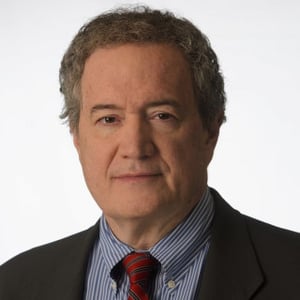
Director of the Program in Human Rights, Catholic University of America
William L. Saunders is Chair Emeritus of the Religious Liberties Practice Group of the Federalist Society. He is also a religious liberty and human rights scholar as well as director of the Center for Human rights at The Catholic University of America. He is Law Fellow with the Institute for Human Ecology, Professor and Director of the Program in Human Rights in the School of Arts & Sciences and Co-director of the Center for Religious Liberty at the Columbus School of Law. Before joining The Catholic University of America, Mr. Saunders served as Senior Vice President and Senior Counsel with Americans United for Life for ten years. From 1999 to 2009, he was Senior Fellow in Bioethics and Human Rights Counsel at the Family Research Council.
Mr. Saunders attended the University of North Carolina at Chapel Hill on a Morehead scholarship. He obtained his degree in law from the Harvard Law School.
Mr. Saunders was featured in Harvard’s first Guide to Conservative Public Interest Law in 2003 and again in the 2008 edition. He served on Harvard’s Advisory Committee for its 2008 celebration of public interest law. A member of the Supreme Court bar, he has authored numerous legal briefs in state, federal, foreign, and international courts.
Mr. Saunders’ book, Unborn Human Life and Fundamental Rights: Leading Constitutional Cases Under Scrutiny, was published in 2019. His articles and book chapters have been published by the university presses of Harvard, Villanova, Brigham Young, Fordham, Georgetown, Houston, Scranton, and the Catholic University of America, as well as by the Intercollegiate Studies Institute, Freedom House, Greenhaven Press, Rowan & Littlefield, Praeger, St. Augustine’s, and Intervarsity press. He has given lectures and participated in debates at many colleges, universities, and law schools, including Princeton, Harvard, Georgetown, and Notre Dame. He delivered the annual J. Michael Miller Lecture at the University of St. Thomas (on international law) in February 2007, the annual R. Wayne Kraft Memorial Lecture (on bioethics) at DeSales University in February 2004 and the annual James Moore Lecture (on human rights violations in Sudan) at Millikin University in 1999. He has also lectured, and/or has been published, in many foreign countries, including Italy, Germany, Poland, Austria, Spain, Greece, Slovakia, Mexico, Qatar, Malaysia, Romania, the Philippines, Hong Kong, and the United Kingdom.
In addition to speaking and writing frequently on bioethics topics, Mr. Saunders has submitted testimony to the President’s Council on Bioethics, as well as to UNESCO’s Committee on Bioethics, and has briefed Congressional staff and state legislatures. He is a regular columnist for the National Catholic Bioethics Quarterly.
Mr. Saunders has appeared often in the media, including BBC World News, CNN, Fox News, Vatican Radio, and National Public Radio. His articles on issues have appeared in a variety of journals, such as First Things, Human Events, Human Life Review, The Legal Times, Communio, The Family in America: A Journal of Public Policy, Ethics & Medics, and Touchstone.
Mr. Saunders served on the official United States delegation to the UN Special Session on Children in 2001/02. In 2011, he was a speaker at an official briefing at the UN, addressing the topic, why euthanasia is not a human right.
In 2004, he served on the NGO Working Committee in connection with the Doha Intergovernmental Conference for the Family.
Mr. Saunders is Senior Fellow with the Religious Freedom Institute, and Affiliated Scholar with the Pellegrino Center for Clinical Ethics at the Georgetown University School of Medicine. He is President of the Fellowship of Catholic Scholars and a member of the boards of the International Association of Catholic Bioethicists, the International Right to Life Federation, the Institute on Religion and Democracy, and the Society of Catholic Social Scientists.
In 1999, Mr. Saunders founded Sudan Relief and Rescue, Inc., to aid the persecuted church in Sudan. He has worked for and written on behalf of the persecuted church for many years.

Executive Vice President, The Federalist Society
Dean Reuter is Executive Vice President at the Federalist Society for Law and Public Policy Studies. He has served in two federal government agency Offices of the Inspector General, as Counsel to the Inspector General and Deputy Inspector General, responsible for policing the use of federal funds granted and contracted through those agencies. As such, he helped conduct and oversee criminal investigations across the country. He is the principal author of the non-fiction book, The Hidden Nazi: The Untold Story of America's Deal with the Devil, and editor of Liberty’s Nemesis: The Unchecked Expansion of the State and Confronting Terror: 9/11 and the Future of American National Security. He was appointed by the President and served as Vice-Chairman of the Board of Directors of the Corporation for National and Community Service, and recently served as an appointee on the U.S. Commission on Presidential Scholars. He is a graduate of Hood College (BA with Honors) and the University of Maryland School of Law.
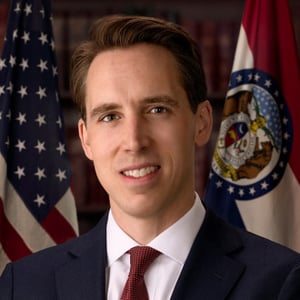
United States Senator, Missouri
U.S. SENATOR JOSH HAWLEY TOOK OFFICE IN JANUARY 2019.
Raised in rural Missouri, U.S. Senator Josh Hawley previously served as Missouri’s Attorney General. There he earned a reputation for taking on the big and the powerful to protect Missouri workers and families. He has battled big government and big business, special interests, organized crime, and anyone who would threaten the well-being of Missourians.
A native of small town Lexington, Missouri in rural Lafayette County, Senator Hawley graduated from Rockhurst High School in Kansas City. After graduating from Stanford University in 2002 and Yale Law School in 2006, he moved back home to mid-Missouri with his wife, Erin, where they started a family. They are the proud parents of two young boys, Elijah and Blaise.
Senator Hawley is recognized as one of the nation’s leading constitutional lawyers. He has litigated at the Supreme Court of the United States, the federal courts of appeals, and in state court, fighting for the people’s liberties. He previously fought Obamacare at the Supreme Court — and won — as one of the lead attorneys in the landmark Hobby Lobby case. He was also a lead attorney in the Hosanna-Tabor case at the Supreme Court, protecting the rights of churches.
As Attorney General, he fought the Washington overreach threatening farms and family businesses, including the Waters of the United States Rule and the Clean Power Plan. Senator Hawley has also taken on big opioid manufacturers, challenging their unethical marketing practices that helped create an epidemic of opioid abuse. He cracked down on human trafficking in Missouri, leading the largest anti-trafficking bust in Missouri history. And he stood up to big tech, launching investigations of the most powerful companies in the world—Google and Facebook—to protect Missourians, their data, and the First Amendment.
The youngest Senator in America, Senator Hawley serves on the Senate Committees on the Judiciary; Armed Services; Homeland Security and Governmental Affairs; Small Business and Entrepreneurship; and the Special Committee on Aging.

The Contraceptive Mandate
Robert Barnes, Stuart Kyle Duncan, John C. Eastman, Martin S. Lederman, Elizabeth B. Wydra
Religion has long had a special place in our society and in the Constitution. Has...
Oral Arguments in the Contraceptive Mandate Case: Sebelius v. Hobby Lobby Stores, Inc. - Podcast
Robert A. Destro
On March 25, 2014, the contraceptive mandate case was argued in the U.S. Supreme Court....
Smarter Sentencing Act - Podcast
John G. Malcolm, William G. Otis
Numerous proposals in Congress, the Justice Department, and the Sentencing Commission would bring down the...
The Contraceptive Mandate in the Supreme Court: Sebelius v. Hobby Lobby Stores, Inc. - Podcast
Stephen Bainbridge, Gerard V. Bradley, Martin S. Lederman, Nelson Tebbe
The contraceptive mandate case is being argued in the U.S. Supreme Court next week. Hobby...
Is the Matthew Shepard and James Byrd Jr. Hate Crimes Act in Part Unconstitutional? - Podcast
Jennifer Mason McAward, Gail L. Heriot
Congress premised the part of the Hate Crimes Prevention Act banning crimes based on race...
Employment Non-Discrimination Act - Podcast
William N. Eskridge
A bill to enact the proposed Employment Non-Discrimination Act ("ENDA") was introduced into the 113th...
Discussion About Sebelius v. Hobby Lobby
Kansas City, MissouriReligious Liberties: Religious Liberty & Conflicting Moral Visions
Stuart Kyle Duncan, William A. Galston, Robert P. George, Andrew Koppelman, Diarmuid F. O'Scannlain
In a variety of contexts, from the HHS preventive services mandate to same-sex marriage, differing...
Supreme Court Preview: What Is in Store for October Term 2013?
Megan L. Brown, Mary Beth Buchanan, Michael A. Carvin, Jan Crawford, Neal K. Katyal, Nicholas Quinn Rosenkranz
October 7th will mark the first day of the 2013 Supreme Court term. Thus far,...
HHS "Contraceptive" Mandate - Litigation Update - Podcast
Mark L. Rienzi, William L. Saunders, Dean Reuter
The controversy over the HHS contraceptive mandate has generated over 50 lawsuits, on behalf of...