
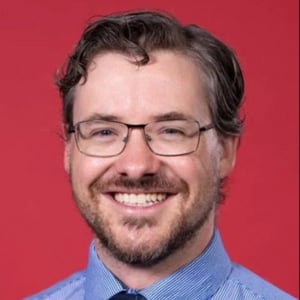
Senior Legal Fellow, Pacific Legal Foundation
Ethan Blevins is a senior legal fellow working primarily on equality and opportunity issues and property rights on PLF’s Constitutional Scholarship team. He previously worked as a staff attorney with PLF, mostly suing his favorite defendant, the City of Seattle. He earned a nickname from The Seattle Times as “the sharpest pin around to the council’s liberal bubble.” He’s had a lifelong dream to earn a superhero name, so he proudly accepts the teasing title of “The Pin” from his coworkers.
In addition to his legal work, Ethan has spoken and written on a variety of legal and policy issues. He has appeared on numerous radio and television programs, and his writings have appeared in The Wall Street Journal, The Seattle Times, The Salt Lake Tribune, The Hill, and other major publications.
Ethan’s introduction to liberty began as a teenager when he read Arthur Koestler’s chilling account of communism in Darkness at Noon. He was living in China at the time, and he saw firsthand the corruption and poverty wrought by dictatorship.
He felt inspired to dedicate his legal career to fighting for liberty after clerking for then-Justice Don Willett on the Texas Supreme Court, a judge known for his fierce commitment to constitutional rights (and his Twitter presence).
Ethan earned his law degree cum laude from Duke School of Law, as well as a master’s degree in international and comparative law. He writes poetry and fiction and has completed two fantasy novels, with several other books always in the works. He also enjoys mnemonics, comic books, gaming, and playing the ukulele. He lives in Bountiful, Utah, with his wife and four kids.
Ethan is a member of the bar only in the states of Montana, Utah and Washington.

Partner, Briscoe Prows Kao Ivester & Bazel LLP
Tony Francois is experienced in Water and Real Property Law, Land Use and Zoning, Environmental Regulation, Natural Resources Development, Agricultural Law, and Constitutional Law. He has represented homeowners, builders, farmers and ranchers, trade associations, and water districts in administrative, civil, and criminal proceedings before state and federal administrative agencies and state and federal trial and appellate courts. He is a member of the California State Bar and the Northern, Eastern, and Central Districts of California and the Districts of New Mexico and North Dakota, and has litigated cases in federal courts in California, Oregon, Washington, Idaho, Montana, Nevada, Arizona, New Mexico, Colorado, North and South Dakota, Minnesota, Massachusetts, Maryland, South Carolina, and the District of Columbia, as well as the Sixth, Eighth, Ninth, and Tenth Circuit Courts of Appeals. He has appeared before the Supreme Courts of California, Idaho, Nevada, and the United States.
Prior to attending law school, he served as an infantry officer in the United States Army, and was stationed in the former West Germany during the fall of the Berlin Wall.
Tony was an Attorney at Pacific Legal Foundation from 2012 to 2021. He was a lobbyist for 10 years, first with California Farm Bureau Federation from 2003 to 2007, and then with KP Public Affairs from 2007 to 2012. He was an attorney at McQuaid, Bedford & Van Zandt in San Francisco from 1999 – 2003.

U.S. Court of Federal Claims and Jurist-In-Residence Professor of Law, The University of Akron School of Law
Judge Ryan T. Holte was sworn in as a judge on the United States Court of Federal Claims in July 2019. Prior to confirmation he served as the David L. Brennan Professor of Law and Director of the Center for Intellectual Property Law and Technology at The University of Akron School of Law (2017-2019) and an assistant professor of law at Southern Illinois University School of Law (2013-2017). Judge Holte has written and presented widely on patent law subjects and empirical legal studies of Federal Circuit and district court patent law cases. His most recent articles were published in the Iowa Law Review (2019), George Mason Law Review (2018), and Washington Law Review (2017).
In practice, Judge Holte served for six years as general counsel and partner of an electrical engineering technology company and is co-inventor of multiple patents related to Systems and Methods for Countering Satellite-Navigated Munitions. Prior to entering academia, Judge Holte practiced as a litigation attorney at the Federal Trade Commission and an associate in the Intellectual Property Practice Group at Jones Day. Prior to practice, he served as a law clerk to Judge Stanley F. Birch, Jr. on the United States Court of Appeals for the Eleventh Circuit and as a law clerk to Judge Loren A. Smith on the United States Court of Federal Claims.
Judge Holte received his JD from the University of California Davis School of Law and his BS, magna cum laude, in engineering from the California Maritime Academy where he was a First Class graduate of the Corps of Cadets Third Engineering Division and sailed as a U.S. Merchant Marine oiler.
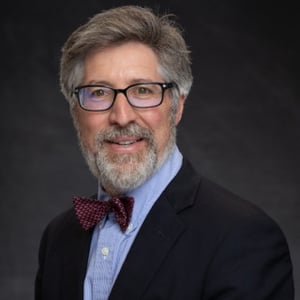
Associate Professor of Government, Hillsdale College, Washington, D.C. Campus
Richard Samuelson is an Associate Professor of Government at Hillsdale College’s Washington, D.C., campus. Dr. Samuelson is an historian of the American founding and of American politics and constitutional thought. He graduated from Bates College and received his MA and PhD in American history from the University of Virginia. Dr. Samuelson taught at California State University San Bernardino from 2007 to 2022. He was the 2009-2010 Garwood Visiting Fellow at Princeton University’s James Madison Program.
Dr. Samuelson has written extensively on John Adams and on the Adams family of Massachusetts, and on the constitutional politics of the founding more largely. His work also connects the founding with more contemporary issues, with a particular focus on religious liberty, and the challenge the modern American state, and contemporary civil rights laws present to religious liberty.
His essays and reviews have appeared in The Review of Politics, The William and Mary Quarterly, Commentary, The Claremont Review of Books, The Public Interest, National Review, and other publications. He has also contributed many essays and reviews to such online publications as Mosaic, Law and Liberty, Realclearpolitics, and other platforms.
Senior Legal Fellow, Pacific Legal Foundation
Ethan Blevins is a senior legal fellow working primarily on equality and opportunity issues and property rights on PLF’s Constitutional Scholarship team. He previously worked as a staff attorney with PLF, mostly suing his favorite defendant, the City of Seattle. He earned a nickname from The Seattle Times as “the sharpest pin around to the council’s liberal bubble.” He’s had a lifelong dream to earn a superhero name, so he proudly accepts the teasing title of “The Pin” from his coworkers.
In addition to his legal work, Ethan has spoken and written on a variety of legal and policy issues. He has appeared on numerous radio and television programs, and his writings have appeared in The Wall Street Journal, The Seattle Times, The Salt Lake Tribune, The Hill, and other major publications.
Ethan’s introduction to liberty began as a teenager when he read Arthur Koestler’s chilling account of communism in Darkness at Noon. He was living in China at the time, and he saw firsthand the corruption and poverty wrought by dictatorship.
He felt inspired to dedicate his legal career to fighting for liberty after clerking for then-Justice Don Willett on the Texas Supreme Court, a judge known for his fierce commitment to constitutional rights (and his Twitter presence).
Ethan earned his law degree cum laude from Duke School of Law, as well as a master’s degree in international and comparative law. He writes poetry and fiction and has completed two fantasy novels, with several other books always in the works. He also enjoys mnemonics, comic books, gaming, and playing the ukulele. He lives in Bountiful, Utah, with his wife and four kids.
Ethan is a member of the bar only in the states of Montana, Utah and Washington.
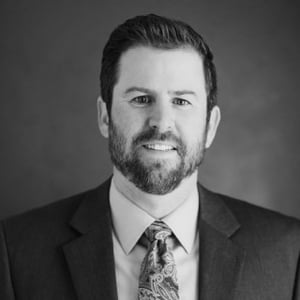
Associate Vice President, National Wildlife Federation
David Willms is the Associate Vice President for the National Wildlife Federation and works with a dynamic team of professionals and volunteers to advance our Public Lands Program, NWF Outdoors (hunting/angling advocacy), and Artemis Sportswomen Initiative. Prior to that, he served as a Natural Resource Policy Advisor to Wyoming Governor, Matthew H. Mead. Before joining the Governor's Office, David worked as an attorney with a broad-based natural resources practice both within Wyoming and around the country. His practice involved providing counsel and litigating issues involving the Endangered Species Act, compliance with the National Environmental Policy Act, complex water law matters, oil and gas leasing and development, land management practices, and multiple uses on public lands, to name a few.
Prior to that, David served as a Senior Assistant Attorney General for the State of Wyoming. In that capacity, he represented the State Engineer's Office and Game and Fish Department on numerous matters in courts around the country, administrative bodies in Wyoming, the Wyoming legislature, and Congress. He has litigated an interstate water dispute before the United States Supreme Court and has engaged with myriad issues involving species such as wolves, grizzly bears, sage grouse, cutthroat trout, black-tailed prairie dogs, black-footed ferrets, and bald eagles.
David holds a Juris Doctorate degree, and bachelor's degrees in Wildlife & Fisheries Biology and Management as well as Environment and Natural Resources. He is passionate about educating the public about natural resources issues, through co-hosting a conservation law and policy podcast called "Your Mountain," and is eager to connect with others who share similar passions.
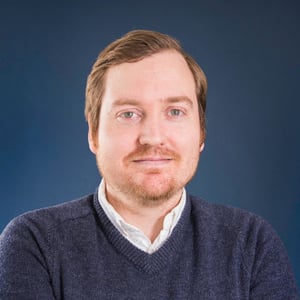
Vice President of Law & Policy, Property and Environment Research Center
Jonathan Wood is vice president of law and policy at the Property and Environment Research Center (PERC). An attorney, Jonathan has litigated environmental and property-rights cases in the Supreme Court of the United States, federal and state appellate courts, and trial courts across the country. His writing has appeared in the Wall Street Journal, Washington Post, National Review, Reason, and other outlets. And his research has been published in journals such as Environmental Law Reporter, Yale Journal on Regulation Notice & Comment, Pace Environmental Law Review, and California Western Law Review.
Prior to coming to PERC, Jonathan was a senior attorney at Pacific Legal Foundation, where he litigated cases concerning the Endangered Species Act, Clean Water Act, and other federal environmental laws. He was co-counsel for forest landowners in Weyerhaeuser Co. v. U.S. Fish and Wildlife Service, in which the Supreme Court ruled unanimously that private land could not be arbitrarily regulated as critical habitat under the ESA. He also led a successful effort to reform regulation of threatened species to better align the incentives of private landowners with the interests of rare species.
Jonathan has testified before several congressional committees on wildlife conservation and endangered species topics. He has also appeared on national television and radio, including NPR’s All Things Considered, C-Span’s Washington Journal, Stossel, Fox News, and Hill.TV.
Jonathan has a law degree from the New York University School of Law, a masters degree in economic policy from the London School of Economics, and a bachelor’s degree in economics from the University of Texas. He is on the executive committee for the Federalist Society’s Environmental Law and Property Rights Practice Group and a steering committee member for the Environmental Law Institute’s Emerging Leaders Initiative.
Partner, Givens Pursley LLP
Jeff Beelaert is a partner at Givens Pursley LLP in Boise, Idaho, with a distinguished background of public service and extensive experience with trial and appellate litigation. As lead counsel, Jeff has achieved success for clients in high-stakes, complex cases at every level of state and federal courts, including the United States Supreme Court.
Before joining Givens Pursley, Jeff previously held several posts at the United States Department of Justice.
Jeff previously worked as an associate at Sidley Austin in DC, where he drafted Supreme Court briefs and handled white collar matters and investigations.
Associate, Jones Day
Harry Graver works on appeals and motions practice, with a focus on federal overreach. He has argued multiple successful cases before the federal appellate courts. And he has briefed matters at all levels of the judiciary.
Before joining Jones Day in 2021, Harry served as a law clerk to Justice Brett M. Kavanaugh of the Supreme Court of the United States and to Judge J. Harvie Wilkinson III of the United States Court of Appeals for the Fourth Circuit. Harry graduated from Harvard Law School, where he received the Fay Diploma for being first in his class. He also serves as an adjunct professor at the Scalia Law School at George Mason University, teaching a course on the separation of powers.
Associate Dean and William T. Schwartz Distinguished Professor of Law, University of Wyoming College of Law
Sam Kalen joined the University of Wyoming College of Law faculty in 2009, and he is the William T. Schwartz Distinguished Professor of Law and Associate Dean, as well as the founder and co-director of the School’s Center for Law and Energy Resources in the Rockies. Sam earned his B.A. from Clark University in Worcester, Mass., his J.D. from Washington University School of Law in St. Louis, and he spent a year studying legal history and constitutional thought in a PhD program at the University of Virginia. Before joining UW, Sam taught as a visitor or adjunct at a number of other law schools, he also served in the Solicitor’s Office at the Department of the Interior during the Clinton administration, and he practiced for many years with a Washington, D.C., law firm. Immediately after law school, he clerked at the Missouri Supreme Court.
Sam is passionate about teaching and writing in a variety of areas that impact environmental, public lands and natural resources, energy, and administrative law. He spent years practicing in each of these areas, including working with Indigenous Peoples and Tribal Nations, and attempts to explore these areas in both the classroom and in his scholarship. He is the author and co-author of numerous law review articles, including one that was cited and quoted in a Supreme Court opinion. His most recent law review article appeared in Maryland Law Review, on "Public Land Management’s Future Place: Envisioning a Paradigm Shift" (Vol 82, page 240, 2023). He also is a co-author of the American Bar Association’s Endangered Species Basic Practice Series book (2nd edition), a co-author of Natural Resources Law and Policy (3rd ed. Foundation Press), and a co-author Energy Follies: Missteps, Fiascos, and Successes of America’s Energy Policy (Cambridge U. Press 2018).
Sam alternates teaching a variety of courses, including Environmental Law, Administrative Law, Legislation, Legal History, Public Lands & Natural Resources, Energy Law, Energy & Climate Law & Policy, and Indian Law. He also has taught field courses, including courses exploring energy and natural resource issues in Wyoming, as well as a course on Public Lands and Natural Resources in Grand Teton National Park. Professor Kalen also has worked collaboratively with the University’s Haub School of Environment and Natural Resources.

Senior Legal Counsel, Pacific Legal Foundation
Before becoming an attorney, James had been a productive member of society working as an exploration geologist in the late 1970s throughout the southwestern United States. However, after several years of dealing with irrational government bureaucrats and environmental policies untethered from reality, James decided that what the world needs is more lawyers — if they are willing to fight for rationality in regulatory regimes, property rights, and liberty.
James attended the University of Arizona College of Law in Tucson, where he served as an editor for the Law Review and received a J.D. degree in 1983. He had previously received a Masters degree in geological sciences from Brown University and an undergraduate degree from Hamilton College in New York. James received the Professional Achievement Award from the University of Arizona Alumni Association in 2018.
James has worked with Pacific Legal Foundation since 1983, litigating cases from Alaska to Florida. He is a member of the Federalist Society’s Environmental Law and Property Rights Practice Group’s Executive Committee, a member of the American College of Real Estate Lawyers, and an honorary member of Owners Counsel of America, an organization comprised of eminent domain attorneys who represent property owners. The Owners Counsel awarded James its Crystal Eagle award in 2013. In 2022, James was awarded the Brigham-Kanner Property Rights Prize at the William & Mary College of Law. The prize is awarded annually to an individual whose work has advanced the cause of property rights and has contributed to the overall awareness of the important role property rights occupy in the broader scheme of individual liberty.
In 2001, James successfully argued a major property rights case, Palazzolo v. Rhode Island, before the United States Supreme Court, a case which affirmed that rights in regulated property do not disappear when land is bought and sold. He has written extensively on all aspects of property rights and environmental law and frequently speaks on these subjects throughout the nation.
When James is not suing the government he enjoys skiing faster than he should, bicycling, hiking, swimming, and spending quality time with his wife, family, and grandchild.
Mr. Burling’s book Nowhere to Live: The Hidden Story of America’s Housing Crisis is available now on Amazon.
James is a member of the bar only in the states of Alaska and California.
Associate Dean and William T. Schwartz Distinguished Professor of Law, University of Wyoming College of Law
Sam Kalen joined the University of Wyoming College of Law faculty in 2009, and he is the William T. Schwartz Distinguished Professor of Law and Associate Dean, as well as the founder and co-director of the School’s Center for Law and Energy Resources in the Rockies. Sam earned his B.A. from Clark University in Worcester, Mass., his J.D. from Washington University School of Law in St. Louis, and he spent a year studying legal history and constitutional thought in a PhD program at the University of Virginia. Before joining UW, Sam taught as a visitor or adjunct at a number of other law schools, he also served in the Solicitor’s Office at the Department of the Interior during the Clinton administration, and he practiced for many years with a Washington, D.C., law firm. Immediately after law school, he clerked at the Missouri Supreme Court.
Sam is passionate about teaching and writing in a variety of areas that impact environmental, public lands and natural resources, energy, and administrative law. He spent years practicing in each of these areas, including working with Indigenous Peoples and Tribal Nations, and attempts to explore these areas in both the classroom and in his scholarship. He is the author and co-author of numerous law review articles, including one that was cited and quoted in a Supreme Court opinion. His most recent law review article appeared in Maryland Law Review, on "Public Land Management’s Future Place: Envisioning a Paradigm Shift" (Vol 82, page 240, 2023). He also is a co-author of the American Bar Association’s Endangered Species Basic Practice Series book (2nd edition), a co-author of Natural Resources Law and Policy (3rd ed. Foundation Press), and a co-author Energy Follies: Missteps, Fiascos, and Successes of America’s Energy Policy (Cambridge U. Press 2018).
Sam alternates teaching a variety of courses, including Environmental Law, Administrative Law, Legislation, Legal History, Public Lands & Natural Resources, Energy Law, Energy & Climate Law & Policy, and Indian Law. He also has taught field courses, including courses exploring energy and natural resource issues in Wyoming, as well as a course on Public Lands and Natural Resources in Grand Teton National Park. Professor Kalen also has worked collaboratively with the University’s Haub School of Environment and Natural Resources.
Partner, Baker Botts LLP
Drawing from two decades of experience in senior government, in-house corporate, and private law firm roles, Jeff Wood helps clients with federal enforcement, compliance, litigation, permitting, and policy challenges primarily in the energy and environmental fields.
Prior to joining Baker Botts, Mr. Wood served for almost two years as the Acting Assistant Attorney General (AAG) for the Justice Department's Environment and Natural Resources Division (ENRD). In that capacity, Mr. Wood led ENRD and its more than 600 attorneys and staff representing EPA, Departments of the Interior, Energy, and Defense, and other agencies in civil and criminal enforcement and defensive environmental, energy, and natural resources litigation.
As the top official in ENRD, Mr. Wood managed a complex organization with an annual budget exceeding $200 million and a docket of more than 6,000 cases and matters. E&E News noted that “Wood maintains a strong relationship with ENRD's career staff” (Greenwire, Oct. 31, 2018). He previously served on the staff of the United States Senate Committee on Environment and Public Works.
At the Justice Department, Mr. Wood oversaw the Division's civil and criminal enforcement programs and was responsible for developing legal strategies and approving briefs in key cases including filings before the Supreme Court and Courts of Appeals in coordination with the Office of Solicitor General. In this role, Mr. Wood held the highest level security clearance and worked closely with top leadership at DOJ, EPA, the Interior Department, USDA, the Energy Department, Transportation Department, FERC, NRC and across the Executive Branch, including the White House.
With many years of both private law firm and in-house legal experience, Mr. Wood has handled complex environmental enforcement, regulatory, policy, and litigation matters for electric utilities, energy companies, maritime companies, mining companies, real estate developers, financial institutions, industrial companies and manufacturers, business coalitions, associations, small businesses, and individual property owners. Drawing from his experiences in-house, Mr. Wood brings a common-sense, cost-effective, client-focused approach to his work every day.
With a strong national reputation, Mr. Wood is a frequent speaker on environmental law and policy matters, with recent speeches and presentations at the Environmental Law Institute, Harvard Law School, Vanderbilt Law School, American University Law School, American Bar Association Environmental Law Conferences, the Texas Environmental SuperConference, Air Force Judge Advocate General School's Advanced Environmental Law Course, Baker Institute's Center for Energy Studies (Rice University), and many other venues. He frequently appears in national news to share insights on significant environmental law and policy issues, including recent quotes in the New York Times, Washington Post, Wall Street Journal, Bloomberg, Law360, and E&E News, among others.
Vice President of Law & Policy, Property and Environment Research Center
Jonathan Wood is vice president of law and policy at the Property and Environment Research Center (PERC). An attorney, Jonathan has litigated environmental and property-rights cases in the Supreme Court of the United States, federal and state appellate courts, and trial courts across the country. His writing has appeared in the Wall Street Journal, Washington Post, National Review, Reason, and other outlets. And his research has been published in journals such as Environmental Law Reporter, Yale Journal on Regulation Notice & Comment, Pace Environmental Law Review, and California Western Law Review.
Prior to coming to PERC, Jonathan was a senior attorney at Pacific Legal Foundation, where he litigated cases concerning the Endangered Species Act, Clean Water Act, and other federal environmental laws. He was co-counsel for forest landowners in Weyerhaeuser Co. v. U.S. Fish and Wildlife Service, in which the Supreme Court ruled unanimously that private land could not be arbitrarily regulated as critical habitat under the ESA. He also led a successful effort to reform regulation of threatened species to better align the incentives of private landowners with the interests of rare species.
Jonathan has testified before several congressional committees on wildlife conservation and endangered species topics. He has also appeared on national television and radio, including NPR’s All Things Considered, C-Span’s Washington Journal, Stossel, Fox News, and Hill.TV.
Jonathan has a law degree from the New York University School of Law, a masters degree in economic policy from the London School of Economics, and a bachelor’s degree in economics from the University of Texas. He is on the executive committee for the Federalist Society’s Environmental Law and Property Rights Practice Group and a steering committee member for the Environmental Law Institute’s Emerging Leaders Initiative.
Attorney, Competitive Enterprise Institute
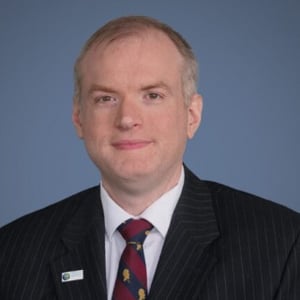
Devin Watkins is an attorney at the Competitive Enterprise Institute. Devin Watkins previously worked at the Cato Institute as a legal associate and interned at the Institute for Justice. At the Cato Institute, Watkins worked on a variety of Supreme Court cases, and one of the briefs he worked on was cited by the Court. His op-eds have appeared in National Review Online, The Hill, Time, and The Federalist among others.
Watkins holds a Juris Doctor cum laude from George Mason University's Antonin Scalia Law School, where he was the development editor on the Mason Law Review. Prior to his legal career Watkins was a senior software developer at Intel and WebMD. He graduated with a Bachelor of Science in Computer Science from Stevens Institute of Technology in Hoboken, New Jersey.
Watkins is a member of the Virginia State Bar, the District of Columbia Bar, the U.S. District Court for the District of Columbia Bar, and the U.S. Court of Appeals for the District of Columbia Circuit Bar.

Adam Griffin is a graduate of the University of North Carolina School of Law. During law school, he served as a research assistant to Professor Stephen E. Sachs and UNC Law Dean Martin Brinkley. After law school, Adam spent two years litigating for liberty at the Institute for Justice as an inaugural Law and Liberty Fellow. He then served as a law clerk to Chief Judge Richard E. Myers in the United States District Court for the Eastern District of North Carolina, and previously worked at Pacific Legal Foundation and the Civil Rights Division of the Department of Justice.
Of Counsel, Spencer Fane LLP
Anthony J. “A.J.” Ferate has built a multi-faceted background in the areas of the law, policy, energy, campaigns and elections, and defense over the last 20 years.
Through recent representation as Vice President of Regulatory Affairs for the Oklahoma Independent Petroleum Association (“OIPA”), A.J. held responsibilities over government efforts outside of the legislative branch on matters as broad as water, electric generation, commodity marketing, land matters, and seismicity. A.J. also maintained responsibility for legal matters at OIPA, including amicus briefing in appellate matters. A.J.’s extensive experience also includes management of public policy strategy for a Fortune 500 company.
For the past eleven years, A.J. has volunteered as General Counsel and spokesman for the Oklahoma Republican Party and has represented a number of elected officials, including U.S. Senator James Lankford, former statewide elected officials, a number of state legislators, and members of Congress.
Additionally, A.J. has assisted elected officials serve their constituents in all branches of government. Early in his career, A.J. held legislative aide duties in the Nebraska Legislature, then went on to work for former Nebraska Treasurer David Heineman. A.J. gained experience in the judiciary while serving Judge Gary L. Lumpkin at the Oklahoma Court of Criminal Appeals, the highest criminal appellate court in Oklahoma. Following this service, A.J. began work with Denise A. Bode of the Oklahoma Corporation Commission, assisting her in her duties regulating 70 percent of Oklahoma’s economy, including oil and gas and electric utilities.
A.J. honorably served ten years as an intelligence analyst for the United States Naval Reserve, including time at the Office of Naval Intelligence in the greater Washington DC area.
Opinion pieces authored or ghostwritten by A.J. have been published in the Seattle Times, Politico, Law360, The Oklahoman, Tulsa World and The Journal Record. A.J. has also been interviewed by national and international newspapers, and has also appeared on national radio programs including NPR’s The Diane Rehm Show and On Point with Tom Ashbrook.
Shareholder, Greenberg Traurig
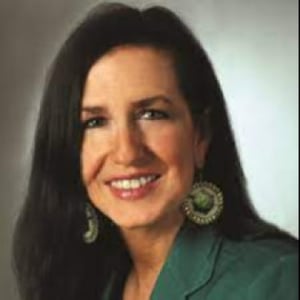
Jennifer Weddle is the Co-Chair of Greenberg Traurig's American Indian Law Practice and has wide-ranging experience in complex regulatory and jurisdictional issues, with a focus in Indian law, handling a variety of matters for tribal and non-tribal clients. She has a dynamic, inter-disciplinary practice that centers on providing strategies for resolving complex jurisdictional problems. Much of her practice focuses in the areas of tribal economic development and natural resources development. Jennifer also has U.S. Supreme Court experience, including serving as one of the attorneys for the respondent in Nevada v. Hicks (2001) and representing the petitioners in Ute Mountain Ute Tribe v. Padilla (2012) and Grand Canyon Skywalk Development, LLC v. Grand Canyon Resort Corporation (2013) and cert stage amici in Saginaw-Chippewa Tribe v. NLRB (2016) and United States v. Cooley (2020) and amici on the merits in Lewis v. Clarke (2017), U.S. v. Washington (2018), Carpenter v. Murphy (2018), McGirt v. Oklahoma (2020), and United States v. Cooley (2021).
Jennifer's work also includes negotiations for mineral leasing employment matters and representation before federal agencies. She has also been involved in civil litigation, working on numerous complex federal, state and tribal litigation matters, including class action tort litigation and large commercial disputes. Her transactional experience includes oil and gas renewables projects throughout the west, as well as Endangered Species Act work. Jennifer frequently assists tribes, banks and non-bank entities with financing and regulatory matters with Indian law components. Jennifer has wide-ranging project siting experience, including the application of NEPA, NHPA, and other environmental laws on tribal and public lands, including with respect to large linear multi-state energy and infrastructure projects. Jennifer has deep transactional, regulatory and litigation experience involving very complex matters with both legal and policy components.
Jennifer is past President of the National Native American Bar Association and past two-term Chair of the Federal Bar Association Indian Law Section. She currently serves as the Tenth Circuit Representative on the American Bar Association Standing Committee on the Federal Judiciary, a role she has held since 2018, spanning the evaluations for more than two dozen federal judicial nominees at every level of the federal courts. She is a ’00 graduate of Harvard Law School and a ’97 graduate of the University of Michigan (Classical Languages and Literature).
Adam Griffin is a graduate of the University of North Carolina School of Law. During law school, he served as a research assistant to Professor Stephen E. Sachs and UNC Law Dean Martin Brinkley. After law school, Adam spent two years litigating for liberty at the Institute for Justice as an inaugural Law and Liberty Fellow. He then served as a law clerk to Chief Judge Richard E. Myers in the United States District Court for the Eastern District of North Carolina, and previously worked at Pacific Legal Foundation and the Civil Rights Division of the Department of Justice.
Attorney, Pacific Legal Foundation
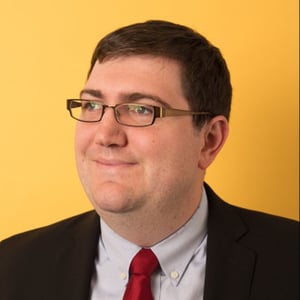
Jeff McCoy is an attorney at Pacific Legal Foundation. Jeff joined PLF in 2017. Since then, he has focused his litigation on separation of powers and private property rights. Jeff also leads PLF’s coastal land rights initiative, which seeks to strengthen and defend statutory and constitutional protections for coastal property owners across the country.
Throughout his career, Jeff has worked for various organizations that promote individual liberty and limited government. Prior to joining PLF, Jeff was a staff attorney at Mountain States Legal Foundation in Lakewood, Colorado, for five years. His work at Mountain States included helping secure victory for a Wyoming private property owner in U.S. Supreme Court case Marvin M. Brandt Revocable Trust v. United States. Besides Mountain States, Jeff worked as an intern for the Cato Institute during the spring of 2008, and after his first year of law school, he worked as a Charles G. Koch Summer Fellow at the Institute for Justice’s Seattle office.
Jeff received his B.A. degree in political science and philosophy from the University of Colorado in 2007 and his law degree, also from the University of Colorado, in 2011. During his time at law school, Jeff had the honor of working as a judicial extern for then-Judge Neil Gorsuch at the U.S. Court of Appeals for the Tenth Circuit.
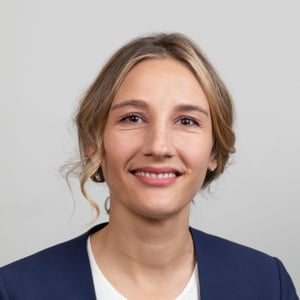
Attorney, Institute for Justice
Anya Bidwell (née Cherkasova) leads IJ’s Project on Immunity and Accountability (“PIA”). Through this project, Anya works to promote judicial engagement and ensure that government officials are held to account when they violate individuals’ constitutional rights. Anya also serves as an adviser on the American Law Institute’s Restatement of the Law, Constitutional Torts project.
One of Anya’s PIA cases—Gonzalez v. Trevino—was heard by the United States Supreme Court on March 20, 2024. She argued the case for the petitioner, with the goal of convincing the Justices that retaliatory arrests not involving on-the-spot decisions by police officers should be actionable under the First Amendment regardless of probable cause. The decision is expected in June.
This was Anya’s third appearance before the U.S. Supreme Court. She second-chaired Brownback v. King (an excessive force case) and Tennessee Wine & Spirits Retailers Association v. Thomas (a commerce clause case) in November 2020 and January 2019 respectfully.
Before joining IJ, Anya worked for a top national law firm, handling cases in trial and appellate courts. She earned her J.D. with honors from the University of Texas. Two years prior to entering law school, Anya received a master’s degree in Global Policy Studies, also from the University of Texas, and wrote a thesis on asymmetric warfare.
Anya spent her childhood in Ukraine and Kyrgyzstan. At 16, she left her family behind and came to America on a university scholarship. Her upbringing motivated her to study law and become an advocate for a strong, independent judiciary.
Anya’s work has been featured in numerous publications, including the Washington Post, the Wall Street Journal, the New York Times, USA Today, and the Guardian. She is also the host of live recordings of our Short Circuit podcast and a co-producer of our documentary-style podcast Bound by Oath.
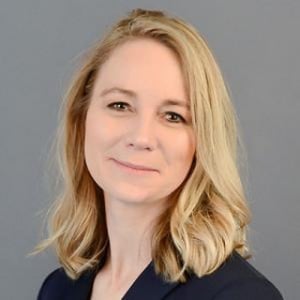
Supreme Court & Appellate Litigation Chair, Lex Politica; Of Counsel, Alliance Defending Freedom
Erin Morrow Hawley serves as Chair of Lex Politica's Supreme Court and Appellate Practice overseeing the firm’s strategic appellate litigation and critical motions practice in the trial courts. Erin is an experienced litigator who represents clients in constitutional, regulatory, and appellate matters in federal and state courts throughout the country.
Erin has represented dozens of clients before the Supreme Court of the United States, served as lead counsel in high-profile cases raising novel constitutional and statutory issues, and authored numerous successful petitions for certiorari and briefs in opposition. She has argued in state and federal appellate and trial courts throughout the country, including the Supreme Court of the United States. Erin represents diverse clients in high-stakes litigation from state governments to faith-based nonprofits to Fortune 100 companies. She possesses expertise on a wide range of subject matters including administrative law, the First Amendment, religious liberty, federal jurisdiction, federal preemption, equitable jurisdiction, tax law, the Affordable Care Act, and Title IX.
Erin represents clients in cases where public communications strategy is paramount. She is a sought-after speaker and writer, has testified multiple times before Congress, and is a frequent presenter on constitutional and administrative law issues, including at the Oxford Union, the National Federalist Society Convention, and university campuses across the country. She is a frequent commentator to media outlets, including Fox News, MSNBC, the Wall Street Journal, WORLD, USA Today, the Federalist, and the Hill.
Erin previously oversaw Alliance Defending Freedom’s--where she still serves as Of Counsel--litigation strategies to empower women and protect the dignity of life, defend pregnancy centers’ First Amendment rights from government overreach, and safeguard Americans’ freedoms from the ever-encroaching administrative state.

Public Lands at the Founding
Ethan Blevins, Tony Francois, Ryan T. Holte, Richard Samuelson
In this Federalist Society America 250 series, experts analyze modern legal and policy debates through...
Panel 3: A Permit to Carry (Electricity): NEPA Litigation and Permitting Reform
CLE credit for this event is available at On-Demand CLE. The National Environmental Protection Act has...
This Land Is My Land: Utah's Supreme Court Challenge to Federal Land Ownership
Ethan Blevins, David Willms, Jonathan Wood
In August of 2024, the state of Utah filed suit against the United States contesting...
The Antiquities Act: A Tool for Conservation, or a Law Without Limit?
Jeff Beelaert, Harry S. Graver, Sam Kalen
In 1906, Congress passed the Antiquities Act, which gives the President the authority to set...
The Public Lands Rule: Will A New “Conservation and Landscape Health” Paradigm for Federal Lands Survive Judicial Review?
James S. Burling, Sam Kalen, Jeffrey H. Wood, Jonathan Wood
The Bureau of Land Management (BLM) recently adopted comprehensive new land management regulations known as...
Courthouse Steps Decision: SEC v. Jarkesy
Devin Watkins
On June 27, 2024, the U.S. Supreme Court issued their opinion in SEC v. Jarkesy. The...
Litigation Update: Sagebrush Rebels and Western States Challenge Presidential Monument Designations
Adam F. Griffin
Congress passed the Antiquities Act in 1906 to protect Native American archaeological sites from looters...
Courthouse Steps Decision: Arizona v. Navajo Nation
Anthony J. Ferate, Jennifer H. Weddle
On Thursday, June 22, 2023, the Supreme Court issued its decision in Arizona v. Navajo...
Courthouse Steps Decision: Wilkins v. United States
Adam F. Griffin, Jeffrey McCoy
On March 28, 2023, the Supreme Court handed down its decision in Wilkins v. United States....
Burnett v. Smith & Implied Rights of Action
Anya Bidwell, Erin M. Hawley
If a federal agent violates a citizen’s constitutional rights, does a justiciable cause of action...