
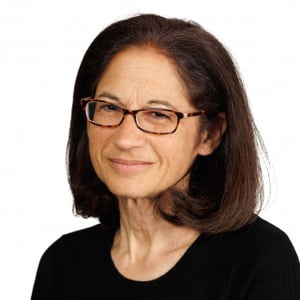
Senior Fellow, Governance Studies, Brookings Institution
Sarah Binder is senior fellow in Governance Studies at the Brookings Institution and professor of political science at George Washington University, where she specializes in Congress and legislative politics. Binder’s current research explores the historical and contemporary relationship between Congress and the Federal Reserve, and she is the co-author with Mark Spindel of The Myth of Independence: How Congress Governs the Federal Reserve (Princeton University Press, 2017). She is also an associate editor of The Washington Post’s Monkey Cage blog.
Binder is a former co-editor of Legislative Studies Quarterly, a co-author with Forrest Maltzman of Advice and Dissent: The Struggle to Shape the Federal Judiciary (Brookings, 2009), author of Stalemate: Causes and Consequences of Legislative Gridlock (Brookings, 2003), Minority Rights, Majority Rule: Partisanship and the Development of Congress (Cambridge University Press, 1997), and co-author with Steven S. Smith of Politics or Principle? Filibustering in the United States Senate (Brookings, 1997). Her other work on Congressional politics has appeared in the American Political Science Review, American Journal of Political Science, and elsewhere.
Her book on legislative gridlock was awarded the 2003 Richard F. Fenno, Jr. Prize by the American Political Science Association for the best book published on legislative politics, and she was elected to the American Academy of Arts and Sciences in 2015.
Binder received her Ph.D. in political science from the University of Minnesota in 1995 and B.A. from Yale University in 1986. She joined Brookings in 1995 and George Washington University in 1999. Between 1986 and 1990, she served as legislative aide and press secretary to Rep. Lee Hamilton (D-Indiana).
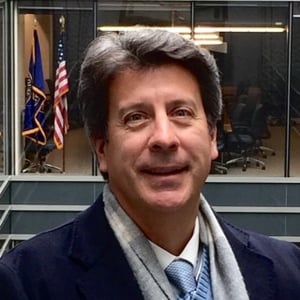
Senior Counsel, Committee on Oversight and Government Reform, U.S. House of Representatives
Daniel Flores is a Senior Counsel on the Republican staff of the Committee on Oversight and Government Reform, U.S. House of Representatives. Prior to his current position, he served in the House as Chief Counsel for the House Judiciary Committee's Subcommittee on Regulatory Reform, Commercial and Antitrust Law. Before coming to the House, he served as an Acting Associate Deputy General Counsel for the U.S. Environmental Protection Agency and in other roles in EPA's Office of General Counsel, as a Senior Trial Attorney for the U.S. Department of Justice, Environment and Natural Resources Division, and as an attorney in private practice in Washington, D.C. He serves as a House liaison to the Administrative Conference of the United States and has served on the Council of the American Bar Association’s Section on Administrative Law & Regulatory Practice.
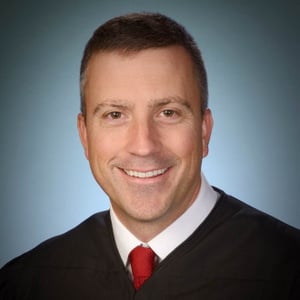
Judge, United States District Court, District of Columbia
Judge Trevor N. McFadden was appointed to the United States District Court for the District of Columbia in 2017. He received his B.A. in 2001 from Wheaton College, IL, magna cum laude. In 2006, he received his J.D. from the University of Virginia School of Law, where he graduated Order of the Coif and was an editor for the Virginia Law Review.
Following graduation from law school, Judge McFadden clerked for Judge Steven Colloton, U.S. Court of Appeals for the Eighth Circuit. He then joined the U.S. Department of Justice, where he served as Counsel to the Deputy Attorney General and as Assistant U.S. Attorney in the District of Columbia. Judge McFadden subsequently became a partner at Baker & McKenzie LLP in Washington, DC, where he focused on white collar investigations. He is also co-author of a treatise, Corporate Settlement Tools: DPAs, NPAs, and Cooperation Agreements.
After four years in private practice, Judge McFadden returned to the U.S. Department of Justice, where he was Deputy Assistant Attorney General and acted as the second-in-command of the Department's Criminal Division. As Deputy Assistant Attorney General, he managed the Division's Fraud and Appellate Sections.
Judge McFadden also has extensive experience in law enforcement. He served as an officer with the Fairfax County, VA, Police Department and as a deputy sheriff in Madison County, VA.
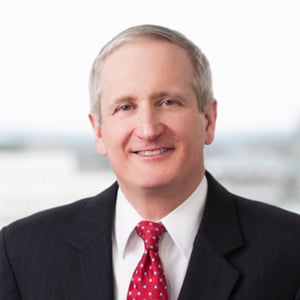
Judge, U.S. Court of International Trade
M. Miller Baker was appointed as a Judge of the United States Court of International Trade on December 18, 2019, by President Donald J. Trump. Judge Baker entered on duty on December 20, 2019.
A native of Terrebonne Parish, Louisiana, Judge Baker grew up in Louisiana and Wyoming and attended Louisiana State University. Judge Baker thereafter earned his J.D. from Tulane University Law School and was admitted to the Louisiana bar in 1984 at age 22. After graduating from Tulane, he served as a law clerk to Judge John Malcolm Duhé, Jr., of the United States District Court for the Western District of Louisiana and then for Judge Thomas Gibbs Gee of the United States Court of Appeals for the Fifth Circuit. Following his judicial clerkships, from 1986 until the end of the Reagan Administration on January 20, 1989, Judge Baker served in the Justice Department under Attorneys General Edwin Meese III and Richard Thornburgh, first as an attorney-advisor in the Office of Legal Policy, and later as a special assistant to the Assistant Attorney General for Civil Rights. Judge Baker then entered private practice in Washington, D.C., until 1991. From 1991 to 1993 he served as counsel to Senator Orrin G. Hatch on the staff of the Senate Judiciary Committee.
Following his service on the Judiciary Committee staff, Judge Baker returned to private practice in Washington, D.C., focusing on complex civil litigation involving a wide range of subjects at the law firms of Carr Goodson Warner (1993–2000) and McDermott Will & Emery LLP (2000–2019). At McDermott, Judge Baker co-chaired the firm’s appellate practice group.
When he was in private practice, Judge Baker argued before the Supreme Court, nine of the thirteen federal courts of appeals, and appellate courts in three states and the District of Columbia. In 2009, The American Lawyer named Judge Baker as “Litigator of the Week” for one of his Supreme Court wins. In addition to his appellate practice, Judge Baker litigated in state and federal trial courts in seventeen states and the District of Columbia.
From 1986 to 1995, Judge Baker served as a naval reserve intelligence officer and received an honorable discharge. His duties included serving with an anti-terrorist unit, on the battle staff of an admiral commanding a carrier battle group operating in the North Atlantic during a large NATO exercise in the Cold War, and as a watch officer in the Navy Command Center in the Pentagon during the Persian Gulf War.
In the aftermath of 9/11, Judge Baker testified before the House and Senate Judiciary Committees on constitutional and policy issues associated with continuity of government. He also testified before the Continuity of Government Commission, a bipartisan study commission established by the American Enterprise Institute and the Brookings Institution.
Judge Baker and his wife Margaret have five children, two of whom are active duty military officers.
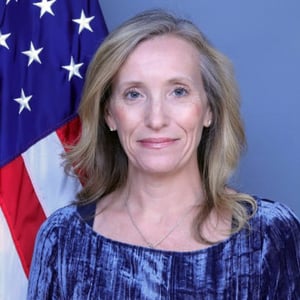
Adjunct Senior Fellow, Indo-Pacific Security Program, Center for New American Security; Senior Advisor, Krach Institute for Tech Diplomacy, Purdue University
Throughout her career in foreign policy, Ambassador Kelley E. Currie has specialized in human rights, political reform, development, and humanitarian issues, with a focus on the Indo-Pacific region. Ambassador Currie is currently an Adjunct Senior Fellow at the Center for a New American Security, a Washington D.C. think tank, and a Senior Advisor to the Krach Institute for Tech Diplomacy at Purdue University. She is a member of the board of directors of the National Endowment for Democray; the board of governors of the East-West Center; and the advisory boards of Spirit of America and the Vandenberg Coalition.
Ambassador Currie was unanimously confirmed in December 2019 as Ambassador-at-Large for Global Women's Issues and the U.S. Representative at the United Nations Commission on the Status of Women and served in that position until January 2021. Prior to that appointment, she served under Ambassador Nikki Haley as the U.S. Representative to the UN Economic and Social Council and Alternative Representative to the UN General Assembly (2017-2018). While awaiting confirmation between ambassadorial appointments, she was appointed interim senior official in the Department of State's Office of Global Criminal Justice. From 2009 until her appointment to the USUN leadership, she was a Senior Fellow with the Project 2049 Institute and the founding Director of the Institute's Burma Transition Initiative. Ambassador Currie also held senior policy positions with the U.S. Congress, international organizatons, and non-governmental organizations.
Ambassador Currie received a Juris Doctor from Georgetown University Law Center with a focus on International Human Rights Law, and an undergraduate degree cum laude in Political Science from the University of Georgia's School of Public and International Affairs.
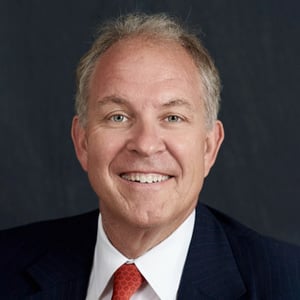
Partner, Zeughauser Group
Alex Dimitrief is a C-suite leader who has steered various global businesses through complex commercial, legal and organizational challenges. He is presently a Partner at Zeughauser Group, where he advises legal departments and law firms on a broad variety of strategic issue. He serves as a director of Eos Energy Enterprises (NASDAQ) and an Advisory Board member at Ethisphere and Cresset. He previously served as a director of Synchrony Financial (NYSE) and We Company. Alex teaches a new class at Harvard Law School on the “Corporation as a Citizen” and corporate law at New York Law School.
As President & CEO of General Electric’s Global Growth Organization, Alex was responsible for driving GE’s growth in 180+ countries. On Alex’s watch in 2018, GE landed $76 billion in international orders and secured billions in financing for many of GE’s emerging market customers. As GE’s General Counsel from 2015 - 2018, Alex served as the principal executive advisor to GE’s Board and led a global team of 5,000+ responsible for GE’s legal matters, compliance, SEC reporting, government affairs and environmental safety programs. In previous roles at GE, Alex was a leader of the transformation of GE Capital (including the IPO/split-off of Synchrony Financial) and spearheaded complex joint venture negotiations for GE Energy in China and Russia. In announcing Alex’s retirement from GE in January 2019, CEO Larry Culp described Alex as “one of the most respected leaders at GE” who “effectively represented GE before governments, regulators and customers throughout the world and is widely recognized as a compelling champion of integrity, transparency and the rule of law.”
Alex came to GE after 20 years as a trial lawyer at Kirkland & Ellis LLP, where he represented a broad variety of clients in securities, restructuring, intellectual property, product liability, environmental, governance and commercial disputes. Alex earned his B.A. from Yale College and his J.D. from Harvard Law School. He was selected out of law school as the youngest-ever White house Fellow and began his career in the Reagan Administration’s Office of Political and Intergovernmental Affairs

Senior Fellow - Foreign Policy, Global Economy and Development, John L. Thornton China Center, Brookings Institute
David Dollar is a senior fellow in the John L. Thornton China Center at the Brookings Institution and host of the Brookings trade podcast, Dollar&Sense. He is a leading expert on China's economy and U.S.-China economic relations. From 2009 to 2013, Dollar was the U.S. Treasury’s economic and financial emissary to China, based in Beijing, facilitating the macroeconomic and financial policy dialogue between the United States and China. Prior to joining Treasury, Dollar worked 20 years for the World Bank, serving as country director for China and Mongolia, based in Beijing (2004-2009). His other World Bank assignments focused on Asian economies, including South Korea, Vietnam, Cambodia, Thailand, Bangladesh, and India. Dollar also worked in the World Bank’s research department. His publications focus on economic reform in China, globalization, and economic growth. He also taught economics at University of California Los Angeles, during which time he spent a semester in Beijing at the Graduate School of the Chinese Academy of Social Sciences in 1986. He has a doctorate in economics from New York University and a bachelor's in Chinese history and language from Dartmouth College.
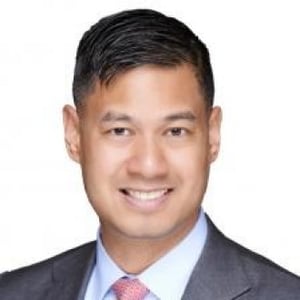
Senior Associate, Freeman Chair in China Studies, Center for Strategic & International Studies
From March 2018 to July 2021, Ivan Kanapathy served on the White House’s National Security Council staff as director for China, Taiwan, and Mongolia and deputy senior director for Asian affairs. In this capacity, he staffed and advised the president and national security advisor and led U.S. government interagency policy development and implementation on relations and engagement with China and Taiwan—including shepherding the most comprehensive and significant U.S. policy shift toward the People’s Republic of China in four decades. From 2014 to 2017, Ivan worked at the American Institute in Taiwan, representing U.S. interests and advising on military and security issues in Taipei. Earlier in his career, Ivan spent a year studying in Beijing and traveling throughout China, Taiwan, and Southeast Asia as a U.S. Marine Corps foreign area study fellow; he later led the development and implementation of the service’s global security cooperation strategy and policies at the Pentagon. As a naval flight officer, Ivan accumulated 2,500 flight hours, served three years as a F/A-18 weapons officer and tactics instructor at the U.S Navy Fighter Weapons School (better known as TOPGUN), and deployed to the Middle East and Western Pacific five times, earning several combat awards and decorations. He holds a MA (with distinction) in East Asia security studies from the Naval Postgraduate School, a BS in physics and economics from Carnegie Mellon University, and an AA and diploma (with highest honors) in Chinese – Mandarin from the Defense Language Institute.
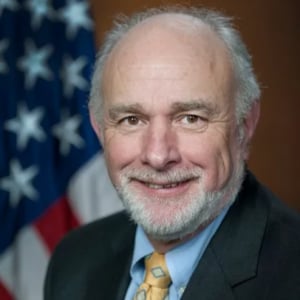
Visiting Fellow in Governance Studies, Brookings Institution
Bill Baer is a visiting fellow in Governance Studies. He is one of the world’s best known and respected antitrust/competition enforcers. Baer is the only person to have led antitrust enforcement at both U.S. antitrust agencies, serving as assistant attorney general in charge of the Antitrust Division of the U.S. Department of Justice from 2013 to 2016, and as director of the Bureau of Competition at the Federal Trade Commission from 1995 to 1999. During his tenure as assistant attorney general, the Antitrust Division achieved unprecedented success in civil and criminal enforcement, bringing and winning more cases than at any point in its history. He also developed close working relationships with his competition enforcement colleagues around the world. In 2016 and early 2017, Baer also served as acting associate attorney general, the third highest official in the Department of Justice. He oversaw the work of the Antitrust, Civil, Civil Rights, Tax, and Environment and Natural Resources Divisions and successfully led the effort to hold financial institutions accountable in the residential mortgage-backed securities crisis, securing record penalties and consumer redress. Baer worked at the Federal Trade Commission on two different occasions: from 1995 to 1999, as director of the Bureau of Competition; and from 1975 to 1980 as attorney advisor to the chairman and assistant general counsel for Legislation and Congressional Relations. While not in public service, he headed the highly regarded antitrust practice at Arnold & Porter, representing a broad range of companies in U.S. and international cartel investigations, antitrust litigation, and merger and acquisition reviews by antitrust enforcers, including the Department of Justice, the Federal Trade Commission, state attorneys general, and the European Commission.
Baer was twice named by Global Competition Review as the best competition lawyer in the world; honored, in 2010 and 2012, by Best Lawyers as the best antitrust lawyer in Washington; and named by The National Law Journal as one of “The Decade’s Most Influential Lawyers.” In 2015 the Federal Trade Commission honored him with the Miles W. Kirkpatrick Lifetime Achievement Award. In 2017, the American Antitrust Institute presented him with the Alfred E. Kahn Award for Antitrust Achievement. In 2024 the American Economic Liberties Project honored him with its first Achievements in Antitrust Award. Most recently, Baer was awarded the John Sherman Award for his substantive contributions to the development of antitrust law. It is the highest honor granted by the Justice Department’s Antitrust Division.
Baer received his J.D. in 1975 from Stanford Law School, where he served as senior article editor of The Stanford Law Review, and his B.A. in 1972 from Lawrence University. Outside of Brookings, he is a trustee and board officer of his alma mater, Lawrence University. He previously served on the Biden transition team for the Federal Trade Commission. In addition, he occasionally serves as a consulting expert on antitrust matters.
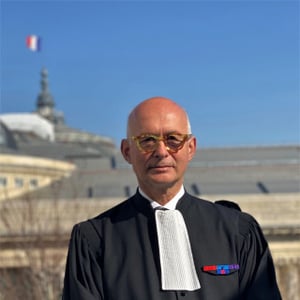
Partner, Supreme Court Attorney, Cabinet Briard LLP
François-Henri Briard is a Knight of the Legion of Honor, an Officer of the National Order of Merit and a Knight of the Palmes Académiques.
He was a member of the Governing Board of the Bar of the French Supreme Courts (2003-2005).
François-Henri Briard was a trustee of Sarah Lawrence College in New York for eight years. He is President of the Institut Vergennes, a member of the U.S. Supreme Court Historical Society and an honorary member of the Society of the Cincinnati and of the Sons of the American Revolution. He is also an expert with the Federalist Society, a U.S. think tank that focuses on constitutional and judicial issues.
He is a member of the Institute of Consulting Tax Attorneys (IACF) and an associate member of the Academy of Moral Sciences, Letters and Arts of Versailles and Ile de France.
He is a member of the French Navy civilian reserve with the rank of frigate captain and has been awarded a medal by the voluntary military services. On behalf of the Firm, he received the Military Reserve Prize (2011).
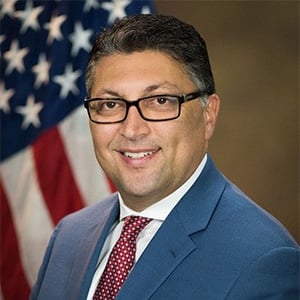
Adjunct Professor of Law, University of Pennsylvania
Makan Delrahim is currently an Adjunct Professor of Law at the University of Pennsylvania.
Previously he served as Assistant Attorney General for the Antitrust Division, Deputy Assistant to the President, and Deputy White House Counsel. Mr. Delrahim’s rich antitrust background covers the full range of industries, issues, and institutions touched upon by the work of the Antitrust Division. He is a former partner in the Los Angeles office of a national law firm. He served in the Antitrust Division from 2003 to 2005 as a Deputy Assistant Attorney General, overseeing the Appellate, Foreign Commerce, and Legal Policy sections. During that time, he played an integral role in building the Antitrust Division’s engagement with its international counterparts and was involved in civil and criminal matters. He has served on the Attorney General’s Task Force on Intellectual Property and as Chairman of the Merger Working Group of the International Competition Network. Mr. Delrahim was also a Commissioner on the Antitrust Modernization Commission from 2004 to 2007. Earlier in his career, Mr. Delrahim served as antitrust counsel, and later as the Staff Director and Chief Counsel of the U.S. Senate Judiciary Committee.
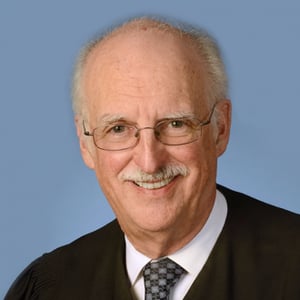
Senior Judge, United States Court of Appeals, District of Columbia Circuit
Circuit Judge Douglas H. Ginsburg was appointed to the United States Court of Appeals for the District of Columbia in 1986. After receiving his B.S. from Cornell University in 1970, and his J.D. from the University of Chicago Law School in 1973, he clerked on the D.C. Circuit and for Justice Thurgood Marshall on the United States Supreme Court. Thereafter, Judge Ginsburg was a professor at the Harvard Law School, the Deputy Assistant and then Assistant Attorney General for the Antitrust Division of the Department of Justice, as well as the Administrator of the Office of Information and Regulatory Affairs in the Office of Management and Budget. Concurrent with his service as a federal judge, Judge Ginsburg has taught at the University of Chicago Law School and the New York University School of Law. Judge Ginsburg is currently a Professor of Law at the George Mason University and a visiting professor at University College London, Faculty of Laws.
Judge Ginsburg is the Chairman of the International Advisory Board of the Global Antitrust Institute at the Law and Economics Center of the George Mason University School of Law. He also serves on the Advisory Boards of: Competition Policy International; the Harvard Journal of Law and Public Policy; the Journal of Competition Law and Economics; the Journal of Law, Economics & Policy; the Supreme Court Economic Review; the University of Chicago Law Review; the New York University Journal of Law and Liberty; and, at University College London, both the Centre for Law, Economics and Society and the Jevons Institute for Competition Law and Economics.
In 2020, Judge Ginsburg was the 11th recipient of the John Sherman Award, presented by the Antitrust Division of the Department of Justice in recognition of the awardee’s Lifetime Contributions to Antitrust Law and Policy.
In 2014, Judge Ginsburg received the Lifetime Achievement Award given annually by the Global Competition Review.
He is the author or co-author of several books and more than 100 articles on competition and regulation, including, most recently, Growing Convergence: The Limited Role of Antitrust in Standard Essential Patent Disputes, in CPI Antitrust Chronicle, Summer 2021, Vol. 1, No. 2.

Vice President and Director of Competition Policy, Progressive Policy Institute
Diana Moss joined the Progressive Policy Institute in 2023. She was previously President of the American Antitrust Institute from 2015-2023. An economist, Dr. Moss has developed and expanded competition enforcement and policy advocacy channels and strategies, and strengthened communications with enforcers, Congress, other advocacy groups, and the media. Her work spans both antitrust and regulation, with industry expertise in digital technology, electricity, petroleum, food and agriculture, airlines, telecommunications, and healthcare. Dr. Moss was previously at the Federal Energy Regulatory Commission, where she coordinated the agency’s competition analysis for electricity mergers. In the early 1990s, she consulted in private practice in the areas of regulation and antitrust. Dr. Moss has spoken widely on various topics involving competition policy and enforcement, testified before Congress, appeared before state and federal regulatory commissions, and made numerous radio and television appearances. She has published articles in a number of economic and legal academic journals, including: American Economic Review, Journal of Industrial Organization, the Energy Law Journal, and the Antitrust Bulletin. She is editor of Network Access, Regulation and Antitrust (2005). Dr. Moss is Adjunct Faculty in the Department of Economics at the University of Colorado at Boulder. She holds a M.A. degree from the University of Denver and a Ph.D. from the Colorado School of Mines.

Judge, United States Court of Appeals, Sixth Circuit
Judge Readler earned his undergraduate and law degrees from the University of Michigan. After graduating, he served as a law clerk to Judge Alan Norris of the United States Court of Appeals for the Sixth Circuit. Judge Readler then began practicing law in the Columbus office of the international law firm Jones Day, eventually spending ten years as a partner in the firm’s Issues and Appeals Practice Group. While at Jones Day, Judge Readler appeared in state and federal trial and appellate courts around the country, most frequently the Supreme Court of Ohio and the Sixth Circuit. Judge Readler also successfully argued before the United States Supreme Court in McQuiggin v. Perkins on behalf of an inmate claiming actual innocence. His other pro bono representations include representing capital defendants before the Tenth Circuit and the Supreme Court of Ohio, as well as representing defendants sentenced to life in prison before the Sixth Circuit. While at Jones Day, Judge Readler traveled to Nairobi with Lawyers Without Borders to train Kenyan lawyers in prosecuting domestic violence cases, and he was also a recipient of the American Marshall Memorial Fellowship awarded by the German Marshall Fund of the United States. Following his career in private practice, Judge Readler served as Acting Assistant Attorney General for the Civil Division of the United States Department of Justice from 2017 to 2019. In that role, Judge Readler led and supervised over 1,000 lawyers in the Department’s largest litigating division, briefing and arguing several cases on behalf of the United States in federal courts across the country, including high-profile cases significant to the Administration and the Department. In March 2019, Judge Readler was confirmed to serve as a Circuit Judge on the Sixth Circuit. He resides in Columbus.
Visiting Fellow in Governance Studies, Brookings Institution
Bill Baer is a visiting fellow in Governance Studies. He is one of the world’s best known and respected antitrust/competition enforcers. Baer is the only person to have led antitrust enforcement at both U.S. antitrust agencies, serving as assistant attorney general in charge of the Antitrust Division of the U.S. Department of Justice from 2013 to 2016, and as director of the Bureau of Competition at the Federal Trade Commission from 1995 to 1999. During his tenure as assistant attorney general, the Antitrust Division achieved unprecedented success in civil and criminal enforcement, bringing and winning more cases than at any point in its history. He also developed close working relationships with his competition enforcement colleagues around the world. In 2016 and early 2017, Baer also served as acting associate attorney general, the third highest official in the Department of Justice. He oversaw the work of the Antitrust, Civil, Civil Rights, Tax, and Environment and Natural Resources Divisions and successfully led the effort to hold financial institutions accountable in the residential mortgage-backed securities crisis, securing record penalties and consumer redress. Baer worked at the Federal Trade Commission on two different occasions: from 1995 to 1999, as director of the Bureau of Competition; and from 1975 to 1980 as attorney advisor to the chairman and assistant general counsel for Legislation and Congressional Relations. While not in public service, he headed the highly regarded antitrust practice at Arnold & Porter, representing a broad range of companies in U.S. and international cartel investigations, antitrust litigation, and merger and acquisition reviews by antitrust enforcers, including the Department of Justice, the Federal Trade Commission, state attorneys general, and the European Commission.
Baer was twice named by Global Competition Review as the best competition lawyer in the world; honored, in 2010 and 2012, by Best Lawyers as the best antitrust lawyer in Washington; and named by The National Law Journal as one of “The Decade’s Most Influential Lawyers.” In 2015 the Federal Trade Commission honored him with the Miles W. Kirkpatrick Lifetime Achievement Award. In 2017, the American Antitrust Institute presented him with the Alfred E. Kahn Award for Antitrust Achievement. In 2024 the American Economic Liberties Project honored him with its first Achievements in Antitrust Award. Most recently, Baer was awarded the John Sherman Award for his substantive contributions to the development of antitrust law. It is the highest honor granted by the Justice Department’s Antitrust Division.
Baer received his J.D. in 1975 from Stanford Law School, where he served as senior article editor of The Stanford Law Review, and his B.A. in 1972 from Lawrence University. Outside of Brookings, he is a trustee and board officer of his alma mater, Lawrence University. He previously served on the Biden transition team for the Federal Trade Commission. In addition, he occasionally serves as a consulting expert on antitrust matters.
Partner, Supreme Court Attorney, Cabinet Briard LLP
François-Henri Briard is a Knight of the Legion of Honor, an Officer of the National Order of Merit and a Knight of the Palmes Académiques.
He was a member of the Governing Board of the Bar of the French Supreme Courts (2003-2005).
François-Henri Briard was a trustee of Sarah Lawrence College in New York for eight years. He is President of the Institut Vergennes, a member of the U.S. Supreme Court Historical Society and an honorary member of the Society of the Cincinnati and of the Sons of the American Revolution. He is also an expert with the Federalist Society, a U.S. think tank that focuses on constitutional and judicial issues.
He is a member of the Institute of Consulting Tax Attorneys (IACF) and an associate member of the Academy of Moral Sciences, Letters and Arts of Versailles and Ile de France.
He is a member of the French Navy civilian reserve with the rank of frigate captain and has been awarded a medal by the voluntary military services. On behalf of the Firm, he received the Military Reserve Prize (2011).
Adjunct Professor of Law, University of Pennsylvania
Makan Delrahim is currently an Adjunct Professor of Law at the University of Pennsylvania.
Previously he served as Assistant Attorney General for the Antitrust Division, Deputy Assistant to the President, and Deputy White House Counsel. Mr. Delrahim’s rich antitrust background covers the full range of industries, issues, and institutions touched upon by the work of the Antitrust Division. He is a former partner in the Los Angeles office of a national law firm. He served in the Antitrust Division from 2003 to 2005 as a Deputy Assistant Attorney General, overseeing the Appellate, Foreign Commerce, and Legal Policy sections. During that time, he played an integral role in building the Antitrust Division’s engagement with its international counterparts and was involved in civil and criminal matters. He has served on the Attorney General’s Task Force on Intellectual Property and as Chairman of the Merger Working Group of the International Competition Network. Mr. Delrahim was also a Commissioner on the Antitrust Modernization Commission from 2004 to 2007. Earlier in his career, Mr. Delrahim served as antitrust counsel, and later as the Staff Director and Chief Counsel of the U.S. Senate Judiciary Committee.
Senior Judge, United States Court of Appeals, District of Columbia Circuit
Circuit Judge Douglas H. Ginsburg was appointed to the United States Court of Appeals for the District of Columbia in 1986. After receiving his B.S. from Cornell University in 1970, and his J.D. from the University of Chicago Law School in 1973, he clerked on the D.C. Circuit and for Justice Thurgood Marshall on the United States Supreme Court. Thereafter, Judge Ginsburg was a professor at the Harvard Law School, the Deputy Assistant and then Assistant Attorney General for the Antitrust Division of the Department of Justice, as well as the Administrator of the Office of Information and Regulatory Affairs in the Office of Management and Budget. Concurrent with his service as a federal judge, Judge Ginsburg has taught at the University of Chicago Law School and the New York University School of Law. Judge Ginsburg is currently a Professor of Law at the George Mason University and a visiting professor at University College London, Faculty of Laws.
Judge Ginsburg is the Chairman of the International Advisory Board of the Global Antitrust Institute at the Law and Economics Center of the George Mason University School of Law. He also serves on the Advisory Boards of: Competition Policy International; the Harvard Journal of Law and Public Policy; the Journal of Competition Law and Economics; the Journal of Law, Economics & Policy; the Supreme Court Economic Review; the University of Chicago Law Review; the New York University Journal of Law and Liberty; and, at University College London, both the Centre for Law, Economics and Society and the Jevons Institute for Competition Law and Economics.
In 2020, Judge Ginsburg was the 11th recipient of the John Sherman Award, presented by the Antitrust Division of the Department of Justice in recognition of the awardee’s Lifetime Contributions to Antitrust Law and Policy.
In 2014, Judge Ginsburg received the Lifetime Achievement Award given annually by the Global Competition Review.
He is the author or co-author of several books and more than 100 articles on competition and regulation, including, most recently, Growing Convergence: The Limited Role of Antitrust in Standard Essential Patent Disputes, in CPI Antitrust Chronicle, Summer 2021, Vol. 1, No. 2.
Vice President and Director of Competition Policy, Progressive Policy Institute
Diana Moss joined the Progressive Policy Institute in 2023. She was previously President of the American Antitrust Institute from 2015-2023. An economist, Dr. Moss has developed and expanded competition enforcement and policy advocacy channels and strategies, and strengthened communications with enforcers, Congress, other advocacy groups, and the media. Her work spans both antitrust and regulation, with industry expertise in digital technology, electricity, petroleum, food and agriculture, airlines, telecommunications, and healthcare. Dr. Moss was previously at the Federal Energy Regulatory Commission, where she coordinated the agency’s competition analysis for electricity mergers. In the early 1990s, she consulted in private practice in the areas of regulation and antitrust. Dr. Moss has spoken widely on various topics involving competition policy and enforcement, testified before Congress, appeared before state and federal regulatory commissions, and made numerous radio and television appearances. She has published articles in a number of economic and legal academic journals, including: American Economic Review, Journal of Industrial Organization, the Energy Law Journal, and the Antitrust Bulletin. She is editor of Network Access, Regulation and Antitrust (2005). Dr. Moss is Adjunct Faculty in the Department of Economics at the University of Colorado at Boulder. She holds a M.A. degree from the University of Denver and a Ph.D. from the Colorado School of Mines.
Judge, United States Court of Appeals, Sixth Circuit
Judge Readler earned his undergraduate and law degrees from the University of Michigan. After graduating, he served as a law clerk to Judge Alan Norris of the United States Court of Appeals for the Sixth Circuit. Judge Readler then began practicing law in the Columbus office of the international law firm Jones Day, eventually spending ten years as a partner in the firm’s Issues and Appeals Practice Group. While at Jones Day, Judge Readler appeared in state and federal trial and appellate courts around the country, most frequently the Supreme Court of Ohio and the Sixth Circuit. Judge Readler also successfully argued before the United States Supreme Court in McQuiggin v. Perkins on behalf of an inmate claiming actual innocence. His other pro bono representations include representing capital defendants before the Tenth Circuit and the Supreme Court of Ohio, as well as representing defendants sentenced to life in prison before the Sixth Circuit. While at Jones Day, Judge Readler traveled to Nairobi with Lawyers Without Borders to train Kenyan lawyers in prosecuting domestic violence cases, and he was also a recipient of the American Marshall Memorial Fellowship awarded by the German Marshall Fund of the United States. Following his career in private practice, Judge Readler served as Acting Assistant Attorney General for the Civil Division of the United States Department of Justice from 2017 to 2019. In that role, Judge Readler led and supervised over 1,000 lawyers in the Department’s largest litigating division, briefing and arguing several cases on behalf of the United States in federal courts across the country, including high-profile cases significant to the Administration and the Department. In March 2019, Judge Readler was confirmed to serve as a Circuit Judge on the Sixth Circuit. He resides in Columbus.
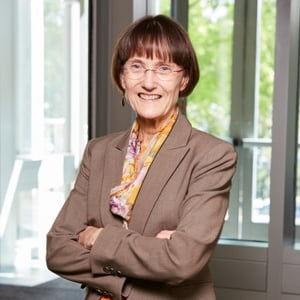
Professor of Law, Emerita & Milton R. Underwood Chair in Free Enterprise, Emerita, Vanderbilt Law School
Margaret Blair is an economist who focuses on corporate law and finance. Her current research focuses on five areas: team production and the role of corporate boards of directors, the legal concept of "personhood," the historical treatment of corporations by the Supreme Court, the role of private-sector governance arrangements in contract enforcement, and the problem of excessive leverage in financial markets. Professor Blair joined Vanderbilt's law faculty in 2004 as part of the team supporting the Law and Business Program and was appointed to the Milton R. Underwood Chair in Free Enterprise in 2010. She had previously taught at Georgetown University Law Center, where she became a visiting professor in 1996 and served as a Sloan Visiting Professor and as research director for the Sloan-GULC Project on Business Institutions, from 2000 through June 2004. She has also been a senior fellow in the Economic Studies Program at the Brookings Institution, where she directed research and wrote about corporate governance and the role of human capital in corporations. She served on the board of directors of Sonic Corporation from 2001 to 2006 and currently serves on the board of WRAP (Worldwide Responsible Accredited Production).
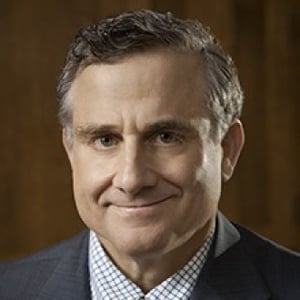
Sam Harris Professor of Corporate Law, Corporate Finance, and Securities Law, Yale Law School
Jonathan R. Macey is Sam Harris Professor of Corporate Law, Corporate Finance, and Securities Law at Yale University, and Professor in the Yale School of Management. From 1991 – 2004, Professor Macey was J. DuPratt White Professor of Law, Director of the John M. Olin Program in Law and Economics at Cornell Law School, and Professor of Law and Business at the Cornell University Johnson Graduate School of Business. Professor Macey earned his B.A. cum laude from Harvard in 1977, and his J.D. from Yale Law School in 1982, where he was Article and Book Review editor of The Yale Law Journal. In 1996, Professor Macey received a Ph.D. honoris causa from the Stockholm School of Economics. Following law school, Professor Macey was law clerk to Judge Henry J. Friendly on the U.S. Court of Appeals for the Second Circuit.
Professor Macey is the author of several books including the two-volume treatise, Macey on Corporation Laws, published in 1998 (Aspen Law & Business), and co-author of two leading casebooks, Corporations: Including Partnerships and Limited Liability Companies (2003 Thomson West), which is in its eighth edition, and Banking Law and Regulation (2002 Aspen Law & Business), which is now in its third edition. He also is the author of over 100 scholarly articles. His recent articles have appeared in the Banking Law Journal, the University of Chicago Law Review, the Stanford Law Review, The Yale Law Journal, the Cornell Law Review, the Journal of Law and Economics, and the Brookings Wharton Papers on Financial Institutions. He has published numerous editorials in such publications as The Wall Street Journal, Forbes, The Los Angeles Times, and The National Law Journal.
Professor Macey has taught at major universities throughout the world, including Bocconi University (Milan), the University of Tokyo; the University of Toronto; the University of Turin, the University of Amsterdam Department of Finance, and the Stockholm School of Economics, Department of Law. He also has been Professor of Law at the University of Chicago (1990) and Visiting Professor of Law at Harvard Law School (1999). Professor Macey is a Senior Research Fellow at the International Centre for Economic Research (ICER) in Turin, Italy. Professor Macey also serves on the Academic Advisory Board (Comitato Scientifico) of the Associazione Disiano Preite for the study of corporate law (per lo studio del diritto dell’impresa). In 1995, Professor Macey was awarded the Paul M. Bator prize for excellence in Teaching, Scholarship and Public Service by the Federalist Society for Law and Public Policy. In 1996, he received a Ph.D., honoris causa from the Stockholm School of Economics. And in 1998, he received the D.P. Jacobs prize for the most significant paper in volume 6 of the Journal of Financial Intermediation for his paper (co-authored with Maureen O’Hara), “The Law & Economics of Best Execution.”
In 1999 Professor Macey was made an honorary Fellow of the Society For Advanced Legal Studies. In 2000, Professor Macey became a member of the Legal Advisory Committee to the Board of Directors of the New York Stock Exchange. In 2001 Professor Macey was appointed a Bertil Daniellson Distinguished Visiting Professor in Banking and Finance at the Stockholm School of Economics. In 2002 Professor Macey was appointed to the Economic Advisory Board of the National Association of Securities Dealers (NASD). In 2004 Professor Macey was awarded a Teaching Award by the Yale Law Women in recognition of his “commitment to excellence in teaching, mentoring and inspiring.” In 2005 Professor Macey became a member of the Board of Editors of Thomson West Publishing Company.
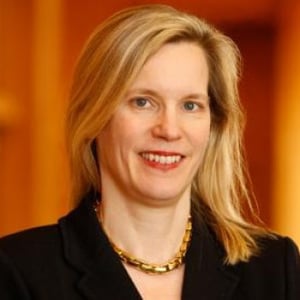
John S. Battle Professor of Law, University of Virginia School of Law
Julia D. Mahoney teaches courses in property, government finance, constitutional law and nonprofit organizations. A graduate of Yale Law School, she joined the University of Virginia faculty as an associate professor in 1999 and is now John S. Battle Professor of Law. She has also taught at the University of Southern California Law School and the University of Chicago Law School, and before entering the legal academy, practiced law at the New York firm Wachtell, Lipton, Rosen & Katz. Her scholarly articles include works on land preservation, eminent domain, health care reform and property rights in human biological materials.

Chief Judge, United States Court of Appeals, Sixth Circuit
JEFFREY S. SUTTON is the Chief Judge of the United States Court of Appeals for the Sixth Circuit. He has served as Chair of the Federal Judicial Conference Committee on Rules of Practice and Procedure, Chair of the Advisory Committee on Appellate Rules, and Chair of the Supreme Court Fellows Commission. He currently serves as Chair of the Executive Committee of the Judicial Conference of the United States. Since 1993, Chief Judge Sutton has been an adjunct professor at The Ohio State University College of Law, where he teaches seminars on State Constitutional Law, the United States Supreme Court, and Appellate Advocacy. He also teaches a class on State Constitutional Law at Harvard Law School. Among other publications, he is the author of Who Decides? States as Laboratories of Constitutional Experimentation and 51 Imperfect Solutions: States and the Making of American Constitutional Law. He is the co-author of a casebook, State Constitutional Law: The Modern Experience, as well as The Law of Judicial Precedent. He is also the co-editor of The Essential Scalia: On the Constitution, the Courts, and the Rule of Law. In 2006, Chief Judge Sutton was elected to the American Law Institute, and in 2017 he was elected to its Council.

Robert C. McCormack Distinguished Service Professor of Entrepreneurship and Finance and George G. Rinder Faculty Fellow, University of Chicago Booth School of Business
Luigi Zingales' research interests span from corporate governance to financial development, from political economy to the economic effects of culture. He co-developed the Financial Trust Index, which is designed to monitor the level of trust that Americans have toward their financial system. In addition to holding his position at Chicago Booth, Zingales is currently a faculty research fellow for the National Bureau of Economic Research, a research fellow for the Center for Economic Policy Research, and a fellow of the European Governance Institute. He is also the director of the Stigler Center for the Study of the Economy and the State. Zingales also serves on the board of ProMarket and is the co-host of the podcast Capitalisn't. In 2014 he was the President of the American Finance Association.
His research has earned him the 2003 Bernácer Prize for the best young European financial economist. His work has been published in the major economic and finance journals, but he has publications also in Science and the Proceedings of the National Academy of Science. His book, Saving Capitalism from Capitalists, coauthored with Raghuram G. Rajan, has been acclaimed as "one of the most powerful defenses of the free market ever written" by Bruce Bartlett of National Review Online. Of his latest book, A Capitalism for the People: Recapturing the Lost Genius of American Prosperity, the Financial Times has written “Zingales’ fundamental diagnosis is right."
Born in Italy, Zingales carries with him a civic passion and the belief that economists should not just interpret the world, they should change it for the better. Commenting on his method of teaching on a few very important lessons rather than a myriad of details, Zingales says, "Twenty years from now they might have forgotten all the details of my course, but hopefully they will not have forgotten the way of thinking." Zingales received a bachelor's degree in economics summa cum laude from Università Bocconi in Italy in 1987 and a PhD in economics from the Massachusetts Institute of Technology in 1992. He joined the Chicago Booth faculty in 1992.
Professor of Law, Emerita & Milton R. Underwood Chair in Free Enterprise, Emerita, Vanderbilt Law School
Margaret Blair is an economist who focuses on corporate law and finance. Her current research focuses on five areas: team production and the role of corporate boards of directors, the legal concept of "personhood," the historical treatment of corporations by the Supreme Court, the role of private-sector governance arrangements in contract enforcement, and the problem of excessive leverage in financial markets. Professor Blair joined Vanderbilt's law faculty in 2004 as part of the team supporting the Law and Business Program and was appointed to the Milton R. Underwood Chair in Free Enterprise in 2010. She had previously taught at Georgetown University Law Center, where she became a visiting professor in 1996 and served as a Sloan Visiting Professor and as research director for the Sloan-GULC Project on Business Institutions, from 2000 through June 2004. She has also been a senior fellow in the Economic Studies Program at the Brookings Institution, where she directed research and wrote about corporate governance and the role of human capital in corporations. She served on the board of directors of Sonic Corporation from 2001 to 2006 and currently serves on the board of WRAP (Worldwide Responsible Accredited Production).
Sam Harris Professor of Corporate Law, Corporate Finance, and Securities Law, Yale Law School
Jonathan R. Macey is Sam Harris Professor of Corporate Law, Corporate Finance, and Securities Law at Yale University, and Professor in the Yale School of Management. From 1991 – 2004, Professor Macey was J. DuPratt White Professor of Law, Director of the John M. Olin Program in Law and Economics at Cornell Law School, and Professor of Law and Business at the Cornell University Johnson Graduate School of Business. Professor Macey earned his B.A. cum laude from Harvard in 1977, and his J.D. from Yale Law School in 1982, where he was Article and Book Review editor of The Yale Law Journal. In 1996, Professor Macey received a Ph.D. honoris causa from the Stockholm School of Economics. Following law school, Professor Macey was law clerk to Judge Henry J. Friendly on the U.S. Court of Appeals for the Second Circuit.
Professor Macey is the author of several books including the two-volume treatise, Macey on Corporation Laws, published in 1998 (Aspen Law & Business), and co-author of two leading casebooks, Corporations: Including Partnerships and Limited Liability Companies (2003 Thomson West), which is in its eighth edition, and Banking Law and Regulation (2002 Aspen Law & Business), which is now in its third edition. He also is the author of over 100 scholarly articles. His recent articles have appeared in the Banking Law Journal, the University of Chicago Law Review, the Stanford Law Review, The Yale Law Journal, the Cornell Law Review, the Journal of Law and Economics, and the Brookings Wharton Papers on Financial Institutions. He has published numerous editorials in such publications as The Wall Street Journal, Forbes, The Los Angeles Times, and The National Law Journal.
Professor Macey has taught at major universities throughout the world, including Bocconi University (Milan), the University of Tokyo; the University of Toronto; the University of Turin, the University of Amsterdam Department of Finance, and the Stockholm School of Economics, Department of Law. He also has been Professor of Law at the University of Chicago (1990) and Visiting Professor of Law at Harvard Law School (1999). Professor Macey is a Senior Research Fellow at the International Centre for Economic Research (ICER) in Turin, Italy. Professor Macey also serves on the Academic Advisory Board (Comitato Scientifico) of the Associazione Disiano Preite for the study of corporate law (per lo studio del diritto dell’impresa). In 1995, Professor Macey was awarded the Paul M. Bator prize for excellence in Teaching, Scholarship and Public Service by the Federalist Society for Law and Public Policy. In 1996, he received a Ph.D., honoris causa from the Stockholm School of Economics. And in 1998, he received the D.P. Jacobs prize for the most significant paper in volume 6 of the Journal of Financial Intermediation for his paper (co-authored with Maureen O’Hara), “The Law & Economics of Best Execution.”
In 1999 Professor Macey was made an honorary Fellow of the Society For Advanced Legal Studies. In 2000, Professor Macey became a member of the Legal Advisory Committee to the Board of Directors of the New York Stock Exchange. In 2001 Professor Macey was appointed a Bertil Daniellson Distinguished Visiting Professor in Banking and Finance at the Stockholm School of Economics. In 2002 Professor Macey was appointed to the Economic Advisory Board of the National Association of Securities Dealers (NASD). In 2004 Professor Macey was awarded a Teaching Award by the Yale Law Women in recognition of his “commitment to excellence in teaching, mentoring and inspiring.” In 2005 Professor Macey became a member of the Board of Editors of Thomson West Publishing Company.
John S. Battle Professor of Law, University of Virginia School of Law
Julia D. Mahoney teaches courses in property, government finance, constitutional law and nonprofit organizations. A graduate of Yale Law School, she joined the University of Virginia faculty as an associate professor in 1999 and is now John S. Battle Professor of Law. She has also taught at the University of Southern California Law School and the University of Chicago Law School, and before entering the legal academy, practiced law at the New York firm Wachtell, Lipton, Rosen & Katz. Her scholarly articles include works on land preservation, eminent domain, health care reform and property rights in human biological materials.
Chief Judge, United States Court of Appeals, Sixth Circuit
JEFFREY S. SUTTON is the Chief Judge of the United States Court of Appeals for the Sixth Circuit. He has served as Chair of the Federal Judicial Conference Committee on Rules of Practice and Procedure, Chair of the Advisory Committee on Appellate Rules, and Chair of the Supreme Court Fellows Commission. He currently serves as Chair of the Executive Committee of the Judicial Conference of the United States. Since 1993, Chief Judge Sutton has been an adjunct professor at The Ohio State University College of Law, where he teaches seminars on State Constitutional Law, the United States Supreme Court, and Appellate Advocacy. He also teaches a class on State Constitutional Law at Harvard Law School. Among other publications, he is the author of Who Decides? States as Laboratories of Constitutional Experimentation and 51 Imperfect Solutions: States and the Making of American Constitutional Law. He is the co-author of a casebook, State Constitutional Law: The Modern Experience, as well as The Law of Judicial Precedent. He is also the co-editor of The Essential Scalia: On the Constitution, the Courts, and the Rule of Law. In 2006, Chief Judge Sutton was elected to the American Law Institute, and in 2017 he was elected to its Council.
Robert C. McCormack Distinguished Service Professor of Entrepreneurship and Finance and George G. Rinder Faculty Fellow, University of Chicago Booth School of Business
Luigi Zingales' research interests span from corporate governance to financial development, from political economy to the economic effects of culture. He co-developed the Financial Trust Index, which is designed to monitor the level of trust that Americans have toward their financial system. In addition to holding his position at Chicago Booth, Zingales is currently a faculty research fellow for the National Bureau of Economic Research, a research fellow for the Center for Economic Policy Research, and a fellow of the European Governance Institute. He is also the director of the Stigler Center for the Study of the Economy and the State. Zingales also serves on the board of ProMarket and is the co-host of the podcast Capitalisn't. In 2014 he was the President of the American Finance Association.
His research has earned him the 2003 Bernácer Prize for the best young European financial economist. His work has been published in the major economic and finance journals, but he has publications also in Science and the Proceedings of the National Academy of Science. His book, Saving Capitalism from Capitalists, coauthored with Raghuram G. Rajan, has been acclaimed as "one of the most powerful defenses of the free market ever written" by Bruce Bartlett of National Review Online. Of his latest book, A Capitalism for the People: Recapturing the Lost Genius of American Prosperity, the Financial Times has written “Zingales’ fundamental diagnosis is right."
Born in Italy, Zingales carries with him a civic passion and the belief that economists should not just interpret the world, they should change it for the better. Commenting on his method of teaching on a few very important lessons rather than a myriad of details, Zingales says, "Twenty years from now they might have forgotten all the details of my course, but hopefully they will not have forgotten the way of thinking." Zingales received a bachelor's degree in economics summa cum laude from Università Bocconi in Italy in 1987 and a PhD in economics from the Massachusetts Institute of Technology in 1992. He joined the Chicago Booth faculty in 1992.
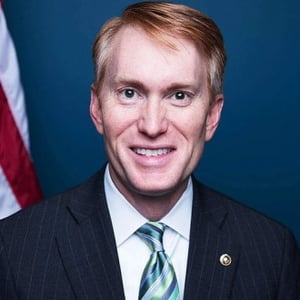
United States Senator from Oklahoma
Senator Lankford of Oklahoma served four years in the U.S. House of Representatives and was elected to the U.S. Senate to complete an unexpired term on November 4, 2014 and re-elected to a full six-year senate term on November 8, 2016.
As chairman of the Senate Subcommittee on Regulatory Affairs and Federal Management, Lankford fights unnecessary and burdensome regulation and advocates for a more restrained federal government.
Personal faith, local decision-making, and opportunity for every person, regardless of their background, are core values for Senator Lankford. Before his time in Congress, from 1995 to 2009, the Senator served as Director of Student Ministry at the Baptist Convention of Oklahoma and Director of the Falls Creek Youth Camp, the largest youth camp in the United States, with more than 51,000 individuals attending each summer.
Committee Assignments:
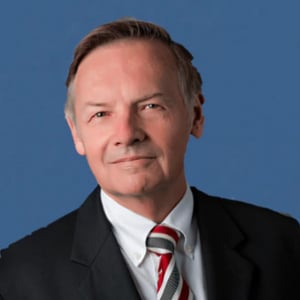
Senior Vice President, Bipartisan Policy Center
G. William Hoagland is a BPC senior vice president. In this capacity, he helps direct and manage fiscal, health, and economic policy analyses.
Before joining BPC in September 2012, Hoagland served as vice president of public policy for CIGNA Corporation, working with business leaders, trade associations, business coalitions, and interest groups to develop CIGNA policy on health care reform issues at both the federal and state levels.
Prior to joining CIGNA, Hoagland completed 33 years of federal government service, including 25 years on the U.S. Senate staff. From 2003 to 2007, he served as the director of budget and appropriations in the office of Senate Majority Leader Bill Frist. He assisted in evaluating the fiscal impact of major legislation and helped to coordinate budget policy for the Senate leadership.
From 1982 to 2003, Hoagland served as a staff member and director of the Senate Budget Committee, reporting to U.S. Sen. Pete V. Domenici, chairman and ranking member of the committee during this period. He participated in major federal budget negotiations, including the 1985 Gramm-Rudman-Hollings Budget Deficit Reduction Act, the 1990 Omnibus Budget Reconciliation Act, and the historic 1997 Balanced Budget Agreement.
In 1981, he served as the administrator of the Department of Agriculture’s Food and Nutrition Service and as a special assistant to the Secretary of Agriculture. He was one of the first employees of the Congressional Budget Office in 1975, working with its first director, Alice Rivlin.
In both 1997 and 2005, National Journal listed him as one of the “Washington 100 Decision Makers” and referred to him as a “bottom-liner who is not a hard-liner.” Roll Call consistently named Hoagland as one of the top 50 Hill staffers. In 2002, he received the James L. Blum Award for Distinguished Service in Budgeting. The National Association of State Budget Officers honored him in 2004 with its Leadership in Budgeting Award, and in 2006 he was inducted as a fellow in the National Academy of Public Administration.
Hoagland is an affiliate professor of public policy at the George Mason University and a board member of the Committee for a Responsible Federal Budget, the National Academy of Social Insurance, and the National Advisory Committee to the Workplace Flexibility 2010 Commission. In 2009, he was appointed to the Peterson-Pew Commission on Budget Reform examining the overall structure of the budget, authorization, and appropriations process, and was a member of BPC’s Debt Reduction Task Force that published Restoring America’s Future in November 2010. He coordinated BPC’s 2013 report, A Bipartisan Rx for Patient-Centered Care and System-Wide Cost Containment. In April 2015, he co-chaired the National Academy of Social Insurance report, “Addressing Pricing Power in Health Care Markets.”
Hoagland attended the U.S. Merchant Marine Academy and holds degrees from Purdue University and The Pennsylvania State University. His family’s Indiana family farm was recognized as a “Hoosier Homestead” for having remained in the family for over a century.
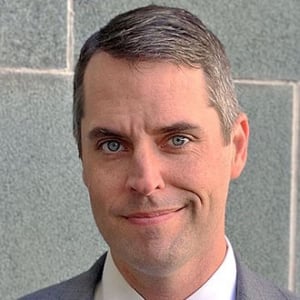
Associate Professor of Law, Emory University School of Law
Matthew B. Lawrence is associate professor of law. Lawrence researches and publishes on health care finance, administrative law, and addictions. He has written widely on these subjects with articles published or forthcoming in Columbia Law Review; Florida Law Review; Duke Law Journal; Harvard Law and Policy Review; the Journal of Law, Medicine, and Ethics; New York University Law Review; William & Mary Law Review; and Yale Law Journal, among other journals.
In addition to his teaching and scholarship, Lawrence possesses a wealth of experience in the federal government. He most recently served as a special legal advisor to the US House of Representatives Budget Committee (Majority). Previously, he worked on health care regulatory issues during the Obama and Trump Administrations as a trial attorney in the Department of Justice’s Federal Programs Branch and attorney advisor in the Office of Management and Budget’s Office of General Counsel in the Executive Office of the President. In 2016, he received an individual special commendation award for his defense of Affordable Care Act programs while serving as trial attorney in the US Department of Justice.
Before coming to Emory Law Lawrence was assistant professor of law at Pennsylvania State University (Dickinson Law), where he also held a courtesy appointment as assistant professor at Penn State College of Medicine in the Department of Surgery. He was recognized by the American Society for Law, Medicine, and Ethics as a 2017 Health Law Scholar, and is affiliate faculty at Harvard Law School’s Petrie-Flom Center for Health Law Policy, Bioethics, and Biotechnology, where he was previously a fellow.
Lawrence is a graduate of New York University School of Law and Brown University; and he served as a law clerk to the Honorable Douglas H. Ginsburg on the US Court of Appeals for the DC Circuit.
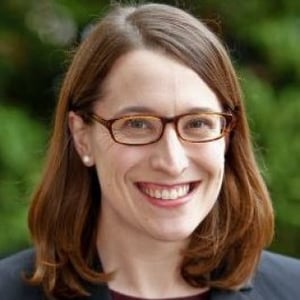
Senior Fellow - Governance Studies, Brookings Institution
Molly Reynolds is a senior fellow in Governance Studies at Brookings. She studies Congress, with an emphasis on how congressional rules and procedure affect domestic policy outcomes.
She is the author of the book, "Exceptions to the Rule: The Politics of Filibuster Limitations in the U.S. Senate," which explores creation, use, and consequences of the budget reconciliation process and other procedures that prevent filibusters in the U.S. Senate. Current research projects include work on oversight in the House of Representatives, congressional reform, and the congressional budget process. She also supervises the maintenance of "Vital Statistics on Congress," Brookings’s long-running resource on the first branch of government.
Reynolds received her Ph.D. in political science and public policy from the University of Michigan and her A.B. in government from Smith College, and previously served as a senior research coordinator in the Governance Studies program at Brookings. In addition, she has served as an instructor at George Mason University.

Senior Fellow and Director of Constitutional Studies, Manhattan Institute
Ilya Shapiro is a senior fellow and director of constitutional studies at the Manhattan Institute and a contributing editor of City Journal. Previously he was executive director and senior lecturer at the Georgetown Center for the Constitution, and before that a vice president of the Cato Institute.
Shapiro is the author of Lawless: The Miseducation of America’s Elites (2025) and Supreme Disorder: Judicial Nominations and the Politics of America’s Highest Court (2020), coauthor of Religious Liberties for Corporations? (2014), and editor of 11 volumes of the Cato Supreme Court Review (2008-18). He has contributed to a variety of academic, popular, and professional publications, including the Wall Street Journal, Harvard Journal of Law & Public Policy, Washington Post, Los Angeles Times, USA Today, National Review, and Newsweek. He also regularly provides commentary for various media outlets, writes the Shapiro’s Gavel newsletter on Substack, and once appeared on the Colbert Report.
Shapiro has testified many times before Congress and state legislatures and has filed more than 500 amicus curiae “friend of the court” briefs in the Supreme Court. He lectures regularly on behalf of the Federalist Society, is a member of the board of fellows of the Jewish Policy Center, was an inaugural Washington Fellow at the National Review Institute, and has been an adjunct law professor at the George Washington University and University of Mississippi. He is also the chairman of the board of advisers of the Mississippi Justice Institute, a barrister in the Edward Coke Appellate Inn of Court, and a former member of the Virginia Advisory Committee to the U.S. Commission on Civil Rights.
Earlier in his career, Shapiro was a special assistant/adviser to the Multi-National Force in Iraq on rule-of-law issues and practiced at Patton Boggs and Cleary Gottlieb. Before entering private practice, he clerked for Judge E. Grady Jolly of the U.S. Court of Appeals for the Fifth Circuit. He holds an AB from Princeton University, an MSc from the London School of Economics, and a JD from the University of Chicago Law School.
Senior Fellow, Governance Studies, Brookings Institution
Sarah Binder is senior fellow in Governance Studies at the Brookings Institution and professor of political science at George Washington University, where she specializes in Congress and legislative politics. Binder’s current research explores the historical and contemporary relationship between Congress and the Federal Reserve, and she is the co-author with Mark Spindel of The Myth of Independence: How Congress Governs the Federal Reserve (Princeton University Press, 2017). She is also an associate editor of The Washington Post’s Monkey Cage blog.
Binder is a former co-editor of Legislative Studies Quarterly, a co-author with Forrest Maltzman of Advice and Dissent: The Struggle to Shape the Federal Judiciary (Brookings, 2009), author of Stalemate: Causes and Consequences of Legislative Gridlock (Brookings, 2003), Minority Rights, Majority Rule: Partisanship and the Development of Congress (Cambridge University Press, 1997), and co-author with Steven S. Smith of Politics or Principle? Filibustering in the United States Senate (Brookings, 1997). Her other work on Congressional politics has appeared in the American Political Science Review, American Journal of Political Science, and elsewhere.
Her book on legislative gridlock was awarded the 2003 Richard F. Fenno, Jr. Prize by the American Political Science Association for the best book published on legislative politics, and she was elected to the American Academy of Arts and Sciences in 2015.
Binder received her Ph.D. in political science from the University of Minnesota in 1995 and B.A. from Yale University in 1986. She joined Brookings in 1995 and George Washington University in 1999. Between 1986 and 1990, she served as legislative aide and press secretary to Rep. Lee Hamilton (D-Indiana).
Senior Counsel, Committee on Oversight and Government Reform, U.S. House of Representatives
Daniel Flores is a Senior Counsel on the Republican staff of the Committee on Oversight and Government Reform, U.S. House of Representatives. Prior to his current position, he served in the House as Chief Counsel for the House Judiciary Committee's Subcommittee on Regulatory Reform, Commercial and Antitrust Law. Before coming to the House, he served as an Acting Associate Deputy General Counsel for the U.S. Environmental Protection Agency and in other roles in EPA's Office of General Counsel, as a Senior Trial Attorney for the U.S. Department of Justice, Environment and Natural Resources Division, and as an attorney in private practice in Washington, D.C. He serves as a House liaison to the Administrative Conference of the United States and has served on the Council of the American Bar Association’s Section on Administrative Law & Regulatory Practice.
Judge, United States District Court, District of Columbia
Judge Trevor N. McFadden was appointed to the United States District Court for the District of Columbia in 2017. He received his B.A. in 2001 from Wheaton College, IL, magna cum laude. In 2006, he received his J.D. from the University of Virginia School of Law, where he graduated Order of the Coif and was an editor for the Virginia Law Review.
Following graduation from law school, Judge McFadden clerked for Judge Steven Colloton, U.S. Court of Appeals for the Eighth Circuit. He then joined the U.S. Department of Justice, where he served as Counsel to the Deputy Attorney General and as Assistant U.S. Attorney in the District of Columbia. Judge McFadden subsequently became a partner at Baker & McKenzie LLP in Washington, DC, where he focused on white collar investigations. He is also co-author of a treatise, Corporate Settlement Tools: DPAs, NPAs, and Cooperation Agreements.
After four years in private practice, Judge McFadden returned to the U.S. Department of Justice, where he was Deputy Assistant Attorney General and acted as the second-in-command of the Department's Criminal Division. As Deputy Assistant Attorney General, he managed the Division's Fraud and Appellate Sections.
Judge McFadden also has extensive experience in law enforcement. He served as an officer with the Fairfax County, VA, Police Department and as a deputy sheriff in Madison County, VA.
Judge, U.S. Court of International Trade
M. Miller Baker was appointed as a Judge of the United States Court of International Trade on December 18, 2019, by President Donald J. Trump. Judge Baker entered on duty on December 20, 2019.
A native of Terrebonne Parish, Louisiana, Judge Baker grew up in Louisiana and Wyoming and attended Louisiana State University. Judge Baker thereafter earned his J.D. from Tulane University Law School and was admitted to the Louisiana bar in 1984 at age 22. After graduating from Tulane, he served as a law clerk to Judge John Malcolm Duhé, Jr., of the United States District Court for the Western District of Louisiana and then for Judge Thomas Gibbs Gee of the United States Court of Appeals for the Fifth Circuit. Following his judicial clerkships, from 1986 until the end of the Reagan Administration on January 20, 1989, Judge Baker served in the Justice Department under Attorneys General Edwin Meese III and Richard Thornburgh, first as an attorney-advisor in the Office of Legal Policy, and later as a special assistant to the Assistant Attorney General for Civil Rights. Judge Baker then entered private practice in Washington, D.C., until 1991. From 1991 to 1993 he served as counsel to Senator Orrin G. Hatch on the staff of the Senate Judiciary Committee.
Following his service on the Judiciary Committee staff, Judge Baker returned to private practice in Washington, D.C., focusing on complex civil litigation involving a wide range of subjects at the law firms of Carr Goodson Warner (1993–2000) and McDermott Will & Emery LLP (2000–2019). At McDermott, Judge Baker co-chaired the firm’s appellate practice group.
When he was in private practice, Judge Baker argued before the Supreme Court, nine of the thirteen federal courts of appeals, and appellate courts in three states and the District of Columbia. In 2009, The American Lawyer named Judge Baker as “Litigator of the Week” for one of his Supreme Court wins. In addition to his appellate practice, Judge Baker litigated in state and federal trial courts in seventeen states and the District of Columbia.
From 1986 to 1995, Judge Baker served as a naval reserve intelligence officer and received an honorable discharge. His duties included serving with an anti-terrorist unit, on the battle staff of an admiral commanding a carrier battle group operating in the North Atlantic during a large NATO exercise in the Cold War, and as a watch officer in the Navy Command Center in the Pentagon during the Persian Gulf War.
In the aftermath of 9/11, Judge Baker testified before the House and Senate Judiciary Committees on constitutional and policy issues associated with continuity of government. He also testified before the Continuity of Government Commission, a bipartisan study commission established by the American Enterprise Institute and the Brookings Institution.
Judge Baker and his wife Margaret have five children, two of whom are active duty military officers.
Adjunct Senior Fellow, Indo-Pacific Security Program, Center for New American Security; Senior Advisor, Krach Institute for Tech Diplomacy, Purdue University
Throughout her career in foreign policy, Ambassador Kelley E. Currie has specialized in human rights, political reform, development, and humanitarian issues, with a focus on the Indo-Pacific region. Ambassador Currie is currently an Adjunct Senior Fellow at the Center for a New American Security, a Washington D.C. think tank, and a Senior Advisor to the Krach Institute for Tech Diplomacy at Purdue University. She is a member of the board of directors of the National Endowment for Democray; the board of governors of the East-West Center; and the advisory boards of Spirit of America and the Vandenberg Coalition.
Ambassador Currie was unanimously confirmed in December 2019 as Ambassador-at-Large for Global Women's Issues and the U.S. Representative at the United Nations Commission on the Status of Women and served in that position until January 2021. Prior to that appointment, she served under Ambassador Nikki Haley as the U.S. Representative to the UN Economic and Social Council and Alternative Representative to the UN General Assembly (2017-2018). While awaiting confirmation between ambassadorial appointments, she was appointed interim senior official in the Department of State's Office of Global Criminal Justice. From 2009 until her appointment to the USUN leadership, she was a Senior Fellow with the Project 2049 Institute and the founding Director of the Institute's Burma Transition Initiative. Ambassador Currie also held senior policy positions with the U.S. Congress, international organizatons, and non-governmental organizations.
Ambassador Currie received a Juris Doctor from Georgetown University Law Center with a focus on International Human Rights Law, and an undergraduate degree cum laude in Political Science from the University of Georgia's School of Public and International Affairs.
Partner, Zeughauser Group
Alex Dimitrief is a C-suite leader who has steered various global businesses through complex commercial, legal and organizational challenges. He is presently a Partner at Zeughauser Group, where he advises legal departments and law firms on a broad variety of strategic issue. He serves as a director of Eos Energy Enterprises (NASDAQ) and an Advisory Board member at Ethisphere and Cresset. He previously served as a director of Synchrony Financial (NYSE) and We Company. Alex teaches a new class at Harvard Law School on the “Corporation as a Citizen” and corporate law at New York Law School.
As President & CEO of General Electric’s Global Growth Organization, Alex was responsible for driving GE’s growth in 180+ countries. On Alex’s watch in 2018, GE landed $76 billion in international orders and secured billions in financing for many of GE’s emerging market customers. As GE’s General Counsel from 2015 - 2018, Alex served as the principal executive advisor to GE’s Board and led a global team of 5,000+ responsible for GE’s legal matters, compliance, SEC reporting, government affairs and environmental safety programs. In previous roles at GE, Alex was a leader of the transformation of GE Capital (including the IPO/split-off of Synchrony Financial) and spearheaded complex joint venture negotiations for GE Energy in China and Russia. In announcing Alex’s retirement from GE in January 2019, CEO Larry Culp described Alex as “one of the most respected leaders at GE” who “effectively represented GE before governments, regulators and customers throughout the world and is widely recognized as a compelling champion of integrity, transparency and the rule of law.”
Alex came to GE after 20 years as a trial lawyer at Kirkland & Ellis LLP, where he represented a broad variety of clients in securities, restructuring, intellectual property, product liability, environmental, governance and commercial disputes. Alex earned his B.A. from Yale College and his J.D. from Harvard Law School. He was selected out of law school as the youngest-ever White house Fellow and began his career in the Reagan Administration’s Office of Political and Intergovernmental Affairs
Senior Fellow - Foreign Policy, Global Economy and Development, John L. Thornton China Center, Brookings Institute
David Dollar is a senior fellow in the John L. Thornton China Center at the Brookings Institution and host of the Brookings trade podcast, Dollar&Sense. He is a leading expert on China's economy and U.S.-China economic relations. From 2009 to 2013, Dollar was the U.S. Treasury’s economic and financial emissary to China, based in Beijing, facilitating the macroeconomic and financial policy dialogue between the United States and China. Prior to joining Treasury, Dollar worked 20 years for the World Bank, serving as country director for China and Mongolia, based in Beijing (2004-2009). His other World Bank assignments focused on Asian economies, including South Korea, Vietnam, Cambodia, Thailand, Bangladesh, and India. Dollar also worked in the World Bank’s research department. His publications focus on economic reform in China, globalization, and economic growth. He also taught economics at University of California Los Angeles, during which time he spent a semester in Beijing at the Graduate School of the Chinese Academy of Social Sciences in 1986. He has a doctorate in economics from New York University and a bachelor's in Chinese history and language from Dartmouth College.
Senior Associate, Freeman Chair in China Studies, Center for Strategic & International Studies
From March 2018 to July 2021, Ivan Kanapathy served on the White House’s National Security Council staff as director for China, Taiwan, and Mongolia and deputy senior director for Asian affairs. In this capacity, he staffed and advised the president and national security advisor and led U.S. government interagency policy development and implementation on relations and engagement with China and Taiwan—including shepherding the most comprehensive and significant U.S. policy shift toward the People’s Republic of China in four decades. From 2014 to 2017, Ivan worked at the American Institute in Taiwan, representing U.S. interests and advising on military and security issues in Taipei. Earlier in his career, Ivan spent a year studying in Beijing and traveling throughout China, Taiwan, and Southeast Asia as a U.S. Marine Corps foreign area study fellow; he later led the development and implementation of the service’s global security cooperation strategy and policies at the Pentagon. As a naval flight officer, Ivan accumulated 2,500 flight hours, served three years as a F/A-18 weapons officer and tactics instructor at the U.S Navy Fighter Weapons School (better known as TOPGUN), and deployed to the Middle East and Western Pacific five times, earning several combat awards and decorations. He holds a MA (with distinction) in East Asia security studies from the Naval Postgraduate School, a BS in physics and economics from Carnegie Mellon University, and an AA and diploma (with highest honors) in Chinese – Mandarin from the Defense Language Institute.

Creatures of Statute III: Congress’ Responsibility to Answer the Major Questions
Sarah Binder, Daniel M. Flores, Trevor N. McFadden
Join the Federalist Society’s Regulatory Transparency Project and Capitol Hill Chapter for the third in...
Creatures of Statute III: Congress’ Responsibility to Answer the Major Questions
Washington, DCBreakout Panel: American Investment in China
M. Miller Baker, Kelley Currie, Alex Dimitrief, David Dollar, Ivan Kanapathy
For many years, the “Washington consensus” was that investing in China—either directly by contracting for...
Breakout Panel: American Investment in China
Tenth Annual Executive Branch Review
Washington, DCTenth Annual Executive Branch Review Conference —EBRX
The Administrative State, Law, and Culture
Washington, DCThe Antitrust Revolution?
Bill Baer, François-Henri Briard, Makan Delrahim, Douglas H. Ginsburg, Diana L. Moss, Chad A. Readler
The 2021 National Lawyers Convention took place November 11-13, 2021 at the Mayflower Hotel in...
The Antitrust Revolution?
Bill Baer, François-Henri Briard, Makan Delrahim, Douglas H. Ginsburg, Diana L. Moss, Chad A. Readler
The 2021 National Lawyers Convention took place November 11-13, 2021 at the Mayflower Hotel in...
Showcase Panel I: Social Activism and Corporate Leadership
Margaret Mendenhall Blair, Jonathan R. Macey, Julia D. Mahoney, Jeffrey S. Sutton, Luigi Zingales
What role should publicly traded corporations play in democratic politics? The 2021 National Lawyers Convention...
Showcase Panel I: Social Activism and Corporate Leadership
Margaret Mendenhall Blair, Jonathan R. Macey, Julia D. Mahoney, Jeffrey S. Sutton, Luigi Zingales
What role should publicly traded corporations play in democratic politics? The 2021 National Lawyers Convention...
Necessary & Proper Episode 74: Can Congress Improve Budget Transparency and Process?
James Lankford, G. William Hoagland, Matthew B. Lawrence, Molly Reynolds, Ilya Shapiro
Some experts argue that the first and most important place for congressional reform is its...