
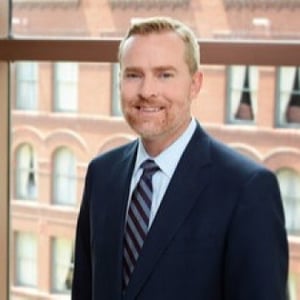
Partner, Davis Graham & Stubbs LLP
Mark Champoux helps clients resolve significant disputes arising in litigation, government enforcement, and regulatory actions in forums across the country. He rejoined Davis Graham & Stubbs LLP in July 2020 after serving as Principal Deputy Assistant Attorney General in the U.S. Department of Justice’s Office of Legal Policy, where he was a primary policy advisor to the Attorney General and coordinated major initiatives relating to regulations, emerging technologies, data privacy, national security, and law enforcement. Mr. Champoux also supervised DOJ’s work in supporting federal judicial nominations, personally preparing over 100 nominees for confirmation by the Senate and overseeing DOJ’s work to secure the confirmation of U.S. Supreme Court Justice Brett M. Kavanaugh, an undertaking that earned him the Attorney General’s Distinguished Service Award.
Mr. Champoux has an extensive record of experience in private practice. He has successfully defended both Fortune 500 companies and small businesses, obtaining complete defense judgments through dispositive motions and trial and leveraging favorable settlements by winning key motions and defeating class certification. In recognition of his litigation work, Benchmark Litigation named Mr. Champoux to the nationwide 40 & Under Hot List in 2016-2017. Mr. Champoux was also named a “Rising Star” by Super Lawyers magazine in 2014-2017 and a “Future Litigation Star” by Benchmark Litigation in 2015.
Mr. Champoux’s practice includes disputes involving emerging technologies, data privacy, natural resources, oil and gas, environmental liabilities, government enforcement, and regulations. He also has substantial experience in a broad range of other litigation areas, including contracts, business torts, real estate, securities fraud, shareholder actions, civil RICO, products liability, and special districts.
Mr. Champoux has also handled numerous pro bono criminal matters, including a successful petition for certiorari in the U.S. Supreme Court with subsequent reversal of conviction for an indigent criminal defendant.
Mr. Champoux received his J.D. in 2007 from Harvard Law School, where he was deputy editor-in-chief of the Harvard Journal of Law & Public Policy, and his B.A. in 2004 from Brigham Young University, graduating magna cum laude and as valedictorian. Before first joining DGS in 2012, Mr. Champoux was a trial attorney at Kirkland & Ellis LLP in Washington, D.C. and clerked for then-Judge Neil M. Gorsuch on the U.S. Court of Appeals for the Tenth Circuit.
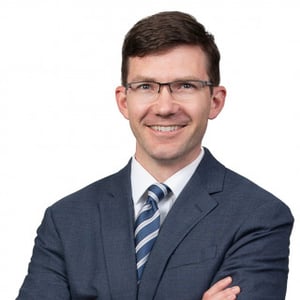
Partner, Nelson Mullins Riley & Scarborough LLP
Miles practices in the areas of appeals, business litigation, and First Amendment law. In addition to representing clients in complex civil and criminal litigation and appeals, Miles advises and represents public and private universities and serves as outside general counsel to several business and educational clients. He also represents and counsels private entities and government agencies and officials, including multiple current and former governors of South Carolina and members of Congress, on issues relating to the constitutional and statutory freedoms of speech, religion, and association. His First Amendment work has been cited by the United States Supreme Court.
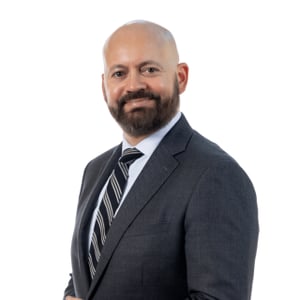
Milton R. Underwood Chair in Free Enterprise, Vanderbilt University Law School
Brian Fitzpatrick is the Milton R. Underwood Chair in Free Enterprise and Professor of Law at Vanderbilt Law School, where his research focuses on class action litigation, federal courts, judicial selection, and constitutional law. He is best known for his empirical studies of class action settlements as well as his book The Conservative Case for Class Actions (University of Chicago Press, 2019). Professor Fitzpatrick joined Vanderbilt's law faculty in 2007 after serving as the John M. Olin Fellow at New York University School of Law. He graduated first in his class from Harvard Law School and went on to clerk for Judge Diarmuid O'Scannlain on the U.S. Court of Appeals for the Ninth Circuit and Justice Antonin Scalia on the U.S. Supreme Court. After his clerkships, Professor Fitzpatrick practiced commercial and appellate litigation for several years at Sidley Austin in Washington, D.C., and served as Special Counsel for Supreme Court Nominations to U.S. Senator John Cornyn. Before earning his law degree, Fitzpatrick graduated summa cum laude with a bachelor's of science in chemical engineering from the University of Notre Dame. He has received the Hall-Hartman Outstanding Professor Award, which recognizes excellence in classroom teaching, for his Civil Procedure and Federal Courts courses.
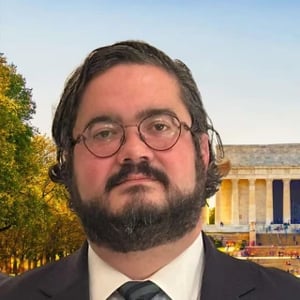
Partner, Torridon Law PLLC
Mike Fragoso is a seasoned legal and policy strategist. Most recently he served as chief counsel to Senate Republican Leader, Mitch McConnell. He has negotiated consequential legislation, managed successful congressional oversight, and prepared individuals for the most contentious Senate hearings.
As chief counsel to Leader McConnell Mike was the Leader’s primary legal advisor and managed the “last mile” of any legislation touching on the Senate Judiciary Committee. He ran the 2024 reauthorization of FISA Section 702 and was involved at the highest levels of the appropriations and budget-reconciliation processes. Mike also repeatedly represented Leader McConnell as counsel of record at the Supreme Court. Leader McConnell said of Mike that he’s “equally at home in the high-minded philosophical discourse of the legal community and the urgent pragmatism of Congressional dealmaking,” and that he “maintains a firm grasp on the realm of the possible” but “knows which screws to twist.” He observed that Mike “is so exceptionally competent that he often produces from his desk the work that would normally require, literally, teams of outside counsel.”
Mike previously was chief counsel for nominations and constitutional law for the Senate Judiciary Committee under Ranking Member Chuck Grassley and Chairman Lindsey Graham. During this time he advised the Senators on two presidential impeachments, ran multiple policy hearings, and managed the confirmation process for over 80 federal judges, including Justice Amy Coney Barrett. Chairman Graham described Mike as “a force of nature.”
During the first Trump administration Mike was deputy assistant attorney general in the Department of Justice’s Office of Legal Policy where he ran the Department’s efforts in support of judicial nominations and prepared over 100 nominees for Senate hearings.
Earlier in his career Mike was legislative director to former Senator Jeff Flake and chief counsel to the Senate Judiciary Committee’s Subcommittee on Privacy, Technology and the Law. There he led the oversight and repeal of the FCC’s broadband-privacy rule and was Senator Flake’s top advisor on the Tax Cuts and Jobs Act of 2017.
He frequently comments on public affairs and his writing has appeared in the Wall Street Journal, National Review, and the Harvard Journal of Law & Public Policy.
Mike also served as a law clerk to Judge Diane Sykes of the U.S. Court of Appeals for the Seventh Circuit.
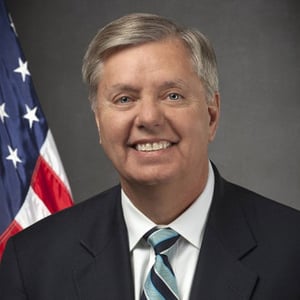
Senator from South Carolina, United States Senate
Senator Lindsey Graham was elected to the United States Senate in 2002 and was re-elected in 2008 and 2014. He became the first person in South Carolina history to garner over one million votes in the 2008 general election.
Prior to serving in the Senate, Graham was elected to the U.S. House of Representatives in 1994 as the first Republican from the Third Congressional District of South Carolina since 1877.
Before being elected to Congress, Graham compiled a distinguished record in the United States Air Force as he logged six-and-a-half years of service on active duty as an Air Force lawyer. From 1984-1988, he was assigned overseas and served at Rhein-Main Air Force Base in Germany. Upon leaving active duty Air Force in 1989, Graham joined the South Carolina Air National Guard where he served until 1995. During the first Gulf War in the early 90's, Graham was called to active duty and served state-side at McEntire Air National Guard Base as Staff Judge Advocate where he prepared members for deployment to the Gulf region.
In 1995, Graham joined the U.S. Air Force Reserves. During American military operations in Iraq and Afghanistan, Graham put his experience in military law to use pulling numerous short-term Reserve duties in both countries over congressional breaks and holidays.
Graham retired from the Air Force Reserves in June 2015 having served his country in uniform for 33 years. He retired at the rank of Colonel.
A native South Carolinian, Graham grew up in a blue collar family in the small town of Central where his parents ran a restaurant and pool hall. The first member of his family to go to college, Graham earned his undergraduate and law degrees from the University of South Carolina. He lives in Seneca and is a member of Corinth Baptist Church.
Milton R. Underwood Chair in Free Enterprise, Vanderbilt University Law School
Brian Fitzpatrick is the Milton R. Underwood Chair in Free Enterprise and Professor of Law at Vanderbilt Law School, where his research focuses on class action litigation, federal courts, judicial selection, and constitutional law. He is best known for his empirical studies of class action settlements as well as his book The Conservative Case for Class Actions (University of Chicago Press, 2019). Professor Fitzpatrick joined Vanderbilt's law faculty in 2007 after serving as the John M. Olin Fellow at New York University School of Law. He graduated first in his class from Harvard Law School and went on to clerk for Judge Diarmuid O'Scannlain on the U.S. Court of Appeals for the Ninth Circuit and Justice Antonin Scalia on the U.S. Supreme Court. After his clerkships, Professor Fitzpatrick practiced commercial and appellate litigation for several years at Sidley Austin in Washington, D.C., and served as Special Counsel for Supreme Court Nominations to U.S. Senator John Cornyn. Before earning his law degree, Fitzpatrick graduated summa cum laude with a bachelor's of science in chemical engineering from the University of Notre Dame. He has received the Hall-Hartman Outstanding Professor Award, which recognizes excellence in classroom teaching, for his Civil Procedure and Federal Courts courses.
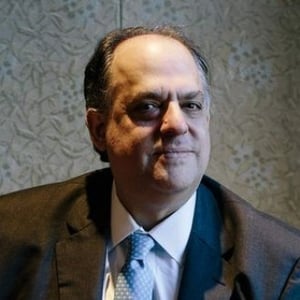
Director of Litigation and Senior Attorney, Hamilton Lincoln Law Institute
Theodore H. Frank is director at the Hamilton Lincoln Law Institute and the Center for Class Action Fairness. Frank founded and ran CCAF as a non-profit, public interest law firm in 2009.
Frank has won several landmark appeals and tens of millions of dollars for consumers and other plaintiffs through his class action work. Adam Liptak of The New York Times calls Frank “the leading critic of abusive class action settlements” and the American Lawyer Litigation Daily referred to him as “the indefatigable scourge of underwhelming class action settlements.”
Previously, Frank clerked for the Honorable Frank H. Easterbrook on the Seventh Circuit Court of Appeals, and was a litigator at firms in Washington and Los Angeles and a resident fellow at the American Enterprise Institute. Frank is a frequent public speaker and has testified before Congress multiple times on legal issues. He has been profiled by The Wall Street Journal, Forbes, GQ, and the ABA Journal, among other publications.
In 2008, Frank was elected to membership in the American Law Institute. He also serves on the Executive Committee of the Federalist Society Litigation Practice Group. Frank graduated from The University of Chicago Law School in 1994 with high honors and as a member of the Order of the Coif and the Law Review. He is a member of the District of Columbia Bar and the state bars of California and Illinois.
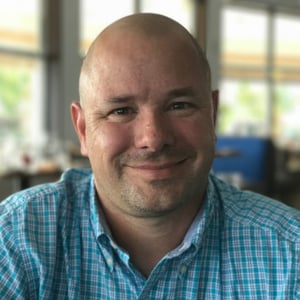
Professor of Political Science, University of Pittsburgh
Chris W. Bonneau is Professor of Political Science at the University of Pittsburgh, where he has been since 2002. His research is primarily in the areas of judicial selection (specifically, judicial elections) and judicial decisionmaking. Professor Bonneau’s work has been supported by the National Science Foundation and he has published numerous articles, including in the American Journal of Political Science and Journal of Politics. He is also the coauthor of three books: Strategic Behavior and Policy Choice on the U.S. Supreme Court (2005), In Defense of Judicial Elections (2009), and the award-winning Voters’ Verdicts: Citizens, Campaigns, and Institutions in State Supreme Court Elections (2015).
Professor Bonneau teaches undergraduate classes in constitutional law, judicial politics, and research methods, as well as graduate classes in judicial politics and research design.
Milton R. Underwood Chair in Free Enterprise, Vanderbilt University Law School
Brian Fitzpatrick is the Milton R. Underwood Chair in Free Enterprise and Professor of Law at Vanderbilt Law School, where his research focuses on class action litigation, federal courts, judicial selection, and constitutional law. He is best known for his empirical studies of class action settlements as well as his book The Conservative Case for Class Actions (University of Chicago Press, 2019). Professor Fitzpatrick joined Vanderbilt's law faculty in 2007 after serving as the John M. Olin Fellow at New York University School of Law. He graduated first in his class from Harvard Law School and went on to clerk for Judge Diarmuid O'Scannlain on the U.S. Court of Appeals for the Ninth Circuit and Justice Antonin Scalia on the U.S. Supreme Court. After his clerkships, Professor Fitzpatrick practiced commercial and appellate litigation for several years at Sidley Austin in Washington, D.C., and served as Special Counsel for Supreme Court Nominations to U.S. Senator John Cornyn. Before earning his law degree, Fitzpatrick graduated summa cum laude with a bachelor's of science in chemical engineering from the University of Notre Dame. He has received the Hall-Hartman Outstanding Professor Award, which recognizes excellence in classroom teaching, for his Civil Procedure and Federal Courts courses.
Milton R. Underwood Chair in Free Enterprise, Vanderbilt University Law School
Brian Fitzpatrick is the Milton R. Underwood Chair in Free Enterprise and Professor of Law at Vanderbilt Law School, where his research focuses on class action litigation, federal courts, judicial selection, and constitutional law. He is best known for his empirical studies of class action settlements as well as his book The Conservative Case for Class Actions (University of Chicago Press, 2019). Professor Fitzpatrick joined Vanderbilt's law faculty in 2007 after serving as the John M. Olin Fellow at New York University School of Law. He graduated first in his class from Harvard Law School and went on to clerk for Judge Diarmuid O'Scannlain on the U.S. Court of Appeals for the Ninth Circuit and Justice Antonin Scalia on the U.S. Supreme Court. After his clerkships, Professor Fitzpatrick practiced commercial and appellate litigation for several years at Sidley Austin in Washington, D.C., and served as Special Counsel for Supreme Court Nominations to U.S. Senator John Cornyn. Before earning his law degree, Fitzpatrick graduated summa cum laude with a bachelor's of science in chemical engineering from the University of Notre Dame. He has received the Hall-Hartman Outstanding Professor Award, which recognizes excellence in classroom teaching, for his Civil Procedure and Federal Courts courses.
Milton R. Underwood Chair in Free Enterprise, Vanderbilt University Law School
Brian Fitzpatrick is the Milton R. Underwood Chair in Free Enterprise and Professor of Law at Vanderbilt Law School, where his research focuses on class action litigation, federal courts, judicial selection, and constitutional law. He is best known for his empirical studies of class action settlements as well as his book The Conservative Case for Class Actions (University of Chicago Press, 2019). Professor Fitzpatrick joined Vanderbilt's law faculty in 2007 after serving as the John M. Olin Fellow at New York University School of Law. He graduated first in his class from Harvard Law School and went on to clerk for Judge Diarmuid O'Scannlain on the U.S. Court of Appeals for the Ninth Circuit and Justice Antonin Scalia on the U.S. Supreme Court. After his clerkships, Professor Fitzpatrick practiced commercial and appellate litigation for several years at Sidley Austin in Washington, D.C., and served as Special Counsel for Supreme Court Nominations to U.S. Senator John Cornyn. Before earning his law degree, Fitzpatrick graduated summa cum laude with a bachelor's of science in chemical engineering from the University of Notre Dame. He has received the Hall-Hartman Outstanding Professor Award, which recognizes excellence in classroom teaching, for his Civil Procedure and Federal Courts courses.
Milton R. Underwood Chair in Free Enterprise, Vanderbilt University Law School
Brian Fitzpatrick is the Milton R. Underwood Chair in Free Enterprise and Professor of Law at Vanderbilt Law School, where his research focuses on class action litigation, federal courts, judicial selection, and constitutional law. He is best known for his empirical studies of class action settlements as well as his book The Conservative Case for Class Actions (University of Chicago Press, 2019). Professor Fitzpatrick joined Vanderbilt's law faculty in 2007 after serving as the John M. Olin Fellow at New York University School of Law. He graduated first in his class from Harvard Law School and went on to clerk for Judge Diarmuid O'Scannlain on the U.S. Court of Appeals for the Ninth Circuit and Justice Antonin Scalia on the U.S. Supreme Court. After his clerkships, Professor Fitzpatrick practiced commercial and appellate litigation for several years at Sidley Austin in Washington, D.C., and served as Special Counsel for Supreme Court Nominations to U.S. Senator John Cornyn. Before earning his law degree, Fitzpatrick graduated summa cum laude with a bachelor's of science in chemical engineering from the University of Notre Dame. He has received the Hall-Hartman Outstanding Professor Award, which recognizes excellence in classroom teaching, for his Civil Procedure and Federal Courts courses.
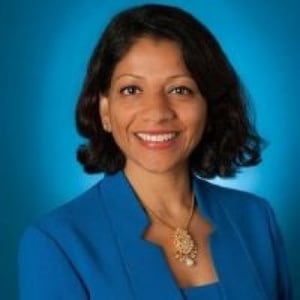
Ms. Malini Moorthy has been Head of the Litigation Department of Bayer Corporation since July 30, 2014. When she left Pfizer Inc., Ms. Moorthy spent many years as a litigation associate at law firms in the United States and Canada, including the New York office of Salans, and Genest Murray Desbrisay Lamek and McCarthy Tetrault, both in Toronto. Before beginning her corporate law career, Ms. Moorthy served as Executive Director of Free the Children in Toronto, an international children’s organization dedicated to ending the exploitation of children and empowering them through leadership development and training. Ms. Moorthy serves as the chair of the Advisory Council of the Duke Law Distinguished Lawyers Series and is on the Board of Directors of the National Center for Law and Economic Justice. She received her bachelor’s degree with honors in political science and economics from the University of North Carolina at Chapel Hill, where she was a Morehead Scholar, and her law degree from Queen’s University in Ontario, Canada, where she was the editor of the Queen’s Law Review.
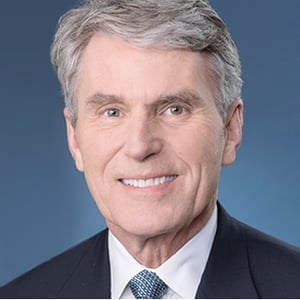
Tim has had a multifaceted and storied career. For many years, Tim was a national trial lawyer with the firm of Shook, Hardy and Bacon. He handled mass tort cases for pharmaceutical, medical device and chemical companies. Tim was lead counsel in a number of high-profile trials for clients around the country and served as lead counsel in a medical device MDL. While in private practice, he was named a Leading National Products Liability Lawyer by Chambers USA, one of the Top 500 Litigators in America by Lawdragon, and one of the Best Lawyers in America. Tim taught at the National Institute for Trial Advocacy for many years and was a frequent speaker on legal topics, trial tactics and litigation strategy.
In 2008, Tim was recruited to become General Counsel and Corporate Secretary of Boston Scientific, a multinational medical device company. While there, Tim served on the Company's Executive Committee and was responsible for worldwide management of the company's Legal organization, Global Compliance, Government Affairs, Aviation, Global Security and other functions. He was also heavily involved in diversity and inclusion initiatives, the Boston Scientific Leadership Academy and innovative outside counsel management initiatives. Over his years at Boston Scientific, Tim was repeatedly awarded for his performance. In 2013, he was recognized by The Legal 500 and named to the "Corporate Counsel 100" list, which identifies the top most powerful corporate legal advisers in the United States. In 2016 he was honored by The Burton Awards as a “Legend in Law.” In 2016, he was flattered to receive the Valued Ally Award from Diversity Best Practices for his work in advancing diversity and inclusion.
Tim's work and influence is not limited to his work at Shook, Hardy and Boston Scientific. He has also worked with a number of organizations. Tim was on the Board and Executive Committee of AdvaMed, the trade association for the medical device industry. He is active in the prestigious and invitation-only Federation of Defense & Corporate Counsel (FDCC), where he served as President and Chairman. He currently serves as President of Lawyers for Civil Justice (LCJ), a group interested in improving the civil justice system in the United States. He had been a member of the boards for DRI and the New England Legal Foundation.
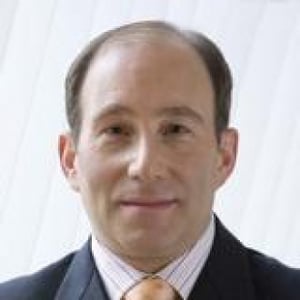
Managing Director, Berkeley Research Group
Dan Troy is Managing Director and an expert witness on FDA matters at Berkeley Research Group. Previously he served as Chief Counsel of the US Food and Drug Administration and General Counsel of GlaxoSmithKline PLC.
Partner, Davis Graham & Stubbs LLP
Mark Champoux helps clients resolve significant disputes arising in litigation, government enforcement, and regulatory actions in forums across the country. He rejoined Davis Graham & Stubbs LLP in July 2020 after serving as Principal Deputy Assistant Attorney General in the U.S. Department of Justice’s Office of Legal Policy, where he was a primary policy advisor to the Attorney General and coordinated major initiatives relating to regulations, emerging technologies, data privacy, national security, and law enforcement. Mr. Champoux also supervised DOJ’s work in supporting federal judicial nominations, personally preparing over 100 nominees for confirmation by the Senate and overseeing DOJ’s work to secure the confirmation of U.S. Supreme Court Justice Brett M. Kavanaugh, an undertaking that earned him the Attorney General’s Distinguished Service Award.
Mr. Champoux has an extensive record of experience in private practice. He has successfully defended both Fortune 500 companies and small businesses, obtaining complete defense judgments through dispositive motions and trial and leveraging favorable settlements by winning key motions and defeating class certification. In recognition of his litigation work, Benchmark Litigation named Mr. Champoux to the nationwide 40 & Under Hot List in 2016-2017. Mr. Champoux was also named a “Rising Star” by Super Lawyers magazine in 2014-2017 and a “Future Litigation Star” by Benchmark Litigation in 2015.
Mr. Champoux’s practice includes disputes involving emerging technologies, data privacy, natural resources, oil and gas, environmental liabilities, government enforcement, and regulations. He also has substantial experience in a broad range of other litigation areas, including contracts, business torts, real estate, securities fraud, shareholder actions, civil RICO, products liability, and special districts.
Mr. Champoux has also handled numerous pro bono criminal matters, including a successful petition for certiorari in the U.S. Supreme Court with subsequent reversal of conviction for an indigent criminal defendant.
Mr. Champoux received his J.D. in 2007 from Harvard Law School, where he was deputy editor-in-chief of the Harvard Journal of Law & Public Policy, and his B.A. in 2004 from Brigham Young University, graduating magna cum laude and as valedictorian. Before first joining DGS in 2012, Mr. Champoux was a trial attorney at Kirkland & Ellis LLP in Washington, D.C. and clerked for then-Judge Neil M. Gorsuch on the U.S. Court of Appeals for the Tenth Circuit.
Partner, Nelson Mullins Riley & Scarborough LLP
Miles practices in the areas of appeals, business litigation, and First Amendment law. In addition to representing clients in complex civil and criminal litigation and appeals, Miles advises and represents public and private universities and serves as outside general counsel to several business and educational clients. He also represents and counsels private entities and government agencies and officials, including multiple current and former governors of South Carolina and members of Congress, on issues relating to the constitutional and statutory freedoms of speech, religion, and association. His First Amendment work has been cited by the United States Supreme Court.
Milton R. Underwood Chair in Free Enterprise, Vanderbilt University Law School
Brian Fitzpatrick is the Milton R. Underwood Chair in Free Enterprise and Professor of Law at Vanderbilt Law School, where his research focuses on class action litigation, federal courts, judicial selection, and constitutional law. He is best known for his empirical studies of class action settlements as well as his book The Conservative Case for Class Actions (University of Chicago Press, 2019). Professor Fitzpatrick joined Vanderbilt's law faculty in 2007 after serving as the John M. Olin Fellow at New York University School of Law. He graduated first in his class from Harvard Law School and went on to clerk for Judge Diarmuid O'Scannlain on the U.S. Court of Appeals for the Ninth Circuit and Justice Antonin Scalia on the U.S. Supreme Court. After his clerkships, Professor Fitzpatrick practiced commercial and appellate litigation for several years at Sidley Austin in Washington, D.C., and served as Special Counsel for Supreme Court Nominations to U.S. Senator John Cornyn. Before earning his law degree, Fitzpatrick graduated summa cum laude with a bachelor's of science in chemical engineering from the University of Notre Dame. He has received the Hall-Hartman Outstanding Professor Award, which recognizes excellence in classroom teaching, for his Civil Procedure and Federal Courts courses.
Partner, Torridon Law PLLC
Mike Fragoso is a seasoned legal and policy strategist. Most recently he served as chief counsel to Senate Republican Leader, Mitch McConnell. He has negotiated consequential legislation, managed successful congressional oversight, and prepared individuals for the most contentious Senate hearings.
As chief counsel to Leader McConnell Mike was the Leader’s primary legal advisor and managed the “last mile” of any legislation touching on the Senate Judiciary Committee. He ran the 2024 reauthorization of FISA Section 702 and was involved at the highest levels of the appropriations and budget-reconciliation processes. Mike also repeatedly represented Leader McConnell as counsel of record at the Supreme Court. Leader McConnell said of Mike that he’s “equally at home in the high-minded philosophical discourse of the legal community and the urgent pragmatism of Congressional dealmaking,” and that he “maintains a firm grasp on the realm of the possible” but “knows which screws to twist.” He observed that Mike “is so exceptionally competent that he often produces from his desk the work that would normally require, literally, teams of outside counsel.”
Mike previously was chief counsel for nominations and constitutional law for the Senate Judiciary Committee under Ranking Member Chuck Grassley and Chairman Lindsey Graham. During this time he advised the Senators on two presidential impeachments, ran multiple policy hearings, and managed the confirmation process for over 80 federal judges, including Justice Amy Coney Barrett. Chairman Graham described Mike as “a force of nature.”
During the first Trump administration Mike was deputy assistant attorney general in the Department of Justice’s Office of Legal Policy where he ran the Department’s efforts in support of judicial nominations and prepared over 100 nominees for Senate hearings.
Earlier in his career Mike was legislative director to former Senator Jeff Flake and chief counsel to the Senate Judiciary Committee’s Subcommittee on Privacy, Technology and the Law. There he led the oversight and repeal of the FCC’s broadband-privacy rule and was Senator Flake’s top advisor on the Tax Cuts and Jobs Act of 2017.
He frequently comments on public affairs and his writing has appeared in the Wall Street Journal, National Review, and the Harvard Journal of Law & Public Policy.
Mike also served as a law clerk to Judge Diane Sykes of the U.S. Court of Appeals for the Seventh Circuit.
Senator from South Carolina, United States Senate
Senator Lindsey Graham was elected to the United States Senate in 2002 and was re-elected in 2008 and 2014. He became the first person in South Carolina history to garner over one million votes in the 2008 general election.
Prior to serving in the Senate, Graham was elected to the U.S. House of Representatives in 1994 as the first Republican from the Third Congressional District of South Carolina since 1877.
Before being elected to Congress, Graham compiled a distinguished record in the United States Air Force as he logged six-and-a-half years of service on active duty as an Air Force lawyer. From 1984-1988, he was assigned overseas and served at Rhein-Main Air Force Base in Germany. Upon leaving active duty Air Force in 1989, Graham joined the South Carolina Air National Guard where he served until 1995. During the first Gulf War in the early 90's, Graham was called to active duty and served state-side at McEntire Air National Guard Base as Staff Judge Advocate where he prepared members for deployment to the Gulf region.
In 1995, Graham joined the U.S. Air Force Reserves. During American military operations in Iraq and Afghanistan, Graham put his experience in military law to use pulling numerous short-term Reserve duties in both countries over congressional breaks and holidays.
Graham retired from the Air Force Reserves in June 2015 having served his country in uniform for 33 years. He retired at the rank of Colonel.
A native South Carolinian, Graham grew up in a blue collar family in the small town of Central where his parents ran a restaurant and pool hall. The first member of his family to go to college, Graham earned his undergraduate and law degrees from the University of South Carolina. He lives in Seneca and is a member of Corinth Baptist Church.
Milton R. Underwood Chair in Free Enterprise, Vanderbilt University Law School
Brian Fitzpatrick is the Milton R. Underwood Chair in Free Enterprise and Professor of Law at Vanderbilt Law School, where his research focuses on class action litigation, federal courts, judicial selection, and constitutional law. He is best known for his empirical studies of class action settlements as well as his book The Conservative Case for Class Actions (University of Chicago Press, 2019). Professor Fitzpatrick joined Vanderbilt's law faculty in 2007 after serving as the John M. Olin Fellow at New York University School of Law. He graduated first in his class from Harvard Law School and went on to clerk for Judge Diarmuid O'Scannlain on the U.S. Court of Appeals for the Ninth Circuit and Justice Antonin Scalia on the U.S. Supreme Court. After his clerkships, Professor Fitzpatrick practiced commercial and appellate litigation for several years at Sidley Austin in Washington, D.C., and served as Special Counsel for Supreme Court Nominations to U.S. Senator John Cornyn. Before earning his law degree, Fitzpatrick graduated summa cum laude with a bachelor's of science in chemical engineering from the University of Notre Dame. He has received the Hall-Hartman Outstanding Professor Award, which recognizes excellence in classroom teaching, for his Civil Procedure and Federal Courts courses.
Director of Litigation and Senior Attorney, Hamilton Lincoln Law Institute
Theodore H. Frank is director at the Hamilton Lincoln Law Institute and the Center for Class Action Fairness. Frank founded and ran CCAF as a non-profit, public interest law firm in 2009.
Frank has won several landmark appeals and tens of millions of dollars for consumers and other plaintiffs through his class action work. Adam Liptak of The New York Times calls Frank “the leading critic of abusive class action settlements” and the American Lawyer Litigation Daily referred to him as “the indefatigable scourge of underwhelming class action settlements.”
Previously, Frank clerked for the Honorable Frank H. Easterbrook on the Seventh Circuit Court of Appeals, and was a litigator at firms in Washington and Los Angeles and a resident fellow at the American Enterprise Institute. Frank is a frequent public speaker and has testified before Congress multiple times on legal issues. He has been profiled by The Wall Street Journal, Forbes, GQ, and the ABA Journal, among other publications.
In 2008, Frank was elected to membership in the American Law Institute. He also serves on the Executive Committee of the Federalist Society Litigation Practice Group. Frank graduated from The University of Chicago Law School in 1994 with high honors and as a member of the Order of the Coif and the Law Review. He is a member of the District of Columbia Bar and the state bars of California and Illinois.

Advice and Consent: The Mechanics, History, and Contemporary Developments in Federal Judicial Selection and Confirmation
Mark Champoux, Miles Coleman, Brian T. Fitzpatrick, Michael Fragoso, Lindsey Graham
On September 4, 2020, the South Carolina lawyers chapters hosted an event on: "Advice and...
Advice and Consent: The Mechanics, History, and Contemporary Developments in Federal Judicial Selection and Confirmation
South Carolina Lawyers Chapters - Online Event
Fitzpatrick v. Frank: Should Conservatives Embrace Class Actions?
Brian T. Fitzpatrick, Theodore "Ted" Frank
Professor Brian Fitzpatrick of Vanderbilt Law School and Ted Frank of the Center for Class...
Fitzpatrick v. Frank: Should Conservatives Embrace Class Actions?
TeleforumHow Are State Supreme Court Justices Selected? [POLICYbrief]
Chris W. Bonneau, Brian T. Fitzpatrick
State supreme court justices play a considerable role in interpreting state laws and making common...
The Case for Political Appointment of Judges
Brian T. Fitzpatrick
This paper is the second in a series of papers commissioned by the Federalist Society on...
The Case for Political Appointment of Judges
Brian T. Fitzpatrick
This paper is the second in a series of papers commissioned by the Federalist Society on...
Topics
The FBI Was Dangerous When It Was Independent
After Andrew McCabe’s recent firing from the FBI, outraged pundits from across the political spectrum...
Are MDLs working? An Assessment of Centralization
Brian T. Fitzpatrick, Malini Moorthy, Timothy A. Pratt, Daniel E. Troy
Multidistrict litigation (“MDL”) accounts for nearly half of all civil cases in federal courts. Although...
Topics
Multidistrict Litigation (MDL) Conference Livestream
Tune into the Livestream during the event from 9:15 AM to 3:15 PM Eastern Time...