

Judge, Arizona Court of Appeals, Division One
The Honorable Jennifer M. Perkins began service on the Arizona Court of Appeals, Division One, on October 30, 2017. At the time of her appointment by Governor Douglas Ducey, Judge Perkins was Assistant Solicitor General for the State of Arizona.
Judge Perkins was born in Portales, New Mexico, and primarily raised in Albuquerque. She attended the prestigious Albuquerque Academy from 1988-1995, before moving to Washington D.C. to attend the Elliott School of International Affairs at the George Washington University as a National Merit Scholar. Therafter, she relocated again to Dallas, Texas, and earned her juris doctor from the SMU Dedman School of Law, graduating cum laude in 2002.
Judge Perkins started her career at the law firm of Browning & Peifer (now Peifer, Hanson, Mullins, and Baker) in Albuquerque, New Mexico. While there, she litigated complex commercial matters including class action plaintiff and defense work, and assisted with employment and contract litigation. In 2003, the judge accompanied the Honorable James O. Browning in transitioning to the federal district court bench, serving as his first law clerk.
After her clerkship, Judge Perkins moved to Arizona to work for the Institute for Justice, Arizona Chapter, a public interest law firm. She spent five years with IJ-AZ litigating civil rights cases in Arizona and across the country. In 2009, the judge became Disciplinary Counsel for the Arizona Commission on Judicial Conduct, where she reviewed and prosecuted ethics complaints against state court judges throughout Arizona. After five years serving the state in this capacity, Judge Perkins entered private practice by joining an appellate law firm in Phoenix. While there, she worked on state and federal appeals involving a wide range of legal subjects, including complex business disputes, property rights, judicial ethics, and personal injury matters.
In January 2015, Judge Perkins joined the Office of the Arizona Attorney General to serve as the first Assistant Solicitor General; in that capacity, she was responsible for oversight of Attorney General Opinions and served as ethics counsel to the entire office. In addition to these two primary roles, the judge assisted on a variety of matters including trial and appellate litigation of election-related matters; federal appellate litigation with the Federalism Unit; state criminal appeals; and drafting amicus briefs on behalf of Arizona in state and federal courts.
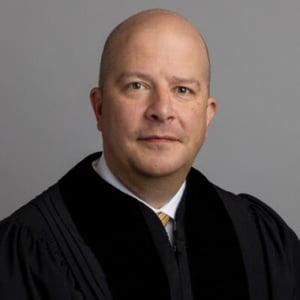
Chief Justice, Supreme Court of Georgia
Chief Justice Nels Peterson was appointed to the Georgia Supreme Court in 2016, and was elected to full six-year terms in 2018 and 2024. He previously served in a variety of other roles in Georgia state government, including as judge on the Georgia Court of Appeals, general counsel for the University System of Georgia, Georgia’s first solicitor general in the Attorney General’s Office, and executive counsel to the Governor.
Before entering state government, Nels practiced at King & Spalding LLP in Atlanta and clerked for Chief Judge William H. Pryor Jr. of the United States Court of Appeals for the Eleventh Circuit. He is a graduate of Kennesaw State University and Harvard Law School. Nels and his wife Jennifer have two children and live in Cobb County, where they teach adult Sunday school at Johnson Ferry Baptist Church.

Vice President for Legal Affairs, Goldwater Institute

Chief Judge, United States Court of Appeals, Sixth Circuit
JEFFREY S. SUTTON is the Chief Judge of the United States Court of Appeals for the Sixth Circuit. He has served as Chair of the Federal Judicial Conference Committee on Rules of Practice and Procedure, Chair of the Advisory Committee on Appellate Rules, and Chair of the Supreme Court Fellows Commission. He currently serves as Chair of the Executive Committee of the Judicial Conference of the United States. Since 1993, Chief Judge Sutton has been an adjunct professor at The Ohio State University College of Law, where he teaches seminars on State Constitutional Law, the United States Supreme Court, and Appellate Advocacy. He also teaches a class on State Constitutional Law at Harvard Law School. Among other publications, he is the author of Who Decides? States as Laboratories of Constitutional Experimentation and 51 Imperfect Solutions: States and the Making of American Constitutional Law. He is the co-author of a casebook, State Constitutional Law: The Modern Experience, as well as The Law of Judicial Precedent. He is also the co-editor of The Essential Scalia: On the Constitution, the Courts, and the Rule of Law. In 2006, Chief Judge Sutton was elected to the American Law Institute, and in 2017 he was elected to its Council.

Anne Fleming Research Professor and Professor of Law, Georgetown University Law Center; Faculty Director, Georgetown Center for the Constitution
Stephanie Barclay is a Professor of Law at Georgetown Law School, and the Faculty Director of the Georgetown Center for the Constitution. Her research focuses on the role our different democratic institutions play in protecting minority rights, particularly at the intersection of free speech and religious exercise. Barclay‘s work is published or is forthcoming in leading journals such as the Harvard Law Review, the Chicago Law Review, the University of Pennsylvania Law Review, and the Yale Law Journal Forum. One of her articles was also selected for the 2020 Stanford/Harvard/Yale Junior Faculty Forum. Her work has been featured in many media outlets, including The New York Times, The Wall Street Journal, The Washington Post, USA Today, Bloomberg BNA, The Hill, and Law 360. And her work has also been cited by the U.S. Supreme Court.
Prior to joining Georgetown, Barclay was twice voted Professor of the Year. Barclay has also litigated constitutional cases at both the trial and appellate level, including before the U.S. Supreme Court. Barclay served as a law clerk to Judge N. Randy Smith on the U.S. Court of Appeals for the Ninth Circuit, and to Justice Neil M. Gorsuch of the U.S. Supreme Court.
Barclay is a Faculty Affiliate at the Constitutional Law Center at Stanford Law School; and she is a Nootbaar Fellow at the Nootbaar Institute on Law, Religion, and Ethics at Pepperdine University. She currently serves as the Chair for the AALS Law and Religion Section and as a Member of the Executive Committee for the AALS Constitutional Law Section. She graduated summa cum laude from BYU Law School, where she was elected to the Order of the Coif. She is completing a Ph.D. in Law at Oxford University as a Clarendon Scholar and a Tang Scholar.
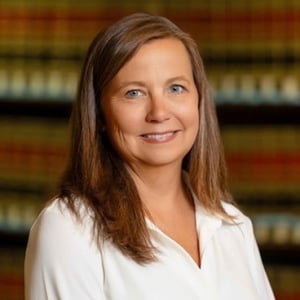
John P. Murphy Foundation Professor of Law and Associate Dean for External Engagement, University of Notre Dame Law School
Nicole Stelle Garnett is the John P. Murphy Foundation Professor of Law at Notre Dame Law School, where she also serves as the Associate Dean for External Engagement and directs the Notre Dame Education Law Project. Her teaching and research focus on education law and policy, religious liberty, and topics related to property law (especially land use and urban development policies). In addition to dozens of articles on these subjects, she is the author of Lost Classroom, Lost Community: Catholic Schools' Importance in Urban America (University of Chicago Press, 2014) and Ordering the City: Land Use, Policing and the Restoration of Urban America (Yale University Press, 2009).
Garnett received her B.A. with distinction in Political Science from Stanford University and her J.D. from Yale Law School. After law school, she clerked for the Honorable Morris S. Arnold of the United States Court of Appeals for the Eighth Circuit and for Associate Justice Clarence Thomas of the Supreme Court of the United States. Before joining the law school faculty in 1999, she worked for two years as a staff attorney at the Institute for Justice, a non-profit public-interest law firm in Washington, D.C., where she helped to defend the constitutionality of the nation's first private-school-choice programs.
At Notre Dame, Garnett is a faculty fellow in the Institute for Educational Initiatives, Kellogg Institute for International Studies, Fitzgerald Institute for Real Estate, and deNicola Center for Ethics and Culture. She also is an elected member of the American Law Institute and a Senior Fellow at the Manhattan Institute.

Judge, United States Court of Appeals, Second Circuit
Judge Menashi was appointed to the U.S. Court of Appeals for the Second Circuit on November 14, 2019. Previously, he served as special assistant and associate counsel to the President in the White House and as acting general counsel at the U.S. Department of Education. He was assistant professor of law at Scalia Law School, George Mason University, where he taught administrative law and civil procedure, and a research fellow at New York University School of Law and Georgetown University Law Center. He was also a partner at Kirkland & Ellis LLP in New York, where he practiced appellate and commercial litigation, and served as a law clerk to Justice Samuel Alito on the Supreme Court of the United States and to Judge Douglas Ginsburg on the U.S. Court of Appeals for the District of Columbia Circuit. He graduated from Stanford Law School, where he was elected to Order of the Coif and served as senior articles editor of the Stanford Law Review, and from Dartmouth College, where he was elected to Phi Beta Kappa.
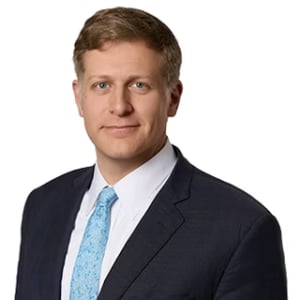
Judge, U.S. Court of Appeals, Second Circuit
On April 10, 2026, President Trump nominated Matthew Schwartz to the United States Court of Appeals for the Second Circuit. He was confirmed on July 14, 2026.
Prior to his appointment, Matthew Schwartz was a partner in the Firm’s Litigation Group. He joined the Firm in 2007 after clerking for Justice Samuel A. Alito, Jr. of the U.S. Supreme Court. He was elected partner in 2011.
Mr. Schwartz’s wide-ranging practice comprises complex litigation, arbitration, and government investigations in the areas of securities law, M&A, derivative suits, antitrust, bank regulation, contracts, constitutional law, administrative law and general commercial litigation. He has represented some of the world’s leading corporations, financial institutions, and industry organizations. Mr. Schwartz provides regular advice on legislation and regulations in the AI, banking, FinTech, and payments fields.
Matt also regularly speaks and writes on legal ethics issues.
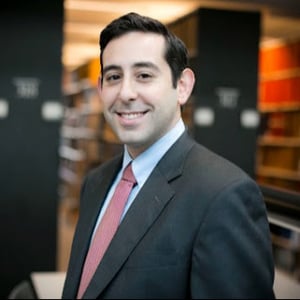
CEO and Director, National Jewish Advocacy Center
Rabbi Dr. Mark Goldfeder, Esq. is the CEO and Director of the National Jewish Advocacy Center, Inc. He has served as the founding Editor of the Cambridge University Press Series on Law and Judaism, a Trustee of the Center for Israel Education, and, by Presidential appointment, as a member of the United States Holocaust Memorial Museum Council.
Goldfeder has taught law across the country and around the world as Senior Lecturer at Emory University School of Law, Spruill Family Senior Fellow at the Center for the Study of Law and Religion, Director of the Restoring Religious Freedom Project, and as a visiting professor at Georgia State University School of Law, Florida Southern College, University of Padua (Italy), Scuola Galileana (Italy), IDC’s Radzyner Law School (Israel) and Bar Ilan Law School (Israel).
Goldfeder holds two rabbinic ordinations (yoreh yoreh; Yeshiva University and Rivavot Ephraim) and two judicial ordinations (yadin yadin; Rav Gedaliah Dov Schwartz, Av Beth Din, Rabbinical Council of America and Chicago Rabbinical Council, and Rav Dovid Schochet, President, Toronto Rabbinical Council).
Goldfeder’s work focuses on law and religion, constitutional law, and international law. He publishes widely in those areas, including both academically and in popular publications like CNN, The Wall Street Journal, The Hill, Forbes, and other major media outlets. He is also co-author of the five-volume treatise Religious Organizations and the Law (Westlaw). Goldfeder handles cases involving antisemitism issues around the country, and lectures and writes widely on those topics. He has worked with local, state, and federal legislators on measures to support the Jewish community, and has defended students, professors, businesses, and nonprofits targeted for their support of the Jewish State. He has worked on cases at the International Criminal Court in the Hague, and has successfully represented clients including American and Israeli nonprofits in federal litigation.
In 2017, he received the Opher Aviran Stand with Israel Award from Hillel, and in 2018, the Jon Barkan Israel Advocacy Award from the American Israel Public Affairs Committee in recognition of his work. He received his Doctorate and LLM degrees from Emory University and his Juris Doctor degree from NYU School of Law. He received his Bachelor of Arts at Yeshiva University in Journalism.

Senior Fellow and Director of Constitutional Studies, Manhattan Institute
Ilya Shapiro is a senior fellow and director of constitutional studies at the Manhattan Institute and a contributing editor of City Journal. Previously he was executive director and senior lecturer at the Georgetown Center for the Constitution, and before that a vice president of the Cato Institute.
Shapiro is the author of Lawless: The Miseducation of America’s Elites (2025) and Supreme Disorder: Judicial Nominations and the Politics of America’s Highest Court (2020), coauthor of Religious Liberties for Corporations? (2014), and editor of 11 volumes of the Cato Supreme Court Review (2008-18). He has contributed to a variety of academic, popular, and professional publications, including the Wall Street Journal, Harvard Journal of Law & Public Policy, Washington Post, Los Angeles Times, USA Today, National Review, and Newsweek. He also regularly provides commentary for various media outlets, writes the Shapiro’s Gavel newsletter on Substack, and once appeared on the Colbert Report.
Shapiro has testified many times before Congress and state legislatures and has filed more than 500 amicus curiae “friend of the court” briefs in the Supreme Court. He lectures regularly on behalf of the Federalist Society, is a member of the board of fellows of the Jewish Policy Center, was an inaugural Washington Fellow at the National Review Institute, and has been an adjunct law professor at the George Washington University and University of Mississippi. He is also the chairman of the board of advisers of the Mississippi Justice Institute, a barrister in the Edward Coke Appellate Inn of Court, and a former member of the Virginia Advisory Committee to the U.S. Commission on Civil Rights.
Earlier in his career, Shapiro was a special assistant/adviser to the Multi-National Force in Iraq on rule-of-law issues and practiced at Patton Boggs and Cleary Gottlieb. Before entering private practice, he clerked for Judge E. Grady Jolly of the U.S. Court of Appeals for the Fifth Circuit. He holds an AB from Princeton University, an MSc from the London School of Economics, and a JD from the University of Chicago Law School.
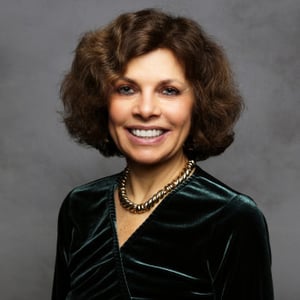
John Marshall Harlan II Professor of Law Emerita, New York Law School; Former President, American Civil Liberties Union
Nadine Strossen, New York Law School Professor Emerita and Senior Fellow at FIRE (the Foundation for Individual Rights and Expression), was national President of the American Civil Liberties Union from 1991 to 2008. An internationally acclaimed free speech scholar and advocate, who regularly addresses diverse audiences and provides media commentary around the world, Strossen is also the Host and Project Consultant for Free To Speak, a 3-hour documentary film series distributed on public television in 2023. Her books about free speech include: Free Speech: What Everyone Needs to Know® (Oxford University Press 2023); HATE: Why We Should Resist It with Free Speech, Not Censorship (Oxford University Press 2018); and Defending Pornography: Free Speech, Sex, and the Fight for Women’s Rights (Scribner 1995), which was republished with a new Preface in 2024 as part of the NYU Classics Series. Her many honors and awards include the National Coalition Against Censorship’s Judy Blume Lifetime Achievement Award for Free Speech. She serves on the Advisory Boards of several organizations that do free speech work, including: ACLU, Academic Freedom Alliance, Foundation Against Intolerance and Racism (FAIR), Heterodox Academy, National Coalition Against Censorship, and the University of Austin.
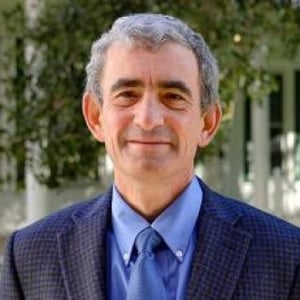
Professor and D’Alemberte Chair in Constitutional Law, Florida State University College of Law
Alexander Tsesis is the D’Alemberte chair in constitutional law at the Florida State University College of Law. He is also the general editor of the Cambridge Studies on Civil Rights and Civil Liberties and the Oxford Theoretical Foundations in Law. Tsesis’ scholarship and teaching focus on a breadth of subjects, including constitutional law, civil rights, constitutional reconstruction, interpretive methodology, free speech theory, and legal history.
Tsesis’ most recent book is Free Speech in the Balance (Cambridge University Press 2020). His previous books include Constitutional Ethos: Liberal Equality for the Common Good (Oxford University Press 2017) and For Liberty and Equality: The Life and Times of the Declaration of Independence (Oxford University Press 2012), We Shall Overcome: A History of Civil Rights and the Law (Yale University Press 2008), The Thirteenth Amendment and American Freedom (New York University Press 2004), and Destructive Messages: How Hate Speech Paved the Way for Harmful Social Movements (New York University Press 2002). He also edited a collection of essays in Promises of Liberty (Columbia University Press 2010). The subjects of his articles range from cyber speech, constitutional interpretation, civil rights law, and human rights. They have appeared or will appear in a variety of law reviews across the country, including the Boston University Law Review, Columbia Law Review, Cornell Law Review, Minnesota Law Review, Northwestern University Law Review, Southern California Law Review, Stanford Law Review, and Vanderbilt Law Review.

Founder, Chairman, and CEO, Louis D. Brandeis Center for Human Rights Under Law
Hon. Kenneth L. Marcus is an internationally recognized expert in civil and human rights, as well as a leader in the fight against anti-Semitism on and off university campuses. He is the Founder, Chairman, and CEO of The Louis D. Brandeis Center for Human Rights Under Law, the leading civil rights legal organization fighting against anti-Semitism. The New York Times has called him “The Man Who Helped Redefine Campus Anti-Semitism.” He been described, in that paper, as “the single most effective and respected force” to combat anti-Semitism.
During his public service career, Marcus served as Assistant U.S. Secretary of Education for Civil Rights; Staff Director at the U.S. Commission on Civil Rights; and General Deputy Assistant U.S. Secretary of Housing and Urban Development for Fair Housing and Equal Opportunity.
In academia, he serves as Professorial Lecturer in Law at George Washington University. He formerly held the Lillie and Nathan Ackerman Chair in Equality and Justice in America at the City University of New York’s Bernard M. Baruch College, served as Visiting Research Professor of Political Science at Yeshiva University, and was a Board of Visitors member George Mason University and Distinguished Senior Fellow at that university’s law school. He is a member of the editorial board of the Journal of Contemporary Antisemitism and previously served as Associate Editor of the Journal for the Study of Anti-Semitism.
Marcus is also author of The Definition of Anti-Semitism (Oxford University Press) and Jewish Identity and Civil Rights in America (Cambridge University Press). He has published widely in academic journals as well as in more popular venues such as The Wall Street Journal, Washington Post, Newsweek, USA Today, and Politico. He is a graduate of Williams College and the University of California at Berkeley School of Law.
Earlier in his career, he was a litigation partner in two major law firms, where he conducted complex commercial and constitutional litigation. He also serves as Chairman emeritus of the Executive Committee of the Federalist Society for Law & Public Policy Civil Rights Practice Group.
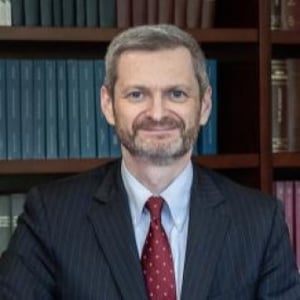
Dean & Clifton R. Musser Professor of Law and Economics, University of Chicago Law School
Thomas J. Miles is the Dean and Clifton R. Musser Professor of Law and Economics at the University of Chicago Law School. As its 14th Dean, Miles has deepened the Law School’s distinctive commitment to path-breaking scholarship and transformative education since 2015. Under his leadership, the Law School recruited more than a dozen academic and clinical faculty members and inaugurated the category of professor from practice. The scholarly ideas of the faculty have been supported and shared more widely through the launch of three new centers: the Center on Law and Finance, the Constitutional Law Institute, and the Malyi Center for the Study of Institutional and Legal Integrity. The clinical program expanded with the addition of three new clinics: the Innovation Clinic, the Jenner & Block Supreme Court and Appellate Clinic, and the Immigrants’ Rights Clinic. During Miles’s deanship, the Law School recruited highly talented and diverse cohorts of students. He steered the Law School through the COVID-19 pandemic. The Law School undertook the first significant revision to the 1L curriculum since 1977 and introduced the accelerated JD/MBA program. The Law School’s vibrant student life was enhanced with new programs in the areas of freedom of expression and diversity and inclusion, including the introduction of a pre-orientation program. The placement of graduates into clerkships nearly doubled. These activities have been supported by generous philanthropy, including a completion of the Inquiry & Impact Campaign with a record amount for the Law School and the highest participation rate within the University. Six new named professorships, including the first named clinical professorship, have been deployed, and financial aid for students reached a new high. As a scholar, Miles makes creative use of the methods of law and economics to investigate legal questions not conventionally thought to fall within that field. For example, he has written on judicial behavior and immigration enforcement. Miles has taught a wide variety of courses at the Law School, including securities regulation, torts, first-year criminal law, economic analysis of law, and federal criminal law. In 2009, he received the Graduating Students Award for Outstanding Teaching. Miles received a PhD in economics from the University of Chicago, a JD from Harvard Law School, and a BA from Tufts University. He clerked for the Hon. Jay S. Bybee of the U.S. Court of Appeals for the Ninth Circuit, and from 2005 to 2013, he was a Co-Editor of the Journal of Legal Studies.

Judge, United States Court of Appeals, Eighth Circuit
David Stras became a judge on the United States Court of Appeals for the Eighth Circuit on January 31, 2018. Before serving on the Eighth Circuit, Judge Stras was an Associate Justice of the Minnesota Supreme Court, a position he occupied from July 1, 2010 until his appointment to the Eighth Circuit.
Prior to becoming a judge, Stras was a member of the faculty of the University of Minnesota Law School from 2004 through 2010. He taught and wrote in the areas of federal courts and jurisdiction, constitutional law, criminal law, and law and politics.
Judge Stras received his Bachelor of Arts degree, with highest distinction, in 1995 and his Master of Business Administration in 1999, both from the University of Kansas. He also received his law degree from the University of Kansas School of Law in 1999, where he served as Editor-in-Chief of the Criminal Procedure Edition of the Kansas Law Review.
Following law school, Stras clerked for The Honorable Melvin Brunetti of the United States Court of Appeals for the Ninth Circuit and then for The Honorable J. Michael Luttig of the United States Court of Appeals for the Fourth Circuit.
From 2001 to 2002, he practiced white-collar criminal and appellate litigation with the Washington, D.C., office of Sidley Austin Brown & Wood. Following his year in practice, he clerked for The Honorable Clarence Thomas of the Supreme Court of the United States.
John Marshall Harlan II Professor of Law Emerita, New York Law School; Former President, American Civil Liberties Union
Nadine Strossen, New York Law School Professor Emerita and Senior Fellow at FIRE (the Foundation for Individual Rights and Expression), was national President of the American Civil Liberties Union from 1991 to 2008. An internationally acclaimed free speech scholar and advocate, who regularly addresses diverse audiences and provides media commentary around the world, Strossen is also the Host and Project Consultant for Free To Speak, a 3-hour documentary film series distributed on public television in 2023. Her books about free speech include: Free Speech: What Everyone Needs to Know® (Oxford University Press 2023); HATE: Why We Should Resist It with Free Speech, Not Censorship (Oxford University Press 2018); and Defending Pornography: Free Speech, Sex, and the Fight for Women’s Rights (Scribner 1995), which was republished with a new Preface in 2024 as part of the NYU Classics Series. Her many honors and awards include the National Coalition Against Censorship’s Judy Blume Lifetime Achievement Award for Free Speech. She serves on the Advisory Boards of several organizations that do free speech work, including: ACLU, Academic Freedom Alliance, Foundation Against Intolerance and Racism (FAIR), Heterodox Academy, National Coalition Against Censorship, and the University of Austin.

Thomas M. Siebel Senior Fellow, The Hoover Institution, Stanford University; Gary T. Schwartz Distinguished Professor of Law Emeritus, UCLA School of Law
Eugene Volokh is the Thomas M. Siebel Senior Fellow at the Hoover Institution (Stanford), as well as the Gary T. Schwartz Distinguished Professor of Law Emeritus and Distinguished Research Professor at UCLA School of Law. He recently retired from teaching at UCLA, after 30 years there, and is now focusing on research.
Volokh is the author of the textbooks The First Amendment and Related Statutes (8th ed. 2023), and Academic Legal Writing (5th ed. 2016), as well as over 100 academic law journal articles, mostly on First Amendment law. He is a member of The American Law Institute; the editor-in-chief of the Journal of Free Speech Law; and the creator and coauthor of The Volokh Conspiracy, a leading legal blog founded in 2002 (hosted at the Washington Post from 2014 to 2017 and now at Reason Magazine).

Founder, Law Office of Eileen J. O'Connor PLLC
After nearly 30 years as a national tax specialist with the IRS and major accounting firms, Eileen J. O’Connor, now an attorney in private practice, was Assistant Attorney General for the Justice Department’s Tax Division for six years during the administration of President George W. Bush and a member of then-President-elect Trump’s Treasury Department Transition Team. She focuses on federal administrative and tax law.
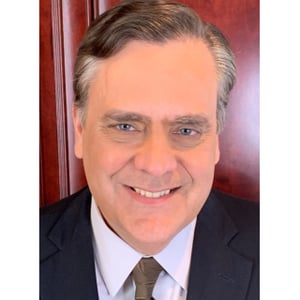
J.B. and Maurice C. Shapiro Professor of Public Interest Law, The George Washington University Law School
Jonathan Turley is a nationally recognized legal scholar who has written extensively in areas ranging from constitutional law to legal theory to tort law. After a stint at Tulane Law School, Professor Turley joined the GW Law faculty in 1990, and in 1998, became the youngest chaired professor in the university's history.
He is the founder and executive director of the Project for Older Prisoners (POPS). He has written more than three dozen academic articles that have appeared in a variety of leading law journals including those of Cornell, Duke, Georgetown, Harvard, and Northwestern Universities, among others. He most recently completed a three-part study of the historical and constitutional evolution of the military system.
Professor Turley has served as counsel in some of the most notable cases in the last two decades, including his representation of the Area 51 workers at a secret air base in Nevada; the nuclear couriers at Oak Ridge, Tennessee; the Rocky Flats grand jury in Colorado; Dr. Eric Foretich, the husband in the Elizabeth Morgan custody controversy; and four former U.S. Attorney Generals during the Clinton impeachment litigation. Professor Turley also has served as counsel in a variety of national security and terrorism cases, and has been ranked as one of the top 10 lawyers handling military cases.
He has served as a consultant on statutory and constitutional issues, and he has been a witness in over 100 hearings before the House and Senate, including the impeachments of Presidents Bill Clinton and Donald Trump. He also is a nationally recognized legal commentator; he ranked 38th in the top 100 most cited ‘public intellectuals’ in a recent study by Judge Richard Posner and was found to be the second most cited law professor in the country.
He is a member of the USA Today board of contributors and the recipient of the “2005 Single Issue Advocate of the Year” – the annual opinion award for the Aspen Institute and The Week magazine. Hundreds of his articles on legal and policy issues regularly appear in national newspapers. He also has worked as the legal analyst for four networks, CBS, NBC, BBC, and Fox. After 30 years as a columnist and commentator, the Washington Post called him the "Dean of Legal Analysts."
He is a best-selling author, including his latest New York Times bestseller "Rage and the Republic: The Unfinished Story of the American Revolution." (Simon & Schuster 2026). Turley's blog, Res Ipsa (www.jonathanturley.org), is one of the most read legal sites in the country.
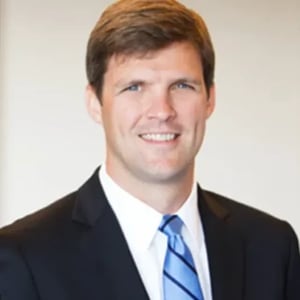
Judge, United States District Court for the Western District of Kentucky
Prior to joining the bench, Judge Beaton was a Partner at Squire Patton Boggs LLP, where he co-chaired the firm’s Appellate & Supreme Court practice group. Judge Beaton’s represented clients engaged in complex commercial litigation in Federal and State courts, and before administrative agencies. Judge Beaton also served as an adjunct professor at the University of Louisville Brandeis School of Law, where he taught constitutional interpretation. Before joining Squire Patton Boggs, Judge Beaton practiced in the Washington, D.C. office of Sidley Austin, LLP, and also served as a legal fellow with the International Justice Mission in Kampala, Uganda. Upon graduation from law school, Judge Beaton served as a law clerk to Justice Ruth Bader Ginsburg of the United States Supreme Court, and to Judge A. Raymond Randolph of the United States Court of Appeals for the D.C. Circuit. Judge Beaton earned his B.A., summa cum laude, from Centre College, and his J.D. from Columbia Law School, where he served as an Articles Editor on the Columbia Law Review.
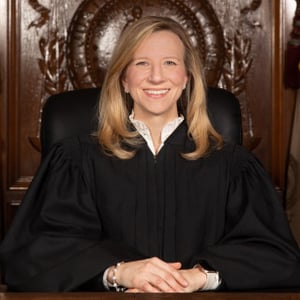
Justice, Supreme Court of Tennessee
Justice Sarah Campbell was confirmed to the Tennessee Supreme Court in 2022. She previously served as an Associate Solicitor General in the Tennessee Attorney General’s Office and as an associate at the law firm of Williams & Connolly LLP in Washington, DC. Justice Campbell earned her law degree from Duke University School of Law, a Master of Public Policy degree from Duke University, and her undergraduate degree from the University of Tennessee, where she received the Torchbearer Award. She served as a law clerk for Justice Samuel A. Alito, Jr. on the United States Supreme Court and Judge William H. Pryor Jr. on the U.S. Court of Appeals for the Eleventh Circuit.
Judge, Arizona Court of Appeals, Division One
The Honorable Jennifer M. Perkins began service on the Arizona Court of Appeals, Division One, on October 30, 2017. At the time of her appointment by Governor Douglas Ducey, Judge Perkins was Assistant Solicitor General for the State of Arizona.
Judge Perkins was born in Portales, New Mexico, and primarily raised in Albuquerque. She attended the prestigious Albuquerque Academy from 1988-1995, before moving to Washington D.C. to attend the Elliott School of International Affairs at the George Washington University as a National Merit Scholar. Therafter, she relocated again to Dallas, Texas, and earned her juris doctor from the SMU Dedman School of Law, graduating cum laude in 2002.
Judge Perkins started her career at the law firm of Browning & Peifer (now Peifer, Hanson, Mullins, and Baker) in Albuquerque, New Mexico. While there, she litigated complex commercial matters including class action plaintiff and defense work, and assisted with employment and contract litigation. In 2003, the judge accompanied the Honorable James O. Browning in transitioning to the federal district court bench, serving as his first law clerk.
After her clerkship, Judge Perkins moved to Arizona to work for the Institute for Justice, Arizona Chapter, a public interest law firm. She spent five years with IJ-AZ litigating civil rights cases in Arizona and across the country. In 2009, the judge became Disciplinary Counsel for the Arizona Commission on Judicial Conduct, where she reviewed and prosecuted ethics complaints against state court judges throughout Arizona. After five years serving the state in this capacity, Judge Perkins entered private practice by joining an appellate law firm in Phoenix. While there, she worked on state and federal appeals involving a wide range of legal subjects, including complex business disputes, property rights, judicial ethics, and personal injury matters.
In January 2015, Judge Perkins joined the Office of the Arizona Attorney General to serve as the first Assistant Solicitor General; in that capacity, she was responsible for oversight of Attorney General Opinions and served as ethics counsel to the entire office. In addition to these two primary roles, the judge assisted on a variety of matters including trial and appellate litigation of election-related matters; federal appellate litigation with the Federalism Unit; state criminal appeals; and drafting amicus briefs on behalf of Arizona in state and federal courts.
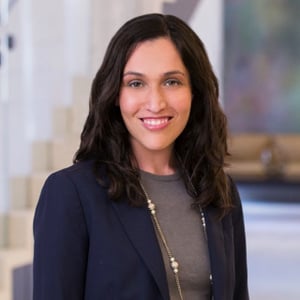
Associate Justice, New Jersey Supreme Court
Justice Rachel Wainer Apter was nominated by Gov. Phil Murphy and was sworn in as an associate justice on Oct. 21, 2022.
Born on July 22, 1980, Justice Wainer Apter grew up in Rockaway. She graduated from the University of Pennsylvania and received her law degree from Harvard Law School. After law school, she served as a law clerk for U.S. District Judge Jed Rakoff, U.S. Circuit Judge Robert Katzmann, and U.S Supreme Court Associate Justice Ruth Bader Ginsburg.
At the time of her appointment, Justice Wainer Apter was serving as director of the New Jersey Division on Civil Rights. She previously served as counsel to the New Jersey Attorney General and assistant attorney general.
Before joining the Attorney General’s Office, Justice Wainer Apter worked as a senior staff attorney at the American Civil Liberties Union (ACLU) and in the Supreme Court and Appellate practice at Orrick, Herrington & Sutcliffe.
Justice Wainer Apter and her husband have three children.
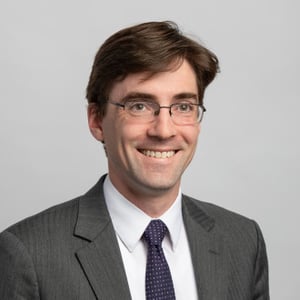
Deputy Litigation Director, Institute for Justice
Robert McNamara serves as Deputy Litigation Director with the Institute for Justice. He joined the Institute in August 2006 and litigates cutting-edge constitutional cases protecting free speech, property rights, economic liberty and other individual liberties in both federal and state courts.
Robert’s work has resulted in court victories for property owners fighting eminent domain abuse, tour guides fighting unconstitutional restrictions on their speech, taxi drivers seeking the right to own their own business, and many others. Robert also litigates in defense of innovation and entrepreneurship in medical care and was co-counsel in Flynn v. Holder, IJ’s landmark challenge to the federal prohibition on compensating bone marrow donors.
Robert’s writing has been published by outlets including The New York Times, The Wall Street Journal, The Washington Post and dozens more nationwide. His opinions and views on legal issues have been featured in radio and television programs ranging from National Public Radio’s All Things Considered to Fox News Channel’s Hannity & Colmes.
Robert is a graduate of Boston University and the New York University School of Law, where he was a founding member and eventual editor-in-chief of the NYU Journal of Law & Liberty. He currently lives in Virginia with his wife and children.
Robert McNamara is a member of the Virginia bar.
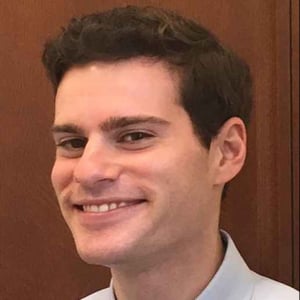
Michael primarily litigates cases related to police misconduct and racial discrimination. He graduated Harvard Law School, cum laude, and Brandeis University, summa cum laude. Previously, Michael clerked for the Hon. John R. Fisher on the District of Columbia Court of Appeals and interned with the Special Litigation Section of DOJ’s Civil Rights Division. He has also represented tenants facing eviction and prisoners in disciplinary hearings. In addition to his legal experience, Michael has worked on a political campaign and served as a fellow at an organization that helps people on public assistance find employment.
Michael enjoys running and, one day, hopes to learn how to dance.

Professor of Law, University of Michigan Law School
Christopher J. Walker is a Professor of Law at the University of Michigan. Prior to joining Michigan law faculty in 2022, he spent a decade teaching at The Ohio State University Moritz College of Law. He previously clerked for Justice Anthony Kennedy of the U.S. Supreme Court, worked on the Civil Appellate Staff at the U.S. Department of Justice, and served on the Senate Judiciary Committee staff for the Gorsuch Supreme Court confirmation. Professor Walker’s research focuses on administrative law, regulation, and law and policy at the agency level. Outside the law school, he chaired the American Bar Association’s Section of Administrative Law and Regulatory Practice in 2020-21 and served as one of forty Public Members of the Administrative Conference of the United States from 2016-2022, and he continues to serve in both organizations in various capacities. He also works of counsel at the U.S. Chamber Litigation Center. In 2022, he received the Federalist Society’s Joseph Story Award.
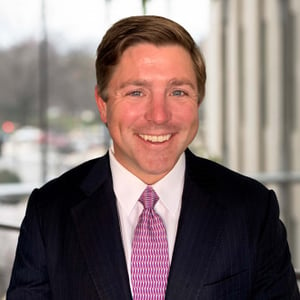
General Counsel, xAI and X
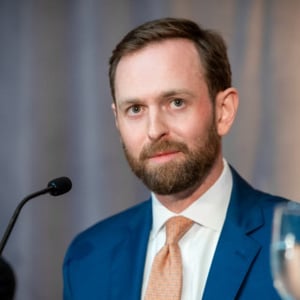
Commissioner, Federal Trade Commission
Andrew N. Ferguson was sworn in April 2, 2024 as a Commissioner of the Federal Trade Commission. President Joe Biden named Ferguson to a term that expires on September 25, 2030.
Ferguson most recently served as solicitor general of the Commonwealth of Virginia. Prior to that position, he served as chief counsel to U.S. Sen. Mitch McConnell of Kentucky, the Republican leader, and as a Republican counsel on the U.S. Senate Judiciary Committee. He also practiced law at several Washington, D.C. law firms. He earned his undergraduate degree and law degree from the University of Virginia. After law school, Ferguson clerked for Judge Karen L. Henderson on the U.S. Court of Appeals for the D.C. Circuit and U.S. Supreme Court Justice Clarence Thomas.

How Did State Constitutions Shape the American Founding?
Jennifer Perkins, Nels S.D. Peterson, Timothy Sandefur, Jeffrey S. Sutton
In this Federalist Society America 250 series, experts analyze modern legal and policy debates through...
Plenary Panel 4: Justice Alito’s Impact on Religious Liberties & Speech
Stephanie Barclay, Nicole Stelle Garnett, Steven J. Menashi, Matthew A. Schwartz
This panel will analyze Justice Alito’s contributions to the Supreme Court’s religious liberty and free...
Topics
Roosevelt’s Four Freedoms Include Two That Are Real
Franklin Roosevelt delivered his eighth State of The Union Address in January of 1941. The...
Addressing Antisemitism in Higher Education
Mark Goldfeder, Ilya Shapiro, Nadine Strossen, Alexander Tsesis
In the wake of the October 7, 2023 terrorist attack in Israel, there have been...
Campus Chaos: Protected Speech or Unprotected Conduct?
Kenneth L. Marcus, Thomas J. Miles, David R. Stras, Nadine Strossen, Eugene Volokh
Over the past year, college campuses have been filled with student protests and demonstrations. A...
Talks with Authors: The Indispensable Right
Eileen J. O'Connor, Jonathan R. Turley
In his new book The Indispensable Right: Free Speech in an Age of Rage, Professor...
Certification of State-Law Questions by Federal Courts
Benjamin Beaton, Sarah Keeton Campbell, Jennifer Perkins, Rachel Wainer Apter
In Lindenberg v. Jackson National Life Ins. Co., 912 F.3d 348 (2018), the Sixth Circuit declared...
Do We Need Qualified Immunity?
Robert J. McNamara, Michael Perloff, Christopher J. Walker
Qualified immunity is perhaps the nation’s most controversial legal doctrine. Proponents say qualified immunity is necessary to give government officials—especially...
Open Minds with Andrew Ferguson and James Burnham
James M. Burnham, Andrew N. Ferguson
In this episode of Open Minds, Andrew Ferguson discusses his career, from judicial clerkships to...
2024 National Student Symposium
Why Separate Powers?
Cambridge, MA