

Chief Executive Officer, Equifund Crowd Funding Portal
Jordan Gillissie is Founder and Chief Executive Officer of Equifund Crowd Funding Portal, a crowdfunding portal registered with the Securities and Exchange Commission and Financial Industry Regulatory Authority. Equifund CFP provides a platform where entrepreneurs and investors can connect and transact in a frictionless environment.
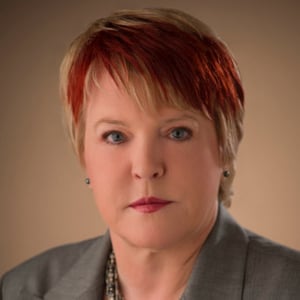
Chief Executive Officer, CrowdCheck
Sara Hanks, co-founder and CEO of CrowdCheck, is an attorney with over 30 years of experience in the corporate and securities field. Sara brings a wealth of legal expertise in securities law and start-ups to the emerging marketplace for crowdfunding and online capital formation. CrowdCheck provides due diligence, disclosure and compliance services for online capital formation, helping investors get the information they need to avoid fraud and make informed investment decisions, and helping entrepreneurs and intermediaries avoid liability.
Her position prior to founding CrowdCheck was General Counsel of the bipartisan Congressional Oversight Panel, the overseer of the Troubled Asset Relief Program (TARP), chaired by now-Senator Elizabeth Warren. At the Congressional Oversight Panel, Sara spent 18 months on Capitol Hill investigating the implementation and consequences of the TARP in depth. She examined the government’s intervention in the automotive companies, the execution of the banking “stress tests,” the rescue of AIG, and the international aspects of the financial crisis.
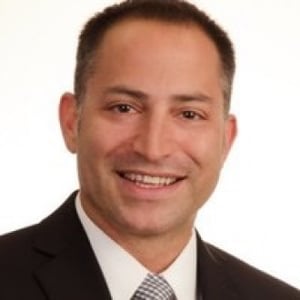
Chief Crowdfunding Data Analyst, Crowdfund Capital Advisors
Sherwood Neiss is a Principal and Chief Crowdfunding Data Analyst at Crowdfund Capital Advisors, a Partner at Crowd Capital Ventures, and a co-founder of GUARDD, Inc. He is an expert at building successful businesses. As a 3-time INC500 winner whose former company won E&Y’s Entrepreneur of the Year, Sherwood understands the keys to entrepreneurial success from concept to company to capital to sale.
As a serial entrepreneur and investor during the 2008 recession, Sherwood saw a need for a change in outdated securities laws and did something about it—as a co-founding member of Startup Exemption, Sherwood co-authored the Crowdfunding Framework used in the JOBS Act. He was invited to the Rose Garden by President Obama on April 5, 2012 when the bill was signed into law.
Within Crowdfund Capital Advisors (CCA), Sherwood works with clients ranging from governments and banks that are looking for ways to boost economic development in their countries to investment firms looking for access to increased deal flow that crowdfunding creates. As the Chief Data Analyst he oversees a team responsible for aggregating data from all registered offerings taking place on Online Investment Platforms and bringing that over to Bloomberg. At Crowd Capital Ventures (CCVF), Sherwood researches, analyses and invests in promising FinTech companies focusing on all sectors of the crowdfunding market. And at GUARDD, Sherwood helps issuers navigate around Blue Sky laws as they relate to secondary trading of exempt, unregistered securities.
Sherwood serves as an advisor to several crowdfunding platforms and crowdfunding technologies giving him a unique understanding and view of the industry and market. As an industry leader, Sherwood contributes to several publications including VentureBeat and TechCrunch. He additionally co-authored Crowdfund Investing for Dummies through Wiley & Son’s as well as the World Bank Report Crowdfunding’s Potential for the Developing World.
Sherwood co-founded Crowdfund Intermediary Regulatory Advocates (CFIRA) and the Crowdfunding Professional Association (CPA), and served as Governing Board Member and co-chair where he led the fight to ensure investors are protected while entrepreneurs have access to the capital they need to start and grow promising companies.
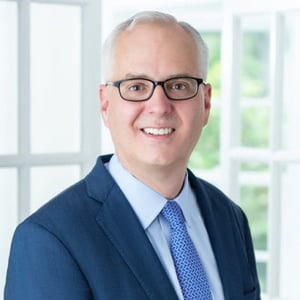
Principal, Clear IP, LLC
Joseph Matal is the Principal at Clear IP, LLC.
Joe has served as both the U.S. Patent and Trademark’s Acting Director and Acting Solicitor. As Acting Solicitor, he defended the agency in intellectual property cases before the U.S. Court of Appeals for the Federal Circuit and U.S. Supreme Court. In his role in the Solicitor’s Office, he participated in briefing almost every major case involving PTAB trials that has come before the Federal Circuit, including cases that have defined the Board’s powers and the evidence that it may consider, the content of final decisions, and the burdens and scope of motions to amend. Recent cases include Uniloc v. Hulu, Thryv v. Click-to-Call, and Aqua Products v. Matal. Previously, Joe served in senior legal roles for more than a decade for the U.S. Senate Judiciary Committee. In that capacity, he negotiated and drafted many of the key provisions of the America Invents Act.
In his roles at the USPTO, Joe briefed and argued numerous appeals of patent and trademark decisions before the Federal Circuit; oversaw the management of the USPTO and its 13,000 employees; and advised the U.S. Solicitor General’s Office in key IP cases before the Supreme Court.

Visiting Fellow, National Security Institute, George Mason University's Antonin Scalia Law School
Mr. Taylor was counsel and chief counsel of the House Subcommittee on the Constitution, Civil Rights, and Civil Liberties, for over 20 years, where he shepherded dozens of bills through committee to be signed into law by presidents of both political parties. He was also counsel to the House Oversight Committee, where he handled constitutional and civil rights issues. He is the author of over a dozen law review articles on legal reform, continuity in government, religious liberty, congressional powers, civil rights, and patent law. He is an elected member of the American Law Institute (the first active congressional staff person elected to that body in its 100-year history), a 1991 graduate of Yale University (BA, summa cum laude), and a 1994 graduate of Harvard Law School (JD, cum laude). He is a Visiting Fellow at the National Security Institute at George Mason University's Antonin Scalia Law School.
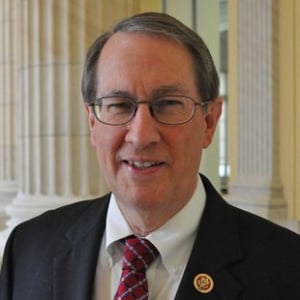
Former Congressman, United States House of Representatives
Bob Goodlatte served in the United States House of Representatives representing Virginia's 6th congressional district for 13 terms.
Goodlatte’s service to the people of the Sixth District began in 1977 when he became District Director for former Congressman Caldwell Butler. He served in this position for two years until 1979, and was responsible for helping folks across the District seeking assistance with or encountering problems from various federal agencies. In 1979, he founded his own private law practice in Roanoke. Later, he was a partner in the law firm of Bird, Kinder and Huffman, working there from 1981 until taking office.
Rep. Goodlatte was first elected to serve as Chairman of the House Judiciary Committee in the 113th Congress. He was the first Judiciary Committee Chairman from Virginia in the last 125 years. Rep. Goodlatte was an active Member of the Judiciary Committee since arriving in Congress, serving in a variety of leadership positions on the Committee including taking the lead on many intellectual property issues. During his time in Congress, Rep. Goodlatte made a name for himself as a leader on Internet and technology issues. He was Co-Chair of the Congressional Internet Caucus and the International Creativity and Theft-Prevention Caucus.
Rep. Goodlatte is a graduate of Washington and Lee University School of Law, and his undergraduate degree in Government was earned at Bates College in Lewiston, Maine.
Principal, Clear IP, LLC
Joseph Matal is the Principal at Clear IP, LLC.
Joe has served as both the U.S. Patent and Trademark’s Acting Director and Acting Solicitor. As Acting Solicitor, he defended the agency in intellectual property cases before the U.S. Court of Appeals for the Federal Circuit and U.S. Supreme Court. In his role in the Solicitor’s Office, he participated in briefing almost every major case involving PTAB trials that has come before the Federal Circuit, including cases that have defined the Board’s powers and the evidence that it may consider, the content of final decisions, and the burdens and scope of motions to amend. Recent cases include Uniloc v. Hulu, Thryv v. Click-to-Call, and Aqua Products v. Matal. Previously, Joe served in senior legal roles for more than a decade for the U.S. Senate Judiciary Committee. In that capacity, he negotiated and drafted many of the key provisions of the America Invents Act.
In his roles at the USPTO, Joe briefed and argued numerous appeals of patent and trademark decisions before the Federal Circuit; oversaw the management of the USPTO and its 13,000 employees; and advised the U.S. Solicitor General’s Office in key IP cases before the Supreme Court.
Visiting Fellow, National Security Institute, George Mason University's Antonin Scalia Law School
Mr. Taylor was counsel and chief counsel of the House Subcommittee on the Constitution, Civil Rights, and Civil Liberties, for over 20 years, where he shepherded dozens of bills through committee to be signed into law by presidents of both political parties. He was also counsel to the House Oversight Committee, where he handled constitutional and civil rights issues. He is the author of over a dozen law review articles on legal reform, continuity in government, religious liberty, congressional powers, civil rights, and patent law. He is an elected member of the American Law Institute (the first active congressional staff person elected to that body in its 100-year history), a 1991 graduate of Yale University (BA, summa cum laude), and a 1994 graduate of Harvard Law School (JD, cum laude). He is a Visiting Fellow at the National Security Institute at George Mason University's Antonin Scalia Law School.
Former Congressman, United States House of Representatives
Bob Goodlatte served in the United States House of Representatives representing Virginia's 6th congressional district for 13 terms.
Goodlatte’s service to the people of the Sixth District began in 1977 when he became District Director for former Congressman Caldwell Butler. He served in this position for two years until 1979, and was responsible for helping folks across the District seeking assistance with or encountering problems from various federal agencies. In 1979, he founded his own private law practice in Roanoke. Later, he was a partner in the law firm of Bird, Kinder and Huffman, working there from 1981 until taking office.
Rep. Goodlatte was first elected to serve as Chairman of the House Judiciary Committee in the 113th Congress. He was the first Judiciary Committee Chairman from Virginia in the last 125 years. Rep. Goodlatte was an active Member of the Judiciary Committee since arriving in Congress, serving in a variety of leadership positions on the Committee including taking the lead on many intellectual property issues. During his time in Congress, Rep. Goodlatte made a name for himself as a leader on Internet and technology issues. He was Co-Chair of the Congressional Internet Caucus and the International Creativity and Theft-Prevention Caucus.
Rep. Goodlatte is a graduate of Washington and Lee University School of Law, and his undergraduate degree in Government was earned at Bates College in Lewiston, Maine.
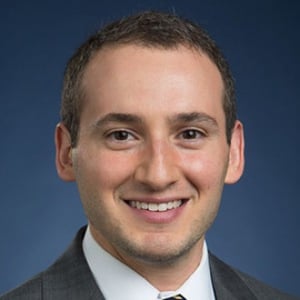
Assistant Professor of Business Law, Michigan Ross School of Law
Jeremy Kress is an Assistant Professor of Business Law at Michigan Ross and Co-Faculty Director of the University of Michigan’s Center on Finance, Law & Policy. His research focuses on bank regulation, systemic risk, and financial stability. Professor Kress' written work has appeared or is forthcoming in the Duke Law Journal, Northwestern University Law Review, Southern California Law Review, and Yale Journal on Regulation, among other journals.
Before entering academia, Professor Kress was an attorney in the banking regulation and policy group at the Federal Reserve Board of Governors in Washington, D.C. In that capacity, he drafted rules to implement the Dodd-Frank Act and Basel III, and he advised the Board on the legal permissibility of bank mergers and acquisitions.
Professor Kress has testified before Congress and serves as a member of the Federal Reserve Bank of New York’s Education and Industry Forum on Financial Services Culture. He frequently comments on financial regulatory matters in the press. Professor Kress has been featured in media outlets including the Wall Street Journal, New York Times, Financial Times, Washington Post, Bloomberg News, NPR's Marketplace, Politico, Yahoo Finance, and American Banker.
Professor Kress teaches Legal Issues in Finance & Banking at Michigan Ross, and he has taught Financial Regulation at Michigan Law School. He was named one of Poets & Quants’ “Top 50 Undergraduate Professors of 2020” and won Michigan Ross’ Neary Teaching Excellence Award in 2019.
Professor Kress graduated cum laude from Harvard Law School and from the Harvard Kennedy School, where he was a Presidential Scholar. He holds a BBA from Michigan Ross.

Resident Scholar, American Enterprise Institute
Paul H. Kupiec is a resident scholar at the American Enterprise Institute (AEI), where he studies systemic risk and the management and regulations of banks and financial markets. He also follows the work of financial regulators such as the Federal Reserve and examines the impact of financial regulations on the US economy.
Before joining AEI, Kupiec was an associate director of the Division of Insurance and Research within the Center for Financial Research at the Federal Deposit Insurance Corporation (FDIC), where he oversaw research on bank risk measurement and the development of regulatory policies such as Basel III. Kupiec was also director of the Center for Financial Research at the FDIC and chairman of the Research Task Force of the Basel Committee on Banking Supervision. He has previously worked at the International Monetary Fund (IMF), Freddie Mac, J.P. Morgan, and for the Division of Research and Statistics at the Board of Governors of the Federal Reserve System.
Kupiec has edited many professional journals, including the Journal of Financial Services Research, Journal of Risk, and Journal of Investment Management.
He has a bachelor of science degree in economics from George Washington University and a doctorate in economics — with a specialization in finance, theory, and econometrics — from the University of Pennsylvania.

Associate Professor of Legal Studies & Business Ethics; Co-Director, Wharton Initiative on Financial Policy and Regulation, The Wharton School, University of Pennsylvania
Christina Parajon Skinner is an expert on financial regulation. Her research focuses on central banking, the debt markets, separation of powers, corporate governance, and law and macroeconomics. Professor Skinner’s work is international and comparative in scope, drawing on her experience as an academic and central bank lawyer in the United Kingdom. Her research has been published or is forthcoming in the Columbia Law Review, the Duke Law Journal, the Vanderbilt Law Review, and the Georgetown Law Journal, among other leading academic journals. Professor Skinner has also contributed to financial regulatory policy working groups, including those convened by the Federal Reserve Bank of New York, the Financial Stability Board, and the U.K. Banking Standards Board.
Prior to joining the faculty at Wharton, Professor Skinner served as legal counsel at the Bank of England, in the Financial Stability Division of the Bank’s Legal Directorate. Her work there focused principally on matters of bank resolution, financial market infrastructure, and macroprudential policy. Previously, Professor Skinner was an Academic Visitor at the University of Oxford, Faculty of Law and a Visiting Fellow at the London School of Economics, Law Department. From 2014-2016, she was a post-doctoral fellow and lecturer in Law at Columbia Law School.
Professor Skinner received her J.D. from Yale Law School, and an A.B. from the School of Public and International Affairs at Princeton University, with a concentration in international economics. She received certificates of proficiency in European Politics and Society, and Spanish Language and Culture.
She is married with five children.
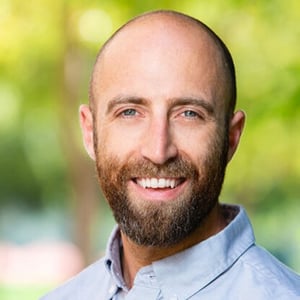
Director, Stanford Graduate School of Business
Graham Steele is the director of the Corporations and Society Initiative at Stanford Graduate School of Business. Prior to joining Stanford GSB, Graham was a member of the staff of the Federal Reserve Bank of San Francisco.
From 2015 to 2017, Graham was the Minority Chief Counsel for the Senate Committee on Banking, Housing & Urban Affairs. From 2010 to 2015 he was a Legislative Assistant for United States Senator Sherrod Brown (D-OH), handling the Senator’s work as a member of the Senate Banking Committee. He also spent four years as the staff director of the Subcommittee on Financial Institutions & Consumer Protection. Prior to joining Senator Brown’s staff, Graham was a policy counsel at Public Citizen’s Congress Watch in Washington, D.C.
Graham received his bachelors degree in political science from the University of Rochester and his law degree from The George Washington University Law School. He is a member of the Massachusetts State Bar. He is originally from Brookline, Massachusetts.
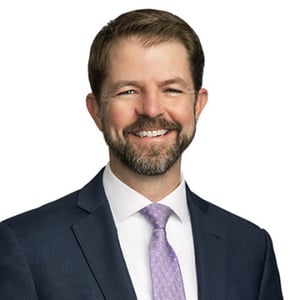
Partner, Baker Botts LLP
Drawing from two decades of experience in senior government, in-house corporate, and private law firm roles, Jeff Wood helps clients with federal enforcement, compliance, litigation, permitting, and policy challenges primarily in the energy and environmental fields.
Prior to joining Baker Botts, Mr. Wood served for almost two years as the Acting Assistant Attorney General (AAG) for the Justice Department's Environment and Natural Resources Division (ENRD). In that capacity, Mr. Wood led ENRD and its more than 600 attorneys and staff representing EPA, Departments of the Interior, Energy, and Defense, and other agencies in civil and criminal enforcement and defensive environmental, energy, and natural resources litigation.
As the top official in ENRD, Mr. Wood managed a complex organization with an annual budget exceeding $200 million and a docket of more than 6,000 cases and matters. E&E News noted that “Wood maintains a strong relationship with ENRD's career staff” (Greenwire, Oct. 31, 2018). He previously served on the staff of the United States Senate Committee on Environment and Public Works.
At the Justice Department, Mr. Wood oversaw the Division's civil and criminal enforcement programs and was responsible for developing legal strategies and approving briefs in key cases including filings before the Supreme Court and Courts of Appeals in coordination with the Office of Solicitor General. In this role, Mr. Wood held the highest level security clearance and worked closely with top leadership at DOJ, EPA, the Interior Department, USDA, the Energy Department, Transportation Department, FERC, NRC and across the Executive Branch, including the White House.
With many years of both private law firm and in-house legal experience, Mr. Wood has handled complex environmental enforcement, regulatory, policy, and litigation matters for electric utilities, energy companies, maritime companies, mining companies, real estate developers, financial institutions, industrial companies and manufacturers, business coalitions, associations, small businesses, and individual property owners. Drawing from his experiences in-house, Mr. Wood brings a common-sense, cost-effective, client-focused approach to his work every day.
With a strong national reputation, Mr. Wood is a frequent speaker on environmental law and policy matters, with recent speeches and presentations at the Environmental Law Institute, Harvard Law School, Vanderbilt Law School, American University Law School, American Bar Association Environmental Law Conferences, the Texas Environmental SuperConference, Air Force Judge Advocate General School's Advanced Environmental Law Course, Baker Institute's Center for Energy Studies (Rice University), and many other venues. He frequently appears in national news to share insights on significant environmental law and policy issues, including recent quotes in the New York Times, Washington Post, Wall Street Journal, Bloomberg, Law360, and E&E News, among others.
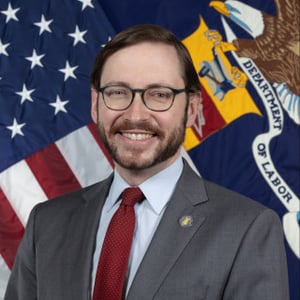
Solicitor, U.S. Department of Labor
Jonathan Berry is Solicitor at the U.S. Department of Labor, in service to President Trump’s agenda to put American workers first. He leads the Department’s lawyers in advising the Secretary and agency leadership on all aspects of law and in representing the Department in court. He was previously managing partner at Boyden Gray PLLC, where he provided strategic counsel and litigated on issues at the intersection of law, politics, and public policy. Earlier, he headed the regulatory office at Labor, and also served at the Department of Justice, in the first Trump Administration. Mr. Berry served as a law clerk to Judge Jerry E. Smith of the United States Court of Appeals for the Fifth Circuit, and to Associate Justice Samuel A. Alito, Jr., of the Supreme Court of the United States.
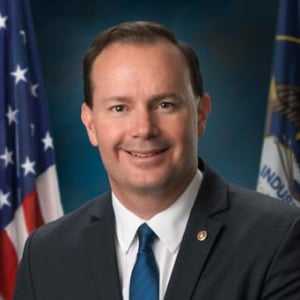
United States Senator, Utah
Elected in 2010 as Utah's 16th Senator, Mike Lee has spent his career defending the basic liberties of Americans and Utahns as a tireless advocate for our founding constitutional principles.
Senator Lee acquired a deep respect for the Constitution early on. His father, Rex Lee, who served as the Solicitor General under President Ronald Reagan, would often discuss varied aspects of judicial and constitutional doctrine around the kitchen table, from Due Process to the uses of Executive Plenary Power. He attended most of his father's arguments before the U.S. Supreme Court, giving him a unique, hands-on experience and understanding of government up close.
Lee graduated from Brigham Young University with a Bachelor of Science in Political Science, and served as BYU's Student Body President in his senior year. He graduated from BYU's Law School in 1997 and went on to serve as law clerk to Judge Dee Benson of the U.S. District Court for the District of Utah, and then with future Supreme Court Justice Judge Samuel A. Alito, Jr. on the U.S. Court of Appeals for the Third Circuit.
Lee spent several years as an attorney with the law firm Sidley & Austin specializing in appellate and Supreme Court litigation, and then served as an Assistant U.S. Attorney in Salt Lake City arguing cases before the U.S. Court of Appeals for the Tenth Circuit.
Lee served the state of Utah as Governor Jon Huntsman's General Counsel and was later honored to reunite with Justice Alito, now on the Supreme Court, for a one-year clerkship. He returned to private practice in 2007.
Throughout his career, Lee earned a reputation as an outstanding practitioner of the law based on his sound judgment, abilities in the courtroom, and thorough understanding of the Constitution.
Today, Lee fights to preserve America's proud founding document in the United States Senate. He advocates efforts to support constitutionally limited government, fiscal responsibility, individual liberty, and economic prosperity.
Lee is a member of the Judiciary Committee, and serves as Chairman of the Antitrust, Competition Policy and Consumer Rights Subcommittee protecting business competition and personal freedom.
He also oversees issues critical to Utah as the Chairman of the Water and Power Subcommittee of the Energy and Natural Resources Committee. He serves on the Commerce Committee and the Joint Economic Committee, as well.
In the 114th Congress, Lee also began his tenure as Chairman of the Senate Steering Committee, where he works with his Republican colleagues in the Senate to introduce bold and innovative solutions to issues facing the American people.
Lee and his wife Sharon live in Alpine, Utah, with their three children. He is a member of The Church of Jesus Christ of Latter-day Saints and served a two-year mission for the Church in the Texas Rio Grande Valley.
Vice President and Publisher, The Political Forum
Stephen R. Soukup is the senior commentator, Vice President, and Publisher of The Political Forum, an “independent research provider” that delivers research and consulting services to the institutional investment community, with an emphasis on economic, social, political, and geopolitical events likely to have an impact on the financial markets in the United States and abroad. He is also the Director of The Political Forum Institute, a non-profit educational organization dedicated to creating and preserving community, primarily among those who earn their livings and create wealth for the nation through the capital markets. Mr. Soukup has followed politics and federal regulatory policy for the financial community since 1996, when he joined the award-winning Washington-research office of Prudential Securities. He is also the Fellow in Culture and Economy at the Culture of Life Foundation.
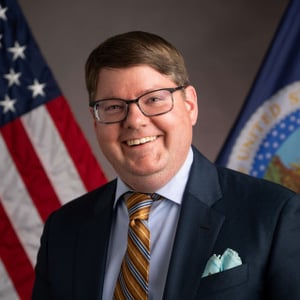
Deputy Secretary of Agriculture, U.S. Department of Agriculture
Judge Stephen Alexander Vaden was appointed as the Deputy Secretary of the U.S. Department of Agriculture on July 7, 2025. Alongside Secretary Brooke L. Rollins, Deputy Secretary Vaden leads the Department’s operations and implements policies that support America’s food and farm systems. A native of Union City, Tennessee, Deputy Secretary Vaden brings expertise in agricultural policy, law, and rural development. Previously, he served as a judge on the U.S. Court of International Trade and as General Counsel of USDA. Throughout Deputy Secretary Vaden’s time as General Counsel, he led successful Supreme Court litigation, advanced regulatory reform, and supported the implementation of the 2018 Farm Bill. He is a graduate of Yale Law School and Vanderbilt University. A public servant with strong agricultural roots, Deputy Secretary Vaden is committed to revitalizing rural America and ensuring an abundant, affordable, and safe U.S. food supply.
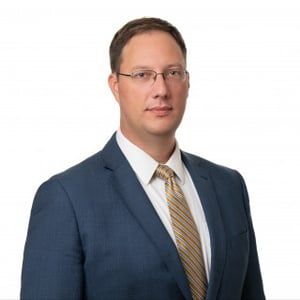
Laurence H. Silberman Chair in Constitutional Governance, American Enterprise Institute; Executive Director, Antonin Scalia Law School’s C. Boyden Gray Center for the Study of the Administrative State
Adam J. White is the Laurence H. Silberman Chair in Constitutional Governance and senior fellow at the American Enterprise Institute, where he focuses on the Supreme Court and the administrative state. He also directs the Antonin Scalia Law School’s C. Boyden Gray Center for the Study of the Administrative State.
He writes on regulation and constitutional government for a variety of publications. He practiced law in Washington, D.C., after clerking for the D.C. Circuit's Judge David Sentelle. He also has been chairman of the ABA's Administrative Law Section.
In 2021, he served on the Presidential Commission on the Supreme Court of the United States, where he criticized “Court packing” and other efforts to restructure the Supreme Court.
Assistant Professor of Business Law, Michigan Ross School of Law
Jeremy Kress is an Assistant Professor of Business Law at Michigan Ross and Co-Faculty Director of the University of Michigan’s Center on Finance, Law & Policy. His research focuses on bank regulation, systemic risk, and financial stability. Professor Kress' written work has appeared or is forthcoming in the Duke Law Journal, Northwestern University Law Review, Southern California Law Review, and Yale Journal on Regulation, among other journals.
Before entering academia, Professor Kress was an attorney in the banking regulation and policy group at the Federal Reserve Board of Governors in Washington, D.C. In that capacity, he drafted rules to implement the Dodd-Frank Act and Basel III, and he advised the Board on the legal permissibility of bank mergers and acquisitions.
Professor Kress has testified before Congress and serves as a member of the Federal Reserve Bank of New York’s Education and Industry Forum on Financial Services Culture. He frequently comments on financial regulatory matters in the press. Professor Kress has been featured in media outlets including the Wall Street Journal, New York Times, Financial Times, Washington Post, Bloomberg News, NPR's Marketplace, Politico, Yahoo Finance, and American Banker.
Professor Kress teaches Legal Issues in Finance & Banking at Michigan Ross, and he has taught Financial Regulation at Michigan Law School. He was named one of Poets & Quants’ “Top 50 Undergraduate Professors of 2020” and won Michigan Ross’ Neary Teaching Excellence Award in 2019.
Professor Kress graduated cum laude from Harvard Law School and from the Harvard Kennedy School, where he was a Presidential Scholar. He holds a BBA from Michigan Ross.
Resident Scholar, American Enterprise Institute
Paul H. Kupiec is a resident scholar at the American Enterprise Institute (AEI), where he studies systemic risk and the management and regulations of banks and financial markets. He also follows the work of financial regulators such as the Federal Reserve and examines the impact of financial regulations on the US economy.
Before joining AEI, Kupiec was an associate director of the Division of Insurance and Research within the Center for Financial Research at the Federal Deposit Insurance Corporation (FDIC), where he oversaw research on bank risk measurement and the development of regulatory policies such as Basel III. Kupiec was also director of the Center for Financial Research at the FDIC and chairman of the Research Task Force of the Basel Committee on Banking Supervision. He has previously worked at the International Monetary Fund (IMF), Freddie Mac, J.P. Morgan, and for the Division of Research and Statistics at the Board of Governors of the Federal Reserve System.
Kupiec has edited many professional journals, including the Journal of Financial Services Research, Journal of Risk, and Journal of Investment Management.
He has a bachelor of science degree in economics from George Washington University and a doctorate in economics — with a specialization in finance, theory, and econometrics — from the University of Pennsylvania.
Associate Professor of Legal Studies & Business Ethics; Co-Director, Wharton Initiative on Financial Policy and Regulation, The Wharton School, University of Pennsylvania
Christina Parajon Skinner is an expert on financial regulation. Her research focuses on central banking, the debt markets, separation of powers, corporate governance, and law and macroeconomics. Professor Skinner’s work is international and comparative in scope, drawing on her experience as an academic and central bank lawyer in the United Kingdom. Her research has been published or is forthcoming in the Columbia Law Review, the Duke Law Journal, the Vanderbilt Law Review, and the Georgetown Law Journal, among other leading academic journals. Professor Skinner has also contributed to financial regulatory policy working groups, including those convened by the Federal Reserve Bank of New York, the Financial Stability Board, and the U.K. Banking Standards Board.
Prior to joining the faculty at Wharton, Professor Skinner served as legal counsel at the Bank of England, in the Financial Stability Division of the Bank’s Legal Directorate. Her work there focused principally on matters of bank resolution, financial market infrastructure, and macroprudential policy. Previously, Professor Skinner was an Academic Visitor at the University of Oxford, Faculty of Law and a Visiting Fellow at the London School of Economics, Law Department. From 2014-2016, she was a post-doctoral fellow and lecturer in Law at Columbia Law School.
Professor Skinner received her J.D. from Yale Law School, and an A.B. from the School of Public and International Affairs at Princeton University, with a concentration in international economics. She received certificates of proficiency in European Politics and Society, and Spanish Language and Culture.
She is married with five children.
Director, Stanford Graduate School of Business
Graham Steele is the director of the Corporations and Society Initiative at Stanford Graduate School of Business. Prior to joining Stanford GSB, Graham was a member of the staff of the Federal Reserve Bank of San Francisco.
From 2015 to 2017, Graham was the Minority Chief Counsel for the Senate Committee on Banking, Housing & Urban Affairs. From 2010 to 2015 he was a Legislative Assistant for United States Senator Sherrod Brown (D-OH), handling the Senator’s work as a member of the Senate Banking Committee. He also spent four years as the staff director of the Subcommittee on Financial Institutions & Consumer Protection. Prior to joining Senator Brown’s staff, Graham was a policy counsel at Public Citizen’s Congress Watch in Washington, D.C.
Graham received his bachelors degree in political science from the University of Rochester and his law degree from The George Washington University Law School. He is a member of the Massachusetts State Bar. He is originally from Brookline, Massachusetts.
Partner, Baker Botts LLP
Drawing from two decades of experience in senior government, in-house corporate, and private law firm roles, Jeff Wood helps clients with federal enforcement, compliance, litigation, permitting, and policy challenges primarily in the energy and environmental fields.
Prior to joining Baker Botts, Mr. Wood served for almost two years as the Acting Assistant Attorney General (AAG) for the Justice Department's Environment and Natural Resources Division (ENRD). In that capacity, Mr. Wood led ENRD and its more than 600 attorneys and staff representing EPA, Departments of the Interior, Energy, and Defense, and other agencies in civil and criminal enforcement and defensive environmental, energy, and natural resources litigation.
As the top official in ENRD, Mr. Wood managed a complex organization with an annual budget exceeding $200 million and a docket of more than 6,000 cases and matters. E&E News noted that “Wood maintains a strong relationship with ENRD's career staff” (Greenwire, Oct. 31, 2018). He previously served on the staff of the United States Senate Committee on Environment and Public Works.
At the Justice Department, Mr. Wood oversaw the Division's civil and criminal enforcement programs and was responsible for developing legal strategies and approving briefs in key cases including filings before the Supreme Court and Courts of Appeals in coordination with the Office of Solicitor General. In this role, Mr. Wood held the highest level security clearance and worked closely with top leadership at DOJ, EPA, the Interior Department, USDA, the Energy Department, Transportation Department, FERC, NRC and across the Executive Branch, including the White House.
With many years of both private law firm and in-house legal experience, Mr. Wood has handled complex environmental enforcement, regulatory, policy, and litigation matters for electric utilities, energy companies, maritime companies, mining companies, real estate developers, financial institutions, industrial companies and manufacturers, business coalitions, associations, small businesses, and individual property owners. Drawing from his experiences in-house, Mr. Wood brings a common-sense, cost-effective, client-focused approach to his work every day.
With a strong national reputation, Mr. Wood is a frequent speaker on environmental law and policy matters, with recent speeches and presentations at the Environmental Law Institute, Harvard Law School, Vanderbilt Law School, American University Law School, American Bar Association Environmental Law Conferences, the Texas Environmental SuperConference, Air Force Judge Advocate General School's Advanced Environmental Law Course, Baker Institute's Center for Energy Studies (Rice University), and many other venues. He frequently appears in national news to share insights on significant environmental law and policy issues, including recent quotes in the New York Times, Washington Post, Wall Street Journal, Bloomberg, Law360, and E&E News, among others.
Solicitor, U.S. Department of Labor
Jonathan Berry is Solicitor at the U.S. Department of Labor, in service to President Trump’s agenda to put American workers first. He leads the Department’s lawyers in advising the Secretary and agency leadership on all aspects of law and in representing the Department in court. He was previously managing partner at Boyden Gray PLLC, where he provided strategic counsel and litigated on issues at the intersection of law, politics, and public policy. Earlier, he headed the regulatory office at Labor, and also served at the Department of Justice, in the first Trump Administration. Mr. Berry served as a law clerk to Judge Jerry E. Smith of the United States Court of Appeals for the Fifth Circuit, and to Associate Justice Samuel A. Alito, Jr., of the Supreme Court of the United States.
United States Senator, Utah
Elected in 2010 as Utah's 16th Senator, Mike Lee has spent his career defending the basic liberties of Americans and Utahns as a tireless advocate for our founding constitutional principles.
Senator Lee acquired a deep respect for the Constitution early on. His father, Rex Lee, who served as the Solicitor General under President Ronald Reagan, would often discuss varied aspects of judicial and constitutional doctrine around the kitchen table, from Due Process to the uses of Executive Plenary Power. He attended most of his father's arguments before the U.S. Supreme Court, giving him a unique, hands-on experience and understanding of government up close.
Lee graduated from Brigham Young University with a Bachelor of Science in Political Science, and served as BYU's Student Body President in his senior year. He graduated from BYU's Law School in 1997 and went on to serve as law clerk to Judge Dee Benson of the U.S. District Court for the District of Utah, and then with future Supreme Court Justice Judge Samuel A. Alito, Jr. on the U.S. Court of Appeals for the Third Circuit.
Lee spent several years as an attorney with the law firm Sidley & Austin specializing in appellate and Supreme Court litigation, and then served as an Assistant U.S. Attorney in Salt Lake City arguing cases before the U.S. Court of Appeals for the Tenth Circuit.
Lee served the state of Utah as Governor Jon Huntsman's General Counsel and was later honored to reunite with Justice Alito, now on the Supreme Court, for a one-year clerkship. He returned to private practice in 2007.
Throughout his career, Lee earned a reputation as an outstanding practitioner of the law based on his sound judgment, abilities in the courtroom, and thorough understanding of the Constitution.
Today, Lee fights to preserve America's proud founding document in the United States Senate. He advocates efforts to support constitutionally limited government, fiscal responsibility, individual liberty, and economic prosperity.
Lee is a member of the Judiciary Committee, and serves as Chairman of the Antitrust, Competition Policy and Consumer Rights Subcommittee protecting business competition and personal freedom.
He also oversees issues critical to Utah as the Chairman of the Water and Power Subcommittee of the Energy and Natural Resources Committee. He serves on the Commerce Committee and the Joint Economic Committee, as well.
In the 114th Congress, Lee also began his tenure as Chairman of the Senate Steering Committee, where he works with his Republican colleagues in the Senate to introduce bold and innovative solutions to issues facing the American people.
Lee and his wife Sharon live in Alpine, Utah, with their three children. He is a member of The Church of Jesus Christ of Latter-day Saints and served a two-year mission for the Church in the Texas Rio Grande Valley.
Vice President and Publisher, The Political Forum
Stephen R. Soukup is the senior commentator, Vice President, and Publisher of The Political Forum, an “independent research provider” that delivers research and consulting services to the institutional investment community, with an emphasis on economic, social, political, and geopolitical events likely to have an impact on the financial markets in the United States and abroad. He is also the Director of The Political Forum Institute, a non-profit educational organization dedicated to creating and preserving community, primarily among those who earn their livings and create wealth for the nation through the capital markets. Mr. Soukup has followed politics and federal regulatory policy for the financial community since 1996, when he joined the award-winning Washington-research office of Prudential Securities. He is also the Fellow in Culture and Economy at the Culture of Life Foundation.
Deputy Secretary of Agriculture, U.S. Department of Agriculture
Judge Stephen Alexander Vaden was appointed as the Deputy Secretary of the U.S. Department of Agriculture on July 7, 2025. Alongside Secretary Brooke L. Rollins, Deputy Secretary Vaden leads the Department’s operations and implements policies that support America’s food and farm systems. A native of Union City, Tennessee, Deputy Secretary Vaden brings expertise in agricultural policy, law, and rural development. Previously, he served as a judge on the U.S. Court of International Trade and as General Counsel of USDA. Throughout Deputy Secretary Vaden’s time as General Counsel, he led successful Supreme Court litigation, advanced regulatory reform, and supported the implementation of the 2018 Farm Bill. He is a graduate of Yale Law School and Vanderbilt University. A public servant with strong agricultural roots, Deputy Secretary Vaden is committed to revitalizing rural America and ensuring an abundant, affordable, and safe U.S. food supply.
Laurence H. Silberman Chair in Constitutional Governance, American Enterprise Institute; Executive Director, Antonin Scalia Law School’s C. Boyden Gray Center for the Study of the Administrative State
Adam J. White is the Laurence H. Silberman Chair in Constitutional Governance and senior fellow at the American Enterprise Institute, where he focuses on the Supreme Court and the administrative state. He also directs the Antonin Scalia Law School’s C. Boyden Gray Center for the Study of the Administrative State.
He writes on regulation and constitutional government for a variety of publications. He practiced law in Washington, D.C., after clerking for the D.C. Circuit's Judge David Sentelle. He also has been chairman of the ABA's Administrative Law Section.
In 2021, he served on the Presidential Commission on the Supreme Court of the United States, where he criticized “Court packing” and other efforts to restructure the Supreme Court.
Former Congressman, United States House of Representatives
Bob Goodlatte served in the United States House of Representatives representing Virginia's 6th congressional district for 13 terms.
Goodlatte’s service to the people of the Sixth District began in 1977 when he became District Director for former Congressman Caldwell Butler. He served in this position for two years until 1979, and was responsible for helping folks across the District seeking assistance with or encountering problems from various federal agencies. In 1979, he founded his own private law practice in Roanoke. Later, he was a partner in the law firm of Bird, Kinder and Huffman, working there from 1981 until taking office.
Rep. Goodlatte was first elected to serve as Chairman of the House Judiciary Committee in the 113th Congress. He was the first Judiciary Committee Chairman from Virginia in the last 125 years. Rep. Goodlatte was an active Member of the Judiciary Committee since arriving in Congress, serving in a variety of leadership positions on the Committee including taking the lead on many intellectual property issues. During his time in Congress, Rep. Goodlatte made a name for himself as a leader on Internet and technology issues. He was Co-Chair of the Congressional Internet Caucus and the International Creativity and Theft-Prevention Caucus.
Rep. Goodlatte is a graduate of Washington and Lee University School of Law, and his undergraduate degree in Government was earned at Bates College in Lewiston, Maine.
Principal, Clear IP, LLC
Joseph Matal is the Principal at Clear IP, LLC.
Joe has served as both the U.S. Patent and Trademark’s Acting Director and Acting Solicitor. As Acting Solicitor, he defended the agency in intellectual property cases before the U.S. Court of Appeals for the Federal Circuit and U.S. Supreme Court. In his role in the Solicitor’s Office, he participated in briefing almost every major case involving PTAB trials that has come before the Federal Circuit, including cases that have defined the Board’s powers and the evidence that it may consider, the content of final decisions, and the burdens and scope of motions to amend. Recent cases include Uniloc v. Hulu, Thryv v. Click-to-Call, and Aqua Products v. Matal. Previously, Joe served in senior legal roles for more than a decade for the U.S. Senate Judiciary Committee. In that capacity, he negotiated and drafted many of the key provisions of the America Invents Act.
In his roles at the USPTO, Joe briefed and argued numerous appeals of patent and trademark decisions before the Federal Circuit; oversaw the management of the USPTO and its 13,000 employees; and advised the U.S. Solicitor General’s Office in key IP cases before the Supreme Court.
Visiting Fellow, National Security Institute, George Mason University's Antonin Scalia Law School
Mr. Taylor was counsel and chief counsel of the House Subcommittee on the Constitution, Civil Rights, and Civil Liberties, for over 20 years, where he shepherded dozens of bills through committee to be signed into law by presidents of both political parties. He was also counsel to the House Oversight Committee, where he handled constitutional and civil rights issues. He is the author of over a dozen law review articles on legal reform, continuity in government, religious liberty, congressional powers, civil rights, and patent law. He is an elected member of the American Law Institute (the first active congressional staff person elected to that body in its 100-year history), a 1991 graduate of Yale University (BA, summa cum laude), and a 1994 graduate of Harvard Law School (JD, cum laude). He is a Visiting Fellow at the National Security Institute at George Mason University's Antonin Scalia Law School.

Topics
Has Chevron Step One Stepped to Center Stage?
Unanimous Supreme Court rulings are always less likely to generate headlines. So, in a term...
Equity Crowdfunding: Risk, Reward, & Regulation
Jordan Gillissie, Sara Hanks, Sherwood Neiss
In April 2012, President Barack Obama signed into law the Jumpstart Our Business Startups (JOBS)...
Ten Years On: The America Invents Act and the role of the Patent Trial and Appeal Board in resolving patent disputes
Joseph Matal, Paul Brian Taylor, Bob Goodlatte
On September 16, 2011, President Obama signed the American Invents Act (AIA) into law. The...
Ten Years On: The America Invents Act and the role of the Patent Trial and Appeal Board in resolving patent disputes
Joseph Matal, Paul Brian Taylor, Bob Goodlatte
On September 16, 2011, President Obama signed the American Invents Act (AIA) into law. The...
Breakout Panel: Climate Risk a New Regulatory Risk? Implications for Financial Regulatory Control of the Financial System
Jeremy Kress, Paul H. Kupiec, Christina P. Skinner, Graham Steele, Jeffrey H. Wood
Deploying a “whole-of-government approach” to climate change, the Biden Administration has sought to disincentivize the...
Breakout Panel: Climate Risk a New Regulatory Risk? Implications for Financial Regulatory Control of the Financial System
Tenth Annual Executive Branch Review
Washington, DCWelcome & Plenary Session: Regulation by Surrogate? Is the Government Evading the Administrative Procedure Act?
Jonathan Berry, Mike S. Lee, Stephen Soukup, Stephen Alexander Vaden, Adam White
In 1946, after ten years of study, Congress passed, and President Truman signed, the Administrative...
Welcome & Plenary Session: Regulation by Surrogate? Is the Government Evading the Administrative Procedure Act?
Tenth Annual Executive Branch Review
Washington, DCTen Years On: The America Invents Act and the role of the Patent Trial and Appeal Board in resolving patent disputes
Topics
The Incoherence of the Biden Administration’s Labor-Market Policies
The Biden administration is pushing two irreconcilable theories about labor markets. One theory argues that...