
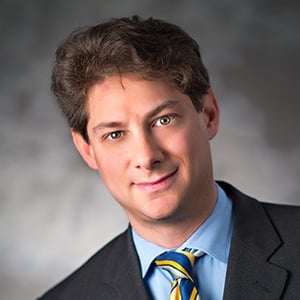
Fellow in Economic Studies and Policy Director, Center on Regulation and Markets, Brookings Institution
Aaron Klein is a fellow in Economic Studies at the Brookings Institution, where he also serves as policy director of the Center on Regulation and Markets. He focuses on financial regulation and technology, macroeconomics, and infrastructure finance and policy. Previously, Klein directed the Bipartisan Policy Center’s Financial Regulatory Reform Initiative. Klein served as Deputy Assistant Secretary for Economic Policy at the U.S. Treasury Department from 2009-2012. While at Treasury, Klein worked on multiple issues ranging from implementing aspects of the financial recovery program to developing new policy for financial regulation, housing finance, transportation and infrastructure, and Native American issues.
Prior to his appointment, he served as Chief Economist of the Senate Banking, Housing and Urban Affairs Committee for Chairmen Chris Dodd (D-CT) and Paul Sarbanes (D-MD). While working in the Senate Klein played a key role in a series of major legislation including, the Economic Emergency Stabilization Act of 2008 (better known as TARP), the Housing and Economic Recovery Act of 2008, the SAFETEA Act of 2005 that re-wrote America's surface transportation policy, the Check Truncation Act of 2003, the Terrorism Risk Insurance Act of 2002, and the Sarbanes-Oxley Act of 2002. A graduate of Dartmouth College and Princeton University, Klein lives in his hometown of Silver Spring, MD with his wife and two daughters.

Senior Fellow and Director, Center for Monetary and Financial Alternatives, Cato Institute
George Selgin is a senior fellow and director of the Center for Monetary and Financial Alternatives at the Cato Institute and Professor Emeritus of Economics at the University of Georgia. He is the author of The Theory of Free Banking (Rowman & Littlefield, 1988), Bank Deregulation and Monetary Order (Routledge, 1996), Good Money: Birmingham Button Makers, the Royal Mint, and the Beginnings of Modern Coinage (University of Michigan Press, 2008), Money: Free and Unfree (The Cato Institute, 2015), Less Than Zero: The Case for a Falling Price Level in a Growing Economy (The Cato Institute, 2018), and Floored! How a Misguided Fed Experiment Deepened and Prolonged the Great Recession (The Cato Institute 2018). Selgin holds a B.A. in economics and zoology from Drew University, and a Ph.D. in economics from New York University.

Associate Professor of Law, Antonin Scalia Law School, George Mason University
Associate Professor of Law J.W. Verret joined the Antonin Scalia Law School, George Mason University faculty in 2008. In 2013, he took leave for two years to serve as the Chief Economist and Senior Counsel for the U.S. House Committee on Financial Services. He received his JD and MA in Public Policy from Harvard Law School and the Harvard Kennedy School of Government, respectively, in 2006. While in law school, Professor Verret served an Olin Fellowship in Law and Economics at the Harvard Program on Corporate Governance under the guidance of Prof. Lucian Bebchuk.
Professor Verret then served as a law clerk for Vice-Chancellor John W. Noble of the Delaware Court of Chancery. Prior to joining the faculty at Scalia Law, Professor Verret was an associate in the SEC Enforcement Defense Practice Group at Skadden, Arps in Washington, D.C. He has written extensively on corporate law topics, including Delaware's Guidance, co-written with Chief Justice Myron T. Steele of the Delaware Supreme Court. His academic work has been featured in the Yale Journal on Regulation, The Business Lawyer, the Delaware Journal of Corporate Law, the Stanford Law Review, the University of Pennsylvania Journal of Business Law, and the Virginia Law and Business Review. Professor Verret was selected by the Northwestern Law School Searle Center on Law, Regulation, and Economic Growth for a 2009-2010 Searle-Kaufmann Research Fellowship.
Professor Verret is also a Senior Scholar at the Mercatus Center Working Group on Financial Markets, where he regularly briefs Congressional staff, members of Congress, SEC Commissioners and other financial regulatory agencies on financial regulation topics. He also directs the Corporate Federalism Initiative, where he obtains research grants for a network of students and faculty scholars who study the division between states and the federal government as sources of corporate law. Professor Verret has been invited to testify before various House and Senate Committees four times during the financial crisis of 2009 regarding all of the central provisions of the Obama Administration's 2009 financial regulatory reform proposals. For a full list of Professor Verret's C-Span appearances, including testimony before the U.S. House of Representatives and the U.S. Senate, see http://www.c-spanvideo.org/jwverret.
Professor Verret has been an invited panelist for various television appearances, including an interview on The NewsHour with Jim Lehrer. Professor Verret has been quoted in various media on financial regulation and corporate law topics, including the New York Times, CNN Money, the CNN Political Ticker, CNBC, ABC News, Investor's Business Daily, ESPN.com, The American Banker, The American Lawyer, The Huffington Post, CBS.com, and AP News. Professor Verret's op-eds have been featured in Forbes, The Chicago Tribune, The Orange County Register, and The Wall Street Journal. Professor Verret is also a regular guest contributor to three of the most noted corporate law and financial regulation law blogs: the Harvard Law School Corporate Governance and Financial Regulation Forum, Deallawyers.com, and The Conglomerate.
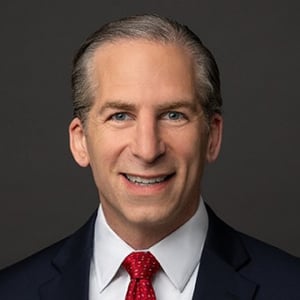
Partner, Cahill Gordon & Reindel LLP; Special Professor of Law, Maurice A. Dean School of Law, Hofstra University
Gary E. Kalbaugh is a nationally recognized leader in commodities, futures, and derivatives law.
Gary is a partner in the New York office of Cahill Gordon & Reindel LLP as well as a Special Professor of Law at the Maurice A. Deane School of Law at Hofstra University, where he teaches derivatives law and banking law.
A preeminent authority in the derivatives field, Gary is the author of the principal treatise Derivatives Law and Regulation (3rd ed. 2021) and serves as Editor-in-Chief of the Futures and Derivatives Law Report, the foremost industry publication. He is a past chair of the New York City Bar Association’s Committee on the Regulation of Futures and Derivatives and has over 15 years of experience as a professor teaching derivatives and banking law.
Gary is the leading derivatives lawyer in the digital assets space, and one of few to truly understand the technical side of emerging financial technology. He serves on the CFTC’s Future of Finance Subcommittee, reflecting his recognized leadership at the intersection of financial regulation and emerging technologies. A frequent speaker, writer, and commentator on derivatives, banking law, artificial intelligence, and digital assets regulation, he has served as conference co-chair for the American Bar Association’s “Artificial Intelligence and Derivatives Market” conference and regularly speaks at major industry conferences on cutting-edge issues in financial regulation and technology. Gary is sought after as a thought leader on the evolving landscape of digital asset regulation and the regulatory implications of AI in financial markets.
At ING, Gary served as Deputy General Counsel and Director, where he chaired swap dealer and security-based swap dealer regulatory committees and provided strategic leadership on U.S., European, and other regulations impacting the organization. He had global responsibility for U.S. derivatives regulatory issues and maintained strong relationships with regulators. Gary also co-developed ING legal’s global artificial intelligence training program and was responsible for U.S. regulatory issues relating to ING’s blockchain-based pilot programs and crypto initiatives.
Previously, Gary served as a lecturer-in-law at Columbia Law School and held senior roles at WestLB, where he was executive director, counsel, and chief U.S. data protection officer and chaired the global Dodd-Frank and underwriting committees. He began his career as an associate at a notable international firm.

Senior Adviser, Crito Capital
Dr. Oonagh McDonald, CBE is currently a senior adviser to Crito Capital, a private placement company based in New York.
A former British Member of Parliament, she became an international expert in financial regulation, after losing her seat in the General Election, 1987. She worked with the Asian Development Bank, advising regulatory authorities in a number of countries, including Sri Lanka and Indonesia. More recently, she has worked with USAID in Ukraine and Moldova. She has served as a non-executive director on the board of both financial services companies and regulatory authorities. In 1998, she was awarded the CBE (Commander of the British Empire), a national honor by the Queen for her work in financial regulation.
She is the author of numerous articles and seven books, of which the most recent are: “Holding bankers to account: A decade of market manipulation, regulatory failures and regulatory reforms” (Manchester University Press, 2019) and “Cryptocurrencies: Money, Trust and Regulation” (Agenda Publishing, 2021).

Senior Fellow, Mises Institute
Alex J. Pollock is a Senior Fellow with the Mises Institute, providing thought and policy leadership on financial issues and the study of financial systems. His work includes cycles of booms and busts, financial crises with their political responses, housing finance, government-sponsored enterprises, risk and uncertainty, central banking, banking and financial regulation, corporate governance, retirement finance, student loans, and the politics of finance.
He previously served as the Principal Deputy Director of the Office of Financial Research in the U.S. Treasury Department 2019-2021. He was a Distinguished Senior Fellow with the R Street Institute 2015-2019 and 2021, and a resident fellow at the American Enterprise Institute, 2004-2015. Among the many aspects of his AEI work, he developed the One Page Mortgage Form to give borrowers in clear form the key information they need in order to know what they are committing themselves to. He was President and CEO of the Federal Home Loan Bank of Chicago from 1991 to 2004. There he invented the Mortgage Partnership Finance program, which successfully created front-end mortgage credit risk sharing beginning in 1997. His decades of banking experience include being a Visiting Scholar at the Federal Reserve Bank of St. Louis, 1991.
Pollock was a director of the CME Group 2004-2019 and of Ascendium Education Group 1989-2019. He is a director and past-chairman of the Great Books Foundation and a past president of the International Union for Housing Finance.
He is the co-author of Surprised Again! - The COVID Crisis and the New Market Bubble (2022), and the author of Finance and Philosophy—Why We’re Always Surprised (2018) and Boom and Bust: Financial Cycles and Human Prosperity (2011), as well as numerous articles and Congressional testimony.
Pollock is a graduate of Williams College, the University of Chicago, and Princeton University.
His work is available on alexjpollock.com.
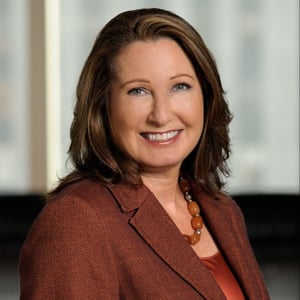
President, Americas and Global Chief Legal Officer, Merkle Science
Mary Beth Buchanan is currently President, Americas and Global Chief Legal Officer at Merkle Science. She was former General Counsel for Kraken Cryptocurrency Exchange. She was a partner at Bryan Cave LLP in the firm’s White Collar Defense and Investigations and Securities Litigation and Enforcement Client Service Groups. She concentrated her practice on white collar criminal defense, SEC and FINRA enforcement matters, corporate and accounting fraud, internal investigations, corporate compliance, foreign corrupt practices violations, Congressional investigations and complex civil litigation.
Ms. Buchanan served as the United States Attorney for the Western District of Pennsylvania from September 2001 to November 2009, having been appointed by President George W. Bush. She is the only woman in Pennsylvania's history to be presidentially appointed to this position. As the United States Attorney, Ms. Buchanan oversaw the prosecution of more than 5,000 cases, including corporate and securities fraud, bank fraud, foreign corrupt practices, false claims, money laundering, health care fraud, public corruption and a broad range of violent crimes. Prior to that time, Ms. Buchanan spent more than 13 years as an Assistant United States Attorney litigating criminal, civil and appellate cases.
During her tenure as the United States Attorney, Ms. Buchanan also held several posts at the DOJ, including serving as the director of the Executive Office for United States Attorneys, acting director of the DOJ’s Office on Violence Against Women and chair of the Attorney General’s Advisory Committee. Ms. Buchanan also served on the U.S. Sentencing Commission's Organizational Guidelines Advisory Committee, which made recommendations to the Commission for amendments to the Sentencing Guidelines for Business Organizations.
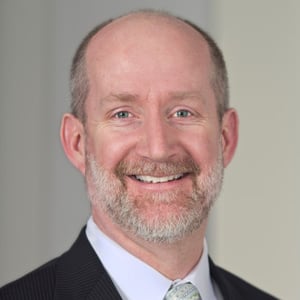
Nonresident Senior Fellow, American Enterprise Institute
Jim Harper is a nonresident senior fellow at the American Enterprise Institute (AEI), where he focuses on privacy issues, and select legal and constitutional law issues.
A lawyer by training, Mr. Harper has served as counsel for the Subcommittee on Commercial, and Administrative Law of the US House Committee on the Judiciary and as counsel for the Senate Committee on Government Affairs. More recently, he worked at the Competitive Enterprise Institute and the Cato Institute, where he wrote on the intersection of business, technology, and public policy, including privacy, surveillance, data security, telecommunications, and cryptocurrencies. He also served as global policy counsel for the Bitcoin Foundation. Mr. Harper was a founding member of the Department of Homeland Security’s Data Privacy and Integrity Advisory Committee. Early in his post-Hill career, he represented companies such as PayPal and Verisign before Congress.
Mr. Harper is the co-editor of “Terrorizing Ourselves: Why U.S. Counterterrorism Policy Is Failing and How to Fix It” (Cato Institute, 2010) and the author of “Identity Crisis: How Identification Is Overused and Misunderstood” (Cato Institute, 2006). He has written several amicus briefs in Fourth Amendment cases before the U.S. Supreme Court and has published scholarly articles in a variety of law journals. In the popular press, Mr. Harper has been published in The New York Times and The Wall Street Journal, among many other publications.
Mr. Harper has a law degree from the U.C. Hastings College of the Law, where he was editor-in-chief of the Hastings Constitutional Law Quarterly, and a BA from the University of California, Santa Barbara.
Regent’s Professor of Law and Director for the Center for Law, Science and Innovation, ASU Sandra Day O’Connor College of Law
Gary Marchant is a Regent's Professor of Law and director of the Center for Law, Science and Innovation. His research interests include legal aspects of genomics and personalized medicine, the use of genetic information in environmental regulation, risk and the precautionary principle, and governance of emerging technologies such as nanotechnology, neuroscience, biotechnology and artificial intelligence.
He teaches courses in Law, Science and Technology, Genetics and the Law, Biotechnology: Science, Law and Policy, Health Technologies and Innovation, Privacy, Big Data and Emerging Technologies, and Artificial Intelligence: Law and Ethics. He was named a Regents' Professor in 2011 and also is a professor in ASU’s School of Life Sciences, a Distinguished Sustainability Scientist in ASU’s Julie Ann Wrigley Global Institute of Sustainability, and is a Lincoln Professor of Emerging Technologies Law and Ethics with the Lincoln Center for Applied Ethics at ASU.
Prior to joining ASU in 1999, Professor Marchant was a partner at the Washington, D.C., office of Kirkland & Ellis, where his practice focused on environmental and administrative law. During law school, he was Editor-in-Chief of the Harvard Journal of Law & Technology and editor of the Harvard Environmental Law Review and was awarded the Fay Diploma (awarded to top graduating student at Harvard Law School).
Professor Marchant frequently lectures about the intersection of law and science at national and international conferences. He has authored more than 150 articles and book chapters on various issues relating to emerging technologies. Among other activities, he has served on five National Academy of Sciences committees, has been the principal investigator on several major grants, and has organized numerous academic conferences on law and science issues.

George C. Dix Professor in Constitutional Law, Northwestern University Pritzker School of Law
John O. McGinnis is a graduate of Harvard College and Harvard Law School where he was an editor of the Harvard Law Review. He also has an MA degree from Balliol College, Oxford, in philosophy and theology. Professor McGinnis clerked on the U.S. Court of Appeals for the District of Columbia. From 1987 to 1991, he was deputy assistant attorney general in the Office of Legal Counsel at the Department of Justice. He is the author of Accelerating Democracy: Transforming Government Through Technology (Princeton 2013) and Originalism and the Good Constitution (Harvard 2013) (with M. Rappaport). He is a past winner of the Paul Bator award given by the Federalist Society to an outstanding academic under 40. He has been listed by the United States on the roster of panelists who may be called upon to decide World Trade Organization Disputes.
Judge, United States Court of Appeals, Sixth Circuit
John B. Nalbandian serves as a United States Circuit Judge from Kentucky on the U.S. Court of Appeals for the Sixth Circuit. He was nominated and confirmed to that position in 2018. Prior to that, Judge Nalbandian was a partner in the litigation practice group of Taft Stettinius & Hollister LLP in Cincinnati, where he served as the firm’s lead appellate lawyer and also practiced complex litigation in state and federal courts. Judge Nalbandian was board certified by the Ohio State Bar Association as a specialist in appellate law. Prior to joining Taft, Judge Nalbandian practiced for five years in the appellate section of Jones Day in Washington, DC. Upon graduation from law school, Judge Nalbandian clerked for the Honorable Jerry E. Smith of the U.S. Court of Appeals for the Fifth Circuit in Houston. While in private practice, he also served as a board member of the State Justice Institute, a nonprofit organization established by the federal government to improve the administration of justice in state courts. He served as President of the Cincinnati Lawyers Chapter of the Federalist Society. He has also been involved in his community as a board member of the Greater Cincinnati Minority Counsel Program, and as a board member of the Asian Pacific Bar Association of Southwest Ohio. Judge Nalbandian earned his B.S., magna cum laude, from the Wharton School at the University of Pennsylvania and his J.D. from the University of Virginia School of Law, where he was inducted into the Order of the Coif and served as managing editor of the Virginia Law Review.
Vice President and Director, Center for Monetary and Financial Alternatives, Cato Institute
Norbert Michel is vice president and director of the Cato Institute’s Center for Monetary and Financial Alternatives, where he specializes on issues pertaining to financial markets and monetary policy. Michel was most recently the Director for Data Analysis at the Heritage Foundation where he edited, and contributed chapters, to two books: The Case Against Dodd–Frank: How the “Consumer Protection” Law Endangers Americans, and Prosperity Unleashed: Smarter Financial Regulation
Michel was previously a tenured professor at Nicholls State University’s College of Business, teaching finance, economics and statistics. Before that, he worked at Heritage as a tax policy analyst in the think tank’s Center for Data Analysis from 2002 to 2005. He previously was with the global energy company Entergy, where he worked on models to help predict bankruptcies of commercial clients.
Michel holds a doctoral degree in financial economics from the University of New Orleans. He received his bachelor of business administration degree in finance and economics from Loyola University. He currently resides in Virginia.
Senior Fellow, Mises Institute
Alex J. Pollock is a Senior Fellow with the Mises Institute, providing thought and policy leadership on financial issues and the study of financial systems. His work includes cycles of booms and busts, financial crises with their political responses, housing finance, government-sponsored enterprises, risk and uncertainty, central banking, banking and financial regulation, corporate governance, retirement finance, student loans, and the politics of finance.
He previously served as the Principal Deputy Director of the Office of Financial Research in the U.S. Treasury Department 2019-2021. He was a Distinguished Senior Fellow with the R Street Institute 2015-2019 and 2021, and a resident fellow at the American Enterprise Institute, 2004-2015. Among the many aspects of his AEI work, he developed the One Page Mortgage Form to give borrowers in clear form the key information they need in order to know what they are committing themselves to. He was President and CEO of the Federal Home Loan Bank of Chicago from 1991 to 2004. There he invented the Mortgage Partnership Finance program, which successfully created front-end mortgage credit risk sharing beginning in 1997. His decades of banking experience include being a Visiting Scholar at the Federal Reserve Bank of St. Louis, 1991.
Pollock was a director of the CME Group 2004-2019 and of Ascendium Education Group 1989-2019. He is a director and past-chairman of the Great Books Foundation and a past president of the International Union for Housing Finance.
He is the co-author of Surprised Again! - The COVID Crisis and the New Market Bubble (2022), and the author of Finance and Philosophy—Why We’re Always Surprised (2018) and Boom and Bust: Financial Cycles and Human Prosperity (2011), as well as numerous articles and Congressional testimony.
Pollock is a graduate of Williams College, the University of Chicago, and Princeton University.
His work is available on alexjpollock.com.
Wayne A. Abernathy, Wild Bells
Wayne A. Abernathy is a former U.S. Treasury Assistant Secretary for Financial Institutions under President George W. Bush, receiving the Alexander Hamilton Award in recognition of his service. In that office he was also a member of the Board of Directors of the Securities Investor Protection Corporation. Prior to his work at the Treasury, Mr. Abernathy served as Staff Director of the Senate Banking Committee, under Chairman Phil Gramm.
Following his service at the Treasury, Mr. Abernathy worked for 15 years on the staff of the American Bankers Association, as Executive Vice President for Financial Institutions Policy and Regulatory Affairs.
Previous experience with the Senate Banking Committee includes serving as Staff Director of the Subcommittee on Securities during 1995-1998. From 1989 until 1994, Mr. Abernathy was a Republican economist for the committee. He previously worked as a senior legislative assistant for Senator Gramm during 1987-1989 and as an economist for the Banking Committee’s Subcommittee on International Finance and Monetary Policy during 1981-1986, under Chairman Jake Garn.
Mr. Abernathy earned his bachelor’s degree in International Studies from The Johns Hopkins University in 1978. In 1980, he received a master’s degree in International Studies from the School of Advanced International Studies of The Johns Hopkins University.
Senior Fellow, Mises Institute
Alex J. Pollock is a Senior Fellow with the Mises Institute, providing thought and policy leadership on financial issues and the study of financial systems. His work includes cycles of booms and busts, financial crises with their political responses, housing finance, government-sponsored enterprises, risk and uncertainty, central banking, banking and financial regulation, corporate governance, retirement finance, student loans, and the politics of finance.
He previously served as the Principal Deputy Director of the Office of Financial Research in the U.S. Treasury Department 2019-2021. He was a Distinguished Senior Fellow with the R Street Institute 2015-2019 and 2021, and a resident fellow at the American Enterprise Institute, 2004-2015. Among the many aspects of his AEI work, he developed the One Page Mortgage Form to give borrowers in clear form the key information they need in order to know what they are committing themselves to. He was President and CEO of the Federal Home Loan Bank of Chicago from 1991 to 2004. There he invented the Mortgage Partnership Finance program, which successfully created front-end mortgage credit risk sharing beginning in 1997. His decades of banking experience include being a Visiting Scholar at the Federal Reserve Bank of St. Louis, 1991.
Pollock was a director of the CME Group 2004-2019 and of Ascendium Education Group 1989-2019. He is a director and past-chairman of the Great Books Foundation and a past president of the International Union for Housing Finance.
He is the co-author of Surprised Again! - The COVID Crisis and the New Market Bubble (2022), and the author of Finance and Philosophy—Why We’re Always Surprised (2018) and Boom and Bust: Financial Cycles and Human Prosperity (2011), as well as numerous articles and Congressional testimony.
Pollock is a graduate of Williams College, the University of Chicago, and Princeton University.
His work is available on alexjpollock.com.
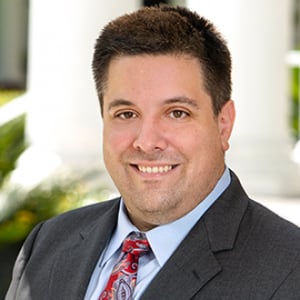
Sheila M. McDevitt Professor of Law and Faculty Director of the Election Law Center, Florida State University College of Law
Professor Morley joined FSU Law in 2018, and teaches and writes in the areas of election law, constitutional law, remedies, and the federal courts. He is best known for his work on election emergencies and post-election litigation, nationwide and other defendant-oriented injunctions, the jurisdiction of the federal courts and their equitable powers more generally. He has testified before congressional committees, made presentations to election officials for the U.S. Election Assistance Commission and participated in bipartisan blue-ribbon groups to develop election reforms. The governor of Florida also appointed Professor Morley to the Criminal Punishment Code Task Force, to propose potential revisions to the legislature.
The U.S. Supreme Court has cited several of his articles, and he was counsel of record for the successful Petitioner in a landmark campaign finance case. Professor Morley has appeared on C-SPAN, Court TV, Fox News and numerous local news programs, and has been quoted in the Washington Post, Los Angeles Times, Roll Call, Politico, U.S. News and World Report, and a wide range of other national publications. His work has been published in many of the nation’s top law reviews, including the Georgetown Law Journal, Northwestern University Law Review, Boston University Law Review and Emory Law Journal.
Before joining FSU Law, Professor Morley was a Climenko Fellow and Lecturer in Law at Harvard Law School. Prior to his experience in academia, he served in government as special assistant to the General Counsel of the Army at the Pentagon, as well as a law clerk for Judge Gerald B. Tjoflat of the U.S. Court of Appeals for the Eleventh Circuit. During his tenure with the Army General Counsel’s office, he was awarded the Meritorious Civilian Service Award and the Army Staff Lapel Pin. He also worked as an associate at Williams & Connolly LLP and the Supreme Court & Appellate group of Winston & Strawn, LLP, both in Washington, D.C.
Professor Morley earned his J.D. from Yale Law School in 2003, where he was a senior editor on the Yale Law Journal; served on the moot court board; and received the Thurman Arnold Prize for Best Oralist in the Morris Tyler Moot Court of Appeals.
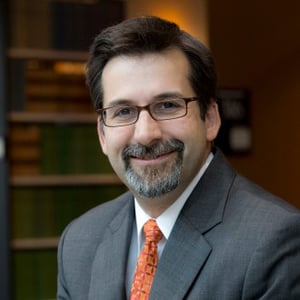
Dean and Anthony B. Buzbee Endowed Dean's Chair, Texas A&M University School of Law
A graduate of Princeton University's Woodrow Wilson School of Public and International Affairs and Yale Law School, Robert B. Ahdieh served as law clerk to Judge James R. Browning of the US Court of Appeals for the Ninth Circuit before his selection for the Honor's Program in the Civil Division of the US Department of Justice.
While still in law school, Ahdieh published what remains one of the seminal treatments of the constitutional transformation of post-Soviet Russia: "Russia's Constitutional Revolution—Legal Consciousness and the Transition to Democracy." Ahdieh's work has also appeared in the Boston University Law Review, Michigan Law Review, theMinnesota Law Review, the NYU Law Review, and the Southern California Law Review, among other journals.
Ahdieh’s scholarly interests revolve around questions of regulatory and institutional design, especially in the financial arena. His particular focus has been on various non-traditional regulatory structures and modes of regulation, including those grounded in dynamics of coordination. Though relatively less studied in the legal literature, the framework of coordination holds significant promise both in helping us theorize existing regulatory patterns and in defining new regulatory constructs for the future.
Ahdieh has explored regulatory and institutional design in a variety of transactional areas, including corporate and securities law, international trade and finance, and contracts. Within these, his work has emphasized two particular patterns of coordination. The first—intersystemic governance—draws on domestic regimes of federalism and transnational regimes of global governance and subsidiarity to highlight the potential benefits of complex systems of overlapping jurisdiction. The second draws on the dynamics at work in so-called “coordination games” to highlight distinct occasions for potential regulatory intervention, as well as various non-traditional regulatory forms, in our modern economic, social, and political order.
During the 2007–2008 academic year, Ahdieh was a visiting professor and the Microsoft/LAPA Fellow at Princeton University's Program in Law and Public Affairs. In Spring 2014, he served as Douglas McK. Brown Visiting Chair in Law, University of British Columbia. He has also visited at Columbia and Georgetown law schools, as well as numerous law schools overseas.
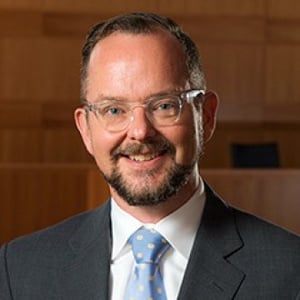
T.J. Maloney Chair in Business Law, Fordham University School of Law
Professor Griffith is an expert in corporate and financial regulatory law. He writes and speaks on corporate law, political economy, and the constitutional rights of corporations and other business associations. In addition to his academic writing, he has authored or contributed to many amicus briefs, including: Iowa v SEC, NCPPR v SEC, AFBR v SEC, and In re Tesla.
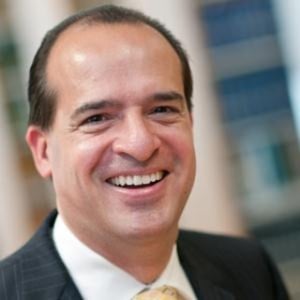
Professor of Law and Rouse Chairholder, Antonin Scalia Law School, George Mason University
Professor Miller holds an Allison and Dorothy Rouse Chair in Law at the Antonin Scalia Law School. An elected member of the American Law Institute and a research member of the European Corporate Governance Institute, Professor Miller is also a Fellow and the Co-Director of the Program on Organizations, Business and Markets at the Classical Liberal Institute at the New York University Law School, an Adjunct Fellow at the Manhattan Institute, and an Affiliated Scholar at the James Wilson Institute on Natural Rights and the American Founding. Prior to joining George Mason University in 2025, Professor Miller was the F. Arnold Daum Chair in Corporate Finance and Law and a Professor of Law at the University of Iowa College of Law, where he had also served as the Associate Dean for Faculty Development.
Professor Miller’s research concerns corporate and securities law, the economic analysis of law, and the philosophy of law. He is particularly interested in applying economic concepts and methods to understand provisions in contracts between sophisticated commercial parties. He has written on material adverse effect clauses under Delaware law, the fiduciary duties of corporate directors, director oversight liability, the history and development of Delaware corporate law, and much more. His articles and working papers are available on his SSRN page.
Professor Miller has been cited by federal and state courts in the United States, including the Delaware Supreme Court and the Delaware Court of Chancery, as well as by the Commercial Court of the United Kingdom and the Ontario Superior Court of Justice (Commercial List) in Canada. Additionally, he is a member of the Committee on Mergers, Acquisitions & Corporate Control Contests and a former chair of the Corporation Law Committee of the New York City Bar Association.
Earlier in his career, Professor Miller was a Professor of Law at the Villanova University School of Law and the Associate Director of the Matthew J. Ryan Center for the Study of Free Institutions and the Public Good at Villanova University. He has been a Visiting Professor of Law at the University of Pennsylvania Law School, a Visiting Assistant Professor of Law at the Cardozo Law School, and an Olin Fellow in Law and Economics at the Columbia Law School.
Before entering academia, Professor Miller was an associate with Wachtell, Lipton, Rosen & Katz. He earned his J.D. from the Yale Law School where he was a Senior Editor of the Yale Law Journal and an Olin Fellow in Law, Economics and Public Policy. He earned his M.A. and M.Phil. degrees in philosophy from Columbia University, where he held a Mellon Fellowship in the Humanities from the Woodrow Wilson National Fellowship Foundation and a Western Civilization Fellowship from the Intercollegiate Studies Institute. He earned his B.A. in philosophy and mathematics from Columbia College.
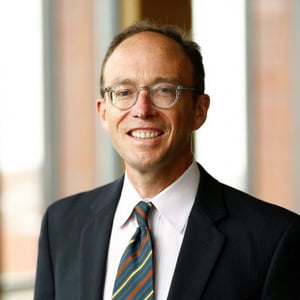
Professor of Legal Studies & Business Ethics, The Wharton School, The University of Pennsylvania
David Zaring’s scholarship addresses administrative and regulatory law from an international perspective. Professor Zaring comes to the business school from the Washington & Lee University School of Law. At Washington & Lee, he was an assistant professor and Alumni Faculty Fellow from 2005 to 2007. He had previously served as Acting Assistant Professor in the Lawyering Program at New York University School of Law from 2002 to 2005, and as a visiting professor at Vanderbilt Law School in the fall of 2007. After graduating magna cum laude from Harvard Law School, Professor Zaring clerked for Chief Judge William Matthew Byrne Jr. of the U.S. District Court for the Central District of California and then for Judge Judith Rogers on the US. Court of Appeals for the D.C. Circuit. He served as a trial attorney for the U.S. Department of Justice in the Federal Programs Branch of the Civil Division and as a special assistant to the General Counsel in the U.S. Department of Housing and Urban Development before entering the academy.

George Mason University Foundation Professor of Law, Antonin Scalia Law School, George Mason University
TODD J. ZYWICKI is George Mason University Foundation Professor of Law at Antonin Scalia Law School at George Mason University and Research Fellow of the George Mason Law and Economics Center. During the Fall 2023 semester he served as the Visiting Scholar in Conservative Thought and Policy for the Bruce Benson Center for the Study of Western Civilization at the University of Colorado-Boulder. From 2020-2021 he was Chair of the Consumer Financial Protection Bureau Taskforce on Federal Consumer Financial Law. In 2021 he was inducted to the American College of Consumer Financial Services Lawyers. He is also a Senior Fellow of the F.A. Hayek Program for the Advanced Study of Politics, Philosophy, and Economics at George Mason University and a former Senior Fellow of the Cato Institute. From 2015-2017 he was Executive Director of the George Mason Law and Economics Center. He served as Co-Editor of the Supreme Court Economic Review from 2006-2017. From 2003-2004, Professor Zywicki served as the Director of the Office of Policy Planning at the Federal Trade Commission. He has also taught at Vanderbilt University Law School, Georgetown University Law Center, Boston College Law School, Mississippi College School of Law, and China University of Political Science and Law.
Professor Zywicki clerked for Judge Jerry E. Smith of the U.S. Court of Appeals for the Fifth Circuit and worked as an associate at Alston & Bird in Atlanta, Georgia, where he practiced bankruptcy and commercial law. He received his J.D. from the University of Virginia, where he was executive editor of the Virginia Tax Review and John M. Olin Scholar in Law and Economics. Professor Zywicki also received an M.A. in Economics from Clemson University and an A.B. cum Laude with high honors in his major from Dartmouth College.
Professor Zywicki is also a Lone Mountain Fellow of the Property and Environment Research Center, a Fellow of the International Centre for Economic Research in Turin, Italy, and a former Senior Fellow of the Goldwater Institute. During the Fall 2008 Semester Professor Zywicki was the Searle Fellow of the George Mason University School of Law and was a 2008-09 W. Glenn Campbell and Rita Ricardo-Campbell National Fellow and the Arch W. Shaw National Fellow at the Hoover Institution on War, Revolution and Peace. He has lectured and consulted with government officials around the world, including Iceland, Italy, Japan, and Guatemala. In 2006 Professor Zywicki served as a Member of the United States Department of Justice Study Group on “Identifying Fraud, Abuse and Errors in the United States Bankruptcy System.”
Professor Zywicki is the author of more than 130 articles in leading law reviews and peer-reviewed economics journals. He is one of the Top 10 most-cited law professors in the field of Commercial Law and one of the Top 25 law professors on Twitter as measured by engagement levels. He is one of the Top 50 Most Downloaded Law Authors at the Social Science Research Network. He has testified multiple times before Congress on issues of consumer bankruptcy law and consumer credit and is a frequent commentator on legal issues in the print and broadcast media, including the Wall Street Journal, New York Times, The Washington Post, The Washington Times, Nightline, The Newshour with Jim Lehrer, Neil Cavuto Show, Fox & Friends, Smerconish, Fox News @ Night with Shannon Bream, Fox Business, CNN, CNBC, Bloomberg News, BBC, The Diane Rehm Show, Lou Dobbs Show, Jerry Doyle Show, and The Laura Ingraham Show.
Professor Zywicki is former Chairman and a current member of the Board of Directors of the Competitive Enterprise Institute, and is a member of the Board of Directors of the Institute for Humane Studies, Bill of Rights Institute, the Executive Committee for the Federalist Society's Financial Institutions and E-Commerce Practice Group, the Board of Trustees of the Foundation for Research on Economics and the Environment. He formerly served on the Governing Board and the Advisory Council for the Financial Services Research Program at George Washington University School of Business. He is currently the Chair of the Academic Advisory Council for the following organizations: The Bill of Rights Institute, the film “We the People in IMAX,” and the McCormick-Tribune Foundation “Freedom Museum” in Chicago, Illinois. He is a member of the Board of Visitors of Ralston College and was a member of the Board of Trustees of Yorktown University. From 2005-2009 he served as an elected Alumni Trustee of the Dartmouth College Board of Trustees.
Wayne A. Abernathy, Wild Bells
Wayne A. Abernathy is a former U.S. Treasury Assistant Secretary for Financial Institutions under President George W. Bush, receiving the Alexander Hamilton Award in recognition of his service. In that office he was also a member of the Board of Directors of the Securities Investor Protection Corporation. Prior to his work at the Treasury, Mr. Abernathy served as Staff Director of the Senate Banking Committee, under Chairman Phil Gramm.
Following his service at the Treasury, Mr. Abernathy worked for 15 years on the staff of the American Bankers Association, as Executive Vice President for Financial Institutions Policy and Regulatory Affairs.
Previous experience with the Senate Banking Committee includes serving as Staff Director of the Subcommittee on Securities during 1995-1998. From 1989 until 1994, Mr. Abernathy was a Republican economist for the committee. He previously worked as a senior legislative assistant for Senator Gramm during 1987-1989 and as an economist for the Banking Committee’s Subcommittee on International Finance and Monetary Policy during 1981-1986, under Chairman Jake Garn.
Mr. Abernathy earned his bachelor’s degree in International Studies from The Johns Hopkins University in 1978. In 1980, he received a master’s degree in International Studies from the School of Advanced International Studies of The Johns Hopkins University.
Associate Professor of Law, Antonin Scalia Law School, George Mason University
Associate Professor of Law J.W. Verret joined the Antonin Scalia Law School, George Mason University faculty in 2008. In 2013, he took leave for two years to serve as the Chief Economist and Senior Counsel for the U.S. House Committee on Financial Services. He received his JD and MA in Public Policy from Harvard Law School and the Harvard Kennedy School of Government, respectively, in 2006. While in law school, Professor Verret served an Olin Fellowship in Law and Economics at the Harvard Program on Corporate Governance under the guidance of Prof. Lucian Bebchuk.
Professor Verret then served as a law clerk for Vice-Chancellor John W. Noble of the Delaware Court of Chancery. Prior to joining the faculty at Scalia Law, Professor Verret was an associate in the SEC Enforcement Defense Practice Group at Skadden, Arps in Washington, D.C. He has written extensively on corporate law topics, including Delaware's Guidance, co-written with Chief Justice Myron T. Steele of the Delaware Supreme Court. His academic work has been featured in the Yale Journal on Regulation, The Business Lawyer, the Delaware Journal of Corporate Law, the Stanford Law Review, the University of Pennsylvania Journal of Business Law, and the Virginia Law and Business Review. Professor Verret was selected by the Northwestern Law School Searle Center on Law, Regulation, and Economic Growth for a 2009-2010 Searle-Kaufmann Research Fellowship.
Professor Verret is also a Senior Scholar at the Mercatus Center Working Group on Financial Markets, where he regularly briefs Congressional staff, members of Congress, SEC Commissioners and other financial regulatory agencies on financial regulation topics. He also directs the Corporate Federalism Initiative, where he obtains research grants for a network of students and faculty scholars who study the division between states and the federal government as sources of corporate law. Professor Verret has been invited to testify before various House and Senate Committees four times during the financial crisis of 2009 regarding all of the central provisions of the Obama Administration's 2009 financial regulatory reform proposals. For a full list of Professor Verret's C-Span appearances, including testimony before the U.S. House of Representatives and the U.S. Senate, see http://www.c-spanvideo.org/jwverret.
Professor Verret has been an invited panelist for various television appearances, including an interview on The NewsHour with Jim Lehrer. Professor Verret has been quoted in various media on financial regulation and corporate law topics, including the New York Times, CNN Money, the CNN Political Ticker, CNBC, ABC News, Investor's Business Daily, ESPN.com, The American Banker, The American Lawyer, The Huffington Post, CBS.com, and AP News. Professor Verret's op-eds have been featured in Forbes, The Chicago Tribune, The Orange County Register, and The Wall Street Journal. Professor Verret is also a regular guest contributor to three of the most noted corporate law and financial regulation law blogs: the Harvard Law School Corporate Governance and Financial Regulation Forum, Deallawyers.com, and The Conglomerate.
Senior Fellow, Mises Institute
Alex J. Pollock is a Senior Fellow with the Mises Institute, providing thought and policy leadership on financial issues and the study of financial systems. His work includes cycles of booms and busts, financial crises with their political responses, housing finance, government-sponsored enterprises, risk and uncertainty, central banking, banking and financial regulation, corporate governance, retirement finance, student loans, and the politics of finance.
He previously served as the Principal Deputy Director of the Office of Financial Research in the U.S. Treasury Department 2019-2021. He was a Distinguished Senior Fellow with the R Street Institute 2015-2019 and 2021, and a resident fellow at the American Enterprise Institute, 2004-2015. Among the many aspects of his AEI work, he developed the One Page Mortgage Form to give borrowers in clear form the key information they need in order to know what they are committing themselves to. He was President and CEO of the Federal Home Loan Bank of Chicago from 1991 to 2004. There he invented the Mortgage Partnership Finance program, which successfully created front-end mortgage credit risk sharing beginning in 1997. His decades of banking experience include being a Visiting Scholar at the Federal Reserve Bank of St. Louis, 1991.
Pollock was a director of the CME Group 2004-2019 and of Ascendium Education Group 1989-2019. He is a director and past-chairman of the Great Books Foundation and a past president of the International Union for Housing Finance.
He is the co-author of Surprised Again! - The COVID Crisis and the New Market Bubble (2022), and the author of Finance and Philosophy—Why We’re Always Surprised (2018) and Boom and Bust: Financial Cycles and Human Prosperity (2011), as well as numerous articles and Congressional testimony.
Pollock is a graduate of Williams College, the University of Chicago, and Princeton University.
His work is available on alexjpollock.com.
Vice President and Director, Center for Monetary and Financial Alternatives, Cato Institute
Norbert Michel is vice president and director of the Cato Institute’s Center for Monetary and Financial Alternatives, where he specializes on issues pertaining to financial markets and monetary policy. Michel was most recently the Director for Data Analysis at the Heritage Foundation where he edited, and contributed chapters, to two books: The Case Against Dodd–Frank: How the “Consumer Protection” Law Endangers Americans, and Prosperity Unleashed: Smarter Financial Regulation
Michel was previously a tenured professor at Nicholls State University’s College of Business, teaching finance, economics and statistics. Before that, he worked at Heritage as a tax policy analyst in the think tank’s Center for Data Analysis from 2002 to 2005. He previously was with the global energy company Entergy, where he worked on models to help predict bankruptcies of commercial clients.
Michel holds a doctoral degree in financial economics from the University of New Orleans. He received his bachelor of business administration degree in finance and economics from Loyola University. He currently resides in Virginia.
Lecturer in Economics, Stanford Graduate School of Business
I spent more than 14 years in economic policy roles advising senior elected officials, including for a time as the senior White House economic advisor to President George W. Bush. As Deputy Director and then Director of the White House National Economic Council, I coordinated economic policy design and implementation for the President.
The last thirteen months of my time in the White House were by far the most intense, helping advise President Bush on his Administration’s response to the financial crisis.
In addition to that work, here are some of the major Presidential policies that I helped design, enact, and implement:
Before working for President Bush I was an aide to Senate Majority Leader Trent Lott (R-MS). I helped him enact economic legislation (and block other legislation) including the 1997 Balanced Budget Act and President Bush’s 2001 tax cut. I came to Senator Lott’s staff from the Senate Budget Committee staff, where I spent two years as a health and retirement economist working for the Chairman, Senator Pete Domenici (R-NM).
I’ve got a Master’s in Public Policy from Harvard’s Kennedy School and a B.A.S. in Math and Political Science from Stanford.

Chief Legal Officer & EVP Strategy and Corporate Affairs, Purdue Pharma L.P.
Marc Kesselman was appointed General Counsel of Purdue Pharma L.P. in July 2018, with responsibility for Purdue’s legal strategy, corporate governance, compliance, and government affairs. He has since been promoted to Chief Legal Officer and EVP Strategy & Corporate Affairs with added oversight of strategy, business development, human resources, security, and communications. Marc joined Purdue Pharma after the company came under intense scrutiny and is helping to engineer a corporate turnaround. Under Marc's leadership, Purdue has secured initial approval of its plan to emerge as a public-minded company dedicated to abating the opioid crisis, responsibly manufacturing and distributing opioid analgesics, and advancing a robust pipeline of non-opioid medicines with the promise of addressing serious medical conditions.
Prior to joining Purdue Pharma, Marc worked for YUM! Brands, Inc. where he served as Chief Legal Officer, Corporate Secretary & Chief Public Policy Officer. In that role, he oversaw all aspects of legal, compliance, regulatory, government affairs, and sustainability agendas for one of the world’s largest restaurant companies, with more than 45,000 restaurants in 135 countries and territories. Marc joined Yum! from Dean Foods where he held a similar role. Previously, he was Senior Vice President & General Counsel at PepsiCo America’s Foods where he oversaw a wide variety of complex commercial, transactional, litigation, regulatory, and government affairs issues relating to PepsiCo's food businesses in North and South America.
From 2006 through 2008, Marc served as General Counsel of the U.S. Department of Agriculture (USDA), where he advised the Secretary of Agriculture and directed all legal activity for the Department. For the previous three years, he served as Deputy General Counsel in the White House Office of Management and Budget, where he handled a variety of regulatory, budgetary and legal policy matters. Marc also worked at the U.S. Department of Justice as Senior Counsel in the Office of Legal Policy and as a Trial Attorney in its Civil Division. His work there earned him the John Marshall Award, the Attorney General’s highest recognition for trial of litigation.
Marc currently serves on the Board of the U.S. Chamber of Commerce Litigation Center, and the Penn Law Alumni Board of Managers. He has previously served as a Public Member of the Administrative Conference of the United States, on the Board of the Dallas Symphony, on the Campaign Cabinet of the United Way of Metropolitan Dallas, and as Chair of the DC Bar Administrative Law Section. He has been named as one of the most influential General Counsel in America by Chambers & Partners, and twice named to the D CEO list of the most influential business leaders in Dallas. In 2023, Marc was named a "Legend in the Law" by the Burton Awards in association with the American Bar Association and the Library of Congress.
Marc holds a JD with honors from the University of Pennsylvania, and a B.A. in Government magna cum laude from Cornell University.
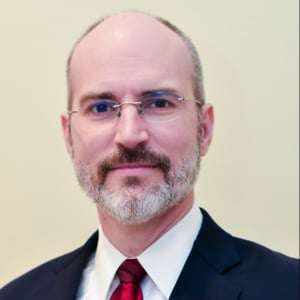
Solicitor General, Attorney General of Texas
William Peterson was appointed by Attorney General Paxton as Solicitor General. Before joining the Office of the Attorney General, Mr. Peterson was a partner at Morgan, Lewis & Bockius. He previous served as a law clerk to Justice Clarence Thomas of the Supreme Court of the United States and Judge Edith Jones of the United States Court of Appeals for the Fifth Circuit. Mr. Peterson received a J.D. from the University of Texas School of Law and an undergraduate degree in Engineering and Applied Sciences from the California Institute of Technology.

Deep Dive Episode 64 – The Federal Reserve and Real-Time Payment Systems
Aaron Klein, George Selgin, J.W. Verret
The Federal Reserve plays a central role in the nation’s payment systems. Reserve banks keep...
LIBOR – Will a $200 Trillion Global Benchmark Disappear – or Not?
Gary Kalbaugh, Oonagh Ann McDonald, Alex J. Pollock
LIBOR is a hugely important interest rate benchmark, used globally and embedded in over $200...
Panel 4: Blockchain-Backed Cryptocurrencies: Order Without Law in the Digital Age
Mary Beth Buchanan, Jim Harper, Gary E. Marchant, John O. McGinnis, John B. Nalbandian
On March 15-16, 2019, the Federalist Society's student chapter at the ASU Sandra Day O'Connor...
Federal Reserve Independence
Norbert J. Michel, Alex J. Pollock
In years, the issue of Federal Reserve independcy have arison to the top of public...
Book Review: Finance and Philosophy: Why We're Always Surprised
Wayne A. Abernathy, Alex J. Pollock
Finance and Philosophy provides a concise and witty account of how bankers and financial regulators...
Husted v. A. Philip Randolph Institute - Post-Argument SCOTUScast
Michael T. Morley
On January 10, 2018, the Supreme Court heard argument in Husted v. A. Philip Randolph...
Financial Crisis and Regulatory Frameworks
Robert B. Ahdieh, Sean J. Griffith, Robert T. Miller, David Zaring, Todd J. Zywicki
With January 2018 marking roughly a decade after the start of the most recent financial...
Deep Dive Episode 13 – Discussion on U.S. Treasury Reports
Wayne A. Abernathy, J.W. Verret
On Friday, October 6, Treasury issued the second of its reports to the President on...
Federal Reserve Accountability and the CHOICE Act - Podcast
Alex J. Pollock, Norbert J. Michel
To whom is the Federal Reserve accountable? Does the Fed's insistence on its "independence" mean...
Interview: The 2008 Financial Crisis
Keith Hennessey, Marc Kesselman, William Peterson
On September 19, 2015, The Federalist Society hosted the 2015 Texas Chapters Conference at the George...