








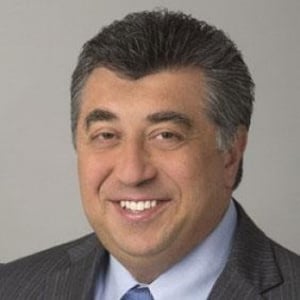

At Stanford Law School, O’Connell teaches Administrative Law, Advanced Administrative Law, and Constitutional Law. The class of 2020 chose her to receive the Hurlbut Award, which is given to one professor “who strives to make teaching an art.” She co-chaired the steering committee for Stanford University’s Faculty Women’s Forum, which works to enable all women faculty to thrive, from August 2022 to January 2024 and jointly conducted two surveys on COVID’s impacts on faculty for FWF. Prior to joining Stanford University in 2018, O’Connell was the George Johnson Professor of Law at the University of California, Berkeley. While there, she received the Distinguished Teaching Award (the campus’s most prestigious honor for teaching) in 2016 and Berkeley Law’s Rutter Award for Teaching Distinction in 2012. From April 2013 to July 2015, she served as associate dean for faculty development and research under three different deans. In 2013-2014, O’Connell was co-president of the Society for Empirical Legal Studies (co-organizing the 2014 Conference on Empirical Legal Studies).
Before joining the Berkeley Law faculty in 2004, O’Connell clerked for Justice Ruth Bader Ginsburg of the U.S. Supreme Court during the October 2003 term. From 2001 to 2003, she was a trial attorney for the Federal Programs Branch of the U.S. Department of Justice’s Civil Division, receiving commendations for her work. She clerked for Judge Stephen F. Williams of the U.S. Court of Appeals for the D.C. Circuit from 2000 to 2001. A Truman Scholar, O’Connell worked for a number of federal agencies in earlier years, including the Department of Defense (Offices of the General Counsel and Inspector General), Federal Trade Commission (Bureau of Competition), Department of Justice (Office of Legal Counsel), and U.S. Army (RDE). She is a member of the New York bar and served as a volunteer for the Biden-Harris Campaign’s policy team.



From the Courthouse Steps: Trump v. Slaughter and Trump v. Cook
Erin M. Hawley, Adam White
In Trump v. Slaughter, the Supreme Court held 6-3 that the Federal Trade Commission's (FTC)...
Arthur N. Rupe Debate: Judging the Supreme Court's Emergency Docket
Jonathan H. Adler, Chad A. Readler, Jed Shugerman
The Federalist Society at UVA Law is pleased to host their 7th Annual Originalism...
Loper Bright Fallout for SEC Rulemaking?
Jan Folena, Margaret A. Little, Michael Piwowar
In an unprecedented action, the SEC in July dismissed with prejudice a pending enforcement case...
Structure Over Spectacle: The Supreme Court's 2024 Term
Donald A. Daugherty, David C. Tryon
After several years of headline-grabbing decisions that reshaped national political debate—from abortion and affirmative action...
Courthouse Steps Oral Argument: Trump v. Slaughter
Eli Nachmany, Bilal Sayyed
Humphrey's Executor v. United States, decided in 1935, upheld the Federal Trade Commission Act, declaring...
Legislative or Executive? The Curious Case of the Library of Congress
Anne Joseph O'Connell, Robert J. Rando, Zvi Rosen, Devin Watkins
The recent dismissal of the Librarian of Congress and the Register of Copyrights by President...
Courthouse Steps Decision: Federal Communications Commission v. Consumers’ Research
Sean Lev, Devin Watkins
The Federal Communications Commission (FCC) has traditionally regulated interstate and international communications and, as part...
Courthouse Steps Oral Argument: Kennedy v. Braidwood Management, Inc.
Timothy Sandefur
In Kennedy v. Braidwood Management, Inc. the Supreme Court will consider "Whether the U.S. Court...
Courthouse Steps Oral Argument: Kennedy v. Braidwood Management, Inc.
Timothy Sandefur
In Kennedy v. Braidwood Management, Inc. the Supreme Court will consider "Whether the U.S. Court...
Courthouse Steps Oral Argument: Kennedy v. Braidwood Management, Inc.