

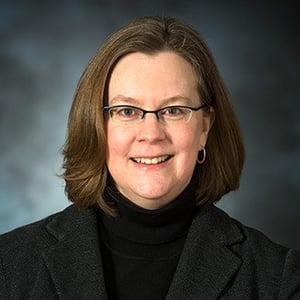
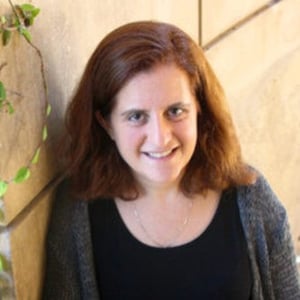
At Stanford Law School, O’Connell teaches Administrative Law, Advanced Administrative Law, and Constitutional Law. The class of 2020 chose her to receive the Hurlbut Award, which is given to one professor “who strives to make teaching an art.” She co-chaired the steering committee for Stanford University’s Faculty Women’s Forum, which works to enable all women faculty to thrive, from August 2022 to January 2024 and jointly conducted two surveys on COVID’s impacts on faculty for FWF. Prior to joining Stanford University in 2018, O’Connell was the George Johnson Professor of Law at the University of California, Berkeley. While there, she received the Distinguished Teaching Award (the campus’s most prestigious honor for teaching) in 2016 and Berkeley Law’s Rutter Award for Teaching Distinction in 2012. From April 2013 to July 2015, she served as associate dean for faculty development and research under three different deans. In 2013-2014, O’Connell was co-president of the Society for Empirical Legal Studies (co-organizing the 2014 Conference on Empirical Legal Studies).
Before joining the Berkeley Law faculty in 2004, O’Connell clerked for Justice Ruth Bader Ginsburg of the U.S. Supreme Court during the October 2003 term. From 2001 to 2003, she was a trial attorney for the Federal Programs Branch of the U.S. Department of Justice’s Civil Division, receiving commendations for her work. She clerked for Judge Stephen F. Williams of the U.S. Court of Appeals for the D.C. Circuit from 2000 to 2001. A Truman Scholar, O’Connell worked for a number of federal agencies in earlier years, including the Department of Defense (Offices of the General Counsel and Inspector General), Federal Trade Commission (Bureau of Competition), Department of Justice (Office of Legal Counsel), and U.S. Army (RDE). She is a member of the New York bar and served as a volunteer for the Biden-Harris Campaign’s policy team.
Appointments Clause Back in the Supreme Court: Patent Office Judges as Principal or Inferior Officers
Aditya Bamzai, John C. O'Quinn
Eleven months ago the Federal Circuit held that the Administrative Patent Judges who serve on...
Appointments Clause Back in the Supreme Court: Patent Office Judges as Principal or Inferior Officers
Federalism and Separation of Powers Practice Group Teleforum
TeleforumAurelius Investment, LLC v. Puerto Rico - Post-Decision SCOTUScast
On June 1, 2020, the Supreme Court issued the decision in the case Aurelius Investment,...
Is Our Modern Administrative State Unmoored from the Morality of Law?
Ted Hirt
A review of The Dubious Morality of Modern Administrative Law, by Richard A. Epstein (Manhattan Institute...
PROMESA and the Appointments Clause
Pennsylvania Student Chapter
Philadelphia, PANecessary & Proper Episode 46: Subdelegations of Rulemaking Power and the Appointments Clause
Kristin E. Hickman, Todd F. Gaziano, Anne Joseph O'Connell
The strictures of the Appointments Clause are receiving renewed attention in the courts, including the...
Deep Dive Episode 65 – Subdelegations of Rulemaking Power and the Appointments Clause
Todd F. Gaziano, Kristin E. Hickman, Anne Joseph O'Connell
The strictures of the Appointments Clause are receiving renewed attention in the courts, including the...
Deep Dive Episode 65 – Subdelegations of Rulemaking Power and the Appointments Clause
Regulatory Transparency Project and Administrative Law & Regulation Practice Group Teleforum
TeleforumIs There a Constitutional Issue in the USMCA?
John S. Baker, Sohan Dasgupta
Some argue that the United States Mexico Canada Agreement (USMCA) presents interesting questions about how...
Is There a Constitutional Issue in the USMCA?
Teleforum