
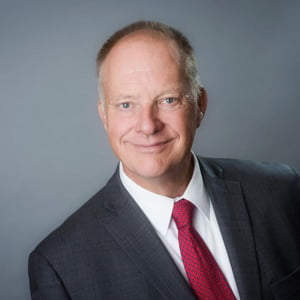
Associate Justice, Minnesota Supreme Court (ret.)
Former Minnesota Supreme Court Justice Barry Anderson is a 1976 graduate of Gustavus Adolphus College in St. Peter, Minnesota and a 1979 graduate of the University of Minnesota Law School. He was a member of the Minnesota Court of Appeals from August 1998 until his appointment to the Supreme Court. He was sworn in and joined the court on October 13, 2004, and served through to his retirement on May 10, 2024.
He previously was a partner in the Minneapolis and Hutchinson law firm of Arnold, Anderson & Dove, PLLP, and also served the City of Hutchinson as City Attorney from 1987 to 1998. He is certified by the Minnesota State Bar Association as a civil trial specialist.
Justice Anderson’s background includes substantial public service including as a board member and chair of variety of community organizations including service clubs, task forces and a local public access channel as well as a wide variety of other community activities.
Justice Anderson also served on the Minnesota Judicial Council, the managing body for the Minnesota Judicial Branch. He is also a frequent contributor to continuing legal education efforts on both appellate advocacy issues as well as general trial practice.

Justice, Supreme Court of Arizona
Clint Bolick was appointed by Governor Doug Ducey in January 2016 to serve on the Arizona Supreme Court and was retained by the voters in 2018 and 2024.
Prior to joining the Court, Justice Bolick litigated constitutional cases in state and federal courts from coast to coast, including the U.S. Supreme Court. Among other positions, he served as Vice President for Litigation at the Goldwater Institute and as Co-founder and Vice President for Litigation at the Institute for Justice. He has litigated in support of school choice, freedom of enterprise, private property rights, freedom of speech, and federalism, and against racial classifications and government subsidies.
Justice Bolick received his Juris Doctor degree from the University of California at Davis, where he has been recognized as a distinguished alumnus, and his Bachelor of Arts degree magna cum laude from Drew University. He serves as a research fellow with the Hoover Institution. Among other honors, he was named one of the 90 Greatest DC Lawyers in the Last 30 Years by Legal Times in 2008, received a Bradley Prize in 2006, and was recognized as one of the nation’s three lawyers of the year by American Lawyer in 2002 for his successful defense of school vouchers in Zelman v. Simmons-Harris.
Justice Bolick is a prolific author of a dozen books and hundreds of articles. Among his most recent books are Unshackled: Freeing America’s K-12 Education System: Immigration Wars: Forging an American Solution, co-authored with former Florida Governor Jeb Bush; and David’s Hammer: The Case for an Activist Judiciary. Bolick serves as an adjunct professor of constitutional law at Arizona State University’s Sandra Day O’Connor School of Law and has served as a lecturer at Harvard University’s John F. Kennedy School of Government.
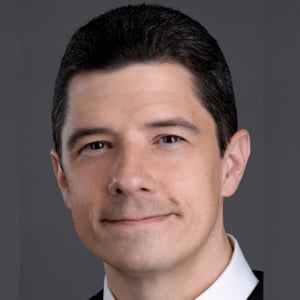
Justice, Texas Supreme Court
Brett Busby was appointed to the Supreme Court of Texas in 2019, confirmed unanimously by the Texas Senate, and elected to a full term in 2020. He previously practiced as an appellate litigator in Houston, served on the Fourteenth Court of Appeals and the Texas Multi-District Litigation Panel, and taught at U.T. Law School as an adjunct professor.
Brett is a seventh-generation Texan, third-generation Eagle Scout, and life-long violinist who grew up in Amarillo and Austin. After graduating with high honors from Duke University and Columbia Law School, he served as a law clerk to Justices Byron R. White (Ret.) and John Paul Stevens, U.S. Supreme Court, and to Judge Gerald Bard Tjoflat, U.S. Court of Appeals, Eleventh Circuit.
In private practice, Brett presented oral argument in the U.S. Supreme Court and handled dozens of appeals in that Court, the Supreme Court of Texas, and federal and state appellate courts. He is board-certified in civil appellate law, and his fellow Texas appellate lawyers elected him as Chair of the State Bar of Texas Appellate Section in 2018. He has also served as Chair of the Texas Bar Committee on Pattern Jury Charges (Business, Consumer, Insurance, and Employment) and as a Director of the Texas Young Lawyers Association.
Brett serves as the Court’s liaison to the Texas Access to Justice Commission and Foundation, which help assure that Texans with limited means have access to basic civil legal services. He received the 2022 Judicial Civic Education Award from the American Lawyers Alliance for his work on the Teach Texas judicial civics program, a partnership with the Houston Bar Association and the Texas Supreme Court Historical Society that sends lawyers and judges to teach seventh graders about our court system and Texas legal history. The Texas Association of Civil Trial and Appellate Specialists named him Appellate Judge of the Year in 2018.
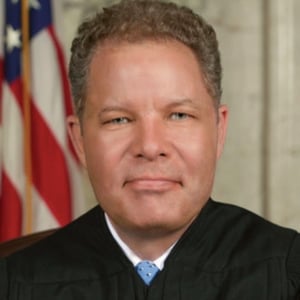
Former Justice, Wisconsin Supreme Court
Justice Daniel Kelly was appointed to the Supreme Court by Gov. Scott Walker in 2016 to fill the vacancy created by the retirement of Justice David T. Prosser, Jr.
A native of Santa Barbara, California, Kelly grew up in Arvada, Colorado. He came to Waukesha, Wisconsin to study at Carroll College (now Carroll University), where he earned a bachelor's degree in Political Science and Spanish in 1986. He earned his law degree from Regent University School of Law in Virginia Beach, Virginia in 1991.
Before joining the Court, Kelly had 19 years' experience as a private practice attorney in Wisconsin and represented clients in cases before the Wisconsin Supreme Court and the U.S. Supreme Court. Kelly spent most of his private practice career at one of the largest and oldest law firms in Wisconsin. Subsequently, he served as vice president and general counsel for a philanthropic foundation, and then practiced law at a firm he owned and founded in Waukesha.
Early in his legal career, Kelly was a law clerk and then staff attorney for the Office of Special Masters of the U.S. Court of Federal Claims, from 1992 to 1996. He worked as a law clerk for the late Wisconsin Court of Appeals Judge Ralph Adam Fine from 1991 to 1992.
Kelly is a member of the board of advisors and past president of the Milwaukee Lawyer's Chapter of the Federalist Society. He serves on the Carroll University President's Advisory Council and is a former member of the Wisconsin Advisory Committee of the U.S. Commission on Civil Rights.
Kelly is married and has five children. He lives in North Prairie, Wisconsin.
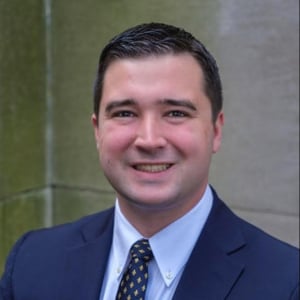
Law Clerk to the Hon. Justin Walker, U.S. Court of Appeals for the D.C. Circuit
Eric Bush is a law clerk for the Honorable Justin R. Walker on the United States Court of Appeals for the District of Columbia Circuit. He graduated magna cum laude from Harvard Law School, where he was Deputy Editor-in-Chief of the Harvard Journal of Law and Public Policy and a member of the winning team in the Ames Moot Court Competition. Eric also served on the Advisory Council for the Harvard Law School Student Chapter of the Federalist Society. He holds a B.A. and B.S. from the University of Louisville.
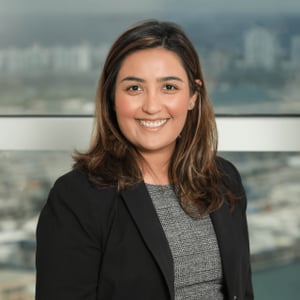
Associate, Shutts and Bowen LLP
Shiza Francis is a recent graduate of Washington University School of Law where she served as the President of the Federalist Society student chapter and as a research assistant for Prof. Conor Clarke. She will be starting at Shutts and Bowen LLP in their Government and Appellate Litigation practice group and will be clerking on the Southern District of Florida in 2026. During law school, she interned at the U.S. House Committee on Oversight, the Missouri Solicitor General’s Office, and the United States Attorney’s Office for the Eastern District of Missouri. Prior to law school, Shiza worked at the Federalist Society, the White House Office of Management and Budget, and the Office of General Counsel for the Governor of Florida. She holds a B.A. from Villanova University.
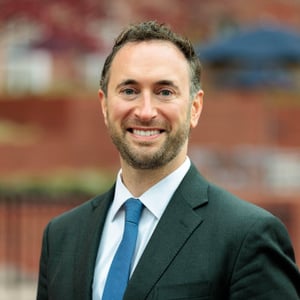
Associate Dean for Academic Affairs, The George Washington University Law School
Aram A. Gavoor is the Associate Dean for Academic Affairs and an internationally recognized scholar in American administrative law, national security, and federal courts. His co-authored work was cited by the U.S. Supreme Court in Department of Commerce v. New York (2019). His scholarship has earned placement in the Florida Law Review, Indiana Law Journal, Ohio State Law Journal, and other law journals. He has briefed and argued over a dozen high-profile public law cases before a majority of the U.S. Courts of Appeals and numerous cases before almost a third of the 94 U.S. District Courts. Associate Dean Gavoor frequently shares his national security, artificial intelligence policy, and federal courts expertise with international news media, including CNN, BBC World News, Wall Street Journal, NBC News, and ABC (Australia) World News. In 2021, the National Law Journal named Associate Dean Gavoor a Rising Star (top 40 under 40) honoree.
Earlier in his career, Associate Dean Gavoor served as Senior Counsel for National Security in the Civil Division of the U.S. Department of Justice, as third-in-rank Counselor to the Administrator of the Office of Information and Regulatory Affairs in the White House Office of Management and Budget, and in private practice. He received the Attorney General's Award for Distinguished Service in 2019, the Civil Division Special Commendation Award in 2020, 2019, and 2018, and a Commendation from the Human Rights and Special Prosecutions Section of the Criminal Division in 2018.
Associate Dean Gavoor previously served on the law school’s part-time faculty from 2008-2017 before accepting a term-limited position as Visiting Associate Professor from 2017-2019. He received GW Law’s Distinguished Adjunct Faculty Teaching Award from the 2020 and 2017 graduating classes. He currently teaches Constitutional Law II, Administrative Law, National Security Law, and Federal Courts.
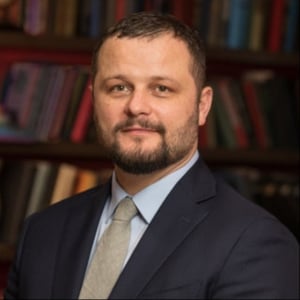
Law Clerk to the Hon. Emil Bove, United States Court of Appeals
Aaron Watt is a law clerk for the Honorable Emil Bove on the United States Court of Appeals. He graduated from Scalia Law School where he was President of the Federalist Society Student chapter. While in law school, Aaron worked on the United States Senate Committee on the Judiciary for Senator Ted Cruz. He also worked as a law clerk for America First Legal. Aaron graduated summa cum laude from the University of Maine where he obtained a B.A. in Philosophy and minors in Political Science and Legal Studies. Before attending law school, Aaron spent 20 years in the private sector owning two businesses.
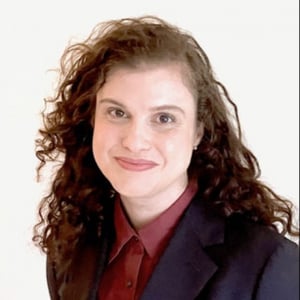
Associate Professor of Law & Dean’s Scholar in Intellectual Property, Texas Tech School of Law
Barbara Lauriat has taught and conducted research in most areas of intellectual property law, including copyright, patents, and trademarks; her work often takes a comparative approach, using examples from different national legal systems and drawing on legal history. Educated in the United States and the United Kingdom, she began her legal academic career in England, teaching intellectual property law to undergraduate, L.L.M., and Ph.D. students at King's College London from 2011-2022, after serving as the Career Development Fellow in Intellectual Property Law and a Fellow of St. Catherine's College at the University of Oxford from 2008-2010. She has previously held visiting positions as the Frank H. Marks Fellow in Intellectual Property Law at George Washington University Law School, a Faculty Fellow at the Notre Dame Institute for Advanced Study, a Faculty Associate at the Berkman Klein Center for the Internet & Society at Harvard University, a Faculty Research Fellow of the Oxford Intellectual Property Research Centre at the University of Oxford, a Scholar-in-Residence in the International Arbitration Department at WilmerHale London, a Visiting Senior Research Fellow at the New Zealand Centre for International Economic Law, a Hauser Global Research Fellow at New York University School of Law, and a Visiting Scholar at the University of British Columbia. She was appointed an Academic Fellow of the Honourable Society of the Inner Temple (2013-2016) and thereafter an Associate Academic Fellow. Lauriat won first prize in the International Association for the Advancement of Teaching and Research in Intellectual Property (ATRIP) Essay Competition in 2013 and was the winner of the Copyright Society of the U.S.A.'s Seton Award in 2015.
Lauriat earned her B.A. from Boston University and her J.D. from Boston's School of Law. She has also recieved her D.Phil at the University of Oxford. As a law student, Lauriat served as an editor on the BU Law Review and was later elected General Editor of the Oxford University Commonwealth Law Journal (2007/2008). She currently serves on the editorial board of Arbitration International.
Lauriat is a member of the Bars of Massachusetts and New Hampshire (inactive) and was Called to the Bar of England and Wales in 2018.
Professor of Law, University of San Diego School of Law
Lisa Ramsey is a Professor of Law at the University of San Diego School of Law, where she is a founding member of the Center for Intellectual Property Law and Markets. She teaches and writes in the intellectual property and international intellectual property law area and is an expert on trademark law. Professor Ramsey is an active member of the American Intellectual Property Law Association and has given presentations on trademark law to attorneys, professors, and students throughout the United States and around the world. Before joining the USD law faculty, she was an intellectual property litigator at Gray Cary Ware & Freidenrich and served as a judicial law clerk for the Honorable Rebecca Beach Smith in the United States District Court for the Eastern District of Virginia. Professor Ramsey’s scholarship focuses on potential conflicts between trademark laws and free speech rights, and explains how trademark protection of inherently valuable words, symbols, and product features can harm fair competition and freedom of expression.
Examples of Professor Ramsey’s publications include Protectable Trademark Subject Matter in Common Law Countries and the Problem with Flexibility in The Cambridge Handbook of International and Comparative Trademark Law (Irene Calboli & Jane Ginsburg eds., Cambridge University Press 2020); Using Failure to Function Doctrine to Protect Free Speech and Competition in Trademark Law in the Iowa Law Review Online (2020); Non-Traditional Trademarks and Inherently Valuable Expression in The Protection of Non-Traditional Trademarks (Irene Calboli & Martin Senftleben eds., Oxford University Press 2018); Free Speech Challenges to Trademark Law After Matal v. Tam in the Houston Law Review (2018); A Free Speech Right to Trademark Protection? in the Trademark Reporter (2016); and Free Speech and International Obligations to Protect Trademarks in the Yale Journal of International Law (2010). Her article Descriptive Trademarks and the First Amendment in the Tennessee Law Review (2003) was judged by the editor of the Intellectual Property Law Review to be one of the best intellectual property law articles of 2003.
Associate Professor, UNH Franklin Pierce School of Law
Zvi S. Rosen is an Associate Professor at UNH Franklin Pierce School of Law and the Faculty Director of the Franklin Pierce Society for Intellectual Property. He has served as a Assistant Professor at the Southern Illinois University School of Law, as a Visiting Assistant Professor at the Maurice A. Deane School of Law at Hofstra University, and as a Visiting Scholar and Professorial Lecturer in Law at George Washington University School of Law.
In 2015-2016, he was the Abraham L. Kaminstein Scholar in Residence at the U.S. Copyright Office. Mr. Rosen received his J.D. from Northwestern University School of Law in 2005 and LLM in Intellectual Property in 2006 from the George Washington University Law School. He has practiced at Fried, Frank, Harris, Shriver & Jacobson LLP as well as smaller firms and his own practice, and clerked for the Hon. Thomas B. Bennett of the U.S. Bankruptcy Court for the Northern District of Alabama. He has written extensively on the development of modern copyright and trademark law, as well as on bankruptcy law.

Thomas M. Siebel Senior Fellow, The Hoover Institution, Stanford University; Gary T. Schwartz Distinguished Professor of Law Emeritus, UCLA School of Law
Eugene Volokh is the Thomas M. Siebel Senior Fellow at the Hoover Institution (Stanford), as well as the Gary T. Schwartz Distinguished Professor of Law Emeritus and Distinguished Research Professor at UCLA School of Law. He recently retired from teaching at UCLA, after 30 years there, and is now focusing on research.
Volokh is the author of the textbooks The First Amendment and Related Statutes (8th ed. 2023), and Academic Legal Writing (5th ed. 2016), as well as over 100 academic law journal articles, mostly on First Amendment law. He is a member of The American Law Institute; the editor-in-chief of the Journal of Free Speech Law; and the creator and coauthor of The Volokh Conspiracy, a leading legal blog founded in 2002 (hosted at the Washington Post from 2014 to 2017 and now at Reason Magazine).

Partner, Clement & Murphy, PLLC
Paul served as the 43rd Solicitor General of the United States from June 2005 until June 2008. Before his confirmation as Solicitor General, he served as Acting Solicitor General for nearly a year and as Principal Deputy Solicitor General for over three years.
Paul has argued over 100 cases before the United States Supreme Court, including McConnell v. FEC, Tennessee v. Lane, United States v. Booker, MGM v. Grokster, Hobby Lobby v. Burwell, Epic Systems Corp. v. Lewis, Rucho v. Common Cause, Facebook v. Duguid, and TransUnion v. Ramirez. Paul has argued more Supreme Court cases since 2000 than any lawyer in or out of government. He has also argued many important cases in the lower courts, including Walker v. Cheney, United States v. Moussaoui and NFL v. Brady.
Paul’s practice focuses on appellate matters, constitutional litigation and strategic counseling. He represents a broad array of clients in the Supreme Court and in federal and state appellate courts. Last year, for example, he successfully argued Supreme Court cases involving significant issues of energy regulation, statutory interpretation, state sovereign immunity and Article III standing, and successfully argued a trademark appeal in the Fourth Circuit, and a constitutional appeal before the en banc Eleventh Circuit.
Paul focuses on high-stakes appeals. In recent years, he successfully defended a $1.2 billion jury verdict for clients in a Tenth Circuit case, while securing the reversal of an over $2 billion jury verdict for another client in the Seventh Circuit and the approval of a nearly $1 billion dollar class action settlement in the Third Circuit. He has initiated major administrative law challenges and constitutional litigation against the federal government, such as the successful challenge to the HHS drug-pricing rule and threatened challenges that led to the withdrawal of the Treasury Department’s proposed cryptocurrency regulations. He also counsels clients on a variety of strategic legal questions, whether arising from pending legislation, government inquiries or ongoing litigation.
Paul has undertaken substantial pro bono engagements in the Supreme Court, such as twice successfully representing the defendant in Bond v. United States and successfully representing the Omaha Tribe in Nebraska v. Parker, the guardian ad litem in Adoptive Couple v. Baby Girl, the defendant in Sekhar v. United States, a high school football coach in Kennedy v. Bremerton, and the Little Sisters of the Poor. Paul’s pro bono representation also precipitated the federal government’s confession of error in United States v. Rojas.
Following law school, Paul clerked for Judge Laurence H. Silberman of the U.S. Court of Appeals for the D.C. Circuit and for Associate Justice Antonin Scalia of the U.S. Supreme Court. After his clerkships, he went on to serve as Chief Counsel of the U.S. Senate Subcommittee on the Constitution, Federalism and Property Rights.
Paul is a Distinguished Lecturer in Law at the Georgetown University Law Center, where he has taught in various capacities since 1998. He also serves as a Senior Fellow of the Law Center’s Supreme Court Institute. He is the Justice Joseph Story Distinguished Practitioner in Residence at the Gray Center at Scalia Law School.
Senior Labor and Employment Counsel, CHRO Association
Roger King is a highly regarded labor relations attorney, whose career spans more than 40 years. Roger recently retired as a partner with Jones Day law firm. He now serves as Senior Labor and Employment counsel for the Association.
Roger specializes in labor and employment, healthcare, collective bargaining, contract administration and representation campaigns. Roger represented the winning side as co-counsel in the landmark U.S. Supreme Court case known as Noel Canning, which successfully challenged President Obama’s authority to make recess appointments to the National Labor Relations Board.
After graduating from Cornell University Law School, he was a Captain and Legal Services Officer in the United States Air Force, on the Staff of United States Senator Robert Taft, Jr. and, subsequently, was appointed as Professional Staff Counsel to the United States Senate Labor Committee.
Roger has testified before both the U.S. Senate and House Labor Committees, is a fellow of the College of Labor and Employment Lawyers, and serves on the Advocacy Committee of the American Society for Healthcare Human Resources Association (ASHHRA) and on the Executive Committee of the Ohio State Bar Association Labor and Employment Law Section Council.
He is a nationally recognized author/speaker on employment matters and has represented employers regarding labor and employment issues both before administrative agencies and in federal and state courts. He has represented the U.S. Chamber of Commerce, the Society for Human Resource Management (SHRM), the HR Policy Association (HRPA), the National Manufactures Association (NAM), the American Hospital Association (AHA), and the Coalition for a Democratic Workplace (CDW) in federal courts regarding numerous labor law issues.
Other clients Roger has represented include the Cleveland Clinic Foundation, Catholic Health Partners, MedStar Health, HCA, Texas Health Resources, Unity Point Health, UHS, Trinity Health, National Beef, General Cable, Orlando Health, ProMedica, Premier Health, Cedars-Sinai, Yale New Haven Health System, McLaren Health Care Corporation, Ohio, California and American Hospital Associations, Bon Secoure Health System, Kaleida Health, Sisters of Levenworth Health System, Lakeland Regional Medical Center, Clarion Clinic, Fisher-Titus Medical Center, Saint Joseph Health System, Benefis Healthcare, Community Health Systems, American Water Works, Macy’s Inc., Verizon and General Motors.

Judge, Arizona Court of Appeals, Division One
The Honorable Jennifer M. Perkins began service on the Arizona Court of Appeals, Division One, on October 30, 2017. At the time of her appointment by Governor Douglas Ducey, Judge Perkins was Assistant Solicitor General for the State of Arizona.
Judge Perkins was born in Portales, New Mexico, and primarily raised in Albuquerque. She attended the prestigious Albuquerque Academy from 1988-1995, before moving to Washington D.C. to attend the Elliott School of International Affairs at the George Washington University as a National Merit Scholar. Therafter, she relocated again to Dallas, Texas, and earned her juris doctor from the SMU Dedman School of Law, graduating cum laude in 2002.
Judge Perkins started her career at the law firm of Browning & Peifer (now Peifer, Hanson, Mullins, and Baker) in Albuquerque, New Mexico. While there, she litigated complex commercial matters including class action plaintiff and defense work, and assisted with employment and contract litigation. In 2003, the judge accompanied the Honorable James O. Browning in transitioning to the federal district court bench, serving as his first law clerk.
After her clerkship, Judge Perkins moved to Arizona to work for the Institute for Justice, Arizona Chapter, a public interest law firm. She spent five years with IJ-AZ litigating civil rights cases in Arizona and across the country. In 2009, the judge became Disciplinary Counsel for the Arizona Commission on Judicial Conduct, where she reviewed and prosecuted ethics complaints against state court judges throughout Arizona. After five years serving the state in this capacity, Judge Perkins entered private practice by joining an appellate law firm in Phoenix. While there, she worked on state and federal appeals involving a wide range of legal subjects, including complex business disputes, property rights, judicial ethics, and personal injury matters.
In January 2015, Judge Perkins joined the Office of the Arizona Attorney General to serve as the first Assistant Solicitor General; in that capacity, she was responsible for oversight of Attorney General Opinions and served as ethics counsel to the entire office. In addition to these two primary roles, the judge assisted on a variety of matters including trial and appellate litigation of election-related matters; federal appellate litigation with the Federalism Unit; state criminal appeals; and drafting amicus briefs on behalf of Arizona in state and federal courts.

Trial Lawyer, Osborn Maledon, P.A., Former Judge, Arizona Superior Court
James focuses his practice on trial and appellate representation in complex commercial litigation and elections disputes. He also serves as arbitrator, mediator, and special master.
Before joining the firm, James served as a judge on the Arizona Superior Court, where he presided over hundreds of jury trials, bench trials, evidentiary hearings, and oral arguments. The civil trials he oversaw included commercial torts, consumer fraud, contract, professional malpractice, and personal injury claims. He also handled many election matters involving challenges to candidates and their nominating petitions, disputes regarding initiative descriptions and petitions, and challenges to statutes’ constitutionality. While on the bench, James also conducted settlement conferences for cases before other judges. He would work collaboratively with the lawyers and parties to consider the strengths and weaknesses of each side’s case and, more importantly, find solutions that avoided the burden and expense of trial. James is on the AAA panel of arbitration neutrals.
Before his judicial appointment, James was a partner in an international law firm and specialized in consumer-facing class action defense plus commercial litigation. He appeared in federal and state trial and appellate courts, and handled arbitration disputes, throughout the country.
James often writes on issues about evidence and civil procedure. Before taking the bench, he also wrote extensively about RICO and class action matters.
James is a member of the State Bar of Arizona Civil Jury Instructions Committee and formerly served on the Civil Practice and Procedure Committee.

Professor of Law, Antonin Scalia Law School, George Mason University
ILYA SOMIN is Professor of Law at George Mason University and the B. Kenneth Simon Chair in Constitutional Studies at the Cato Institute. His research focuses on constitutional law, property law, democratic theory, federalism, and migration rights. He is the author of Free to Move: Foot Voting, Migration, and Political Freedom (Oxford University Press, revised and expanded edition, 2022), Democracy and Political Ignorance: Why Smaller Government is Smarter (Stanford University Press, revised and expanded second edition, 2016), and The Grasping Hand: Kelo v. City of New London and the Limits of Eminent Domain (University of Chicago Press, 2015, rev. paperback ed., 2016), coauthor of A Conspiracy Against Obamacare: The Volokh Conspiracy and the Health Care Case (Palgrave Macmillan, 2013), and co-editor of Eminent Domain: A Comparative Perspective (Cambridge University Press, 2017). Democracy and Political Ignorance has been translated into Italian and Japanese.
Somin’s work has appeared in numerous scholarly journals, including the Yale Law Journal, Stanford Law Review, Northwestern University Law Review, Georgetown Law Journal, Critical Review, and others. Somin has also published articles in a variety of popular press outlets, including the New York Times, Washington Post, Wall Street Journal, Los Angeles Times, CNN, NBC, The Atlantic, USA Today, Boston Globe, US News and World Report, South China Morning Post, National Law Journal and Reason. He has been quoted or interviewed by the New York Times, Washington Post, Wall Street Journal, Time, Newsweek, The Economist, the Christian Science Monitor, the Financial Times, The Guardian, the Associated Press, CBS, MSNBC, NPR, BBC, Reuters, the Canadian Broadcasting Corporation, the Australian Broadcasting Corporation, Radio Free Europe/Radio Liberty, Al Jazeera, and the Voice of America, among other media.
Somin’s writings have been cited in decisions by the United States Supreme Court, multiple state supreme courts and lower federal courts, and the Supreme Court of Israel. He is co-counsel for the plaintiffs in VOS Selections, Inc. v. Trump, a case challenging the constitutionality of President Trump’s “Liberation Day” tariffs. Somin has testified on the use of drones for targeted killing in the War on Terror before the US Senate Judiciary Subcommittee on the Constitution, Civil Rights, and Human Rights. In 2009, he testified on property rights issues at the United States Senate Judiciary Committee confirmation hearings for Supreme Court Justice Sonia Sotomayor. Somin writes regularly for the popular Volokh Conspiracy law and politics blog, now affiliated with Reason magazine (previously affiliated with the Washington Post from 2014 to 2017). From 2006 to 2013, he served as Co-Editor of the Supreme Court Economic Review, one of the country’s top-rated law and economics journals.
Somin has served as a visiting professor at the University of Pennsylvania Law School. He has also been a visiting professor or scholar at the Georgetown University Law Center, the University of Hamburg, Germany, the University of Torcuato Di Tella in Buenos Aires, Argentina, Uriel Reichman University in Israel, and Zhengzhou University in China. He is a University Affiliate of the Schar School of Policy and Government at George Mason University, and an affiliated faculty member of the George Mason University Institute for Immigration Research. Before joining the faculty at George Mason, Somin was the John M. Olin Fellow in Law at Northwestern University Law School in 2002-2003. In 2001-2002, he clerked for the Hon. Judge Jerry E. Smith of the U.S. Court of Appeals for the Fifth Circuit. Professor Somin earned his B.A., Summa Cum Laude, at Amherst College, M.A. in Political Science from Harvard University, and J.D. from Yale Law School.
President and General Counsel, Public Interest Legal Foundation
J. Christian Adams is the President and General Counsel of the Public Interest Legal Foundation. He served from 2005 to 2010 in the Voting Section at the United States Department of Justice Voting Section. President Trump appointed Adams to the Presidential Advisory Commission on Election Integrity. President Trump also appointed Adams as a Commissioner to the United States Commission on Civil Rights where he also now serves with a term through 2025. He has been involved in election law lawsuits in 33 states and the territory of Guam. He has represented multiple presidential campaigns in election litigation. He has a law degree from the University of South Carolina School of Law. He is a member of the South Carolina and Virginia Bars.
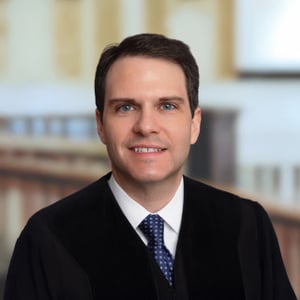
Associate Justice, Arkansas Supreme Court
Nicholas Bronni was appointed to the Arkansas Supreme Court by Governor Sarah Huckabee Sanders on December 20, 2024, and he began his service on January 1, 2025.
Before being appointed to the bench, Justice Bronni served as the Solicitor General of Arkansas. In that role, he successfully argued two cases in the United States Supreme Court: Delaware v. Pennsylvania, 598 U.S. 115 (2023), an original jurisdiction case concerning unclaimed property; and Rutledge v. PCMA, 592 U.S. 80 (2020), an ERISA preemption case. Justice Bronni also successfully argued numerous cases before federal and state appellate courts, including Arkansas Times v. Waldrip, 37 F.4th 1386 (8th Cir. 2022) (en banc), which upheld Arkansas's law barring state contractors from boycotting Israel; and Arkansas State Conf. NAACP v. Arkansas Bd. of Apportionment, 86 F.4th 1204 (8th Cir. 2023), a landmark case holding that Section 2 of the Voting Rights Act is not privately enforceable. As Solicitor General, Justice Bronni received the National Association of Attorneys General's 2024 Best Supreme Court Brief Award for his multistate amicus brief in Muldrow v. City of St. Louis, Missouri, 601 U.S. 346 (2024).
Justice Bronni received his law degree with magna cum laude honors from the University of Michigan Law School. At Michigan, he was an editor of the Michigan Law Review and was elected to the Order of the Coif. He received his undergraduate degree, summa cum laude, and with special departmental honors from the Elliott School of International Affairs at the George Washington University.
Prior to returning home to Arkansas, Justice Bronni was a Senior Litigation Counsel with the Appellate Litigation Group at the United States Securities and Exchange Commission. He was also an associate with Gibson Dunn and Crutcher LLP in Washington, DC. Justice Bronni clerked for the Honorable Jay S. Bybee of the United States Court of Appeals for the Ninth Circuit.
Attorney
Maya M. Noronha is a civil rights attorney.
As special counsel for external affairs at First Liberty Institute, Maya worked for the largest legal organization in the United States dedicated exclusively to defending religious liberty for all Americans.
Previously, Maya worked at the U.S. Department of Health and Human Services, as acting chief of staff of the Administration for Children and Families; principal advisor to the Commissioner of the Administration on Children, Youth, and Families; and senior advisor to the Director of the Office for Civil Rights and regulatory reform officer. She provided advice on federal civil rights laws that prohibit discrimination on the basis of conscience, religion, race, color, national origin, limited English proficiency, sex, disability, age, and health information in both health care and human services.
In the area of election law, Maya has advised officials elected to or candidates for President, U.S. Senate, U.S. House of Representatives, Governor, state legislature, city council, and magisterial district judge. She practiced law at Baker Hostetler LLP, where she was on the Political Law and Federal Advocacy Teams, advising clients on voting rights, redistricting, election integrity, campaign finance, financial reporting, ethics compliance, as well as conducting trial and appellate litigation. She also has delivered legislative testimony, planned continuing legal education conferences on election law, and published about voting rights and election administration.
In addition to addressing the Federalist Society, she has delivered remarks to the White House Initiative on Asian American Pacific Islanders, United States Senate, Women in Government Relations, Georgetown University, George Mason University School of Law, the Columbus School of Law at the Catholic University of America, and Arizona State University Cronkite School of Journalism.
Maya is in Phi Beta Kappa, a member of the Alpha Sigma Nu Jesuit Honor Society, and a John Carroll Scholar. Forbes Magazine recognized Maya as one of its 30 under 30 in Law and Public Policy.
She serves concurrently on the Federalist Society’s Free Speech & Election Law Executive Committee and the American Bar Association’s Standing Committee on Election Law.
Education
· J.D., Georgetown University Law Center, 2011
· A.B., Georgetown University, 2005
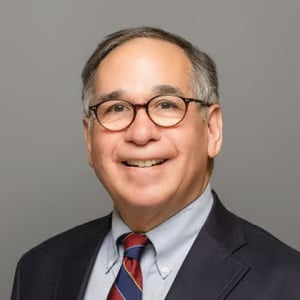
Adjunct Professor of Law; Director, N.Y. Census and Redistricting Institute, New York Law School
Jeff Wice is a Distinguished Adjunct Professor and Senior Fellow at New York Law School where he directs the New York Elections, Census & Redistricting Institute and teaches classes on redistricting, election law, and the census. He is now working on his sixth redistricting cycle. In past years, he served as a redistricting counsel to New York State Legislativbe Leaders and as counsel to three New York City Districting Commissions and to numerous counties and localities across New York and the nation.
During the 2000 census cycle, Professor Wice served as counsel to President Bill Clinton’s members of the U.S. Census Monitoring Board. He is the co-editor/author of the National Conference of State Legislatures' 2020 Redistricting Redbook, a comprehensive handbook on the census and redistricting.
‘’City & State NY’ recognized Professor Wice as one of New York’s “Top 50 Over 50” in 2022 and just last month as a "New York legal trailblazer" for his efforts promoting fair representation and the census. He is a graduate of the George Washington University and Antioch School of Law.
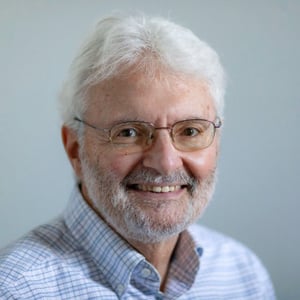
CEO, Asset Forfeiture Law, LLC
As a federal prosecutor, Stefan D. Cassella was one of the federal government’s leading experts on asset forfeiture and money laundering law for over thirty years. He now serves as an expert witness and consultant to law enforcement agencies and the private sector as the CEO of AssetForfeitureLaw, LLC.
As a Deputy Chief of the Justice Department’s Asset Forfeiture and Money Laundering Section and later as the Chief of the Asset Forfeiture and Money Laundering Section in the U.S. Attorney’s Office in Baltimore, Maryland, Mr. Cassella litigated some of the Government’s most significant forfeiture and money laundering cases and drafted many of the federal forfeiture and money laundering statutes.
He is the author of Asset Forfeiture Law in the United States, a one-volume resource designed to lead the practitioner, prosecutor, judge and policy maker through the labyrinth of statutes, rules and cases that govern this dynamic area of the law, and of more than 40 law review articles on money laundering and forfeiture. He has trained state and federal prosecutors and agents and their counterparts in numerous foreign countries, including over 200 lectures at the National Advocacy Center at the University of South Carolina.
Mr. Cassella is also the author and publisher of the Money Laundering and Forfeiture Digest, a monthly compendium of the forfeiture and money laundering cases decided by the federal courts that is circulated to hundreds of state, federal and foreign prosecutors and lawyers, law enforcement agents, academics and policy makers in the U.S. and abroad.

FCC Enforcement Bureau Reform
The Supreme Court’s decision in SEC v. Jarkesy will have significant impacts on agency authority in the...
Judicial Elections and Free Speech
Barry Anderson, Clint Bolick, Brett Busby, Daniel Kelly
Judicial selection in the states is not uniform, but most states have some form of...
New Voices in Administrative Law II: The Supreme Court and Federal Court Jurisdiction
Eric Mathias Bush, Shiza Francis, Aram A. Gavoor, Aaron Watt
The development of standing jurisprudence has been inextricably intertwined with the growth of the administrative...
The First Amendment in Trademark Law after Vidal v. Elster
Barbara Lauriat, Lisa P. Ramsey, Zvi Rosen, Eugene Volokh
In Vidal v. Elster (the “Trump Too Small” case), the Supreme Court unanimously upheld a...
2024 Annual Supreme Court Round Up
Paul D. Clement
On Thursday, July 25, the Washington, D.C. Lawyers Chapter gathered for the annual Supreme...
Courthouse Steps Decision: Starbucks Corp. v. McKinney
G. Roger King
Starbucks Corp. v. McKinney sits at an interesting intersection of labor and administrative law. The...
Litigation Update: Arizona Supreme Court Opinion in Planned Parenthood v. Mayes / Hazelrigg
Jennifer Perkins, James D. Smith
Throughout Arizona’s history as a state, the criminal code authorized penalties against any person who...
Devillier v. Texas - Post-Decision SCOTUScast
Ilya Somin
On April 16th, 2024, the Supreme Court issued its ruling in Devillier v. Texas. At issue...
Standing and Section 2: Does Section 2 of the Voting Rights Act Provide a Private Right of Action?
J. Christian Adams, Nicholas Bronni, Maya Noronha, Jeffrey M. Wice
In 2021, in Arkansas State Conference NAACP v. Arkansas Board of Apportionment, private litigants sued...
McIntosh v. United States - Post-Decision SCOTUScast
Stefan D. Cassella
On April 17, 2024, the Supreme Court issued its ruling in McIntosh v. United States....