
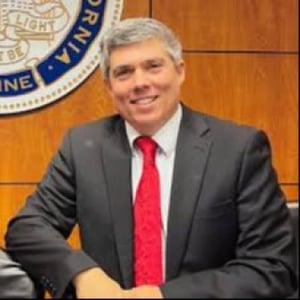
Partner, Friedland Cianfrani LLP
Joe has focused on IP litigation for his entire 25-year legal career. In that time, he has successfully represented clients in high-stakes intellectual property disputes at both the trial and appellate levels. Joe combines a strong technical background with a thorough understanding of his clients’ business goals and then tailors the legal strategy to achieve those goals.
Joe's practice primarily involves representing litigants in federal district court in patent and trademark cases, the Patent Trial and Appeal Board (PTAB), and before the United States Court of Appeals for the Federal Circuit, where he served as a law clerk to Judge Arthur Gajarsa. Joe has represented clients on more than 50 appeals and petitions for inter partes review involving computer peripherals, optics, electronics, software, pharmaceuticals, DNA sequencing, and medical devices.
Before founding Friedland Cianfrani, Joe was a partner at Knobbe Martens for two decades, where he served as the Chair of the firm’s Litigation Department and the co-chair of the appellate practice group. Joe is a leader in the intellectual property bar community and has served on the Board of Directors of the American Intellectual Property Association and has chaired the Association’s amicus and legislative committees. He has authored numerous amicus briefs for the AIPLA and other bar associations on a variety of intellectual property issues and is a frequent lecturer on intellectual property law and litigation strategy. Joe is also an active community leader and has coached local high school mock trial teams for the past several years.
Joe has also been consistently recognized with numerous awards as a “Rising Star,” "Super Lawyer," and "Best Lawyer," including Lawyer of the Year award by Best Lawyers in 2021.
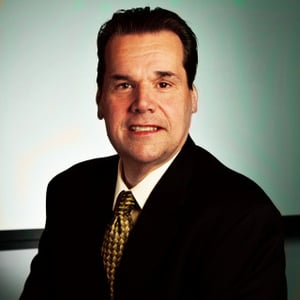
Partner, Patrick Doerr
Mr. Rando has represented clients in matters involving computer hardware and software, silicon chip manufacturing, biotechnology, medical devices, pharmaceuticals, chemical compounds, food additives, alternative energy, AI, autonomous vehicles, blockchain, consumer electronics, communications, internet, and e-commerce. He has appeared in courts across the country, including the Southern and Eastern Districts of New York and multiple U.S. Courts of Appeals.
As appellate counsel, Mr. Rando has served as counsel of record or co-counsel in more than 30 amicus briefs filed before the U.S. Supreme Court and Federal Circuit on issues of patent law, statutory interpretation, separation of powers, and constitutional law. Noteworthy filings include eBay Inc. v. MercExchange (2006), Oil States v. Greene’s Energy (2017), American Axle v. Neapco (2021), Amgen v. Sanofi (2023), and Cellect v. Vidal (2024).
Mr. Rando is a Fellow of the Academy of Court-Appointed Masters, having served by judicial appointment as Special Master in numerous complex patent cases, including multi-day Markman hearings and post-discovery proceedings. He also serves as a court-appointed Mediator and Neutral in both patent and commercial disputes.
He has played an active role in judicial and legislative engagement. Mr. Rando co-developed and conducted lecture series for the SDNY and EDNY Patent Pilot Program Judges and Clerks, covering the America Invents Act and Section 101 eligibility post-Alice and Mayo. He represented both the Federal Bar Association (FBA) and New York Intellectual Property Law Association (NYIPLA) at the Tillis/Coons Section 101 Patent Reform Roundtable, and submitted written testimony to the U.S. Senate Judiciary Committee in 2019.
Mr. Rando is a former president of the NYIPLA (2023–2024) and has held nearly every leadership position in the organization. He also served as Chair of the FBA’s Intellectual Property Law Section and was a founding member and president of the FBA’s EDNY Chapter. He is a founding member of the Association of Amicus Counsel, and an active contributor to the Federalist Society IP Practice Group Executive Committee.
He frequently lectures at CLE programs, universities, and legal associations on IP, constitutional law, and appellate advocacy. He has been quoted extensively in publications such as Law360, Bloomberg Law, WIPR, and National Law Journal. His scholarly publications include articles in The Federal Lawyer, Touro Law Review, and IPWatchdog.
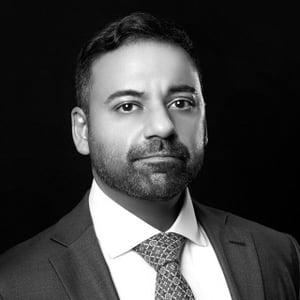
Partner, Kasowitz LLP
Amit R. Vora is Chair of Kasowitz LLP's Appellate & Constitutional Litigation practice group. He has extensive experience litigating before the U.S. Supreme Court and federal and state appellate courts nationwide. He represents companies and individuals in administrative, commercial, and patent disputes, and matters involving the First Amendment, separation of powers, due process, and other constitutional issues. For example, he represented former Attorney General Edwin Meese III and Professors Steven G. Calabresi and Garry S. Lawson as amici in SEC v. Jarkesy in the U.S. Supreme Court, SpaceX v. NLRB in the Fifth Circuit, and United States ex rel. Zafirov in the Eleventh Circuit.
Amit previously served as Assistant Solicitor General with the New York State Attorney General’s Office. Amit was also a Supervising Attorney and Teaching Fellow with Georgetown University Law Center’s Appellate Courts Immersion Clinic, and he clerked for Judge Edward C. Prado of the Fifth Circuit.
Amit is the author of several practice-oriented and scholarly pieces, including The Third Circuit’s Sun Valley Decision: An Illumination of Jarkesy’s Article III Implications, Washington Legal Foundation (2025); Constitutional Crowding and Article II, 85 Albany Law Review 857 (2022); and Defending an Under-21 Firearm Ban Under the Second Amendment, 71 Stanford Law Review Online 1 (2018).
Amit holds an LL.M. in appellate advocacy from Georgetown University Law Center, a J.D. from Harvard Law School, and a B.A. in cognitive science from Yale College.
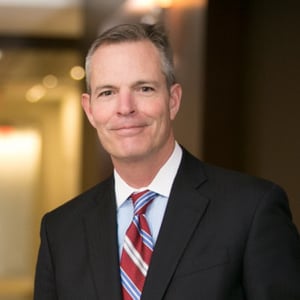
Partner, Balch & Bingham LLP
General Counsel to the Mississippi Manufacturers Association, Pepper Crutcher advises and advocates for a wide range of Southeast U.S., private sector employers. Pepper regularly defends employment litigation, including class and collective actions, and both defends and prosecutes unfair competition claims. Pepper’s labor law practice involves all types of NLRB proceedings, labor contract negotiation and arbitration. Pepper also helps employers, insurers, brokers, administrators and providers achieve Affordable Care Act compliance and appeal ACA tax assessments.
Mr. Crutcher has been rated "AV" by Martindale Hubbell and since 2004 has been selected to be included in Chambers USA America's Leading Lawyers for Business: The Client's Guide (Employment, Mississippi). He is also listed in The Best Lawyers in America for Intellectual Property Law and Labor & Employment Law.
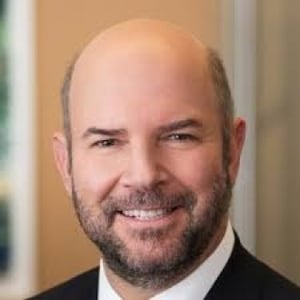
Partner, Morgan, Lewis & Bockius LLP
Philip A. Miscimarra is the former Chairman of the National Labor Relations Board (NLRB). Phil leads the firm’s NLRB special appeals practice and is co-leader of Morgan Lewis Workforce Change, which manages all employment, labor, benefits, and related issues arising from mergers, acquisitions, startups, workforce reductions, and other types of business restructuring. He represents clients on a wide range of labor and employment issues, with a focus on labor-management relations, business acquisitions and restructuring, and employment litigation. Phil is also a Senior Fellow at the University of Pennsylvania's Wharton School and the Wharton Center for Human Resources. He is admitted in Illinois only, and his practice is supervised by DC Bar members.
Phil was named Chairman of the NLRB by President Donald J. Trump on April 24, 2017, after previously serving as Acting Chairman and a Board Member. He was appointed to the NLRB by President Barack Obama on April 9, 2013, and was approved unanimously by the Senate Committee on Health, Education, Labor, and Pensions on May 22, 2013. He was confirmed by voice vote in the US Senate on July 30, 2013, and served from August 7, 2013, to December 16, 2017. Upon the completion of his term, Phil served on the NLRB longer than 26 other board members over the past 30 years.
Phil is the author or co-author of several books involving labor law issues, including The NLRB and Managerial Discretion: Subcontracting, Relocations, Closings, Sales, Layoffs, and Technological Change (2d ed. 2010) (by Miscimarra, Turner, Friedman, Callahan, Conrad, Lignowski and Scroggins); The NLRB and Secondary Boycotts (3d ed. 2002) (by Miscimarra, Berkowitz, Wiener and Ditelberg); and Government Protection of Employees Involved in Mergers and Acquisitions (1989 and 1997 supp.) (by Northrup and Miscimarra); and other publications. He has also testified on labor and employment law issues in the United States Congress.
Chambers USA named Phil one of the leading lawyers for employment law in the United States from 2004 to 2012, based on the views of clients, peers, and other industry professionals. He has been described as a "fantastic lawyer" and "prolific writer," with clients admiring his "multilayered abilities and business savvy" and his "high level of integrity."

Professor of Law and Executive Director, Law and Economics Center, Antonin Scalia Law School, George Mason University
Donald Kochan is Professor of Law and Executive Director of the Law & Economics Center (LEC). Professor Kochan is an elected member of the American Law Institute (ALI) and serves as an Adviser to ALI's Restatement of the Law Fourth, Property project. Professor Kochan is a Nonresident Scholar at the Center for the Constitution at Georgetown University Law Center, where he was a Visiting Scholar in residence during Fall 2018. Before joining the Antonin Scalia Law School faculty, he was the Parker S. Kennedy Professor in Law at Chapman University’s Dale E. Fowler School of Law from 2004 to 2020. From 2003 to 2004, Professor Kochan was an Olin Fellow at the University of Virginia School of Law. During 2002-2003, he was a Visiting Assistant Professor of Law at George Mason’s Scalia Law School.
Professor Kochan’s scholarship focuses on areas of property law, constitutional law, administrative law, local government law, natural resources and environmental law, and law & economics. He has published several books and more than 50 scholarly articles and essays in well-regarded law journals. His work has been cited in more than a dozen state and federal court opinions, in more than 75 briefs filed in state and federal courts including more than 25 filed in the U.S. Supreme Court, in dozens of books and treatises, and in more than 800 scholarly articles.
Professor Kochan received his JD from Cornell Law School, where he was a John M. Olin Scholar in Law and Economics and managing editor of the Cornell International Law Journal. During law school, he also served as editor and executive editor of the Harvard Journal of Law & Public Policy symposium issues in 1997 and 1998. He received his BA from Western Michigan University, magna cum laude, with majors in both political science and philosophy, where he studied as the John W. Gill Medallion Scholar and was honored as the Presidential Scholar (awarded to the top graduate in the political science department).
After graduating from law school, Professor Kochan was a law clerk to The Honorable Richard F. Suhrheinrich of the United States Court of Appeals for the Sixth Circuit. Following his clerkship, Professor Kochan was an associate with the firm of Crowell & Moring LLP in Washington, D.C., where he specialized in natural resources & environmental law as well as tort, products, and consumer civil litigation & legislative affairs.
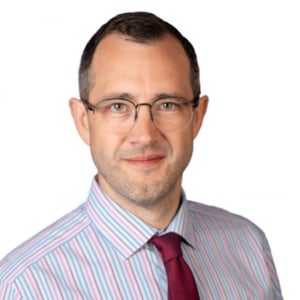
Attorney, Pacific Legal Foundation
Jeremy is an attorney in Pacific Legal Foundation’s Property Rights practice. He focuses on the fundamental rights of landowners to use and develop their property. He also leads PLF’s Coastal Land Rights Project, which puts him routinely at odds with the California Coastal Commission—but he wouldn’t mind being contacted about any government abuses in Hawaii or the U.S. Virgin Islands.
Some of his career highlights at PLF include forcing the mayor of Mount Dora, Florida, to publicly apologize for the city’s vendetta against the owners of a home painted like Van Gogh’s “Starry Night,” and obtaining an opinion ordering just compensation for the owners of a small offshore island in Florida (that just happened to be named after their war hero father), after government regulations stripped all economic uses of the property.
Jeremy obtained his undergraduate degree in communications from the University of Central Florida, but for every minute he spent in classes, he spent five more playing guitar or bass in several noteworthy-for-their-obscurity rock bands. A few tours across the country later, Jeremy realized he was spending all of his free time reading about the principles of liberty and decided to make a career out of it.
He graduated cum laude from Chapman University, Fowler School of Law in Orange, California, where he was president of the Federalist Society, senior articles editor of the Chapman Law Review, and “that guy who keeps trying to talk about the Constitution” on the Chapman moot court team. His two favorite parts of law school were externing for Judge Andrew J. Guilford in the Central District of California and getting the top grade in administrative law from his favorite professor.
Jeremy’s free time is almost never actually free, because he has 11-year-old twin boys and a golden retriever named Ripley (yes, as in Ellen Ripley, warrant officer of the Nostromo). But he will always find time to talk your ear off about freedom, guitars, or Nebraska football.
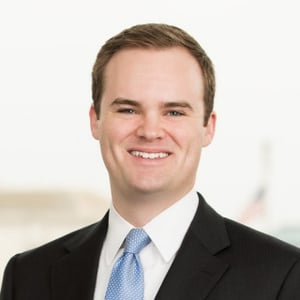
Counsel, Clare Locke
Eric Hageman is an attorney at Clare Locke LLP, where he defends individuals, institutions, and corporations from reputational attacks. He has significant litigation experience at all levels of state and federal court, having authored scores of merits and amicus briefs in the U.S. Supreme Court and federal courts of appeals. His clients represent a wide array of industries and have included several high-net-worth individuals and half the Fortune 20.
Before joining Clare Locke, Eric was an appellate attorney in the Washington, D.C., offices of two multinational law firms, where he worked on shareholder disputes, broken-deal litigation, separation-of-powers issues, and arbitrability disputes, as well as litigation under the Foreign Agent Registration Act, the Freedom of Information Act, and the Alien Tort Statute.
Eric was a law clerk to the Honorable Kyle Duncan of the U.S. Court of Appeals for the Fifth Circuit and to the Honorable Thomas Schroeder of the U.S. District Court for the Middle District of North Carolina.
Eric earned his J.D. from Notre Dame Law School, where he was Executive Editor of the Notre Dame Law Review and published work on the Takings Clause and on the obligations of judicial candor. He earned his Bachelor of Architecture from the University of Notre Dame, where he studied in Rome and was a member of the School of Architecture Curriculum Committee.
Eric is an Antonin Scalia Fellow and a Fellow of the James Wilson Institute on Natural Rights and the American Founding. His legal and jurisprudential scholarship has appeared in the Notre Dame Law Review, U.S. Constitutional Law: Rights & Liberties, Law and Liberty, and Mirror of Justice, among other publications. Eric’s commentary on the Supreme Court has been quoted in Bloomberg.
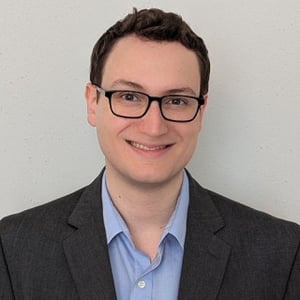
Assistant Professor of Law, The University of Houston Law Center
David Froomkin is an assistant professor of law at the University of Houston Law Center, with primary scholarly interests in administrative law, election law, and democratic and constitutional theory. His research focuses on the structure of government and of the democratic process, drawing on political science, political economy, and analysis of the text and structure of the Constitution. In addition to other ongoing projects, he is currently completing a book manuscript that develops a new conceptual and normative theory of the separation of powers as a government structure that can reinforce rather than vitiate legislative supremacy.
David received a B.A. from Columbia University in 2015, a J.D. from Yale Law School in 2022, and a Ph.D. (Political Science) from Yale University in 2024. Before joining the University of Houston Law Center, he also served as a Teaching Fellow and an Associate in Teaching at Yale. He currently teaches courses on election law, criminal law, and constitutional design.
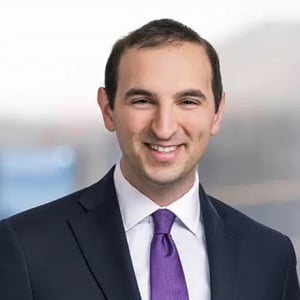
Associate, Covington & Burling LLP
Eli Nachmany is an associate at Covington & Burling LLP in the Washington, DC, office. He clerked for Judge Steven J. Menashi of the U.S. Court of Appeals for the Second Circuit. Eli graduated magna cum laude from Harvard Law School, where he was Editor-in-Chief of the Harvard Journal of Law & Public Policy. Prior to law school, Eli served as the speechwriter to the U.S. Secretary of the Interior and as a domestic policy aide in the White House Office of American Innovation. He graduated summa cum laude from New York University with a B.S. in Sports Management. Eli’s scholarship on administrative law and executive power has appeared in the BYU Law Review, George Mason Law Review, Wake Forest Law Review, and Yale Law Journal Forum.

Professor of Law, University of Michigan Law School
Christopher J. Walker is a Professor of Law at the University of Michigan. Prior to joining Michigan law faculty in 2022, he spent a decade teaching at The Ohio State University Moritz College of Law. He previously clerked for Justice Anthony Kennedy of the U.S. Supreme Court, worked on the Civil Appellate Staff at the U.S. Department of Justice, and served on the Senate Judiciary Committee staff for the Gorsuch Supreme Court confirmation. Professor Walker’s research focuses on administrative law, regulation, and law and policy at the agency level. Outside the law school, he chaired the American Bar Association’s Section of Administrative Law and Regulatory Practice in 2020-21 and served as one of forty Public Members of the Administrative Conference of the United States from 2016-2022, and he continues to serve in both organizations in various capacities. He also works of counsel at the U.S. Chamber Litigation Center. In 2022, he received the Federalist Society’s Joseph Story Award.

Judge, United States Court of Appeals, Eleventh Circuit
On March 20, 2018, Judge Elizabeth L. Branch (Lisa) was sworn in as a United States Circuit Judge for the Eleventh Circuit.
Judge Branch attended and graduated from Davidson College in North Carolina (B.A., cum laude, 1990), and Emory University School of Law (J.D., with distinction, 1994).
After graduating from law school, Judge Branch served as a federal law clerk to The Honorable J. Owen Forrester of the U.S. District Court for the Northern District of Georgia from 1994 to 1996. Following her clerkship, Judge Branch joined the litigation department of Smith, Gambrell & Russell, LLP in Atlanta as an associate and then a partner.
From 2004 to 2008, Judge Branch was a senior official in the Administration of President George W. Bush in Washington, D.C. She served first as the Associate General Counsel for Rules and Legislation at the U.S. Department of Homeland Security and then as the Counselor to the Administrator of the Office of Information and Regulatory Affairs at the U. S. Office of Management and Budget.
She returned to Smith Gambrell in 2008 as a litigation partner. Judge Branch then was appointed to the Court of Appeals of Georgia by Governor Nathan Deal, taking office on September 4, 2012, where she served until March 19, 2018.
Judge Branch is a member of the Board of Advisors of the Atlanta Lawyers Chapter for the Federalist Society for Law and Public Policy Studies.
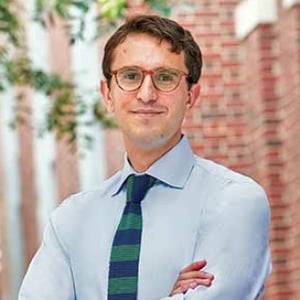
Professor, New York University School of Law

Laurence H. Silberman Chair in Constitutional Governance, American Enterprise Institute; Executive Director, Antonin Scalia Law School’s C. Boyden Gray Center for the Study of the Administrative State
Adam J. White is the Laurence H. Silberman Chair in Constitutional Governance and senior fellow at the American Enterprise Institute, where he focuses on the Supreme Court and the administrative state. He also directs the Antonin Scalia Law School’s C. Boyden Gray Center for the Study of the Administrative State.
He writes on regulation and constitutional government for a variety of publications. He practiced law in Washington, D.C., after clerking for the D.C. Circuit's Judge David Sentelle. He also has been chairman of the ABA's Administrative Law Section.
In 2021, he served on the Presidential Commission on the Supreme Court of the United States, where he criticized “Court packing” and other efforts to restructure the Supreme Court.
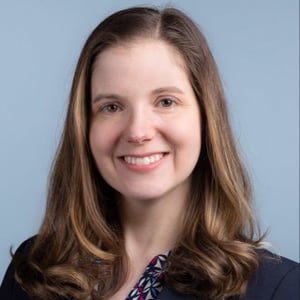
Vice President and Deputy Chief Counsel, U.S. Chamber Litigation Center, U.S. Chamber of Commerce
Jennifer B. Dickey is vice president and deputy chief counsel at the U.S. Chamber Litigation Center, the litigation arm of the U.S. Chamber of Commerce. Dickey handles a variety of litigation matters for the Chamber.
Dickey joined the Chamber following her service as Acting Assistant Attorney General and Principal Deputy Assistant Attorney General in the Civil Division at the U.S. Department of Justice. She also previously served as Deputy Associate Attorney General, providing strategic oversight of the Civil Division, Civil Rights Division, and Foreign Claims Settlement Commission, as well as Special Assistant to the President and Associate Counsel to the President. In the latter capacity, she provided legal advice on a wide array of executive actions and rulemakings, civil litigation, and judicial nominations.
Dickey also practiced law at Kirkland & Ellis LLP before her government service. She was a commercial and appellate litigator, representing businesses in federal and state courts.
Earlier in her career, Dickey served as a law clerk for the Honorable Clarence Thomas of the Supreme Court of the United States and the Honorable William H. Pryor Jr. of the United States Court of Appeals for the Eleventh Circuit.
Dickey earned her law degree magna cum laude from Duke University School of Law, where she was an Executive Editor of the Duke Law Journal, and her undergraduate degree magna cum laude from Dartmouth College.
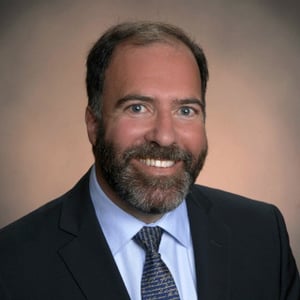
Professor of Law, Widener University Commonwealth Law School
Counsel, Lehotsky Keller Cohn LLP
Shannon Grammel is a litigator with experience at all levels of federal and state courts.
Ms. Grammel has represented both private- and public-sector clients in a broad array of substantive legal areas, including constitutional law, administrative law, election law, and complex commercial litigation. Ms. Grammel has authored briefs before the Supreme Court of the United States, several federal courts of appeals, multiple state supreme courts, and federal and state trial courts. She has also argued in state appellate court and has participated in both federal- and state-court trials.
Before joining Lehotsky Keller Cohn LLP, Ms. Grammel served as Deputy Solicitor General of Kansas. Before that, she was a member of the Supreme Court & Appellate group in Latham & Watkins LLP’s Washington D.C. office.
Ms. Grammel served as a law clerk for Justice Brett M. Kavanaugh of the Supreme Court of the United States and Judge J. Harvie Wilkinson III of the U.S. Court of Appeals for the Fourth Circuit. Ms. Grammel earned her law degree from Stanford Law School, where she was President of the Stanford Law Review.
Senior Attorney, Institute for Free Speech
Brett Nolan is a Senior Attorney at the Institute for Free Speech, a public interest law firm that defends the First Amendment rights of those engaged in political speech and advocacy around the country.
Before joining the Institute, Brett served as the Principal Deputy Solicitor General of Kentucky, where he represented the Commonwealth in a wide variety of high-stakes litigation at every level of state and federal court. In that role, Brett led a successful challenge against the Department of Treasury over the constitutionality of a federal law limiting the ability of states to modify their tax codes, and he helped secure a U.S. Supreme Court victory that upheld a state’s constitutional right to defend its interests in federal court.
Prior to that, Brett served as the Deputy General Counsel to the former Governor of Kentucky, where he advised the governor and other executive branch officials on legal and policy issues and represented them in litigation. Brett clerked for Judge John Nalbandian of the U.S. Court of Appeals for the Sixth Circuit and Judge Karen K. Caldwell of the U.S. District Court for the Eastern District of Kentucky. Between clerkships, he worked in private practice. Brett received his law degree from the University of Chicago Law School, where he graduated with High Honors and was an editor of The University of Chicago Law Review.
Partner, Bailey Glasser LLP
Greg Porter has extensive trial and class action experience in complex pension, 401(k) plan, and employee stock ownership plan (ESOPs) lawsuits in federal court. Greg has led Bailey Glasser’s ERISA and trust practice to major trial and appellate victories, including seminal decisions in the Seventh and Fourth Circuit Courts of Appeal and a $30 million trial judgment that broke new ground for ESOPs. With co-counsel, the firm’s ERISA practice won a 9-0 decision in the Supreme Court, Intel Corp v. Sulyma, that established key statute of limitations rights for employees in ERISA cases.
Greg has recovered hundreds of millions of dollars on behalf of employees who lost retirement savings in 401(k) plans and ESOPs. He understands complex financial transactions, investments, and instruments.
Greg has also developed techniques for successfully investigating and prosecuting complex lawsuits involving business valuation, securities lending, hedge funds, and private equity. He has argued appeals in the Second, Fourth, Sixth and Eighth U.S. Circuit Courts of Appeal.
Senior Fellow, Stand Together Trust
Vikrant Reddy is a senior fellow at Stand Together Trust, specializing in the area of criminal justice reform. Reddy previously served as a senior policy analyst at the Texas Public Policy Foundation (TPPF), where he managed the launch of TPPF’s national Right on Crime initiative in 2010. He has worked as a research assistant at the Cato Institute, as a judicial clerk to the Hon. Gina M. Benavides in Texas, and as an attorney in private practice. He is a member of the State Bar of Texas, and he serves on the Executive Committee of the Criminal Law Practice Group of the Federalist Society. He is also an appointee to the U.S. Commission on Civil Rights Texas State Advisory Committee.
Reddy’s research and scholarly opinions have appeared in a range of national media outlets, including USA Today, National Review, The Federalist, and others.
Reddy earned his law degree from the Southern Methodist University School of Law. He received his undergraduate degree from the University of Texas at Austin.
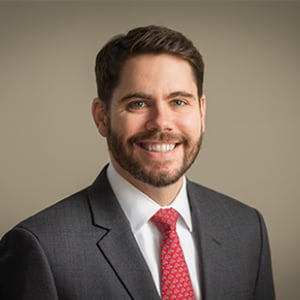
Partner, Consovoy McCarthy PLLC
Mr. Weir is an experienced litigator who focuses on constitutional and regulatory matters. He has particular expertise in cases involving the First and Fourteenth Amendments, civil rights statutes, and challenges to federal agency actions. He has briefed and presented oral argument in state and federal courts across the country, including in the Supreme Court of the United States. He was trial counsel and part of the team that prevailed before the Supreme Court in the landmark case Students for Fair Admissions, Inc. v. Harvard College and University of North Carolina.
Since 2015, Mr. Weir has been an adjunct professor for the Administrative Law and Supreme court clinics at the Antonin Scalia Law School at George Mason University. He is a former law clerk to Judge Carlos T. Bea of the United States Court of Appeals for the Ninth Circuit and Judge Anthony J. Trenga of the United States District Court for the Eastern District of Virginia. He earned his A.B. cum laude from Georgetown University and his J.D. summa cum laude from George Mason University School of Law.
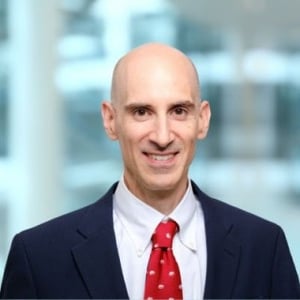
Partner, Holtzman Vogel
Joe Burns is a partner with Holtzman Vogel and focuses his practice on representing candidates and party committees in election cases throughout New York State.
Prior to joining the firm, Joe served as Deputy Director of Election Operations at the New York State Board of Elections. In this role, he worked with county Boards of Elections, candidates, and party committees, and was involved in New York State's transition from lever to optical scan voting. He also conducted hearings for the NYSBOE and represented it in court proceedings.
Additionally, Joe has served as an attorney for the Erie County and New York State Republican Committees, and has also represented candidates for a variety of public offices throughout New York State, including candidates for U.S. Congress and New York State Supreme Court.
From 2018 to 2024, Joe was the Deputy Administrative Director for the Erie County Water Authority; and from 2015 to 2018, he was the Secretary to the Erie County Water Authority.
A life-long resident of Upstate New York and active member of the Western New York community, Joe served as vice chair of the Erie County Charter Revision Commission in 2016 and was a member of the Erie County Advisory Commission on Reapportionment in 2021. City and State named Joe to its Upstate Power 100 list in 2024, and in 2025, Joe was named as one of New York State’s Law Power 100 by City and State.
Joe is a frequent commentator and author on New York State and national politics, and election law.
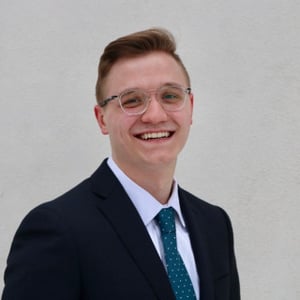
Law Clerk, U.S. District Court for the Northern District of Illinois
Tom Fogarty is currently a law clerk in the U.S. District Court for the Northern District of Illinois.
Tom received his J.D. from Duke University School of Law, where he was the VP of Internal Affairs of the Duke Law Federalist Society, the President of the Mock Trial Board, a member of the Moot Court Board, and an Online Editor of the Duke Law Journal. He also received his B.A. in History from the Ohio State University.

The Federal Circuit's Reliance on One-Word Affirmances Under Rule 36: Is it Lawful?
Joseph Cianfrani, Robert J. Rando, Amit R. Vora
The Federal Circuit’s first Chief Judge, the Honorable Howard T. Markey, announced, “In our Court...
Litigation Update: United Natural Foods v. NLRB
R. Pepper Crutcher, Philip A. Miscimarra
This litigation update will discuss the United Natural Foods case, where a new National Labor...
Explainer Episode 85 - Rebuilding California: Lessons from the Pacific Palisades Fire
Donald J. Kochan, Jeremy Talcott
The 2025 Pacific Palisades Fire has underscored the challenges of building in California’s complex regulatory...
Topics
New York’s Commission on Ethics and Lobbying in Government: Constitutional Structure and the Future of a State Ethics Watchdog
Former New York State Gov. Andrew Cuomo has made headlines recently due to rumors that...
Supreme Judicial Court Streamlines Massachusetts Anti-SLAPP Motions
Eric Hageman
In Bristol Asphalt, Co. v. Rochester Bituminous Products, Inc., the Supreme Judicial Court of...
Remedies in Presidential Removal Cases: A Shifting Landscape
David Froomkin, Eli Nachmany, Christopher J. Walker
The Supreme Court's decision in Collins v. Yellen represented a paradigm shift. Now, in cases...
DC-Wide FedSoc Rupe Debate: Are Independent Agencies Constitutional?
Lisa Branch, Noah Rosenblum, Adam White
Registration is now closed. Join The Federalist Society’s local DC Young Lawyers Chapter and the Georgetown...
A Seat at the Sitting - January 2025
Jennifer B. Dickey, Michael R. Dimino, Shannon Grammel Denmark, Brett Nolan, Gregory Y. Porter, Vikrant P. Reddy, Bryan Weir
Each month, a panel of constitutional experts convenes to discuss the Court’s upcoming docket sitting...
Challenge to New York Ballot Canvassing Law Thrown Out by State High Court
Joseph Thomas Burns
On October 31, 2024, in Amedure v. State, the New York State Court of Appeals...
Pandemic Orders and the Right to Earn a Living in North Carolina
Tom M. Fogarty
In March of 2020—during the early stages of the COVID-19 pandemic—North Carolina Governor Roy Cooper...