
Of Counsel, Christian Legal Society's Center for Law & Religious Freedom
Kim Colby has worked for Christian Legal Society’s Center for Law and Religious Freedom since graduating from Harvard Law School in 1981. She has represented religious groups in several appellate cases, including two cases heard by the United States Supreme Court. She has filed numerous amicus briefs in federal and state courts. In 1984, she assisted in congressional passage of the Equal Access Act, 20 U.S.C. § 4071, et seq., which protects the right of secondary school students to meet for prayer and Bible study on campus. Ms. Colby has prepared several CLS publications addressing issues about religious expression in public schools, including released time programs, implementation of the Equal Access Act, and teachers’ religious expression.
Ms. Colby graduated summa cum laude from the University of Illinois with a major in American History and a particular interest in slavery in colonial North America.
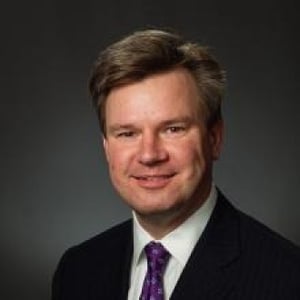
Senior Counsel & Director of the Center for Religious Schools, Alliance Defending Freedom
Gregory S. Baylor serves as senior counsel with Alliance Defending Freedom, where he is the director of the Center for Religious Schools and senior counsel with the Center for Public Policy.
Since joining ADF in 2009, Baylor has focused on defending and advancing the religious freedom of faith-based educational institutions through advice, education, legislative and public advocacy, and representation in disputes. He has testified about religious liberty issues three times before congressional committees and numerous times before state legislative committees.
Greg serves on the board of directors of the International Alliance for Christian Education, the board of directors of the Association for Biblical Higher Education, the board of directors of the Association for Christian Schools International, the board of advisors of the Museum of the Bible, and advisory board of the Center for Academic Faithfulness and Flourishing.
Greg earned his Juris Doctor in 1990 from Duke University School of Law, where he graduated Order of the Coif, with high honors, and served on the editorial board of the Duke Law Journal. He received his bachelor’s degree in Honors English in 1987 from Dartmouth College. Following graduation from law school, he served as law clerk to the Hon. Jerry E. Smith on the U.S. Court of Appeals for the Fifth Circuit. He practiced labor and employment law at two large international law firms for three years before joining the staff of Christian Legal Society’s Center for Law and Religious Freedom, where he served for 15 years prior to joining ADF. He lives in Northern Virginia with his wife (a medical doctor) and two daughters.

Laurence A. Tisch Professor of Law and Director, Classical Liberal Institute, New York University School of Law; Senior Fellow, The Civitas Institute, University of Texas at Austin
Richard A. Epstein is the inaugural Laurence A. Tisch Professor of Law at NYU School of Law. Prior to his joining the faculty, he was a visiting law professor at NYU from 2007 through 2009. He served as the Peter and Kirstin Bedford Senior Fellow at the Hoover Institution from 2000 to 2024. Since 2024 to the present he is a senior lecturer at the Civitas Institute at the University of Texas—Austin. Epstein is also the James Parker Hall Distinguished Service Professor of Law Emeritus and a senior lecturer at the University of Chicago. His initial law school appointment was at the University of Southern California from 1968 to 1972. Epstein received an LL.D., h.c. from the University of Ghent, 2003. He has been a member of the American Academy of Arts and Sciences since 1985 and was a Senior Fellow of the Center for Clinical Medical Ethics at the University of Chicago Division of Biological Sciences, also from 1983. to 2022 He served as editor of the Journal of Legal Studies from 1981 to 1991, and of the Journal of Law and Economics from 1991-2001. From 2001 to 2010 he was a director of the John M. Olin Program in Law and Economics at the University of Chicago.
His newest book, The Myth of Birthright Citizenship: What the Fourteenth Amendment Really Says was published in 2026 (Encounter Books). Prior to that he has published many books including, The Dubious Morality of the Modern Administrative State (Roman & Littlefield 2020).Earlier he published th Classical Liberal Constitution: The Uncertain Quest for Limited Government (Harvard 2014) iHis previous books include Design for Liberty: Private Property, Public Administration and the Rule of Law (Harvard 2011); The Case Against the Employee Free Choice Act (Hoover 2009); Supreme Neglect: How to Revive the Constitutional Protection of Property Rights (Oxford 2008); Antitrust Decrees in Theory and Practice: Why Less is More (AEI 2007); Overdose: How Excessive Government Regulation Stifles Pharmaceutical Innovation (Yale University Press. 2006); How Progressives Rewrote the Constitution (Cato 2006); Cases and Materials on Torts (Aspen Law & Business; 8th ed. 2004); Skepticism and Freedom: A Modern Case for Classical Liberalism (University of Chicago, 2003); Torts (Aspen Law & Business 1999); Principles for a Free Society: Reconciling Individual Liberty with the Common Good (Perseus Books, 1998): Mortal Peril: Our Inalienable Rights to Health Care (Addison-Wesley, 1997); Simple Rules for a Complex World (Harvard, 1995); Bargaining With the State (Princeton, 1993); Forbidden Grounds: The Case Against Employment Discrimination Laws (Harvard , 1992); Takings: Private Property and the Power of Eminent Domain (Harvard, 1985); and Modern Products Liability Law (Greenwood Press, 1980). He has also edited(with Catherine M. Sharkey) Cases and Materials on the Law of Torts (10th edition 2012).
Professor Epstein has written numerous articles on a wide range of legal and interdisciplinary subjects. He has taught courses in administrative law, antitrust law, civil procedure, communications, constitutional law, contracts, corporations, criminal law, employment discrimination law, environmental law, food and drug law health law and policy, legal history, labor law, property, real estate development and finance, jurisprudence, labor law; land use planning, patents, individual, estate and corporate taxation, Roman Law; torts, and workers' compensation.
Professor Epstein also writes a regular column for Civitas Institute, which also sponsors his podcast, The Libertarian with Charles C.W. Cooke, and Law Talk, with Cooke and John Yoo. He also does a podcast with John Batchelor. And appears regularly on the Freedom File with Judge Andrew Napolitano.
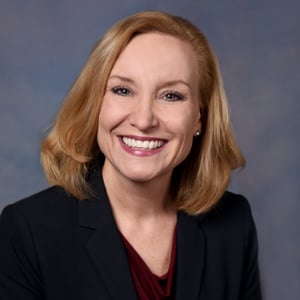
Judge, United States Court of Appeals, Sixth Circuit
The Honorable Joan L. Larsen is a judge of the United States Court of Appeals for the Sixth Circuit. She was nominated by the President on May 8, 2017 and confirmed by the Senate on November 1, 2017. Before her appointment to the federal bench, Judge Larsen served two terms as a Justice of the Michigan Supreme Court, where she was the court’s liaison to Michigan’s drug, sobriety, mental health and veteran’s courts.
Before becoming a judge, Judge Larsen was a faculty member at the University of Michigan Law School, where she was also Special Counsel to the Dean and received the L. Hart Wright Award for Excellence in Teaching. Judge Larsen's research and teaching interests included constitutional law, criminal procedure, statutory interpretation, and presidential power. Judge Larsen continues to assist the law school as the adviser to the Henry M. Campbell Moot Court Competition.
Judge Larsen began her legal career as a law clerk to the Hon. David B. Sentelle of the United States Court of Appeals for the D.C. Circuit and to Justice Antonin Scalia of the Supreme Court of the United States. Following her clerkships, she joined the law firm of Sidley Austin, where she was a member of the Constitutional, Criminal, and Civil Litigation Section. She later served as Deputy Assistant Attorney General in the United States Department of Justice, Office of Legal Counsel.
Judge Larsen graduated first in her class from Northwestern University School of Law, where she served as articles editor of the Northwestern University Law Review and earned the John Paul Stevens Award for Academic Excellence. She received her B.A., with highest honors, from the University of Northern Iowa.
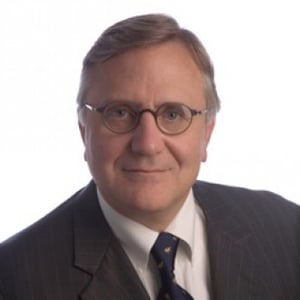
Reed Larson Professor of Labor Law, Ave Maria School of Law and, National Right To Work Legal Defense Foundation
John Raudabaugh is a labor lawyer and former Member of the U.S. National Labor Relations Board. He was a partner in law firms representing management concerning domestic and international labor law matters. Currently, he represents employees seeking relief from union and/or employer unfair labor practices. Mr. Raudabaugh has presented testimony to both Senate and House Committees regarding labor law reform. Professor Raudabaugh teaches Labor Law and a Labor Law Practicum at the Ave Maria School of Law. He is a graduate of the Wharton School of Finance and Commerce and New York State School of Industrial and Labor Relations with B.S. and M.S. degrees in labor economics and a J.D. degree from the University of Virginia Law School of Law.
Director of Government Affairs, AFL-CIO
Bill Samuel is the Director of Government Affairs at the AFL-CIO. In addition to serving as the chief lobbyist for the 10 million-member labor federation, Bill chairs the AFL-CIO’s Legislative Committee, which is made up of legislative representatives from the federation’s 54 affiliated unions.
Bill returned to the labor movement in January 2001 after a five-year stint in the Clinton Administration, serving first as Associate Deputy Secretary of Labor under Robert Reich and then Alexis Herman. In 2000, Bill joined the White House staff as senior policy advisor to Vice President Al Gore, serving as the Vice President’s principal advisor on labor policy issues and liaison to organized labor.
From 1984 to 1995, Bill was the chief lobbyist at the United Mine Workers of America. While at the UMWA, Bill lead the successful campaign to win passage of federal legislation guaranteeing lifetime health benefits to over 200,000 retired miners and their dependents. Prior to joining the UMWA, Bill was a legislative representative for the National Treasury Employees Union and the American Federation of Government Employees.
He is a graduate of Oberlin College and the George Washington University Law Center.
General Counsel, International Association of Machinists and Aerospace Workers
Mark Schneider is the General Counsel of the International Association of Machinists and Aerospace Workers. Prior to that he was Counsel for Political Programs and Associate General Counsel of the Service Employees International Union, and a partner at Jenner & Block LLC, where he was co-chair of the Telecommunications Practice Group and specialized in trial and appellate litigation. Mr. Schneider also has been an Adjunct Professor of Law at the University of Chicago.
Mr. Schneider has a B.A. from Swarthmore College, an M.Phil. from St. Edmund Hall, Oxford University, and a J.D. from Columbia University School of Law. He was a law clerk to Judge James Oakes of the United States Court of Appeals for the Second Circuit, and Harry Blackmun of the United States Supreme Court.

Professor of Law and Centennial Chair, South Texas College of Law Houston
Josh Blackman is a national thought leader on constitutional law and the United States Supreme Court. Josh’s work was quoted during two presidential impeachment trials. He has testified before Congress and advises federal and state lawmakers. Josh regularly appears on TV, including NBC, CBS, ABC, Fox, and the BBC. Josh is also a frequent guest on NPR and other syndicated radio programs. He has published commentaries in the New York Times, Wall Street Journal, Washington Post, and leading national publications.
Since 2012, Josh has served as a professor at the South Texas College of Law Houston. He holds the Centennial Chair of Constitutional Law. Josh is an Adjunct Fellow at the Manhattan Institute. Josh has written more than seven dozen law review articles that have been cited more than a thousand times. Josh was selected as the Jurist of the Year by the Texas Journal of Law & Public Policy, received the inaugural Meese III Originalism Award, and was awarded the Inaugural Joseph Story Award. Josh was selected by Forbes Magazine for the “30 Under 30” in Law and Policy. Josh is the President of the Harlan Institute, and founded FantasySCOTUS, the Internet’s Premier Supreme Court Fantasy League. He blogs at the Volokh Conspiracyand posts@JoshMBlackman.

Dr. John Eastman is the former Henry Salvatori Professor of Law & Community Service and former Dean at Chapman University's Dale E. Fowler School of Law, where he had been a member of the faculty since 1999, specializing in Constitutional Law, Legal History, and Property. He is a founding director of the Center for Constitutional Jurisprudence, a public interest law firm affiliated with the Claremont Institute that he founded in 1999. He has a Ph.D. in Government from the Claremont Graduate School and a J.D. from the University of Chicago Law School, and a B.A. in Politics and Economics from the University of Dallas. He serves as the Chairman of the Board of the National Organization for Marriage.
Prior to joining the Chapman law faculty, Dr. Eastman served as a law clerk to the Honorable Clarence Thomas, Associate Justice, Supreme Court of the United States, and to the Honorable J. Michael Luttig, Judge, United States Court of Appeals for the Fourth Circuit and practiced law with the national law firm of Kirkland & Ellis. Dr. Eastman has also represented numerous clients in important constitutional law matters and has argued before the Supreme Court. On behalf of the Claremont Institute Center for Constitutional Jurisprudence, he has participated as amicus curiae before the Supreme Court of the United States, U.S. Courts of Appeals, and State Supreme Courts in more than one hundred cases of constitutional significance, including Boy Scouts of America v. Dale, Zelman v. Simmons-Harris (the school vouchers case), Kelo v. New London, Ct. (eminent domain), and Van Orden v. Perry (the 10 Commandments case). He has also appeared as an expert legal commentator on numerous television and radio programs, including C-SPAN, Fox News, PBS, NewsHour, and The O'Reilly Factor.
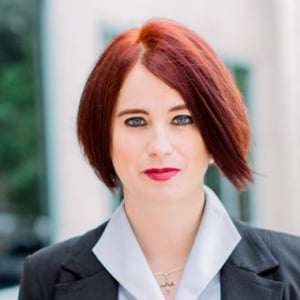
Counsel to Sen. Ted Cruz, U.S. Senate Judiciary Committee
Kathleen Hunker is a senior policy analyst with the Center for Economic Freedom at the Texas Public Policy Foundation. She is also a managing editor of the Foundation’s research and publications.
During her time at the Foundation, Ms. Hunker has testified nearly two-dozen times before the Texas Legislature and has become a respected expert on the law surrounding consumer protection, property rights, and the Texas civil court system.
A Texan by choice, not birth, Ms. Hunker previously worked as a legal associate at the Cato Institute’s Center for Constitutional Studies, where she conducted rigorous research and writing on a wide-range of federal and state cases in order to advance the Center’s mission of a constitutionally limited government.
The Claremont Institute selected her in 2014 for their prestigious John Marshall Fellowship on American political thought and jurisprudence.
Ms. Hunker graduated from Columbia University School of Law and the University College London with a Juris Doctor (J.D.) and Masters of Law (LL.M) respectively. She received her Bachelor of Arts (B.A.) from Hofstra University.
A former editor for the Columbia Journal of European Law, Ms. Hunker has written for such publications as Forbes, Townhall.com, Austin American-Statesman, and Ethika Politika, among others. Her legal research also has appeared in the Harvard Journal of Law and Public Policy and the Cornell International Law Journal Online. Ms. Hunker specializes in comparative constitutional law and natural rights.

Thomas M. Siebel Senior Fellow, The Hoover Institution, Stanford University; Gary T. Schwartz Distinguished Professor of Law Emeritus, UCLA School of Law
Eugene Volokh is the Thomas M. Siebel Senior Fellow at the Hoover Institution (Stanford), as well as the Gary T. Schwartz Distinguished Professor of Law Emeritus and Distinguished Research Professor at UCLA School of Law. He recently retired from teaching at UCLA, after 30 years there, and is now focusing on research.
Volokh is the author of the textbooks The First Amendment and Related Statutes (8th ed. 2023), and Academic Legal Writing (5th ed. 2016), as well as over 100 academic law journal articles, mostly on First Amendment law. He is a member of The American Law Institute; the editor-in-chief of the Journal of Free Speech Law; and the creator and coauthor of The Volokh Conspiracy, a leading legal blog founded in 2002 (hosted at the Washington Post from 2014 to 2017 and now at Reason Magazine).

Judge, United States Court of Appeals, Fifth Circuit
Judge Duncan received his B.A. from Louisiana State University in 1994, his J.D. from the Paul M. Hebert Law Center at Louisiana State University in 1997, and his LL.M. from Columbia Law School in 2004.
After graduating from law school, he clerked for Louisiana-based Circuit Judge John Malcolm Duhé Jr. of the United States Court of Appeals for the Fifth Circuit.
From 2008–2012, Duncan served as Appellate Chief for Louisiana's Attorney General's office. From 2012–2014, he served as general counsel of the Becket Fund for Religious Liberty. From 2004-2008, he was an assistant professor of law at the University of Mississippi School of Law.
Before becoming a judge, Duncan practiced at the Washington, D.C. firm of Schaerr Duncan LLP, where he was a founding partner. He was appointed by President Trump to the United States Court of Appeals for the Fifth Circuit on May 1, 2018.

Professor of Law, Antonin Scalia Law School, George Mason University
ILYA SOMIN is Professor of Law at George Mason University and the B. Kenneth Simon Chair in Constitutional Studies at the Cato Institute. His research focuses on constitutional law, property law, democratic theory, federalism, and migration rights. He is the author of Free to Move: Foot Voting, Migration, and Political Freedom (Oxford University Press, revised and expanded edition, 2022), Democracy and Political Ignorance: Why Smaller Government is Smarter (Stanford University Press, revised and expanded second edition, 2016), and The Grasping Hand: Kelo v. City of New London and the Limits of Eminent Domain (University of Chicago Press, 2015, rev. paperback ed., 2016), coauthor of A Conspiracy Against Obamacare: The Volokh Conspiracy and the Health Care Case (Palgrave Macmillan, 2013), and co-editor of Eminent Domain: A Comparative Perspective (Cambridge University Press, 2017). Democracy and Political Ignorance has been translated into Italian and Japanese.
Somin’s work has appeared in numerous scholarly journals, including the Yale Law Journal, Stanford Law Review, Northwestern University Law Review, Georgetown Law Journal, Critical Review, and others. Somin has also published articles in a variety of popular press outlets, including the New York Times, Washington Post, Wall Street Journal, Los Angeles Times, CNN, NBC, The Atlantic, USA Today, Boston Globe, US News and World Report, South China Morning Post, National Law Journal and Reason. He has been quoted or interviewed by the New York Times, Washington Post, Wall Street Journal, Time, Newsweek, The Economist, the Christian Science Monitor, the Financial Times, The Guardian, the Associated Press, CBS, MSNBC, NPR, BBC, Reuters, the Canadian Broadcasting Corporation, the Australian Broadcasting Corporation, Radio Free Europe/Radio Liberty, Al Jazeera, and the Voice of America, among other media.
Somin’s writings have been cited in decisions by the United States Supreme Court, multiple state supreme courts and lower federal courts, and the Supreme Court of Israel. He is co-counsel for the plaintiffs in VOS Selections, Inc. v. Trump, a case challenging the constitutionality of President Trump’s “Liberation Day” tariffs. Somin has testified on the use of drones for targeted killing in the War on Terror before the US Senate Judiciary Subcommittee on the Constitution, Civil Rights, and Human Rights. In 2009, he testified on property rights issues at the United States Senate Judiciary Committee confirmation hearings for Supreme Court Justice Sonia Sotomayor. Somin writes regularly for the popular Volokh Conspiracy law and politics blog, now affiliated with Reason magazine (previously affiliated with the Washington Post from 2014 to 2017). From 2006 to 2013, he served as Co-Editor of the Supreme Court Economic Review, one of the country’s top-rated law and economics journals.
Somin has served as a visiting professor at the University of Pennsylvania Law School. He has also been a visiting professor or scholar at the Georgetown University Law Center, the University of Hamburg, Germany, the University of Torcuato Di Tella in Buenos Aires, Argentina, Uriel Reichman University in Israel, and Zhengzhou University in China. He is a University Affiliate of the Schar School of Policy and Government at George Mason University, and an affiliated faculty member of the George Mason University Institute for Immigration Research. Before joining the faculty at George Mason, Somin was the John M. Olin Fellow in Law at Northwestern University Law School in 2002-2003. In 2001-2002, he clerked for the Hon. Judge Jerry E. Smith of the U.S. Court of Appeals for the Fifth Circuit. Professor Somin earned his B.A., Summa Cum Laude, at Amherst College, M.A. in Political Science from Harvard University, and J.D. from Yale Law School.

Solicitor General, Montana Attorney General's Office
Christian is currently Solicitor General of Montana, where he serves as the chief litigator and principal legal advisor to Montana Attorney General Austin Knudsen. In that capacity, he manages litigation before the federal district courts, courts of appeal, and the United States Supreme Court, as well as the Montana Supreme Court. He previously served in the Trump Administration as Senior Counsel to the Assistant Secretary for Civil Rights at the U.S. Department of Education. Prior to government service, he was a public interest constitutional litigator at Mountain States Legal Foundation and a fellow at the Institute for Justice. He clerked for Justice Caleb Stegall on the Kansas Supreme Court. He also served as Director of Publications for the Federalist Society's national headquarters.
Christian earned his B.A. in Political Science in 2009 from the University of Pennsylvania before attending the University of Kansas School of Law. Christian is admitted to practice law in Kansas and Montana. A Kansas native, he is a die-hard fan of the Kansas Jayhawks, Kansas City Chiefs, and Kansas City Royals.
Christian is a member of the Federalism & Separation of Powers Practice Group's Executive Committee.

Senior Fellow and Director of Constitutional Studies, Manhattan Institute
Ilya Shapiro is a senior fellow and director of constitutional studies at the Manhattan Institute and a contributing editor of City Journal. Previously he was executive director and senior lecturer at the Georgetown Center for the Constitution, and before that a vice president of the Cato Institute.
Shapiro is the author of Lawless: The Miseducation of America’s Elites (2025) and Supreme Disorder: Judicial Nominations and the Politics of America’s Highest Court (2020), coauthor of Religious Liberties for Corporations? (2014), and editor of 11 volumes of the Cato Supreme Court Review (2008-18). He has contributed to a variety of academic, popular, and professional publications, including the Wall Street Journal, Harvard Journal of Law & Public Policy, Washington Post, Los Angeles Times, USA Today, National Review, and Newsweek. He also regularly provides commentary for various media outlets, writes the Shapiro’s Gavel newsletter on Substack, and once appeared on the Colbert Report.
Shapiro has testified many times before Congress and state legislatures and has filed more than 500 amicus curiae “friend of the court” briefs in the Supreme Court. He lectures regularly on behalf of the Federalist Society, is a member of the board of fellows of the Jewish Policy Center, was an inaugural Washington Fellow at the National Review Institute, and has been an adjunct law professor at the George Washington University and University of Mississippi. He is also the chairman of the board of advisers of the Mississippi Justice Institute, a barrister in the Edward Coke Appellate Inn of Court, and a former member of the Virginia Advisory Committee to the U.S. Commission on Civil Rights.
Earlier in his career, Shapiro was a special assistant/adviser to the Multi-National Force in Iraq on rule-of-law issues and practiced at Patton Boggs and Cleary Gottlieb. Before entering private practice, he clerked for Judge E. Grady Jolly of the U.S. Court of Appeals for the Fifth Circuit. He holds an AB from Princeton University, an MSc from the London School of Economics, and a JD from the University of Chicago Law School.

Judge, United States Court of Appeals, Ninth Circuit
Judge Carlos Bea serves as a judge on the United States Court of Appeals for the Ninth Circuit. He received his Bachelor's Degree from Stanford University in 1956 and his J.D. from Stanford Law School in 1958. Judge Bea was born in San Sebastian, Spain, and immigrated with his family to Cuba in 1939. In 1952, he represented Cuba on the Cuban National basketball team in the Helsinki Olympics. Judge Bea became a naturalized citizen of the United States in 1958. He engaged in private practice in San Francisco, principally in the area of civil trials (jury and non-jury), from 1959-75 at Dunne, Phelps & Mills and from 1975-90 at Carlos Bea, A Law Corporation. He taught courses in civil litigation advocacy at Hastings College of Law and Stanford Law School. From 1990 to 2003, Judge Bea served as a judge of the San Francisco Superior Court. He was nominated by President George W. Bush to the United States Court of Appeals for the Ninth Circuit and was confirmed in 2003.
Judge Bea and his wife Louise reside in San Francisco, where they raised their four sons, Sebastian, Alexander, Nicholas, and Dominic.
President and CEO, Castro Synergies, LLC and Commissioner, U.S. Commission on Civil Rights
Marty Castro is the President and CEO of Castro Synergies, LLC, which provides strategic consulting services to corporations, entrepreneurs and non-profit organizations that seek to collaborate with and have a positive social impact on diverse communities.
Mr. Castro was appointed by President Barack Obama to the U.S. Commission on Civil Rights in January of 2011.
In December 2009, Mr. Castro was appointed by Illinois Governor Pat Quinn to Chair the Illinois Human Rights Commission. The Human Rights Commission is the State public body that arbitrates complaints of civil rights violations in housing, employment, public accommodations and financial credit.
Mr. Castro is chair of the board of the National Museum of Mexican Art, the only accredited Latino Museum in the United States. He also serves on the board of the Chicago Community Trust. Mr. Castro is a former national board member of the Mexican American Legal Defense and Educational Fund and former chair of the Hispanic National Bar Association’s U.S. Supreme Court Committee. Mr. Castro is also the former chair of the Judicial Nominations Commission for the Northern District of Illinois, by appointment of U.S. Senator Richard Durbin.
For his leadership and accomplishments, Mr. Castro has received numerous awards and recognitions, including the National Medical Fellowships’ Humanitarian Award; the Hispanic National Bar Association’s Cesar Chavez Humanitarian Award; the Edwin A. Rothschild Civil Liberties Award from the American Civil Liberties Union of Illinois; and the Thurgood Marshall Lifetime Achievement Award from the Association of Corporate Counsel, Chicago Chapter.
Mr. Castro received his B.A. in political science in 1985 from DePaul University and his Juris Doctorate degree from the University of Michigan Law School in 1988.

Senior Scholar, Manhattan Institute; Professor of Law Emerita, University of San Diego
Gail Heriot is a Senior Scholar at the Manhattan Institute, a Professor of Law Emerita at the University of San Diego and the Chairman of the Board of the American Civil Rights Project. She served on the U.S. Commission on Civil Rights for 18 years. Her new book is entitled “Why We Walk on Eggshells: How Our Civil Rights Laws Stifle Our Public Discourse.”
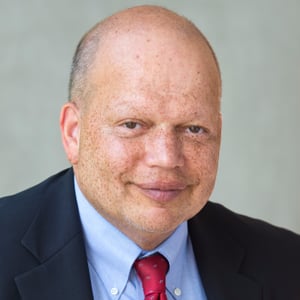
Julius L. Chambers Distinguished Professor of Law and Director of the Center for Civil Rights, University of North Carolina School of Law
Theodore M. Shaw is the Julius L. Chambers Distinguished Professor of Law and Director of the Center for Civil Rights at the University of North Carolina School of Law at Chapel Hill. Professor Shaw teaches Civil Procedure and Advanced Constitutional Law/Fourteenth Amendment. Before joining the faculty of UNC Law School, from 2008-2014 Professor Shaw taught at Columbia University Law School, where he was Professor of Professional Practice. During that time he was also “Of Counsel” to the law firm of Norton Rose Fulbright (formerly Fulbright & Jaworski, LLP). His practice involved civil litigation and representation of institutional clients on matters concerning diversity and civil rights.
Professor Shaw was the fifth Director-Counsel and President of the NAACP Legal Defense and Educational Fund, Inc., for which he worked in various capacities over the span of twenty-six years. He has litigated education, employment, voting rights, housing, police misconduct, capital punishment and other civil rights cases in trial and appellate courts, and in the United States Supreme Court.From 1982 until 1987, he litigated education, housing, and capital punishment cases and directed LDF's education litigation docket. In 1987, under the direction of LDF's third Director-Counsel, Julius Chambers, Mr. Shaw relocated to Los Angeles to establish LDF's Western Regional Office. In 1990, Mr. Shaw left LDF to join the faculty of the University of Michigan Law School, where he taught Constitutional Law, Civil Procedure and Civil Rights. While at Michigan, he played a key role in initiating a review of the law school's admissions practices and policies, and served on the faculty committee that promulgated the admissions program that was upheld by the U.S. Supreme Court in 2003 in Grutter v. Bollinger.
In 1993, Mr. Shaw returned to LDF as Associate Director-Counsel, and in 2004, he became LDF's fifth Director-Counsel. Mr. Shaw's legal career began as a Trial Attorney in the Honors Program of the United States Department of Justice, Civil Rights Division in Washington, D.C., where he worked from 1979 until 1982.
Mr. Shaw has testified on numerous occasions before Congress and before state and local legislatures. His human rights work has taken him to Africa, Asia, Europe, and South America. In addition to teaching at Columbia and at Michigan Law School, Professor Shaw held the 1997-1998 Haywood Burns Chair at CUNY School of Law at Queens College and the 2003 Phyllis Beck Chair at Temple Law School. He was a visiting scholar at the Constitution Center in Philadelphia in 2008-2009. He is a member of the faculty of the Practicing Law Institute (PLI).
Mr. Shaw served on the Obama Transition Team after the 2008 presidential election, as team leader for the Civil Rights Division of the Justice Department.
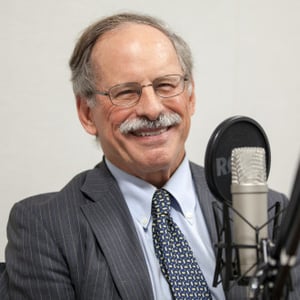
Freelance Journalist and Author
Stuart Taylor, Jr. is a Washington writer focusing on legal and policy issues and a National Journal contributing editor. He occasionally practices law.
Taylor has coauthored three books. All have been acclaimed by commentators across the ideological spectrum. In January 2017, KC Johnson and Taylor authored The Campus Rape Frenzy: The Attack on Due Process at America's Universities. In 2012, Richard Sander and Taylor authored Mismatch: How Affirmative Action Hurts Students It's Intended to Help, and Why Universities Won't Admit It. In 2007, Taylor and Johnson authored Until Proven Innocent: Political Correctness and the Shameful Injustices of the Duke Lacrosse Rape Fraud. Sander and Taylor have also filed amicus briefs in Supreme Court cases involving admissions preferences.
Since 1980, Taylor has done reporting and commentary about issues ranging from the biggest Supreme Court cases to race, voting rights, mindlessly excessive criminal penalties, guilt-presuming campus rape processes, journalistic bias, the death penalty, war powers, gerrymandering, guns, polarization, civil liberties, national security, torture, campaign finance, education, impeachment, and other issues. He has often been called one of the nation's best legal journalists and is known for challenging both liberal and conservative conventional wisdom.
Taylor was a reporter for The New York Times from 1980-1988, covering legal affairs and then the Supreme Court. He wrote commentaries and long features for The American Lawyer, Legal Times and their affiliates from 1989-1997, and for National Journal and Newsweek from 1998 through 2010. He has written (less often) on a freelance basis for numerous publications since 2010. He has written op-eds for The Washington Post, The New York Times, The Wall Street Journal, The Los Angeles Times, USA Today, and The New York Daily News and longer commentaries for RealClearPolitics, The Atlantic, The New Republic, the (late) Weekly Standard, National Review, Slate, The Daily Beast, Harper’s, Reader’s Digest, Time and other magazines. He has been interviewed on all major television and radio networks. He taught “Law and the News Media” at Stanford Law School in 2011 and 2012 and practices law on occasion.
Taylor graduated from Princeton University in 1970 with an A.B. in History. After working as a reporter for the Baltimore Evening Sun and Sun from 1971-1974, he moved to Harvard Law School, was a Harvard Law Review note editor, and graduated in 1977 at the top of his class, with high honors. He also won a Frederick Sheldon Traveling Fellowship and traveled around the world in 1977-1978 while studying freedom of the press in the United Kingdom and Kenya.
Taylor practiced law with Wilmer, Cutler & Pickering, in Washington, D.C., from 1977-1980 before returning to journalism in 1980 by joining the Washington Bureau of The New York Times.
Taylor's journalism honors include the 2009 Northern California Innocence Project Media Award for his work on the Duke lacrosse rape fraud; a 2002 National Headliner Award for best special magazine column on one subject; and a share of The American Lawyer’s National Magazine Award for a March 1990 special issue on the drug war. He was a National Magazine Award finalist in 1993 and 1997 and was nominated by The New York Times for a Pulitzer Prize in 1988.
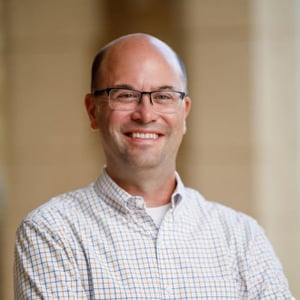
Paul J. Schierl Professor of Law, University of Notre Dame Law School
Professor Richard W. Garnett teaches and writes in the areas of constitutional law, criminal law, the First Amendment, and law and religion. He is a leading authority on questions and debates regarding religious freedom and church-state relations, and is the founding director of Notre Dame Law School’s Program on Church, State, and Society.
Garnett clerked for the late Chief Justice of the United States, William H. Rehnquist, and also for the late Chief Judge of the United States Court of Appeals for the Eighth Circuit, Richard S. Arnold. He earned his J.D. from Yale Law School in 1995 and his B.A., summa cum laude, from Duke University in 1990. He joined the faculty in 1999 after practicing law in Washington, D.C. with Miller, Cassidy, Larroca & Lewin.
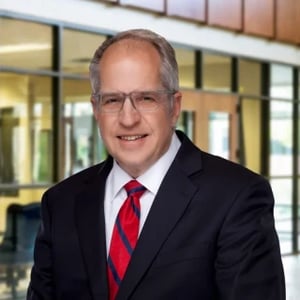
Senior Counsel, First Liberty Institute
Jordan Lorence is Senior Counsel in FLI’s Washington, D.C. office, where he represents First Liberty in strategic efforts promoting religious liberty, and works on important First Amendment projects and litigation, including those at the U.S. Supreme Court.
Lorence has a long career of litigating religious liberty cases since 1984. He has worked for many public interest law firms, including Alliance Defending Freedom, Home School Legal Defense Association, the North Star Legal Center and Concerned Women for America.
He has worked on important religious liberty cases. Lorence worked on school choice cases at the Supreme Court, such as Witters v. Washington Department of Services for the Blind (1986), and Trinity Lutheran (2016), which laid the foundation for First Liberty’s crucial win in Carson v. Makin (2022), requiring Maine to include religious schools in its school choice program.
Lorence argued before the U.S. Supreme Court in Regents of the University of Wisconsin v. Southworth (2000). He represented prolife Christian law students from the University of Wisconsin Law School who objected to the University’s requirement that they pay a mandatory student fee that funded the advocacy of student pro-abortion groups. Other Supreme Court cases Lorence has worked on include NIFLA v. Becerra (2018), protecting prolife pregnancy centers from a California statute requiring them to post signs explaining how pregnant women could obtain state-funded abortions; Masterpiece Cakeshop (2017), involving a Christian cake artist sued by the State of Colorado for declining to design a case celebrating the wedding of a same-sex couple and other cases such as Christian Legal Society v. Martinez (2012), Rosenberger v. University of Virginia (1995), Hurley v. GLIB (1995) and Lamb’s Chapel v. Center Moriches Center Moriches School District (1993).
Churches and other religious groups in New York City obtained the right to rent vacant public schools on weekends to conduct worship services after Lorence’s tenacious 20 years of litigation in Bronx Household of Faith. Lorence won protection for churches facing eviction from discriminatory zoning ordinances in Minnesota in Cornerstone Bible Church v. City of Hastings, Minnesota (1991). He also argued at the New Mexico Supreme Court one of the first cases in the nation defending a Christian wedding photographer charged by the State of New Mexico with discrimination for declining to create photos celebrating the commitment ceremony of a lesbian couple in Elane Photography v. Willock (2013).
Lorence defended home schooling families from intrusive school officials during his time working at Home School Legal Defense Association (HSLDA) in the 1980s and 1990s. HSLDA also tasked Lorence with establishing a sister organization in Canada to protect home schooling families there. He traveled extensively in Canada from British Columbia to Prince Edward Island speaking to families how they could protect their right to home school under relevant Canadian law.
Lorence earned his undergraduate degree in journalism from Stanford University and his law degree from the University of Minnesota, his home state. Lorence was born and raised in Minnesota, where he worked one summer building Mighty Dump trucks at Tonka Toys in Mound, Minnesota. For two years immediately after he graduated from law school, Lorence served as the head administrator for a Minnesota Senate committee.
He speaks extensively on First Amendment and other legal issues. Lorence has spoken at least 75 law schools and many legal conferences. Prominent publications such as the Wall Street Journal, the Washington Post and others have printed his opinion pieces on key legal issues involving religious liberty and freedom of speech. He has appeared on such media outlets as Fox News, CNN, National Public Radio, NBC’s Today Show, BBC radio and many others.
Lorence and his wife Marilyn have been married 40 years. They live in the Washington, D.C. area where they raised their seven children.

Chief Judge, United States Court of Appeals, Eleventh Circuit
William H. Pryor Jr. serves as Chief Circuit Judge on the United States Court of Appeals for the Eleventh Circuit.
In 2013–18, he served on the United States Sentencing Commission and, in 2017–18, served as Acting Chair.
He has taught as a visiting professor at the University of Alabama School of Law and previously taught as an adjunct professor at the Cumberland School of Law of Samford University.
He served as the 45th Attorney General of Alabama from 1997 to 2004. When he took office, he was the youngest attorney general in the nation. In his reelection, he received the highest percentage of votes of any statewide candidate.
He graduated magna cum laude from Tulane Law School where he finished first in the common-law curriculum and was editor in chief of the Tulane Law Review. He then served as a law clerk for Judge John Minor Wisdom of the U.S. Court of Appeals for the Fifth Circuit.
He is a member of The American Law Institute and an Adviser for the RESTATEMENT OF THE LAW THIRD, CONFLICT OF LAWS. He is a coauthor with Bryan Garner, Justices Gorsuch and Kavanaugh, and several other judges of a treatise, THE LAW OF JUDICIAL PRECEDENT. He has published in the Yale Law Journal, Columbia Law Review, Virginia Law Review, Notre Dame Law Review, Harvard Journal of Law & Public Policy, Yale Law & Policy Review, George Mason Law Review, Florida Law Review, Alabama Law Review, Case Western Reserve Law Review, and Tulane Law Review. He has published op-eds in The Wall Street Journal, The New York Times, National Review, and USA Today. He has debated at National Lawyers’ Conventions of the Federalist Society (including on National Public Radio) and at the Oxford Union in the United Kingdom. And he is listed among several “widely admired judicial writers” in Bryan Garner’s The Redbook: A Manual on Legal Style.
He is a member of the Tulane Law School Hall of Fame and has received the Defender of the Constitution Award from the Heritage Foundation, the Jurist of the Year Award from the Texas Review of Law & Politics, and the St. Thomas More Award from the St. Thomas More Society of Atlanta. Judge Pryor is also a proud member of the National Society of the Sons of the American Revolution.
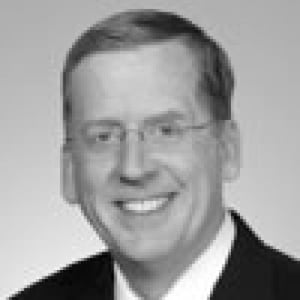
Partner, Jenner & Block LLP
Paul M. Smith is a partner in the Firm's Litigation Department. He is a member of the Firm's Policy Committee. He is Chair of the Appellate and Supreme Court Practice and a Co-Chair of the Creative Content, Media and First Amendment, and Election Law and Redistricting Practices. Mr. Smith is AV Peer Review Rated, Martindale-Hubbell's highest peer recognition for ethical standards and legal ability.
Mr. Smith has had an active Supreme Court practice for two decades, including oral arguments in thirteen Supreme Court cases. These arguments have included Crawford v. Marion County Election Board (2008), the Indiana Voter ID case; LULAC v. Perry (2006), and Vieth v. Jubelirer (2003), two congressional redistricting cases; Lawrence v. Texas (2003), involving the constitutionality of the Texas sodomy statute; United States v. American Library Ass'n (2003), involving a First Amendment challenge to the Children's Internet Protection Act and Mathias v. WorldCom (2001), dealing with the Eleventh Amendment immunity of state commissions. His first argument was in Celotex Corp. v. Catrett in 1986. Mr. Smith also worked extensively on several other First Amendment cases in the Supreme Court, involving issues ranging from commercial speech to defamation to "adult" speech on the Internet.
Mr. Smith also represents various clients in trial and appellate cases involving commercial and telecommunications issues, the First Amendment, intellectual property, antitrust, and redistricting and voting rights, among other areas. His recent trial work has included several cases involving congressional redistricting as well as challenges to state video game restrictions under the First Amendment.
Mr. Smith graduated summa cum laude and Phi Beta Kappa from Amherst College in 1976 and received a J.D. from Yale Law School in 1979, where he served as Editor-in-Chief of the Yale Law Journal. The following year, Mr. Smith was a law clerk to Judge James L. Oakes of the United States Court of Appeals for the Second Circuit. From 1980-81, Mr. Smith was a law clerk to Supreme Court Justice Lewis F. Powell, Jr.
Mr. Smith was a member of the Board of Governors of the District of Columbia Bar from 2002-2008. He is a former board member and former Chair of the National Board of Directors of The American Constitution Society, Co-Chair of the Board of Directors of Lambda Legal and a member of the Board of Directors of the Washington Lawyers Committee for Civil Rights and Urban Affairs.
Since 2003, Chambers USA has named him one of the country's leading lawyers in the areas of Appellate Litigation and Media & Entertainment Law. In 2007, 2008, 2009 and 2010 Chambers USA also named him one of the country's leading lawyers in the area of First Amendment Litigation. Mr. Smith was recognized in the 2007, 2008, 2009 and 2010 Editions of Washington DC Super Lawyers for Appellate Law and as one of the Top 100 Lawyers in DC. In 2010, Mr. Smith was named one of the Top 10 lawyers in Washington, DC by Washington DC Super Lawyers and one of "Washington's Top Lawyers" by Washingtonian magazine. Mr. Smith was also named one of the "Decade's Most Influential Lawyers" by The National Law Journal in 2010. The Firm was also selected as 2010 "Copyright Firm of the Year" by Managing Intellectual Property magazine. In 2010, Mr. Smith was awarded the Thurgood Marshall Award from the American Bar Association Section of Individual Rights and Responsibilities.
Mr. Smith is admitted to practice in Maryland, New York and the District of Columbia.
Thomas M. Siebel Senior Fellow, The Hoover Institution, Stanford University; Gary T. Schwartz Distinguished Professor of Law Emeritus, UCLA School of Law
Eugene Volokh is the Thomas M. Siebel Senior Fellow at the Hoover Institution (Stanford), as well as the Gary T. Schwartz Distinguished Professor of Law Emeritus and Distinguished Research Professor at UCLA School of Law. He recently retired from teaching at UCLA, after 30 years there, and is now focusing on research.
Volokh is the author of the textbooks The First Amendment and Related Statutes (8th ed. 2023), and Academic Legal Writing (5th ed. 2016), as well as over 100 academic law journal articles, mostly on First Amendment law. He is a member of The American Law Institute; the editor-in-chief of the Journal of Free Speech Law; and the creator and coauthor of The Volokh Conspiracy, a leading legal blog founded in 2002 (hosted at the Washington Post from 2014 to 2017 and now at Reason Magazine).

University Professor of Law and Executive Director, Liberty & Law Center, Antonin Scalia Law School, George Mason University
David Bernstein holds a University Professorship chair at the Antonin Scalia Law School, where he has been teaching since 1995. He has also been a visiting professor at the University of Michigan, Georgetown University, William & Mary, Brooklyn Law School, the University of Turin, and Hebrew University. Professor Bernstein teaches Constitutional Law, Evidence, and Products Liability.
A prolific author, Professor Bernstein often challenges the conventional wisdom with prodigious research and sharp, original analysis. He is the author of five books, and coauthor of two more. Professor Bernstein’s book Rehabilitating Lochner was praised across the political spectrum as “intellectual history in its highest form,” a “fresh perspective and a cogent analysis,” “delightful and informative,” “sharp and iconoclastic,” and “a terrific work of historical revisionism.” Columnist George Will praised Bernstein’s most recent book, Classified, The Untold Story of Racial Classification in America, as “perhaps the most consequential American book of 2022.”
Professor Bernstein has also written dozens of articles and essays published in major law reviews, including the California Law Review, Columbia Law Review, Michigan Law Review, and Yale Law Journal. An article he coauthored, Defending Daubert: It’s Time to Amend Federal Rule of Evidence 702, directly inspired a pending amendment to Rule 702.
Professor Bernstein blogs at the Instapundit.com, the Times of Israel, and the Volokh Conspiracy. He is a graduate of the Yale Law School, where he was senior editor of the Yale Law Journal and a John M. Olin Fellow in Law, Economics, and Public Policy.
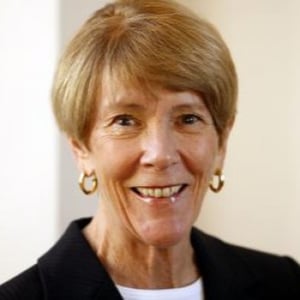
David and Mary Harrison Distinguished Professor of Law Emeritus, University of Virginia School of Law
Lillian BeVier taught constitutional law (with special emphasis on First Amendment issues), intellectual property (trademark, copyright), real property and torts from 1973-2010 at the Law School, and now teaches a January Term course on judicial philosophy.
At Stanford Law School, BeVier was revising editor for the Stanford Law Review and a member of the Order of the Coif. Before coming to Virginia, she was associate professor of law at the University of Santa Clara Law School; practiced law with Spaeth Blase Valentine & Klein in Palo Alto, Calif.; served as research associate to Professor William F. Baxter at Stanford University Law School, working on the FAA-ABA study of the legal aspects of airport noise and the sonic boom; and was assistant to the general secretary and assistant staff legal counsel for Stanford University.
BeVier received the University of Virginia Alumni Association Distinguished Professor Award in 2006. The Raven Society elected her to membership in 1993 and honored her with the faculty award in 2010. She delivered the Henry Miller Memorial Lecture at Georgia State Law School in 2005, the Coen Memorial Lecture at the University of Colorado Law School in 2000, and the David C. Baum Lecture on Civil Rights and Civil Liberties at the University of Illinois Law School in 1996. In 1999, at the invitation of the Supreme Court Historical Society, she spoke to the Society on Free Expression in the Warren and Burger Courts. Suffolk University awarded her an honorary S.J.D. degree in 1998. In the fall of 2003, she was a visiting scholar at the National Constitution Center in Philadelphia.
Having been nominated by President Bush and confirmed by the Senate in 2003, she served as vice-chair of the Board of Directors of the Legal Services Corporation until 2009. She serves on the national Board of Visitors of the Federalist Society. Within the Charlottesville community, BeVier has served as chair of the Board of Trustees of St. Anne’s-Belfield School and of the Martha Jefferson Hospital. She is currently chair of the board of the Martha Jefferson Health Services Corporation and of Piedmont CASA (Court-Appointed Special Advocates).
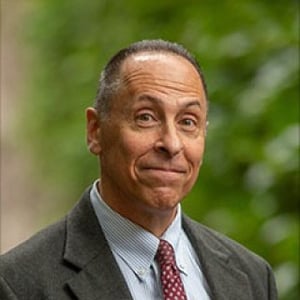
John Paul Stevens Professor of Law, Northwestern University School of Law
Andrew Koppelman is John Paul Stevens Professor of Law, Professor (by courtesy) of Political Science, and Philosophy Department Affiliated Faculty at Northwestern University. He received the Walder Award for Research Excellence from Northwestern, the Hart-Dworkin award in legal philosophy from the Association of American Law Schools, and the Edward S. Corwin Prize from the American Political Science Association. His scholarship focuses on issues at the intersection of law and political philosophy. He has written more than 100 scholarly articles and eight books, most recently Burning Down the House: How Libertarian Philosophy Was Corrupted by Delusion and Greed, (St. Martin’s Press). His column appears regularly at The Hill. You can find his recent work at andrewkoppelman.com.

Founder, Chairman, and CEO, Louis D. Brandeis Center for Human Rights Under Law
Hon. Kenneth L. Marcus is an internationally recognized expert in civil and human rights, as well as a leader in the fight against anti-Semitism on and off university campuses. He is the Founder, Chairman, and CEO of The Louis D. Brandeis Center for Human Rights Under Law, the leading civil rights legal organization fighting against anti-Semitism. The New York Times has called him “The Man Who Helped Redefine Campus Anti-Semitism.” He been described, in that paper, as “the single most effective and respected force” to combat anti-Semitism.
During his public service career, Marcus served as Assistant U.S. Secretary of Education for Civil Rights; Staff Director at the U.S. Commission on Civil Rights; and General Deputy Assistant U.S. Secretary of Housing and Urban Development for Fair Housing and Equal Opportunity.
In academia, he serves as Professorial Lecturer in Law at George Washington University. He formerly held the Lillie and Nathan Ackerman Chair in Equality and Justice in America at the City University of New York’s Bernard M. Baruch College, served as Visiting Research Professor of Political Science at Yeshiva University, and was a Board of Visitors member George Mason University and Distinguished Senior Fellow at that university’s law school. He is a member of the editorial board of the Journal of Contemporary Antisemitism and previously served as Associate Editor of the Journal for the Study of Anti-Semitism.
Marcus is also author of The Definition of Anti-Semitism (Oxford University Press) and Jewish Identity and Civil Rights in America (Cambridge University Press). He has published widely in academic journals as well as in more popular venues such as The Wall Street Journal, Washington Post, Newsweek, USA Today, and Politico. He is a graduate of Williams College and the University of California at Berkeley School of Law.
Earlier in his career, he was a litigation partner in two major law firms, where he conducted complex commercial and constitutional litigation. He also serves as Chairman emeritus of the Executive Committee of the Federalist Society for Law & Public Policy Civil Rights Practice Group.
Thomas M. Siebel Senior Fellow, The Hoover Institution, Stanford University; Gary T. Schwartz Distinguished Professor of Law Emeritus, UCLA School of Law
Eugene Volokh is the Thomas M. Siebel Senior Fellow at the Hoover Institution (Stanford), as well as the Gary T. Schwartz Distinguished Professor of Law Emeritus and Distinguished Research Professor at UCLA School of Law. He recently retired from teaching at UCLA, after 30 years there, and is now focusing on research.
Volokh is the author of the textbooks The First Amendment and Related Statutes (8th ed. 2023), and Academic Legal Writing (5th ed. 2016), as well as over 100 academic law journal articles, mostly on First Amendment law. He is a member of The American Law Institute; the editor-in-chief of the Journal of Free Speech Law; and the creator and coauthor of The Volokh Conspiracy, a leading legal blog founded in 2002 (hosted at the Washington Post from 2014 to 2017 and now at Reason Magazine).

Courthouse Steps: Masterpiece Cakeshop v. Colorado CRC
Kim Colby
On December 5th, The Supreme Court will hear oral arguments in Masterpiece Cakeshop v. Colorado...
Religious Freedom of Religious Colleges - Podcast
Gregory Baylor
Mr. Gregory S. Baylor of Alliance Defending Freedom discussed current and future challenges to the religious...
Labor & Employment: 80th Anniversary of the National Labor Relations Act & Congressional Action
Richard A. Epstein, Joan Larsen, John N. Raudabaugh, Bill Samuel, Mark Schneider
Our nation's private sector labor law is a product of the New Deal and the...
Texas RFRA and the Houston "HERO" LGBT Referendum - Podcast
Josh Blackman, John C. Eastman, Kathleen Hunker, Eugene Volokh
The Houston Equal Rights Ordinance (HERO) ballot initiative, which extends to housing & employment, has...
How could the Supreme Court affect marriage?
Stuart Kyle Duncan, Ilya Somin
Kyle Duncan of Duncan PLLC, an attorney in private practice who serves as Special Assistant...
Anti-discrimination and Individual Liberties: Elane Photography v. Willock - Podcast
Christian Corrigan, Ilya Shapiro
On August 22, the New Mexico Supreme Court ruled in Elane Photography v. Willock that...
Civil Rights: Who Benefits from Affirmative Action and Race and Gender Consciousness?
Carlos T. Bea, Martin Castro, Gail L. Heriot, Theodore M. Shaw, Stuart S. Taylor
The Civil Rights Practice Group hosted this panel on "Who Benefits from Affirmative Action and...
Religious Liberties: Christian Legal Society vs. Martínez
Richard W. Garnett, Jordan Lorence, William H. Pryor, Paul Smith, Eugene Volokh
Prof. Richard W. Garnett, IV, Associate Dean, University of Notre Dame Law School Mr. Jordan...
Free Speech & Election Law: Freedom of Speech vs. Anti-Discrimination Laws
David Bernstein, Lillian R. BeVier, Andrew Koppelman, Kenneth L. Marcus, Eugene Volokh
An employer is sued for hostile work environment harassment because it doesn't stop its employees...