Vice President for Legal Affairs, Goldwater Institute
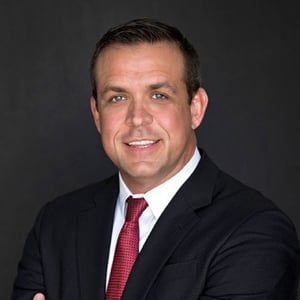
Staff Attorney, Goldwater Institute
John Thorpe is an attorney at the Goldwater Institute in Phoenix, Arizona, where he litigates in the areas of education, free speech, economic liberty, government transparency, regulatory reform, and property rights.
After graduating from the Sandra Day O’Connor College of Law at Arizona State University, John clerked for Judge Carolyn B. McHugh on the Tenth Circuit and for Judge Bridget S. Bade on the Ninth Circuit. John has also worked in private practice, focusing on appeals, complex commercial litigation, and Indian law. Prior to law school, John taught economics, Latin, and humanities at a charter school in Phoenix, where he saw first-hand how school choice can transform students’ lives. John is passionate about empowering families through school choice and academic transparency, as well as ensuring that schools are places for the pursuit of truth and the free exchange of ideas.
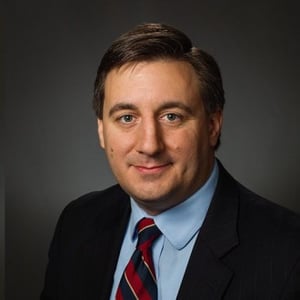
Deputy Assistant Attorney General, Office of Legal Policy, Department of Justice
GianCarlo Canaparo serves as Deputy Assistant Attorney General in the Office of Legal Policy at the Department of Justice. There, he oversees the Office's regulatory work and is the Department's liaison to the Office of Information and Regulatory Affairs. He also assists the White House in the process of selecting nominees for federal judgeships and advises Department leadership on policy and legal matters.
Before joining the Department, Canaparo was a senior legal fellow at The Heritage Foundation’s Edwin Meese III Center for Legal and Judicial Studies where he researched constitutional law, administrative law, and civil rights.
Canaparo’s scholarship has appeared in various law reviews including the Harvard Journal of Law and Public Policy, the Notre Dame Law Review, the Georgetown Journal of Law and Public Policy, the Texas Review of Law and Politics, and the Administrative Law Review. His research has been cited by Justice Neil Gorsuch and featured in the Wall Street Journal and Washington Post. His analysis has appeared in Law & Liberty, Civitas, Fox News, The National Review, Law 360, FedSoc Blog, and other outlets.
Canaparo co-hosted The Heritage Foundation’s SCOTUS 101 podcast, which follows the Supreme Court’s arguments and opinions and features interviews with judges, advocates, and scholars.
After graduating Georgetown law, Canaparo spent three years at the law firm of Skadden, Arps, Slate, Meagher & Flom and two years as a federal law clerk. He earned his bachelor’s degree in economics from the University of California at Davis.
Canaparo is a classical pianist and organist.
Vice President for Legal Affairs, Goldwater Institute
Deputy Assistant Attorney General, Office of Legal Policy, Department of Justice
GianCarlo Canaparo serves as Deputy Assistant Attorney General in the Office of Legal Policy at the Department of Justice. There, he oversees the Office's regulatory work and is the Department's liaison to the Office of Information and Regulatory Affairs. He also assists the White House in the process of selecting nominees for federal judgeships and advises Department leadership on policy and legal matters.
Before joining the Department, Canaparo was a senior legal fellow at The Heritage Foundation’s Edwin Meese III Center for Legal and Judicial Studies where he researched constitutional law, administrative law, and civil rights.
Canaparo’s scholarship has appeared in various law reviews including the Harvard Journal of Law and Public Policy, the Notre Dame Law Review, the Georgetown Journal of Law and Public Policy, the Texas Review of Law and Politics, and the Administrative Law Review. His research has been cited by Justice Neil Gorsuch and featured in the Wall Street Journal and Washington Post. His analysis has appeared in Law & Liberty, Civitas, Fox News, The National Review, Law 360, FedSoc Blog, and other outlets.
Canaparo co-hosted The Heritage Foundation’s SCOTUS 101 podcast, which follows the Supreme Court’s arguments and opinions and features interviews with judges, advocates, and scholars.
After graduating Georgetown law, Canaparo spent three years at the law firm of Skadden, Arps, Slate, Meagher & Flom and two years as a federal law clerk. He earned his bachelor’s degree in economics from the University of California at Davis.
Canaparo is a classical pianist and organist.
Attorney, Berkshire Law Office
As one of approximately 70 certified specialists in the State of Arizona and one of 36 Fellows in the American Academy of Matrimonial Lawyers, Keith Berkshire is well versed in all areas of family law, including high stakes litigation. In addition to his litigation practice, Keith has a significant appellate practice which includes 23 published Opinions at the Arizona Court of Appeals and the Arizona Supreme Court. Keith also successfully litigated the Howell case at the Supreme Court of the United States.
Keith routinely teaches other attorneys and judges at legal education seminars on various family law issues, including legal decision-making (custody) and appellate matters and regularly serves as an expert witness on variously family law issues.
Attorney, Arizona Center for Disability Law
Sey In is a Hofstra law graduate interested in public interest law with focus in health law, public service, and immigration. He worked in litigation technology for over 10 years prior to going to law school.
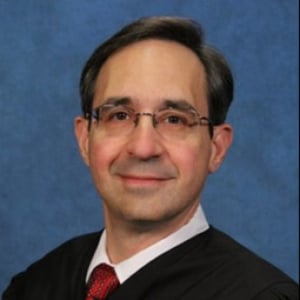
Presiding Judge of the Probate and Mental Health Department, Superior Court of Arizona for Maricopa County
Jay M. Polk is the Presiding Judge of the Probate and Mental Health Department of the Superior Court of Arizona for Maricopa County. He served as the Associate Presiding Judge of that department from April 10, 2017, through June 26, 2020. From November 21, 2011, to April 7, 2017, Judge Polk was assigned to the Family Court Department and served as the Associate Presiding Judge of Family Court Department for the Northeast Regional Court Center for approximately two of those years.
For nearly 20 years prior to his appointment to the bench, Judge Polk limited his practice of law to contested and uncontested matters relating to guardianships, conservatorships, decedents’ estates, the abuse or exploitation of vulnerable adults, and estate planning for modest estates. In addition, he served as a mediator and arbitrator, as a guardian ad litem for minor children and incapacitated adults, and as judge pro tempore. Between 1999 and 2011, Judge Polk was an Arizona Licensed Fiduciary and, as such, served as a personal representative or special administrator for several estates, as well as the special conservator for an attorney.
Judge Polk is a frequent speaker on probate and family law matters. He is an editor of the forthcoming edition of the Arizona Probate Code Practice Manual, was a co-managing editor of the 2014 edition of that publication, an associate editor of the 2000 edition of that publication, and has been a regular contributor to the Judicial College of Arizona’s Probate Benchbook. Throughout his career, Judge Polk has been involved in drafting legislation to improve Arizona’s probate laws. In addition, Judge Polk served on the Arizona Supreme Court’s Probate Rules Committee, which drafted the first set of statewide probate rules of procedure, and the Arizona Supreme Court’s Committee on Improving Judicial Oversight and Processing of Probate Court Matters, which proposed significant reforms to Arizona’s probate laws and rules. From December 2017 until December 2019, Judge Polk served on the Task Force on the Arizona Rules of Probate Procedure and chaired Workgroup 1 of that Task Force. He continues to serve on the Task Force’s Editorial Workgroup, which is updating statewide mandatory probate forms. From September 2018 until December 2019, Judge Polk was a member of the Steering Committee on Arizona Case Processing Standards and chaired the Probate Time Standards subcommittee. Between 2014 and 2015, Judge Polk assisted in creating the Superior Court of Arizona for Maricopa County’s intelligent probate forms.
Since 2011, Judge Polk has been a member of the Fiduciary Board, which regulates Arizona professional fiduciaries. He has been a member of the Executive Board of the Arizona Judges Association since June 2014, and served as Secretary from July 2016 through June 2017, Vice President from July 2017 through June 2018, and President from July 2018 to June 2019. He has been a member of the Arizona Public Safety Personnel Retirement System (“PSPRS”) Advisory Committee since November 2016. Since May 2017, Judge Polk has served as the Judicial Liaison to the Estate Planning, Probate, and Trust Law Section of the Maricopa County Bar Association, and since September 2018, he has served as the Judicial Liaison to the Elder Law, Mental Health, and Special Needs Planning Section of the State of Bar of Arizona. Since June 2019, he also has been the Judicial Liaison to the Probate and Trust Law Section of the State Bar of Arizona. In addition, Judge Polk served as President of The Council For Jews With Special Needs from 2004 to 2006 and was a member of that organization’s Board of Directors from 1998 through 2007.
A graduate of the University of Chicago (A.B. 1989, Political Science) and Arizona State University (J.D. 1992), Judge Polk has been the recipient of numerous professional awards, including the State Bar of Arizona Probate and Trust Law Section’s 2008 Eleanor ter Horst Distinguished Service Award, the Arizona Fiduciaries Association’s 2009 Leadership Award, the Arizona Chapter of the National Academy of Elder Attorneys’ 2011 Craig C. Gordon Outstanding Arizona Chapter Member Award, and the Maricopa County Bar Association Family Law Section’s 2017 Bridging the Gap Award.
Vice Chief Justice, Arizona Supreme Court
Dram-Shop Liability and the State Constitution at the Arizona Supreme Court
Timothy Sandefur
The Arizona Supreme Court made surprisingly quick work of what at first appeared to be...
Can a Respondeat Superior Claim Survive Dismissal of the Underlying Negligence Claim? Arizona Supreme Court Reverses Course.
John Thorpe
For nearly eighty years, Arizona courts have held that if a negligence claim against an...
State Court Docket Watch: Matthews v. Industrial Commission of Arizona
GianCarlo Canaparo
How does originalism work with state constitutions? Justice Clint Bolick, writing for the Arizona Supreme...
Arizona Free Enterprise v. Hobbs
Timothy Sandefur
The Arizona Constitution, written in 1910, includes several features traceable to the reform efforts...
State Court Docket Watch: Rogers v. Honorable Mroz
GianCarlo Canaparo
On February 1, 2022, the Arizona Supreme Court held that the First Amendment barred a...
Free Britney!
Do the Probate & Family Courts have too much power to control individual autonomy?
Phoenix, AZOn Arizonans for Second Chances v. Hobbs
The COVID-19 pandemic hit Arizona in March 2020, resulting in an emergency declaration and a...
Annual Lawyer-Student Mixer