
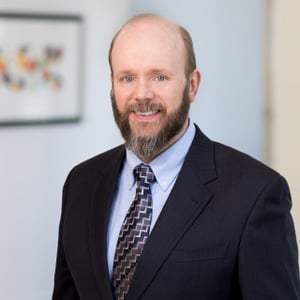
Partner, Crowell & Moring LLP, Crowell & Moring LLP
Trevor K. Copeland is a partner in the law firm of Crowell & Moring LLP (formerly Brinks Gilson & Lione PC).
His patent prosecution experience includes work on medical devices, sunglasses, footwear, sprinklers and irrigation equipment, decorative statuary and water gardens, biotechnology and general mechanical arts. He works closely with clients having products in these areas to develop intellectual property acquisition and management strategies, as well as to protect new ideas and products while respecting the rights of others.
Mr. Copeland's further practice includes design protection, whereby clients are able to protect the unique and valuable ornamental designs of their products using patent, copyright, and/or trademark. He has also litigated utility patents on clients' behalf, and has worked on preliminary injunction lawsuits for both design and utility patents, including winning a preliminary injunction against a foreign company preparing to launch an infringing laser-level device with a suction base.
Mr. Copeland has former experience as a high school biology and chemistry teacher, and as a visiting scientist with a Fungal Biochemistry and Molecular Genetics Laboratory Group.

Laurence A. Tisch Professor of Law and Director, Classical Liberal Institute, New York University School of Law; Senior Fellow, The Civitas Institute, University of Texas at Austin
Richard A. Epstein is the inaugural Laurence A. Tisch Professor of Law at NYU School of Law. Prior to his joining the faculty, he was a visiting law professor at NYU from 2007 through 2009. He served as the Peter and Kirstin Bedford Senior Fellow at the Hoover Institution from 2000 to 2024. Since 2024 to the present he is a senior lecturer at the Civitas Institute at the University of Texas—Austin. Epstein is also the James Parker Hall Distinguished Service Professor of Law Emeritus and a senior lecturer at the University of Chicago. His initial law school appointment was at the University of Southern California from 1968 to 1972. Epstein received an LL.D., h.c. from the University of Ghent, 2003. He has been a member of the American Academy of Arts and Sciences since 1985 and was a Senior Fellow of the Center for Clinical Medical Ethics at the University of Chicago Division of Biological Sciences, also from 1983. to 2022 He served as editor of the Journal of Legal Studies from 1981 to 1991, and of the Journal of Law and Economics from 1991-2001. From 2001 to 2010 he was a director of the John M. Olin Program in Law and Economics at the University of Chicago.
His newest book, The Myth of Birthright Citizenship: What the Fourteenth Amendment Really Says was published in 2026 (Encounter Books). Prior to that he has published many books including, The Dubious Morality of the Modern Administrative State (Roman & Littlefield 2020).Earlier he published th Classical Liberal Constitution: The Uncertain Quest for Limited Government (Harvard 2014) iHis previous books include Design for Liberty: Private Property, Public Administration and the Rule of Law (Harvard 2011); The Case Against the Employee Free Choice Act (Hoover 2009); Supreme Neglect: How to Revive the Constitutional Protection of Property Rights (Oxford 2008); Antitrust Decrees in Theory and Practice: Why Less is More (AEI 2007); Overdose: How Excessive Government Regulation Stifles Pharmaceutical Innovation (Yale University Press. 2006); How Progressives Rewrote the Constitution (Cato 2006); Cases and Materials on Torts (Aspen Law & Business; 8th ed. 2004); Skepticism and Freedom: A Modern Case for Classical Liberalism (University of Chicago, 2003); Torts (Aspen Law & Business 1999); Principles for a Free Society: Reconciling Individual Liberty with the Common Good (Perseus Books, 1998): Mortal Peril: Our Inalienable Rights to Health Care (Addison-Wesley, 1997); Simple Rules for a Complex World (Harvard, 1995); Bargaining With the State (Princeton, 1993); Forbidden Grounds: The Case Against Employment Discrimination Laws (Harvard , 1992); Takings: Private Property and the Power of Eminent Domain (Harvard, 1985); and Modern Products Liability Law (Greenwood Press, 1980). He has also edited(with Catherine M. Sharkey) Cases and Materials on the Law of Torts (10th edition 2012).
Professor Epstein has written numerous articles on a wide range of legal and interdisciplinary subjects. He has taught courses in administrative law, antitrust law, civil procedure, communications, constitutional law, contracts, corporations, criminal law, employment discrimination law, environmental law, food and drug law health law and policy, legal history, labor law, property, real estate development and finance, jurisprudence, labor law; land use planning, patents, individual, estate and corporate taxation, Roman Law; torts, and workers' compensation.
Professor Epstein also writes a regular column for Civitas Institute, which also sponsors his podcast, The Libertarian with Charles C.W. Cooke, and Law Talk, with Cooke and John Yoo. He also does a podcast with John Batchelor. And appears regularly on the Freedom File with Judge Andrew Napolitano.
Associate Professor of Law, New York Law School
James Grimmelmann is Associate Professor at New York Law School and a member of its Institute for Information Law and Policy. He received his J.D. from Yale Law School, where he was Editor-in-Chief of LawMeme and a member of the Yale Law Journal. Prior to law school, he received an A.B. in computer science from Harvard College and worked as a programmer for Microsoft. He has served as a Resident Fellow of the Information Society Project at Yale, as a legal intern for Creative Commons and the Electronic Frontier Foundation, and as a law clerk to the Honorable Maryanne Trump Barry of the United States Court of Appeals for the Third Circuit.
He studies how the law governing the creation and use of computer software affects individual freedom and the distribution of wealth and power in society. As a lawyer and technologist, he aims to help these two groups speak intelligibly to each other. He writes about intellectual property, virtual worlds, search engines, online privacy, and other topics in computer and Internet law. Recent publications include The Internet Is a Semicommons, 78 Fordham L. Rev. 2799 (2010), Saving Facebook, 94 Iowa L. Rev. 1137 (2009), and The Ethical Visions of Copyright Law, 77 Fordham L. Rev. 2005 (2009).
He has been blogging since 2000 at the Laboratorium (http://laboratorium.net/). His home page is at http://james.grimmelmann.net/.
Assistant Professor of Law, University of Chicago Law School
Jonathan Masur received a BS in physics and an AB in political science from Stanford University in 1999 and his JD from Harvard Law School in 2003. After graduating from law school, he clerked for Judge Richard Posner of the U.S. Court of Appeals for the Seventh Circuit and for Chief Judge Marilyn Hall Patel of the U.S. District Court for the Northern District of California. He taught at the Law School as a Bigelow Fellow and Lecturer in Law before joining the faculty in 2007.
His research and teaching interests include administrative law, legislation, behavioral law and economics, patent law, and criminal law.

President, TechFreedom
Berin Szoka serves as President of TechFreedom. Previously, he was a Senior Fellow and the Director of the Center for Internet Freedom at The Progress & Freedom Foundation. Before joining PFF, he was an Associate in the Communications Practice Group at Latham & Watkins LLP, where he advised clients on regulations affecting the Internet and telecommunications industries. Before joining Latham's Communications Practice Group, Szoka practiced at Lawler Metzger Milkman & Keeney, LLC, a boutique telecommunications law firm in Washington, and clerked for the Hon. H. Dale Cook, Senior U.S. District Judge for the Northern District of Oklahoma. Szoka received his Bachelor's degree in economics from Duke University and his juris doctor from the University of Virginia School of Law, where he served as Submissions Editor of the Virginia Journal of Law and Technology. He is admitted to practice law in the District of Columbia and California (inactive).
U.S. Court of Appeals, Seventh Circuit
Diane P. Wood received her BA in 1971 and her JD in 1975 from the University of Texas at Austin. After graduation, she clerked for Judge Irving L. Goldberg of the Fifth Circuit and for Justice Harry A. Blackmun of the U.S. Supreme Court. She then worked briefly for the U.S. State Department on international investment, antitrust, and transfer of technology issues. Moving on to Covington & Burling, Judge Wood continued a more general antitrust and commercial litigation practice until June 1980. In 1980–81, she was an assistant professor at the Georgetown University Law Center. In 1981, she joined the faculty of the Law School. She spent 1985–86 on leave as a Visiting Professor at Cornell Law School, and she was on leave during the fall quarter 1986, while she worked on the project to revise the Department of Justice Antitrust Guide for International Operations. She served as Associate Dean from 1989 through 1992. From 1993 until 1995, she was deputy assistant general in the Antitrust Division of the U.S. Department of Justice with responsibility for the Division's International, Appellate, and Legal Policy matters. Before becoming a judge of the U.S. Court of Appeals for the Seventh Circuit in 1995, Judge Wood was the Harold J. and Marion F. Green Professor of International Legal Studies.
Judge Wood's research interests include antitrust (both international and general), federal civil procedure, and international trade and business. She has taught in all three fields.
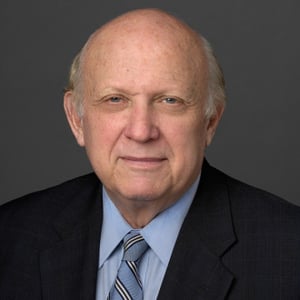
Senior Counsel, Cahill Gordon & Reindel LLP
Floyd Abrams is Senior Counsel in Cahill Gordon & Reindel LLP's litigation practice group.
Floyd has a national trial and appellate practice and extensive experience in high-visibility matters, often involving First Amendment, securities litigation, intellectual property, public policy and regulatory issues. He has argued frequently in the Supreme Court in cases raising issues as diverse as the scope of the First Amendment, the interpretation of ERISA, the nature of broadcast regulation, the impact of copyright law and the continuing viability of the Miranda rule. Most recently, Floyd prevailed in his argument before the Supreme Court on behalf of Senator Mitch McConnell as amicus curiae, defending the rights of corporations and unions to speak publicly about politics and elections in Citizens United v. Federal Election Commission. Floyd's clients have included The McGraw-Hill Companies in a large number of litigations around the country involving claims against its subsidiary, Standard & Poor’s Financial Services LLC, The New York Times in the Pentagon Papers case and others, ABC, NBC, CBS, CNN, Time Magazine, Business Week, The Nation, Reader's Digest, Hearst, AIG, and others in trials, appeals and investigations.
Floyd has represented Standard & Poor’s in litigations about its ratings; he defended the Brooklyn Museum of Art in its legal battles with Mayor Rudolph Giuliani; he represented two of the nation’s largest insurers in litigation under Section 17200 in California and he has frequently testified before congressional committees and prepared clients to do so. In 1998, he represented CNN in investigating and issuing a report on its broadcast accusing the United States of using nerve gas on a military mission in Laos in 1970, and again in 1999 in seeking to persuade the United States Senate to permit the public to view its deliberations as it determined whether or not to convict President Clinton of alleged high crimes and misdemeanors. He represented Nina Totenberg and National Public Radio in the 1992 "leak" investigation conducted by the United States Senate arising out of the confirmation hearing of Justice Clarence Thomas and, in 2004 and 2005, Judith Miller and Matthew Cooper in their efforts to avoid revealing their confidential sources.
In 2006, Floyd was elected to the American Academy of Arts & Sciences, an independent research center that conducts multidisciplinary studies of complex and emerging problems advanced by its 4,600 elected members, who are leaders in the academic disciplines, the arts, business and public affairs from around the world. In 2015, Floyd was honored by Yale Law School with its prestigious Award of Merit. Also in 2015, Floyd received the Walter Cronkite Freedom of Information Award presented by the Connecticut Foundation for Open Government. In 2011, Floyd was awarded the CUNY Graduate School of Journalism's Lifetime Achievement Award. In 1998, Floyd was the recipient of the William J. Brennan, Jr. Award for outstanding contribution to public discourse; the Learned Hand Award of the American Jewish Committee; and the Thurgood Marshall Award of the Association of the Bar of the City of New York. In November, 1999, he received the William J. Brennan, Jr. award of the Libel Defense Resource Center. Floyd was awarded, in 1997, the Milton S. Gould Award for outstanding appellate advocacy by the Office of the Appellate Defender in New York. Previously he had been awarded the Ross Essay Prize of the American Bar Association for his study of the Ninth Amendment of the United States Constitution. He has also received awards from, among others, the American Jewish Congress, Catholic University, the New York and Philadelphia Chapters of the Society of Professional Journalists, Sigma Delta Chi, the New York Civil Liberties Union, the Association for Education in Journalism and Mass Communication, and the National Broadcast Editorial Association.
In November, 2011, Yale Law School announced the formation of The Floyd Abrams Institute for Freedom of Expression, whose mission is to promote free speech, scholarship and law reform on emerging questions concerning traditional and new media. Developed in cooperation with Floyd, the Institute includes a clinic for Yale Law students to engage in litigation, draft model legislation, and advise lawmakers and policy makers on issues of media freedom and informational access.
The American Bar Association awarded Floyd its Certificate of Merit for his article published in The New York Times Magazine entitled "The New Effort to Control Information," which was described by the ABA as a "noteworthy contribution to public understanding of the American system of law and justice."
Described by Senator Daniel Patrick Moynihan as "the most significant First Amendment lawyer of our age," Floyd is top-ranked by Chambers USA. He is listed in Who’s Who Legal, Who’s Who in American Law, and has been awarded with Lifetime Achievement Awards by The New York Law Journal and The American Lawyer (2013).
Floyd, who served as chairman of Mayor Edward Koch's Committee on Appointments, New York City, served as the Chairman of the New York State Zenger Commemoration Planning Committee. Previously, he served as the Chairman of the Communications Committee of the Association of the Bar of the City of New York, as well as Chairman of the Committee on Freedom of Speech and of the Press of the Individual Rights Section of the American Bar Association and of the Committee on Freedom of Expression of the Litigation Section of the American Bar Association.
He has appeared frequently on television on Nightline, the News Hour with Jim Lehrer, Charlie Rose and other programs and has published articles and reviews in The New York Times, The Washington Post, The Yale Law Journal, The Harvard Law Review, and elsewhere.
Floyd served on the Technology and Privacy Advisory Committee of the U.S. Department of Defense in 2003-4 and as the Chair of the New York State Commission on Public Access to Court Records in 2004.
For fifteen years, Floyd was the William J. Brennan, Jr. Visiting Professor of First Amendment Law at the Columbia Graduate School of Journalism. He has, as well, been a Visiting Lecturer at Yale Law School and Columbia Law School and he is author of Friend of the Court: On the Front Lines with the First Amendment, published by Yale University Press (2013) and Speaking Freely: Trials of the First Amendment, published by Viking Press (2005).
Senior Fellow, Hudson Institute
Gabriel Schoenfeld is a Senior Fellow at the Hudson Institute in Washington, DC, and a Resident Scholar at the Witherspoon Institute in Princeton, New Jersey. His essays on national security and modern history have appeared in leading publications, including the New York Times, Wall Street Journal, Los Angeles Times, Washington Post, Weekly Standard, New Republic, Atlantic, National Interest, Bulletin of the Atomic Scientists, and Commentary, where from 1994 to 2008 he was Senior Editor. His previous book, The Return of Anti-Semitism, was published by Encounter in 2004.
Before joining Commentary, Schoenfeld was a Senior Fellow at the Center for Strategic and International Studies in Washington, DC, where he founded the research bulletin Soviet Prospects. Schoenfeld was an IREX Scholar at Moscow State University, holds a PhD from Harvard University’s Department of Government, and is a United States Chess Federation master. The father of three daughters, he lives in New York City.
Attorney, Kobre & Kim LLP
Eric Snyder is an experienced trial lawyer and investigator who has handled numerous high-profile cases. Prior to joining Kobre & Kim LLP, Mr. Snyder served in the U.S. Department of Justice for more than a decade; as a Trial Attorney in the Criminal Division at the U.S. Department of Justice in Washington DC, and as an Assistant U.S. Attorney at the U.S. Attorney's Office for the Southern District of New York. Mr. Snyder also served as an Assistant District Attorney in the New York County District Attorney's Office. His practice focuses on white-collar criminal defense, internal investigations, regulatory enforcement and business litigation matters.
Prior to joining Kobre & Kim LLP, Mr. Snyder served as an Assistant U.S. Attorney at the U.S. Attorney's Office for the Southern District of New York in the Terrorism & National Security, Organized Crime and International Narcotics Trafficking Units.
Mr. Snyder also practiced as a Trial Attorney in the Criminal Division, Narcotic and Dangerous Drug Section at the U.S. Department of Justice.
Before his time at the U.S. Attorney's Office, Mr. Snyder served as an Assistant District Attorney at the New York County District Attorney's Office.

Founder and Executive Director, National Security Institute; Assistant Professor of Law, Antonin Scalia Law School, George Mason University
Jamil N. Jaffer is the Founder and Executive Director of the National Security Institute at the Antonin Scalia Law School at George Mason University where he also serves as an Assistant Professor of Law, Director of the National Security Law and Policy Program, and Director of the Cyber, Intelligence, and National Security LLM Program. Jamil also teaches classes on counterterrorism, intelligence, surveillance, cybersecurity, and other national security matters, as well as a summer course held abroad with U.S. Supreme Court Justice Neil M. Gorsuch. Jamil is also affiliated with Stanford University’s Center for International Security and Cooperation and previously served as a Visiting Fellow at the Hoover Institution from 2016 to 2019.
Jamil is also a Venture Partner with Paladin Capital Group, where he assists the firm with investments across the full range of its themes and theses, including a focus on dual-use national security technologies. Jamil also serves on the board of directors of RangeForce, a cybersecurity training and readiness platform startup and Tozny, a digital identity startup, and on the advisory boards of U.S. Strategic Metals, North America’s largest primary producer of cobalt, a critical mineral used in EV batteries, aerospace, and other national security applications; and Constella Intelligence, a deep and dark web intelligence startup. Jamil also serves as an advisor to Beacon Global Strategies, a strategic advisory firm and Duco, a technology platform startup that connects corporations with geopolitical and international business experts. Jamil is also the managing director of Trigraph Caveat Capital, a private investment vehicle.
Among other things, Jamil currently serves on the Board of Directors for the Greater Washington Board of Trade, the Board of Advisors for the Global Cyber Alliance, and the Advisory Board of the Foundation for the Defense of Democracies’ Center on Cyber and Tech Innovation, the Executive Committee of the Reagan Institute Strategy Group. Jamil is also a Fellow at the Academy for Judaic, Christian, and Islamic Studies, an advisor to the Concordia Summit, and is a member of the Board of Directors for the Center for Intelligence Policy, the Board of Directors of Speech First, and the Executive Committee of the International Law and National Security Practice Group of the Federalist Society.
Immediately prior to his current positions, from 2015-2021, Jamil served as a senior business leader at IronNet Cybersecurity, helping take the company from a bootstrapped first-year technology products startup through two rounds of venture capital fundraising, growing from 40 employees to over 300, and through its listing on New York Stock Exchange. In his role as IronNet's Senior Vice President for Strategy, Partnerships & Corporate Development, Jamil worked directly for the co-CEOs of the company, Gen (ret.) Keith B. Alexander, the former Director of the National Security Agency and Founding Commander of U.S. Cyber Command, and Bill Welch, the former COO of Zscaler and Duo; in that role, Jamil led all of the company’s strategic and technology partnership efforts, including developing go-to-market and technology integration plans with some of the largest cloud platforms and cybersecurity companies in the market, evaluating potential acquisition targets, and developing overall corporate strategy and thought leadership around collective security and collaborative defense in the cyber arena.
Prior to his time at IronNet, Jamil served on the leadership team of the Senate Foreign Relations Committee as Chief Counsel and Senior Advisor under Chairman Bob Corker (R-TN), where he worked on key national security and foreign policy issues, including leading the drafting of the proposed Authorization for the Use of Military Force against ISIS in 2014 and 2015, the AUMF against Syria in 2013, and revisions to the 9/11 AUMF against al Qaeda. Jamil was also the lead architect of the Iran Nuclear Agreement Review Act and two sanctions laws against Russia for its first intervention in Ukraine.
Prior to joining SFRC, Jamil served as Senior Counsel to the House Permanent Select Committee on Intelligence under Chairman Mike Rogers (R-MI) where he led the committee’s oversight of NSA surveillance, NRO intelligence issues, and NGA analytic and collection matters, as well as intelligence community-wide counterterrorism issues. Jamil was also the lead architect of the Cyber Intelligence Sharing and Protection Act, the nation’s first cyber threat intelligence sharing legislation that was signed into law in 2015.
In the Bush Administration, Jamil served in the White House as an Associate Counsel to the President, handling Defense Department, State Department, and intelligence community matters, and serving as one of the White House Counsel’s primary representatives to the National Security Council Deputies Committee.
Prior to the White House, Jamil served on the leadership team of the Justice Department’s National Security Division as Counsel to the Assistant Attorney General for National Security, where he focused on counterterrorism and intelligence matters. At NSD, Jamil helped lead the division’s work on In re: Directives, the first ever two-party litigated matter in the FISA Court and the second case before the FISA Court of Review in its 30-year history. Jamil also led NSD’s efforts on the President’s Comprehensive National Cybersecurity Initiative (CNCI), including the drafting of NSPD-54/HSPD-23, and related classified matters, and advised the National Security Agency (NSA) and U.S. Cyber Command’s predecessor organization, the Joint Function Component Command for Network Warfare (JFCC-NW), on matters related to cyber intelligence collection and offensive cyber activities. For his work on these matters, Jamil was awarded the Assistant Attorney General’s Award for Special Initiative and was among the group of lawyers awarded the Director of National Intelligence’s 2008 Legal Award (Team of the Year – Cyber Legal).
Jamil also served in other positions in the Justice Department, including in the Office of Legal Policy, where he worked on the confirmations of Chief Justice John G. Roberts, Jr. and Justice Samuel A. Alito, Jr. to the United States Supreme Court.
Jamil also served as a lawyer in private practice at Kellogg Huber, a Washington, DC-based litigation boutique, as a policy advisor to Congressman Bob Goodlatte (R-VA), and as a staff member or senior advisor on a number of political campaigns, including two presidential campaigns and a presidential transition team. While in law school, Jamil was a member of the University of Chicago Law Review, managing editor of the Chicago Journal of International Law, and National Symposium Editor of the Harvard Journal of Law & Public Policy. Following law school, Jamil served as a law clerk to Judge Edith H. Jones of the United States Court of Appeals for the Fifth Circuit and, later in his career, as a law clerk to then-Judge Neil M. Gorsuch when he first joined the United States Court of Appeals for the Tenth Circuit as well as a law clerk to Justice Neil Gorsuch when he joined the U.S. Supreme Court.
Jamil has published multiple op-eds and academic articles on national security, foreign policy, cybersecurity, counterterrorism, encryption, and intelligence matters, and is the co-author of a book chapter with former NSA Director Gen. (Ret.) Keith B. Alexander on national security and the press in National Security, Leaks, and the Freedom of the Press: The Pentagon Papers Fifty Years On (2021) and a book chapter with former CIA Director Gen. (ret.) Mike Hayden on ISIS, al Qaeda, and other international terrorist groups in Choosing to Lead: American Foreign Policy for a Disordered World (2015). Jamil has also written book chapters on cybersecurity and surveillance, as well as op-eds and policy papers with former Attorney General Michael B. Mukasey, former National Counterterrorism Center Director Matt Olsen, and Congressman Mike Waltz (R-FL), among others.
Jamil has previously taught graduate-level courses in intelligence law and policy at George Washington University’s Elliott School of International Affairs and the National Intelligence University, served an outside advisor to the Cyberspace Solarium Commission, and has recently testified before committees of the U.S. Senate and House of Representatives on China, cybersecurity, counterterrorism, and other national security matters. Jamil has also recently appeared on a range of national television and radio outlets including CNN, Fox News, Fox Business, MSNBC, Bloomberg, PBS, Voice of America, and National Public Radio, and in various print and online publications, including the Wall Street Journal, New York Times, and the Washington Post on a range of national security matters including cybersecurity, counterterrorism, surveillance, encryption, privacy, and foreign policy issues.
Jamil holds degrees from UCLA (BA, cum laude), the University of Chicago Law School (JD, with honors), and the United States Naval War College (MA, with distinction).
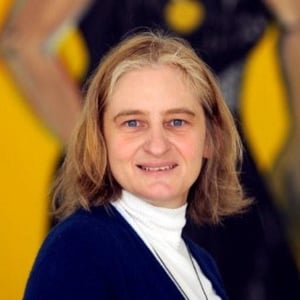
Arnold I. Shure Professor of Law, University of Chicago Law School
Ralph S. Tyler, Jr. Professor of Constitutional Law, Harvard Law School
Dean and Bernard G. Segal Professor of Law, University of Pennsylvania Law School
Partner, Latham & Watkins LLP
Gregory Garre is a partner in the Washington, D.C. office of Latham & Watkins and Global Chair of the firm's Supreme Court and Appellate Practice Group. He recently served as the 44th Solicitor General of the United States. As Solicitor General, he was the federal government's top lawyer before the Supreme Court and was responsible for overseeing the government's litigation in the federal appellate courts. Prior to his nomination by the President and unanimous confirmation as Solicitor General by the Senate, he served as Principal Deputy Solicitor General from 2005 to 2008, and then as Acting Solicitor General. In addition, he served as an Assistant to the Solicitor General from 2000 to 2004. He is the only person to have held all of those positions within the Office of the Solicitor General.
Mr. Garre has argued 29 cases before the Supreme Court, including two cases during the current term, and has served as counsel of record in hundreds of cases before the Court. During the past term, he won each of the cases he argued as Solicitor General, including the landmark case of Ashcroft v. Iqbal, which clarified the gateway requirements for civil litigation in the federal courts, as well as FCC v. Fox Television Stations, and Winter v. NRDC. He has also argued and briefed cases involving a wide array of other nationally important matters, including in the areas of administrative law, alien tort statute, antitrust, business and employment law, education, environmental law, First Amendment, intellectual property, international law, media and telecommunications, separation of powers and voting rights.
Mr. Garre has also successfully argued numerous cases before the federal courts of appeals, including some of the most significant cases heard by the appellate courts in recent years. And, as Acting Solicitor General, he successfully argued on behalf of the government in the first adversarial appeal heard by the Foreign Intelligence Surveillance Court of Review in its 30-year history.
Mr. Garre has received numerous awards for his public service, including the Attorney General's Medallion for his service as Solicitor General and the Navy's Distinguished Public Service Award-the Navy's highest civilian honor-for his successful argument in Winter v. NRDC, which secured a path-marking Supreme Court ruling overturning an order that restrained critically important naval exercises. He has also received the Attorney General's Distinguished Service Award, the Attorney General's Award for Excellence in Furthering Interests of US National Security, and additional honors from the Department of Justice for his work on nationally important litigation matters.
In November 2009, Mr. Garre was named to Washingtonian Magazine's list of top Supreme Court lawyers. In 2006, he was named to The American Lawyer's "Fab 50" list of top litigators under the age of 45 expected to be "leading the field for years to come." And in 2005, he was named to Chambers USA's list of leading appellate litigators in Washington, D.C.
Mr. Garre received his JD degree with high honors from the George Washington University Law School, where he served as editor-in-chief of the law review and was selected to Order of the Coif, and his BA degree cum laude from Dartmouth College, where he was a Rufus Choate Scholar. Following his graduation from law school, he served as a law clerk to Chief Justice William H. Rehnquist, and to Judge Anthony J. Scirica of the United States Court of Appeals for the Third Circuit.
Mr. Garre is a member of the advisory board of the Georgetown University Law School Supreme Court Institute and of the Edward Coke Appellate Inn of Court. He has taught constitutional law and Supreme Court practice for many years at the George Washington University Law School. He has testified before Congress and speaks frequently on issues related to the Supreme Court and appellate practice.

James Monroe Distinguished Professor of Law and Albert Clark Tate, Jr., Professor of Law, University of Virginia School of Law
Professor Saikrishna Prakash’s scholarship focuses on separation of powers, particularly executive powers. He teaches Constitutional Law, Foreign Relations Law and Presidential Powers at the Law School.
Prakash’s most recent book, “The Living Presidency: An Originalist Argument Against Its Ever-Expanding Powers,” was published by Harvard Belknap Press in 2020. He also authored “Imperial from the Beginning: The Constitution of the Original Executive” (Yale University Press, 2015). The former book focuses on the modern presidency while the latter considers the presidency of the Founders.
Prakash has authored over 75 law review articles. Among them are “Of Synchronicity and Supreme Law” in the Harvard Law Review, “The Indefensible Duty to Defend” in the Columbia Law Review, and “50 States, 50 Attorneys General and 50 Approaches to the Duty to Defend” and “The Executive Power Over Foreign Affairs” in the Yale Law Journal.
Prakash has published op-eds in The New York Times, The Wall Street Journal and the Los Angeles Times. At the request of Democrats and Republicans, he has testified before Congress on matters of presidential removal, the Mueller Report and how Congress might better check the presidency. He is currently a Miller Center Senior Fellow. In 2015, he received the Roger Traynor award for faculty scholarship. In the same year, he received an honorable mention from the American Society of Legal Writers for his book “Imperial from the Beginning.” He has given named lectures at William & Mary Law School, Princeton University and Toledo Law School, and keynote addresses at several conferences.
Prakash majored in economics and political science at Stanford University. At Yale Law School, he served as senior editor of the Yale Law Journal and received the John M. Olin Fellowship in Law, Economics and Public Policy. He subsequently clerked for Judge Laurence H. Silberman of the U.S. Court of Appeals for the District of Columbia Circuit and for Justice Clarence Thomas of the U.S. Supreme Court. After practicing in New York for two years, he served as a visiting professor at the University of Illinois College of Law and as an associate professor at Boston University School of Law. He then spent several years at the University of San Diego School of Law as the Herzog Research Professor of Law. Prakash has been a visiting professor at Northwestern University and the University of Chicago. He also has served as a James Madison Fellow at Princeton University and Visiting Research Fellow at the Hoover Institution of War & Peace at Stanford University.

David Boies Professor of Law, Yale Law School

Patrick Hotung Professor of Constitutional Law, Georgetown University Law Center; Faculty Director, Georgetown Center for the Constitution
Randy E. Barnett is the Patrick Hotung Professor of Constitutional Law at the Georgetown University Law Center and is the Faculty Director of the Georgetown Center for the Constitution. After graduating from Northwestern University and Harvard Law School, he tried many felony cases as a prosecutor in the Cook County States’ Attorney’s Office in Chicago. A recipient of a Guggenheim Fellowship in Constitutional Studies and the Bradley Prize, Professor Barnett has been a visiting professor at Penn, Northwestern and Harvard Law School.
Professor Barnett’s publications includes thirteen books, more than one hundred articles and reviews, as well as numerous op-eds. His most recent book is Felony Review: Tales of True Crime and Corruption in Chicago (2026). His other books on the Constitution include: A Life for Liberty: The Making of an American Originalist (2024); The Original Meaning of the Fourteenth Amendment: Its Letter and Spirit (2021) (with Evan Bernick); An Introduction to Constitutional Law: 100 Supreme Court Cases Everyone Should Know (2019) (with Josh Blackman); Restoring the Lost Constitution: The Presumption of Liberty (2nd ed. 2013); Our Republican Constitution: Securing the Liberty and Sovereignty of We the People (2016); and Constitutional Law: Cases in Context (5th ed. forthcoming 2027) (with Josh Blackman). His books on contracts are The Oxford Introductions to U.S. Law: Contracts (2010) and Contracts: Cases and Doctrine (7th ed. 2021) (with Nate Oman). And he is the author of The Structure of Liberty: Justice and the Rule of Law (2nd ed. 2014).
In 2004, he argued the medical marijuana case of Gonzalez v. Raich before the U.S. Supreme Court. In 2012, he was one of the lawyers representing the National Federation of Independent Business in its constitutional challenge to the Affordable Care Act in NFIB v. Sebelius. He’s appeared in numerous documentaries and portrayed a prosecutor in the 2010 science-fiction feature film, InAlienable: The Movie. On X he is @RandyEBarnett
Inez Milholland Professor of Civil Liberties, New York University School of Law
Burt Neuborne is the Inez Milholland Professor of Civil Liberties and founding Legal Director of the Brennan Center for Justice at NYU Law School. For 45 years, he has been one of the nation's foremost civil liberties lawyers, serving as National Legal Director of the ACLU from 1981-86, Special Counsel to the NOW Legal Defense and Education Fund from 1990-1996, and as a member of the New York City Human Rights Commission from 1988-1992. He has argued numerous Supreme Court cases, and has litigated literally hundreds of important constitutional cases in the state and federal courts. He challenged the constitutionality of the Vietnam War, pioneered the flag burning cases, worked on the Pentagon Papers case, worked with Justice Ruth Bader Ginsburg when she headed the ACLU Women's Rights Project, anchored the ACLU's legal program during the Reagan years, and defended the Legal Services program against unconstitutional attacks. He currently directs the legal program of the Brennan Center, especially its efforts to reinforce American democracy and secure campaign finance reform. The Brennan Center was established in 1994 to honor Justice William Brennan, Jr.’s monumental contribution to American Law.
At the same time, Professor Neuborne has forged a national reputation as a constitutional scholar and teacher. In 1990, he was the recipient of the University-wide Distinguished Teacher Award at New York University for his work in teaching Civil Procedure, Evidence, Federal Courts and Constitutional Law. He is the author of three books and over 20 law review articles on diverse areas of constitutional law and procedure. Among his best known scholarly works is the two-volume Political and Civil Rights in the United States, which he co-authored with NYU colleagues Norman Dorsen and Sylvia Law and the Deputy Solicitor General of the United States, Paul Bender. His 1992 lectures on American law at Universitat Pompeu Fabra in Barcelona have been translated and published in Spanish. In 2001, in recognition of his scholarship and his work in the courts, Professor Neuborne was elected to membership in the American Academy of Arts and Sciences.
In 1996, Professor Neuborne appeared as Jerry Falwell's lawyer in Milos Forman's The People v. Larry Flynt.
For the past 14 years, Professor Neuborne has served as a principal counsel in a series of lawsuits seeking to recover property unjustly taken from Holocaust victims by Swiss banks and German corporations during the Nazi era. The litigation has succeeded in assembling more than $8.5 billion for distribution to Holocaust victims and their families throughout the world. Professor Neuborne was appointed by the Court to oversee the $1.25 Swiss bank settlement, and was appointed by the United States to serve on the Board of Trustees of the German Foundation “Remembrance, Responsibility and Future,” established to distribute the $5.2 billion settlement in the German slave labor litigation.
Professor Neuborne is married to Helen Redleaf Neuborne.
Judge, United States Court of Appeals, Ninth Circuit
Judge O’Scannlain was appointed United States Circuit Judge for the Ninth Circuit by President Reagan on September 26, 1986. He received a J.D. degree in 1963 from Harvard Law School and a B.A. in 1957 from St. John’s University. He also earned the LL.M. (Judicial Process) degree at University of Virginia Law School in 1992. He was awarded the LL.D. (honoris causa) degree by the University of Notre Dame in 2002, the LL.D. (honoris causa) degree by Lewis & Clark College in 2003 and the LL.D. (honoris causa) degree by the University of Portland in 2011.
As a judge on the U.S. Court of Appeals for the Ninth Circuit, Judge O’Scannlain has participated in over 6,000 federal cases and has written hundreds of published opinions on a broad range of subjects including constitutional law, international law, securities law, administrative law, and criminal law. He hears appeals in San Francisco (court headquarters), as well as in Los Angeles (Pasadena), Portland, Seattle, Anchorage and Honolulu. The late Chief Justice Rehnquist appointed Judge O'Scannlain to the Federal Judicial Center's Advisory Committee on Appellate Judge Education. In 2009, Chief Justice Roberts appointed Judge O’Scannlain to the International Judicial Relations Committee of the U.S. Judicial Conference and subsequently appointed him Chairman in 2010.
President George W. Bush appointed Judge O’Scannlain to the Board of Trustees of the James Madison Memorial Fellowship Foundation in 2004. Pope Benedict XVI conferred the Order of Saint Gregory the Great on Judge and Mrs. O’Scannlain in 2007.
Judge O’Scannlain’s professional interests also include judicial administration and reform, and continuing legal education. Judge O’Scannlain is former Chair of the Judicial Division of the American Bar Association and has previously chaired the ABA’s Appellate Judges Conference, its Committee on Appellate Practice, and its 9th Appellate Practice Institute. He has testified before the Senate Judiciary Committee on several occasions, the House Judiciary Subcommittee on Courts and Intellectual Property, and the Commission on Structural Alternatives for the Federal Courts of Appeals on the subject of court reorganization. In addition to serving as a faculty member at numerous federal appellate practice seminars for judges and attorneys, including New York University Law School’s Institute for Judicial Administration, Judge O’Scannlain is an Adjunct Professor at Lewis & Clark Law School where he teaches a seminar on the Supreme Court. He has served as a Moot Court Judge at distinguished law schools across the United States including Harvard, Yale Stanford, Boalt Hall (Berkeley Law), Virginia, Cornell, Notre Dame, Fordham, Alabama, University of Southern California, King Hall (U.C. Davis) and Loyola Marymount University and in China at Xiamen and Renmin Universities.
Between graduation from Harvard and investiture as a federal judge, Judge O’Scannlain was primarily engaged in private law practice. Between 1969 and 1974, he was consecutively the Deputy Attorney General of Oregon, the Public Utility Commissioner of Oregon, and Director of the Oregon Department of Environmental Quality. He retired from the U.S. Army Reserve in 1978 as a Major after 23 years Reserve and National Guard service, including four years as an enlisted man.
A first generation Irish-American son of immigrant parents from Sligo and Derry, Judge O’Scannlain is married to the former Maura Nolan and has eight children: Sean, Jane, Brendan, Kevin, Megan, Christopher, Anne, and Kate, and nineteen grandchildren. His chambers are in the Pioneer Courthouse in Portland, Oregon.
Laurence A. Tisch Professor of Law and Director, Classical Liberal Institute, New York University School of Law; Senior Fellow, The Civitas Institute, University of Texas at Austin
Richard A. Epstein is the inaugural Laurence A. Tisch Professor of Law at NYU School of Law. Prior to his joining the faculty, he was a visiting law professor at NYU from 2007 through 2009. He served as the Peter and Kirstin Bedford Senior Fellow at the Hoover Institution from 2000 to 2024. Since 2024 to the present he is a senior lecturer at the Civitas Institute at the University of Texas—Austin. Epstein is also the James Parker Hall Distinguished Service Professor of Law Emeritus and a senior lecturer at the University of Chicago. His initial law school appointment was at the University of Southern California from 1968 to 1972. Epstein received an LL.D., h.c. from the University of Ghent, 2003. He has been a member of the American Academy of Arts and Sciences since 1985 and was a Senior Fellow of the Center for Clinical Medical Ethics at the University of Chicago Division of Biological Sciences, also from 1983. to 2022 He served as editor of the Journal of Legal Studies from 1981 to 1991, and of the Journal of Law and Economics from 1991-2001. From 2001 to 2010 he was a director of the John M. Olin Program in Law and Economics at the University of Chicago.
His newest book, The Myth of Birthright Citizenship: What the Fourteenth Amendment Really Says was published in 2026 (Encounter Books). Prior to that he has published many books including, The Dubious Morality of the Modern Administrative State (Roman & Littlefield 2020).Earlier he published th Classical Liberal Constitution: The Uncertain Quest for Limited Government (Harvard 2014) iHis previous books include Design for Liberty: Private Property, Public Administration and the Rule of Law (Harvard 2011); The Case Against the Employee Free Choice Act (Hoover 2009); Supreme Neglect: How to Revive the Constitutional Protection of Property Rights (Oxford 2008); Antitrust Decrees in Theory and Practice: Why Less is More (AEI 2007); Overdose: How Excessive Government Regulation Stifles Pharmaceutical Innovation (Yale University Press. 2006); How Progressives Rewrote the Constitution (Cato 2006); Cases and Materials on Torts (Aspen Law & Business; 8th ed. 2004); Skepticism and Freedom: A Modern Case for Classical Liberalism (University of Chicago, 2003); Torts (Aspen Law & Business 1999); Principles for a Free Society: Reconciling Individual Liberty with the Common Good (Perseus Books, 1998): Mortal Peril: Our Inalienable Rights to Health Care (Addison-Wesley, 1997); Simple Rules for a Complex World (Harvard, 1995); Bargaining With the State (Princeton, 1993); Forbidden Grounds: The Case Against Employment Discrimination Laws (Harvard , 1992); Takings: Private Property and the Power of Eminent Domain (Harvard, 1985); and Modern Products Liability Law (Greenwood Press, 1980). He has also edited(with Catherine M. Sharkey) Cases and Materials on the Law of Torts (10th edition 2012).
Professor Epstein has written numerous articles on a wide range of legal and interdisciplinary subjects. He has taught courses in administrative law, antitrust law, civil procedure, communications, constitutional law, contracts, corporations, criminal law, employment discrimination law, environmental law, food and drug law health law and policy, legal history, labor law, property, real estate development and finance, jurisprudence, labor law; land use planning, patents, individual, estate and corporate taxation, Roman Law; torts, and workers' compensation.
Professor Epstein also writes a regular column for Civitas Institute, which also sponsors his podcast, The Libertarian with Charles C.W. Cooke, and Law Talk, with Cooke and John Yoo. He also does a podcast with John Batchelor. And appears regularly on the Freedom File with Judge Andrew Napolitano.

Richard and Frances Mallery Professor of Law and Faculty Director, Constitutional Law Center, Stanford Law School
Michael W. McConnell is the Richard and Frances Mallery Professor and Faculty Director of the Constitutional Law Center at Stanford Law School, and a Senior Fellow at the Hoover Institution. From 2002 to 2009, he served as a Circuit Judge on the United States Court of Appeals for the Tenth Circuit. He was nominated by President George W. Bush, a Republican, and confirmed by a Democratic Senate by unanimous consent. McConnell has previously held chaired professorships at the University of Chicago and the University of Utah, and visiting professorships at Harvard and NYU. He teaches courses on constitutional law, constitutional history, First Amendment, and interpretive theory. He has published widely in the fields of constitutional law and theory, especially church and state, equal protection, and separation of powers. His book, “The President Who Would Not Be King: Executive Power Under the Constitution,” was published by Princeton University Press in 2020, based on the Tanner Lectures in Human Values, which he delivered at Princeton in 2019. His latest book, co-authored with Nathan Chapman, “Agreeing to Disagree: How the Establishment Clause Protects Religious Diversity and Freedom of Conscience,” was published by Oxford University Press in mid-2023. McConnell has argued sixteen cases in the United States Supreme Court, most recently Carney v. Adams (2020). defending a provision of the Delaware Constitution requiring political balance on that state’s courts. More recently, he was co-counsel in Gonzalez v. Google. He earned his B.A. from Michigan State University and his J.D. from the University of Chicago, and has received honorary degrees from Notre Dame University and Michigan State. He served as law clerk to Supreme Court Justice William J. Brennan, Jr. and D.C. Circuit Chief Judge J. Skelly Wright. He has been Assistant General Counsel of the Office of Management & Budget, Assistant to the Solicitor General of the Department of Justice, and a member of the President’s Intelligence Oversight Board. He is Senior of Counsel to the law firm Wilson, Sonsini, Goodrich & Rosati, and is co-chair of Meta’s Oversight Review Board.

Former President & CEO, The Federalist Society for Law and Public Policy Studies
Eugene B. Meyer, former President and CEO of the Federalist Society, has served as Executive Director, CEO, and/or President of the organization for more than 40 years. He is responsible for shepherding the organization from a small group of law students to a community of 90,000 lawyers, law students, academics, judges, and others interested in the rule of law. The Society now includes a Student Chapter at nearly every ABA-accredited law school in the country and Lawyers Chapters in 220 major cities across the nation. Gene earned his B.A. in history at Yale in 1975 and his M.A. in political science from the London School of Economics in 1976. Gene currently serves on the boards of the U.S. Chess Center, the Holman Foundation, the Sarah Scaife Foundation, and the advisory board of the Adam Smith Society. He holds the title of International Chess Master.
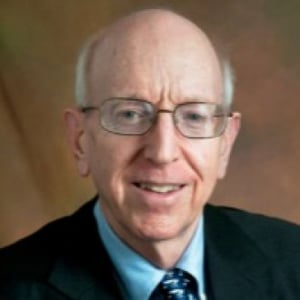
Senior Lecturer in Law, University of Chicago Law School
Following his graduation from Harvard Law School, Judge Posner clerked for Justice William J. Brennan, Jr. From 1963 to 1965, he was assistant to Commissioner Philip Elman of the Federal Trade Commission. For the next two years, he was assistant to the solicitor general of the United States. Prior to going to Stanford Law School in 1968 as Associate Professor, Judge Posner served as general counsel of the President's Task Force on Communications Policy. He first came to the University of Chicago Law School in 1969, and was Lee and Brena Freeman Professor of Law prior to his appointment in 1981 as a judge of the US Court of Appeals for the Seventh Circuit. He was the chief judge of the court from 1993 to 2000.
Judge Posner has written a number of books, including Economic Analysis of Law (9th ed., 2014); The Economics of Justice (1981); Law and Literature (3rd ed. 2009); The Problems of Jurisprudence (1990); Cardozo: A Study in Reputation (1990); The Essential Holmes (1992); Sex and Reason (1992); Overcoming Law (1995); The Federal Courts: Challenge and Reform (1996); Law and Legal Theory in England and America (1996); The Problematics of Moral and Legal Theory (1999); Antitrust Law (2d ed. 2001); Law, Pragmatism, and Democracy (2003); Catastrophe: Risk and Response (2004); Preventing Surprise Attacks: Intelligence Reform in the Wake of 9/11 (2005); How Judges Think (2008); A Failure of Capitalism: The Crisis of '08 and the Descent into Depression (2009); The Crisis of Capitalist Democracy (2010); The Behavior of Federal Judges: A Theoretical and Empirical Study of Rational Choice (coauthored with Lee Epstein and William M. Landes) (2013); and Reflections on Judging (2013). He also wrote books on the Clinton impeachment and Bush v. Gore, many articles in legal and economic journals, and book reviews in the popular press.
He has taught administrative law, antitrust, economic analysis of law, history of legal thought, conflict of laws, regulated industries, law and literature, the legislative process, family law, primitive law, torts, civil procedure, evidence, health law and economics, law and science, and jurisprudence. He was the founding editor of the Journal of Legal Studies and (with Orley Ashenfelter) the American Law and Economics Review. He is an Honorary Bencher of the Inner Temple and a corresponding fellow of the British Academy, and he was the President of the American Law and Economics Association from 1995 to 1996 and the honorary President of the Bentham Club of University College, London, for 1998. He has received honorary degrees from leading American and foreign universities, along with a number of awards, including the Thomas Jefferson Memorial Foundation Award in Law from the University of Virginia in 1994, the Marshall-Wythe Medallion from the College of William and Mary in 1998, the 2003 Research Award from the Fellows of the American Bar Foundation, the 2003 John Sherman Award from the US Department of Justice, the Learned Hand Medal for Excellence in Federal Jurisprudence from the Federal bar Council in 2005, the Thomas C. Schelling Award from the John F. Kennedy School of Government at Harvard University in 2005, and the Ronald H. Coase Medal from the American Law and Economics Association in 2010.

Professor of Law, Georgetown University Law Center
Nicholas Quinn Rosenkranz teaches constitutional law and federal jurisdiction, and he writes articles for the Harvard Law Review and the Stanford Law Review.
He is currently developing a new theory of constitutional interpretation and judicial review. The first installment, entitledThe Subjects of the Constitution, was published in the Stanford Law Review in May of 2010, and it is among the most downloaded articles about constitutional interpretation, judicial review, and/or federal courts in the history of SSRN. The second installment, The Objects of the Constitution, was published in May of 2011, also in the Stanford Law Review. And the comprehensive version is forthcoming as a book by Oxford University Press.
Rosenkranz has served and advised the federal government in a variety of capacities. He clerked for Judge Frank H. Easterbrook on the U.S. Court of Appeals for the Seventh Circuit (1999-2000) and for Justice Anthony M. Kennedy at the U.S. Supreme Court (October Term 2001). He served as an Attorney-Advisor at the Office of Legal Counsel in the U.S. Department of Justice (November 2002 - July 2004). He often testifies before Congress as a constitutional expert—most recently before the House Financial Services Oversight Subcommittee, regarding the Obama Administration's use of bank settlement agreements to circumvent the Appropriations Clause. He has also filed briefs and presented oral argument before the U.S. Supreme Court. His most recent Supreme Court brief, in Los Angeles v. Patel, was cited by Justice Alito in dissent.
Rosenkranz is a member of the New York Bar and the U.S. Supreme Court Bar. He is a Senior Fellow at the Cato Institute. He serves on the Board of Directors of the Foundation for Individual Rights in Education (FIRE). He is a founding member of Heterodox Academy and a member of its Executive Committee. He also serves on the Board of Directors of the Federalist Society and as the faculty advisor to the Georgetown chapter.
Laurence A. Tisch Professor of Law and Director, Classical Liberal Institute, New York University School of Law; Senior Fellow, The Civitas Institute, University of Texas at Austin
Richard A. Epstein is the inaugural Laurence A. Tisch Professor of Law at NYU School of Law. Prior to his joining the faculty, he was a visiting law professor at NYU from 2007 through 2009. He served as the Peter and Kirstin Bedford Senior Fellow at the Hoover Institution from 2000 to 2024. Since 2024 to the present he is a senior lecturer at the Civitas Institute at the University of Texas—Austin. Epstein is also the James Parker Hall Distinguished Service Professor of Law Emeritus and a senior lecturer at the University of Chicago. His initial law school appointment was at the University of Southern California from 1968 to 1972. Epstein received an LL.D., h.c. from the University of Ghent, 2003. He has been a member of the American Academy of Arts and Sciences since 1985 and was a Senior Fellow of the Center for Clinical Medical Ethics at the University of Chicago Division of Biological Sciences, also from 1983. to 2022 He served as editor of the Journal of Legal Studies from 1981 to 1991, and of the Journal of Law and Economics from 1991-2001. From 2001 to 2010 he was a director of the John M. Olin Program in Law and Economics at the University of Chicago.
His newest book, The Myth of Birthright Citizenship: What the Fourteenth Amendment Really Says was published in 2026 (Encounter Books). Prior to that he has published many books including, The Dubious Morality of the Modern Administrative State (Roman & Littlefield 2020).Earlier he published th Classical Liberal Constitution: The Uncertain Quest for Limited Government (Harvard 2014) iHis previous books include Design for Liberty: Private Property, Public Administration and the Rule of Law (Harvard 2011); The Case Against the Employee Free Choice Act (Hoover 2009); Supreme Neglect: How to Revive the Constitutional Protection of Property Rights (Oxford 2008); Antitrust Decrees in Theory and Practice: Why Less is More (AEI 2007); Overdose: How Excessive Government Regulation Stifles Pharmaceutical Innovation (Yale University Press. 2006); How Progressives Rewrote the Constitution (Cato 2006); Cases and Materials on Torts (Aspen Law & Business; 8th ed. 2004); Skepticism and Freedom: A Modern Case for Classical Liberalism (University of Chicago, 2003); Torts (Aspen Law & Business 1999); Principles for a Free Society: Reconciling Individual Liberty with the Common Good (Perseus Books, 1998): Mortal Peril: Our Inalienable Rights to Health Care (Addison-Wesley, 1997); Simple Rules for a Complex World (Harvard, 1995); Bargaining With the State (Princeton, 1993); Forbidden Grounds: The Case Against Employment Discrimination Laws (Harvard , 1992); Takings: Private Property and the Power of Eminent Domain (Harvard, 1985); and Modern Products Liability Law (Greenwood Press, 1980). He has also edited(with Catherine M. Sharkey) Cases and Materials on the Law of Torts (10th edition 2012).
Professor Epstein has written numerous articles on a wide range of legal and interdisciplinary subjects. He has taught courses in administrative law, antitrust law, civil procedure, communications, constitutional law, contracts, corporations, criminal law, employment discrimination law, environmental law, food and drug law health law and policy, legal history, labor law, property, real estate development and finance, jurisprudence, labor law; land use planning, patents, individual, estate and corporate taxation, Roman Law; torts, and workers' compensation.
Professor Epstein also writes a regular column for Civitas Institute, which also sponsors his podcast, The Libertarian with Charles C.W. Cooke, and Law Talk, with Cooke and John Yoo. He also does a podcast with John Batchelor. And appears regularly on the Freedom File with Judge Andrew Napolitano.
Professor of Constitutional Law, Pepperdine University School of Law
One of America's best known scholars and popular commentators on the law, Professor Douglas W. Kmiec holds the endowed chair in constitutional law at Pepperdine Law School. He came to this position after serving several years as dean and St. Thomas More Professor of Law at The Catholic University of America in Washington, D.C., and for nearly two decades, on the law faculty at the University of Notre Dame. As dean at Catholic University, Professor Kmiec did what many said would be impossible; he greatly increased academic quality and student selectivity at the same time he deepened the school's religious commitment. During his tenure, the law school moved into the upper tier of the U.S. News ranking from tier three. At Notre Dame, he was director of Notre Dame's Center on Law & Government, and the founder of its Journal of Law, Ethics & Public Policy. Beyond the university setting, Kmiec served Presidents Ronald Reagan and George Bush during 1985-89 as constitutional legal counsel (Assistant Attorney General, Office of Legal Counsel, U.S. Department of Justice).
A wide-ranging writer and engaging speaker, Professor Kmiec writes a syndicated column for the Catholic News Service, and for several years wrote a regular column in the Chicago Tribune. He is also a frequent contributor to the pages of the Los Angeles Times, Wall Street Journal, and other periodicals. He is the co-author (with legal historian Stephen Presser of Northwestern) of three books on the Constitution -- The American Constitutional Order; Individual Rights and the American Constitution and The History, Structure and Philosophy of the American Constitution. Another recent book, Cease-Fire on the Family (Crisis Books/Notre Dame) attracted scholarly and popular acclaim for proposing realistic ways for families to "end the culture war" by renewing personal virtue and civic responsibility within itself. He has also written The Attorney General's Lawyer (Praeger 1992), and several respected legal treatises.
Professor Kmiec's scholarly research spans legal and non-legal subjects, from the Constitution and the federal system, to land use and the organization of America society. He is a frequent guest on national news programs, such as Nightline, the Newshour, and NPR's Talk of the Nation, analyzing constitutional questions.
A White House Fellow (1982-83), Professor Kmiec is one of a few individuals who has received the Distinguished Service Award from two cabinet departments —the Department of Justice in 1987 and Housing and Urban Development in 1983. In 1988, he was awarded the Edmund J. Randolph Award by the attorney general. He has lectured on the U.S. Constitution in Asia as a Fulbright Distinguished Scholar.
An honors graduate of Northwestern, Professor Kmiec received his law degree from the University of Southern California, where he served on the Law Review and received the Legion Lex Commencement Prize for Legal Writing. He is a member of the bar of the U.S. Supreme Court and the state bars of Illinois and California.
B.A., with honors, Northwestern University, 1973
J.D., University of Southern California, 1976
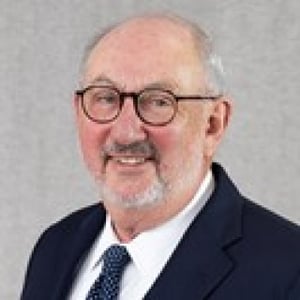
Partner, McGuireWoods LLP
George Terwilliger is co-head of the firm's white collar practice and leads the firm's Strategic Response and Crisis Management practice group. Following his fifteen years of public service in the US Department of Justice, where he began as a law clerk and concluded as Acting Attorney General, George has provided counsel in government and internal investigations, agency enforcement proceedings and in civil and criminal litigation. He has represented many of the nation's and the world's largest corporations, including major financial institutions, energy companies, public institutions as well as leading business and government officials, including members of the US Senate and House as well as cabinet officials. He has also represented lawyers and corporate legal departments in investigations. As a result of both his private sector work and government positions, George is called upon to provide counsel as well as commentary to government officials, Congress and private organizations on national security, homeland defense, terrorism, and other public policy and legal issues. George's work regularly involves providing counsel in the executive suites and boardrooms of major corporations.
In private practice for international law firms, George has represented national and international financial, energy, telecommunications, industrial and healthcare companies. He is a recognized expert in leading credible corporate internal investigations and his experience designing and executing both targeted and global legal compliance reviews has involved work in more than 60 countries around the globe. George is an expert on the Foreign Corrupt Practices Act and regularly provides counsel to companies addressing FCPA issues. No stranger to high stakes litigation and crisis events, George helped lead the Bush-Cheney legal team in the 2000 Florida vote recount, served as special outside counsel to a Senate committee investigating vote fraud allegations, served as counsel to an executive commission on gambling, and has represented many clients in politically charged election law and similar cases. He has guided corporations and individual through high stakes matters of intense public interest. He represented an incumbent president in First Amendment litigation concerning the right to have an inaugural prayer said in a public ceremony.
At the Department of Justice, George served for 10 years as a frontline federal prosecutor, handling hundreds of investigations, trials and appeals, including in white collar and national security cases. President Ronald Reagan appointed him as a U.S. attorney, and he next served as the deputy attorney general and as acting attorney general during the George H.W. Bush administration. As Deputy Attorney General, George ran the Justice Department's operations, overseeing all the nation's federal prosecutors, as well as the FBI and other law enforcement agencies. He also had leadership responsibility in several national and international crises, including a hostage-taking in a federal prison and the federal law enforcement response to domestic unrest in Los Angeles. In several instances, he personally handled negotiations of high-profile criminal and civil matters in the United States and abroad.
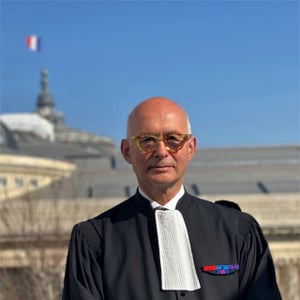
Partner, Supreme Court Attorney, Cabinet Briard LLP
François-Henri Briard is a Knight of the Legion of Honor, an Officer of the National Order of Merit and a Knight of the Palmes Académiques.
He was a member of the Governing Board of the Bar of the French Supreme Courts (2003-2005).
François-Henri Briard was a trustee of Sarah Lawrence College in New York for eight years. He is President of the Institut Vergennes, a member of the U.S. Supreme Court Historical Society and an honorary member of the Society of the Cincinnati and of the Sons of the American Revolution. He is also an expert with the Federalist Society, a U.S. think tank that focuses on constitutional and judicial issues.
He is a member of the Institute of Consulting Tax Attorneys (IACF) and an associate member of the Academy of Moral Sciences, Letters and Arts of Versailles and Ile de France.
He is a member of the French Navy civilian reserve with the rank of frigate captain and has been awarded a medal by the voluntary military services. On behalf of the Firm, he received the Military Reserve Prize (2011).

The First Amendment Online: Search, Privacy & Personalization
Trevor K. Copeland, Richard A. Epstein, James Grimmelmann, Jonathan Masur, Berin Szóka, Diane P. Wood
Congress is aflutter with online privacy bills, while arguments for regulating search engines, social networks...
Wikileaks: Frontier Journalism or Underminer of Liberty and Security?
Floyd Abrams, Gabriel Schoenfeld, Eric Snyder, Jamil N. Jaffer
A Federalist Society panel of free speech and national security experts discusses what, if anything,...
Welcome & Panel I (Roundtable) - Originalism: A Rationalization for Conservatism, or a Principled Theory of Interpretation?
Mary Anne Case, Richard Fallon, Michael A. Fitts, Gregory G. Garre, Saikrishna Prakash, Ryan Ulloa, Keith E. Whittington
Welcome and Introduction Mr. Ryan Ulloa, Symposium Director, University of Pennsylvania Law School Dean Michael...
Constitutional Interpretation & the Bill of Rights
Randy E. Barnett, Burt Neuborne, Diarmuid F. O'Scannlain
Much has been written in the past 200 years on how to interpret the language...
The Financial Industry, The Credit Crisis, and Free Market Solutions
Emil Arca, Richard A. Epstein
The New York City Lawyers Chapter hosted this event on December 8, 2008, at the...
1st Annual Rosenkranz Discussion
Michael W. McConnell, Eugene B. Meyer, Richard Posner, Nicholas Quinn Rosenkranz
The Federalist Society's 1st Annual Rosenkranz Discussion was held on November 22, 2008. The topic...
Is the U.S. Legal Regime Undermining American Competitiveness
David D. Aufhauser, Richard A. Epstein, Douglas W. Kmiec, George J. Terwilliger, François-Henri Briard
The Federalist Society's Corporations Practice Group presented this panel discussion at the 2007 Annual National...