
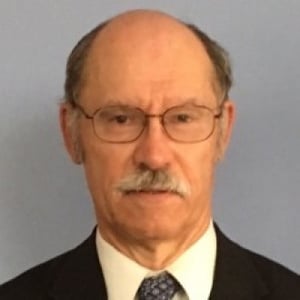
Professorial Lecturer in Law, George Washington University Law School
Theodore C. (Ted) Hirt was an attorney in the Department of Justice's Civil Division from August 1979 to March 2016. He was in its Federal Programs Branch from 1979 to 2008 (trial attorney, senior trial counsel, assistant director), and then in its Office of Immigration Litigation from 2008 to 2016 (trial attorney and senior litigation counsel). Among his responsibilities (September 2001 to March 2016) was being an advisor to the Assistant Attorneys General for the Civil Division, who serve ex officio on the Civil Rules Advisory Committee. Mr. Hirt’s areas of specialization include First Amendment issues, internet and telecommunications law, and electronic discovery. From 1976 to 1979, he was an associate at Fried, Frank, Harris, Shriver & Kampelman. From 1975 to 1976 he was an attorney in the Prehearing Division of the Michigan Court of Appeals.
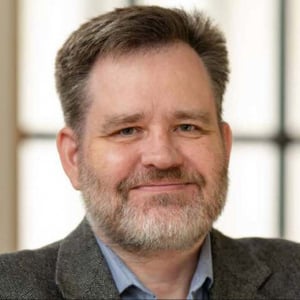
David Boies Professor of Law, Yale Law School

Laurence A. Tisch Professor of Law and Director, Classical Liberal Institute, New York University School of Law; Director, Classical Liberal Institute, Civitas Institute University of Texas at Austin
Richard A. Epstein is the Laurence A. Tisch Professor of Law, at New York University, a senior research fellow at the Civitas Institute at the University of Texas Austin, and a senior Lecturer, the University of Chicago. He received an LL.D., h.c . from the University of Ghent, 2003 , and an LLD h.c . from the University of Siegen in 2018 and the Bradley Prize in 2011. He has been a member of the American Academy of Arts and Sciences since 1985. He has edited both the Journal of Legal Studies (1981-1991) and the Journal of Law and Economics (1991-2001). He is also a founder and director of the Classical Liberal Institute at NYU Law School. His most recent book is The Classical Liberal Constitution: The Uncertain Quest for Limited Government (2014). His other books include Takings: Private Property and the Power of Eminent Domain ( 1985); Bargaining with the State (1993); Simple Rules for a Complex World (1995); Principles for a Free Society: Reconciling Individual Liberty and the Common Good (1998); Skepticism and Freedom: A Modern Theory of Classical Liberalism (2003); Design for Liberty: Private Property, Public Administration and the Rule of Law (2011), and most recently, The Myth of Birthright citizenship—and Beyond (2026). He has taught courses in , administrative law, antitrust, constitutional, contracts, environmental law, land use planning; real property, torts and water law. He has written and spoken extensively on a wide range of topics, and is writes a regular column for Defining Ideas.
Laurence A. Tisch Professor of Law and Director, Classical Liberal Institute, New York University School of Law; Director, Classical Liberal Institute, Civitas Institute University of Texas at Austin
Richard A. Epstein is the Laurence A. Tisch Professor of Law, at New York University, a senior research fellow at the Civitas Institute at the University of Texas Austin, and a senior Lecturer, the University of Chicago. He received an LL.D., h.c . from the University of Ghent, 2003 , and an LLD h.c . from the University of Siegen in 2018 and the Bradley Prize in 2011. He has been a member of the American Academy of Arts and Sciences since 1985. He has edited both the Journal of Legal Studies (1981-1991) and the Journal of Law and Economics (1991-2001). He is also a founder and director of the Classical Liberal Institute at NYU Law School. His most recent book is The Classical Liberal Constitution: The Uncertain Quest for Limited Government (2014). His other books include Takings: Private Property and the Power of Eminent Domain ( 1985); Bargaining with the State (1993); Simple Rules for a Complex World (1995); Principles for a Free Society: Reconciling Individual Liberty and the Common Good (1998); Skepticism and Freedom: A Modern Theory of Classical Liberalism (2003); Design for Liberty: Private Property, Public Administration and the Rule of Law (2011), and most recently, The Myth of Birthright citizenship—and Beyond (2026). He has taught courses in , administrative law, antitrust, constitutional, contracts, environmental law, land use planning; real property, torts and water law. He has written and spoken extensively on a wide range of topics, and is writes a regular column for Defining Ideas.
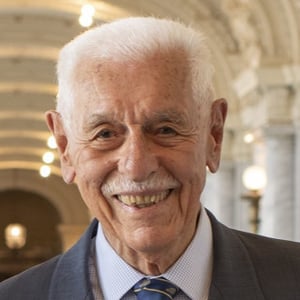
Judge, United States Court of Appeals, Ninth Circuit
Judge Carlos Bea serves as a judge on the United States Court of Appeals for the Ninth Circuit. He received his Bachelor's Degree from Stanford University in 1956 and his J.D. from Stanford Law School in 1958. Judge Bea was born in San Sebastian, Spain, and immigrated with his family to Cuba in 1939. In 1952, he represented Cuba on the Cuban National basketball team in the Helsinki Olympics. Judge Bea became a naturalized citizen of the United States in 1958. He engaged in private practice in San Francisco, principally in the area of civil trials (jury and non-jury), from 1959-75 at Dunne, Phelps & Mills and from 1975-90 at Carlos Bea, A Law Corporation. He taught courses in civil litigation advocacy at Hastings College of Law and Stanford Law School. From 1990 to 2003, Judge Bea served as a judge of the San Francisco Superior Court. He was nominated by President George W. Bush to the United States Court of Appeals for the Ninth Circuit and was confirmed in 2003.
Judge Bea and his wife Louise reside in San Francisco, where they raised their four sons, Sebastian, Alexander, Nicholas, and Dominic.
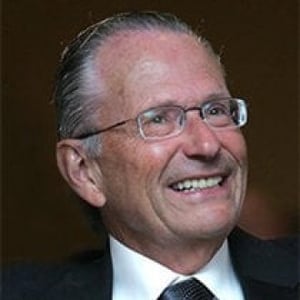
Earl Warren Professor of Public Law (Emeritus), UC Berkeley School of Law
Jesse Choper served as law clerk to Chief Justice Earl Warren of the U.S. Supreme Court following graduation from law school. He taught at the Wharton School of the University of Pennsylvania from 1957 to 1960, and at the University of Minnesota Law School from 1961 to 1965. He joined the Berkeley Law faculty in 1965. Choper has been a visiting professor at Harvard Law School, Fordham Law School, University of Milan, Free University in Amsterdam, Autonoma University in Barcelona, University of New South Wales in Sydney, University of Lucerne in Switzerland, and Catholic University of Portugal in Lisbon and Porto. He served as Berkeley Law’s dean from 1982 to 1992.
From 1979 to 1998, Choper was one of the three major lecturers at U.S. Law Week’s Annual Constitutional Law Conference in Washington, D.C. He has delivered 20 titled lectures at major universities throughout the country, including the Cooley Lectures at Michigan, the Stevens Lecture at Cornell, the Baum Lecture at Illinois, and the Lockhart Lecture at Minnesota. He has served on the executive committee of the Association of American Law Schools, and on the executive council of the American Academy of Arts and Sciences (of which he was vice president for more than ten years). He was national president of the Order of the Coif and is a member of the American Law Institute. In 1998 he received the UC Berkeley Distinguished Teaching Award and the Rutter Award for Teaching Distinction at Berkeley Law in 2006. In 2005 the Berkeley Law Alumni Association presented Choper with the Faculty Lifetime Achievement Award and the University of Pennsylvania Law School gave him the James Wilson Award, its highest award for alumni.
Choper’s major publications include the books, Judicial Review and the National Political Process: A Functional Reconsideration of the Role of the Supreme Court, which received the Order of the Coif Triennial Book Award in 1982, and Securing Religious Liberty: Principles for Judicial Interpretation of the Religion Clauses. His recent publications include the thirteenth edition of his Constitutional Law casebooks; the eighth edition of his Corporations casebook; the second edition of The Supreme Court and Its Justices; “The Political Question Doctrine: Suggested Criteria,” in Duke Law Journal (2005); “Wartime Process: A Dialogue on Congressional Power to Remove Issues From the Federal Courts,” in California Law Review (2007) (co-author); and “Who’s Afraid of the Eleventh Amendment? The Limited Impact of the Court’s Sovereign Immunity Rulings,” in Columbia Law Review (2006) (co-author).

Emanuel S. Heller Professor of Law, University of California at Berkeley; Senior Research Fellow, School of Civic Leadership, Civitas Institute, University of Texas at Austin; Nonresident Senior Fellow, American Enterprise Institute
John Yoo is the Emanuel Heller Professor of Law. He is also Distinguished Visiting Scholar, School of Civic Leadership and Senior Research Fellow, Civitas Institute, at the University of Texas at Austin. He is also a Nonresident Senior Fellow at the American Enterprise Institute.
His most recent book, The Politically Incorrect Guide to the Supreme Court, co-authored with Robert Delahunty, was published in 2023. Professor Yoo’s other books include Defender-in-Chief: Trump’s Fight for Presidential Power; Striking Power: How Cyber, Robots, and Space Weapons Change the Rules for War, Point of Attack: Preventive War, International Law, and Global Welfare, and Crisis and Command: A History of Executive Power from George Washington to George Bush.
Professor Yoo has published more than 100 articles in academic journals on subjects including national security, constitutional law, international law, and the Supreme Court. He also regularly contributes to the editorial pages of the Wall Street Journal, New York Times, Washington Post, Los Angeles Times, and National Review, among others.
Professor Yoo has served in all three branches of government. He was an official in the U.S. Department of Justice, where he worked on national security and terrorism issues after the 9/11 attacks. He served as general counsel of the U.S. Senate Judiciary Committee. He has been a law clerk for Supreme Court Justice Clarence Thomas and federal appeals Judge Laurence Silberman. He has been a visiting professor at Seoul National University in South Korea, the Interdisciplinary Center in Israel, Keio University in Japan, Trento University in Italy, the University of Chicago, and the Free University of Amsterdam.
Professor Yoo supervises the Public Law and Policy Program and the California Constitution Center. He also serves on the boards of the Pacific Legal Foundation, the Federalist Society’s Separation of Powers and Federalism Division, the Universidad Cientifica del Sur Law School, and the Asia-Pacific Law Institute at Seoul National University. He is a winner of the Federalist Society’s Paul Bator award and been the Edwin Meese III Originalism Lecturer at the Heritage Foundation.
Professor Yoo graduated from Yale Law School and summa cum laude from Harvard College.

Is Congress a Salvageable Institution?
Ted Hirt
A review of Philip A. Wallach, Why Congress (Oxford University Press 2023) Constitutional law...
Why Free Speech Matters on Campus
Dallas, TXRichard Epstein on The Classical Liberal Constitution
Palo Alto, CaliforniaThe Case Against Employment Discrimination Laws
Denver, ColoradoSupreme Court Round-Up and Preview 2014-2015
San Francisco, California