

Milton R. Underwood Chair in Free Enterprise, Vanderbilt University Law School
Brian Fitzpatrick is the Milton R. Underwood Chair in Free Enterprise and Professor of Law at Vanderbilt Law School, where his research focuses on class action litigation, federal courts, judicial selection, and constitutional law. He is best known for his empirical studies of class action settlements as well as his book The Conservative Case for Class Actions (University of Chicago Press, 2019). Professor Fitzpatrick joined Vanderbilt's law faculty in 2007 after serving as the John M. Olin Fellow at New York University School of Law. He graduated first in his class from Harvard Law School and went on to clerk for Judge Diarmuid O'Scannlain on the U.S. Court of Appeals for the Ninth Circuit and Justice Antonin Scalia on the U.S. Supreme Court. After his clerkships, Professor Fitzpatrick practiced commercial and appellate litigation for several years at Sidley Austin in Washington, D.C., and served as Special Counsel for Supreme Court Nominations to U.S. Senator John Cornyn. Before earning his law degree, Fitzpatrick graduated summa cum laude with a bachelor's of science in chemical engineering from the University of Notre Dame. He has received the Hall-Hartman Outstanding Professor Award, which recognizes excellence in classroom teaching, for his Civil Procedure and Federal Courts courses.

Judge, United States Court of Appeals, Eleventh Circuit
Judge Kevin C. Newsom is a member of the United States Court of Appeals for the Eleventh Circuit. He sits in Birmingham, Alabama.
Before his appointment to the bench, Judge Newsom was the head of the appellate practice group at Bradley Arant Boult Cummings LLP and, before that, the Solicitor General of Alabama. As a practicing lawyer, Judge Newsom argued four cases in the Supreme Court of the United States, and nearly 40 more in the United States Courts of Appeals and state supreme and appellate courts.
Judge Newsom graduated summa cum laude from Samford University and magna cum laude from Harvard Law School, where he was an articles editor on the Harvard Law Review. Following law school, Judge Newsom clerked for Judge Diarmuid F. O’Scannlain of the United States Court of Appeals for the Ninth Circuit and Justice David H. Souter of the Supreme Court of the United States.
Judge Newsom teaches at Harvard Law School, Yale Law School, Stanford Law School, and the University of Chicago Law School. His published work has appeared in the Yale Law Journal and the Harvard Law Review.
Milton R. Underwood Chair in Free Enterprise, Vanderbilt University Law School
Brian Fitzpatrick is the Milton R. Underwood Chair in Free Enterprise and Professor of Law at Vanderbilt Law School, where his research focuses on class action litigation, federal courts, judicial selection, and constitutional law. He is best known for his empirical studies of class action settlements as well as his book The Conservative Case for Class Actions (University of Chicago Press, 2019). Professor Fitzpatrick joined Vanderbilt's law faculty in 2007 after serving as the John M. Olin Fellow at New York University School of Law. He graduated first in his class from Harvard Law School and went on to clerk for Judge Diarmuid O'Scannlain on the U.S. Court of Appeals for the Ninth Circuit and Justice Antonin Scalia on the U.S. Supreme Court. After his clerkships, Professor Fitzpatrick practiced commercial and appellate litigation for several years at Sidley Austin in Washington, D.C., and served as Special Counsel for Supreme Court Nominations to U.S. Senator John Cornyn. Before earning his law degree, Fitzpatrick graduated summa cum laude with a bachelor's of science in chemical engineering from the University of Notre Dame. He has received the Hall-Hartman Outstanding Professor Award, which recognizes excellence in classroom teaching, for his Civil Procedure and Federal Courts courses.
Judge, United States Court of Appeals, Eleventh Circuit
Judge Kevin C. Newsom is a member of the United States Court of Appeals for the Eleventh Circuit. He sits in Birmingham, Alabama.
Before his appointment to the bench, Judge Newsom was the head of the appellate practice group at Bradley Arant Boult Cummings LLP and, before that, the Solicitor General of Alabama. As a practicing lawyer, Judge Newsom argued four cases in the Supreme Court of the United States, and nearly 40 more in the United States Courts of Appeals and state supreme and appellate courts.
Judge Newsom graduated summa cum laude from Samford University and magna cum laude from Harvard Law School, where he was an articles editor on the Harvard Law Review. Following law school, Judge Newsom clerked for Judge Diarmuid F. O’Scannlain of the United States Court of Appeals for the Ninth Circuit and Justice David H. Souter of the Supreme Court of the United States.
Judge Newsom teaches at Harvard Law School, Yale Law School, Stanford Law School, and the University of Chicago Law School. His published work has appeared in the Yale Law Journal and the Harvard Law Review.

Chief Judge, United States Court of Appeals, Eleventh Circuit
William H. Pryor Jr. serves as Chief Circuit Judge on the United States Court of Appeals for the Eleventh Circuit.
In 2013–18, he served on the United States Sentencing Commission and, in 2017–18, served as Acting Chair.
He has taught as a visiting professor at the University of Alabama School of Law and previously taught as an adjunct professor at the Cumberland School of Law of Samford University.
He served as the 45th Attorney General of Alabama from 1997 to 2004. When he took office, he was the youngest attorney general in the nation. In his reelection, he received the highest percentage of votes of any statewide candidate.
He graduated magna cum laude from Tulane Law School where he finished first in the common-law curriculum and was editor in chief of the Tulane Law Review. He then served as a law clerk for Judge John Minor Wisdom of the U.S. Court of Appeals for the Fifth Circuit.
He is a member of The American Law Institute and an Adviser for the RESTATEMENT OF THE LAW THIRD, CONFLICT OF LAWS. He is a coauthor with Bryan Garner, Justices Gorsuch and Kavanaugh, and several other judges of a treatise, THE LAW OF JUDICIAL PRECEDENT. He has published in the Yale Law Journal, Columbia Law Review, Virginia Law Review, Notre Dame Law Review, Harvard Journal of Law & Public Policy, Yale Law & Policy Review, George Mason Law Review, Florida Law Review, Alabama Law Review, Case Western Reserve Law Review, and Tulane Law Review. He has published op-eds in The Wall Street Journal, The New York Times, National Review, and USA Today. He has debated at National Lawyers’ Conventions of the Federalist Society (including on National Public Radio) and at the Oxford Union in the United Kingdom. And he is listed among several “widely admired judicial writers” in Bryan Garner’s The Redbook: A Manual on Legal Style.
He is a member of the Tulane Law School Hall of Fame and has received the Defender of the Constitution Award from the Heritage Foundation, the Jurist of the Year Award from the Texas Review of Law & Politics, and the St. Thomas More Award from the St. Thomas More Society of Atlanta. Judge Pryor is also a proud member of the National Society of the Sons of the American Revolution.

Senior Vice President for Legal Studies, Cato Institute
Clark Neily is senior vice president for legal studies at the Cato Institute. His areas of interest include constitutional law, overcriminalization, civil forfeiture, police accountability, and gun rights. Neily is the author of Terms of Engagement: How Our Courts Should Enforce the Constitution’s Promise of Limited Government. His writing has appeared in the Wall Street Journal, Forbes, and National Review Online, as well as various law reviews, including the Harvard Journal of Law and Public Policy, George Mason Law Review, Georgetown Journal of Law and Public Policy, NYU Journal of Law and Liberty, and Texas Review of Law and Politics. Neily is a frequent guest speaker and lecturer for the Federalist Society, Institute for Humane Studies, and American Constitution Society.
Before joining Cato in 2017, Neily was a senior attorney and constitutional litigator at the Institute for Justice and director of the Institute’s Center for Judicial Engagement. He is also an adjunct professor at the University of Texas School of Law, where he teaches constitutional litigation and public-interest law.
Neily served as co-counsel in District of Columbia v. Heller, the historic case in which the Supreme Court held for the first time that the Second Amendment protects an individual right to own a gun for self-defense.
Neily began his legal career as a law clerk to Judge Royce Lamberth on the U.S. District Court for the District of Columbia. After that he spent four years in the trial department of the Dallas-based firm Thompson & Knight. Neily received his undergraduate and law degrees from the University of Texas, where he was Chief Articles Editor of the Texas Law Review.
Judge, United States Court of Appeals, Eleventh Circuit
Judge Kevin C. Newsom is a member of the United States Court of Appeals for the Eleventh Circuit. He sits in Birmingham, Alabama.
Before his appointment to the bench, Judge Newsom was the head of the appellate practice group at Bradley Arant Boult Cummings LLP and, before that, the Solicitor General of Alabama. As a practicing lawyer, Judge Newsom argued four cases in the Supreme Court of the United States, and nearly 40 more in the United States Courts of Appeals and state supreme and appellate courts.
Judge Newsom graduated summa cum laude from Samford University and magna cum laude from Harvard Law School, where he was an articles editor on the Harvard Law Review. Following law school, Judge Newsom clerked for Judge Diarmuid F. O’Scannlain of the United States Court of Appeals for the Ninth Circuit and Justice David H. Souter of the Supreme Court of the United States.
Judge Newsom teaches at Harvard Law School, Yale Law School, Stanford Law School, and the University of Chicago Law School. His published work has appeared in the Yale Law Journal and the Harvard Law Review.
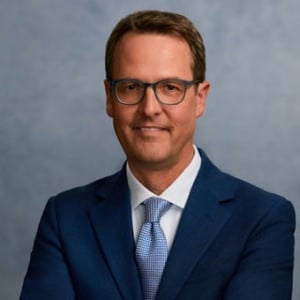
Partner, Orrick, Herrington & Sutcliffe LLP
Andy excels at solving complex problems for his clients using a variety of effective strategies. As former Chief Deputy Attorney General for the State of Wisconsin, Andy Cook has extensive experience representing businesses before state Attorneys General involving investigations and lawsuits. His strong relationships with Attorneys General and their senior staff frequently facilitate the successful resolution of client issues through diplomacy and negotiations. When litigation becomes necessary, Andy effectively advocates for clients throughout the litigation process.
Andy combines his legal expertise in numerous areas of law covered by state Attorneys General, an understanding of how state AG offices operate, and vast knowledge of legal and regulatory issues facing his clients. This substantive and comprehensive legal approach is crucial to effectively representing clients before state Attorneys General. Andy also has substantial experience drafting and enacting complex civil liability reforms before state legislatures to successfully address client goals.
Andy’s main practice focuses on advising Fortune 500 companies before state Attorneys General in the areas of antitrust, consumer protection, False Claims Act, environmental law, and cybersecurity and data privacy. Andy, in collaboration with a team of attorneys, successfully navigated a client through antitrust regulatory review by state Attorneys General in one of the nation’s largest mergers of two major telecommunication companies. Andy also worked with a team of lawyers representing a large corporation involving the multistate opioids litigation brought by state Attorneys General.
Andy gained valuable experience serving as Deputy Attorney General for the State of Wisconsin where he was the second in command of the 700-plus state agency. In his role as Chief Deputy Attorney General, Andy oversaw the day-to-day operations at the Wisconsin Department of Justice (DOJ); directed the State’s litigation strategy; negotiated, reviewed, and approved all settlements; drafted and reviewed attorney general opinions; managed the agency’s budget; oversaw civil and criminal investigations handled by DOJ; and managed DOJ’s legislative agenda.
Andy played college hockey and remains active by running, cross country skiing, and playing golf. On the weekends, Andy and his wife enjoy watching their kids’ sporting events, including soccer, baseball, gymnastics, and track. In his rare spare time, Andy reads history books.
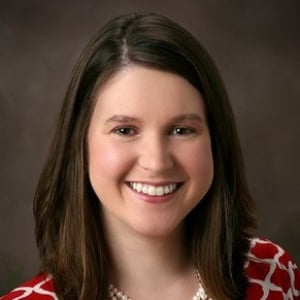
Attorney, Lobbyist & Communications Professional, Kelchen Consulting

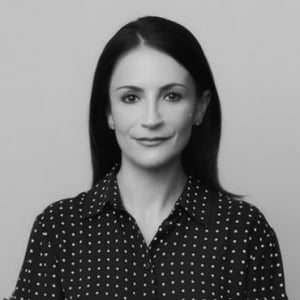
2011 U.S. Supreme Court Round-Up
State Court Challenges to Legislatively Enacted Tort Reforms
Andrew Cook, Emily Kelchen
Introduction Over the past three decades, proponents of civil liability reform have made significant gains.1...
Luncheon: Supreme Court Review and Preview
Atlanta, GeorgiaSupreme Court Round-Up
Birmingham, AlabamaThe Unbearable Rightness of Marbury v. Madison: Its Real Lessons and Irrepressible Myths
Birmingham, AlabamaAlabama's Challenge to Obamacare
The Myths and Real Lessons of Marbury v. Madison
Right Result, Wrong Reasoning? McDonald vs. City of Chicago and The Future of Gun Rights
The Senate’s Role in the Nomination and Confirmation Process: Whose Burden?
Orlando, Florida2010 Supreme Court Round-Up