
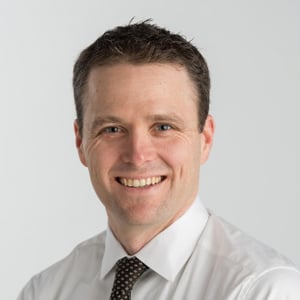
Professor of Law, University of Michigan Law School
Professor Nicholas Bagley teaches and writes in the areas of administrative law, regulatory theory, and health law. Prior to joining the Law School faculty, he was an attorney with the appellate staff in the Civil Division at the U.S. Department of Justice, where he argued a dozen cases before the U.S. Courts of Appeals and acted as lead counsel in many more. Professor Bagley also served as a law clerk to Justice John Paul Stevens of the U.S. Supreme Court and to the Hon. David S. Tatel of the U.S. Court of Appeals, District of Columbia Circuit. Professor Bagley holds a BA in English from Yale University and received his JD, summa cum laude, from New York University School of Law. Before entering law school, he joined Teach For America and taught eighth-grade English at a public school in South Bronx. Professor Bagley's work has appeared in the Harvard Law Review, the Columbia Law Review, the Georgetown Law Journal, the New England Journal of Medicine, and the Journal of Health Politics, Policy, and Law. In 2012, he was the recipient of the Law School's L. Hart Wright Award for Excellence in Teaching. He is a frequent contributor to The Incidental Economist, a prominent health policy blog.

Tazewell Taylor Professor of Law and William H. Cabell Research Professor, William & Mary Law School
Jonathan H. Adler joined the William & Mary law faculty as the Tazwell Taylor Professor of Law and William H. Cabell Research Professor in 2025. Prior to joining the faculty, he was the inaugural Johan Verheij Memorial Professor of Law and the founding Director of the Coleman P. Burke Center for Environmental Law at the Case Western Reserve University School of Law.
Professor Adler is the author or editor of seven books, including Climate Liberalism: Perspectives on Liberty, Property and Pollution (Palgrave, 2023), Marijuana Federalism: Uncle Sam and Mary Jane (Brookings Institution Press, 2020), Business and the Roberts Court (Oxford University Press, 2016) and Rebuilding the Ark: New Perspectives on Endangered Species Act Reform (AEI Press, 2011).
His articles have appeared in publications ranging from the Harvard Environmental Law Review and Yale Journal on Regulation to the Wall Street Journal, New York Times, and Washington Post. He has testified before Congress a dozen times, and his work has been cited in the U.S. Supreme Court. A 2024 study identified Professor Adler as the seventh most cited legal academic in administrative and environmental law from 2019 to 2023.
Professor Adler is a contributing editor to Civitas Outlook and a regular contributor to the popular legal blog, The Volokh Conspiracy. A regular commentator on constitutional and regulatory issues, he has appeared on numerous radio and television programs, ranging from the PBS Newshour and National Public Radio to the Fox News Channel and Entertainment Tonight.
Professor Adler is a senior fellow at the Property & Environment Research Center in Bozeman, Montana. In 2018, Professor Adler was elected to membership in the American Law Institute and helped co-found the organization Checks and Balances. In 2024, Professor Adler was appointed a public member of the Administrative Conference of the United States.
Professor Adler clerked for the Honorable David B. Sentelle on the U.S. Court of Appeals for the District of Columbia Circuit.

Richard and Frances Mallery Professor of Law and Faculty Director, Constitutional Law Center, Stanford Law School
Michael W. McConnell is the Richard and Frances Mallery Professor and Faculty Director of the Constitutional Law Center at Stanford Law School, and a Senior Fellow at the Hoover Institution. From 2002 to 2009, he served as a Circuit Judge on the United States Court of Appeals for the Tenth Circuit. He was nominated by President George W. Bush, a Republican, and confirmed by a Democratic Senate by unanimous consent. McConnell has previously held chaired professorships at the University of Chicago and the University of Utah, and visiting professorships at Harvard and NYU. He teaches courses on constitutional law, constitutional history, First Amendment, and interpretive theory. He has published widely in the fields of constitutional law and theory, especially church and state, equal protection, and separation of powers. His book, “The President Who Would Not Be King: Executive Power Under the Constitution,” was published by Princeton University Press in 2020, based on the Tanner Lectures in Human Values, which he delivered at Princeton in 2019. His latest book, co-authored with Nathan Chapman, “Agreeing to Disagree: How the Establishment Clause Protects Religious Diversity and Freedom of Conscience,” was published by Oxford University Press in mid-2023. McConnell has argued sixteen cases in the United States Supreme Court, most recently Carney v. Adams (2020). defending a provision of the Delaware Constitution requiring political balance on that state’s courts. More recently, he was co-counsel in Gonzalez v. Google. He earned his B.A. from Michigan State University and his J.D. from the University of Chicago, and has received honorary degrees from Notre Dame University and Michigan State. He served as law clerk to Supreme Court Justice William J. Brennan, Jr. and D.C. Circuit Chief Judge J. Skelly Wright. He has been Assistant General Counsel of the Office of Management & Budget, Assistant to the Solicitor General of the Department of Justice, and a member of the President’s Intelligence Oversight Board. He is Senior of Counsel to the law firm Wilson, Sonsini, Goodrich & Rosati, and is co-chair of Meta’s Oversight Review Board.
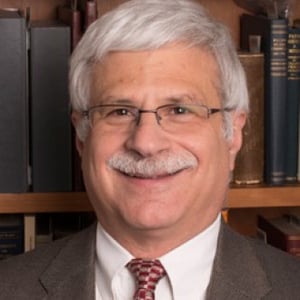
Professor of Law, Catholic University of America
Robert Destro served as Assistant Secretary for the Bureau of Democracy, Human Rights, and Labor (DRL). He has a long history as a human rights advocate and civil rights attorney with expertise in elections, employment, and constitutional law. Destro has served on the faculty at Catholic University’s Columbus School of Law since 1982 and served as its interim dean from 1999 to 2001. He was founding director of the Interdisciplinary Program in Law and Religion and served as the Director of the Institute for Policy Research and Catholic Studies from June 2017 to September 2019. He served as a commissioner on the U.S. Commission on Civil Rights from 1983-1989. His legal work includes collaboration with the Peace Research Institute Oslo in a fifteen-year dialogue among Muslim, Christian, and Jewish leaders in the legal, business, and religious fields in the United States and the Middle East as well as efforts promoting the release of political prisoners and prisoners of conscience in the Middle East. He has served as voting rights counsel for the Ohio Secretary of State and has advocated for the first amendment rights of individuals and organizations.
He earned a B.A. from Miami University, Ohio, and a J.D. from the University of California at Berkeley. He is an active member of the Bar in Ohio and California.
The rest of his bio including his publications are available on the Catholic University Faculty page linked here.
Tazewell Taylor Professor of Law and William H. Cabell Research Professor, William & Mary Law School
Jonathan H. Adler joined the William & Mary law faculty as the Tazwell Taylor Professor of Law and William H. Cabell Research Professor in 2025. Prior to joining the faculty, he was the inaugural Johan Verheij Memorial Professor of Law and the founding Director of the Coleman P. Burke Center for Environmental Law at the Case Western Reserve University School of Law.
Professor Adler is the author or editor of seven books, including Climate Liberalism: Perspectives on Liberty, Property and Pollution (Palgrave, 2023), Marijuana Federalism: Uncle Sam and Mary Jane (Brookings Institution Press, 2020), Business and the Roberts Court (Oxford University Press, 2016) and Rebuilding the Ark: New Perspectives on Endangered Species Act Reform (AEI Press, 2011).
His articles have appeared in publications ranging from the Harvard Environmental Law Review and Yale Journal on Regulation to the Wall Street Journal, New York Times, and Washington Post. He has testified before Congress a dozen times, and his work has been cited in the U.S. Supreme Court. A 2024 study identified Professor Adler as the seventh most cited legal academic in administrative and environmental law from 2019 to 2023.
Professor Adler is a contributing editor to Civitas Outlook and a regular contributor to the popular legal blog, The Volokh Conspiracy. A regular commentator on constitutional and regulatory issues, he has appeared on numerous radio and television programs, ranging from the PBS Newshour and National Public Radio to the Fox News Channel and Entertainment Tonight.
Professor Adler is a senior fellow at the Property & Environment Research Center in Bozeman, Montana. In 2018, Professor Adler was elected to membership in the American Law Institute and helped co-found the organization Checks and Balances. In 2024, Professor Adler was appointed a public member of the Administrative Conference of the United States.
Professor Adler clerked for the Honorable David B. Sentelle on the U.S. Court of Appeals for the District of Columbia Circuit.
Professor of Law, University of Michigan Law School
Professor Nicholas Bagley teaches and writes in the areas of administrative law, regulatory theory, and health law. Prior to joining the Law School faculty, he was an attorney with the appellate staff in the Civil Division at the U.S. Department of Justice, where he argued a dozen cases before the U.S. Courts of Appeals and acted as lead counsel in many more. Professor Bagley also served as a law clerk to Justice John Paul Stevens of the U.S. Supreme Court and to the Hon. David S. Tatel of the U.S. Court of Appeals, District of Columbia Circuit. Professor Bagley holds a BA in English from Yale University and received his JD, summa cum laude, from New York University School of Law. Before entering law school, he joined Teach For America and taught eighth-grade English at a public school in South Bronx. Professor Bagley's work has appeared in the Harvard Law Review, the Columbia Law Review, the Georgetown Law Journal, the New England Journal of Medicine, and the Journal of Health Politics, Policy, and Law. In 2012, he was the recipient of the Law School's L. Hart Wright Award for Excellence in Teaching. He is a frequent contributor to The Incidental Economist, a prominent health policy blog.

Senior Vice President for Legal Studies, Cato Institute
Clark Neily is senior vice president for legal studies at the Cato Institute. His areas of interest include constitutional law, overcriminalization, civil forfeiture, police accountability, and gun rights. Neily is the author of Terms of Engagement: How Our Courts Should Enforce the Constitution’s Promise of Limited Government. His writing has appeared in the Wall Street Journal, Forbes, and National Review Online, as well as various law reviews, including the Harvard Journal of Law and Public Policy, George Mason Law Review, Georgetown Journal of Law and Public Policy, NYU Journal of Law and Liberty, and Texas Review of Law and Politics. Neily is a frequent guest speaker and lecturer for the Federalist Society, Institute for Humane Studies, and American Constitution Society.
Before joining Cato in 2017, Neily was a senior attorney and constitutional litigator at the Institute for Justice and director of the Institute’s Center for Judicial Engagement. He is also an adjunct professor at the University of Texas School of Law, where he teaches constitutional litigation and public-interest law.
Neily served as co-counsel in District of Columbia v. Heller, the historic case in which the Supreme Court held for the first time that the Second Amendment protects an individual right to own a gun for self-defense.
Neily began his legal career as a law clerk to Judge Royce Lamberth on the U.S. District Court for the District of Columbia. After that he spent four years in the trial department of the Dallas-based firm Thompson & Knight. Neily received his undergraduate and law degrees from the University of Texas, where he was Chief Articles Editor of the Texas Law Review.
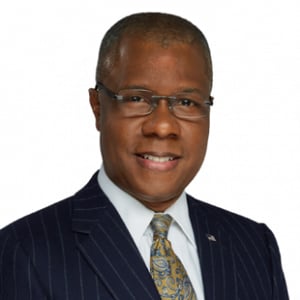
Syndicated Columnist
New York political commentor Deroy Murdock is a Fox News Contributor, a Contributing Editor with National Review Online, an emeritus Media Fellow with the Hoover Institution on War, Revolution and Peace at Stanford University; and a Senior Fellow with the Atlas Network, which supports and connects some 500 free-market think tanks in the USA and some 95 countries world-wide. Mr. Murdock’s weekly column — “This Opinion Just In…” — appears in the New York Post, the Washington Times, the New Hampshire Union-Leader, and other newspapers across America. He has appeared on radio shows across America and presents commentaries on Fox News Radio’s podcast, The Rundown. He is a veteran of the 1980 and 1984 Reagan for President campaigns and Steve Forbes’ 2000 White House bid.
As a popular public speaker, he has lectured or debated at the Cato Institute, the Council on Foreign Relations; Harvard Medical School, the Heritage Foundation; the National Academy of Sciences; Dartmouth, Stanford, and Tulane universities; and various fora, from Bogotá to Buenos Aires to Budapest. He is a native of Los Angeles, a graduate of Georgetown University, and a resident of Manhattan, where he earned an MBA from New York University. His program included a semester of study at the Chinese University of Hong Kong.
Deroy Murdock hopes that someday the free society will bring him — and every American — more leisure time to experience fine dining, motion pictures, skiing, live music, and the priceless joys of family, friends, and loved ones.
Professor of Law, Catholic University of America
Robert Destro served as Assistant Secretary for the Bureau of Democracy, Human Rights, and Labor (DRL). He has a long history as a human rights advocate and civil rights attorney with expertise in elections, employment, and constitutional law. Destro has served on the faculty at Catholic University’s Columbus School of Law since 1982 and served as its interim dean from 1999 to 2001. He was founding director of the Interdisciplinary Program in Law and Religion and served as the Director of the Institute for Policy Research and Catholic Studies from June 2017 to September 2019. He served as a commissioner on the U.S. Commission on Civil Rights from 1983-1989. His legal work includes collaboration with the Peace Research Institute Oslo in a fifteen-year dialogue among Muslim, Christian, and Jewish leaders in the legal, business, and religious fields in the United States and the Middle East as well as efforts promoting the release of political prisoners and prisoners of conscience in the Middle East. He has served as voting rights counsel for the Ohio Secretary of State and has advocated for the first amendment rights of individuals and organizations.
He earned a B.A. from Miami University, Ohio, and a J.D. from the University of California at Berkeley. He is an active member of the Bar in Ohio and California.
The rest of his bio including his publications are available on the Catholic University Faculty page linked here.

Hobby Lobby and the Limits of a Corporate Conscience
Birmingham, AlabamaRegulation Impacts Under the Patient Protection and Affordable Care Act
Halbig v. Sebelius - The Next Threat to Obamacare? - Podcast
Nicholas Bagley, Jonathan H. Adler
The authors of the PPACA envisioned a system in which state governments would establish health...
Halbig v. Sebelius - The Next Threat to Obamacare?
TeleforumFrom Obamacare to Cat Care: Is There Anything the Feds Can't Do?
Baltimore, MarylandSebelius v. Hobby Lobby Stores, Inc.
Michael W. McConnell
Note from the Editor: This article is a discussion about the Sebelius v. Hobby Lobby...
Obamacare
Thomas Goode Jones Student Chapter
Montgomery, ALOral Arguments in the Contraceptive Mandate Case: Sebelius v. Hobby Lobby Stores, Inc. - Podcast
Robert A. Destro
On March 25, 2014, the contraceptive mandate case was argued in the U.S. Supreme Court....
Oral Arguments in the Contraceptive Mandate Case: Sebelius v. Hobby Lobby Stores, Inc.
TeleforumImplications of ObamaCare
Chicago, Illinois