
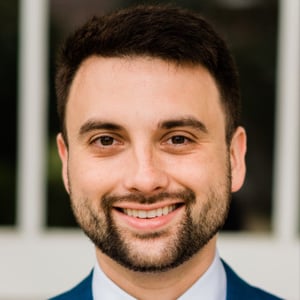
Roberto is a 2018 graduate of the University of Chicago Law School.
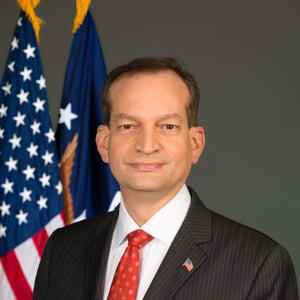
Former Secretary; U.S. Department of Labor
Rene Alexander Acosta is an American attorney and politician, who served as the 27th United States Secretary of Labor from 2017 to 2019.
Secretary Acosta is the son of Cuban refugees, a native of Miami, and first-generation college graduate. He earned his undergraduate and law degrees from Harvard University.
Following law school, he worked as a law clerk for Justice Samuel A. Alito, Jr., at the U.S. Court of Appeals for the Third Circuit. He then worked at the law firm of Kirkland & Ellis and went on to teach at George Mason University’s Antonin Scalia School of Law.
Secretary Acosta has served in three presidentially appointed, Senate-confirmed positions. In 2002, he was appointed to serve as a member of the National Labor Relations Board, where he participated in or authored more than 125 opinions. In 2003, he was appointed Assistant Attorney General for the Civil Rights Division of the U.S. Department of Justice, and from 2005 to 2009 he served as the U.S. Attorney for the Southern District of Florida.
Prior to his tenure at the Department of Labor, Secretary Acosta served as the dean of the FIU College of Law.
Secretary Acosta has twice been named one of the nation’s 50 most influential Hispanics by Hispanic Business magazine. He was also named to the list of 100 most influential individuals in business ethics in 2008. In 2013, the South Florida Hispanic Chamber of Commerce presented him with the Chairman’s Higher Education Award in recognition of his “outstanding achievements, leadership and determination throughout a lifetime of caring and giving back to the community.”
Secretary Acosta and his wife enjoy spending time together as a family, raising their two daughters.
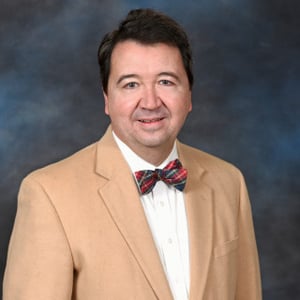
Judge, United States Court of Appeals, Sixth Circuit
John K. Bush is a Circuit Judge on the United States Court of Appeals for the Sixth Circuit.
His chambers are in Louisville, Kentucky. Prior to joining the court, Judge Bush was a partner in the
Louisville office of the firm Bingham Greenebaum Doll (now Dentons Bingham Greenebaum),
where he also was co-chair of the firm’s litigation department. He began his legal practice in the
Washington, D.C. office of Gibson Dunn & Crutcher.
Judge Bush served as a law clerk for Judge J. Smith Henley of the United States Court of
Appeals for the Eighth Circuit. He was graduated summa cum laude from Vanderbilt University,
and cum laude from Harvard Law School. He is an adjunct lecturer at The George Washington
University Law School and the Brandeis School of Law at the University of Louisville.
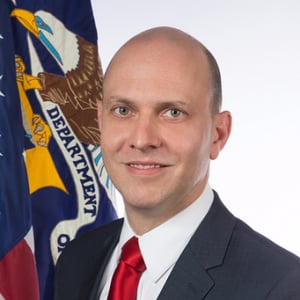
Chief of Staff and Acting Solicitor, U.S. Department of Labor
On February 17, 2017, President Trump appointed Nicholas C. Geale as Deputy Solicitor of Labor, and he became Acting Solicitor of Labor in accordance with federal law. Mr. Geale also serves as the Chief of Staff for Secretary Acosta at the Department of Labor, effective August 20, 2017.
Mr. Geale previously served as a member of the National Mediation Board, which he joined in August 2013. Immediately prior to joining the National Mediation Board, Mr. Geale served as the Director of Oversight and Investigations for Ranking Member Lamar Alexander on the U.S. Senate Health, Education, Labor and Pensions Committee. Before becoming Director of Oversight, Mr. Geale served as Oversight and Investigations Counsel on the Committee for Ranking Member Michael B. Enzi. Mr. Geale also served at the U.S. Department of Labor from 2006-2009, as an attorney in the Office of the Solicitor and as Counselor to the Deputy Secretary of Labor.
Prior to federal service, Mr. Geale had six years of experience in labor and employment matters, general commercial litigation and alternative dispute resolution in private and public practice, including serving as Assistant General Counsel for the Washington Metropolitan Area Transit Authority.
Mr. Geale graduated from Georgetown Law in 1999 and Claremont McKenna College in 1996.

Partner, Resolution Economics
Victoria Lipnic is a Partner at Resolution Economics. She leads the Company’s Human Capital Strategy Group. The Human Capital Strategy Group combines the Company’s expertise in data analytics and deep knowledge of regulatory requirements with an interdisciplinary approach to advise organizations on the full range of their human capital needs and reporting requirements including recruitment, selection, promotions, DE&I, pay equity, and overall talent allocation.
Lipnic joined Resolution Economics in 2021. She has broad experience in the full range of human capital, labor and employment issues, especially from the regulatory enforcement perspective. Prior to joining the Company she served as Commissioner from 2010 to 2020 and Acting Chair from 2017 to 2019 of the U.S. Equal Employment Opportunity Commission. She was appointed to the EEOC by President Barack Obama and unanimously confirmed by the U.S. Senate. At the EEOC she worked on policy, cases, and regulations under all of the statutes enforced by the Commission including Title VII of the Civil Rights Act of 1964, the Age Discrimination in Employment Act (ADEA), the Americans with Disabilities Act (ADA), the Equal Pay Act (EPA), the Pregnancy Discrimination Act (PDA) and the Genetic Information Nondiscrimination Act (GINA). While at the EEOC she participated in numerous agency regulatory initiatives including the final GINA regulations, the ADA, as amended, regulations, and the revisions to the EEO-1 form to include pay data reporting. She organized the agency’s first public meeting on Big Data in Employment, created its Chief Data Officer position, oversaw development of the Office of Enterprise Data and Analytics and published a significant report on age discrimination. She co-chaired the EEOC’s Select Task Force on the Study of Harassment in the Workplace, and co-authored its seminal report, issued in 2016, before the #MeToo movement.
Prior to joining the EEOC, she practiced law with Seyfarth Shaw, LLP. She also served as the U.S. Assistant Secretary of Labor for Employment Standards from 2002 to January 2009, a position she was appointed to by President George W. Bush. At the Department of Labor she oversaw regulatory development and enforcement for the Wage and Hour Division, the Office of Federal Contract Compliance Programs (OFCCP), the Office of Labor Management Standards and four national workers’ compensation programs. This included oversight and enforcement of the Fair Labor Standards Act, the Family and Medical Leave Act, Executive Order 11246 and the Labor Management Reporting Disclosure Act.
Prior to her service as Assistant Secretary, Lipnic served as Workforce Policy Counsel to the Committee on Education and the Workforce in the U.S. House of Representatives. She was also in-house counsel for labor and employment with the U.S. Postal Service.
Partner, Morgan, Lewis & Bockius LLP
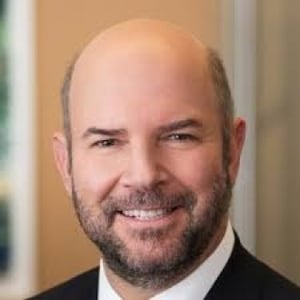
Philip A. Miscimarra is the former Chairman of the National Labor Relations Board (NLRB). Phil leads the firm’s NLRB special appeals practice and is co-leader of Morgan Lewis Workforce Change, which manages all employment, labor, benefits, and related issues arising from mergers, acquisitions, startups, workforce reductions, and other types of business restructuring. He represents clients on a wide range of labor and employment issues, with a focus on labor-management relations, business acquisitions and restructuring, and employment litigation. Phil is also a Senior Fellow at the University of Pennsylvania's Wharton School and the Wharton Center for Human Resources. He is admitted in Illinois only, and his practice is supervised by DC Bar members.
Phil was named Chairman of the NLRB by President Donald J. Trump on April 24, 2017, after previously serving as Acting Chairman and a Board Member. He was appointed to the NLRB by President Barack Obama on April 9, 2013, and was approved unanimously by the Senate Committee on Health, Education, Labor, and Pensions on May 22, 2013. He was confirmed by voice vote in the US Senate on July 30, 2013, and served from August 7, 2013, to December 16, 2017. Upon the completion of his term, Phil served on the NLRB longer than 26 other board members over the past 30 years.
Phil is the author or co-author of several books involving labor law issues, including The NLRB and Managerial Discretion: Subcontracting, Relocations, Closings, Sales, Layoffs, and Technological Change (2d ed. 2010) (by Miscimarra, Turner, Friedman, Callahan, Conrad, Lignowski and Scroggins); The NLRB and Secondary Boycotts (3d ed. 2002) (by Miscimarra, Berkowitz, Wiener and Ditelberg); and Government Protection of Employees Involved in Mergers and Acquisitions (1989 and 1997 supp.) (by Northrup and Miscimarra); and other publications. He has also testified on labor and employment law issues in the United States Congress.
Chambers USA named Phil one of the leading lawyers for employment law in the United States from 2004 to 2012, based on the views of clients, peers, and other industry professionals. He has been described as a "fantastic lawyer" and "prolific writer," with clients admiring his "multilayered abilities and business savvy" and his "high level of integrity."

Chief Judge, United States Court of Appeals, Fifth Circuit
Jennifer Walker Elrod is the Chief Judge of the United States Court of Appeals for the Fifth Circuit. She was nominated to the Fifth Circuit in 2007, and she served as a Circuit Judge on the court until assuming the role of Chief Judge in October 2024. Prior to serving as a Circuit Judge, Chief Judge Elrod was appointed and then twice elected Judge of the 190th District Court of Harris County, Texas, where she spent over five years presiding over more than 200 jury and non-jury trials.
Chief Judge Elrod graduated cum laude from Harvard Law School, where she was an active member of the Harvard Federalist Society, an Ames Moot Court finalist, and a Senior Editor of the Harvard Journal of Law & Public Policy. She clerked for the Honorable Sim Lake in the Southern District of Texas. Before serving as a judge, Chief Judge Elrod worked in private practice, focusing on civil litigation, antitrust, and employment matters.
She has been repeatedly recognized for her work as a jurist, as well as for her pro bono work and contributions to the community. She has been named the 2022 Texas Review of Law & Politics’ Jurist of the Year, the 2018 Harvard Federalist Society’s Alumni of the Year, the 2016–17 Texas Association of Civil Trial and Appellate Specialists’ Appellate Judge of the Year, and the 2008 Mexican-American Bar Association of Texas’s Judge of the Year.
Chief Judge Elrod is actively engaged in the academic and legal communities. Chief Judge Elrod currently serves on the Board of Directors and as the Jurist-in-Residence at the South Texas College of Law, where she teaches civil procedure and First Amendment law. She is also a member of the American Law Institute and of the Board of Advisors for the Harvard Journal of Law & Public Policy, and she is a former member of the Board of Regents of her alma mater, Baylor University, and the Board of Visitors at Brigham Young University Law School. She previously served as the Chair of the Codes of Conduct Committee for the Judicial Conference of the United States. She has also served as the M.D. Anderson Visiting Public Service Professor at the Texas Tech University School of Law and as Jurist-in-Residence at Brigham Young University Law School, and she has taught legal writing at the University of Houston Law Center. She presented the Lewis F. Powell, Jr. Distinguished Lecture at the Washington and Lee University School of Law and is a frequent speaker on the topics of trial and appellate procedure, ethics, employment law, and constitutional law. Chief Judge Elrod also serves on the board of the Garland R. Walker Inn of Court, and co-produces an annual musical CLE, for which her pupilage group has won multiple national awards.
Chief Judge Elrod’s publications include: Trial by Siri: AI Comes to the Courtroom; Don’t Mess with Texas Judges: In Praise of the State Judiciary; For Good: Enriching Your Practice and Your Life Through Pro Bono and Community Service; Is the Jury Still Out?: A Case for the Continued Viability of the American Jury; and W(h)ither the Jury? The Diminishing Role of the Jury Trial in our Legal System.

Laurence A. Tisch Professor of Law and Director, Classical Liberal Institute, New York University School of Law; Senior Fellow, The Civitas Institute, University of Texas at Austin
Richard A. Epstein is the inaugural Laurence A. Tisch Professor of Law at NYU School of Law. Prior to his joining the faculty, he was a visiting law professor at NYU from 2007 through 2009. He served as the Peter and Kirstin Bedford Senior Fellow at the Hoover Institution from 2000 to 2024. Since 2024 to the present he is a senior lecturer at the Civitas Institute at the University of Texas—Austin. Epstein is also the James Parker Hall Distinguished Service Professor of Law Emeritus and a senior lecturer at the University of Chicago. His initial law school appointment was at the University of Southern California from 1968 to 1972. Epstein received an LL.D., h.c. from the University of Ghent, 2003. He has been a member of the American Academy of Arts and Sciences since 1985 and was a Senior Fellow of the Center for Clinical Medical Ethics at the University of Chicago Division of Biological Sciences, also from 1983. to 2022 He served as editor of the Journal of Legal Studies from 1981 to 1991, and of the Journal of Law and Economics from 1991-2001. From 2001 to 2010 he was a director of the John M. Olin Program in Law and Economics at the University of Chicago.
His newest book, The Myth of Birthright Citizenship: What the Fourteenth Amendment Really Says was published in 2026 (Encounter Books). Prior to that he has published many books including, The Dubious Morality of the Modern Administrative State (Roman & Littlefield 2020).Earlier he published th Classical Liberal Constitution: The Uncertain Quest for Limited Government (Harvard 2014) iHis previous books include Design for Liberty: Private Property, Public Administration and the Rule of Law (Harvard 2011); The Case Against the Employee Free Choice Act (Hoover 2009); Supreme Neglect: How to Revive the Constitutional Protection of Property Rights (Oxford 2008); Antitrust Decrees in Theory and Practice: Why Less is More (AEI 2007); Overdose: How Excessive Government Regulation Stifles Pharmaceutical Innovation (Yale University Press. 2006); How Progressives Rewrote the Constitution (Cato 2006); Cases and Materials on Torts (Aspen Law & Business; 8th ed. 2004); Skepticism and Freedom: A Modern Case for Classical Liberalism (University of Chicago, 2003); Torts (Aspen Law & Business 1999); Principles for a Free Society: Reconciling Individual Liberty with the Common Good (Perseus Books, 1998): Mortal Peril: Our Inalienable Rights to Health Care (Addison-Wesley, 1997); Simple Rules for a Complex World (Harvard, 1995); Bargaining With the State (Princeton, 1993); Forbidden Grounds: The Case Against Employment Discrimination Laws (Harvard , 1992); Takings: Private Property and the Power of Eminent Domain (Harvard, 1985); and Modern Products Liability Law (Greenwood Press, 1980). He has also edited(with Catherine M. Sharkey) Cases and Materials on the Law of Torts (10th edition 2012).
Professor Epstein has written numerous articles on a wide range of legal and interdisciplinary subjects. He has taught courses in administrative law, antitrust law, civil procedure, communications, constitutional law, contracts, corporations, criminal law, employment discrimination law, environmental law, food and drug law health law and policy, legal history, labor law, property, real estate development and finance, jurisprudence, labor law; land use planning, patents, individual, estate and corporate taxation, Roman Law; torts, and workers' compensation.
Professor Epstein also writes a regular column for Civitas Institute, which also sponsors his podcast, The Libertarian with Charles C.W. Cooke, and Law Talk, with Cooke and John Yoo. He also does a podcast with John Batchelor. And appears regularly on the Freedom File with Judge Andrew Napolitano.
Commissioner, U.S. Equal Employment Opportunity Commission
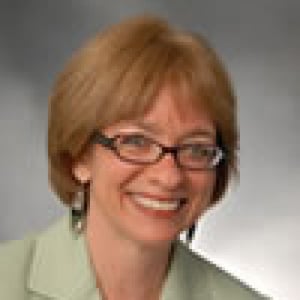
Chai R. Feldblum has served as a Commissioner of the U.S. Equal Employment Opportunity Commission since 2010, having been nominated to serve by President Barack Obama, and confirmed by the Senate, initially for a term ending on July 1, 2013. President Obama nominated her to serve a second term ending on July 1, 2018, and she was confirmed by the Senate on December 12, 2013.
Prior to her appointment to the EEOC, Commissioner Feldblum was a Professor of Law at the Georgetown University Law Center where she has taught since 1991. At Georgetown, she founded the Law Center's Federal Legislation and Administrative Clinic, which represented clients such as Catholic Charities USA, the National Disability Rights Network, and the Bazelon Center for Mental Health Law. She also founded and co-directed Workplace Flexibility 2010, a policy enterprise focused on finding common ground between employers and employees on workplace flexibility issues.
As Legislative Counsel at the American Civil Liberties Union from 1988 to 1991, Commissioner Feldblum played a leading role in helping to draft and negotiate the ground-breaking Americans with Disabilities Act of 1990. Later, as a law professor representing the Epilepsy Foundation, she was equally instrumental in drafting and negotiating the ADA Amendments Act of 2008.
Commissioner Feldblum has also worked to advance lesbian, gay, bisexual and transgender rights, was one of the drafters of the Employment Nondiscrimination Act, and is the first openly lesbian Commissioner of the EEOC. She clerked for Judge Frank Coffin of the First Circuit Court of Appeals and for Supreme Court Justice Harry A. Blackmun after receiving her J.D. from Harvard Law School. She received her B.A. degree from Barnard College.

Senior Scholar, Manhattan Institute; Professor of Law Emerita, University of San Diego
Gail Heriot is a Senior Scholar at the Manhattan Institute, a Professor of Law Emerita at the University of San Diego and the Chairman of the Board of the American Civil Rights Project. She served on the U.S. Commission on Civil Rights for 18 years. Her new book is entitled “Why We Walk on Eggshells: How Our Civil Rights Laws Stifle Our Public Discourse.”

Negative Legislation
Roberto J. Borgert
Modern commentators have spilled much ink on the undemocratic nature of congressional delegations to executive...
A View from the Top: DOL, EEOC, and NLRB
R. Alexander Acosta, John K. Bush, Nicholas Geale, Victoria Lipnic, Philip A. Miscimarra
Through regulation and enforcement, the Equal Employment Opportunity Commission, National Labor Relations Board and U.S....
Showcase Panel I: Youth, Employment, and the Law
Jennifer Walker Elrod, Richard A. Epstein, Chai Feldblum, Gail L. Heriot, J.H Verkerke
This panel will examine intergenerational equity issues raised by employment discrimination laws, including those protecting...