
Commissioner, Consumer Product Safety Commission
Robert (Bob) S. Adler is a Commissioner at the U. S. Consumer Product Safety Commission (CPSC). He was appointed to the agency by President Barack Obama in August 2009. His term runs through October 2014. Prior to his appointment, he served on the Obama Transition Team and co-authored a report on the CPSC for the Obama administration.
Prior to assuming office, Adler served as a professor of Legal Studies at the University of North Carolina as the Luther Hodges Jr., Scholar in Ethics and Law at Chapel Hill's Kenan-Flagler Business School. At the University of North Carolina, he served as the Associate Dean of the MBA Program and as Associate Dean for the School's Bachelor of Science in Business Administration Program. As a professor, he taught courses in business law, business ethics, business-government relations and negotiation. Bob won a university-wide teaching award, the Tanner Award, in 1996 and the undergraduate program's Distinguished Teaching Award in 1990. In 2004, he received the Gerald Barrett Faculty Award for outstanding teaching and service to the MBA Program.
Bob's academic research interests included product safety, product liability, regulation, commercial law, medical malpractice, and negotiation. His article, When David Meets Goliath: Dealing With Power Differentials in Negotiation, in the Spring 2000 issue of the Harvard Negotiation Law Review (co-authored with Elliot Silverstein) received the annual best article award by the CPR Institute for Dispute Resolution.
Prior to his service at UNC, he spent nine years as an attorney-advisor to two commissioners at the U.S. Consumer Product Safety Commission in Washington, D.C. Subsequently, he served as counsel to the Subcommittee on Health and the Environment of the Committee on Energy and Commerce in the U.S. House of Representatives. While on the subcommittee, he worked on legislation relating to product liability, childhood vaccines, the Food and Drug Administration, medical malpractice, and the Consumer Product Safety Commission.
Before his service at the CPSC, Bob served as a deputy attorney general for the Pennsylvania Justice Department, where he headed the southwest regional office of the Pennsylvania Bureau of Consumer Protection.
Bob has been involved in numerous consumer protection and education activities for many years. He was elected six times to the board of directors of Consumers Union, publisher of Consumer Reports magazine.
Bob graduated cum laude from the University of Pennsylvania in 1966 with a major in political science. He received a JD from the University of Michigan Law School in 1969.
Commissioner, Consumer Product Safety Commission
Nancy A. Nord was nominated by President George W. Bush to be a commissioner of the Consumer Product Safety Commission (CPSC) for a term that expires in October of 2012. The CPSC protects the public against unreasonable risks of injury and death associated with consumer products. She was confirmed by the Senate for that position on April 29, 2005 and was sworn into office on May 5, 2005. Ms. Nord also served as Acting Chairman of the CPSC from July 2006 until May 2009.
Ms. Nord was born and raised in Sioux Falls, SD. She holds a bachelor's degree from the University of Nebraska and a law degree from the George Washington University in Washington, D.C.
Ms. Nord has held a number of legal positions both in the federal government and in the private sector. Her federal experience includes service as General Counsel of the White House Council on Environmental Quality, counsel to the Commerce Committee of the U.S. House of Representatives and attorney at the Federal Communications Commission. In the private sector, she was the Director of Federal Affairs for the Eastman Kodak Company, practiced law with the Washington, DC law firm of Verner, Liipfert, Bernhard, McPherson and Hand, served as the executive director of the American Corporate Counsel Association and was Director of Consumer Affairs for the U.S. Chamber of Commerce.
Ms. Nord is married to the Honorable James S. Halpern, a judge on the U.S. Tax Court and the mother of one daughter. She resides in Washington, DC.
Shareholder, Brownstein Hyatt Farber Schreck, LLP
From Capitol Hill to Albuquerque, Hal Stratton is a familiar figure in the halls of government. He has spent over three decades navigating government—as the head of a federal agency, as a state attorney general, as a small business owner and as a successful litigator and government relations advisor.
Hal advises and counsels clients in the areas of mining, oil and gas, natural resources product safety regulation, products liability litigation, state and federal government relations, and multistate and class action litigation with an emphasis on product safety and liability as well as areas affected by state attorneys general. Hal also counsels clients concerning international trade, regulation and product health and safety.
In 1978, Hal was elected to the New Mexico House of Representatives at the age of 27 by defeating the House Majority Whip. During his four terms in the New Mexico House he served on a number of committees, including the Judiciary Committee, where he served as chairman; the Energy & Natural Resources Committee, where he served as vice chairman; and the Transportation and Rules Committees. In 1986, he was elected New Mexico’s attorney general—the only Republican to serve in that position since 1930.
While in the private practice of law, Hal has handled and litigated numerous matters involving oil and gas, federal and state grazing lease and condemnation rights, oil and gas tax and royalty valuation, asbestos landfill siting and matters with the Office of Aircraft Safety (now the National Business Center Aviation Management), among others. He has also handled a number of matters involving American Indian tribes.
Hal has served as an adjunct professor of law at George Mason University School of Law where he created a course on state attorneys general and multistate litigation and regulation. He is a Distinguished Military Graduate, served on active duty in the U.S. Army, and is the recipient of a number of awards including the American Legislative Exchange Council’s Legislator of the Year award and recognition as the National Right to Work Committee’s Statesman of the Year.

Dr. John Eastman is the former Henry Salvatori Professor of Law & Community Service and former Dean at Chapman University's Dale E. Fowler School of Law, where he had been a member of the faculty since 1999, specializing in Constitutional Law, Legal History, and Property. He is a founding director of the Center for Constitutional Jurisprudence, a public interest law firm affiliated with the Claremont Institute that he founded in 1999. He has a Ph.D. in Government from the Claremont Graduate School and a J.D. from the University of Chicago Law School, and a B.A. in Politics and Economics from the University of Dallas. He serves as the Chairman of the Board of the National Organization for Marriage.
Prior to joining the Chapman law faculty, Dr. Eastman served as a law clerk to the Honorable Clarence Thomas, Associate Justice, Supreme Court of the United States, and to the Honorable J. Michael Luttig, Judge, United States Court of Appeals for the Fourth Circuit and practiced law with the national law firm of Kirkland & Ellis. Dr. Eastman has also represented numerous clients in important constitutional law matters and has argued before the Supreme Court. On behalf of the Claremont Institute Center for Constitutional Jurisprudence, he has participated as amicus curiae before the Supreme Court of the United States, U.S. Courts of Appeals, and State Supreme Courts in more than one hundred cases of constitutional significance, including Boy Scouts of America v. Dale, Zelman v. Simmons-Harris (the school vouchers case), Kelo v. New London, Ct. (eminent domain), and Van Orden v. Perry (the 10 Commandments case). He has also appeared as an expert legal commentator on numerous television and radio programs, including C-SPAN, Fox News, PBS, NewsHour, and The O'Reilly Factor.
Of Counsel, Erickson & Sederstrom
Professional Positions
Former Member of National Association of Attorneys General Executive Committee (2002)
Member, Society of Attorneys General Emeritus (SAGE)
Washington Legal Foundation, Policy Advisory Board
Federalist Society, Member of the Federalism Subcommittee for Federalism and Separation of Powers
Former Member, TRANSLink Transmission Co., Board of Directors
Former Member, U.S. Chamber of Commerce Federalism Working Group
Former Chair, Nebraska Crime Commission
Honors and Accomplishments
Argued cases in the United States Supreme Court
Phi Beta Kappa
Republican Nominee for U.S. Senate in Nebraska (2000)
Founding Member of the Republican Attorneys General Association
Nebraska Fertilizer and Ag Chemical Institute's Government Official of the Year (2000)
Nebraska Coalition for Victims of Crime's Public Policy Award (1999)
Lincoln Independent Business Association's Business Champion Award (1997)
Lincoln Jaycees Outstanding Young Individual Award (1981)
Prior to Becoming of Counsel to Erickson & Sederstrom, P.C.
Attorney General of Nebraska (1991-2003)
Legal Counsel to the Governor of Nebraska (1979-1983)
University of Nebraska, Lincoln, B.A. (1970)
Harvard Business School, M.B.A. (1974)
Harvard Law School, J.D. (cum laude) (1974)
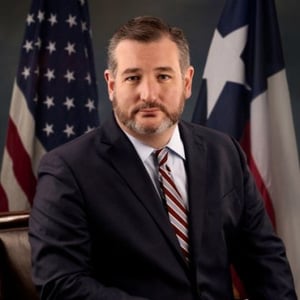
United States Senator, Texas
Ted Cruz represents 28 million Texans in the U.S. Senate as a passionate fighter for limited government and economic growth. He has authored 39 legislative measures signed into law. Recent victories include expanding 529 college savings accounts to allow parents to save for K–12 public, private, and religious education, leading the effort to repeal Obamacare’s individual mandate, imposing sanctions on terrorists who use civilians as human shields, designating North Korea as a state sponsor of terrorism, reauthorizing and reforming NASA, ensuring the availability of additional records to help solve civil rights cold cases, supporting thousands of Texas jobs, and leading the fight to confirm principled constitutionalists to our courts.
Senator Cruz is a graduate of Princeton University and Harvard Law School, a former law clerk to Chief Justice William Rehnquist, and former solicitor general of Texas. He has argued nine cases before the Supreme Court. In November of 2018, he was re-elected to the Senate by the people of Texas.
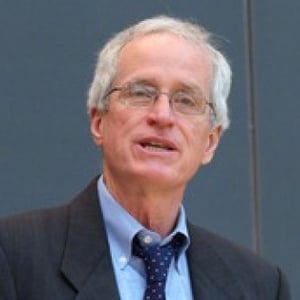
Lecturer, Harvard Law School
James E. Tierney is the former Attorney General of Maine and a Lecturer at Harvard Law School where he teaches a course on the role of state attorneys general while directing the Harvard Attorney General clinic. For thirteen years he was the Director of the National State Attorneys General Program at Columbia Law School, and he has also taught courses at Boston College Law School, Northeastern Law School and the University of Maine School of Law.
Mr. Tierney served as the Attorney General of Maine from 1980 until 1990. During his ten years as Attorney General of Maine, Mr. Tierney played an active role in the National Association of Attorneys General (NAAG) and has instructed newly elected state Attorneys General on the effective performance of their office. Mr. Tierney has also served as a Special Prosecutor in Florida, Pennsylvania, Minnesota and Vermont and, on behalf of NAAG, has authored an analysis of the operations of state grand jury practice throughout the United States. He travels regularly to visit in offices of attorney general where he conducts ethics seminars for incumbent attorneys general and their staffs.
Tierney has served on the Board of both the American Judicature Society and was a member of the Board of Commentators of the Courtroom Television Network. In April of 2006, Professor Tierney was selected as the Columbia Law School Public Interest Professor of the Year. This award, which is given to the faculty member or administrator who has most supported and inspired a significant portion of the public interest law student community, is selected by a vote of students.
Tierney is married to Maine author Elizabeth Strout. He has five children and eight grandchildren.
Executive Vice President, Mackinac Center for Public Policy
Michael J. Reitz is executive vice president of the Mackinac Center for Public Policy, where he oversees execution of the Center's strategic plan. The Mackinac Center is an independent, nonprofit research and educational institute based in Midland, Michigan, with the mission of improving the quality of life for all Michigan citizens by promoting sound solutions to state and local policy questions.
Prior to joining the Mackinac Center in 2012, Reitz spent eight years with the Freedom Foundation in Washington state as its general counsel and director of labor policy. Reitz established the Freedom Foundation’s Theodore L. Stiles Center for Liberty, where he litigated for accurate elections, defended the First Amendment rights of individuals, fought against governmental abuses of power and wrote extensively on constitutional law. Reitz championed a number of reforms to modify public-sector collective bargaining and to protect workers from coercive union monopolies.
An advocate of accountable government, Reitz has worked actively to promote transparency in state and local government, serving on the board of the Michigan Coalition for Open Government, a nonprofit organization that educates citizens about their rights to access public records and attend public meetings. While in Washington state, Reitz led a research and litigation effort to expose the governor's secretive practice of withholding records under claims of executive privilege.
Reitz frequently comments on public policy issues and has been cited by The Wall Street Journal, the Los Angeles Times, The Boston Globe, The Seattle Times and other publications. He is a co-author of "To Protect and Maintain Individual Rights," a reference guide to the Declaration of Rights in the Washington Constitution. Reitz received his law degree from Oak Brook College of Law and Government Policy. He is a member of the Washington bar and is admitted to practice before the U.S. Supreme Court and the U.S. Court of Appeals for the Ninth Circuit.
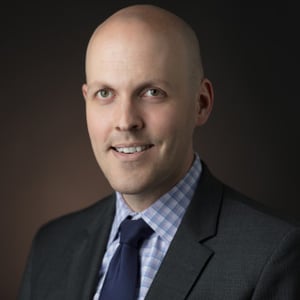
Partner, Barr & Klein PLLC
Steve Klein, a partner at Barr & Klein PLLC, is an experienced free speech attorney who has successfully fought for the First Amendment rights of his clients against local, state and federal regulators. As a lobbyist, Steve’s advocacy has led to the successful amendment of state laws to respect political engagement and prevented the enactment of laws that burden it. Steve has published articles in several legal journals, and his commentary has appeared in The Wall Street Journal, The Washington Times, The Detroit News, and other outlets. Steve earned a bachelors degree in politics at Hillsdale College and a law degree from Ave Maria School of Law, where he served as Managing Editor of the Ave Maria Law Review. He is licensed to practice law in the District of Columbia, Illinois and Michigan.
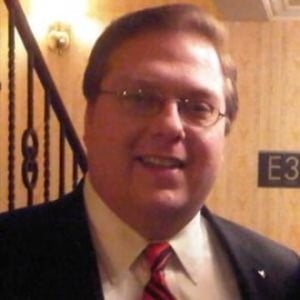
Senior Advisor to the Regional Administrator, United States Environmental Protection Agency

Laurence A. Tisch Professor of Law and Director, Classical Liberal Institute, New York University School of Law; Director, Classical Liberal Institute, Civitas Institute University of Texas at Austin
Richard A. Epstein is the inaugural Laurence A. Tisch Professor of Law at NYU School of Law. Prior to his joining the faculty, he was a visiting law professor at NYU from 2007 through 2009. He served as the Peter and Kirstin Bedford Senior Fellow at the Hoover Institution from 2000 to 2024. Since 2024 to the present he is a senior lecturer at the Civitas Institute at the University of Texas—Austin. Epstein is also the James Parker Hall Distinguished Service Professor of Law Emeritus and a senior lecturer at the University of Chicago. His initial law school appointment was at the University of Southern California from 1968 to 1972. Epstein received an LL.D., h.c. from the University of Ghent, 2003. He has been a member of the American Academy of Arts and Sciences since 1985 and was a Senior Fellow of the Center for Clinical Medical Ethics at the University of Chicago Division of Biological Sciences, also from 1983. to 2022 He served as editor of the Journal of Legal Studies from 1981 to 1991, and of the Journal of Law and Economics from 1991-2001. From 2001 to 2010 he was a director of the John M. Olin Program in Law and Economics at the University of Chicago.
His newest book, The Myth of Birthright Citizenship: What the Fourteenth Amendment Really Says was published in 2026 (Encounter Books). Prior to that he has published many books including, The Dubious Morality of the Modern Administrative State (Roman & Littlefield 2020).Earlier he published th Classical Liberal Constitution: The Uncertain Quest for Limited Government (Harvard 2014) iHis previous books include Design for Liberty: Private Property, Public Administration and the Rule of Law (Harvard 2011); The Case Against the Employee Free Choice Act (Hoover 2009); Supreme Neglect: How to Revive the Constitutional Protection of Property Rights (Oxford 2008); Antitrust Decrees in Theory and Practice: Why Less is More (AEI 2007); Overdose: How Excessive Government Regulation Stifles Pharmaceutical Innovation (Yale University Press. 2006); How Progressives Rewrote the Constitution (Cato 2006); Cases and Materials on Torts (Aspen Law & Business; 8th ed. 2004); Skepticism and Freedom: A Modern Case for Classical Liberalism (University of Chicago, 2003); Torts (Aspen Law & Business 1999); Principles for a Free Society: Reconciling Individual Liberty with the Common Good (Perseus Books, 1998): Mortal Peril: Our Inalienable Rights to Health Care (Addison-Wesley, 1997); Simple Rules for a Complex World (Harvard, 1995); Bargaining With the State (Princeton, 1993); Forbidden Grounds: The Case Against Employment Discrimination Laws (Harvard , 1992); Takings: Private Property and the Power of Eminent Domain (Harvard, 1985); and Modern Products Liability Law (Greenwood Press, 1980). He has also edited(with Catherine M. Sharkey) Cases and Materials on the Law of Torts (10th edition 2012).
Professor Epstein has written numerous articles on a wide range of legal and interdisciplinary subjects. He has taught courses in administrative law, antitrust law, civil procedure, communications, constitutional law, contracts, corporations, criminal law, employment discrimination law, environmental law, food and drug law health law and policy, legal history, labor law, property, real estate development and finance, jurisprudence, labor law; land use planning, patents, individual, estate and corporate taxation, Roman Law; torts, and workers' compensation.
Professor Epstein also writes a regular column for Civitas Institute, which also sponsors his podcast, The Libertarian with Charles C.W. Cooke, and Law Talk, with Cooke and John Yoo. He also does a podcast with John Batchelor. And appears regularly on the Freedom File with Judge Andrew Napolitano.

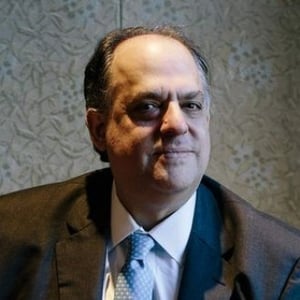
Director of Litigation and Senior Attorney, Hamilton Lincoln Law Institute
Theodore H. Frank is director at the Hamilton Lincoln Law Institute and the Center for Class Action Fairness. Frank founded and ran CCAF as a non-profit, public interest law firm in 2009.
Frank has won several landmark appeals and tens of millions of dollars for consumers and other plaintiffs through his class action work. Adam Liptak of The New York Times calls Frank “the leading critic of abusive class action settlements” and the American Lawyer Litigation Daily referred to him as “the indefatigable scourge of underwhelming class action settlements.”
Previously, Frank clerked for the Honorable Frank H. Easterbrook on the Seventh Circuit Court of Appeals, and was a litigator at firms in Washington and Los Angeles and a resident fellow at the American Enterprise Institute. Frank is a frequent public speaker and has testified before Congress multiple times on legal issues. He has been profiled by The Wall Street Journal, Forbes, GQ, and the ABA Journal, among other publications.
In 2008, Frank was elected to membership in the American Law Institute. He also serves on the Executive Committee of the Federalist Society Litigation Practice Group. Frank graduated from The University of Chicago Law School in 1994 with high honors and as a member of the Order of the Coif and the Law Review. He is a member of the District of Columbia Bar and the state bars of California and Illinois.
Senior Fellow, Manhattan Institute's Center for Legal Policy
 Marie Gryphon is a Senior Fellow with the Center for Legal Policy. As an attorney in private practice, she worked on ERISA, securities, class action, commercial contract, legal malpractice, and constitutional law cases. She has also been a legal and policy analyst with the Cato Institute, working on issues related to education policy.
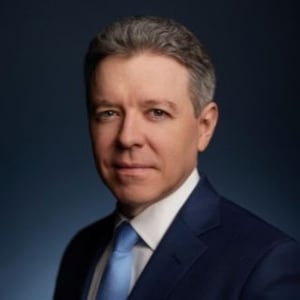
Former Solicitor General of Texas
Jonathan F. Mitchell is Principal at Mitchell Law PLLC. He received his law degree with high honors from the University of Chicago Law School, where he was an articles editor of The University of Chicago Law Review and a member of the Order of the Coif.
After graduating from law school, Mr. Mitchell clerked for Judge J. Michael Luttig of the U.S. Court of Appeals for the Fourth Circuit and for Justice Antonin Scalia of the Supreme Court of the United States. He then served as an Attorney-Adviser in the Office of Legal Counsel of the United States Department of Justice from 2003 through 2006. After leaving the Department of Justice, Mr. Mitchell served as a Visiting Researcher at Georgetown University Law Center, a Visiting Assistant Professor at the University of Chicago Law School from 2006 through 2008, and an Assistant Professor of Law at George Mason University from 2008 through 2010.
In 2010, Mr. Mitchell was appointed Solicitor General of Texas, a position he held until January 2015. After leaving the Texas Solicitor General’s office, Mr. Mitchell served as the Searle Visiting Professor of Law at the University of Texas School of Law before joining the Hoover Institution as a Visiting Fellow from 2015 to 2016. Mr. Mitchell also served as a Visiting Professor of Law at Stanford Law School before opening his own law firm in 2018.
Mr. Mitchell has published numerous works of scholarship in top-10 law journals, and he has written articles on textualism, national-security law, criminal law and procedure, judicial review and judicial federalism, and the legality of stare decisis in constitutional adjudication.
Mr. Mitchell has argued eight times before the Supreme Court of the United States, and more than 20 times in the federal courts of appeals. He has also argued before Supreme Court of Texas and in numerous trial courts. Mr. Mitchell has authored the principal merits brief in 11 Supreme Court cases, and has written and submitted more than 20 amicus curiae briefs in the Supreme Court.
Mr. Mitchell devised the novel enforcement mechanism in the Texas Heartbeat Act, also known as Senate Bill 8, which avoids pre-enforcement judicial review by prohibiting government officials from enforcing the statute and empowering private citizens to bring lawsuits against those who violate it. This produced an end-run around Roe v. Wade and allowed Texas and other states to impose pre-viability abortion bans despite the continued existence of Roe.
Judge, United States Court of Appeals, District of Columbia Circuit
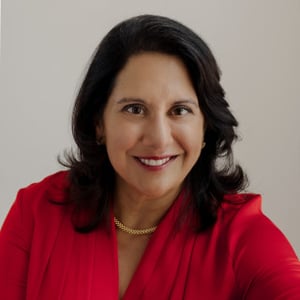
Judge Rao was appointed to the United States Court of Appeals for the District of Columbia Circuit in March 2019. She graduated from Yale College in 1995 and the University of Chicago Law School in 1999. Following graduation, she served as a law clerk to Judge J. Harvie Wilkinson III of the U.S. Court of Appeals for the Fourth Circuit and, in the 2001 October Term, as law clerk to Justice Clarence Thomas of the U.S. Supreme Court. Between her clerkships, Judge Rao served as counsel for nominations and constitutional law to the U.S. Senate Committee on the Judiciary. In 2002, she joined the international arbitration group of Clifford Chance LLP in London, England. From 2005-2006, she served as Special Assistant and Associate White House Counsel to President George W. Bush. From 2006 to 2017, Judge Rao was a professor at the Antonin Scalia Law School at George Mason University, where she taught constitutional law, legislation and statutory interpretation, and the history and foundations of the administrative state. In 2014, she founded the Center for the Study of the Administrative State, a non-profit Center that promotes academic scholarship and public policy debates about administrative law. In July 2017, she was appointed to serve as the Administrator of the Office of Information and Regulatory Affairs in the Office of Management Budget. She served in this position until her appointment to the D.C. Circuit.

Consumer Product Safety Commission (CPSC)
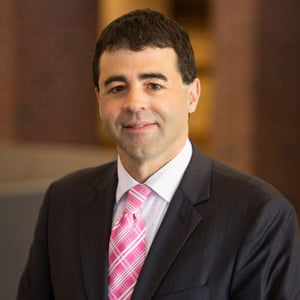
Robert S. Adler, Nancy A. Nord, Harold "Hal" Stratton
Administrative Law & Regulation Practice Group
The enacted Consumer Products Safety Improvement Act of 2008 mandated the promulgation of over 40...
The Role of the State Attorney General
John C. Eastman, Donald B. Stenberg, Ted Cruz, James E. Tierney
Federalism & Separation of Powers Practice Group Teleforum
The proper role of the state attorneys general is a recurring question for the national...
New York’s Highest Court Backtracks on Property Owners’ Rights in Eminent Domain Case
Craig Mausler
In In re Goldstein v. New York State Urban Development Corp., New York State used its...
Washington Supreme Court Upholds School Funding Structure: Disparities in School Employee Pay Not Unconstitutional
Michael J. Reitz
On November 12, 2009, the Washington State Supreme Court unanimously declined to declare as unconstitutional...
Montana Supreme Court: Physician-Assisted Suicide Is an End-of-Life Option
Rita L. Marker
On the last day of 2009, Montana’s Supreme Court handed down its ruling in Baxter v....
West Virginia Court Expands COPPERWELD Doctrine
Jarrett Gerlach
In the 1984 case Copperweld Corp. v. Independence Tube Corp.,1 the United States Supreme Court forever altered...
CAPERTON Decision Prompts Changes to Judicial Recusal Standards and Procedures
Stephen R. Klein
In June of 2009, the Supreme Court decided the case Caperton v. A. T. Massey Coal...
A Survey of California Furlough Lawsuits
Jason J. Jarvis
The current economic crisis is forcing states to adopt creative means of balancing their budgets....
A Recent History of Medical Malpractice and Civil Justice Reform in Illinois: The Five Year Wait for the Supreme Court to Decide the Fate of Reform in LEBRON V. GOTTLIEB MEMORIAL HOSPITAL
Christopher Hage
Recently, the Illinois Supreme Court ruled on the validity of the bipartisan Medical Malpractice Reform...
Young Legal Scholars Paper Presentations
Miriam Baer, Richard A. Epstein, Nita Farahany, Theodore "Ted" Frank, Marie Gryphon, Jason Mazzone, Jonathan Mitchell, Neomi Rao
12th Annual Faculty Conference
Prof. Miriam Baer, Brooklyn Law School “Cooperation’s Cost” Mr. Theodore Frank, Center for Class Action...