
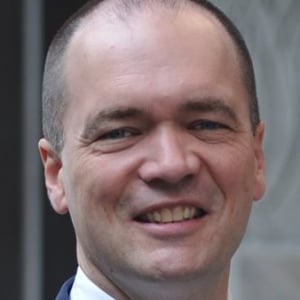
Professor of Law, High Point School of Law
Scott Gaylord directs High Point Law’s Appellate Litigation Clinic and serves as a Professor of Law, teaching Constitutional Law and related upper-level elective courses. The Appellate Clinic works with students to write and file briefs in significant court cases, including appeals before the United States Supreme Court.
Professor Gaylord is a prominent Constitutional Law scholar with an impressive background in both academia and legal practice. He has authored or co-authored 18 substantial law review articles, co-authored a Constitutional Law casebook, and has written more than 35 amicus briefs to the U.S. Supreme Court and federal circuit courts on prominent national cases involving religious liberty and free speech. He is a frequent speaker on constitutional law and First Amendment topics at law schools across the country and has regularly provided commentary on ongoing constitutional issues to national media outlets, including th eNew York Times, USA Today, the Diane Rehm Show, NPR, The National Constitution Center, and Bloomberg Law.
Professor Gaylord also started an appellate advocacy clinic at his former law school and currently serves on the North Carolina Chief Justice’s Commission on Professionalism, along with holding many other service and leadership roles. Prior to joining the academy in 2007, he practiced complex civil and commercial litigation with the Charlotte firm of Robinson Bradshaw & Hinson, and he clerked for Judge Edith H. Jones on the United States Court of Appeals for the Fifth Circuit.
Professor Gaylord earned his B.A. in philosophy and English, summa cum laude, from Colgate University, his Ph.D. in philosophy from the University of North Carolina at Chapel Hill, and his J.D. from Notre Dame Law School, where he also graduated summa cum laude.

Executive Vice President, Mackinac Center for Public Policy
Michael J. Reitz is executive vice president of the Mackinac Center for Public Policy, where he oversees execution of the Center's strategic plan. The Mackinac Center is an independent, nonprofit research and educational institute based in Midland, Michigan, with the mission of improving the quality of life for all Michigan citizens by promoting sound solutions to state and local policy questions.
Prior to joining the Mackinac Center in 2012, Reitz spent eight years with the Freedom Foundation in Washington state as its general counsel and director of labor policy. Reitz established the Freedom Foundation’s Theodore L. Stiles Center for Liberty, where he litigated for accurate elections, defended the First Amendment rights of individuals, fought against governmental abuses of power and wrote extensively on constitutional law. Reitz championed a number of reforms to modify public-sector collective bargaining and to protect workers from coercive union monopolies.
An advocate of accountable government, Reitz has worked actively to promote transparency in state and local government, serving on the board of the Michigan Coalition for Open Government, a nonprofit organization that educates citizens about their rights to access public records and attend public meetings. While in Washington state, Reitz led a research and litigation effort to expose the governor's secretive practice of withholding records under claims of executive privilege.
Reitz frequently comments on public policy issues and has been cited by The Wall Street Journal, the Los Angeles Times, The Boston Globe, The Seattle Times and other publications. He is a co-author of "To Protect and Maintain Individual Rights," a reference guide to the Declaration of Rights in the Washington Constitution. Reitz received his law degree from Oak Brook College of Law and Government Policy. He is a member of the Washington bar and is admitted to practice before the U.S. Supreme Court and the U.S. Court of Appeals for the Ninth Circuit.
Senior Fellow, Hoover Institution of Stanford University
Counsel, Sutherland Asbill & Brennan LLP
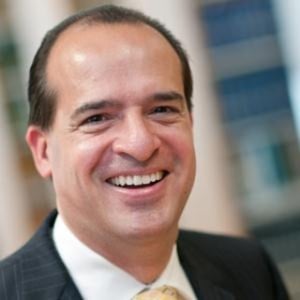
Professor of Law and Rouse Chairholder, Antonin Scalia Law School, George Mason University
Professor Miller holds an Allison and Dorothy Rouse Chair in Law at the Antonin Scalia Law School. An elected member of the American Law Institute and a research member of the European Corporate Governance Institute, Professor Miller is also a Fellow and the Co-Director of the Program on Organizations, Business and Markets at the Classical Liberal Institute at the New York University Law School, an Adjunct Fellow at the Manhattan Institute, and an Affiliated Scholar at the James Wilson Institute on Natural Rights and the American Founding. Prior to joining George Mason University in 2025, Professor Miller was the F. Arnold Daum Chair in Corporate Finance and Law and a Professor of Law at the University of Iowa College of Law, where he had also served as the Associate Dean for Faculty Development.
Professor Miller’s research concerns corporate and securities law, the economic analysis of law, and the philosophy of law. He is particularly interested in applying economic concepts and methods to understand provisions in contracts between sophisticated commercial parties. He has written on material adverse effect clauses under Delaware law, the fiduciary duties of corporate directors, director oversight liability, the history and development of Delaware corporate law, and much more. His articles and working papers are available on his SSRN page.
Professor Miller has been cited by federal and state courts in the United States, including the Delaware Supreme Court and the Delaware Court of Chancery, as well as by the Commercial Court of the United Kingdom and the Ontario Superior Court of Justice (Commercial List) in Canada. Additionally, he is a member of the Committee on Mergers, Acquisitions & Corporate Control Contests and a former chair of the Corporation Law Committee of the New York City Bar Association.
Earlier in his career, Professor Miller was a Professor of Law at the Villanova University School of Law and the Associate Director of the Matthew J. Ryan Center for the Study of Free Institutions and the Public Good at Villanova University. He has been a Visiting Professor of Law at the University of Pennsylvania Law School, a Visiting Assistant Professor of Law at the Cardozo Law School, and an Olin Fellow in Law and Economics at the Columbia Law School.
Before entering academia, Professor Miller was an associate with Wachtell, Lipton, Rosen & Katz. He earned his J.D. from the Yale Law School where he was a Senior Editor of the Yale Law Journal and an Olin Fellow in Law, Economics and Public Policy. He earned his M.A. and M.Phil. degrees in philosophy from Columbia University, where he held a Mellon Fellowship in the Humanities from the Woodrow Wilson National Fellowship Foundation and a Western Civilization Fellowship from the Intercollegiate Studies Institute. He earned his B.A. in philosophy and mathematics from Columbia College.

After Change in Personnel, Michigan Supreme Court Reverses Itself in Major Insurance Decision
Lance Boldrey
In 2008, the Michigan Supreme Court, by a 4-3 majority, issued an opinion in United...
Alabama Courts Will Not Second-Guess Legislature’s Voting Procedures
Berton Spence
A holding that Alabama’s largest county has been collecting an occupational tax repealed by the...
North Carolina High Court Is First to Overturn Restriction on Felony Gun Ownership
Scott W. Gaylord
The United States Supreme Court’s 2008 decision in District of Columbia v. Heller1 focused national...
Washington Supreme Court Upholds At-Will Employment: Employees Who Object to “Bad Boss” Are Not Protected from Termination
Michael J. Reitz
The Washington State Supreme Court narrowly affirmed an employer’s right to terminate employees who disagree...
New York Court Weakens Product Liability Defenses
Craig Mausler
Passante v. Agway Consumer Products
In Passante v. Agway Consumer Products, the plaintiff, an employee of a loading company, was...
Judicial Funding Mandates Related to Education Sharply Decline
Eric A. Hanushek, Alfred A. Lindseth
Twenty years ago a new kind of educational lawsuit designed to ensure “adequacy of funding”...
Key Issues for Pennsylvanians: What is at Stake with the Pennsylvania Supreme Court
Nathan Fox, Brian T. Guthrie, Bill O'Shea
Pennsylvanians will soon elect a new justice to serve a ten-year term on the Pennsylvania...
Dollars and Sense: Understanding the New Jersey Supreme Court’s Role in Education and Housing
Frederic J. Giordano, Shauna Peterson, Robert T. Miller
The State of New Jersey has experienced increasing economic difficulties in recent years. Its state...
Proposals for Changing Judicial Selection in Wisconsin
After three years in a row of vigorously contested state supreme court races, numerous proposals...
ABA-NCSC Summit Addresses Challenges to Fairness, Impartiality of State Courts
Joshua Daniel Davey
In May, delegations from thirty-seven states and territories participated in a national summit held in...