

Former Attorney General, State of Arizona
Mark Brnovich served as Arizona's 26th Attorney General from 2015 to 2023. He was first inaugurated in 2015, and again in 2019 after winning re-election. Mark has spent most of his professional life serving as a prosecutor at the local, state, and federal levels. Mark met his wife Susan while they both worked as prosecutors for the Maricopa County Attorney's office. Mark worked in the Gang/Repeat Offender Unit and prosecuted many difficult and high profile cases from 1992 to 1998. He then went on to work as an Assistant Attorney General with the Arizona Attorney General's Office from 1998 to 2003, where he developed an expertise in gambling law. Brnovich later went on to serve as an Assistant United States Attorney for the District of Arizona where he prosecuted public integrity crimes, as well as crimes occurring in Indian Country.
Brnovich has also been a Judge Pro Tem of Maricopa County Superior Court, a Command Staff Judge Advocate in the U.S. Army National Guard, the Director for Constitutional Government at the Goldwater Institute, and the Director of the Arizona Department of Gaming, a law enforcement agency that investigates illegal gambling activity, as well as working with tribal regulators to ensure the integrity of tribal gaming.
Brnovich is known for restoring public confidence in the office of "Arizona's Top Cop" and for assembling some of the nation's most talented public servants for his administration. Mark argued at the United States Supreme Court in defense of the "one-person, one-vote" principle, was featured on 60 Minutes in defense of capital punishment, and has initiated national public education efforts to combat human sex trafficking.
Brnovich has been recognized by the National Federation of Independent Business as a "Champion of Small Business." and was elected by his bi-partisan colleagues to serve as the Chairman of the Conference of Western Attorneys General.
Mark's wife Susan was recently appointed by the United States Senate to serve as a U.S. District Judge for the District of Arizona. He has two teenage daughters and lives in Phoenix.
Senior Director and Global Relations Lead, Uber Technologies Inc.
Mark Floyd is the Sr. Director and Global Labor Relations lead for Uber Technologies. Mr. Floyd has more than 30 years of legal experience devoted to the area of labor and employment global matters; experience that includes private practice as well as senior in-house positions for U.S as well as International companies. Mr. Floyd is a frequent speaker, trainer, and author on matters concerning today’s labor and employee relations environment.

Judge, United States Court of Appeals, Third Circuit
Judge Hardiman was appointed to the United States Court of Appeals for the Third Circuit on January 9, 2007 and was confirmed by the Senate (95-0) on March 15, 2007. Prior to becoming an appellate judge, Judge Hardiman served as a trial judge on the United States District Court for the Western District of Pennsylvania as of November 1, 2003. In 2008, Chief Justice John Roberts appointed Judge Hardiman to the Information Technology Committee of the Judicial Conference of the United States. Judge Hardiman was appointed Chairman of the IT Committee in 2013 and served in that capacity until September 2021. In 2021 he was appointed by the Director of the Administrative Office of the United States Courts to serve as Chair of the Judiciary IT Security Task Force, which completed its work in fall 2023. Chief Justice Roberts appointed Judge Hardiman to the Board of the Federal Judicial Center to serve from March 2020 until March 2024. As part of his work with the Center, Judge Hardiman now serves as Editor in Chief for the Manual for Complex Civil Litigation, Fifth.
Before entering judicial service, Judge Hardiman handled a wide variety of litigation matters in state and federal trial and appellate courts as a partner at Reed Smith LLP (1999-2003), a partner at Titus & McConomy LLP (1996-1999), and as an associate with its predecessor firm, Cindrich & Titus (1992-1996). Judge Hardiman began his legal career as an associate in the Washington, D.C. office of Skadden, Arps, Slate, Meagher & Flom (1990-1992).
A 1987 honors graduate of the University of Notre Dame, Judge Hardiman received his law degree in 1990 from the Georgetown University Law Center, where he served as a Notes and Comments Editor on the Georgetown Law Journal. In 2012, Judge Hardiman was elected as a member of the American Law Institute and was elected to its Council in 2019 and its Executive Committee in 2025. Judge Hardiman regularly teaches a seminar on Advanced Constitutional Law at Duquesne University School of Law and a one-week course entitled “Constitutional Law: the First and Second Amendments” at Georgetown University Law Center.
A native of Waltham, Massachusetts, Judge Hardiman has chambers in Pittsburgh, Pennsylvania. He and his wife Lori married in 1992 and have three children.
Immigration Law and Policy Fellow, Cornell Law School
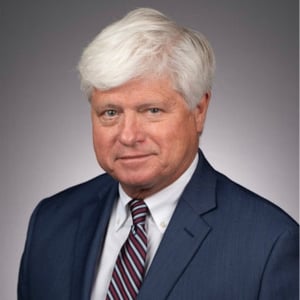
Randel Johnson has worked on employment and immigration law and policy issues for over twenty-five years, bringing a broad perspective from working in the executive agencies, on Capitol Hill, and in the private sector. Deeply involved in past efforts on comprehensive immigration reform, including testifying in both the U.S. House of Representatives and the U.S. Senate, his experience includes working as the senior vice president at the U.S. Chamber of Commerce, labor counsel to the House Education and Labor Committee, and special assistant to the solicitor of labor at the U.S. Department of Labor. He was also a partner at the law firm of Seyfarth Shaw and most recently a judge on the Administrative Review Board at the Labor Department.

Director of Government Affairs, AFL-CIO
Bill Samuel is the Director of Government Affairs at the AFL-CIO. In addition to serving as the chief lobbyist for the 10 million-member labor federation, Bill chairs the AFL-CIO’s Legislative Committee, which is made up of legislative representatives from the federation’s 54 affiliated unions.
Bill returned to the labor movement in January 2001 after a five-year stint in the Clinton Administration, serving first as Associate Deputy Secretary of Labor under Robert Reich and then Alexis Herman. In 2000, Bill joined the White House staff as senior policy advisor to Vice President Al Gore, serving as the Vice President’s principal advisor on labor policy issues and liaison to organized labor.
From 1984 to 1995, Bill was the chief lobbyist at the United Mine Workers of America. While at the UMWA, Bill lead the successful campaign to win passage of federal legislation guaranteeing lifetime health benefits to over 200,000 retired miners and their dependents. Prior to joining the UMWA, Bill was a legislative representative for the National Treasury Employees Union and the American Federation of Government Employees.
He is a graduate of Oberlin College and the George Washington University Law Center.
Former Attorney General, State of Arizona
Mark Brnovich served as Arizona's 26th Attorney General from 2015 to 2023. He was first inaugurated in 2015, and again in 2019 after winning re-election. Mark has spent most of his professional life serving as a prosecutor at the local, state, and federal levels. Mark met his wife Susan while they both worked as prosecutors for the Maricopa County Attorney's office. Mark worked in the Gang/Repeat Offender Unit and prosecuted many difficult and high profile cases from 1992 to 1998. He then went on to work as an Assistant Attorney General with the Arizona Attorney General's Office from 1998 to 2003, where he developed an expertise in gambling law. Brnovich later went on to serve as an Assistant United States Attorney for the District of Arizona where he prosecuted public integrity crimes, as well as crimes occurring in Indian Country.
Brnovich has also been a Judge Pro Tem of Maricopa County Superior Court, a Command Staff Judge Advocate in the U.S. Army National Guard, the Director for Constitutional Government at the Goldwater Institute, and the Director of the Arizona Department of Gaming, a law enforcement agency that investigates illegal gambling activity, as well as working with tribal regulators to ensure the integrity of tribal gaming.
Brnovich is known for restoring public confidence in the office of "Arizona's Top Cop" and for assembling some of the nation's most talented public servants for his administration. Mark argued at the United States Supreme Court in defense of the "one-person, one-vote" principle, was featured on 60 Minutes in defense of capital punishment, and has initiated national public education efforts to combat human sex trafficking.
Brnovich has been recognized by the National Federation of Independent Business as a "Champion of Small Business." and was elected by his bi-partisan colleagues to serve as the Chairman of the Conference of Western Attorneys General.
Mark's wife Susan was recently appointed by the United States Senate to serve as a U.S. District Judge for the District of Arizona. He has two teenage daughters and lives in Phoenix.
Senior Director and Global Relations Lead, Uber Technologies Inc.
Mark Floyd is the Sr. Director and Global Labor Relations lead for Uber Technologies. Mr. Floyd has more than 30 years of legal experience devoted to the area of labor and employment global matters; experience that includes private practice as well as senior in-house positions for U.S as well as International companies. Mr. Floyd is a frequent speaker, trainer, and author on matters concerning today’s labor and employee relations environment.
Judge, United States Court of Appeals, Third Circuit
Judge Hardiman was appointed to the United States Court of Appeals for the Third Circuit on January 9, 2007 and was confirmed by the Senate (95-0) on March 15, 2007. Prior to becoming an appellate judge, Judge Hardiman served as a trial judge on the United States District Court for the Western District of Pennsylvania as of November 1, 2003. In 2008, Chief Justice John Roberts appointed Judge Hardiman to the Information Technology Committee of the Judicial Conference of the United States. Judge Hardiman was appointed Chairman of the IT Committee in 2013 and served in that capacity until September 2021. In 2021 he was appointed by the Director of the Administrative Office of the United States Courts to serve as Chair of the Judiciary IT Security Task Force, which completed its work in fall 2023. Chief Justice Roberts appointed Judge Hardiman to the Board of the Federal Judicial Center to serve from March 2020 until March 2024. As part of his work with the Center, Judge Hardiman now serves as Editor in Chief for the Manual for Complex Civil Litigation, Fifth.
Before entering judicial service, Judge Hardiman handled a wide variety of litigation matters in state and federal trial and appellate courts as a partner at Reed Smith LLP (1999-2003), a partner at Titus & McConomy LLP (1996-1999), and as an associate with its predecessor firm, Cindrich & Titus (1992-1996). Judge Hardiman began his legal career as an associate in the Washington, D.C. office of Skadden, Arps, Slate, Meagher & Flom (1990-1992).
A 1987 honors graduate of the University of Notre Dame, Judge Hardiman received his law degree in 1990 from the Georgetown University Law Center, where he served as a Notes and Comments Editor on the Georgetown Law Journal. In 2012, Judge Hardiman was elected as a member of the American Law Institute and was elected to its Council in 2019 and its Executive Committee in 2025. Judge Hardiman regularly teaches a seminar on Advanced Constitutional Law at Duquesne University School of Law and a one-week course entitled “Constitutional Law: the First and Second Amendments” at Georgetown University Law Center.
A native of Waltham, Massachusetts, Judge Hardiman has chambers in Pittsburgh, Pennsylvania. He and his wife Lori married in 1992 and have three children.
Immigration Law and Policy Fellow, Cornell Law School
Randel Johnson has worked on employment and immigration law and policy issues for over twenty-five years, bringing a broad perspective from working in the executive agencies, on Capitol Hill, and in the private sector. Deeply involved in past efforts on comprehensive immigration reform, including testifying in both the U.S. House of Representatives and the U.S. Senate, his experience includes working as the senior vice president at the U.S. Chamber of Commerce, labor counsel to the House Education and Labor Committee, and special assistant to the solicitor of labor at the U.S. Department of Labor. He was also a partner at the law firm of Seyfarth Shaw and most recently a judge on the Administrative Review Board at the Labor Department.
Director of Government Affairs, AFL-CIO
Bill Samuel is the Director of Government Affairs at the AFL-CIO. In addition to serving as the chief lobbyist for the 10 million-member labor federation, Bill chairs the AFL-CIO’s Legislative Committee, which is made up of legislative representatives from the federation’s 54 affiliated unions.
Bill returned to the labor movement in January 2001 after a five-year stint in the Clinton Administration, serving first as Associate Deputy Secretary of Labor under Robert Reich and then Alexis Herman. In 2000, Bill joined the White House staff as senior policy advisor to Vice President Al Gore, serving as the Vice President’s principal advisor on labor policy issues and liaison to organized labor.
From 1984 to 1995, Bill was the chief lobbyist at the United Mine Workers of America. While at the UMWA, Bill lead the successful campaign to win passage of federal legislation guaranteeing lifetime health benefits to over 200,000 retired miners and their dependents. Prior to joining the UMWA, Bill was a legislative representative for the National Treasury Employees Union and the American Federation of Government Employees.
He is a graduate of Oberlin College and the George Washington University Law Center.
Reed Larson Professor of Labor Law, Ave Maria School of Law and, National Right To Work Legal Defense Foundation
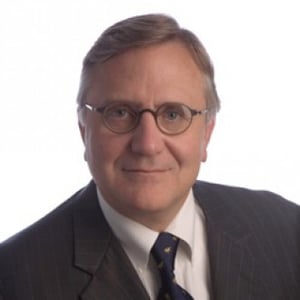
John Raudabaugh is a labor lawyer and former Member of the U.S. National Labor Relations Board. He was a partner in law firms representing management concerning domestic and international labor law matters. Currently, he represents employees seeking relief from union and/or employer unfair labor practices. Mr. Raudabaugh has presented testimony to both Senate and House Committees regarding labor law reform. Professor Raudabaugh teaches Labor Law and a Labor Law Practicum at the Ave Maria School of Law. He is a graduate of the Wharton School of Finance and Commerce and New York State School of Industrial and Labor Relations with B.S. and M.S. degrees in labor economics and a J.D. degree from the University of Virginia Law School of Law.

Professor of Law, University of San Diego School of Law (Retired)
Gail Heriot is a recently retired law professor from the University of San Diego. She also served as a member of the U.S. Commission on Civil Rights from 2007 to 2025. She is also the chairman of the board of the American Civil Rights Project and the chair emerita of the Civil Rights practice group at the Federalist Society for Law & Public Policy.
Professor Heriot is a prolific writer in the area of civil rights. She is the author of many law review articles. She is also the editor (along with Maimon Schwarzschild) of the 2021 anthology, A Dubious Expediency: How Race Preferences Damage Higher Education. Her upcoming book is entitled, Why We Walk on Eggshell: How Our Civil Rights Laws Helped Bring About the Woke Era—And the Trump Era, Too.
Her writings for a general audience have appeared in the Wall Street Journal, the San Diego Union-Tribune, the National Review and many other newspapers and magazines.
In 1996, she co-chaired the successful “Yes on Proposition 209” campaign, which amended the California Constitution to prohibit state-sponsored discrimination or preferential treatment based on race, sex, color, ethnicity or national origin. In 2020, she co-chaired the “No on Proposition 16” campaign, which successfully prevented Proposition 209’s repeal.
Of Counsel, Kirkland & Ellis LLP
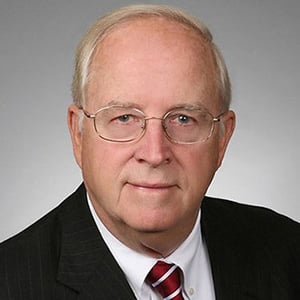
John focuses his practice on labor and employment litigation and counseling employers on mergers, acquisitions and consolidations, downsizing, plant relocations, union representation elections, labor negotiations, strikes and lockouts, NLRB unfair labor practices, arbitration, wage and hour, wrongful discharge and equal employment. John, a former NLRB General Counsel and Labor Department official, was selected as a global leader in the field of employment & labor law in The International Who's Who of Labor and Employment Lawyers by Law Business Research, The Best Lawyers in America, and Super Lawyers.
John earned his B.A. from Brown University and both his J.D. and LL.M. from Georgetown.

Attorney at Law
James P. Scanlan is an attorney specializing in the use of statistics in litigation. He has published about 60 articles on legal or public policy issues. About half have pertained to the use of statistics in the law and the social and medical sciences, especially regarding the patterns by which standard measures of differences between outcome rates tend to be systematically affected by the prevalence of an outcome. Most notably, the rarer an outcome the greater tends to be the relative difference in experiencing and the smaller tends to be the relative difference in avoiding it, a pattern termed “Scanlan’s Rule” by scholars in the UK. Thus, for example, improvements in health or healthcare tend to decrease relative differences in favorable health outcomes, while increasing relative differences in the corresponding adverse outcomes; increasing loan approval rates tends to decrease relative differences in approval rates while increasing relative differences in rejection rates. Without recognizing this and related patterns it is not possible to soundly interpret data on group differences in outcome rates.

CEO, Sharf & Associates
As EEOC's Chief Psychologist in the mid-1970s, Jim drafted the Uniform Guidelines on Employee Selection Procedures He subsequently returned to government to serve as Special Assistant to EEOC's Chairman for whom he drafted the "race norming" prohibition in the Civil Rights Act of 1991.
Jim has successfully defended the validity generalization (VG) of measures of cognitive ability (Taylor v. James River Corp., 1989 WL 165953 (S.D. Ala. 1989; McCoy v. Willamette Industries, Inc. U.S. District Court for the Southern District of Georgia, Savannah Dicision, Civil Action No. CV401-075 (2001)) - his VG reasoning having been affirmed by the Fifth Circuit (Bernard v. Gulf Oil Corp., 890 F.2d. 735, 744 (5th Cir. 1989). Jim has also successfully defended validity generalization challenged by OFCCP (TIMKEN) and EEOC (SMECO).
For four years, Jim was industrial psychology's expert writing the licensing exam required of all psychologists in the U.S. and Canada. Jim was awarded the M. Scott Myers Award for Applied Research in the Workplace by the Society for Industrial/ Organizational Psychology for developing the valid, legally defensible employment tests used by TSA to hire fifty-thousand airport security screeners.
With Metrics Reporting, Inc., Jim and the Competency Validation Center team are now partnering with the Hope Street Group nonprofit network both to document and to assess legally defensible, job-related competencies in the healthcare and manufacturing sectors. GOALS: Employers will be able to communicate Talent Supply Chain competencies; Individuals will accumulate stackable credentials documenting their competencies; and Talent Suppliers will align competency-based education with employer requirements.
Professor of Law, University of San Diego School of Law (Retired)
Gail Heriot is a recently retired law professor from the University of San Diego. She also served as a member of the U.S. Commission on Civil Rights from 2007 to 2025. She is also the chairman of the board of the American Civil Rights Project and the chair emerita of the Civil Rights practice group at the Federalist Society for Law & Public Policy.
Professor Heriot is a prolific writer in the area of civil rights. She is the author of many law review articles. She is also the editor (along with Maimon Schwarzschild) of the 2021 anthology, A Dubious Expediency: How Race Preferences Damage Higher Education. Her upcoming book is entitled, Why We Walk on Eggshell: How Our Civil Rights Laws Helped Bring About the Woke Era—And the Trump Era, Too.
Her writings for a general audience have appeared in the Wall Street Journal, the San Diego Union-Tribune, the National Review and many other newspapers and magazines.
In 1996, she co-chaired the successful “Yes on Proposition 209” campaign, which amended the California Constitution to prohibit state-sponsored discrimination or preferential treatment based on race, sex, color, ethnicity or national origin. In 2020, she co-chaired the “No on Proposition 16” campaign, which successfully prevented Proposition 209’s repeal.
Of Counsel, Kirkland & Ellis LLP
John focuses his practice on labor and employment litigation and counseling employers on mergers, acquisitions and consolidations, downsizing, plant relocations, union representation elections, labor negotiations, strikes and lockouts, NLRB unfair labor practices, arbitration, wage and hour, wrongful discharge and equal employment. John, a former NLRB General Counsel and Labor Department official, was selected as a global leader in the field of employment & labor law in The International Who's Who of Labor and Employment Lawyers by Law Business Research, The Best Lawyers in America, and Super Lawyers.
John earned his B.A. from Brown University and both his J.D. and LL.M. from Georgetown.
Attorney at Law
James P. Scanlan is an attorney specializing in the use of statistics in litigation. He has published about 60 articles on legal or public policy issues. About half have pertained to the use of statistics in the law and the social and medical sciences, especially regarding the patterns by which standard measures of differences between outcome rates tend to be systematically affected by the prevalence of an outcome. Most notably, the rarer an outcome the greater tends to be the relative difference in experiencing and the smaller tends to be the relative difference in avoiding it, a pattern termed “Scanlan’s Rule” by scholars in the UK. Thus, for example, improvements in health or healthcare tend to decrease relative differences in favorable health outcomes, while increasing relative differences in the corresponding adverse outcomes; increasing loan approval rates tends to decrease relative differences in approval rates while increasing relative differences in rejection rates. Without recognizing this and related patterns it is not possible to soundly interpret data on group differences in outcome rates.
CEO, Sharf & Associates
As EEOC's Chief Psychologist in the mid-1970s, Jim drafted the Uniform Guidelines on Employee Selection Procedures He subsequently returned to government to serve as Special Assistant to EEOC's Chairman for whom he drafted the "race norming" prohibition in the Civil Rights Act of 1991.
Jim has successfully defended the validity generalization (VG) of measures of cognitive ability (Taylor v. James River Corp., 1989 WL 165953 (S.D. Ala. 1989; McCoy v. Willamette Industries, Inc. U.S. District Court for the Southern District of Georgia, Savannah Dicision, Civil Action No. CV401-075 (2001)) - his VG reasoning having been affirmed by the Fifth Circuit (Bernard v. Gulf Oil Corp., 890 F.2d. 735, 744 (5th Cir. 1989). Jim has also successfully defended validity generalization challenged by OFCCP (TIMKEN) and EEOC (SMECO).
For four years, Jim was industrial psychology's expert writing the licensing exam required of all psychologists in the U.S. and Canada. Jim was awarded the M. Scott Myers Award for Applied Research in the Workplace by the Society for Industrial/ Organizational Psychology for developing the valid, legally defensible employment tests used by TSA to hire fifty-thousand airport security screeners.
With Metrics Reporting, Inc., Jim and the Competency Validation Center team are now partnering with the Hope Street Group nonprofit network both to document and to assess legally defensible, job-related competencies in the healthcare and manufacturing sectors. GOALS: Employers will be able to communicate Talent Supply Chain competencies; Individuals will accumulate stackable credentials documenting their competencies; and Talent Suppliers will align competency-based education with employer requirements.

Laurence A. Tisch Professor of Law and Director, Classical Liberal Institute, New York University School of Law; Director, Classical Liberal Institute, Civitas Institute University of Texas at Austin
Richard A. Epstein is the Laurence A. Tisch Professor of Law, at New York University, a senior research fellow at the Civitas Institute at the University of Texas Austin, and a senior Lecturer, the University of Chicago. He received an LL.D., h.c . from the University of Ghent, 2003 , and an LLD h.c . from the University of Siegen in 2018 and the Bradley Prize in 2011. He has been a member of the American Academy of Arts and Sciences since 1985. He has edited both the Journal of Legal Studies (1981-1991) and the Journal of Law and Economics (1991-2001). He is also a founder and director of the Classical Liberal Institute at NYU Law School. His most recent book is The Classical Liberal Constitution: The Uncertain Quest for Limited Government (2014). His other books include Takings: Private Property and the Power of Eminent Domain ( 1985); Bargaining with the State (1993); Simple Rules for a Complex World (1995); Principles for a Free Society: Reconciling Individual Liberty and the Common Good (1998); Skepticism and Freedom: A Modern Theory of Classical Liberalism (2003); Design for Liberty: Private Property, Public Administration and the Rule of Law (2011), and most recently, The Myth of Birthright citizenship—and Beyond (2026). He has taught courses in , administrative law, antitrust, constitutional, contracts, environmental law, land use planning; real property, torts and water law. He has written and spoken extensively on a wide range of topics, and is writes a regular column for Defining Ideas.
Judge, United States Court of Appeals, Sixth Circuit
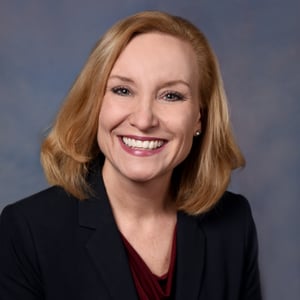
The Honorable Joan L. Larsen is a judge of the United States Court of Appeals for the Sixth Circuit. She was nominated by the President on May 8, 2017 and confirmed by the Senate on November 1, 2017. Before her appointment to the federal bench, Judge Larsen served two terms as a Justice of the Michigan Supreme Court, where she was the court’s liaison to Michigan’s drug, sobriety, mental health and veteran’s courts.
Before becoming a judge, Judge Larsen was a faculty member at the University of Michigan Law School, where she was also Special Counsel to the Dean and received the L. Hart Wright Award for Excellence in Teaching. Judge Larsen's research and teaching interests included constitutional law, criminal procedure, statutory interpretation, and presidential power. Judge Larsen continues to assist the law school as the adviser to the Henry M. Campbell Moot Court Competition.
Judge Larsen began her legal career as a law clerk to the Hon. David B. Sentelle of the United States Court of Appeals for the D.C. Circuit and to Justice Antonin Scalia of the Supreme Court of the United States. Following her clerkships, she joined the law firm of Sidley Austin, where she was a member of the Constitutional, Criminal, and Civil Litigation Section. She later served as Deputy Assistant Attorney General in the United States Department of Justice, Office of Legal Counsel.
Judge Larsen graduated first in her class from Northwestern University School of Law, where she served as articles editor of the Northwestern University Law Review and earned the John Paul Stevens Award for Academic Excellence. She received her B.A., with highest honors, from the University of Northern Iowa.
Reed Larson Professor of Labor Law, Ave Maria School of Law and, National Right To Work Legal Defense Foundation
John Raudabaugh is a labor lawyer and former Member of the U.S. National Labor Relations Board. He was a partner in law firms representing management concerning domestic and international labor law matters. Currently, he represents employees seeking relief from union and/or employer unfair labor practices. Mr. Raudabaugh has presented testimony to both Senate and House Committees regarding labor law reform. Professor Raudabaugh teaches Labor Law and a Labor Law Practicum at the Ave Maria School of Law. He is a graduate of the Wharton School of Finance and Commerce and New York State School of Industrial and Labor Relations with B.S. and M.S. degrees in labor economics and a J.D. degree from the University of Virginia Law School of Law.
Director of Government Affairs, AFL-CIO
Bill Samuel is the Director of Government Affairs at the AFL-CIO. In addition to serving as the chief lobbyist for the 10 million-member labor federation, Bill chairs the AFL-CIO’s Legislative Committee, which is made up of legislative representatives from the federation’s 54 affiliated unions.
Bill returned to the labor movement in January 2001 after a five-year stint in the Clinton Administration, serving first as Associate Deputy Secretary of Labor under Robert Reich and then Alexis Herman. In 2000, Bill joined the White House staff as senior policy advisor to Vice President Al Gore, serving as the Vice President’s principal advisor on labor policy issues and liaison to organized labor.
From 1984 to 1995, Bill was the chief lobbyist at the United Mine Workers of America. While at the UMWA, Bill lead the successful campaign to win passage of federal legislation guaranteeing lifetime health benefits to over 200,000 retired miners and their dependents. Prior to joining the UMWA, Bill was a legislative representative for the National Treasury Employees Union and the American Federation of Government Employees.
He is a graduate of Oberlin College and the George Washington University Law Center.

General Counsel, International Association of Machinists and Aerospace Workers
Mark Schneider is the General Counsel of the International Association of Machinists and Aerospace Workers. Prior to that he was Counsel for Political Programs and Associate General Counsel of the Service Employees International Union, and a partner at Jenner & Block LLC, where he was co-chair of the Telecommunications Practice Group and specialized in trial and appellate litigation. Mr. Schneider also has been an Adjunct Professor of Law at the University of Chicago.
Mr. Schneider has a B.A. from Swarthmore College, an M.Phil. from St. Edmund Hall, Oxford University, and a J.D. from Columbia University School of Law. He was a law clerk to Judge James Oakes of the United States Court of Appeals for the Second Circuit, and Harry Blackmun of the United States Supreme Court.

Labor & Employment Law: The Battle for the Gig Economy
Mark Brnovich, Mark Floyd, Thomas M. Hardiman, Randel K. Johnson, Bill Samuel
2016 National Lawyers Convention
The “gig" or “on demand" economy may be the fastest growing segment of our economy,...
Labor & Employment Law: The Battle for the Gig Economy
Mark Brnovich, Mark Floyd, Thomas M. Hardiman, Randel K. Johnson, Bill Samuel
2016 National Lawyers Convention
The “gig" or “on demand" economy may be the fastest growing segment of our economy,...
Full Board Decisions of the National Labor Relations Board: Fiscal Year 2016
John N. Raudabaugh
Federalist Society Review, Volume 17, Issue 3
Note from the Editor: This article critically reflects on the most recent term of the National...
Topics
Department of Labor's Radical Reinterpretation of the Persuader Rule is Enjoined: A Victory for Fairness, Separation of Powers, and for the Attorney-Client Privilege
Last week, Senior U.S. District Court Judge Sam Cummings of the Northern District of Texas...
Disparate Impact: Reducing Innovation in the Workplace?
Gail L. Heriot, John S. Irving, James Scanlan, James Sharf
Fourth Annual Executive Branch Review Conference
The slogan "Personnel is policy" reflects the principle that hiring the right people is one...
Disparate Impact: Reducing Innovation in the Workplace?
Gail L. Heriot, John S. Irving, James Scanlan, James Sharf
Fourth Annual Executive Branch Review Conference
The slogan "Personnel is policy" reflects the principle that hiring the right people is one...
Topics
Implications of the Friedrichs Non-Decision
With the death of Justice Scalia, most Court watchers expected a 4-4 split in Friedrichs...
Topics
Free Speech for All*
The Supreme Court’s anti-climactic order affirming the Ninth Circuit’s ruling in Friedrichs v. California Teachers...
Topics
Article: Why I'm Fighting My Teachers Union
Writing in the Wall Street Journal, Harlan Elrich, one of the 10 California teachers suing to...
Labor & Employment: 80th Anniversary of the National Labor Relations Act & Congressional Action
Richard A. Epstein, Joan Larsen, John N. Raudabaugh, Bill Samuel, Mark Schneider
2015 National Lawyers Convention
Our nation's private sector labor law is a product of the New Deal and the...