
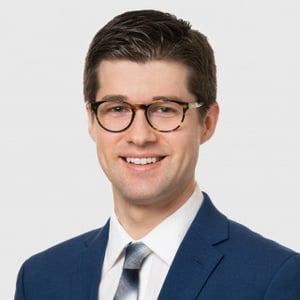
Director, Americas Program, Center for Strategic and International Studies
Ryan C. Berg is director of the Americas Program and head of the Future of Venezuela Initiative at the Center for Strategic and International Studies. He is also an adjunct professor at the Catholic University of America and a course coordinator at the United States Foreign Service Institute. His research focuses on U.S.-Latin America relations, strategic competition and defense policy, authoritarian regimes, armed conflict and transnational organized crime, and trade and development issues. Previously, Dr. Berg was a research fellow at the American Enterprise Institute, where he helped lead its Latin America Studies Program, as well as visiting research fellow at the University of Oxford’s Changing Character of War Programme. Dr. Berg was a Fulbright scholar in Brazil and is a Council on Foreign Relations Term Member. He has been published in a variety of peer-reviewed academic and policy-oriented journals, including The Lancet, Migration and Development, the SAIS Review of International Affairs, and the Georgetown Security Studies Review. His articles have appeared in Foreign Affairs, Foreign Policy, CNN.com, Los Angeles Times, and World Politics Review, among other outlets. He routinely testifies before the Senate Foreign Relations Committee and the House Foreign Affairs Committee. Dr. Berg obtained a PhD and an MPhil in political science and an MSc in global governance and diplomacy from the University of Oxford, where he was a Senior Hulme Fellow. Earlier, he obtained a BA in government and theology from Georgetown University. He is fluent in Spanish and Portuguese and is conversational in Slovenian.
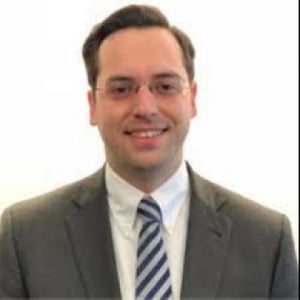
CEO & Chairman of the Board, NeWay Capital and Próspera
Erick started his career in investment banking at Brown Brothers Harriman & Co, before working as an M&A advisor for AG Edwards & Sons (now Wells Fargo). He then joined Ernst & Young’s London advisory practice. After that, he led the creation of multiple business units as CFO of LATAM at the Borealis Group, and as an entrepreneur in the financial services industry. Erick is a member of the Society for International Development, in Washington DC.
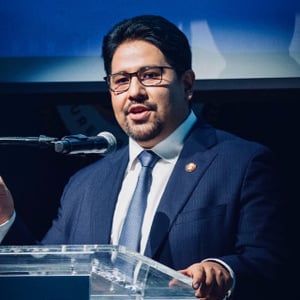
Executive Director, Center for a Secure Free Society
Joseph M. Humire is a national security expert, specialized in analyzing Transregional Threat Networks in the Western Hemisphere. Mr. Humire provides regular briefings on countering China, Russia, and Iran’s authoritarian influence in Latin America and the Caribbean, as well as combating the convergence of international terrorism and transnational organized crime. Mr. Humire has testified numerous times before the U.S. Congress as well as the European and Canadian Parliament and in 2023 was awarded an Order of Defense Merit Medial from the Colombian Armed Forces.
Mr. Humire is a regular national security commentator and contributor for a variety of English and Spanish language media and has a regular weekly radio segment called the #NewWorldReport on the nationally syndicated show and podcast CBS Eye on the World with John Batchelor and is the host of the Border Wars Podcast available on all digital platforms. Mr. Humire has published in both languages for various newspapers and academic journals across the Americas and released his first book in 2014 titled Iran’s Strategic Penetration of Latin America, published by Lexington Books. More recently, in 2019, he wrote the foreword for the latest book by Dr. Max G. Manwaring, titled Confronting the Evolving Global Security Landscape published by Praeger Security International.
Mr. Humire currently serves as the executive director of the national security think tank—Center for a Secure Free Society (SFS)—based in the Washington D.C. metropolitan area. Prior to SFS, he served in the U.S. Marine Corps with a combat tour in Iraq and a multinational training exercise UNITAS in Latin America and the Caribbean. After leaving the military, he graduated from George Mason University with a degree in Economics and Global Affairs. Mr. Humire began building SFS’s global network of more than 100 security scholars in almost 30 countries worldwide as the Director of Institute Relations at the Atlas Economic Research Foundation. He is currently a visiting fellow at The Heritage Foundation’s Allison Center for National Security and a visiting professor-of-practice at Florida International University’s Adam Smith Center for Economic Freedom.
Director, Americas Program, Center for Strategic and International Studies
Ryan C. Berg is director of the Americas Program and head of the Future of Venezuela Initiative at the Center for Strategic and International Studies. He is also an adjunct professor at the Catholic University of America and a course coordinator at the United States Foreign Service Institute. His research focuses on U.S.-Latin America relations, strategic competition and defense policy, authoritarian regimes, armed conflict and transnational organized crime, and trade and development issues. Previously, Dr. Berg was a research fellow at the American Enterprise Institute, where he helped lead its Latin America Studies Program, as well as visiting research fellow at the University of Oxford’s Changing Character of War Programme. Dr. Berg was a Fulbright scholar in Brazil and is a Council on Foreign Relations Term Member. He has been published in a variety of peer-reviewed academic and policy-oriented journals, including The Lancet, Migration and Development, the SAIS Review of International Affairs, and the Georgetown Security Studies Review. His articles have appeared in Foreign Affairs, Foreign Policy, CNN.com, Los Angeles Times, and World Politics Review, among other outlets. He routinely testifies before the Senate Foreign Relations Committee and the House Foreign Affairs Committee. Dr. Berg obtained a PhD and an MPhil in political science and an MSc in global governance and diplomacy from the University of Oxford, where he was a Senior Hulme Fellow. Earlier, he obtained a BA in government and theology from Georgetown University. He is fluent in Spanish and Portuguese and is conversational in Slovenian.
CEO & Chairman of the Board, NeWay Capital and Próspera
Erick started his career in investment banking at Brown Brothers Harriman & Co, before working as an M&A advisor for AG Edwards & Sons (now Wells Fargo). He then joined Ernst & Young’s London advisory practice. After that, he led the creation of multiple business units as CFO of LATAM at the Borealis Group, and as an entrepreneur in the financial services industry. Erick is a member of the Society for International Development, in Washington DC.
Executive Director, Center for a Secure Free Society
Joseph M. Humire is a national security expert, specialized in analyzing Transregional Threat Networks in the Western Hemisphere. Mr. Humire provides regular briefings on countering China, Russia, and Iran’s authoritarian influence in Latin America and the Caribbean, as well as combating the convergence of international terrorism and transnational organized crime. Mr. Humire has testified numerous times before the U.S. Congress as well as the European and Canadian Parliament and in 2023 was awarded an Order of Defense Merit Medial from the Colombian Armed Forces.
Mr. Humire is a regular national security commentator and contributor for a variety of English and Spanish language media and has a regular weekly radio segment called the #NewWorldReport on the nationally syndicated show and podcast CBS Eye on the World with John Batchelor and is the host of the Border Wars Podcast available on all digital platforms. Mr. Humire has published in both languages for various newspapers and academic journals across the Americas and released his first book in 2014 titled Iran’s Strategic Penetration of Latin America, published by Lexington Books. More recently, in 2019, he wrote the foreword for the latest book by Dr. Max G. Manwaring, titled Confronting the Evolving Global Security Landscape published by Praeger Security International.
Mr. Humire currently serves as the executive director of the national security think tank—Center for a Secure Free Society (SFS)—based in the Washington D.C. metropolitan area. Prior to SFS, he served in the U.S. Marine Corps with a combat tour in Iraq and a multinational training exercise UNITAS in Latin America and the Caribbean. After leaving the military, he graduated from George Mason University with a degree in Economics and Global Affairs. Mr. Humire began building SFS’s global network of more than 100 security scholars in almost 30 countries worldwide as the Director of Institute Relations at the Atlas Economic Research Foundation. He is currently a visiting fellow at The Heritage Foundation’s Allison Center for National Security and a visiting professor-of-practice at Florida International University’s Adam Smith Center for Economic Freedom.
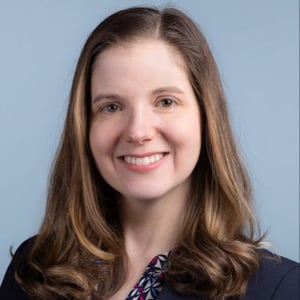
Vice President and Deputy Chief Counsel, U.S. Chamber Litigation Center, U.S. Chamber of Commerce
Jennifer B. Dickey is vice president and deputy chief counsel at the U.S. Chamber Litigation Center, the litigation arm of the U.S. Chamber of Commerce. Dickey handles a variety of litigation matters for the Chamber.
Dickey joined the Chamber following her service as Acting Assistant Attorney General and Principal Deputy Assistant Attorney General in the Civil Division at the U.S. Department of Justice. She also previously served as Deputy Associate Attorney General, providing strategic oversight of the Civil Division, Civil Rights Division, and Foreign Claims Settlement Commission, as well as Special Assistant to the President and Associate Counsel to the President. In the latter capacity, she provided legal advice on a wide array of executive actions and rulemakings, civil litigation, and judicial nominations.
Dickey also practiced law at Kirkland & Ellis LLP before her government service. She was a commercial and appellate litigator, representing businesses in federal and state courts.
Earlier in her career, Dickey served as a law clerk for the Honorable Clarence Thomas of the Supreme Court of the United States and the Honorable William H. Pryor Jr. of the United States Court of Appeals for the Eleventh Circuit.
Dickey earned her law degree magna cum laude from Duke University School of Law, where she was an Executive Editor of the Duke Law Journal, and her undergraduate degree magna cum laude from Dartmouth College.
Professor of Law, Widener University Commonwealth Law School
Counsel, Lehotsky Keller Cohn LLP
Shannon Grammel is a litigator with experience at all levels of federal and state courts.
Ms. Grammel has represented both private- and public-sector clients in a broad array of substantive legal areas, including constitutional law, administrative law, election law, and complex commercial litigation. Ms. Grammel has authored briefs before the Supreme Court of the United States, several federal courts of appeals, multiple state supreme courts, and federal and state trial courts. She has also argued in state appellate court and has participated in both federal- and state-court trials.
Before joining Lehotsky Keller Cohn LLP, Ms. Grammel served as Deputy Solicitor General of Kansas. Before that, she was a member of the Supreme Court & Appellate group in Latham & Watkins LLP’s Washington D.C. office.
Ms. Grammel served as a law clerk for Justice Brett M. Kavanaugh of the Supreme Court of the United States and Judge J. Harvie Wilkinson III of the U.S. Court of Appeals for the Fourth Circuit. Ms. Grammel earned her law degree from Stanford Law School, where she was President of the Stanford Law Review.
Senior Attorney, Institute for Free Speech
Brett Nolan is a Senior Attorney at the Institute for Free Speech, a public interest law firm that defends the First Amendment rights of those engaged in political speech and advocacy around the country.
Before joining the Institute, Brett served as the Principal Deputy Solicitor General of Kentucky, where he represented the Commonwealth in a wide variety of high-stakes litigation at every level of state and federal court. In that role, Brett led a successful challenge against the Department of Treasury over the constitutionality of a federal law limiting the ability of states to modify their tax codes, and he helped secure a U.S. Supreme Court victory that upheld a state’s constitutional right to defend its interests in federal court.
Prior to that, Brett served as the Deputy General Counsel to the former Governor of Kentucky, where he advised the governor and other executive branch officials on legal and policy issues and represented them in litigation. Brett clerked for Judge John Nalbandian of the U.S. Court of Appeals for the Sixth Circuit and Judge Karen K. Caldwell of the U.S. District Court for the Eastern District of Kentucky. Between clerkships, he worked in private practice. Brett received his law degree from the University of Chicago Law School, where he graduated with High Honors and was an editor of The University of Chicago Law Review.
Partner, Bailey Glasser LLP
Greg Porter has extensive trial and class action experience in complex pension, 401(k) plan, and employee stock ownership plan (ESOPs) lawsuits in federal court. Greg has led Bailey Glasser’s ERISA and trust practice to major trial and appellate victories, including seminal decisions in the Seventh and Fourth Circuit Courts of Appeal and a $30 million trial judgment that broke new ground for ESOPs. With co-counsel, the firm’s ERISA practice won a 9-0 decision in the Supreme Court, Intel Corp v. Sulyma, that established key statute of limitations rights for employees in ERISA cases.
Greg has recovered hundreds of millions of dollars on behalf of employees who lost retirement savings in 401(k) plans and ESOPs. He understands complex financial transactions, investments, and instruments.
Greg has also developed techniques for successfully investigating and prosecuting complex lawsuits involving business valuation, securities lending, hedge funds, and private equity. He has argued appeals in the Second, Fourth, Sixth and Eighth U.S. Circuit Courts of Appeal.
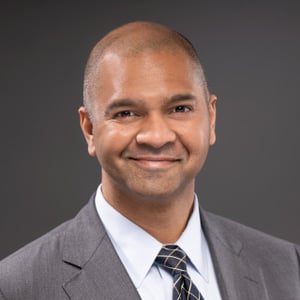
Senior Fellow, Stand Together Trust
Vikrant Reddy is a senior fellow at Stand Together Trust, specializing in the area of criminal justice reform. Reddy previously served as a senior policy analyst at the Texas Public Policy Foundation (TPPF), where he managed the launch of TPPF’s national Right on Crime initiative in 2010. He has worked as a research assistant at the Cato Institute, as a judicial clerk to the Hon. Gina M. Benavides in Texas, and as an attorney in private practice. He is a member of the State Bar of Texas, and he serves on the Executive Committee of the Criminal Law Practice Group of the Federalist Society. He is also an appointee to the U.S. Commission on Civil Rights Texas State Advisory Committee.
Reddy’s research and scholarly opinions have appeared in a range of national media outlets, including USA Today, National Review, The Federalist, and others.
Reddy earned his law degree from the Southern Methodist University School of Law. He received his undergraduate degree from the University of Texas at Austin.
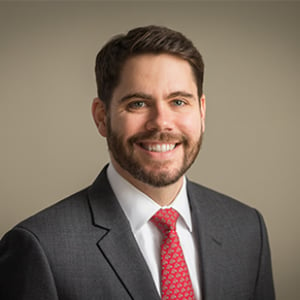
Partner, Consovoy McCarthy PLLC
Mr. Weir is an experienced litigator who focuses on constitutional and regulatory matters. He has particular expertise in cases involving the First and Fourteenth Amendments, civil rights statutes, and challenges to federal agency actions. He has briefed and presented oral argument in state and federal courts across the country, including in the Supreme Court of the United States. He was trial counsel and part of the team that prevailed before the Supreme Court in the landmark case Students for Fair Admissions, Inc. v. Harvard College and University of North Carolina.
Since 2015, Mr. Weir has been an adjunct professor for the Administrative Law and Supreme court clinics at the Antonin Scalia Law School at George Mason University. He is a former law clerk to Judge Carlos T. Bea of the United States Court of Appeals for the Ninth Circuit and Judge Anthony J. Trenga of the United States District Court for the Eastern District of Virginia. He earned his A.B. cum laude from Georgetown University and his J.D. summa cum laude from George Mason University School of Law.
Vice President and Deputy Chief Counsel, U.S. Chamber Litigation Center, U.S. Chamber of Commerce
Jennifer B. Dickey is vice president and deputy chief counsel at the U.S. Chamber Litigation Center, the litigation arm of the U.S. Chamber of Commerce. Dickey handles a variety of litigation matters for the Chamber.
Dickey joined the Chamber following her service as Acting Assistant Attorney General and Principal Deputy Assistant Attorney General in the Civil Division at the U.S. Department of Justice. She also previously served as Deputy Associate Attorney General, providing strategic oversight of the Civil Division, Civil Rights Division, and Foreign Claims Settlement Commission, as well as Special Assistant to the President and Associate Counsel to the President. In the latter capacity, she provided legal advice on a wide array of executive actions and rulemakings, civil litigation, and judicial nominations.
Dickey also practiced law at Kirkland & Ellis LLP before her government service. She was a commercial and appellate litigator, representing businesses in federal and state courts.
Earlier in her career, Dickey served as a law clerk for the Honorable Clarence Thomas of the Supreme Court of the United States and the Honorable William H. Pryor Jr. of the United States Court of Appeals for the Eleventh Circuit.
Dickey earned her law degree magna cum laude from Duke University School of Law, where she was an Executive Editor of the Duke Law Journal, and her undergraduate degree magna cum laude from Dartmouth College.
Professor of Law, Widener University Commonwealth Law School
Counsel, Lehotsky Keller Cohn LLP
Shannon Grammel is a litigator with experience at all levels of federal and state courts.
Ms. Grammel has represented both private- and public-sector clients in a broad array of substantive legal areas, including constitutional law, administrative law, election law, and complex commercial litigation. Ms. Grammel has authored briefs before the Supreme Court of the United States, several federal courts of appeals, multiple state supreme courts, and federal and state trial courts. She has also argued in state appellate court and has participated in both federal- and state-court trials.
Before joining Lehotsky Keller Cohn LLP, Ms. Grammel served as Deputy Solicitor General of Kansas. Before that, she was a member of the Supreme Court & Appellate group in Latham & Watkins LLP’s Washington D.C. office.
Ms. Grammel served as a law clerk for Justice Brett M. Kavanaugh of the Supreme Court of the United States and Judge J. Harvie Wilkinson III of the U.S. Court of Appeals for the Fourth Circuit. Ms. Grammel earned her law degree from Stanford Law School, where she was President of the Stanford Law Review.
Senior Attorney, Institute for Free Speech
Brett Nolan is a Senior Attorney at the Institute for Free Speech, a public interest law firm that defends the First Amendment rights of those engaged in political speech and advocacy around the country.
Before joining the Institute, Brett served as the Principal Deputy Solicitor General of Kentucky, where he represented the Commonwealth in a wide variety of high-stakes litigation at every level of state and federal court. In that role, Brett led a successful challenge against the Department of Treasury over the constitutionality of a federal law limiting the ability of states to modify their tax codes, and he helped secure a U.S. Supreme Court victory that upheld a state’s constitutional right to defend its interests in federal court.
Prior to that, Brett served as the Deputy General Counsel to the former Governor of Kentucky, where he advised the governor and other executive branch officials on legal and policy issues and represented them in litigation. Brett clerked for Judge John Nalbandian of the U.S. Court of Appeals for the Sixth Circuit and Judge Karen K. Caldwell of the U.S. District Court for the Eastern District of Kentucky. Between clerkships, he worked in private practice. Brett received his law degree from the University of Chicago Law School, where he graduated with High Honors and was an editor of The University of Chicago Law Review.
Partner, Bailey Glasser LLP
Greg Porter has extensive trial and class action experience in complex pension, 401(k) plan, and employee stock ownership plan (ESOPs) lawsuits in federal court. Greg has led Bailey Glasser’s ERISA and trust practice to major trial and appellate victories, including seminal decisions in the Seventh and Fourth Circuit Courts of Appeal and a $30 million trial judgment that broke new ground for ESOPs. With co-counsel, the firm’s ERISA practice won a 9-0 decision in the Supreme Court, Intel Corp v. Sulyma, that established key statute of limitations rights for employees in ERISA cases.
Greg has recovered hundreds of millions of dollars on behalf of employees who lost retirement savings in 401(k) plans and ESOPs. He understands complex financial transactions, investments, and instruments.
Greg has also developed techniques for successfully investigating and prosecuting complex lawsuits involving business valuation, securities lending, hedge funds, and private equity. He has argued appeals in the Second, Fourth, Sixth and Eighth U.S. Circuit Courts of Appeal.
Senior Fellow, Stand Together Trust
Vikrant Reddy is a senior fellow at Stand Together Trust, specializing in the area of criminal justice reform. Reddy previously served as a senior policy analyst at the Texas Public Policy Foundation (TPPF), where he managed the launch of TPPF’s national Right on Crime initiative in 2010. He has worked as a research assistant at the Cato Institute, as a judicial clerk to the Hon. Gina M. Benavides in Texas, and as an attorney in private practice. He is a member of the State Bar of Texas, and he serves on the Executive Committee of the Criminal Law Practice Group of the Federalist Society. He is also an appointee to the U.S. Commission on Civil Rights Texas State Advisory Committee.
Reddy’s research and scholarly opinions have appeared in a range of national media outlets, including USA Today, National Review, The Federalist, and others.
Reddy earned his law degree from the Southern Methodist University School of Law. He received his undergraduate degree from the University of Texas at Austin.
Partner, Consovoy McCarthy PLLC
Mr. Weir is an experienced litigator who focuses on constitutional and regulatory matters. He has particular expertise in cases involving the First and Fourteenth Amendments, civil rights statutes, and challenges to federal agency actions. He has briefed and presented oral argument in state and federal courts across the country, including in the Supreme Court of the United States. He was trial counsel and part of the team that prevailed before the Supreme Court in the landmark case Students for Fair Admissions, Inc. v. Harvard College and University of North Carolina.
Since 2015, Mr. Weir has been an adjunct professor for the Administrative Law and Supreme court clinics at the Antonin Scalia Law School at George Mason University. He is a former law clerk to Judge Carlos T. Bea of the United States Court of Appeals for the Ninth Circuit and Judge Anthony J. Trenga of the United States District Court for the Eastern District of Virginia. He earned his A.B. cum laude from Georgetown University and his J.D. summa cum laude from George Mason University School of Law.
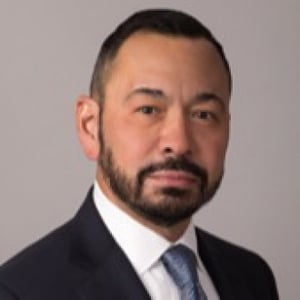
Partner, Gibson Dunn & Crutcher LLP
Miguel A. Estrada is a partner in the Washington, D.C. office of Gibson, Dunn & Crutcher.
Mr. Estrada has represented clients before federal and state courts throughout the country in a broad range of matters. He has argued 24 cases before the United States Supreme Court, and briefed many others. He has also argued dozens of appeals in the lower federal courts.
Best Lawyers® recognized Mr. Estrada as a 2020 Lawyer of the Year in Intellectual Property Litigation and as a Lawyer of the Year in Appellate Practice. He has been recognized by Benchmark Litigation as a 2020 U.S. Appellate Litigation “Star”. In 2014, The American Lawyer named Mr. Estrada a “Litigator of the Year,” praising his “brains and tenacity” and noting he is the lawyer to call for “a tough, potentially unwinnable case.” From 2014-2021, Chambers & Partners has named him as one of a handful of attorneys that it ranked in the top tier among the nation’s leading appellate lawyers. Chambers & Partners noted that “clients are impressed by his intellect and ability, with one saying, ‘His papers are just blindingly clear in what they say and devastating in how they marshal the arguments.’” The Atlantic described his oral argument in a 2014 high-profile separation-of-powers case as “one of the most dazzling arguments the marble chamber has heard in many years.”
Mr. Estrada was selected by his peers for inclusion in the 2020 edition of The Best Lawyers in America® in the area of Appellate Law, in addition to previous recognition by the publication in the specialties of Bet-the-Company Litigation, Commercial Litigation and Criminal Defense: White Collar, Intellectual Property Litigation, and Regulatory Enforcement Litigation in the areas of SEC, Telecom, and Energy. In 2017, he was elected as a member of the American Law Institute. In 2021, Mr. Estrada was named among the Lawdragon 500 Leading Lawyers in America. In 2004, Legal Times named him one of the top 12 appellate litigators in the D.C. area, noting that “people who follow appellate practice in Washington have known for several years that Estrada . . . is one of the best around.” Also in 2004, Washingtonian Magazine named him one of the top constitutional law lawyers “who could become one of the legends of the Supreme Court bar.”
Mr. Estrada joined Gibson Dunn in 1997, after serving for five years as Assistant to the Solicitor General of the United States. He previously served as Assistant U.S. Attorney and Deputy Chief of the Appellate Section, U.S. Attorney’s Office, Southern District of New York. In those capacities, Mr. Estrada represented the government in numerous jury trials and in many appeals before the U.S. Court of Appeals for the Second Circuit. Before joining the U.S. Attorney’s Office, Mr. Estrada practiced corporate law in New York with Wachtell, Lipton, Rosen & Katz.
Mr. Estrada is a Trustee of the Supreme Court Historical Society. He was formerly a member of the Board of Visitors of Harvard Law School.
Mr. Estrada served as a law clerk to the Honorable Anthony M. Kennedy in the U.S. Supreme Court from 1988 to 1989 and to the Honorable Amalya L. Kearse in the U.S. Court of Appeals for the Second Circuit from 1986 to 1987. He received a J.D. degree magna cum laude in 1986 from Harvard Law School, where he was editor of the Harvard Law Review. Mr. Estrada graduated with an A.B. degree magna cum laude and Phi Beta Kappa in 1983 from Columbia College, New York. He is fluent in Spanish and proficient in French.
Representative Supreme Court matters include:
In 2011, the Supreme Court appointed Mr. Estrada to brief and argue two criminal cases –Dorsey v. United States and Hill v. United States – in which the Solicitor General declined to defend the judgments of the court of appeals. Mr. Estrada was appointed to argue the position that the Solicitor General had declined to defend.
Mr. Estrada was also part of the team that successfully presented then Governor Bush’s position to the Supreme Court in Bush v. Gore (2000). Other cases that Mr. Estrada handled in the Supreme Court include Granholm v. Heald (2005) (dormant Commerce Clause and Twenty-First Amendment), Vermont Agency of Natural Resources v. United States ex rel. Stevens (2000) (False Claims Act, Article III standing and Eleventh Amendment immunity), Old Chief v. United States (1997) (rules of evidence), United States v. Mezzanatto (1995) (evidence and plea bargaining), United States v. Robertson (1995) (constitutional limits on Congress’s Commerce Clause powers), Citizens Bank of Maryland v. Strumpf (1995) (bankruptcy law), and NOW, Inc. v. Scheidler (1994) (RICO).
Recent Court of Appeals matters include:
In addition, Mr. Estrada is lead appellate counsel to Vivendi S.A. in two securities-fraud appeals from jury verdicts that are currently pending in the Second Circuit, and to the National Association of Broadcasters in a challenge to certain procedures promulgated by the FCC in connection with the upcoming Spectrum Auction. Mr. Estrada also recently presented argument before the D.C. Circuit on behalf of the tobacco industry in a first amendment challenge to certain compelled disclosures that were imposed as part of the government’s long-running civil RICO case against the industry.
Other matters:
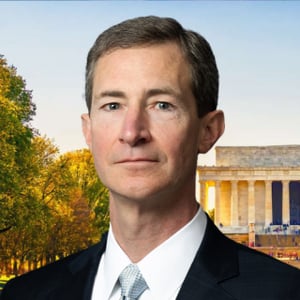
Partner, Torridon Law, PLLC
Pat Philbin brings to Torridon thirty years’ of experience in Washington, including in senior roles in the federal government. His work has involved a broad range of matters from litigating disputes for Fortune 100 companies, to responding to congressional investigations, to crisis management on legal issues making front page news. In addition to handling critical litigation matters, Pat draws on his extensive experience both in and out of government to counsel clients confronted with complex legal issues presenting multi-dimensional challenges.

Thomas M. Siebel Senior Fellow, The Hoover Institution, Stanford University; Gary T. Schwartz Distinguished Professor of Law Emeritus, UCLA School of Law
Eugene Volokh is the Thomas M. Siebel Senior Fellow at the Hoover Institution (Stanford), as well as the Gary T. Schwartz Distinguished Professor of Law Emeritus and Distinguished Research Professor at UCLA School of Law. He recently retired from teaching at UCLA, after 30 years there, and is now focusing on research.
Volokh is the author of the textbooks The First Amendment and Related Statutes (8th ed. 2023), and Academic Legal Writing (5th ed. 2016), as well as over 100 academic law journal articles, mostly on First Amendment law. He is a member of The American Law Institute; the editor-in-chief of the Journal of Free Speech Law; and the creator and coauthor of The Volokh Conspiracy, a leading legal blog founded in 2002 (hosted at the Washington Post from 2014 to 2017 and now at Reason Magazine).

A Hemisphere at Stake: China, Cartels, and the Path Forward for U.S. Policy
Ryan C. Berg, Erick A. Brimen, Joseph M. Humire
As China deepens its presence in Latin America by owning nearly 40 ports—including a...
A Hemisphere at Stake: China, Cartels, and the Path Forward for U.S. Policy
Ryan C. Berg, Erick A. Brimen, Joseph M. Humire
As China deepens its presence in Latin America by owning nearly 40 ports—including a...
Topics
This Land Is (Not) Your Land: The Effort to Divest Foreign State Ownership of American Land
In February 2023, the U.S. Air Force shot down a high-altitude surveillance balloon that had...
Topics
Cut International Law Down to Size: National Sovereignty Trumps Utopian Alternatives
The ongoing International Criminal Court (ICC) and International Court of Justice (ICJ) cases against Israel...
A Seat at the Sitting - January 2025
Jennifer B. Dickey, Michael R. Dimino, Shannon Grammel Denmark, Brett Nolan, Gregory Y. Porter, Vikrant P. Reddy, Bryan Weir
The January Docket in 90 Minutes or Less
Each month, a panel of constitutional experts convenes to discuss the Court’s upcoming docket sitting...
A Seat at the Sitting - January 2025
Jennifer B. Dickey, Michael R. Dimino, Shannon Grammel Denmark, Brett Nolan, Gregory Y. Porter, Vikrant P. Reddy, Bryan Weir
The January Docket in 90 Minutes or Less
Each month, a panel of constitutional experts convenes to discuss the Court’s upcoming docket sitting...
Topics
Punish the Perpetrator, Not the Victim: How to Deal With Chinese Hacking
This month, the Biden Administration revealed that Chinese state actors have infiltrated at least since...
Topics
How Should Historical Gloss Inform Our Interpretation of the Constitution?: A Review of Historical Gloss and Foreign Affairs: Constitutional Authority in Practice
“[It is] an inadmissibly narrow conception of American constitutional law to confine it to the...
Topics
Are NDAAs a Model for Revitalizing Article I?
For over six decades, Congress has passed a National Defense Authorization Act (NDAA) every year....
16th Annual Rosenkranz Debate & Luncheon
Miguel A. Estrada, Patrick F. Philbin, Eugene Volokh
2024 National Lawyers Convention
RESOLVED: That Congress Can Ban TikTok Featuring: Mr. Miguel Estrada, Partner, Gibson Dunn & Crutcher...