
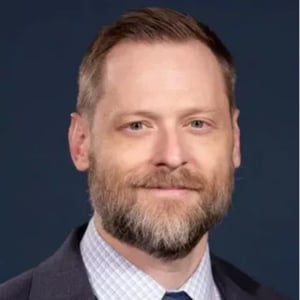
Litigation Director, Center for Individual Rights
Caleb Kruckenberg is CIR’s Litigation Director.
Caleb previously worked as a prosecutor, a public defender, a lobbyist for a national advocacy organization and, most recently, an impact litigator protecting the separation of powers at both the Pacific Legal Foundation and the New Civil Liberties Alliance. He has won major victories against numerous federal agencies, including the U.S. Department of Justice, Department of Labor, Bureau of Alcohol Tobacco and Firearms, and the Securities and Exchange Commission. He is also proud to have sued every U.S. attorney general, eight so far, since he has been litigating against the government on behalf of liberty-minded clients. Caleb has also argued more than 20 times in the U.S. Courts of Appeals, winning cases in 8 of the 12 regional circuit courts.
He graduated cum laude from Temple University Beasley School of Law in Philadelphia, where he was the lead articles editor for the Temple Law Review. Caleb also attended the Pennsylvania Academy of the Fine Arts, where he studied figurative painting.
Litigation Director, Center for Individual Rights
Caleb Kruckenberg is CIR’s Litigation Director.
Caleb previously worked as a prosecutor, a public defender, a lobbyist for a national advocacy organization and, most recently, an impact litigator protecting the separation of powers at both the Pacific Legal Foundation and the New Civil Liberties Alliance. He has won major victories against numerous federal agencies, including the U.S. Department of Justice, Department of Labor, Bureau of Alcohol Tobacco and Firearms, and the Securities and Exchange Commission. He is also proud to have sued every U.S. attorney general, eight so far, since he has been litigating against the government on behalf of liberty-minded clients. Caleb has also argued more than 20 times in the U.S. Courts of Appeals, winning cases in 8 of the 12 regional circuit courts.
He graduated cum laude from Temple University Beasley School of Law in Philadelphia, where he was the lead articles editor for the Temple Law Review. Caleb also attended the Pennsylvania Academy of the Fine Arts, where he studied figurative painting.

Executive Vice President, Goldwater Institute
Christina Sandefur is the Executive Vice President at the Goldwater Institute. She develops policies and litigates cases advancing healthcare freedom, free enterprise, private property rights, free speech, and taxpayer rights.
Christina is a co-drafter of the Right to Try initiative, now federal law, which protects terminally ill patients' right to try safe investigational treatments that have been prescribed by their physician but are not yet FDA-approved. She has won important victories for property rights in Arizona and works nationally to promote the Institute's Private Property Rights Protection Act, a state-level reform that requires government to pay owners when regulations destroy property rights and reduce property values.
Christina is the co-author of the book Cornerstone of Liberty: Private Property Rights in 21st Century America (2016). She is a frequent guest on national television and radio programs, has provided expert legal testimony to various legislative committees, and is a frequent speaker at conferences. She is the recipient of the 2018 Buckley Award in recognition of her leadership in the freedom movement, and she is an Advisory Board Member of the Network of enlightened Women. Christina serves on the board of the Phoenix Lawyers Chapter of the Federalist Society and is a member of the executive committee for the Federalist Society's Regulatory Transparency Project: FDA & Health.
Christina is a graduate of Michigan State University College of Law and Hillsdale College.
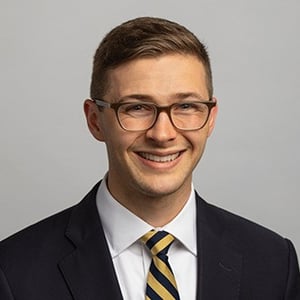
Attorney, Institute for Justice
Josh Windham is an attorney at the Institute for Justice.
Originally from Charlotte, Josh joined the Institute’s headquarters office in 2016. He received his law degree in 2016 from the University of North Carolina School of Law, where he served as president of the Federalist Society and as judicial extern to the Honorable Robert Numbers in the Eastern District of North Carolina. Josh graduated summa cum laude from North Carolina State University in 2013 with a Bachelor of Arts in History. He is an avid sports fan and dessert lover.
Josh is licensed in North Carolina.
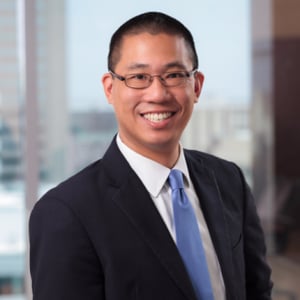
Chair, Issues & Appeals, Hunton Andrews Kurth LLP
The former Solicitor General of West Virginia, Mr. Lin has been on the front lines of many precedent-setting cases in appellate courts across the country, including in a US Supreme Court victory that George Will called “the court’s most severe rebuke of a president” since the Truman administration. Having argued more than 60 appeals, he brings to clients a well-honed ability to identify the most persuasive issues for appeal and a practiced understanding of how best to frame complex legal questions in appellate courts.
With experience in the private sector and multiple branches of government, Mr. Lin’s practice has spanned a wide range of issues, including major questions of constitutional and administrative law at the federal and state levels. On behalf of more than two dozen states, he won a stay from the US Supreme Court of the EPA’s Clean Power Plan. Described by the New York Times as an “unprecedented” order, the stay was the first time the Supreme Court had ever put a regulation on hold before review by a federal appeals court. In that same case, Elbert argued before the en banc DC Circuit in an historic proceeding that one commenter quoted in E&E News compared to “the NBA All-Star Game.” At the state level, Elbert led the effort that persuaded the West Virginia Supreme Court of Appeals to overturn an injunction of the state’s right-to-work law.
In 2013, Mr. Lin was appointed the Solicitor General of West Virginia. During his four-and-a-half year tenure, he served as a member of the Attorney General’s senior management team, oversaw all civil and criminal appeals, and argued nearly two dozen cases in federal and state appellate courts. He authored more than twenty-five briefs in the US Supreme Court and more than forty-five formal Opinions of the Attorney General.
Earlier in his career, Mr. Lin served as a trial attorney in the Federal Programs Branch of the US Department of Justice’s Civil Division, where he received a Special Service Award. He has also been a law clerk at all three levels of the federal judiciary: for Justice Clarence Thomas on the US Supreme Court; for Judge William H. Pryor Jr. on the US Court of Appeals for the Eleventh Circuit; and for Senior Judge Robert E. Keeton on the US District Court for the District of Massachusetts.
Mr. Lin speaks regularly on a wide variety of topics, including constitutional law, administrative law, environmental law, state and federal relations, the US Supreme Court, and appellate practice. He has testified before Congress, and has spoken at the national conventions of the American Bar Association, the Association of Corporate Counsel, the National Asian Pacific American Bar Association, the Federalist Society, Americans for Prosperity, and the American Legislative Exchange Council. He is an elected member of the American Law Institute, a public member of the Administrative Conference of the United States, and a fellow of the American Academy of Appellate Lawyers.
Mr. Lin is admitted to practice in the following federal courts: the Supreme Court of the United States; the First, Second, Third, Fourth, Fifth, Sixth, Seventh, Eighth, Ninth, Eleventh, D.C., and Federal Circuits; the District of Massachusetts; the Northern and Southern Districts of West Virginia; and the Eastern and Western Districts of Virginia.
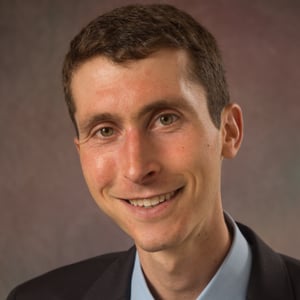
Professor of Law, University of Chicago Law School
Daniel Hemel’s research focuses on taxation, nonprofit organizations, administrative law, and federal courts. His academic work has appeared in the California Law Review, Cornell Law Review, Columbia Law Review, Georgetown Law Journal, Journal of Legal Analysis, National Tax Journal, NYU Law Review, Supreme Court Review, Tax Law Review, Texas Law Review, University of Chicago Law Review, and Yale Law Journal, and has been cited by the US Supreme Court as well as the Ninth Circuit and Federal Circuit Courts of Appeals. His op-eds and other writing have appeared in the New York Times, Washington Post, Wall Street Journal, Atlantic, Politico, Slate, TIME Magazine, and Vox. He also has provided on-air legal analysis for CNN, MSNBC, and NPR.
Daniel graduated summa cum laude from Harvard College and received an MPhil with distinction from Oxford University, where he was a Marshall Scholar. He then earned his JD from Yale Law School, where he was editor-in-chief of the Yale Law Journal. Before joining the University of Chicago Law School faculty, he was a law clerk to Associate Justice Elena Kagan on the US Supreme Court. He also clerked for Judge Michael Boudin on the US Court of Appeals for the First Circuit and Judge Sri Srinivasan on the US Court of Appeals for the District of Columbia Circuit, and served as visiting counsel at the Joint Committee on Taxation. He has held visiting professorships at Harvard Law School and Stanford Law School.
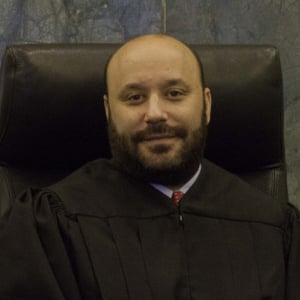
Judge, United States District Court, Eastern District of Arkansas
Lee Philip Rudofsky is a judge on the United States District Court for the Eastern District of Arkansas. Prior to his 2019 appointment by President Trump, Judge Rudofsky served as the Solicitor General of Arkansas, an Assistant General Counsel at Walmart, a Senior Litigation Associate at Kirkland & Ellis, and counsel to several Republican political campaigns. Today, in addition to his judicial service, Judge Rudofsky teaches law school classes on founding-era constitutional history and, separately, speaks to students across the country about the October 7th Massacre and the subsequent Israeli response. In 2024, Judge Rudofsky helped establish an annual judicial education mission to Israel that offers American judges the opportunity to learn first-hand about the Israeli legal system, Israeli society, and legal issues related to the Israel-Hamas war.
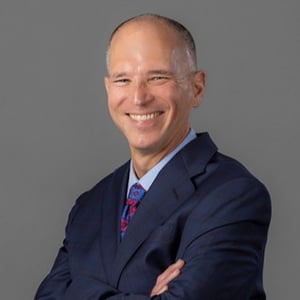
George Mason University Foundation Professor of Law, Antonin Scalia Law School, George Mason University
TODD J. ZYWICKI is George Mason University Foundation Professor of Law at Antonin Scalia Law School at George Mason University and Research Fellow of the George Mason Law and Economics Center. During the Fall 2023 semester he served as the Visiting Scholar in Conservative Thought and Policy for the Bruce Benson Center for the Study of Western Civilization at the University of Colorado-Boulder. From 2020-2021 he was Chair of the Consumer Financial Protection Bureau Taskforce on Federal Consumer Financial Law. In 2021 he was inducted to the American College of Consumer Financial Services Lawyers. He is also a Senior Fellow of the F.A. Hayek Program for the Advanced Study of Politics, Philosophy, and Economics at George Mason University and a former Senior Fellow of the Cato Institute. From 2015-2017 he was Executive Director of the George Mason Law and Economics Center. He served as Co-Editor of the Supreme Court Economic Review from 2006-2017. From 2003-2004, Professor Zywicki served as the Director of the Office of Policy Planning at the Federal Trade Commission. He has also taught at Vanderbilt University Law School, Georgetown University Law Center, Boston College Law School, Mississippi College School of Law, and China University of Political Science and Law.
Professor Zywicki clerked for Judge Jerry E. Smith of the U.S. Court of Appeals for the Fifth Circuit and worked as an associate at Alston & Bird in Atlanta, Georgia, where he practiced bankruptcy and commercial law. He received his J.D. from the University of Virginia, where he was executive editor of the Virginia Tax Review and John M. Olin Scholar in Law and Economics. Professor Zywicki also received an M.A. in Economics from Clemson University and an A.B. cum Laude with high honors in his major from Dartmouth College.
Professor Zywicki is also a Lone Mountain Fellow of the Property and Environment Research Center, a Fellow of the International Centre for Economic Research in Turin, Italy, and a former Senior Fellow of the Goldwater Institute. During the Fall 2008 Semester Professor Zywicki was the Searle Fellow of the George Mason University School of Law and was a 2008-09 W. Glenn Campbell and Rita Ricardo-Campbell National Fellow and the Arch W. Shaw National Fellow at the Hoover Institution on War, Revolution and Peace. He has lectured and consulted with government officials around the world, including Iceland, Italy, Japan, and Guatemala. In 2006 Professor Zywicki served as a Member of the United States Department of Justice Study Group on “Identifying Fraud, Abuse and Errors in the United States Bankruptcy System.”
Professor Zywicki is the author of more than 130 articles in leading law reviews and peer-reviewed economics journals. He is one of the Top 10 most-cited law professors in the field of Commercial Law and one of the Top 25 law professors on Twitter as measured by engagement levels. He is one of the Top 50 Most Downloaded Law Authors at the Social Science Research Network. He has testified multiple times before Congress on issues of consumer bankruptcy law and consumer credit and is a frequent commentator on legal issues in the print and broadcast media, including the Wall Street Journal, New York Times, The Washington Post, The Washington Times, Nightline, The Newshour with Jim Lehrer, Neil Cavuto Show, Fox & Friends, Smerconish, Fox News @ Night with Shannon Bream, Fox Business, CNN, CNBC, Bloomberg News, BBC, The Diane Rehm Show, Lou Dobbs Show, Jerry Doyle Show, and The Laura Ingraham Show.
Professor Zywicki is former Chairman and a current member of the Board of Directors of the Competitive Enterprise Institute, and is a member of the Board of Directors of the Institute for Humane Studies, Bill of Rights Institute, the Executive Committee for the Federalist Society's Financial Institutions and E-Commerce Practice Group, the Board of Trustees of the Foundation for Research on Economics and the Environment. He formerly served on the Governing Board and the Advisory Council for the Financial Services Research Program at George Washington University School of Business. He is currently the Chair of the Academic Advisory Council for the following organizations: The Bill of Rights Institute, the film “We the People in IMAX,” and the McCormick-Tribune Foundation “Freedom Museum” in Chicago, Illinois. He is a member of the Board of Visitors of Ralston College and was a member of the Board of Trustees of Yorktown University. From 2005-2009 he served as an elected Alumni Trustee of the Dartmouth College Board of Trustees.
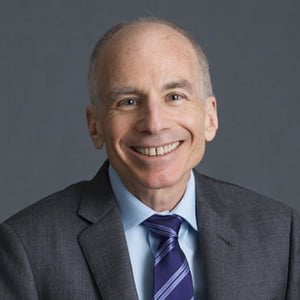
University Professor, Founding Linda D. & Timothy J. O’Neill Professor of Global Health Law, Faculty Director of O’Neill Institute for National & Global Health Law, Georgetown University, Director, World Health Organization Collaborating Center on Public Health Law & Human Rights
Lawrence O. Gostin is University Professor, Georgetown University’s highest academic rank conferred by the University President. Prof. Gostin directs the O’Neill Institute for National and Global Health Law and is the Founding O’Neill Chair in Global Health Law. He served as Associate Dean for Research at Georgetown Law from 2004 to 2008. He is Professor of Medicine at Georgetown University and Professor of Public Health at the Johns Hopkins University.
Prof. Gostin is the Director of the World Health Organization Collaborating Center on National and Global Health Law. The WHO Director-General has appointed Prof. Gostin to high-level positions, including the International Health Regulations (IHR) Roster of Experts and the Expert Advisory Panel on Mental Health. He served on the Director-General’s Advisory Committee on Reforming the World Health Organization, as well as numerous WHO expert advisory committees, including on the Pandemic Influenza Preparedness Framework, smallpox, genomic sequencing data, migrant health, and NCD prevention. He served on the WHO/Global Fund Blue Ribbon Expert Panel: The Equitable Access Initiative to develop a global health equity framework. He co-chairs the Lancet Commission on Global Health Law.
Professor Gostin served on two global commissions to report on the lessons learned from the 2015 West Africa Ebola epidemic. He was also senior advisor to the United Nations Secretary General’s post-Ebola Commission. He also served on the drafting team for the G-7 Summit in Tokyo 2016, focusing on global health security and Universal Health Coverage.
Prof. Gostin holds multiple international academic professorial appointments, including at Oxford University, the University of Witwatersrand (South Africa), and Melbourne University. Prof. Gostin served on the Governing Board of Directors of the Consortium of Universities for Global Health.
Prof. Gostin holds editorial appointments in leading academic journals throughout the world. He is the Legal and Global Health Correspondent for the Journal of the American Medical Association. He is also Founding Editor-in-Chief of Laws (an international open access law journal). He was formally the Editor-in-Chief of the Journal of Law, Medicine & Ethics.
Prof. Gostin holds four honorary degrees. In 1994, the Chancellor of the State University of New York conferred an Honorary Doctor of Laws Degree. In 2006, Her Majesty Queen Elizabeth II and the Vice Chancellor awarded Cardiff University’s (Wales) highest honor, an Honorary Fellow. In 2007, the Royal Institute of Public Health (United Kingdom) appointed Prof. Gostin as a Fellow of the Royal Society of Public Health (FRSPH). In 2012, the Chancellor of the University of Sydney – on the nomination of the Deans of the Law and Medical Schools – conferred a Doctor of Laws (honoris causa), presided by two Justices of Australia’s highest court—Justices Kirby and Haydon.
Prof. Gostin is an elected lifetime Member of the National Academy of Medicine/ National Academy of Sciences. He has served on the National Academy’s Board on Health Sciences Policy, the Board on Population Health, the Human Subjects Review Board, and the Committee on Science, Technology, and Law. He currently serves on the National Academies of Sciences Engineering, and Medicine, Board on Global Health. Gostin chaired the National Academy’s Committee on Global Solutions to Falsified, Substandard, and Counterfeit Medicines. He has chaired National Academy Committees on national preparedness for mass disasters, health informational privacy, public health genomics, and human subject research on prisoners.
Prof. Gostin is also a Member of the Council on Foreign Relations and Fellow of the Hastings Center. In 2016, President Obama appointed Prof. Gostin to a six-year term on the President’s National Cancer Advisory Board to advise the nation on cancer prevention, research, and policy. He also serves on the National Institutes of Health Director’s Advisory Committee on the ethics of public/private partnerships to end the opioid crisis.
Prof. Gostin has led major law reform initiatives in the U.S., including drafting the Model Emergency Health Powers Act (MEHPA) to combat bioterrorism (following the post-9/11 anthrax attacks) and the “Turning Point” Model State Public Health Act. He also spearheaded the World Health Organization and International Development Law Organization’s major report, Advancing the Right to Health: The Vital Role of Law.
Prof. Gostin’s proposal for a Framework Convention on Global Health – an international treaty ensuring the right to health – is now part of a global campaign, endorsed by the UN Secretary-General and Director of UNAIDS.
In the United Kingdom, Lawrence Gostin was the Legal Director of the National Association for Mental Health, Director of the National Council of Civil Liberties (the UK equivalent of the ACLU), and a Fellow at Oxford University. He helped draft the Mental Health Act (England and Wales) and brought landmark cases before the European Court of Human Rights.
Prof. Gostin’s books include: Public Health Law: Power, Duty, Restraint (University of California Press, 3rd ed., 2016); Public Health Law and Ethics: A Reader (University of California Press, 3rd ed., 2018); Human Rights in Global Health: Rights-Based Governance for a Globalizing World (Oxford University Press, 2018); Law and the Health System (Foundation Press, 2014); Principles of Mental Health Law & Practice (Oxford University Press, 2010).
Gostin’s classic text, Global Health Law (Harvard University Press, 2014) is read throughout the world—translated and published in both simplified and traditional Chinese, and in Spanish. Paul Farmer, Partners in Health, says of his book: Global Health Law is “more than the definitive book on a dynamic field. Gostin harnesses the power of international law and human rights as tools to close unconscionable health inequities — the injustices that burden marginalized populations throughout the world. Gostin presents a forceful vision, one that deserves a wide embrace.”
In a 2012 systematic empirical analysis of legal scholarship, independent researchers ranked Prof. Gostin 1st in the nation in productivity among all law professors, and 11th in in impact and influence. A 2017 and 2018 systematic empirical analysis ranked Prof. Gostin 1st in the nation for citations in health law.
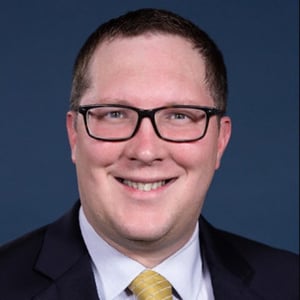
Attorney, Pacific Legal Foundation
Luke A. Wake is an attorney at the Pacific Legal Foundation. Prior to joining PLF, he was a senior staff attorney at the NFIB Small Business Legal Center.
Wake has particular expertise on environmental and land use issues, and has worked on numerous other constitutional issues and matters of importance to small business owners. He is an ardent defender of private property rights, which he believes are essential to the free enterprise system and the foundation of American liberty. As a strong advocate of individual rights and economic liberties, he has built his career defending small business interests.
Wake has focused on a whole host of issues, from employment law matters to regulatory compliance. In addition to serving as a resource for small business owners, Wake is committed to ensuring that the voice of small business is heard in the nation’s courts. As an appellate practitioner, Wake has focused particularly on informing the courts on matters of administrative law and on issues under the Fifth Amendment’s Takings Clause. He is also working to advance small business interests in law review articles, and was recently published in the Berkeley Journal of Law & Ecology. See R.S. Radford & Luke A. Wake, Deciphering and Extrapolating: Searching for Sense in Penn Central, 38 Ecology L.Q. 731, 746-747 (2011).
Before joining the Legal Center’s team, Wake completed a prestigious two-year fellowship as an attorney in the Pacific Legal Foundation’s College of Public Interest Law. Wake is a graduate of Case Western Reserve University School of Law in Cleveland Ohio, and is a member of the California Bar. He completed his undergraduate studies at Elon University in North Carolina in 2006 where he focused on political theory and corporate communications.
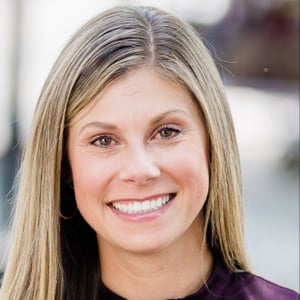
Executive Director, Southeastern Legal Foundation
Kimberly Hermann serves as Executive Director for Southeastern Legal Foundation.
Kim has worked with Southeastern Legal Foundation since 2009. Her belief in liberty and desire to serve started at a young age – instilled by her parents’ dedication to hard work, family values, and love for America.
After earning her undergraduate degree in Analytical Finance and graduate degree in Accounting from Wake Forest University, Kim worked as a licensed CPA with an international accounting firm. But her strong belief in individual liberty, the rule of law, and accountability in government led her to pursue a career in law. While in law school at Georgia State University College of Law, Kim served as a law clerk at SLF. After graduating, Kim worked at a private law firm in Atlanta where she specialized in financial and business litigation but continued to serve SLF in a pro bono capacity. In 2013, Kim returned to SLF full-time and is proud to dedicate her career to the freedom-based law movement.
Kim advances liberty through litigation in federal and state trial and appellate courts on issues ranging from government overreach, free speech, property rights, and economic liberty. In addition to representing clients, Kim testifies before state legislatures, drafts model legislation, and regularly publishes legal articles. Through SLF’s legal initiatives, she informs Americans about their constitutional rights, equipping them with the tools they need to stand up to government overreach. Her work and that of Southeastern Legal Foundation is regularly covered by national media and you will frequently hear or see her on radio, podcasts, and television.
Kim is an active member of the Federalist Society where she serves as an expert on the Federalist Society’s Civil Rights Executive Committee. She is also an active member of her community and when she isn’t fighting for liberty, you can find her at her children’s school or on the sports fields cheering them on. She lives in the Atlanta area with her husband and two children.
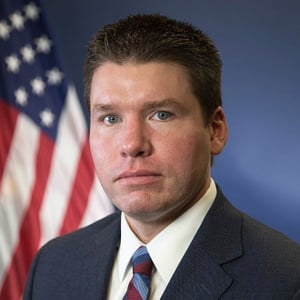
United States Attorney, Eastern District of Kentucky
Robert M. Duncan, Jr. is the United States Attorney for the Eastern District of Kentucky. He was nominated by President Donald Trump on August 3, 2017, and confirmed by the United States Senate on November 9, 2017.
Prior to his appointment, Duncan had served for more than a decade as an Assistant United States Attorney in the Eastern District of Kentucky. Beginning in 2011 and continuing until his appointment as United States Attorney, Duncan focused on the prosecution of Organized Crime Drug Enforcement Task Force cases, working with federal, state, and local law enforcement personnel to disrupt and dismantle complex drug trafficking and money laundering organizations operating in the District and elsewhere. From 2007 to 2013, Duncan served as coordinator of the office’s Project Safe Neighborhoods Program, a Department of Justice initiative to reduce gun and gang crime through education, community outreach, and prosecution.
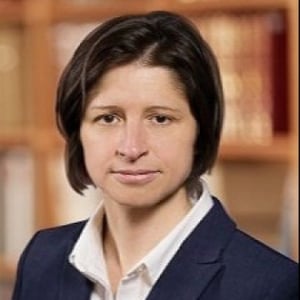
Attorney, Sheehey Furlong & Behm P.C.
Christina E. Nolan, the former United States Attorney for Vermont, is a principal in the firm. She focuses on complex civil litigation, defense of government enforcement actions, false claims act defense and enforcement, white collar and serious felony criminal defense, and internal investigations. Having previously served as a state and federal prosecutor, Christina has tried more than a dozen cases to juries, regularly handled evidentiary hearings before federal and state trial courts, and appeared several times before the United States Court of Appeals for the Second Circuit.
Christina, a native Vermonter, was employed from 2010 to 2021 at the U.S. Attorney’s Office in Vermont (USAO), serving first as an Assistant U.S. Attorney in the Criminal Division for nearly 8 years, and then leading the office as U.S. Attorney from November 2017 until March 2021. Following the bipartisan recommendation of Senator Patrick Leahy and Governor Phil Scott, Christina was nominated for the chief law enforcement officer post by the President and unanimously confirmed by the U.S. Senate. As U.S. Attorney, Christina supervised all federal criminal and civil investigations and prosecutions in Vermont, served as chief spokesperson for federal law enforcement and the USAO, and partnered with community leaders and government officials to promote criminal justice policies and launch community-based and law enforcement initiatives.
U.S. Attorney General William Barr selected Christina as one of a dozen U.S. Attorneys to sit on the Attorney General’s Advisory Committee, which advises the Attorney General on all aspects of criminal and civil policy. Christina chaired the Advisory Committee’s Controlled Substances Subcommittee (CSS), and was a member of its Health Care Fraud and Domestic Violence Working Groups. Christina also cochaired the Justice Department’s initiative to combat sexual harassment in housing during the pandemic and helped lead the Attorney General’s effort to implement police reform pursuant to the 2020 Executive Order on Safe Policing for Safe Communities. In her capacity as leader of the CSS, Christina testified before the U.S. Senate Judiciary Committee concerning fentanyl enforcement policy and proposed fentanyl legislation. In Vermont, Christina sat on Governor Scott’s Opioid Coordination, Substance Misuse, and Emergency Preparedness Councils and cochaired the Vermont Human Trafficking Task Force.
As U.S. Attorney, Christina actively supervised a range of criminal and civil cases involving drug trafficking; firearms and violence; human trafficking; organized crime; child exploitation; wire, health care, bank, and securities fraud; embezzlement and money laundering; government contracting fraud; medical malpractice; and federal False Claims Act enforcement. Under Christina’s leadership, the USAO resolved criminal felony antikickback charges and civil False Claims Act claims against Purdue Pharma L.P. as part of the largest criminal resolution ever reached against a pharmaceutical company; charged the largest fraud case in Vermont history relating to the EB-5/Jay Peak financial scandal in the Northeast Kingdom and obtained a guilty plea from the lead defendant; and secured unprecedented False Claims Act civil and criminal settlements against healthcare companies that garnered national attention.
As a federal prosecutor, Christina investigated and prosecuted financial, narcotics, violent, child exploitation, and other crimes. She tried six federal cases to juries, each trial resulting in conviction. Among her most notable cases was the prosecution and conviction of Richard Monroe for the drug-related murder of University of Vermont student, Kevin DeOliveira, in Burlington. Monroe is serving a 25-year sentence. As Assistant U.S. Attorney, Christina was also tasked with oversight of all opioid trafficking prosecutions and investigations in Eastern Vermont and served as the USAO’s Violent Crime Coordinator.
Before joining the USAO, Christina served as an Assistant District Attorney in Middlesex County, Massachusetts, where she tried numerous cases to juries and prosecuted a variety of state crimes, including DUI, drug trafficking, firearms, and domestic violence matters. From 2005 to 2009, Nolan worked as a litigation associate at Goodwin Procter, LLP, a large Boston law firm. In that role, she represented white collar defendants, conducted internal investigation, supervised complex civil litigation, and played a managerial role in the representation of a corporate executive in a high-profile federal securities fraud prosecution. The securities fraud case ended in dismissal of charges against the client.
After law school, Christina clerked for The Honorable F. Dennis Saylor, IV of the United States District Court for the District of Massachusetts.
Christina graduated magna cum laude from Boston College Law School in 2004, where she served a Senior Editor on the Boston College Law Review. She earned her Bachelor’s degrees in political science and history from the University of Vermont, where she graduated summa cum laude.
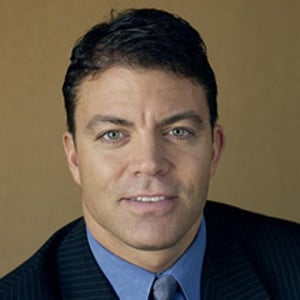
Daniel Levin Professor of Public Policy, The University of Chicago
Tomas J. Philipson is the Daniel Levin Professor of Public Policy Studies at the University of Chicago Harris School of Public Policy and directs the Becker Friedman Institute’s Program on Foundational Research in Health Care Markets and Policies within the Health Economics Initiative. He is also an associate member of the Department of Economics and a former senior lecturer at the Law School. His research focuses on health economics, and he teaches master's and PhD courses in microeconomics and health economics at the University.
Philipson is a US citizen but was born and raised in Sweden where he obtained his undergraduate degree in mathematics at Uppsala University. He received his MA and PhD in economics from the Wharton School at the University of Pennsylvania. He has been a visiting faculty member at Yale University and a visiting senior fellow at the World Bank.
Philipson has served in several public sector positions. He served in the second Bush Administration as the senior economic advisor to the head of the Food and Drug Administration and subsequently as the senior economic advisor to the head of the Centers for Medicare and Medicaid Services. He served as a health care advisor to Senator John McCain during his campaign for President of the United States. He was appointed by the Speaker of the US House of Representatives to the Key Indicator Commission created by the Affordable Care Act. He has served as a scientific advisor to Congress on the 21st Century Cures legislation and on the steering committee of Vice President Biden's Cancer Moon Shot Initiative.
Philipson is the recipient of numerous international and national research awards. He has twice been the recipient of the highest honor of his field: the Kenneth Arrow Award of the International Health Economics Association (for best paper in the field of health economics). In addition, he was awarded the Garfield Award by Research America, The Prêmio Haralambos Simeonidisand from the Brazilian Economic Association, and the Distinguished Economic Research Award from the Milken Institute. Philipson has been awarded numerous grants and awards from both public and private agencies, including the National Institutes of Health, the National Science Foundation, the Rockefeller Foundation, the Alfred P. Sloan Foundation, the John M. Olin Foundation, and the Royal Swedish Academy of Sciences.
Philipson is a founding editor of the journal Forums for Health Economics & Policy of Berkeley Electronic Press and has been on the editorial board of the journal Health Economics and The European Journal of Health Economics. His research has been published widely in all leading academic journals of economics such as the American Economic Review, Journal of Political Economy, Quarterly Journal of Economics, Journal of Economic Theory, Journal of Health Economics, Health Affairs, and Econometrica.
Philipson is a fellow, board member, or associate of a number of other organizations outside the University of Chicago, including the National Bureau of Economic Research, the American Enterprise Institute, the Manhattan Institute (where he was chairman of Project FDA), the Heartland Institute, the Milken Institute, the RAND Corporation, and the USC Shaeffer Center for Health Economics and Policy. At the University of Chicago, he is affiliated with the John M. Olin Program of Law & Economics, the George J. Stigler Center for the Study of the Economy and the State, the Population Research Center, and NORC. He has served on the University-wide Council on Research and on the Advisory Committee to the University's Office of Intellectual Property and Technology Transfer.
Philipson has done executive consulting for both private corporations, including many US Fortune 100 companies, as well as government organizations domestically and internationally. This has included work for the President's Council on Science and Technology, the National Academy of Sciences, and the UK National Health Service. It has also included work for multi-lateral organizations such as the World Bank, the World Intellectual Property Organization, and the OECD. In 2007 he co-founded Precision Heath Economics LLC, which was sold in 2015 to Precision for Medicine Group LLC.
Philipson’s research is frequently disseminated through the popular press. He is a monthly op-ed contributor for Forbes magazine and frequently appears in numerous popular media outlets such as CNN, CBS, FOX News, Bloomberg TV, National Public Radio, New York Times, Wall Street Journal, Businessweek, The Economist, Washington Post, Investor's Business Daily, and USA Today. He is a frequent keynote speaker at many domestic and international health care events and conferences.
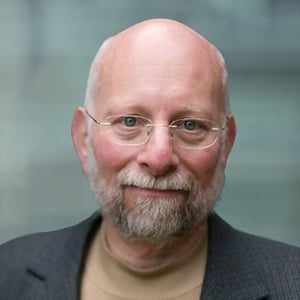
Senior Fellow, Cato Institute
Jeffrey A. Singer is a senior fellow at the Cato Institute and works in the Department of Health Policy Studies. He is principal and founder of Valley Surgical Clinics Ltd., the largest and oldest group private surgical practice in Arizona, and has been in private practice as a general surgeon for more than 35 years.
He is also a visiting fellow at the Goldwater Institute in Phoenix. Singer is a member of the Board of Scientific Advisors of the American Council on Science and Health. From 1994 to 2016, he was a regular contributor to Arizona Medicine, the journal of the Arizona Medical Association. He served on the Advisory Board Council of the Center for Political Thought and Leadership at Arizona State University from 2014 to 2018 and is an adjunct instructor in the Program on Political History and Leadership at ASU. He writes and speaks extensively on regional and national public policy, with a specific focus on the areas of health care policy and the harmful effects of drug prohibition.
He received his BA from Brooklyn College (City University of New York) and his MD from New York Medical College. He is a fellow of the American College of Surgeons.
United States Attorney, Eastern District of Kentucky
Robert M. Duncan, Jr. is the United States Attorney for the Eastern District of Kentucky. He was nominated by President Donald Trump on August 3, 2017, and confirmed by the United States Senate on November 9, 2017.
Prior to his appointment, Duncan had served for more than a decade as an Assistant United States Attorney in the Eastern District of Kentucky. Beginning in 2011 and continuing until his appointment as United States Attorney, Duncan focused on the prosecution of Organized Crime Drug Enforcement Task Force cases, working with federal, state, and local law enforcement personnel to disrupt and dismantle complex drug trafficking and money laundering organizations operating in the District and elsewhere. From 2007 to 2013, Duncan served as coordinator of the office’s Project Safe Neighborhoods Program, a Department of Justice initiative to reduce gun and gang crime through education, community outreach, and prosecution.
Attorney, Sheehey Furlong & Behm P.C.
Christina E. Nolan, the former United States Attorney for Vermont, is a principal in the firm. She focuses on complex civil litigation, defense of government enforcement actions, false claims act defense and enforcement, white collar and serious felony criminal defense, and internal investigations. Having previously served as a state and federal prosecutor, Christina has tried more than a dozen cases to juries, regularly handled evidentiary hearings before federal and state trial courts, and appeared several times before the United States Court of Appeals for the Second Circuit.
Christina, a native Vermonter, was employed from 2010 to 2021 at the U.S. Attorney’s Office in Vermont (USAO), serving first as an Assistant U.S. Attorney in the Criminal Division for nearly 8 years, and then leading the office as U.S. Attorney from November 2017 until March 2021. Following the bipartisan recommendation of Senator Patrick Leahy and Governor Phil Scott, Christina was nominated for the chief law enforcement officer post by the President and unanimously confirmed by the U.S. Senate. As U.S. Attorney, Christina supervised all federal criminal and civil investigations and prosecutions in Vermont, served as chief spokesperson for federal law enforcement and the USAO, and partnered with community leaders and government officials to promote criminal justice policies and launch community-based and law enforcement initiatives.
U.S. Attorney General William Barr selected Christina as one of a dozen U.S. Attorneys to sit on the Attorney General’s Advisory Committee, which advises the Attorney General on all aspects of criminal and civil policy. Christina chaired the Advisory Committee’s Controlled Substances Subcommittee (CSS), and was a member of its Health Care Fraud and Domestic Violence Working Groups. Christina also cochaired the Justice Department’s initiative to combat sexual harassment in housing during the pandemic and helped lead the Attorney General’s effort to implement police reform pursuant to the 2020 Executive Order on Safe Policing for Safe Communities. In her capacity as leader of the CSS, Christina testified before the U.S. Senate Judiciary Committee concerning fentanyl enforcement policy and proposed fentanyl legislation. In Vermont, Christina sat on Governor Scott’s Opioid Coordination, Substance Misuse, and Emergency Preparedness Councils and cochaired the Vermont Human Trafficking Task Force.
As U.S. Attorney, Christina actively supervised a range of criminal and civil cases involving drug trafficking; firearms and violence; human trafficking; organized crime; child exploitation; wire, health care, bank, and securities fraud; embezzlement and money laundering; government contracting fraud; medical malpractice; and federal False Claims Act enforcement. Under Christina’s leadership, the USAO resolved criminal felony antikickback charges and civil False Claims Act claims against Purdue Pharma L.P. as part of the largest criminal resolution ever reached against a pharmaceutical company; charged the largest fraud case in Vermont history relating to the EB-5/Jay Peak financial scandal in the Northeast Kingdom and obtained a guilty plea from the lead defendant; and secured unprecedented False Claims Act civil and criminal settlements against healthcare companies that garnered national attention.
As a federal prosecutor, Christina investigated and prosecuted financial, narcotics, violent, child exploitation, and other crimes. She tried six federal cases to juries, each trial resulting in conviction. Among her most notable cases was the prosecution and conviction of Richard Monroe for the drug-related murder of University of Vermont student, Kevin DeOliveira, in Burlington. Monroe is serving a 25-year sentence. As Assistant U.S. Attorney, Christina was also tasked with oversight of all opioid trafficking prosecutions and investigations in Eastern Vermont and served as the USAO’s Violent Crime Coordinator.
Before joining the USAO, Christina served as an Assistant District Attorney in Middlesex County, Massachusetts, where she tried numerous cases to juries and prosecuted a variety of state crimes, including DUI, drug trafficking, firearms, and domestic violence matters. From 2005 to 2009, Nolan worked as a litigation associate at Goodwin Procter, LLP, a large Boston law firm. In that role, she represented white collar defendants, conducted internal investigation, supervised complex civil litigation, and played a managerial role in the representation of a corporate executive in a high-profile federal securities fraud prosecution. The securities fraud case ended in dismissal of charges against the client.
After law school, Christina clerked for The Honorable F. Dennis Saylor, IV of the United States District Court for the District of Massachusetts.
Christina graduated magna cum laude from Boston College Law School in 2004, where she served a Senior Editor on the Boston College Law Review. She earned her Bachelor’s degrees in political science and history from the University of Vermont, where she graduated summa cum laude.
Daniel Levin Professor of Public Policy, The University of Chicago
Tomas J. Philipson is the Daniel Levin Professor of Public Policy Studies at the University of Chicago Harris School of Public Policy and directs the Becker Friedman Institute’s Program on Foundational Research in Health Care Markets and Policies within the Health Economics Initiative. He is also an associate member of the Department of Economics and a former senior lecturer at the Law School. His research focuses on health economics, and he teaches master's and PhD courses in microeconomics and health economics at the University.
Philipson is a US citizen but was born and raised in Sweden where he obtained his undergraduate degree in mathematics at Uppsala University. He received his MA and PhD in economics from the Wharton School at the University of Pennsylvania. He has been a visiting faculty member at Yale University and a visiting senior fellow at the World Bank.
Philipson has served in several public sector positions. He served in the second Bush Administration as the senior economic advisor to the head of the Food and Drug Administration and subsequently as the senior economic advisor to the head of the Centers for Medicare and Medicaid Services. He served as a health care advisor to Senator John McCain during his campaign for President of the United States. He was appointed by the Speaker of the US House of Representatives to the Key Indicator Commission created by the Affordable Care Act. He has served as a scientific advisor to Congress on the 21st Century Cures legislation and on the steering committee of Vice President Biden's Cancer Moon Shot Initiative.
Philipson is the recipient of numerous international and national research awards. He has twice been the recipient of the highest honor of his field: the Kenneth Arrow Award of the International Health Economics Association (for best paper in the field of health economics). In addition, he was awarded the Garfield Award by Research America, The Prêmio Haralambos Simeonidisand from the Brazilian Economic Association, and the Distinguished Economic Research Award from the Milken Institute. Philipson has been awarded numerous grants and awards from both public and private agencies, including the National Institutes of Health, the National Science Foundation, the Rockefeller Foundation, the Alfred P. Sloan Foundation, the John M. Olin Foundation, and the Royal Swedish Academy of Sciences.
Philipson is a founding editor of the journal Forums for Health Economics & Policy of Berkeley Electronic Press and has been on the editorial board of the journal Health Economics and The European Journal of Health Economics. His research has been published widely in all leading academic journals of economics such as the American Economic Review, Journal of Political Economy, Quarterly Journal of Economics, Journal of Economic Theory, Journal of Health Economics, Health Affairs, and Econometrica.
Philipson is a fellow, board member, or associate of a number of other organizations outside the University of Chicago, including the National Bureau of Economic Research, the American Enterprise Institute, the Manhattan Institute (where he was chairman of Project FDA), the Heartland Institute, the Milken Institute, the RAND Corporation, and the USC Shaeffer Center for Health Economics and Policy. At the University of Chicago, he is affiliated with the John M. Olin Program of Law & Economics, the George J. Stigler Center for the Study of the Economy and the State, the Population Research Center, and NORC. He has served on the University-wide Council on Research and on the Advisory Committee to the University's Office of Intellectual Property and Technology Transfer.
Philipson has done executive consulting for both private corporations, including many US Fortune 100 companies, as well as government organizations domestically and internationally. This has included work for the President's Council on Science and Technology, the National Academy of Sciences, and the UK National Health Service. It has also included work for multi-lateral organizations such as the World Bank, the World Intellectual Property Organization, and the OECD. In 2007 he co-founded Precision Heath Economics LLC, which was sold in 2015 to Precision for Medicine Group LLC.
Philipson’s research is frequently disseminated through the popular press. He is a monthly op-ed contributor for Forbes magazine and frequently appears in numerous popular media outlets such as CNN, CBS, FOX News, Bloomberg TV, National Public Radio, New York Times, Wall Street Journal, Businessweek, The Economist, Washington Post, Investor's Business Daily, and USA Today. He is a frequent keynote speaker at many domestic and international health care events and conferences.
Senior Fellow, Cato Institute
Jeffrey A. Singer is a senior fellow at the Cato Institute and works in the Department of Health Policy Studies. He is principal and founder of Valley Surgical Clinics Ltd., the largest and oldest group private surgical practice in Arizona, and has been in private practice as a general surgeon for more than 35 years.
He is also a visiting fellow at the Goldwater Institute in Phoenix. Singer is a member of the Board of Scientific Advisors of the American Council on Science and Health. From 1994 to 2016, he was a regular contributor to Arizona Medicine, the journal of the Arizona Medical Association. He served on the Advisory Board Council of the Center for Political Thought and Leadership at Arizona State University from 2014 to 2018 and is an adjunct instructor in the Program on Political History and Leadership at ASU. He writes and speaks extensively on regional and national public policy, with a specific focus on the areas of health care policy and the harmful effects of drug prohibition.
He received his BA from Brooklyn College (City University of New York) and his MD from New York Medical College. He is a fellow of the American College of Surgeons.
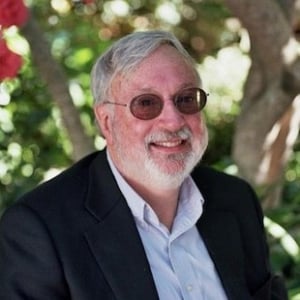
Senior Fellow, Pacific Research Institute
Henry I. Miller, MS, MD, is a Senior Fellow at the Pacific Research Institute in San Francisco. His research focuses on public policy toward science, technology, and medicine, encompassing a number of areas, including pharmaceutical development, genetic engineering, models for regulatory reform, precision medicine, and the emergence of new viral diseases.
Dr. Miller served for fifteen years at the US Food and Drug Administration (FDA) in a number of posts. He was the medical reviewer for the first genetically engineered drugs to be evaluated by the FDA and thus instrumental in the rapid licensing of human insulin and human growth hormone. Thereafter, he was a special assistant to the FDA commissioner and the founding director of the FDA's Office of Biotechnology. As a government official, Dr. Miller received numerous awards and citations.
During more than two decades as the Robert Wesson Fellow in Scientific Philosophy & Public Policy at Stanford University's Hoover Institution, Dr. Miller became well known for both his contributions to scholarly journals and for articles and books that make science, medicine, and technology accessible. His work has been widely published in many languages. Monographs include Policy Controversy in Biotechnology: An Insider's View; To America's Health: A Model for Reform of the Food and Drug Administration; and The Frankenfood Myth: How Protest and Politics Threaten the Biotech Revolution. Barron's selected The Frankenfood Myth as one of the 25 Best Books of 2004. In addition, Dr. Miller has published extensively in a wide spectrum of scholarly journals and popular publications worldwide, including The Lancet, Journal of the American Medical Association, Science, the Nature family of journals, Chronicle of Higher Education, Forbes, National Review, Wall Street Journal, New York Times, the Guardian, and the Financial Times. He appears regularly on the nationally syndicated radio programs of John Batchelor and Lars Larson.
Dr. Miller was the first recipient of an award named after him from the American Council on Science and Health and was selected by the editors of Nature Biotechnology as one of the people who had made the "most significant contributions" to biotechnology during the previous decade. He serves on several editorial boards.

Litigation Update: Eviction Moratoria
Caleb Kruckenberg
Litigation Practice Group Teleforum
On September 1, 2020, the U.S. Centers for Disease Control and Prevention took a step...
Litigation Update: Eviction Moratoria
Caleb Kruckenberg
Litigation Practice Group Teleforum
On September 1, 2020, the U.S. Centers for Disease Control and Prevention took a step...
Explainer Episode 30 – An Update on Telemedicine Laws and Regulations
Christina Sandefur, Josh Windham
Regulatory Transparency Project's Fourth Branch Podcast
During the COVID-19 pandemic, federal and state governments relaxed rules that limit telemedicine—technology that enables...
Cameron v. EMW Women's Surgical Center - Post-Argument SCOTUScast
Elbert Lin
Featuring Elbert Lin
On October 12, 2021 the Court heard oral argument in Cameron v. EMW Women’s Surgical...
Topics
New U.S. Commission on Civil Rights Report: Racial Disparities in Maternal Health
On September 15, 2021, the U.S. Commission on Civil Rights issued a new report entitled...
Feddie Night Fights: Vaxxports?
Daniel Hemel, Lee Rudofsky, Todd J. Zywicki
Chicago Student Chapter
Feddie Night Fights. It’s On. The Federalist Society’s Student Division & University of Chicago Law School...
Deep Dive Episode 194 – Examining the CDC's Eviction Moratorium
Lawrence Gostin, Luke A. Wake, Kimberly Hermann
Regulatory Transparency Project's Fourth Branch Podcast
In September 2020, the Centers for Disease Control and Prevention (CDC) issued its first nationwide...
Opioids in 2021: Enforcement Strategies and Policy Prescriptions
Robert M. Duncan, Christina E. Nolan, Tomas J. Philipson, Jeffrey A. Singer
Criminal Law & Procedure Practice Group Teleforum
Opioid deaths in the US rose 29% during the course of the recent COVID pandemic....
Opioids in 2021: Enforcement Strategies and Policy Prescriptions
Robert M. Duncan, Christina E. Nolan, Tomas J. Philipson, Jeffrey A. Singer
Criminal Law & Procedure Practice Group Teleforum
Opioid deaths in the US rose 29% during the course of the recent COVID pandemic....
Government Funding of Medical Innovations: High Tech or Low Tech?
Henry I. Miller
A Regulatory Transparency Project Fourth Branch Video
What drives the costs of healthcare in the United States? Every year sees new and...