
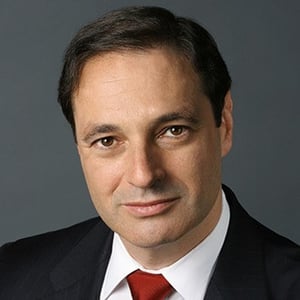
Senior Fellow, Competitive Enterprise Institute
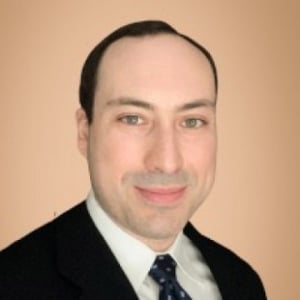
Joel M. Zinberg, M.D., J.D. is a senior fellow with the Competitive Enterprise Institute. He is a native New Yorker who recently completed two years as General Counsel and Senior Economist at the Council of Economic Advisers in the Executive Office of the President. He practiced general and oncologic surgery in New York for nearly 30 years at the Mount Sinai Hospital and Icahn School of Medicine where he is an Associate Clinical Professor of Surgery. He has been involved with health policy issues and the interaction between law and medicine for his entire career. Dr. Zinberg taught for 10 years at the Columbia University Law School as a Lecturer in Law where he created a course on the legal, policy and ethical issues surrounding organ transplantation. He served for many years on the New York State Board of Professional Medical Conduct and on Mount Sinai's Ethics Committee and Institutional Review Board. He is past President and Trustee of the New York County Medical Society. Between 2015 and 2017 he was a Visiting Scholar at the American Enterprise Institute.
Dr. Zinberg has written for publications as varied as the Journal of the American Medical Association, the Bulletin of the American College of Surgeons, the Wall Street Journal, City Journal and law reviews. He is the author of book chapters on legal and policy issues in organ transplantation.
He received his J.D. degree from the Yale Law School, his M.D. from the Columbia University College of Physicians and Surgeons and his B.A. in economics with High Honors, Phi Beta Kappa, from Swarthmore College.

Lewis & Clark Distinguished Professor of Law Emeritus, Lewis & Clark Law School
Professor Funk is the author of American Constitutional Structure and a co-author of one of the leading administrative law casebooks, Administrative Procedure and Practice: Problems and Cases, as well as Administrative Law: Examples & Explanations and the Federal Administrative Procedure Sourcebook. Together with Professor Craig Johnston, Professor Funk is also a co-author of Legal Protection of the Environment, an environmental law casebook. In 2004-05, Funk was a Senior Fulbright Scholar at the University of Heidelberg, where he taught both American constitutional law and environmental law. Funk has published numerous articles on administrative and environmental issues, including in such publications as the Duke Law Journal, the Harvard Journal on Legislation, the Yale Journal on Regulation, the Administrative Law Review, and the U.C.L.A Journal of Environmental Law and Policy. He has chaired both the Administrative Law and Natural Resources Law Sections of the American Association of Law Schools. Funk is also active in the American Bar Association, where he recently served on the ABA’s President’s Task Force on Preemption of State Tort Law and where he is a Fellow of the Administrative Law and Regulatory Practice Section, which he formerly chaired and on whose Council he served. Professor Funk is also a Center for Progressive Reform Scholar, a member of the American Law Institute, and a Fellow of the American Bar Foundation. He has been admitted to practice in New York, the District of Columbia, and before the U.S. Supreme Court.
Before coming to the law school to teach, Professor Funk was an assistant general counsel at the U.S. Department of Energy and earned a special citation for exceptional performance from the Secretary of Energy. Prior to that Funk served as the principal staff member of the Legislation Subcommittee of the U.S. House of Representatives Permanent Select Committee on Intelligence, where he was instrumental in the drafting of the Foreign Intelligence Surveillance Act. Before joining the House Committee, Funk was a staff attorney in the Office of Legal Counsel of the U.S. Department of Justice, where he received a special commendation for outstanding service. Immediately after law school he clerked for Judge James Oakes of the U.S. Court of Appeals, Second Circuit.

President, Harned Strategies LLC
Karen Harned is President at Harned Strategies LLC. Previously, she served as Executive Director of the National Federation of Independent Business Small Business Legal Center, a post she held from 2002-2022. Prior to joining the Legal Center, Ms. Harned was an attorney at a Washington, D.C. law firm specializing in food and drug law, where she represented several small and large businesses and their respective trade associations before Congress and federal agencies. She also served as Assistant Press Secretary to U.S. Senator Don Nickles of Oklahoma from August of 1989 to March of 1993. Ms. Harned received her B.A. from the University of Oklahoma in 1989 and her J.D. from The George Washington University National Law Center in 1995. She is admitted to practice in the District of Columbia.
As Executive Director of the NFIB Small Business Legal Center, Ms. Harned commented regularly on small business cases before federal and state courts, as well as the U.S. Supreme Court. She has appeared on Fox News, Fox Business, NBC Nightly News, CNN, CNBC and MSNBC, as well as National Public Radio, CBS Radio, and radio outlets across the country. Her opinion editorials and articles regarding healthcare, lawsuit abuse, regulation, and other issues important to small business have been published in newspapers and other publications nationwide.
Ms. Harned has testified before Congress on the small business impact of regulation and the civil justice system. Additionally, she has conducted numerous webinars and legal compliance seminars for small business owners across the country on issues relating to employment law, including unionization and immigration.
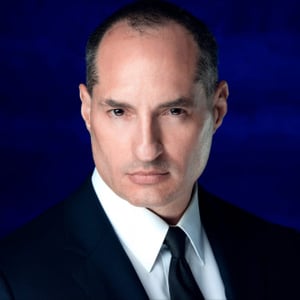
Lecturer in Residence and Executive Director, California Constitution Center, University of California, Berkeley, School of Law
David A. Carrillo received his doctorate from Berkeley Law before joining the faculty as a lecturer in residence and the founding executive director of the California Constitution Center in 2012. The center is devoted to developing scholarship concerning the California constitution and the California Supreme Court. Dr. Carrillo coauthored a casebook on California constitutional law, teaches courses on the California constitution and the California Supreme Court, publishes articles on those subjects, and is editor-in-chief of SCOCAblog.com, a blog about the state high court.
Before starting his academic career Dr. Carrillo was in active practice for 16 years, as a Deputy Attorney General with the California Department of Justice, as a Deputy City Attorney in San Francisco, as a Deputy District Attorney in Contra Costa County, and as a commercial litigation associate in private practice. A member of the California bar since 1995, Dr. Carrillo is admitted to practice before the Supreme Court of the United States, the Ninth Circuit Court of Appeals, and the Northern, Southern, Central, and Eastern District Courts of California.
In October 2019, California Governor Gavin Newsom appointed Dr. Carrillo to a four-year term on the California Law Revision Commission, where he is serving as the 2021-22 vice-chair. He also serves on the board of the Constitutional Rights Foundation and chairs the Citrin Center advisory board. His past charitable and professional board service includes: the Bar Association of San Francisco; the California Bar Foundation; the National Advisory Council of the Institute of Governmental Studies; the Foundation for Democracy and Justice; the State Bar Committee on Appellate Courts; the Justice and Diversity Center of the Bar Association of San Francisco; the Volunteer Legal Services Corporation in Alameda County; and the Berkeley Law Alumni Association. Dr. Carrillo chaired the judicial appointments committee of the Alameda County Bar Association, and served on the State Bar Commission on Judicial Nominees Evaluation and the Committee of Bar Examiners, as well as San Francisco and Alameda bar association committees on judicial appointments. He is a life member of the La Raza Lawyers Association (San Francisco and East Bay) and the Hispanic National Bar Association.
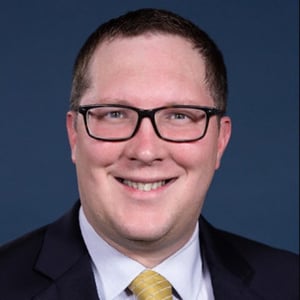
Attorney, Pacific Legal Foundation
Luke A. Wake is an attorney at the Pacific Legal Foundation. Prior to joining PLF, he was a senior staff attorney at the NFIB Small Business Legal Center.
Wake has particular expertise on environmental and land use issues, and has worked on numerous other constitutional issues and matters of importance to small business owners. He is an ardent defender of private property rights, which he believes are essential to the free enterprise system and the foundation of American liberty. As a strong advocate of individual rights and economic liberties, he has built his career defending small business interests.
Wake has focused on a whole host of issues, from employment law matters to regulatory compliance. In addition to serving as a resource for small business owners, Wake is committed to ensuring that the voice of small business is heard in the nation’s courts. As an appellate practitioner, Wake has focused particularly on informing the courts on matters of administrative law and on issues under the Fifth Amendment’s Takings Clause. He is also working to advance small business interests in law review articles, and was recently published in the Berkeley Journal of Law & Ecology. See R.S. Radford & Luke A. Wake, Deciphering and Extrapolating: Searching for Sense in Penn Central, 38 Ecology L.Q. 731, 746-747 (2011).
Before joining the Legal Center’s team, Wake completed a prestigious two-year fellowship as an attorney in the Pacific Legal Foundation’s College of Public Interest Law. Wake is a graduate of Case Western Reserve University School of Law in Cleveland Ohio, and is a member of the California Bar. He completed his undergraduate studies at Elon University in North Carolina in 2006 where he focused on political theory and corporate communications.
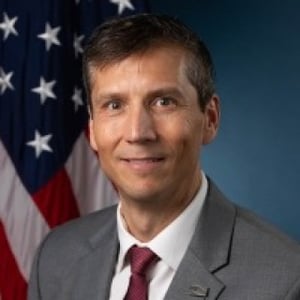
U.S. Attorney, Middle District of Tennessee, U.S. Department of Justice
Braden Boucek was sworn in on December 24, 2025, as the United States Attorney for the Middle District of Tennessee. Prior to becoming United States Attorney, Mr. Boucek served as the senior vice president of litigation at the Southeastern Legal Foundation having previously served as the vice president of legal affairs at the Beacon Center. Mr. Boucek has extensive experience as a prosecutor, starting his career at the Tennessee Attorney General’s Office before serving for two years as an Assistant District Attorney General in Williamson County. He was a federal prosecutor for ten years, first serving as an Assistant United States Attorney in the Western District of Tennessee from 2005 to 2011. From 2011 to 2015, Mr. Boucek was an Assistant United States Attorney in the Middle District of Tennessee, the district he now leads as the United States Attorney.

Vice President of Legal Affairs, Beacon Center of Tennessee
Wen Fa is the Vice President of Legal Affairs at the Beacon Center of Tennessee. He also serves on Beacon’s senior leadership team. Wen leads Beacon’s legal department in its efforts to protect the constitutional rights of property owners, entrepreneurs, and other Americans in courts across the United States. Having immigrated to America from Beijing, Wen believes that property rights, economic liberty, and equality under the law are essential to a free society and strives to advance those principles through his work.
Before joining Beacon, Wen was a senior attorney with Pacific Legal Foundation, where he litigated numerous cases involving equality under the law, free speech, economic liberty, and property rights. Wen litigated two Supreme Court cases: Minnesota Voters Alliance v. Mansky, which vindicated the free speech rights of voters, and Cedar Point Nursery v. Hassid, which secured the property rights of agricultural businesses. Wen has also secured important victories for farmers standing up against a racially discriminatory federal farm loan forgiveness program and small business owners who fought back against racial preferences in small business grants.
In addition to litigation, Wen promotes liberty through speeches, debates, and op-eds. Wen testified before Congress in 2021 and has published numerous op-eds in newspapers such as the Wall Street Journal, the Hill, and San Francisco Chronicle. He has spoken about his work in podcasts, on television, and in speeches to students at Georgetown, Duke, and law schools around the country.
Wen graduated with a bachelor’s degree in finance from the University of Texas-Dallas, a master’s degree in political theory from the London School of Economics, where he studied under libertarian scholar Chandran Kukathas, and a law degree from the University of Michigan. Wen is licensed to practice law in California, Texas, and several federal courts, including the Supreme Court of the United States.
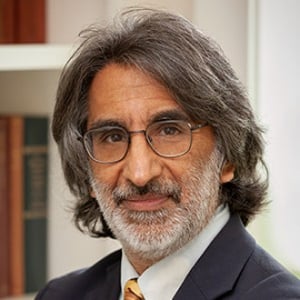
Sterling Professor of Law, Yale Law School
Akhil Reed Amar is Sterling Professor of Law and Political Science at Yale University, where he teaches constitutional law in both Yale College and Yale Law School. After graduating from Yale College, summa cum laude, in 1980 and from Yale Law School in 1984, and clerking for Judge (later Justice) Stephen Breyer, Amar joined the Yale faculty in 1985 at the age of 26. He is Yale’s only living professor to have won the University’s unofficial triple crown — the Sterling Chair for scholarship, the DeVane Medal for teaching, and the Lamar Award for alumni service.
Amar’s work has won awards from both the American Bar Association and the Federalist Society, and he has been cited by Supreme Court justices across the spectrum in more than 50 cases — tops among scholars under age 70. According to both Fred Shapiro’s landmark 2021 study of lifetime scholarly citations and Heinonline’s most recent tabulation of lifetime law-review citations, Amar is America’s second most-cited legal scholar still under age 70. He is a member of the American Academy of Arts and Sciences and has written widely for popular publications, including The New York Times, The Washington Post, The Wall Street Journal, Time, and The Atlantic. He was an informal consultant to the popular TV show The West Wing and his scholarship has been showcased on many broadcasts, including The Colbert Report, Morning Joe, AC360, Velshi, Fox News @ Night with Shannon Bream, Fareed Zakaria GPS, Erin Burnett Outfront, and Constitution USA with Peter Sagal.
He is the author of more than a hundred law review articles and several books, including The Bill of Rights (1998 — winner of the Yale University Press Governors’ Award), America’s Constitution (2005 — winner of the ABA’s Silver Gavel Award), America’s Unwritten Constitution (2012 — named one of the year’s 100 best nonfiction books by The Washington Post), and The Constitution Today (2016 — named one of the year’s top ten nonfiction books by Time magazine). The first volume of his ambitious trilogy on American constitutional history from the Founding to the present, The Words That Made Us: America’s Constitutional Conversation, 1760-1840, came out in May 2021. The second volume, Born Equal: Remaking America’s Constitution, 1840-1920, will be published in September 2025 and is already available for pre-order. All together, his nonfiction books have won two starred reviews from Publishers Weekly and three starred reviews from Kirkus—tops, it is believed, among legal scholars under age 70. Together with Vikram David Amar (YLS ’88), he has a bi-weekly column on the Supreme Court on the distinguished website SCOTUSblog. Along with Andy Lipka, he co-hosts a popular and free weekly podcast, Amarica’s Constitution, whose listeners are eligible for CLE credit in most American jurisdictions. A wide assortment of his articles and op-eds and video links to many of his public lectures and free online courses may be found at akhilamar.com.

Professor of Law, South Texas College of Law Houston
Josh Blackman is a national thought leader on constitutional law and the United States Supreme Court. Josh’s work was quoted during two presidential impeachment trials. He has testified before Congress and advises federal and state lawmakers. Josh regularly appears on TV, including NBC, CBS, ABC, Fox, and the BBC. Josh is also a frequent guest on NPR and other syndicated radio programs. He has published commentaries in the New York Times, Wall Street Journal, Washington Post, and leading national publications.
Since 2012, Josh has served as a professor at the South Texas College of Law Houston. He holds the Centennial Chair of Constitutional Law. Josh is an Adjunct Fellow at the Manhattan Institute. Josh has written more than seven dozen law review articles that have been cited more than a thousand times. Josh was selected as the Jurist of the Year by the Texas Journal of Law & Public Policy, received the inaugural Meese III Originalism Award, and was awarded the Inaugural Joseph Story Award. Josh was selected by Forbes Magazine for the “30 Under 30” in Law and Policy. Josh is the President of the Harlan Institute, and founded FantasySCOTUS, the Internet’s Premier Supreme Court Fantasy League. He blogs at the Volokh Conspiracyand posts@JoshMBlackman.
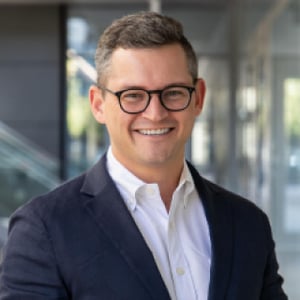
Associate Professor of Law, Sandra Day O'Connor College of Law, Arizona State University
Jonathan Green is an Associate Professor of Law at Arizona State University teaching Civil Procedure and Statutory Interpretation. His scholarship focuses on the history of political and legal thought. He is especially interested in the history of constitutionalism, theories of interpretation, and the concept of judicial power. His research has been published in the Arizona State Law Journal, the Journal of the History of Ideas, Modern Intellectual History, and the Historical Journal.
Prior to joining the ASU faculty in 2024, Professor Green was a Harry A. Bigelow Fellow at the University of Chicago. He previously clerked for Judge Neomi Rao of the U.S. Court of Appeals for the District of Columbia Circuit, and worked as a litigation associate at DLA Piper in Philadelphia.
Professor Green holds a J.D. from Yale Law School, where he was an editor of the Yale Law Journal. He received his PhD from the University of Cambridge, where he was a joint recipient of Prince Consort & Thirwall Prize, awarded annually for the best dissertation in the Cambridge History Faculty. He also received his MPhil from Cambridge, and earned his B.A., summa cum laude, from Northwestern University.
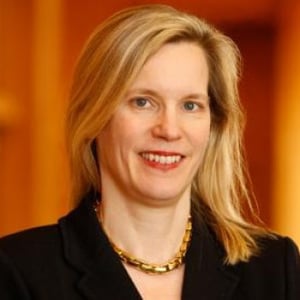
John S. Battle Professor of Law, University of Virginia School of Law
Julia D. Mahoney teaches courses in property, government finance, constitutional law and nonprofit organizations. A graduate of Yale Law School, she joined the University of Virginia faculty as an associate professor in 1999 and is now John S. Battle Professor of Law. She has also taught at the University of Southern California Law School and the University of Chicago Law School, and before entering the legal academy, practiced law at the New York firm Wachtell, Lipton, Rosen & Katz. Her scholarly articles include works on land preservation, eminent domain, health care reform and property rights in human biological materials.
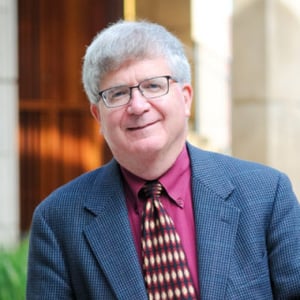
Richard and Frances Mallery Professor of Law and Faculty Director, Constitutional Law Center, Stanford Law School
Michael W. McConnell is the Richard and Frances Mallery Professor and Faculty Director of the Constitutional Law Center at Stanford Law School, and a Senior Fellow at the Hoover Institution. From 2002 to 2009, he served as a Circuit Judge on the United States Court of Appeals for the Tenth Circuit. He was nominated by President George W. Bush, a Republican, and confirmed by a Democratic Senate by unanimous consent. McConnell has previously held chaired professorships at the University of Chicago and the University of Utah, and visiting professorships at Harvard and NYU. He teaches courses on constitutional law, constitutional history, First Amendment, and interpretive theory. He has published widely in the fields of constitutional law and theory, especially church and state, equal protection, and separation of powers. His book, “The President Who Would Not Be King: Executive Power Under the Constitution,” was published by Princeton University Press in 2020, based on the Tanner Lectures in Human Values, which he delivered at Princeton in 2019. His latest book, co-authored with Nathan Chapman, “Agreeing to Disagree: How the Establishment Clause Protects Religious Diversity and Freedom of Conscience,” was published by Oxford University Press in mid-2023. McConnell has argued sixteen cases in the United States Supreme Court, most recently Carney v. Adams (2020). defending a provision of the Delaware Constitution requiring political balance on that state’s courts. More recently, he was co-counsel in Gonzalez v. Google. He earned his B.A. from Michigan State University and his J.D. from the University of Chicago, and has received honorary degrees from Notre Dame University and Michigan State. He served as law clerk to Supreme Court Justice William J. Brennan, Jr. and D.C. Circuit Chief Judge J. Skelly Wright. He has been Assistant General Counsel of the Office of Management & Budget, Assistant to the Solicitor General of the Department of Justice, and a member of the President’s Intelligence Oversight Board. He is Senior of Counsel to the law firm Wilson, Sonsini, Goodrich & Rosati, and is co-chair of Meta’s Oversight Review Board.
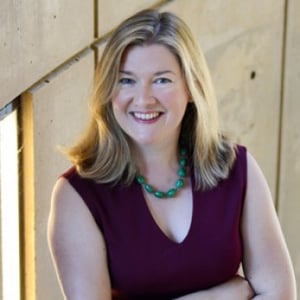
Carl and Shelia Spaeth Professor of Law; Associate Dean for Research and Intellectual Life, Stanford Law School
Bernadette Meyler, JD ’03, is a scholar of British and American constitutional law and of law and the humanities. She returned in 2013 to Stanford Law School, where she had previously served as Leah Kaplan Visiting Professor in Human Rights. Her research and teaching bring together the sometimes surprisingly divided fields of legal history and law and literature. They also examine the long history of constitutionalism, reaching back into the English common law ancestry of the U.S. Constitution. Professor Meyler’s current book projects stem from these respective areas of her scholarship. Theaters of Pardoning (Cornell UP, forthcoming 2019) demonstrates that the representation of pardoning tracks changing conceptions of sovereignty within the plays and politics of seventeenth-century England. In doing so, the book considers how the shared audiences of dramatic and historical tragicomedy—whether Kings, students at the Inns of Court, or potential jurors—brought concepts from the literary into the legal arena and back again. Common Law Originalism shifts to the American context, looking at the multiple eighteenth-century common law meanings—both colonial and English—of various constitutional terms and phrases. Based on this variety, as well as on the practices of common law interpretation with which members of the Founding generation were familiar, the book argues that we should, in large part, reject the pursuit of a singular and determinate original meaning; instead, it contends, we must embrace a more vigorous debate in the present over contested constitutional meanings. Professor Meyler is also the co-editor of several collections of essays in law and the humanities designed to introduce scholars and students to the field, including, with Elizabeth Anker, New Directions in Law and Literature (Oxford UP, 2017) and, with Simon Stern and Maksymilian Del Mar, The Oxford Handbook of Law and the Humanities (Oxford UP, forthcoming 2019).
After receiving her BA in Literature with a focus on Classics at Harvard University, Professor Meyler obtained her JD from Stanford Law School and completed a PhD in English at UC, Irvine as a Mellon Fellow in Humanistic Studies and a Chancellor’s Fellow. Following law school, Professor Meyler clerked for the Hon. Robert A. Katzmann of the U.S. Court of Appeals for the Second Circuit.
Professor Meyler previously taught at Cornell University, where she served, most recently, as Professor of Law and English and Faculty Director of Research at the Cornell Law School. She also visited Princeton University as the inaugural Mellon/LAPA Fellow in Law and the Humanities.
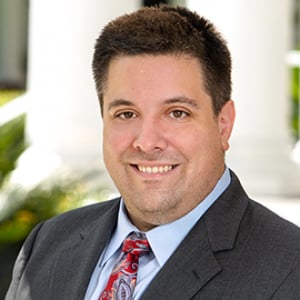
Sheila M. McDevitt Professor of Law and Faculty Director of the Election Law Center, Florida State University College of Law
Professor Morley joined FSU Law in 2018, and teaches and writes in the areas of election law, constitutional law, remedies, and the federal courts. He is best known for his work on election emergencies and post-election litigation, nationwide and other defendant-oriented injunctions, the jurisdiction of the federal courts and their equitable powers more generally. He has testified before congressional committees, made presentations to election officials for the U.S. Election Assistance Commission and participated in bipartisan blue-ribbon groups to develop election reforms. The governor of Florida also appointed Professor Morley to the Criminal Punishment Code Task Force, to propose potential revisions to the legislature.
The U.S. Supreme Court has cited several of his articles, and he was counsel of record for the successful Petitioner in a landmark campaign finance case. Professor Morley has appeared on C-SPAN, Court TV, Fox News and numerous local news programs, and has been quoted in the Washington Post, Los Angeles Times, Roll Call, Politico, U.S. News and World Report, and a wide range of other national publications. His work has been published in many of the nation’s top law reviews, including the Georgetown Law Journal, Northwestern University Law Review, Boston University Law Review and Emory Law Journal.
Before joining FSU Law, Professor Morley was a Climenko Fellow and Lecturer in Law at Harvard Law School. Prior to his experience in academia, he served in government as special assistant to the General Counsel of the Army at the Pentagon, as well as a law clerk for Judge Gerald B. Tjoflat of the U.S. Court of Appeals for the Eleventh Circuit. During his tenure with the Army General Counsel’s office, he was awarded the Meritorious Civilian Service Award and the Army Staff Lapel Pin. He also worked as an associate at Williams & Connolly LLP and the Supreme Court & Appellate group of Winston & Strawn, LLP, both in Washington, D.C.
Professor Morley earned his J.D. from Yale Law School in 2003, where he was a senior editor on the Yale Law Journal; served on the moot court board; and received the Thurman Arnold Prize for Best Oralist in the Morris Tyler Moot Court of Appeals.
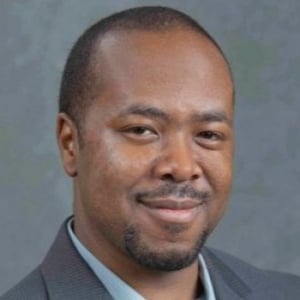
Justice Thurgood Marshall Distinguished Professor of Law, University of Virginia Law
Bertrall Ross joined the law faculty in 2021. He teaches and writes in the areas of constitutional law, constitutional theory, election law, administrative law and statutory interpretation.
Ross’ research is driven by a concern about democratic responsiveness and accountability, as well as the inclusion of marginalized communities in administrative and political processes. His past scholarship has been published in several books and journals, including the Columbia Law Review, New York University Law Review and the University of Chicago Law Review. Two of his articles were selected by the Yale/Harvard/Stanford Junior Faculty Forum.
Ross earned his undergraduate degree in international affairs and history from the University of Colorado, Boulder; his graduate degrees from the London School of Economics and Princeton University’s School of Public and International Affairs; and his law degree from Yale Law School. After law school, he clerked for Judge Dorothy Nelson of the U.S. Court of Appeals for the Ninth Circuit and Judge Myron Thompson of the U.S. District Court for the Middle District of Alabama.

Professor, University of Minnesota Law School
Ilan Wurman is the Julius E. Davis Professor of Law at the University of Minnesota, where he teaches administrative law and constitutional law. He previously taught at Arizona State University. He writes primarily on the Fourteenth Amendment, administrative law, separation of powers, and constitutionalism. His academic writing has appeared in the Yale Law Journal, the Stanford Law Review, the University of Chicago Law Review, the University of Pennsylvania Law Review, the Virginia Law Review, the Duke Law Journal, the Minnesota Law Review, the Notre Dame Law Review, and the Texas Law Review among other journals.
Professor Wurman is the author of a casebook, Administrative Law Theory and Fundamentals: An Integrated Approach (Foundation Press 2d ed. 2024). He is also the author of A Debt Against the Living: An Introduction to Originalism (Cambridge 2017), and The Second Founding: An Introduction to the Fourteenth Amendment (Cambridge 2020). His next book, The Constitution of 1789: A New Introduction, is also forthcoming with Cambridge University Press.
Professor Wurman practices law with the firm Tully Bailey. He has litigated a variety of administrative law and constitutional law cases, including cases involving COVID-19 restrictions, transmission lines, and Appointments Clause challenges. He also devised winning public nuisance theories to force city governments to address the increasingly challenging public camping crises throughout the country.
Professor of Law, South Texas College of Law Houston
Josh Blackman is a national thought leader on constitutional law and the United States Supreme Court. Josh’s work was quoted during two presidential impeachment trials. He has testified before Congress and advises federal and state lawmakers. Josh regularly appears on TV, including NBC, CBS, ABC, Fox, and the BBC. Josh is also a frequent guest on NPR and other syndicated radio programs. He has published commentaries in the New York Times, Wall Street Journal, Washington Post, and leading national publications.
Since 2012, Josh has served as a professor at the South Texas College of Law Houston. He holds the Centennial Chair of Constitutional Law. Josh is an Adjunct Fellow at the Manhattan Institute. Josh has written more than seven dozen law review articles that have been cited more than a thousand times. Josh was selected as the Jurist of the Year by the Texas Journal of Law & Public Policy, received the inaugural Meese III Originalism Award, and was awarded the Inaugural Joseph Story Award. Josh was selected by Forbes Magazine for the “30 Under 30” in Law and Policy. Josh is the President of the Harlan Institute, and founded FantasySCOTUS, the Internet’s Premier Supreme Court Fantasy League. He blogs at the Volokh Conspiracyand posts@JoshMBlackman.
Professor of Law, South Texas College of Law Houston
Josh Blackman is a national thought leader on constitutional law and the United States Supreme Court. Josh’s work was quoted during two presidential impeachment trials. He has testified before Congress and advises federal and state lawmakers. Josh regularly appears on TV, including NBC, CBS, ABC, Fox, and the BBC. Josh is also a frequent guest on NPR and other syndicated radio programs. He has published commentaries in the New York Times, Wall Street Journal, Washington Post, and leading national publications.
Since 2012, Josh has served as a professor at the South Texas College of Law Houston. He holds the Centennial Chair of Constitutional Law. Josh is an Adjunct Fellow at the Manhattan Institute. Josh has written more than seven dozen law review articles that have been cited more than a thousand times. Josh was selected as the Jurist of the Year by the Texas Journal of Law & Public Policy, received the inaugural Meese III Originalism Award, and was awarded the Inaugural Joseph Story Award. Josh was selected by Forbes Magazine for the “30 Under 30” in Law and Policy. Josh is the President of the Harlan Institute, and founded FantasySCOTUS, the Internet’s Premier Supreme Court Fantasy League. He blogs at the Volokh Conspiracyand posts@JoshMBlackman.
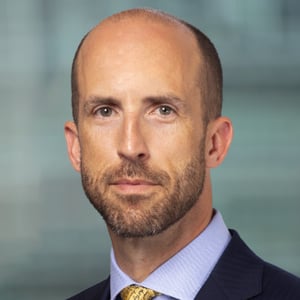
Director of Health Policy Studies, Cato Institute
Michael F. Cannon is the Cato Institute’s director of health policy studies. His scholarship spans public health; regulation of clinicians, medical facilities, pharmaceuticals, and medical devices; employer‐sponsored and other private health insurance; Medicare; Medicaid; CHIP; the Veterans Health Administration; medical malpractice litigation; administrative law; international health systems; political philosophy; and more. Cannon is “an influential health‐care wonk” (Washington Post) and “the most famous libertarian health care scholar” (Washington Examiner). Washingtonian magazine named Cannon one of Washington, DC’s “Most Influential People” in 2021, 2022, and 2023.
Cannon has appeared on ABC, Al Jazeera, BBC, CBS, CNN, CNBC, C‑SPAN, Fox News Channel, NPR, and other broadcast media. His articles have appeared in the Wall Street Journal; the New York Times; USA Today; the Washington Post; the Los Angeles Times; SCOTUSBlog; Forum for Health Economics and Policy; JAMA Internal Medicine; Health Matrix: Journal of Law‐Medicine; Harvard Health Policy Review; the Yale Journal of Health Policy, Law, and Ethics; the Journal of Health Politics, Policy and Law; and Quinnipiac Health Law Journal. His latest book is Recovery: A Guide to Reforming the U.S. Health Sector.
Cannon was previously a domestic policy analyst for the U.S. Senate Republican Policy Committee, where he advised the Senate leadership on health, education, labor, welfare, and the Second Amendment. He is a member of the Board of Advisers of Harvard Health Policy Review and the Federalist Society Regulatory Transparency Project’s FDA & Health Working Group.
Cannon holds an MA in economics and a JM in law and economics from George Mason University and a BA in American government from the University of Virginia.
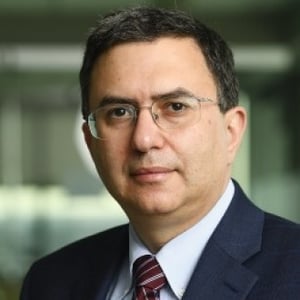
Vice Dean for Public Health Practice and Community Engagement, Bloomberg School of Public Health, Johns Hopkins University
Dr. Joshua M. Sharfstein is Vice Dean for Public Health Practice and Community Engagement and Professor of the Practice in Health Policy and Management at the Johns Hopkins Bloomberg School of Public Health. He is also the Director of the Bloomberg American Health Initiative. He is the author of the Public Health Crisis Survival Guide: Leadership and Management in Trying Times, and the co-author of The Opioid Epidemic: What Everyone Needs to Know.
Previously, Dr. Sharfstein served as Secretary of the Maryland Department of Health and Mental Hygiene from January 2011 to December 2014. In this position, he led efforts to align Maryland’s health care system with improved health outcomes, culminating in the adoption of a revised payment model for all hospital care for Maryland residents. He also oversaw the development of a statewide health improvement process with 18 local public-private coalitions and the reshaping of state’s approach to health information exchange, long-term care, and behavioral health.
From March 2009 to January 2011, Dr. Sharfstein served as Principal Deputy Commissioner of the U.S. Food and Drug Administration, where he oversaw the agency’s successful performance management and transparency initiatives. From December 2005 to March 2009, as Commissioner of Health for Baltimore City, Dr. Sharfstein led innovative efforts that contributed to major declines in both overdose deaths and infant mortality rates. From July 2001 to December 2005, as minority professional staff and health policy advisor for Congressman Henry A. Waxman, Dr. Sharfstein was engaged in a wide range of oversight and legislative activities on health care topics, including emergency preparedness, HIV, and the politicization of science.
Dr. Sharfstein graduated summa cum laude with an A.B. in Social Studies from Harvard College in 1991. From August 1991 to August 1992, he worked on public health projects in Guatemala and Costa Rica with a Frederick Sheldon Prize Fellowship. He graduated from Harvard Medical School in 1996, from the Boston Combined Residency Program in Pediatrics at Boston Medical Center and Children’s Hospital in 1999, and from the fellowship in general academic pediatrics at the Boston University School of Medicine in 2001.
Dr. Sharfstein is an elected member of the Institute of Medicine (2014) and fellow of the National Academy of Public Administration (2013). He serves on the editorial board of the Journal of the American Medical Association. His awards have included the Jay S. Drotman Memorial Award from the American Public Health Association (1994), Public Official of the Year from Governing Magazine (2008) and the Circle of Commendation Award from the Consumer Product Safety Commission (2013).
Dr. Sharfstein lives with his family in Baltimore, Maryland.
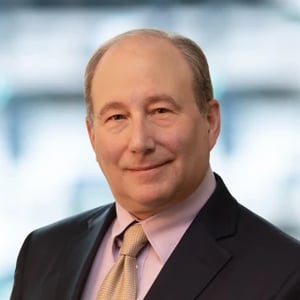
Managing Director, Berkeley Research Group
Dan Troy is the Managing Director at Berkeley Research Group.
Prior to that, he was the Chief Business Officer, Chief Administrative Officer, and General Counsel of Valo in Boston, Massachusetts.
Prior to joining Valo, he served as the Senior Vice President & General Counsel of GlaxoSmithKline and was a member of its Corporate Executive Team. Dan joined GSK in September 2008 and was responsible for leading the company’s legal department in protecting GSK’s intellectual property; managing litigation; supporting business development transactions; and business compliance and risk management. In 2012, Dan led the integration team following the acquisition of Human Genome Sciences, which later resulted in the launch of Benlysta, the first lupus treatment in 50 years. Dan led GSK’s Contributions Committee in the US and also led the Government Affairs, Public Policy and Patient Advocacy team from 2012 until 2014.
Prior to joining GSK, he was a Partner at the Washington law firm Sidley Austin LLP, where he principally represented pharmaceutical companies and trade associations on matters related to the US Food and Drug Administration (FDA) and government regulations. Dan was formerly Chief Counsel for the FDA, where he served as a primary liaison to the White House and the US Department of Health and Human Services.
Dan has chaired the American Bar Association's Section of Administrative Law and is a member of the American Law Institute. He currently chairs the US Chamber of Commerce Litigation Center. He has also chaired the Civil Justice Reform Group, as well as the PhRMA Law Section Executive Committee. He was the 2012 CPR Corporate Leadership Award recipient and, in 2013, was named a 'Legend in the Law' at the Burton Awards.
Dan holds a B.S. in Industrial and Labor Relations from Cornell University and a J.D. from Columbia University School of Law, where he was a member of the Law Review and a Kent Scholar. After graduation from law school, he was a law clerk for the US Circuit Court of Appeals for the District of Columbia Circuit.
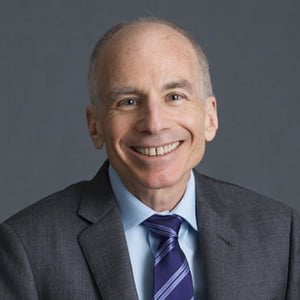
University Professor, Founding Linda D. & Timothy J. O’Neill Professor of Global Health Law, Faculty Director of O’Neill Institute for National & Global Health Law, Georgetown University, Director, World Health Organization Collaborating Center on Public Health Law & Human Rights
Lawrence O. Gostin is University Professor, Georgetown University’s highest academic rank conferred by the University President. Prof. Gostin directs the O’Neill Institute for National and Global Health Law and is the Founding O’Neill Chair in Global Health Law. He served as Associate Dean for Research at Georgetown Law from 2004 to 2008. He is Professor of Medicine at Georgetown University and Professor of Public Health at the Johns Hopkins University.
Prof. Gostin is the Director of the World Health Organization Collaborating Center on National and Global Health Law. The WHO Director-General has appointed Prof. Gostin to high-level positions, including the International Health Regulations (IHR) Roster of Experts and the Expert Advisory Panel on Mental Health. He served on the Director-General’s Advisory Committee on Reforming the World Health Organization, as well as numerous WHO expert advisory committees, including on the Pandemic Influenza Preparedness Framework, smallpox, genomic sequencing data, migrant health, and NCD prevention. He served on the WHO/Global Fund Blue Ribbon Expert Panel: The Equitable Access Initiative to develop a global health equity framework. He co-chairs the Lancet Commission on Global Health Law.
Professor Gostin served on two global commissions to report on the lessons learned from the 2015 West Africa Ebola epidemic. He was also senior advisor to the United Nations Secretary General’s post-Ebola Commission. He also served on the drafting team for the G-7 Summit in Tokyo 2016, focusing on global health security and Universal Health Coverage.
Prof. Gostin holds multiple international academic professorial appointments, including at Oxford University, the University of Witwatersrand (South Africa), and Melbourne University. Prof. Gostin served on the Governing Board of Directors of the Consortium of Universities for Global Health.
Prof. Gostin holds editorial appointments in leading academic journals throughout the world. He is the Legal and Global Health Correspondent for the Journal of the American Medical Association. He is also Founding Editor-in-Chief of Laws (an international open access law journal). He was formally the Editor-in-Chief of the Journal of Law, Medicine & Ethics.
Prof. Gostin holds four honorary degrees. In 1994, the Chancellor of the State University of New York conferred an Honorary Doctor of Laws Degree. In 2006, Her Majesty Queen Elizabeth II and the Vice Chancellor awarded Cardiff University’s (Wales) highest honor, an Honorary Fellow. In 2007, the Royal Institute of Public Health (United Kingdom) appointed Prof. Gostin as a Fellow of the Royal Society of Public Health (FRSPH). In 2012, the Chancellor of the University of Sydney – on the nomination of the Deans of the Law and Medical Schools – conferred a Doctor of Laws (honoris causa), presided by two Justices of Australia’s highest court—Justices Kirby and Haydon.
Prof. Gostin is an elected lifetime Member of the National Academy of Medicine/ National Academy of Sciences. He has served on the National Academy’s Board on Health Sciences Policy, the Board on Population Health, the Human Subjects Review Board, and the Committee on Science, Technology, and Law. He currently serves on the National Academies of Sciences Engineering, and Medicine, Board on Global Health. Gostin chaired the National Academy’s Committee on Global Solutions to Falsified, Substandard, and Counterfeit Medicines. He has chaired National Academy Committees on national preparedness for mass disasters, health informational privacy, public health genomics, and human subject research on prisoners.
Prof. Gostin is also a Member of the Council on Foreign Relations and Fellow of the Hastings Center. In 2016, President Obama appointed Prof. Gostin to a six-year term on the President’s National Cancer Advisory Board to advise the nation on cancer prevention, research, and policy. He also serves on the National Institutes of Health Director’s Advisory Committee on the ethics of public/private partnerships to end the opioid crisis.
Prof. Gostin has led major law reform initiatives in the U.S., including drafting the Model Emergency Health Powers Act (MEHPA) to combat bioterrorism (following the post-9/11 anthrax attacks) and the “Turning Point” Model State Public Health Act. He also spearheaded the World Health Organization and International Development Law Organization’s major report, Advancing the Right to Health: The Vital Role of Law.
Prof. Gostin’s proposal for a Framework Convention on Global Health – an international treaty ensuring the right to health – is now part of a global campaign, endorsed by the UN Secretary-General and Director of UNAIDS.
In the United Kingdom, Lawrence Gostin was the Legal Director of the National Association for Mental Health, Director of the National Council of Civil Liberties (the UK equivalent of the ACLU), and a Fellow at Oxford University. He helped draft the Mental Health Act (England and Wales) and brought landmark cases before the European Court of Human Rights.
Prof. Gostin’s books include: Public Health Law: Power, Duty, Restraint (University of California Press, 3rd ed., 2016); Public Health Law and Ethics: A Reader (University of California Press, 3rd ed., 2018); Human Rights in Global Health: Rights-Based Governance for a Globalizing World (Oxford University Press, 2018); Law and the Health System (Foundation Press, 2014); Principles of Mental Health Law & Practice (Oxford University Press, 2010).
Gostin’s classic text, Global Health Law (Harvard University Press, 2014) is read throughout the world—translated and published in both simplified and traditional Chinese, and in Spanish. Paul Farmer, Partners in Health, says of his book: Global Health Law is “more than the definitive book on a dynamic field. Gostin harnesses the power of international law and human rights as tools to close unconscionable health inequities — the injustices that burden marginalized populations throughout the world. Gostin presents a forceful vision, one that deserves a wide embrace.”
In a 2012 systematic empirical analysis of legal scholarship, independent researchers ranked Prof. Gostin 1st in the nation in productivity among all law professors, and 11th in in impact and influence. A 2017 and 2018 systematic empirical analysis ranked Prof. Gostin 1st in the nation for citations in health law.
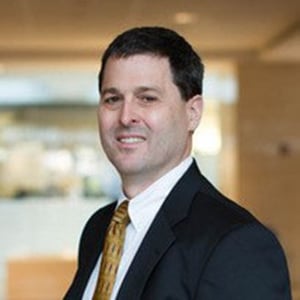
Scott K. Ginsburg Professor of Health Law & Policy, Georgetown University
David A. Hyman, M.D., J.D., is the Scott K. Ginsburg Professor of Health Law & Policy at Georgetown University. Professor Hyman focuses his research and writing on the regulation and financing of health care. He teaches or has taught health care regulation, civil procedure, insurance, medical malpractice, law & economics, professional responsibility, and tax policy.
While serving as Special Counsel to the Federal Trade Commission, Professor Hyman was principal author and project leader for the first joint report ever issued by the Federal Trade Commission and Department of Justice, “Improving Health Care: A Dose of Competition” (2004). He is also the author of Medicare Meets Mephistopheles, which was selected by the U.S. Chamber of Commerce/National Chamber Foundation as one of the top ten books of 2007, and the co-author (with Charles Silver) of Overcharged: Why Americans Pay Too Much for Health Care (2018). He has published widely in student-edited law reviews and peer-reviewed medical, health policy, law, and economics journals.

Litigation Counsel, New Civil Liberties Alliance
Jenin Younes is Litigation Counsel for the New Civil Liberties Alliance. Having always been a passionate advocate for individual liberties, Jenin spent the first part of her career as an appellate public defender, providing representation to indigent clients convicted of criminal offenses in New York City. In this capacity, she briefed and argued countless appeals in New York’s Appellate Division, Second Department, and several cases in the New York State Court of Appeals. She also represented individuals at civil hearings in trial court.
Jenin holds a B.A. from Cornell University and a J.D. from New York University School of Law.
President, Harned Strategies LLC
Karen Harned is President at Harned Strategies LLC. Previously, she served as Executive Director of the National Federation of Independent Business Small Business Legal Center, a post she held from 2002-2022. Prior to joining the Legal Center, Ms. Harned was an attorney at a Washington, D.C. law firm specializing in food and drug law, where she represented several small and large businesses and their respective trade associations before Congress and federal agencies. She also served as Assistant Press Secretary to U.S. Senator Don Nickles of Oklahoma from August of 1989 to March of 1993. Ms. Harned received her B.A. from the University of Oklahoma in 1989 and her J.D. from The George Washington University National Law Center in 1995. She is admitted to practice in the District of Columbia.
As Executive Director of the NFIB Small Business Legal Center, Ms. Harned commented regularly on small business cases before federal and state courts, as well as the U.S. Supreme Court. She has appeared on Fox News, Fox Business, NBC Nightly News, CNN, CNBC and MSNBC, as well as National Public Radio, CBS Radio, and radio outlets across the country. Her opinion editorials and articles regarding healthcare, lawsuit abuse, regulation, and other issues important to small business have been published in newspapers and other publications nationwide.
Ms. Harned has testified before Congress on the small business impact of regulation and the civil justice system. Additionally, she has conducted numerous webinars and legal compliance seminars for small business owners across the country on issues relating to employment law, including unionization and immigration.
Professor, University of Minnesota Law School
Ilan Wurman is the Julius E. Davis Professor of Law at the University of Minnesota, where he teaches administrative law and constitutional law. He previously taught at Arizona State University. He writes primarily on the Fourteenth Amendment, administrative law, separation of powers, and constitutionalism. His academic writing has appeared in the Yale Law Journal, the Stanford Law Review, the University of Chicago Law Review, the University of Pennsylvania Law Review, the Virginia Law Review, the Duke Law Journal, the Minnesota Law Review, the Notre Dame Law Review, and the Texas Law Review among other journals.
Professor Wurman is the author of a casebook, Administrative Law Theory and Fundamentals: An Integrated Approach (Foundation Press 2d ed. 2024). He is also the author of A Debt Against the Living: An Introduction to Originalism (Cambridge 2017), and The Second Founding: An Introduction to the Fourteenth Amendment (Cambridge 2020). His next book, The Constitution of 1789: A New Introduction, is also forthcoming with Cambridge University Press.
Professor Wurman practices law with the firm Tully Bailey. He has litigated a variety of administrative law and constitutional law cases, including cases involving COVID-19 restrictions, transmission lines, and Appointments Clause challenges. He also devised winning public nuisance theories to force city governments to address the increasingly challenging public camping crises throughout the country.
Attorney, Pacific Legal Foundation
Luke A. Wake is an attorney at the Pacific Legal Foundation. Prior to joining PLF, he was a senior staff attorney at the NFIB Small Business Legal Center.
Wake has particular expertise on environmental and land use issues, and has worked on numerous other constitutional issues and matters of importance to small business owners. He is an ardent defender of private property rights, which he believes are essential to the free enterprise system and the foundation of American liberty. As a strong advocate of individual rights and economic liberties, he has built his career defending small business interests.
Wake has focused on a whole host of issues, from employment law matters to regulatory compliance. In addition to serving as a resource for small business owners, Wake is committed to ensuring that the voice of small business is heard in the nation’s courts. As an appellate practitioner, Wake has focused particularly on informing the courts on matters of administrative law and on issues under the Fifth Amendment’s Takings Clause. He is also working to advance small business interests in law review articles, and was recently published in the Berkeley Journal of Law & Ecology. See R.S. Radford & Luke A. Wake, Deciphering and Extrapolating: Searching for Sense in Penn Central, 38 Ecology L.Q. 731, 746-747 (2011).
Before joining the Legal Center’s team, Wake completed a prestigious two-year fellowship as an attorney in the Pacific Legal Foundation’s College of Public Interest Law. Wake is a graduate of Case Western Reserve University School of Law in Cleveland Ohio, and is a member of the California Bar. He completed his undergraduate studies at Elon University in North Carolina in 2006 where he focused on political theory and corporate communications.

Explainer Episode 35 – Why Was the CDC's Travel Mask Mandate Struck Down?
Joel Zinberg
Regulatory Transparency Project's Fourth Branch Podcast
On April 18, Judge Kathryn Kimball Mizelle of the United States District Court for the...
Deep Dive Episode 215 – Sundown for the SUNSET Rule?
William Funk, Karen Harned, Jonah R. Hecht
Regulatory Transparency Project's Fourth Branch Podcast
In January 2021, the Department of Health and Human Services (“HHS”) finalized its SUNSET Rule....
Deep Dive Episode 214 – Emergency Management Statutes: Lessons from COVID-19
David A. Carrillo, Luke A. Wake, Braden H. Boucek
Regulatory Transparency Project's Fourth Branch Podcast
In March 2020, the COVID-19 pandemic was sweeping the country and governors throughout the nation...
Deep Dive Episode 212 – Litigation Update: Roberts v. Bassett: NY Racial Preferences in Allocating COVID Treatments
Wencong Fa
Regulatory Transparency Project's Fourth Branch Podcast
Faced with a limited supply of recently-approved COVID-19 treatments, both the State and City of...
Young Legal Scholars Panel
Akhil Reed Amar, Josh Blackman, Jonathan Green, Julia D. Mahoney, Michael W. McConnell, Bernadette Meyler, Michael T. Morley, Bertrall Ross, Ilan Wurman
2022 National Student Symposium
Before the National Student Symposium begins, the Federalist Society's Faculty Division will host a panel of...
Abortion, Dobbs, and The Future of the Conservative Legal Movement
Josh Blackman
Evansville Lawyers Chapter
On February 18, 2022, the Evansville Lawyers Chapter hosted a Zoom webinar featuring Professor Josh...
Abortion, Dobbs, and The Future of the Conservative Legal Movement
Josh Blackman
Evansville Lawyers Chapter
On February 18, 2022, the Evansville Lawyers Chapter hosted a Zoom webinar featuring Professor Josh...
Deep Dive Episode 209 – Who Should Decide Whether Drugs Are Available Over-The-Counter or by Prescription?
Michael F. Cannon, Joshua Sharfstein, Dan Troy
Regulatory Transparency Project's Fourth Branch Podcast
In October 2020, Michael Cannon and Jeffrey Singer proposed ending the U.S. Food and Drug...
Deep Dive Episode 208 – A Debate on COVID-19 Vaccine Mandates
Lawrence Gostin, David Hyman, Jenin Younes
Regulatory Transparency Project's Fourth Branch Podcast
On February 2, 2022, Lawrence Gostin, David Hyman, and Jenin Younes joined the Federalist Society's...
Explainer Episode 32 – The Vaccine Mandate Cases and the Future of Administrative Law
Karen Harned, Ilan Wurman, Luke A. Wake
Regulatory Transparency Project's Fourth Branch Podcast
On January 13, the Supreme Court stayed the Occupational Safety and Health Administration's (OSHA) COVID-19 vaccine-or-test...