
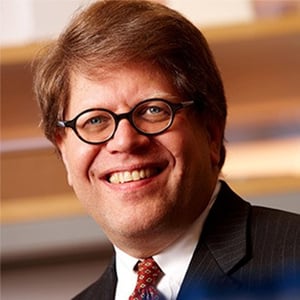
Faculty Fellow, Center for Law, Science & Innovation, Sandra Day O'Connor College of Law, Arizona State University
Dr. Klein is a Faculty Fellow at the Center for Law, Science & Innovation at the Sandra Day O'Connor College of Law at Arizona State University. He is also Principal at Roger D. Klein, MD JD Consulting and Klein & Klein Co., L.P.A. He was formerly Chief Medical Officer at OmniSeq, an oncology focused genomic profiling company that was recently acquired by LabCorp. Previously, Roger was the Medical Director at the Molecular Oncology division at the Cleveland Clinic. He was also the Chair of the Professional Relations Committee at the Association for Molecular Pathology. Prior to joining the Cleveland Clinic, he served as Medical Director of Molecular Oncology at the BloodCenter of Wisconsin where he led the center’s Diagnostic Laboratories’ initiative focused on DNA- and RNA-based testing for evaluation of cancer patients.
Dr. Klein has been an advisor to the Department of Health and Human Services (HHS), the Food and Drug Administration (FDA), the Centers for Medicare and Medicaid Services (CMS), and the Centers for Disease Control and Prevention (CDC). He has participated in and assumed leadership roles in many professional society committees and corporate advisory boards and is a policy advisor to the Heartland Institute.
Dr. Klein is licensed to practice medicine in Ohio, Florida, and Wisconsin. Additionally, he is licensed to practice law in the District of Columbia and Ohio. Roger obtained his Molecular Genetic Pathology certification at Mayo Medical School following completion of his M.D. Yale University School of Medicine. He obtained his J.D. from Yale Law School.
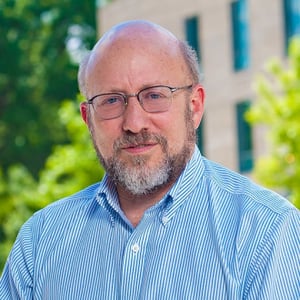
Professor of Law, American University; Washington College of Law
Robert Dinerstein is professor of law and director of the Disability Rights Law Clinic at American University Washington College of Law (AUWCL), where he has taught since 1983. His previous positions include serving as the law school's acting dean (2020-2021), associate dean for academic affairs from (1997-2004), associate dean for experiential education (2012-2018), and director of the clinical program (1988-96 and 2008-2018). He specializes in the fields of clinical education and disability law, especially mental disabilities law (including issues of consent/choice, capacity and supported decision-making and other alternatives to guardianship), the Americans with Disabilities Act, the UN Convention on the Rights of Persons with Disabilities, legal representation of clients with mental disabilities, and disability and international human rights.
Dinerstein has made numerous presentations on clinical legal education and disability law, among other topics, and has published a number of books, articles, chapters and other writing on these subjects.
He is the author/editor of two books. He is co-editor and co-author, with the late Stanley Herr and Joan O’Sullivan, of A Guide to Consent (AAMR, 1999). He is co-author, with the late Stephen Ellmann, Isabelle Gunning, Kate Kruse and Ann Shalleck, of Lawyers and Clients: Critical Issues in Interviewing and Counseling (Thomson West 2009) and the accompanying Teacher’s Manual.
Among Dinerstein’s recent publications in the disability law area, he is the author of:
In the area of legal education and lawyering, his recent articles include “New Wine and New Bottles (on experiential legal education),” 44 Syllabus 2 (Winter 2012-13), Publication of ABA Section on Legal Education and Admissions to the Bar; as co-author (with Margaret Barry, Phyllis Goldfarb, Peggy Maisel and Linda Morton) “Exploring the Meaning of Experiential Deaning,” 67(3) Journal of Legal Education 660 (2018); and ‘The Clinical Law Review at 25: What Hath We Wrought?, 26(1) Clinical Law Review 147 (2019) (25th Anniversary Symposium Issue). He has written extensively on issues of clinical pedagogy and lawyering, in particular, client-centered counseling [especially in his article, “Client-Centered Counseling: Reappraisal and Refinement,” 32 Arizona L. Rev. 501 (1990).] He has also written and presented on the US Department of Justice’s record of enforcement of the rights of persons with disabilities under several administrations.
Dinerstein was appointed by President Clinton in 1994 to serve on the President's Committee on Mental Retardation (now called the President’s Committee on People with Intellectual Disabilities), on which he served until 2001. From 2018-2021, he was a commissioner on the ABA Commission on Disability Rights, and from 2021-present serves as the ABA Section on Civil Rights and Social Justice’s liaison to the Commission. Internationally, he has consulted for the World Health Organization (Ghana and Malawi) and the Open Society Foundations (Ghana and Zambia) regarding the revision of mental health laws and was a signatory to the Montreal Declaration on Intellectual Disabilities, adopted in Montreal, Canada in October 2004. He also has consulted with the Open Society Foundations regarding disability rights clinics and disability rights curricula in Latin America and Southern Africa. Domestically, he has consulted for the Ford Foundation, Public Welfare Foundation and the US Department of Health and Human Services and the US Department of Education on issues related to legal services, disability law and poverty law. He is the principal investigator for the Disability and Human Rights Fellows program, which receives support from the Open Society Foundations.
Prior to joining AUWCL, Dinerstein worked as an attorney in the U.S. Department of Justice's Civil Rights Division, Special Litigation Section, where he handled federal court cases on the rights of people in institutions for people with psychosocial disabilities, people with intellectual disabilities and juveniles. In addition to the Disability Rights Law Clinic, which he founded (and which handles special education, supported decision making, advance mental health directives, Titles I-III of the ADA, and other cases), he teaches a seminar on law and disability and has taught interviewing and counseling, legal ethics, the supervised externship seminar, and the criminal justice clinic (which he directed from 1989-1996).
Dinerstein is actively involved in organizations related to legal education nationally. He was a member (elected) of the Council of the American Bar Association Section on Legal Education and Admissions to the Bar (2006-2011), and previously was on the section’s Standards Review Committee, where he was vice chair. He has been a member of 17 ABA-AALS joint site inspection teams, chairing four teams. Within the Association of American Law Schools, he was a member of the membership review committee and has, among other things, chaired the sections on clinical legal education, law and community, disability law and law and mental disability law, as well as the committees on clinical legal education, sections and the annual meeting, and the planning committee for the 2006 clinical teachers’ conference. He has been a member of a number of other planning committees, including for the AALS New Teachers’ Conference.
Dinerstein currently sits on the boards of directors of the Equal Rights Center (president), and the New Hope Community, Inc. and Foundation, and in the past has served on the boards of the Quality Trust for Individuals with Disabilities, Inc. (founding board member & president, 2001-2016), Washington Legal Clinic for the Homeless, Inc. (founding board member and long-term treasurer, 1986-2015), Advocates for Justice and Education (treasurer), the District of Columbia Bar Board of Governors (elected; 2002-05), Society of American Law Teachers (elected), Mental Disability Rights International (founding board member; now called Disability Rights International), Legal Counsel for the Elderly, and the Maryland Disability Law Center; and the steering committee for the Jacobus tenBroek annual disability law symposium sponsored by the National Federation of the Blind (founding member, and member until 2019).
Among his many awards and honors, Dinerstein has received the WCL Outstanding Service Award (2017-18); been named a Fellow of the American Association on Intellectual and Developmental Disabilities (2016) and received the Paul G. Hearne Award for Disability Rights (ABA, 2013); (with Ann Shalleck) the Egon Guttman Casebook Award (2011-12) for Lawyers and Clients; the William Pincus Award for his contributions to clinical legal education (2010); American University Awards for Scholar-Teacher of the Year (2013), Outstanding Teaching in a Full-Time Appointment (2009) and Faculty-Administrator Award for Outstanding Service to the University Community (2002); and the Pro Bono Service Award from the International Human Rights Law Group (1988).
He has an A.B. degree from Cornell University and a J.D. degree from Yale Law School. He is listed in Who's Who in America).
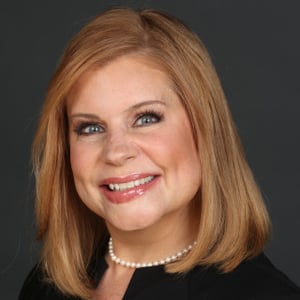
Vice President & Senior Legal Fellow, Defending Education
Sarah Parshall Perry is vice president and senior legal fellow at Defending Education.
Before coming to Defending Education, Sarah served as a Senior Legal Fellow for the Edwin Meese III Center for Legal and Judicial Studies, part of the Institute for Constitutional Government at Heritage, where her work centered on civil rights and the proper role of the courts.
Sarah joined Heritage after serving as Senior Counsel to the Assistant Secretary for Civil Rights at the U.S. Department of Education where she focused on policy reform, technical guidance, and the Office for Civil Rights’ (OCR) annual report to Congress. While at OCR, she was appointed by the Acting Assistant Secretary to co-chair the Employment Engagement, Diversity, & Inclusion Council and, in coordination with the Deputy Assistant Secretary for Enforcement oversee the hiring of dozens of attorneys for OCR’s 12 regional offices nationwide. Prior to her tenure at the Department of Education, she spent six years at the Family Research Council in Washington, D.C. where she was Senior Fellow for Education Reform and later, became the regular substitute host for the “Washington Watch” radio show. Her work at the Family Research Council also included the building and oversight of multiple policy coalitions geared toward the fight against antisemitism in academia, curbing tech censorship, and protecting religious liberty.
Before joining FRC, Sarah was in-house counsel and director of development for a Baltimore advertising agency, providing management of all new business transactions from pitch to contract execution for the multi-million-dollar enterprise. She began her practice at the litigation firm of Simms Showers, LLP where her work included Title VII employment discrimination, maritime/admiralty, and False Claims Act (“Qui Tam”) law. Sarah has a law degree from the University of Virginia School of Law, where she was an editor of the Virginia Journal of International Law, a recipient of the American Jurisprudence award, a Phi Delta Phi honor society member, and a student practitioner in the appellate litigation clinic where she argued before the 4th Circuit Court of Appeals. She holds a B.S. in Journalism with honors from Liberty University.
Her commentary and analysis have appeared in media outlets across the country, including the AP, BBC, Fox News, NPR, The Hill, Washington Post, Washington Times, and the New York Times. She is the mother of three children, and the author of just as many books on the trials and triumphs of parenting children on the autism spectrum. Sarah is a member of the Kirkpatrick Society at the American Enterprise Institute, and makes her home north of Baltimore, Maryland.
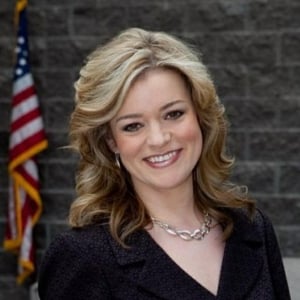
Former Acting Assistant Secretary and Principal Deputy Assistant Secretary, U.S. Department of Education, Office for Civil Rights
Kimberly M. Richey served as acting assistant secretary and principal deputy assistant secretary in the Office for Civil Rights (OCR) at the U.S Department of Education (DOE). Earlier, Richey served as the acting assistant secretary and deputy assistant secretary in the Office of Special Education and Rehabilitative Services at the DOE. Richey was the managing director of federal advocacy and public policy at the National School Boards Association, and earlier she represented the Oklahoma State Department of Education, the State Board of Education, and the state superintendent of public instruction as their general counsel.
Richey was general counsel and associate director of the Oklahoma Council on Law Enforcement Education and Training, a postsecondary education agency focused on peace officer training, and also served the DOE as counselor to the assistant secretary in the Office for Civil Rights. During that time, Richey was also acting chief of staff in the Office of Legislation and Congressional Affairs.
Richey is a certified teacher and is licensed to practice law in Oklahoma, Texas, and the District of Columbia. She holds a J.D. from the University of Oklahoma and a bachelor’s degree in education from Southern Nazarene University. Richey is a native of Corpus Christi, Texas.
Professor of Law, American University; Washington College of Law
Robert Dinerstein is professor of law and director of the Disability Rights Law Clinic at American University Washington College of Law (AUWCL), where he has taught since 1983. His previous positions include serving as the law school's acting dean (2020-2021), associate dean for academic affairs from (1997-2004), associate dean for experiential education (2012-2018), and director of the clinical program (1988-96 and 2008-2018). He specializes in the fields of clinical education and disability law, especially mental disabilities law (including issues of consent/choice, capacity and supported decision-making and other alternatives to guardianship), the Americans with Disabilities Act, the UN Convention on the Rights of Persons with Disabilities, legal representation of clients with mental disabilities, and disability and international human rights.
Dinerstein has made numerous presentations on clinical legal education and disability law, among other topics, and has published a number of books, articles, chapters and other writing on these subjects.
He is the author/editor of two books. He is co-editor and co-author, with the late Stanley Herr and Joan O’Sullivan, of A Guide to Consent (AAMR, 1999). He is co-author, with the late Stephen Ellmann, Isabelle Gunning, Kate Kruse and Ann Shalleck, of Lawyers and Clients: Critical Issues in Interviewing and Counseling (Thomson West 2009) and the accompanying Teacher’s Manual.
Among Dinerstein’s recent publications in the disability law area, he is the author of:
In the area of legal education and lawyering, his recent articles include “New Wine and New Bottles (on experiential legal education),” 44 Syllabus 2 (Winter 2012-13), Publication of ABA Section on Legal Education and Admissions to the Bar; as co-author (with Margaret Barry, Phyllis Goldfarb, Peggy Maisel and Linda Morton) “Exploring the Meaning of Experiential Deaning,” 67(3) Journal of Legal Education 660 (2018); and ‘The Clinical Law Review at 25: What Hath We Wrought?, 26(1) Clinical Law Review 147 (2019) (25th Anniversary Symposium Issue). He has written extensively on issues of clinical pedagogy and lawyering, in particular, client-centered counseling [especially in his article, “Client-Centered Counseling: Reappraisal and Refinement,” 32 Arizona L. Rev. 501 (1990).] He has also written and presented on the US Department of Justice’s record of enforcement of the rights of persons with disabilities under several administrations.
Dinerstein was appointed by President Clinton in 1994 to serve on the President's Committee on Mental Retardation (now called the President’s Committee on People with Intellectual Disabilities), on which he served until 2001. From 2018-2021, he was a commissioner on the ABA Commission on Disability Rights, and from 2021-present serves as the ABA Section on Civil Rights and Social Justice’s liaison to the Commission. Internationally, he has consulted for the World Health Organization (Ghana and Malawi) and the Open Society Foundations (Ghana and Zambia) regarding the revision of mental health laws and was a signatory to the Montreal Declaration on Intellectual Disabilities, adopted in Montreal, Canada in October 2004. He also has consulted with the Open Society Foundations regarding disability rights clinics and disability rights curricula in Latin America and Southern Africa. Domestically, he has consulted for the Ford Foundation, Public Welfare Foundation and the US Department of Health and Human Services and the US Department of Education on issues related to legal services, disability law and poverty law. He is the principal investigator for the Disability and Human Rights Fellows program, which receives support from the Open Society Foundations.
Prior to joining AUWCL, Dinerstein worked as an attorney in the U.S. Department of Justice's Civil Rights Division, Special Litigation Section, where he handled federal court cases on the rights of people in institutions for people with psychosocial disabilities, people with intellectual disabilities and juveniles. In addition to the Disability Rights Law Clinic, which he founded (and which handles special education, supported decision making, advance mental health directives, Titles I-III of the ADA, and other cases), he teaches a seminar on law and disability and has taught interviewing and counseling, legal ethics, the supervised externship seminar, and the criminal justice clinic (which he directed from 1989-1996).
Dinerstein is actively involved in organizations related to legal education nationally. He was a member (elected) of the Council of the American Bar Association Section on Legal Education and Admissions to the Bar (2006-2011), and previously was on the section’s Standards Review Committee, where he was vice chair. He has been a member of 17 ABA-AALS joint site inspection teams, chairing four teams. Within the Association of American Law Schools, he was a member of the membership review committee and has, among other things, chaired the sections on clinical legal education, law and community, disability law and law and mental disability law, as well as the committees on clinical legal education, sections and the annual meeting, and the planning committee for the 2006 clinical teachers’ conference. He has been a member of a number of other planning committees, including for the AALS New Teachers’ Conference.
Dinerstein currently sits on the boards of directors of the Equal Rights Center (president), and the New Hope Community, Inc. and Foundation, and in the past has served on the boards of the Quality Trust for Individuals with Disabilities, Inc. (founding board member & president, 2001-2016), Washington Legal Clinic for the Homeless, Inc. (founding board member and long-term treasurer, 1986-2015), Advocates for Justice and Education (treasurer), the District of Columbia Bar Board of Governors (elected; 2002-05), Society of American Law Teachers (elected), Mental Disability Rights International (founding board member; now called Disability Rights International), Legal Counsel for the Elderly, and the Maryland Disability Law Center; and the steering committee for the Jacobus tenBroek annual disability law symposium sponsored by the National Federation of the Blind (founding member, and member until 2019).
Among his many awards and honors, Dinerstein has received the WCL Outstanding Service Award (2017-18); been named a Fellow of the American Association on Intellectual and Developmental Disabilities (2016) and received the Paul G. Hearne Award for Disability Rights (ABA, 2013); (with Ann Shalleck) the Egon Guttman Casebook Award (2011-12) for Lawyers and Clients; the William Pincus Award for his contributions to clinical legal education (2010); American University Awards for Scholar-Teacher of the Year (2013), Outstanding Teaching in a Full-Time Appointment (2009) and Faculty-Administrator Award for Outstanding Service to the University Community (2002); and the Pro Bono Service Award from the International Human Rights Law Group (1988).
He has an A.B. degree from Cornell University and a J.D. degree from Yale Law School. He is listed in Who's Who in America).
Vice President & Senior Legal Fellow, Defending Education
Sarah Parshall Perry is vice president and senior legal fellow at Defending Education.
Before coming to Defending Education, Sarah served as a Senior Legal Fellow for the Edwin Meese III Center for Legal and Judicial Studies, part of the Institute for Constitutional Government at Heritage, where her work centered on civil rights and the proper role of the courts.
Sarah joined Heritage after serving as Senior Counsel to the Assistant Secretary for Civil Rights at the U.S. Department of Education where she focused on policy reform, technical guidance, and the Office for Civil Rights’ (OCR) annual report to Congress. While at OCR, she was appointed by the Acting Assistant Secretary to co-chair the Employment Engagement, Diversity, & Inclusion Council and, in coordination with the Deputy Assistant Secretary for Enforcement oversee the hiring of dozens of attorneys for OCR’s 12 regional offices nationwide. Prior to her tenure at the Department of Education, she spent six years at the Family Research Council in Washington, D.C. where she was Senior Fellow for Education Reform and later, became the regular substitute host for the “Washington Watch” radio show. Her work at the Family Research Council also included the building and oversight of multiple policy coalitions geared toward the fight against antisemitism in academia, curbing tech censorship, and protecting religious liberty.
Before joining FRC, Sarah was in-house counsel and director of development for a Baltimore advertising agency, providing management of all new business transactions from pitch to contract execution for the multi-million-dollar enterprise. She began her practice at the litigation firm of Simms Showers, LLP where her work included Title VII employment discrimination, maritime/admiralty, and False Claims Act (“Qui Tam”) law. Sarah has a law degree from the University of Virginia School of Law, where she was an editor of the Virginia Journal of International Law, a recipient of the American Jurisprudence award, a Phi Delta Phi honor society member, and a student practitioner in the appellate litigation clinic where she argued before the 4th Circuit Court of Appeals. She holds a B.S. in Journalism with honors from Liberty University.
Her commentary and analysis have appeared in media outlets across the country, including the AP, BBC, Fox News, NPR, The Hill, Washington Post, Washington Times, and the New York Times. She is the mother of three children, and the author of just as many books on the trials and triumphs of parenting children on the autism spectrum. Sarah is a member of the Kirkpatrick Society at the American Enterprise Institute, and makes her home north of Baltimore, Maryland.
Former Acting Assistant Secretary and Principal Deputy Assistant Secretary, U.S. Department of Education, Office for Civil Rights
Kimberly M. Richey served as acting assistant secretary and principal deputy assistant secretary in the Office for Civil Rights (OCR) at the U.S Department of Education (DOE). Earlier, Richey served as the acting assistant secretary and deputy assistant secretary in the Office of Special Education and Rehabilitative Services at the DOE. Richey was the managing director of federal advocacy and public policy at the National School Boards Association, and earlier she represented the Oklahoma State Department of Education, the State Board of Education, and the state superintendent of public instruction as their general counsel.
Richey was general counsel and associate director of the Oklahoma Council on Law Enforcement Education and Training, a postsecondary education agency focused on peace officer training, and also served the DOE as counselor to the assistant secretary in the Office for Civil Rights. During that time, Richey was also acting chief of staff in the Office of Legislation and Congressional Affairs.
Richey is a certified teacher and is licensed to practice law in Oklahoma, Texas, and the District of Columbia. She holds a J.D. from the University of Oklahoma and a bachelor’s degree in education from Southern Nazarene University. Richey is a native of Corpus Christi, Texas.
Faculty Fellow, Center for Law, Science & Innovation, Sandra Day O'Connor College of Law, Arizona State University
Dr. Klein is a Faculty Fellow at the Center for Law, Science & Innovation at the Sandra Day O'Connor College of Law at Arizona State University. He is also Principal at Roger D. Klein, MD JD Consulting and Klein & Klein Co., L.P.A. He was formerly Chief Medical Officer at OmniSeq, an oncology focused genomic profiling company that was recently acquired by LabCorp. Previously, Roger was the Medical Director at the Molecular Oncology division at the Cleveland Clinic. He was also the Chair of the Professional Relations Committee at the Association for Molecular Pathology. Prior to joining the Cleveland Clinic, he served as Medical Director of Molecular Oncology at the BloodCenter of Wisconsin where he led the center’s Diagnostic Laboratories’ initiative focused on DNA- and RNA-based testing for evaluation of cancer patients.
Dr. Klein has been an advisor to the Department of Health and Human Services (HHS), the Food and Drug Administration (FDA), the Centers for Medicare and Medicaid Services (CMS), and the Centers for Disease Control and Prevention (CDC). He has participated in and assumed leadership roles in many professional society committees and corporate advisory boards and is a policy advisor to the Heartland Institute.
Dr. Klein is licensed to practice medicine in Ohio, Florida, and Wisconsin. Additionally, he is licensed to practice law in the District of Columbia and Ohio. Roger obtained his Molecular Genetic Pathology certification at Mayo Medical School following completion of his M.D. Yale University School of Medicine. He obtained his J.D. from Yale Law School.
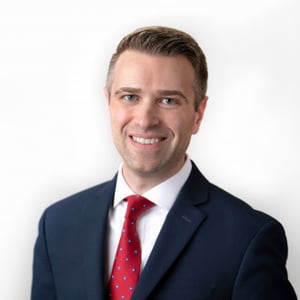
Managing Partner, Cramer Multhauf LLP
Attorney Matthew Fernholz focuses his practice on commercial litigation, trust and fiduciary disputes, business torts, trade secrets, non-compete agreements, defamation, and appellate work. In addition, he has developed one of the preeminent political and election law practices in the State of Wisconsin, and has handled several high-profile matters, from representing candidates for statewide office, successfully challenging the Governor’s emergency powers, arguing before the Wisconsin Elections Commission, and representing the Speaker of the Assembly.
Matthew frequently and successfully tries cases to verdict, and believes a lawyer unwilling to try a case should not take on a client in a litigation matter. In addition to this trial work, he has handled dozens of appeals, and countless dispositive motions.
His work has also been published in law review journals and newspapers alike.
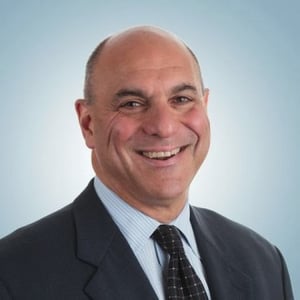
Senior Partner, Pines Bach LLP
Lester Pines is a Senior Partner in the firm.
A Fellow of the American College of Trial Lawyers, he is a respected civil and criminal litigator and appellate advocate. In his over 40 years of practice, he has appeared in trial and appellate courts throughout Wisconsin, in numerous federal district courts, and before the federal 7th Circuit Court of Appeals. After a recent trial, one of Lester’s clients wrote:
"Seeing you in action was like watching an artist create a classic painting from a blank canvas but instead of paint you used facts, figures and, most importantly, words to achieve a masterpiece in the courtroom."
His wide-ranging civil trial practice encompasses commercial claims, employment disputes, constitutional and civil rights matters, personal injury and intellectual property cases. His criminal defense work has involved many high profile cases, especially involving teachers, police officers and other public employees. He is counsel to Madison Teachers Inc., which represents the employees of the Madison Metropolitan School District.
Recently, Lester was featured in a cover story in Isthmus, a Madison weekly newspaper, " Activist Attorney – Lester Pines draws on faith and family in his practice and beyond."
Recent challenges to the constitutionality of newly enacted laws that Lester brought on behalf of his clients include:
Previously, in cases in which he was appointed by former Wisconsin Governor Jim Doyle, Lester defended Wisconsin’s law creating domestic partnerships for same sex couples and stopped an attempt by then Attorney General J.B. Van Hollen to suppress voting in the 2008 Presidential election.
Among the many cases Lester has argued before the Wisconsin Supreme Court, two in particular have shaped Wisconsin law. In 2010 he represented the Zurich American Insurance Company inMiller v. Hanover Insurance, securing the reversal of a $2,000,000 default judgment against his client and achieving a significant change in Wisconsin law regarding relief from such judgments. In an original action in 1996, he successfully argued the case of Thompson v. Craney, which delineated the constitutionally vested powers of the State Superintendent of Public Instruction and protected them from being altered by the Legislature, which the Wisconsin Supreme Court reaffirmed in 2016 in Coyne v. Walker.
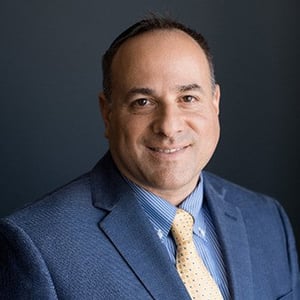
Policy Advisor, Heartland Institute
Jeff Stier is a policy advisor to the Heartland Institute.
He is widely quoted in the media and has written health policy op-eds for The Wall Street Journal, the Los Angeles Times, USA Today, The New York Post, The Washington Examiner, and Foxnews.com. The New York Times, the Associated Press, Reuters, CNN, Fox News, CNBC, MSNBC, NPR and other major outlets have interviewed and quoted Stier on a wide range of topics.
Stier has testified at state and local legislatures throughout the U.S., at FDA scientific hearings and at the Office of Management and Budget. He has also been a voice for freedom at hearings at the United Nations and in Israel’s Knesset. During more than two decades of advancing public health and defending liberty, Stier has been a speaker at CPAC, policy retreats for elected officials and medical and legal conferences.
Stier advises leading investment firms on regulatory and legal risk.
Earlier, Mr. Stier crafted health and environmental policy in the Office of the Mayor during the Giuliani administration in New York City.
Mr. Stier serves on the boards of the non-profit Jewish International Connections and Park City Jewish Collective. While earning his law degree at the Benjamin N. Cardozo School of Law, Mr. Stier served two terms as Editor-In-Chief of the Cardozo Law Forum. Jeff and his canine, BB, served as a Certified Crisis Response Strike Team with NATIONAL Crisis Response Canines, supporting survivors and first-responders.
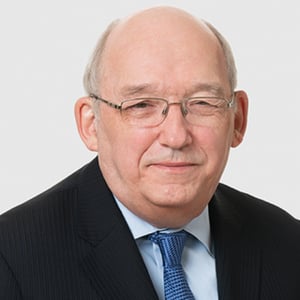
Senior Fellow, American Enterprise Institute
Thomas Miller is a senior fellow at the American Enterprise Institute (AEI), where he studies health care policy, including regulatory barriers to choice and competition, market-based alternatives to the Affordable Care Act, health care litigation, and the political economy of health care reform.
A former senior health economist for the Joint Economic Committee in Congress, Mr. Miller was previously a trial attorney, journalist, and sports broadcaster.
Mr. Miller is the coauthor of the bestseller “Why Obamacare Is Wrong for America” (HarperCollins, 2011), the first in-depth examination of the impact of the Affordable Care Act. His analyses and commentary have been published and featured widely in peer-reviewed publications and in the popular press, including Cato Journal, Health Affairs, Law and Contemporary Problems, the Journal of Law, Medicine, and Politics, the Los Angeles Times, The New York Times, USA Today, The Wall Street Journal, and The Washington Post.
Mr. Miller has also testified before Congress on the uninsured, health care costs, Medicare cost sharing, high-risk pools, health care competition, health insurance tax credits, the individual mandate, genetic information, Social Security, and the federal reinsurance of catastrophic events, among others. He also speaks regularly on various college campuses and teaches a seminar on “Shaping Law and Policy” at Duke University School of Law.
Mr. Miller has a JD from the Duke University School of Law and a BA in political science from New York University.

Partner, King & Spalding
John Richter is a trial and investigations partner in the Special Matters and Investigations Practice Group, and represents and defends companies, Boards of Directors, Board committees, and individuals facing a variety of white-collar criminal and regulatory enforcement matters, parallel civil litigation, and internal corporate investigations. John previously served as the Acting Assistant Attorney General in charge of the Criminal Division at the U.S. Department of Justice and as the U.S. Attorney for the Western District of Oklahoma, having been nominated by President George W. Bush and confirmed by unanimous consent of the U.S. Senate.
Partner, King & Spalding
John Richter is a trial and investigations partner in the Special Matters and Investigations Practice Group, and represents and defends companies, Boards of Directors, Board committees, and individuals facing a variety of white-collar criminal and regulatory enforcement matters, parallel civil litigation, and internal corporate investigations. John previously served as the Acting Assistant Attorney General in charge of the Criminal Division at the U.S. Department of Justice and as the U.S. Attorney for the Western District of Oklahoma, having been nominated by President George W. Bush and confirmed by unanimous consent of the U.S. Senate.
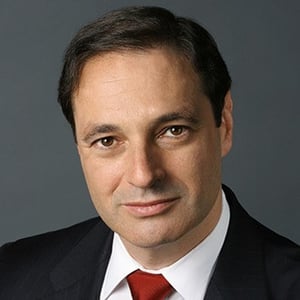
Senior Fellow, Competitive Enterprise Institute
Joel M. Zinberg, M.D., J.D. is a senior fellow with the Competitive Enterprise Institute. He is a native New Yorker who recently completed two years as General Counsel and Senior Economist at the Council of Economic Advisers in the Executive Office of the President. He practiced general and oncologic surgery in New York for nearly 30 years at the Mount Sinai Hospital and Icahn School of Medicine where he is an Associate Clinical Professor of Surgery. He has been involved with health policy issues and the interaction between law and medicine for his entire career. Dr. Zinberg taught for 10 years at the Columbia University Law School as a Lecturer in Law where he created a course on the legal, policy and ethical issues surrounding organ transplantation. He served for many years on the New York State Board of Professional Medical Conduct and on Mount Sinai's Ethics Committee and Institutional Review Board. He is past President and Trustee of the New York County Medical Society. Between 2015 and 2017 he was a Visiting Scholar at the American Enterprise Institute.
Dr. Zinberg has written for publications as varied as the Journal of the American Medical Association, the Bulletin of the American College of Surgeons, the Wall Street Journal, City Journal and law reviews. He is the author of book chapters on legal and policy issues in organ transplantation.
He received his J.D. degree from the Yale Law School, his M.D. from the Columbia University College of Physicians and Surgeons and his B.A. in economics with High Honors, Phi Beta Kappa, from Swarthmore College.

Explainer Episode 55 - 10 Years On: The Impact and Effects of AMP vs. Myriad
Roger D. Klein
Regulatory Transparency Project's Fourth Branch Podcast
On June 13, 2013, the Supreme Court issued its unanimous decision in Association for Molecular...
504 Regulations Under the Current Administration
Robert Dinerstein, Sarah Parshall Perry, Kimberly M. Richey
Section 504 of the Rehabilitation Act of 1973 protects qualified "individuals with disabilities" from discrimination...
504 Regulations Under the Current Administration
Robert Dinerstein, Sarah Parshall Perry, Kimberly M. Richey
Section 504 of the Rehabilitation Act of 1973 protects qualified "individuals with disabilities" from discrimination...
Explainer Episode 53 - Biologics, Biosimilars, and the Two-fold U.S. Approval Framework’s Possible Impact on Prices
Roger D. Klein
Regulatory Transparency Project's Fourth Branch Podcast
Biosimilars, a category of biologic (medicine derived from a living organism), require approval, at least...
Pandemic Powers: Wisconsin's State of Emergency
Matthew M. Fernholz, Lester A. Pines
The COVID-19 Pandemic renewed the debate over state powers and their limits, specifically state emergency...
Explainer Episode 52 - What Came Next: FDA's Response to the Reagan-Udall Foundation’s December Reports on FDA's Tobacco and Human Foods Program
Jeff Stier
Regulatory Transparency Project's Fourth Branch Podcast
In late February 2023, the FDA released its responses to the December 2022 Reagan-Udall Foundation...
Explainer Episode 51 - Beyond Medicaid? Potential Paths Forward to Better Healthcare
Thomas P. Miller
Regulatory Transparency Project's Fourth Branch Podcast
Signed into law in 1965, Medicaid has been active for almost 58 years, during which...
Courthouse Steps Oral Argument: Dubin v. United States
John C. Richter
On February 27, 2023, the United States Supreme Court is set to hear Oral Argument...
Courthouse Steps Oral Argument: Dubin v. United States
John C. Richter
On February 27, 2023, the United States Supreme Court is set to hear Oral Argument...
Explainer Episode 48 - The FDA & the Practice of Medicine: Possible Regulation of Off-Label Prescriptions
Joel Zinberg
Regulatory Transparency Project's Fourth Branch Podcast
On December 29, 2022, President Biden signed the Consolidated Appropriations Act, 2023 into law. This omnibus law...