
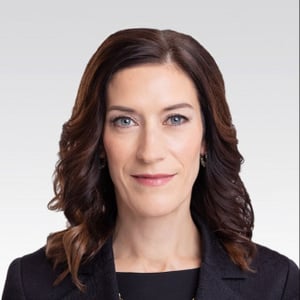
Executive Vice President of Global Governance, Chief Legal Officer and Corporate Secretary, Walmart Inc.
Rachel Brand is Walmart’s executive vice president of global governance, chief legal officer, and corporate secretary. She oversees the company’s global legal, compliance, ethics, corporate governance, digital citizenship, aviation, investigative, and corporate security functions, including Walmart’s Emergency Operations Center.
Immediately before joining Walmart, Rachel served as the United States Associate Attorney General and holds the distinction of being the first woman to serve in this role. She had previously served in the U.S. Department of Justice as the Assistant Attorney General for the Office of Legal Policy during President George W. Bush’s administration. Her other government service includes an appointment by President Obama to serve as a Member of the U.S. Privacy and Civil Liberties Oversight Board, service as an Associate Counsel to the President at the White House, and judicial clerkships with Justice Charles Fried of the Supreme Judicial Court of Massachusetts and Justice Anthony Kennedy at the Supreme Court of the United States. In the private sector, Rachel was a lawyer in private practice at two law firms in Washington, D.C. and served as the Vice President and Chief Counsel for Regulatory Litigation at the U.S. Chamber of Commerce Litigation Center.
Rachel serves on the board of directors for the Walmart Foundation and is the executive sponsor for Walmart’s Tribal Voices Associate Resource Group. Outside of Walmart, she serves on the board of directors for the International Justice Mission and is a member of The American Law Institute.
Rachel earned her Bachelor of Arts degree from the University of Minnesota-Morris and her J.D. from Harvard Law School.
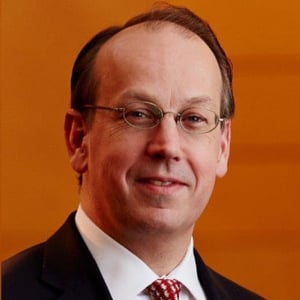
Partner, Clement & Murphy, PLLC
Paul served as the 43rd Solicitor General of the United States from June 2005 until June 2008. Before his confirmation as Solicitor General, he served as Acting Solicitor General for nearly a year and as Principal Deputy Solicitor General for over three years.
Paul has argued over 100 cases before the United States Supreme Court, including McConnell v. FEC, Tennessee v. Lane, United States v. Booker, MGM v. Grokster, Hobby Lobby v. Burwell, Epic Systems Corp. v. Lewis, Rucho v. Common Cause, Facebook v. Duguid, and TransUnion v. Ramirez. Paul has argued more Supreme Court cases since 2000 than any lawyer in or out of government. He has also argued many important cases in the lower courts, including Walker v. Cheney, United States v. Moussaoui and NFL v. Brady.
Paul’s practice focuses on appellate matters, constitutional litigation and strategic counseling. He represents a broad array of clients in the Supreme Court and in federal and state appellate courts. Last year, for example, he successfully argued Supreme Court cases involving significant issues of energy regulation, statutory interpretation, state sovereign immunity and Article III standing, and successfully argued a trademark appeal in the Fourth Circuit, and a constitutional appeal before the en banc Eleventh Circuit.
Paul focuses on high-stakes appeals. In recent years, he successfully defended a $1.2 billion jury verdict for clients in a Tenth Circuit case, while securing the reversal of an over $2 billion jury verdict for another client in the Seventh Circuit and the approval of a nearly $1 billion dollar class action settlement in the Third Circuit. He has initiated major administrative law challenges and constitutional litigation against the federal government, such as the successful challenge to the HHS drug-pricing rule and threatened challenges that led to the withdrawal of the Treasury Department’s proposed cryptocurrency regulations. He also counsels clients on a variety of strategic legal questions, whether arising from pending legislation, government inquiries or ongoing litigation.
Paul has undertaken substantial pro bono engagements in the Supreme Court, such as twice successfully representing the defendant in Bond v. United States and successfully representing the Omaha Tribe in Nebraska v. Parker, the guardian ad litem in Adoptive Couple v. Baby Girl, the defendant in Sekhar v. United States, a high school football coach in Kennedy v. Bremerton, and the Little Sisters of the Poor. Paul’s pro bono representation also precipitated the federal government’s confession of error in United States v. Rojas.
Following law school, Paul clerked for Judge Laurence H. Silberman of the U.S. Court of Appeals for the D.C. Circuit and for Associate Justice Antonin Scalia of the U.S. Supreme Court. After his clerkships, he went on to serve as Chief Counsel of the U.S. Senate Subcommittee on the Constitution, Federalism and Property Rights.
Paul is a Distinguished Lecturer in Law at the Georgetown University Law Center, where he has taught in various capacities since 1998. He also serves as a Senior Fellow of the Law Center’s Supreme Court Institute. He is the Justice Joseph Story Distinguished Practitioner in Residence at the Gray Center at Scalia Law School.
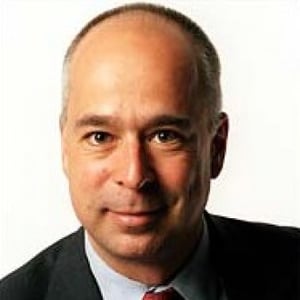
Supreme Court Correspondent, The New York Times
Adam Liptak covers the Supreme Court for The New York Times. Liptak’s column on legal affairs, “Sidebar,” appears every other Tuesday.
A graduate of Yale College and Yale Law School, Liptak practiced law at a large New York City law firm and in the legal department of The New York Times Company before joining the paper’s news staff in 2002.
Liptak was a finalist for the Pulitzer Prize in explanatory reporting in 2009 for “American Exception,” a series of articles examining ways in which the American legal system differs from those of other developed nations. He received the 2010 Scripps Howard Award for Washington reporting for a five-part series on the Roberts Court.
He is the author of “To Have and Uphold: The Supreme Court and the Battle for Same-Sex Marriage.”
His journalism has appeared in The New Yorker, Vanity Fair, Business Week and Rolling Stone, and he has published articles in The Arizona Law Review, The Michigan Law Review and The New York University Annual Survey of American Law.
Liptak has taught courses at Yale, Columbia, the University of Chicago, Washington University in St. Louis, the University of Southern California and U.C.L.A. He is a member of the American Academy of Arts and Sciences.
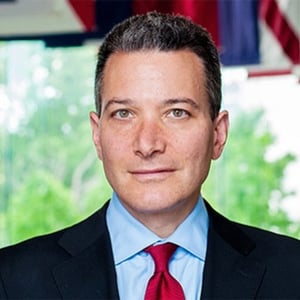
Senior Fellow, FIRE and CEO Emeritus, National Constitution Center
Jeffrey Rosen is a senior FIRE fellow as well as the host of “The Blessings of Liberty” podcast, presented by FIRE. He is also the CEO emeritus of the National Constitution Center, a professor of law at the George Washington University Law School, and a contributing editor of The Atlantic. He was previously the legal affairs editor of The New Republic and a staff writer for The New Yorker.
Rosen is the author of the New York Times bestsellers The Pursuit of Happiness and Conversations with RBG. His new book is The Pursuit of Liberty: How Hamilton vs. Jefferson Ignited the Lasting Battle Over Power in America.
Rosen is a graduate of Harvard College; Oxford University, where he was a Marshall Scholar; and Yale Law School. He is an elected member of the American Philosophical Society and the American Law Institute. In 2024, the French government recognized him as a Chevalier in the Ordre des Arts et des Lettres.
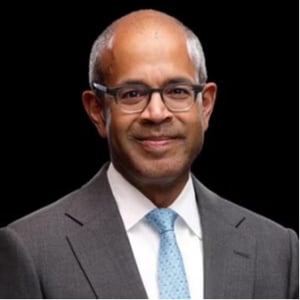
Partner, Davis Polk & Wardwell LLP
Kannon is the head of our Supreme Court & Appellate practice. He has argued 39 cases before the U.S. Supreme Court and has argued more than 150 appeals in courts across the country, including every federal court of appeals and numerous state courts.
Kannon is ranked as a “Star Individual” in appellate law by Chambers USA, where a client notes, “It’s hard to think of enough superlatives to describe his talent, his judgment, his ability, his experience – he is as good as it gets.” Legal 500 U.S. recognizes Kannon in its Hall of Fame for appellate work. A client shares, “His work is the best in the business, and he is a wonderful human being in addition to being a world-class appellate litigator.”
In 2024 and 2022, Kannon was a finalist for the American Lawyer’s “Litigator of the Year” award. He was named “Appellate Litigator of the Year” by Benchmark Litigation in 2021 and was a 2026 finalist for that recognition.
Before entering private practice, Kannon served as an Assistant to the Solicitor General at the U.S. Department of Justice.
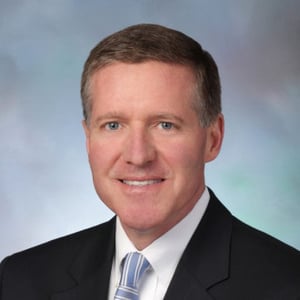
Partner, Davis Polk & Wardwell LLP
Kenneth Wainstein is a partner at Davis Polk & Wardwell, where he focuses his practice on corporate internal investigations and civil and criminal enforcement proceedings. Ken spent over 20 years in a variety of law enforcement and national security positions in the government. Between 1989 and 2001, Ken served as an Assistant U.S. Attorney in both the Southern District of New York and the District of Columbia, where he handled criminal prosecutions ranging from public corruption to gang prosecution cases and held a variety of supervisory positions, including Acting United States Attorney. In 2001, he was appointed Director of the Executive Office for U.S. Attorneys, where he provided oversight and support to the 94 U.S. Attorneys’ Offices. Between 2002 and 2004, Ken served as General Counsel of the Federal Bureau of Investigation and then as Chief of Staff to Director Robert S. Mueller III. In 2004, Ken was appointed and then confirmed as United States Attorney for the District of Columbia, where he had the privilege to lead the largest United States Attorney’s Office in the country. In 2006, the U.S. Senate confirmed Ken as the first Assistant Attorney General for National Security. In that position, Ken established and led the new National Security Division, which consolidated DOJ’s law enforcement and intelligence activities on counterterrorism and counterintelligence matters. In 2008, after 19 years at the Justice Department, Ken was named Homeland Security Advisor by President George W. Bush. In this capacity, he coordinated the nation’s counterterrorism, homeland security, infrastructure protection, and disaster response and recovery efforts. He advised the President, convened and chaired meetings of the Cabinet Officers on the Homeland Security Council, and oversaw the inter-agency coordination process for homeland security and counterterrorism programs.
Executive Vice President of Global Governance, Chief Legal Officer and Corporate Secretary, Walmart Inc.
Rachel Brand is Walmart’s executive vice president of global governance, chief legal officer, and corporate secretary. She oversees the company’s global legal, compliance, ethics, corporate governance, digital citizenship, aviation, investigative, and corporate security functions, including Walmart’s Emergency Operations Center.
Immediately before joining Walmart, Rachel served as the United States Associate Attorney General and holds the distinction of being the first woman to serve in this role. She had previously served in the U.S. Department of Justice as the Assistant Attorney General for the Office of Legal Policy during President George W. Bush’s administration. Her other government service includes an appointment by President Obama to serve as a Member of the U.S. Privacy and Civil Liberties Oversight Board, service as an Associate Counsel to the President at the White House, and judicial clerkships with Justice Charles Fried of the Supreme Judicial Court of Massachusetts and Justice Anthony Kennedy at the Supreme Court of the United States. In the private sector, Rachel was a lawyer in private practice at two law firms in Washington, D.C. and served as the Vice President and Chief Counsel for Regulatory Litigation at the U.S. Chamber of Commerce Litigation Center.
Rachel serves on the board of directors for the Walmart Foundation and is the executive sponsor for Walmart’s Tribal Voices Associate Resource Group. Outside of Walmart, she serves on the board of directors for the International Justice Mission and is a member of The American Law Institute.
Rachel earned her Bachelor of Arts degree from the University of Minnesota-Morris and her J.D. from Harvard Law School.
Partner, Clement & Murphy, PLLC
Paul served as the 43rd Solicitor General of the United States from June 2005 until June 2008. Before his confirmation as Solicitor General, he served as Acting Solicitor General for nearly a year and as Principal Deputy Solicitor General for over three years.
Paul has argued over 100 cases before the United States Supreme Court, including McConnell v. FEC, Tennessee v. Lane, United States v. Booker, MGM v. Grokster, Hobby Lobby v. Burwell, Epic Systems Corp. v. Lewis, Rucho v. Common Cause, Facebook v. Duguid, and TransUnion v. Ramirez. Paul has argued more Supreme Court cases since 2000 than any lawyer in or out of government. He has also argued many important cases in the lower courts, including Walker v. Cheney, United States v. Moussaoui and NFL v. Brady.
Paul’s practice focuses on appellate matters, constitutional litigation and strategic counseling. He represents a broad array of clients in the Supreme Court and in federal and state appellate courts. Last year, for example, he successfully argued Supreme Court cases involving significant issues of energy regulation, statutory interpretation, state sovereign immunity and Article III standing, and successfully argued a trademark appeal in the Fourth Circuit, and a constitutional appeal before the en banc Eleventh Circuit.
Paul focuses on high-stakes appeals. In recent years, he successfully defended a $1.2 billion jury verdict for clients in a Tenth Circuit case, while securing the reversal of an over $2 billion jury verdict for another client in the Seventh Circuit and the approval of a nearly $1 billion dollar class action settlement in the Third Circuit. He has initiated major administrative law challenges and constitutional litigation against the federal government, such as the successful challenge to the HHS drug-pricing rule and threatened challenges that led to the withdrawal of the Treasury Department’s proposed cryptocurrency regulations. He also counsels clients on a variety of strategic legal questions, whether arising from pending legislation, government inquiries or ongoing litigation.
Paul has undertaken substantial pro bono engagements in the Supreme Court, such as twice successfully representing the defendant in Bond v. United States and successfully representing the Omaha Tribe in Nebraska v. Parker, the guardian ad litem in Adoptive Couple v. Baby Girl, the defendant in Sekhar v. United States, a high school football coach in Kennedy v. Bremerton, and the Little Sisters of the Poor. Paul’s pro bono representation also precipitated the federal government’s confession of error in United States v. Rojas.
Following law school, Paul clerked for Judge Laurence H. Silberman of the U.S. Court of Appeals for the D.C. Circuit and for Associate Justice Antonin Scalia of the U.S. Supreme Court. After his clerkships, he went on to serve as Chief Counsel of the U.S. Senate Subcommittee on the Constitution, Federalism and Property Rights.
Paul is a Distinguished Lecturer in Law at the Georgetown University Law Center, where he has taught in various capacities since 1998. He also serves as a Senior Fellow of the Law Center’s Supreme Court Institute. He is the Justice Joseph Story Distinguished Practitioner in Residence at the Gray Center at Scalia Law School.
Supreme Court Correspondent, The New York Times
Adam Liptak covers the Supreme Court for The New York Times. Liptak’s column on legal affairs, “Sidebar,” appears every other Tuesday.
A graduate of Yale College and Yale Law School, Liptak practiced law at a large New York City law firm and in the legal department of The New York Times Company before joining the paper’s news staff in 2002.
Liptak was a finalist for the Pulitzer Prize in explanatory reporting in 2009 for “American Exception,” a series of articles examining ways in which the American legal system differs from those of other developed nations. He received the 2010 Scripps Howard Award for Washington reporting for a five-part series on the Roberts Court.
He is the author of “To Have and Uphold: The Supreme Court and the Battle for Same-Sex Marriage.”
His journalism has appeared in The New Yorker, Vanity Fair, Business Week and Rolling Stone, and he has published articles in The Arizona Law Review, The Michigan Law Review and The New York University Annual Survey of American Law.
Liptak has taught courses at Yale, Columbia, the University of Chicago, Washington University in St. Louis, the University of Southern California and U.C.L.A. He is a member of the American Academy of Arts and Sciences.
Senior Fellow, FIRE and CEO Emeritus, National Constitution Center
Jeffrey Rosen is a senior FIRE fellow as well as the host of “The Blessings of Liberty” podcast, presented by FIRE. He is also the CEO emeritus of the National Constitution Center, a professor of law at the George Washington University Law School, and a contributing editor of The Atlantic. He was previously the legal affairs editor of The New Republic and a staff writer for The New Yorker.
Rosen is the author of the New York Times bestsellers The Pursuit of Happiness and Conversations with RBG. His new book is The Pursuit of Liberty: How Hamilton vs. Jefferson Ignited the Lasting Battle Over Power in America.
Rosen is a graduate of Harvard College; Oxford University, where he was a Marshall Scholar; and Yale Law School. He is an elected member of the American Philosophical Society and the American Law Institute. In 2024, the French government recognized him as a Chevalier in the Ordre des Arts et des Lettres.
Partner, Davis Polk & Wardwell LLP
Kannon is the head of our Supreme Court & Appellate practice. He has argued 39 cases before the U.S. Supreme Court and has argued more than 150 appeals in courts across the country, including every federal court of appeals and numerous state courts.
Kannon is ranked as a “Star Individual” in appellate law by Chambers USA, where a client notes, “It’s hard to think of enough superlatives to describe his talent, his judgment, his ability, his experience – he is as good as it gets.” Legal 500 U.S. recognizes Kannon in its Hall of Fame for appellate work. A client shares, “His work is the best in the business, and he is a wonderful human being in addition to being a world-class appellate litigator.”
In 2024 and 2022, Kannon was a finalist for the American Lawyer’s “Litigator of the Year” award. He was named “Appellate Litigator of the Year” by Benchmark Litigation in 2021 and was a 2026 finalist for that recognition.
Before entering private practice, Kannon served as an Assistant to the Solicitor General at the U.S. Department of Justice.
Partner, Davis Polk & Wardwell LLP
Kenneth Wainstein is a partner at Davis Polk & Wardwell, where he focuses his practice on corporate internal investigations and civil and criminal enforcement proceedings. Ken spent over 20 years in a variety of law enforcement and national security positions in the government. Between 1989 and 2001, Ken served as an Assistant U.S. Attorney in both the Southern District of New York and the District of Columbia, where he handled criminal prosecutions ranging from public corruption to gang prosecution cases and held a variety of supervisory positions, including Acting United States Attorney. In 2001, he was appointed Director of the Executive Office for U.S. Attorneys, where he provided oversight and support to the 94 U.S. Attorneys’ Offices. Between 2002 and 2004, Ken served as General Counsel of the Federal Bureau of Investigation and then as Chief of Staff to Director Robert S. Mueller III. In 2004, Ken was appointed and then confirmed as United States Attorney for the District of Columbia, where he had the privilege to lead the largest United States Attorney’s Office in the country. In 2006, the U.S. Senate confirmed Ken as the first Assistant Attorney General for National Security. In that position, Ken established and led the new National Security Division, which consolidated DOJ’s law enforcement and intelligence activities on counterterrorism and counterintelligence matters. In 2008, after 19 years at the Justice Department, Ken was named Homeland Security Advisor by President George W. Bush. In this capacity, he coordinated the nation’s counterterrorism, homeland security, infrastructure protection, and disaster response and recovery efforts. He advised the President, convened and chaired meetings of the Cabinet Officers on the Homeland Security Council, and oversaw the inter-agency coordination process for homeland security and counterterrorism programs.
Research Fellow, American Enterprise Institute
 John Fortier is the principal contributor to the AEI-Brookings Election Reform Project and executive director of the Continuity of Government Commission. A political scientist who has taught at the University of Pennsylvania, the University of Delaware, Boston College, and Harvard University, Mr. Fortier has written numerous scholarly and popular articles. His books include Second-Term Blues: How George W. Bush Has Governed (Brookings Institution Press, 2007); Absentee and Early Voting: Trends, Promises, and Perils (AEI Press, 2006); and After the People Vote: A Guide to the Electoral College (AEI Press, 2004). Mr. Fortier writes a column for Politico and is a frequent radio and television commentator on the presidency, Congress, and elections.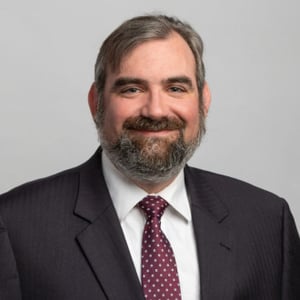
Senior Attorney, Institute for Justice
Robert Frommer serves as a senior attorney with the Institute for Justice. He joined the Institute in August 2008 and is currently litigating on behalf of SpeechNow.org, a group challenging the federal campaign finance laws regarding free speech.
Before joining IJ, Robert was an attorney with the Washington, D.C., office of Gibson, Dunn & Crutcher LLP, where he litigated both complex litigation and public-interest matters. He is a former law clerk to Judge Morris Sheppard Arnold of the U.S. Court of Appeals for the Eighth Circuit.
Robert received his law degree magna cum laude from the University of Michigan Law School in 2004, where he was elected to the Order of the Coif and served as both a book review editor for the Michigan Law Review and president of the Federalist Society student chapter. Before going to law school, Robert earned a master's degree in economics from George Mason University.
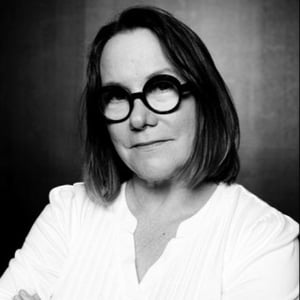
Independent Analyst, None
Allison Hayward most recently served as the Head of Case Selection at the Oversight Board. Previously, she was a Commissioner at the California Fair Political Practices Commission, a Board Member at the Office of Congressional Ethics, and an Assistant Professor of Law at George Mason University School of Law. She also previously worked as Chief of Staff and Counsel in the office of Federal Election Commission Commissioner Bradley A. Smith and practiced election law in California and in Washington DC.
In 1994-1995, Professor Hayward was a judicial clerk for the Honorable Danny J. Boggs, United States Court of Appeal for the Sixth Circuit.
She is a member of the State Bar of California and the District of Columbia Bar.
Chancellor's Professor of Law and Political Science, University of California, Irvine School of Law
Professor Richard L. Hasen is Chancellor’s Professor of Law and Political Science at the University of California, Irvine. Hasen is a nationally recognized expert in election law and campaign finance regulation, and is co-author of a leading casebook on election law.
From 2001-2010, he served (with Dan Lowenstein) as founding co-editor of the quarterly peer-reviewed publication, Election Law Journal. He is the author of over 100 articles on election law issues, published in numerous journals including the Harvard Law Review, Stanford Law Review and Supreme Court Review. He was elected to The American Law Institute in 2009 and served as an Adviser on ALI’s law reform project, Principles of Election Law: Resolution of Election Disputes.
Professor Hasen was named one of the 100 most influential lawyers in America by The National Law Journal in 2013, and one of the Top 100 Lawyers in California in 2005 and 2016 by the Los Angeles and San Francisco Daily Journal.
His op-eds and commentaries have appeared in many publications, including The New York Times, The Washington Post, Politico, and Slate. Hasen also writes the often-quoted Election Law Blog, which the ABA Journal named to its “Blawg 100 Hall of Fame” in 2015. His newest book, The Justice of Contradictions: Antonin Scalia and the Politics of Disruption, will be published in 2018 by Yale University Press.
Professor Hasen holds a B.A. degree (with highest honors) from UC Berkeley, and a J.D., M.A., and Ph.D. (Political Science) from UCLA. After law school, Hasen clerked for the Honorable David R. Thompson of the United States Court of Appeals for the Ninth Circuit, and then worked as a civil appellate lawyer at the Encino firm Horvitz and Levy.
From 1994-1997, Hasen taught at the Chicago-Kent College of Law and from 1998-2011 he taught at Loyola Law School, Los Angeles, where he was named the William H. Hannon Distinguished Professor of Law in 2005. He joined the UC Irvine School of Law faculty in July 2011, and is a faculty member of the UC Irvine Jack W. Peltason Center for the Study of Democracy.
Senior Attorney, DC, Pacific Legal Foundation
Steve Simpson joined PLF in 2019 to head up its Separation of Powers practice group.
Steve’s career in public interest law started at the Institute for Justice in 2001, where he litigated free speech, campaign finance, and economic liberty cases. Among other high-profile cases in which Steve was involved, he was co-counsel in Arizona Free Enterprise Club’s Freedom Club PAC v. Bennett, IJ’s successful Supreme Court challenge to Arizona’s public financing law for political campaigns. He was the lead litigator in SpeechNow.org v. FEC, a joint effort between IJ and the Institute for Free Speech that led to the creation of super PACs. And he was co-counsel in Swedenburg v. Kelly, IJ’s successful Supreme Court challenge to New York’s ban on the interstate shipping of wine.
In 2013, Steve moved into the policy arena as the Ayn Rand Institute’s director of Legal Studies, where he spent five years writing and speaking on a wide variety of legal and cultural issues. From there, he moved back into law as senior litigation counsel at the New Civil Liberties Alliance in Washington, D.C.
Steve has spoken and written on a wide variety of legal and policy issues. He has testified in Congress and briefed congressional staffers. He has been interviewed on scores of television and radio programs, including PBS News Hour, Stossel, and The Rubin Report. His writings have appeared in many publications, including The Wall Street Journal and The Washington Post. In 2014, Steve was a Lincoln Fellow at the Claremont Institute. He is the editor of Defending Free Speech (ARI Press, 2016).
Steve earned his law degree magna cum laude from New York Law School in 1994. Following law school, he clerked for a federal district judge in the Southern District of Florida and spent several years as a litigator at Shearman & Sterling.
When he’s not at work or spending time with his wife and three daughters, Steve can usually be found mucking around in the woods at his cabin on Shenandoah Mountain.

Thomas M. Siebel Senior Fellow, The Hoover Institution, Stanford University; Gary T. Schwartz Distinguished Professor of Law Emeritus, UCLA School of Law
Eugene Volokh is the Thomas M. Siebel Senior Fellow at the Hoover Institution (Stanford), as well as the Gary T. Schwartz Distinguished Professor of Law Emeritus and Distinguished Research Professor at UCLA School of Law. He recently retired from teaching at UCLA, after 30 years there, and is now focusing on research.
Volokh is the author of the textbooks The First Amendment and Related Statutes (8th ed. 2023), and Academic Legal Writing (5th ed. 2016), as well as over 100 academic law journal articles, mostly on First Amendment law. He is a member of The American Law Institute; the editor-in-chief of the Journal of Free Speech Law; and the creator and coauthor of The Volokh Conspiracy, a leading legal blog founded in 2002 (hosted at the Washington Post from 2014 to 2017 and now at Reason Magazine).
H.H. Macaulay Endowed Professor of Economics, Clemson College of Business
Thomas Hazlett is the Hugh H. Macaulay Endowed Professor of Economics at Clemson University. He has previously held faculty positions at George Mason University, the University of California, Davis, and the Wharton School, and served as Chief Economist of the Federal Communications Commission. A noted expert in regulatory economics and information markets, his research has appeared in academic forums such as the Journal of Law & Economics, RAND Journal of Economics, the Journal of Financial Economics, the University of Pennsylvania Law Review and the Columbia Law Review. He has also written for such popular periodicals as the Wall Street Journal, The Economist, Slate, the N.Y. Times, N.Y. Daily News, Reuters.com, Business Week, The New Republic and the Financial Times. His most recent book, The Political Spectrum: The Tumultuous Liberation of Wireless Technology, from Herbert Hoover to the Smartphone, (Yale, 2017), was featured as one of the top tech books of the year at CES 2018.
Communications Director, Media Research Center
United States Representative, United States House of Representatives
Congressman Jamie Raskin proudly represents Maryland’s 8th Congressional District in the U.S. House of Representatives. The district includes Montgomery, Carroll, and Frederick Counties. Congressman Raskin was sworn into his second Term at the start of the 116th Congress on January 3, 2019.
Congressman Raskin is a returning Member of the House Judiciary Committee, the Committee on Oversight and Reform, and the Committee on House Administration. This Congress, he joined the House Committee on Rules and now Chairs the Rules Subcommittee on Expedited Procedures. Raskin is Vice Chair of the House Administration Committee, Chair of the Oversight Subcommittee on Civil Rights and Civil Liberties, and Vice Chair of the Judiciary Subcommittee on the Constitution. Raskin is the Caucus Leadership Representative for the 116th Congress, a role in which he represents Junior Members of the Caucus (those who have served five or less Terms) at the leadership table. He was also appointed to serve as a Senior Whip for the 116th Congress.
Prior to his time in Congress, Raskin was a three-term State Senator in Maryland, where he also served as the Senate Majority Whip. He earned a reputation for building coalitions in Annapolis to deliver a series of landmark legislative accomplishments. He was also a professor of constitutional law at American University’s Washington College of Law for more than 25 years. He authored several books, including the Washington Post best-seller Overruling Democracy: The Supreme Court versus the American People and the highly-acclaimed We the Students: Supreme Court Cases For and About America’s Students, which has sold more than 50,000 copies.
Congressman Raskin is a graduate of Harvard College and Harvard Law School. He and his wife, Sarah Bloom Raskin, live in Takoma Park with their dogs, Potter and Toby. They have three grown children: Tabitha, Tommy, and Hannah.
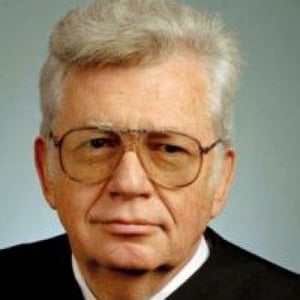
Judge, U.S. Court of Appeals, District of Columbia Circuit
Judge Sentelle was appointed United States Circuit Judge in October 1987, served as Chief Judge from February 11, 2008 until February 11, 2013, and took senior status on February 12, 2013. He is a 1968 graduate of the University of North Carolina Law School. Following law school, he practiced with the firm of Uzzell & DuMont until he became an Assistant U.S. Attorney in Charlotte, N.C. in 1970. From 1974 to 1977, he served as a North Carolina State District Judge but left the bench in 1977 to become a partner with the firm of Tucker, Hicks, Sentelle, Moon & Hodge. In 1985, Judge Sentelle joined the U.S. District Court, Western District of North Carolina, in Asheville, where he served until his appointment to the D.C. Circuit. Judge Sentelle was the Presiding Judge of the Special Division for the Purpose of Appointing Independent Counsels (1992-2006). He also served as the Chair of the U.S. Judicial Conference's Executive Committee (2010-2013). Judge Sentelle served for over 20 years as President of the Edward Bennett Williams Inn of the American Inns of Court.
H.H. Macaulay Endowed Professor of Economics, Clemson College of Business
Thomas Hazlett is the Hugh H. Macaulay Endowed Professor of Economics at Clemson University. He has previously held faculty positions at George Mason University, the University of California, Davis, and the Wharton School, and served as Chief Economist of the Federal Communications Commission. A noted expert in regulatory economics and information markets, his research has appeared in academic forums such as the Journal of Law & Economics, RAND Journal of Economics, the Journal of Financial Economics, the University of Pennsylvania Law Review and the Columbia Law Review. He has also written for such popular periodicals as the Wall Street Journal, The Economist, Slate, the N.Y. Times, N.Y. Daily News, Reuters.com, Business Week, The New Republic and the Financial Times. His most recent book, The Political Spectrum: The Tumultuous Liberation of Wireless Technology, from Herbert Hoover to the Smartphone, (Yale, 2017), was featured as one of the top tech books of the year at CES 2018.
Communications Director, Media Research Center
United States Representative, United States House of Representatives
Congressman Jamie Raskin proudly represents Maryland’s 8th Congressional District in the U.S. House of Representatives. The district includes Montgomery, Carroll, and Frederick Counties. Congressman Raskin was sworn into his second Term at the start of the 116th Congress on January 3, 2019.
Congressman Raskin is a returning Member of the House Judiciary Committee, the Committee on Oversight and Reform, and the Committee on House Administration. This Congress, he joined the House Committee on Rules and now Chairs the Rules Subcommittee on Expedited Procedures. Raskin is Vice Chair of the House Administration Committee, Chair of the Oversight Subcommittee on Civil Rights and Civil Liberties, and Vice Chair of the Judiciary Subcommittee on the Constitution. Raskin is the Caucus Leadership Representative for the 116th Congress, a role in which he represents Junior Members of the Caucus (those who have served five or less Terms) at the leadership table. He was also appointed to serve as a Senior Whip for the 116th Congress.
Prior to his time in Congress, Raskin was a three-term State Senator in Maryland, where he also served as the Senate Majority Whip. He earned a reputation for building coalitions in Annapolis to deliver a series of landmark legislative accomplishments. He was also a professor of constitutional law at American University’s Washington College of Law for more than 25 years. He authored several books, including the Washington Post best-seller Overruling Democracy: The Supreme Court versus the American People and the highly-acclaimed We the Students: Supreme Court Cases For and About America’s Students, which has sold more than 50,000 copies.
Congressman Raskin is a graduate of Harvard College and Harvard Law School. He and his wife, Sarah Bloom Raskin, live in Takoma Park with their dogs, Potter and Toby. They have three grown children: Tabitha, Tommy, and Hannah.
Judge, U.S. Court of Appeals, District of Columbia Circuit
Judge Sentelle was appointed United States Circuit Judge in October 1987, served as Chief Judge from February 11, 2008 until February 11, 2013, and took senior status on February 12, 2013. He is a 1968 graduate of the University of North Carolina Law School. Following law school, he practiced with the firm of Uzzell & DuMont until he became an Assistant U.S. Attorney in Charlotte, N.C. in 1970. From 1974 to 1977, he served as a North Carolina State District Judge but left the bench in 1977 to become a partner with the firm of Tucker, Hicks, Sentelle, Moon & Hodge. In 1985, Judge Sentelle joined the U.S. District Court, Western District of North Carolina, in Asheville, where he served until his appointment to the D.C. Circuit. Judge Sentelle was the Presiding Judge of the Special Division for the Purpose of Appointing Independent Counsels (1992-2006). He also served as the Chair of the U.S. Judicial Conference's Executive Committee (2010-2013). Judge Sentelle served for over 20 years as President of the Edward Bennett Williams Inn of the American Inns of Court.
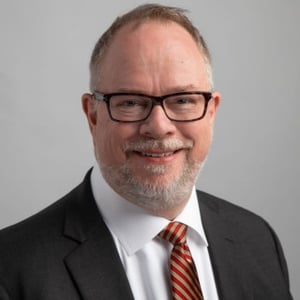
Managing Attorney of the Washington Office, Institute for Justice
William R. Maurer is the Managing Attorney of the Washington state office of the Institute for Justice, which engages in litigation in the areas of economic liberty, private property rights, educational choice, & freedom of speech.
Maurer is an advocate against the criminalization of poverty and the governmental use of the criminal and civil enforcement systems to raise revenue. He was lead counsel in a class action challenging the use of tickets to raise revenue in the city of Pagedale, Missouri. The suit resulted in a federal consent decree that reformed the city’s ticketing and municipal court system. He regularly speaks, teaches, and writes about the abuse of fines and fees in the criminal justice system. He was a participant in summits on taxation by citation put on by the White House and Department of Justice during the Obama Administration. His work on the issue includes serving as an advisory board member of the Fines and Fees Justice Center.
In addition to his work on criminal and civil justice reform, Maurer is a First Amendment litigator. In 2011, he successfully argued before the U.S. Supreme Court that Arizona’s punitive campaign financing regime was unconstitutional. Before the Washington Supreme Court, he successfully argued against efforts to classify radio commentary as a contribution under the state’s campaign finance law.
His cases and advocacy have been covered in the Washington Post, the New York Times, the Economist, the Wall Street Journal, and other major media outlets.
Maurer was named a “Washington Superlawyer” by Washington Law & Politics Magazine for several years. He is a chapter author in numerous legal reference works and has written several articles for law reviews and legal publications across the country.
Prior to joining IJ-WA, Maurer clerked for Washington Supreme Court Justice Richard Sanders and then practiced law at Perkins Coie LLP. Maurer received his law degree in 1994 from the University of Wisconsin – Madison, where he was an editor of the Wisconsin Law Review. He received his BA from Bard College in 1989.
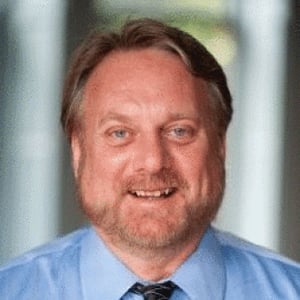
Government Affairs Lobbyist, Public Citizen
Craig Holman, Ph.D. is currently Government Affairs Lobbyist for Public Citizen. As Legislative Representative, he serves as the organization’s Capitol Hill lobbyist on campaign finance and governmental ethics. Previously, Holman was Senior Policy Analyst at the Brennan Center for Justice, New York University School of Law. Dr. Holman worked closely with reform organizations and the Democratic congressional caucus of the 110th Congress in drafting and promoting the “Honest Leadership and Open Government Act,” the new federal lobbying and ethics reform legislation signed into law on September 14, 2007. As a consequence of this legislation, Holman is also working with European nongovernmental organizations and members of the European Commission and Parliament in developing a lobbyist registration system for the European Union.
Holman has assisted in drafting campaign finance reform legislation, including pay-to-play legislation, and has conducted numerous research projects on the initiative process and the impact of money in politics. He has been called upon to assist as a researcher and/or expert witness defending in court the Bipartisan Campaign Reform Act of 2002 (BCRA) as well as the campaign finance reform laws of Alaska, Arkansas, California and Colorado. He has authored and co-authored several studies on campaign finance and the initiative process, including four major works entitled BUYING TIME 2000: TELEVISION ADVERTISING IN THE 2000 FEDERAL ELECTIONS (2001); THE PRICE OF JUSTICE: A CASE STUDY IN JUDICIAL CAMPAIGN FINANCING (1995); TO GOVERN OURSELVES: BALLOT INITIATIVES IN THE LOS ANGELES AREA (1992), and DEMOCRACY BY INITIATIVE (1992). Some of his other publications include: “Lobbying Reform in the United States and the European Union: Progress on Two Continents,” in Conor McGrath, ed., INTEREST GROUPS AND LOBBYING (2009); “The Structure and Organization of Congress and the Practice of Lobbying,” in Thomas Susman and William Luneburg, eds., THE LOBBYING MANUAL: A COMPLETE GUIDE TO FEDERAL LAW GOVERNING LAWYERS AND LOBBYISTS, FOURTH EDITION (2008); “Close the 527 Loophole” in Matt Kerbel, ed., GET THIS PARTY STARTED: HOW PROGRESSIVES CAN FIGHT BACK AND WIN (2006); “The Bipartisan Campaign Reform Act: Limits and Opportunities for Non-Profit Groups in Federal Elections,” Northern Kentucky Law Review (2004); “The Nuts and Bolts of Public Financing of State Candidate Campaigns,” National Civic Review (2003); and THE NEW POLITICS OF JUDICIAL ELECTIONS (2002).
Independent Analyst, None
Allison Hayward most recently served as the Head of Case Selection at the Oversight Board. Previously, she was a Commissioner at the California Fair Political Practices Commission, a Board Member at the Office of Congressional Ethics, and an Assistant Professor of Law at George Mason University School of Law. She also previously worked as Chief of Staff and Counsel in the office of Federal Election Commission Commissioner Bradley A. Smith and practiced election law in California and in Washington DC.
In 1994-1995, Professor Hayward was a judicial clerk for the Honorable Danny J. Boggs, United States Court of Appeal for the Sixth Circuit.
She is a member of the State Bar of California and the District of Columbia Bar.
Supreme Court Correspondent, The Washington Post
Robert Barnes has been a Washington Post reporter and editor since 1987. He joined the paper to cover Maryland politics, and has served in various editing positions including metropolitan editor and national political editor . He has covered the Supreme Court since November 2006. He gave up law school plans for a life in newspapers after taking a journalism class in college. It did not occur to him, as it apparently did to others, that he could do both.
Partner, O'Melveny & Myers LLP
Walter Dellinger is an influential authority on appellate and Supreme Court decisions, lending his experience as a former Solicitor General and decades of legal knowledge to amicus briefs, a multitude of pro bono clients, and public and private companies involved in bet-the-company litigation. A frequent commentator for the Wall Street Journal, Slate, and major television networks, Walter holds the designation of the Douglas B. Maggs Emeritus Professor of Law at Duke University. He was named one of the 100 Most Influential Lawyers in America by the National Law Journal and recognized with a Lifetime Achievement Award from the American Lawyer.
Walter, who formerly served as O’Melveny’s Diversity and Inclusion Partner, helped convince the US Supreme Court that proponents of Proposition 8, California's ban on same-sex marriage, did not have standing to appeal a court order invalidating it. That ruling, Hollingsworth v. Perry, cleared the way for marriage equality in California and eventually nationwide.
Walter served as Assistant Attorney General and head of the Office of Legal Counsel (OLC) from 1993 to 1996. He was acting Solicitor General for the 1996-97 Term of the US Supreme Court. During that time, Walter argued nine cases before the Court, the most by any Solicitor General in more than 20 years. His arguments included cases dealing with physician-assisted suicide, the line item veto, the cable television act, the Brady Act, the Religious Freedom Restoration Act, and the constitutionality of remedial services for parochial school children.
Walter has served as Special Counsel to the Board of Directors of the New York Stock Exchange in connection with the NYSE’s transformation into a publicly held company and its acquisition of an electronic trading company.
After serving in early 1993 in the White House as an advisor to the President on constitutional issues, Walter was nominated by the President to be Assistant Attorney General. He was confirmed by the Senate in October 1993 and served for three years. As head of the OLC, Walter issued opinions on a wide variety of issues, including: the President's authority to deploy United States forces in Haiti and Bosnia; whether the trade agreements required treaty ratification; and a major review of separation of powers questions. He provided extensive legal advice on questions arising out of the shutdown of the federal government, on national debt ceiling issues, and on loan guarantees for Mexico.
Walter has published articles on constitutional issues for scholarly journals including the Harvard Law Review, the Yale Law Journal, and the Duke Law Journal, and has written for the New York Times, the Washington Post, Newsweek, the New Republic, and the London Times. He has been a visiting professor at the Catholic University of Belgium and has given lectures to university faculties in Florence, Siena, Nuremberg, Copenhagen, Leiden, Utrecht, Tilburg, Mexico, and Rio de Janeiro, and has delivered major lectures at Stanford, Yale, Harvard, Michigan, Berkeley, Penn, Duke, Chicago, and other US law schools. He has testified more than 25 times before committees of Congress.
In private practice, Walter’s arguments before the United States Supreme Court have included Exxon Shipping Co. v. Baker, Morgan Stanley Capital Group Inc. v. Public Utility District No. 1 of Snohomish County, Alabama v. North Carolina, Hosanna-Tabor v. EEOC, Heller v. District of Columbia, Jackson v. Birmingham School District, Brown v. Legal Foundation of Washington, US Airways v. Barnett, Utah v. Evans, Hunt v. Cromartie, and Hunt v. Easley. His most notable Court of Appeals and state supreme court arguments include Martha Stewart v. United States, Whiteside v. United States, and Exxon v. Alabama, LCI v. Phillips.
Professor of Law, Stanford Law School
Orin S. Kerr is a Professor of Law at Stanford Law School, where he teaches and writes in the areas of criminal procedure and computer crime law. Kerr earned mechanical engineering degrees from Princeton University and Stanford University before graduating with a J.D. from Harvard Law School. He is a former law clerk to Justice Anthony M. Kennedy at the United States Supreme Court and Judge Leonard I. Garth of the U.S. Court of Appeals for the Third Circuit.
Partner (retd.), Foley & Lardner LLP
Cleta Mitchell was a partner and political law attorney in the Washington, D.C. office of Foley & Lardner LLP and a member of the firm’s Political Law Practice. With more than 40 years of experience in law, politics and public policy, Ms. Mitchell advised nonprofit and issue organizations, corporations, candidates, campaigns, and individuals on state and federal campaign finance law, election law, and compliance issues related to lobbying, ethics and financial disclosure. Ms. Mitchell practiced before the Federal Election Commission, the ethics committees of the US House and Senate and similar state and local enforcement bodies and agencies.
Ms. Mitchell has extensive experience on the federal lobbying and ethics law enacted by Congress in 2007, having taught dozens of seminars on the subject since its passage. In 2008, Ms. Mitchell authored The Lobbying Compliance Handbook, published by Columbia Books, Inc.
Ms. Mitchell represented numerous candidates, campaigns and members of Congress, as well as state and national political party committees. She has served as legal counsel to the National Republican Senatorial Committee and the National Republican Congressional Committee. Ms. Mitchell served as co-counsel for the National Rifle Association in the Supreme Court case involving the 2002 federal campaign finance law.
Ms. Mitchell has testified before Congress on numerous occasions related to election law, campaign finance and lobbying and ethics laws, and is a frequent speaker and guest commentator on political law. In 1999, she authored "The Rise of America’s Two National Pastimes: Baseball and the Law," published by the University of Michigan Law Review, and in 2012, Ms. Mitchell authored “Donor Disclosure: Undermining The First Amendment,” published by the Minnesota Law Review. In 2013, she was interviewed by The Wall Street Journal, “How to Investigate the IRS.”
Ms. Mitchell served on the advisory council to the American Bar Association’s Standing Committee on Election Law and as an advisor on the American Law Institute's Election Law Project entitled, “Principles of Election Law: Dispute Resolution.” She serves on the board of directors of the Lynde and Harry Bradley Foundation, is chairman of the American Conservative Union Foundation, and has served as the president of the Republican National Lawyers Association.
Ms. Mitchell was a member of the Oklahoma House of Representatives from 1976-1984 where she chaired the House Appropriations and Budget Committee. She served on the executive committee of the National Conference of State Legislatures.
Ms. Mitchell was in private law practice in Oklahoma City in litigation and administrative law until 1991 when she became director and general counsel of the Term Limits Legal Institute in Washington, D.C. She litigated cases in state and federal courts nationwide on congressional term limits and served as co-counsel with former U.S. Attorney General Griffin Bell in the Supreme Court of the United States case on term limits for members of Congress.
Ms. Mitchell earned both her B.A., magna cum laude, and J.D. from the University of Oklahoma.

Professor of Law, Georgetown University Law Center
Nicholas Quinn Rosenkranz teaches constitutional law and federal jurisdiction, and he writes articles for the Harvard Law Review and the Stanford Law Review.
He is currently developing a new theory of constitutional interpretation and judicial review. The first installment, entitledThe Subjects of the Constitution, was published in the Stanford Law Review in May of 2010, and it is among the most downloaded articles about constitutional interpretation, judicial review, and/or federal courts in the history of SSRN. The second installment, The Objects of the Constitution, was published in May of 2011, also in the Stanford Law Review. And the comprehensive version is forthcoming as a book by Oxford University Press.
Rosenkranz has served and advised the federal government in a variety of capacities. He clerked for Judge Frank H. Easterbrook on the U.S. Court of Appeals for the Seventh Circuit (1999-2000) and for Justice Anthony M. Kennedy at the U.S. Supreme Court (October Term 2001). He served as an Attorney-Advisor at the Office of Legal Counsel in the U.S. Department of Justice (November 2002 - July 2004). He often testifies before Congress as a constitutional expert—most recently before the House Financial Services Oversight Subcommittee, regarding the Obama Administration's use of bank settlement agreements to circumvent the Appropriations Clause. He has also filed briefs and presented oral argument before the U.S. Supreme Court. His most recent Supreme Court brief, in Los Angeles v. Patel, was cited by Justice Alito in dissent.
Rosenkranz is a member of the New York Bar and the U.S. Supreme Court Bar. He is a Senior Fellow at the Cato Institute. He serves on the Board of Directors of the Foundation for Individual Rights in Education (FIRE). He is a founding member of Heterodox Academy and a member of its Executive Committee. He also serves on the Board of Directors of the Federalist Society and as the faculty advisor to the Georgetown chapter.
Partner, Schaerr Jaffe LLP
Gene Schaerr specializes in handling—and usually winning—civil appeals, writ proceedings and similar matters, both in appellate courts and in the law-focused proceedings at the trial-court or agency level that often determine success or failure on appeal. He has argued and won dozens of cases in a variety of forums—including the U.S. Supreme Court (where he has argued six cases), every federal circuit, and numerous federal district courts and state appellate courts. His win rate in the dozens of federal appeals he has argued in the past six years is over 75 percent.
He was a coordinator of Sidley Austin's appellate practice from 1993 until 2005, and from 2005 until 2014 was the chair of the nationwide appellate practice at Winston & Strawn—a practice he led to numerous recognitions in such publications as the Appellate Hot List. His personal practice successes have won him repeated recognition in such publications as Best Lawyers in Washington, D.C., Legal 500, D.C. Superlawyers, and Best Lawyers in America. In January 2014, Mr. Schaerr formed his own boutique litigation firm so that he could serve his clients without the conflicts and inefficiencies inherent in big-firm law practice.
Substantively, Mr. Schaerr's experience includes not only virtually every area of federal law, defamation, higher education law, immigration, insurance coverage, labor and employment, patent and trademark, privacy, product liability and warranty, statutory interpretation and tax.He has represented clients in virtually every sector, including automotive, communications, energy, financial services, health care, higher education, insurance, maritime, pharmaceuticals, technology and state and local government. He also teaches courses in Supreme Court litigation, religious freedom litigation and advanced litigation skills as an adjunct professor of law at the Brigham Young University law school.
Mr. Schaerr began law practice in 1987 following clerkships on the U.S. Supreme Court (for Chief Justice Warren Burger and Justice Antonin Scalia) and on the U.S. Court of Appeals for the D.C. Circuit (for then- Judge Kenneth Starr). He graduated in 1985 from the Yale Law School, where he was Editor-in-Chief of the Yale Journal on Regulation and Senior Editor of the Yale Law Journal. From 1991 to 1993, he served in the White House as Associate Counsel to the President, where he had responsibility for a wide range of constitutional and administrative-law issues, including those involving economic regulation, higher education, separation of powers, federalism and religious freedom. He serves as Chairman of the Constitutional Sources Project, a digital resource providing free public access to historical materials relevant to the U.S. Constitution.
Senior Legal Fellow, Edwin Meese III Institute for the Rule of Law, Advancing American Freedom
In his 35 years at the Justice Department and in private practice, Mike Carvin was one of the leading appellate and trial lawyers challenging state and federal regulations on constitutional and statutory grounds, with 10 Supreme Court arguments and numerous high-profile victories. In addition to his numerous cases in the United States Supreme Court, he argued in virtually every federal appeals court. His major cases include the recent constitutional challenge to the Affordable Care Act and the decisions invalidating Sarbanes-Oxley's accounting board, preventing the Justice Department from obtaining monetary relief against the tobacco industry under RICO, overturning the federal government's plan to statistically adjust the census, limiting the Justice Department's ability to create "majority-minority" districts, and upholding Proposition 209's ban on racial preferences in California.
Mike was one of the lead lawyers, and argued before the Florida Supreme Court, on behalf of George W. Bush in the 2000 presidential election Florida recount controversy. He also has represented state governments, financial institutions, telecommunications, and energy companies in "takings," First Amendment, civil rights, and statutory challenges to federal government actions.
Director of the National Research Initiative, American Enterprise Institute
Sudler Family Professor of Constitutional Law, New York University School of Law
Richard H. Pildes is one of the nation’s leading scholars of constitutional law and a specialist in legal issues affecting democracy. He is a Member of the American Academy of Arts and Sciences and the American Law Institute, and has received recognition as a Guggenheim Fellow and a Carnegie Scholar. His acclaimed casebook, The Law of Democracy: Legal Structure of the Political Process (now in its fourth edition), helped create an entirely new field of study in the law schools. The Law of Democracy systematically explores legal and policy issues concerning the structure of democratic elections and institutions, such as the role of money in politics, the design of election districts, the regulation of political parties, the design of voting systems, the representation of minority interests in democratic institutions, and similar issues. He has written extensively on the rise of political polarization in the United States, the Voting Rights Act, the dysfunction of America’s political processes, the role of the Supreme Court in overseeing American democracy, the powers of the American President and Congress, and he has criticized excessively “romantic” understandings of democracy. In addition to his scholarship on these issues, he has written on national-security law, the design of the regulatory state, and American constitutional history and theory.
Respect for his expertise in these areas is reflected in frequent citations of his work in U.S. Supreme Court opinions, the translation of his work into many languages, and his frequent public lectures and appearances around the world, including his nomination with the NBC News Team for an Emmy Award for coverage of the 2000 Presidential election litigation.
His work has been translated and published in Chinese, French, Spanish, and Portuguese. In addition to his scholarship, Professor Pildes plays an active role litigating in these areas. He has won two cases before the United States Supreme Court, including a 2015 victory in Alabama Democratic Conference v. Alabama, a case involving race and redistricting. He served as counsel to a group of former chairmen of the Securities and Exchange Commission in litigation defending the constitutionality of the Sarbanes-Oxley Act; as counsel in election litigation to the Puerto Rico Electoral Commission; as counsel to the government of Puerto Rico; as a federal court-appointed independent expert on voting rights litigation; and as counsel in successful Supreme Court litigation that challenged the way the United States Tax Court operated. He was also a senior legal advisor to the 2008 and 2012 campaigns of President Obama.
Pildes received his A.B. in physical chemistry summa cum laude from Princeton, and his J.D. magna cum laude from Harvard, where he served as Supreme Court Note Editor on the Harvard Law Review. He clerked for Judge Abner J. Mikva of the U.S. Court of Appeals for the District of Columbia Circuit and for Justice Thurgood Marshall of the U.S. Supreme Court. After practicing law in Boston, he began his academic career at the University of Michigan Law School, before joining the NYU School of Law in 2001.
Vice-chair, U.S. Commission on Civil Rights, and Adjunct Scholar, American Enterprise Institute
Abigail Thernstrom is the vice-chair of the U.S. Commission on Civil Rights, and an adjunct scholar at the American Enterprise Institute. She was a senior fellow at the Manhattan Institute in New York from 1993 to 2009, and a member of the Massachusetts State Board of Education for more than a decade until her third term ended in November 2006. She also serves on the board of advisors of the U.S. Election Assistance Commission. She received her Ph.D. in 1975 from the Department of Government, Harvard University.
In 2007 she and her husband, Stephan Thernstrom, along with James Q. Wilson, Martin Feldstein, and John Bolton, were the recipients of a Bradley Foundation prizes for Outstanding Intellectual Achievement.
Thernstrom and her husband, Harvard historian Stephan Thernstrom, are the co-authors of No Excuses: Closing the Racial Gap in Learning (Simon & Schuster, October 2003), which has been awarded the 2007 Fordham Foundation prize for “for distinguished scholarship,” and was named by both the Los Angeles Times and the American School Board Journal as one of the best books of 2003.
They also collaborated on America in Black and White: One Nation, Indivisible (Simon & Schuster), which the New York Times Book Review, in its annual end-of-the-year issue, named as one of the notable books of 1997.
They are the editors of a Beyond the Color Line: New Perspectives on Race and Ethnicity. Their lengthy review of William G. Bowen and Derek Bok's much-noticed work, The Shape of the River, appeared in the June 1999 issue of the UCLA Law Review.
Whose Votes Count? Affirmative Action and Minority Voting Rights (Harvard University Press) won four awards, including the American Bar Association's Certificate of Merit, and the Anisfield-Wolf prize for the best book on race and ethnicity. It was named the best policy studies book of that year by the Policy Studies Organization (an affiliate of the American Political Science Association), and won the Benchmark Book Award from the Center for Judicial Studies. Along with her husband, she also won the 2004 Peter Shaw Memorial Award given by National Association of Scholars.
She is currently completing a book entitled Voting Rights and Wrongs: The Elusive Quest for Racially Fair Elections, and is working, as well, with her husband on another book with the tentative title of Don’t Call it Segregation: The Myth of Contemporary Apartheid. She (and two co-authors) submitted an amicus brief in Parents Involved in Community Schools v. Seattle, challenging the constitutionality of Seattle's racial balancing plan.
Her frequent media appearances have included Fox News Sunday, Good Morning America, and This Week with George Stephanopoulos. For some years, she was a stringer for The Economist, and continues to write for a variety of journals and newspapers, including the Wall Street Journal, the Los Angeles Times, the New York Times and the (London) Times Literary Supplement.
She serves on several boards, and from 1992 to 1997 was a member of the Aspen Institute's Domestic Strategy Group.

Supreme Court Preview: What Is in Store for October Term 2010?
Rachel L. Brand, Paul D. Clement, Adam Liptak, Jeffrey Rosen, Kannon K. Shanmugam, Kenneth L. Wainstein
October 4th marks the first day of the 2010 Supreme Court term. This term the...
Supreme Court Preview: What Is in Store for October Term 2010?
Rachel L. Brand, Paul D. Clement, Adam Liptak, Jeffrey Rosen, Kannon K. Shanmugam, Kenneth L. Wainstein
October 4th marks the first day of the 2010 Supreme Court term. This term the...
Doe v. Reed and the Role of Anonymity in a Democracy
John C. Fortier, Robert Frommer, Allison R. Hayward
Free Speech & Election Law Practice Group
In April 2010 the U.S. Supreme Court heard oral arguments in Doe v. Reed. The...
Citizens United v. Federal Election Commission
Richard Hasen, Steve Simpson, Eugene Volokh
Free Speech & Election Law Practice Group
On January 21, 2010, the Supreme Court announced its decision in Citizens United v. FEC. ...
Free Speech: The Fairness Doctrine
Thomas Hazlett, Seton Motley, Jamin Ben Raskin, David B. Sentelle
2009 National Lawyers Convention
The Federal Communications Commission (FCC) adopted the Fairness Doctrine as a formal rule in 1949....
Free Speech: The Fairness Doctrine
Thomas Hazlett, Seton Motley, Jamin Ben Raskin, David B. Sentelle
2009 National Lawyers Convention
The Federal Communications Commission (FCC) adopted the Fairness Doctrine as a formal rule in 1949....
Fair Elections Now Act
William R. Maurer, Craig Holman, Allison R. Hayward
Free Speech & Election Law Practice Group
Assistant Senate Majority Leader Richard Durbin and Sen. Arlen Specter, along with Reps. John Larson...
Supreme Court October Term 2009: What Is in Store?
Robert Barnes, Walter E. Dellinger, Orin S. Kerr, Cleta Mitchell, Nicholas Quinn Rosenkranz, Gene C. Schaerr
October 5th marks the first day of the 2009 Supreme Court term. Thus far the...
ACLU of New Mexico, et al. v. Santillanes
Hans A. Von Spakovsky
Civil Rights Practice Group
In 2005, the voters of Albuquerque passed an amendment to the city charter requiring photo...
Voting Rights--and Wrongs: The Elusive Quest for Racially Fair Elections
Michael A. Carvin, Henry Olsen, Richard H. Pildes, Abigail Thernstrom
Civil Rights Practice Group and the American Enterprise Institute
Has the 1965 Voting Rights Act, the crown jewel of American civil rights legislation, become...