
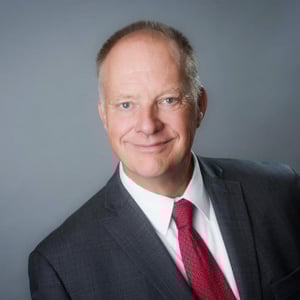
Associate Justice, Minnesota Supreme Court (ret.)
Former Minnesota Supreme Court Justice Barry Anderson is a 1976 graduate of Gustavus Adolphus College in St. Peter, Minnesota and a 1979 graduate of the University of Minnesota Law School. He was a member of the Minnesota Court of Appeals from August 1998 until his appointment to the Supreme Court. He was sworn in and joined the court on October 13, 2004, and served through to his retirement on May 10, 2024.
He previously was a partner in the Minneapolis and Hutchinson law firm of Arnold, Anderson & Dove, PLLP, and also served the City of Hutchinson as City Attorney from 1987 to 1998. He is certified by the Minnesota State Bar Association as a civil trial specialist.
Justice Anderson’s background includes substantial public service including as a board member and chair of variety of community organizations including service clubs, task forces and a local public access channel as well as a wide variety of other community activities.
Justice Anderson also served on the Minnesota Judicial Council, the managing body for the Minnesota Judicial Branch. He is also a frequent contributor to continuing legal education efforts on both appellate advocacy issues as well as general trial practice.
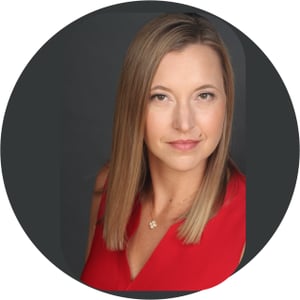
Partner, Clare Locke LLP
Libby is one of the country’s most sought-after libel lawyers. She is a trusted counselor and fierce advocate for Fortune 100 companies and high-profile individuals facing existential reputational attacks from the national media and other influential publishers, achieving remarkable results for her clients both in and outside the courtroom. Court watchers have called her “as good as they get,” “aggressive and not afraid to litigate,” and someone who has the media savvy to handle high profile matters in the public eye.
After co-founding Clare Locke LLP in 2014, Libby rapidly rose to national prominence for a highly-publicized multi-million dollar trial victory against Rolling Stone magazine about a fabricated gang rape at a University of Virginia fraternity. In 2019, she was lead trial counsel and won a $26 million federal jury verdict on behalf of a successful North Carolina businessman who was defamed by a public company during a proxy fight. A commentator opined that “she was excellent in trial and she eviscerated the other side,” and the federal judge concluded that her vigorous cross-examination “exposed [Defendant’s] CEO as a non-credible witness.” A skilled appellate advocate and former federal circuit clerk, in 2019 Libby achieved a rare win against The New York Times on behalf of former Gov. Sarah Palin in the U.S. Court of Appeals for the Second Circuit arising out of a false and defamatory editorial. She is actively litigating matters against a variety of mainstream news outlets, including CNN and The New York Times.
Libby’s success in the courtroom gets her results in the newsroom. She regularly advises clients and their PR counsel in dealing with the national media in crisis situations, and some of her biggest wins are the false stories the public will never hear about. She has killed flawed articles, storylines, and broadcast segments in outlets including in The New York Times, The Washington Post, Vanity Fair, The National Enquirer, and on Bloomberg, CBS and The Dr. Oz Show. Libby has also vindicated her clients’ reputations by obtaining myriad retractions of false publications. Examples include securing a $3.375 million settlement and video apology from the Southern Poverty Law Center, a complete retraction of a Bloomberg podcast, a multi-article correction from The Chicago Tribune, and the removal of a paperback edition book from publication by Simon & Schuster.
Recognized as an expert in libel law and the First Amendment, Libby has been ranked as a Band 1 global defamation/reputation management provider in Chambers & Partners HNW directory every year since its inception in 2016, and a Band 1 First Amendment Litigator in Chambers & Partners USA in 2020. She has numerous national awards and accolades from the National Law Journal, including being named as one of D.C.’s 40 Under 40 in 2019. She is regularly asked to speak on issues involving the First Amendment, media, and reputation, including publishing multiple op-eds in The Wall Street Journal and appearing as a guest on Fox News, CNN, and ABC’s 20/20. Libby has also served as an adjunct professor at Georgetown University Law Center and George Washington University Law School.
Libby graduated from NYU’s College of Arts and Science with a degree in Politics and Economics, and she received her J.D. from Georgetown University Law Center. After law school, she clerked on the U.S. Court of Appeals for the Fifth Circuit, and then began her career in private practice at Kirkland & Ellis. Perhaps the accomplishment of which she is most proud, Libby is a mom of five. She lives in Alexandria, Virginia with her husband and law partner, Tom Clare, their children, and the world’s most spoiled Labrador Retriever, Gipper.
Associate Justice, Minnesota Supreme Court (ret.)
Former Minnesota Supreme Court Justice Barry Anderson is a 1976 graduate of Gustavus Adolphus College in St. Peter, Minnesota and a 1979 graduate of the University of Minnesota Law School. He was a member of the Minnesota Court of Appeals from August 1998 until his appointment to the Supreme Court. He was sworn in and joined the court on October 13, 2004, and served through to his retirement on May 10, 2024.
He previously was a partner in the Minneapolis and Hutchinson law firm of Arnold, Anderson & Dove, PLLP, and also served the City of Hutchinson as City Attorney from 1987 to 1998. He is certified by the Minnesota State Bar Association as a civil trial specialist.
Justice Anderson’s background includes substantial public service including as a board member and chair of variety of community organizations including service clubs, task forces and a local public access channel as well as a wide variety of other community activities.
Justice Anderson also served on the Minnesota Judicial Council, the managing body for the Minnesota Judicial Branch. He is also a frequent contributor to continuing legal education efforts on both appellate advocacy issues as well as general trial practice.
Partner, Clare Locke LLP
Libby is one of the country’s most sought-after libel lawyers. She is a trusted counselor and fierce advocate for Fortune 100 companies and high-profile individuals facing existential reputational attacks from the national media and other influential publishers, achieving remarkable results for her clients both in and outside the courtroom. Court watchers have called her “as good as they get,” “aggressive and not afraid to litigate,” and someone who has the media savvy to handle high profile matters in the public eye.
After co-founding Clare Locke LLP in 2014, Libby rapidly rose to national prominence for a highly-publicized multi-million dollar trial victory against Rolling Stone magazine about a fabricated gang rape at a University of Virginia fraternity. In 2019, she was lead trial counsel and won a $26 million federal jury verdict on behalf of a successful North Carolina businessman who was defamed by a public company during a proxy fight. A commentator opined that “she was excellent in trial and she eviscerated the other side,” and the federal judge concluded that her vigorous cross-examination “exposed [Defendant’s] CEO as a non-credible witness.” A skilled appellate advocate and former federal circuit clerk, in 2019 Libby achieved a rare win against The New York Times on behalf of former Gov. Sarah Palin in the U.S. Court of Appeals for the Second Circuit arising out of a false and defamatory editorial. She is actively litigating matters against a variety of mainstream news outlets, including CNN and The New York Times.
Libby’s success in the courtroom gets her results in the newsroom. She regularly advises clients and their PR counsel in dealing with the national media in crisis situations, and some of her biggest wins are the false stories the public will never hear about. She has killed flawed articles, storylines, and broadcast segments in outlets including in The New York Times, The Washington Post, Vanity Fair, The National Enquirer, and on Bloomberg, CBS and The Dr. Oz Show. Libby has also vindicated her clients’ reputations by obtaining myriad retractions of false publications. Examples include securing a $3.375 million settlement and video apology from the Southern Poverty Law Center, a complete retraction of a Bloomberg podcast, a multi-article correction from The Chicago Tribune, and the removal of a paperback edition book from publication by Simon & Schuster.
Recognized as an expert in libel law and the First Amendment, Libby has been ranked as a Band 1 global defamation/reputation management provider in Chambers & Partners HNW directory every year since its inception in 2016, and a Band 1 First Amendment Litigator in Chambers & Partners USA in 2020. She has numerous national awards and accolades from the National Law Journal, including being named as one of D.C.’s 40 Under 40 in 2019. She is regularly asked to speak on issues involving the First Amendment, media, and reputation, including publishing multiple op-eds in The Wall Street Journal and appearing as a guest on Fox News, CNN, and ABC’s 20/20. Libby has also served as an adjunct professor at Georgetown University Law Center and George Washington University Law School.
Libby graduated from NYU’s College of Arts and Science with a degree in Politics and Economics, and she received her J.D. from Georgetown University Law Center. After law school, she clerked on the U.S. Court of Appeals for the Fifth Circuit, and then began her career in private practice at Kirkland & Ellis. Perhaps the accomplishment of which she is most proud, Libby is a mom of five. She lives in Alexandria, Virginia with her husband and law partner, Tom Clare, their children, and the world’s most spoiled Labrador Retriever, Gipper.
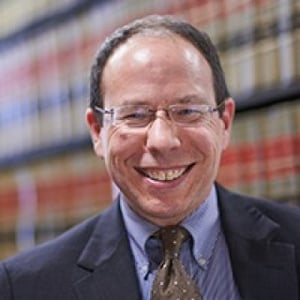
Professor of Law, Michigan State University (currently serving as FCC General Counsel)
Professor Candeub joined the MSU Law faculty in fall 2004. He is also a Fellow with MSU's Institute of Public Utilities. Prior to joining MSU, he served as an advisor at the Federal Communications Commission (FCC). From 1998 to 2000, Professor Candeub was a litigation associate for the Washington D.C. firm of Jones, Day, Reavis & Pogue and also has served as a corporate associate with Cleary, Gottlieb, Steen & Hamilton, also in Washington, D.C. Immediately following law school, he clerked for Chief Judge J. Clifford Wallace, U.S. Court of Appeals for the Ninth Circuit. While in law school, Professor Candeub was an articles editor for the University of Pennsylvania Law Review.
Professor Candeub's scholarly interests focus on the law and regulation of communications, internet, technology. His numerous law review articles and scholarly papers have placed him at the center of legal and policy controversies, and he often writes for popular outlets such as the Wall Street Journal and US News. Federal courts, including the U.S. Supreme Court, have cited and relied upon his work.
He joined the Trump administration in 2019 as Deputy Assistant Secretary of Commerce for Telecommunications and Information and assumed the role of Acting Assistant Secretary. He later joined the Department of Justice as Deputy Associate Attorney General.
Professor Candeub is a senior fellow at the D.C.-based Center of Renewing America.

Judge, United States Court of Appeals, District of Columbia Circuit
Judge Katsas was appointed to the D.C. Circuit in December 2017. He graduated from Princeton University and Harvard Law School, where he was an executive editor on the Harvard Law Review. Between 1989 and 1992, he served as a law clerk to Judge Edward Becker on the Third Circuit, to then-Judge Clarence Thomas on the D.C. Circuit, and to Justice Thomas on the Supreme Court. Between 1992 and 2001, he was an associate and then partner in the Washington office of Jones Day, where he specialized in appellate and complex civil litigation. Between 2001 and 2009, he served in many senior positions in the Department of Justice, including as Assistant Attorney General for the Civil Division and as Acting Associate Attorney General. In 2009, he returned to Jones Day. From January to December 2017, he served as Deputy Assistant to the President and Deputy Counsel to the President.
Before joining the bench, Judge Katsas argued more than 75 appeals, including three cases in the Supreme Court, 13 cases in the D.C. Circuit, and cases in every other federal court of appeals. By appointment of the Chief Justice, he served on the Advisory Committee on Appellate Rules from 2013 to 2017. In 2016, he was elected to membership in the American Academy of Appellate Lawyers.
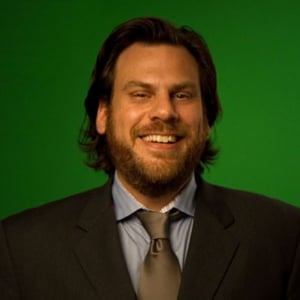
President and Founder, International Center for Law & Economics
Geoffrey A. Manne is the president and founder of the International Center for Law and Economics (ICLE), a nonprofit, nonpartisan research center based in Portland, Oregon. He is also a distinguished fellow at Northwestern Law School’s Searle Center on Law, Regulation, & Economic Growth. In April 2017 he was appointed by FCC Chairman Ajit Pai to the FCC’s Broadband Deployment Advisory Committee, and he recently served for two years on the FCC’s Consumer Advisory Committee.
Mr. Manne earned his JD and AB degrees from the University of Chicago and is an expert in the economic analysis of law, specializing in competition, telecommunications, consumer protection, intellectual property, and technology policy.
Prior to founding ICLE, Manne was a law professor at Lewis & Clark Law School. From 2006-2009, he took a leave from teaching to develop Microsoft’s law and economics academic outreach program. Manne has also served as a lecturer in law at the University of Chicago Law School and the University of Virginia School of Law. He practiced antitrust law and appellate litigation at Latham & Watkins, clerked for Hon. Morris S. Arnold on the 8th Circuit Court of Appeals, and worked as a research assistant for Judge Richard Posner. He was also once (very briefly) employed by the FTC.
Mr. Manne’s publications have appeared in numerous journals including the Journal of Competition Law and Economics, the Harvard Journal of Law and Technology, the Supreme Court Economic Review, and the Arizona Law Review, among others. With former FTC Commissioner, Joshua Wright, Manne is the editor of a volume from Cambridge University Press entitled, Competition Policy and Intellectual Property Law Under Uncertainty: Regulating Innovation. Manne has also testified on several occasions before Congress and at the FCC and FTC, and he regularly files written comments and amicus briefs on key antitrust, IP, and telecommunications issues. His analysis is frequently published in popular print and broadcasting outlets such as the Wall Street Journal, Wired, Foreign Affairs, NPR, and Bloomberg, among others.
Manne is a member of the American Law and Economics Association, the Canadian Law and Economics Association, and the Society for Institutional & Organizational Economics. He blogs at Truth on the Market (www.truthonthemarket.com) (of which he is also the co-founder), is a contributor at WIRED, and tweets at @geoffmanne. His scholarly publications are available at http://ssrn.com/author=175541.
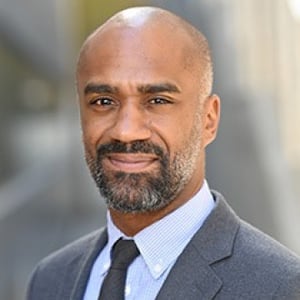
Professor of Law, Fordham University
Olivier is a Professor of Law at Fordham University. His research is in communications law and policy. His most recent popular writing, scholarship, and public speaking engagements are on liability under the Communications Decency Act and the social impacts of artificial intelligence. A few months ago, the John S. and James L. Knight Foundation awarded him a grant to support this work. He is a principal investigator, along with a team of telecommunications network engineers and social scientists, in an interdisciplinary National Science Foundation grant project that is prototyping a community-administered computing network in West Harlem.
Olivier teaches Legislation & Regulation, Administrative Law, Information Law, U.S. Data Protection Law & Privacy, and information law related courses. At Fordham, he also is the Director of the McGannon Center for Communications Research, the Academic Director of the Center for Law and Information Policy, and a research affiliate at the Center on Race, Law, and Justice. Before entering academia, Olivier was a Karpatkin Fellow in the National Legal Office of the American Civil Liberties Union in New York City and a litigation associate at Jenner & Block, LLC, in Washington, D.C. He is the Board President of the New York affiliate of the ACLU and sits on the Academic Advisory Board for the Open Markets Institute and the Advisory Committee for the Cyber Civil Rights Initiative. Before the COVID-19 outbreak, he taught a class on modern American literature for local incarcerated men.
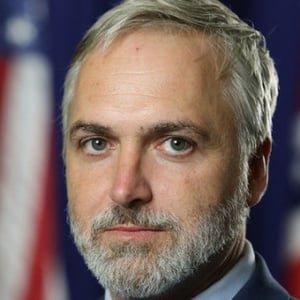
Senior Attorney, Institute for Free Speech
Charles “Chip” Miller joined the Institute for Free Speech as a Senior Attorney in May 2023, where he has handled cases in the 1st, 5th, and 10th Circuits, District Courts in Maine, Iowa, Kansas, Ohio, Texas and Utah, and State Supreme Courts in Alaska and Connecticut, as well as amicus briefs in SCOTUS and the First Circuit. At IFS, Miller's work focuses on Campaign Finance, Donor Privacy, Political Speech and Freedom of the Press. Miller previously served as Ohio’s Deputy Attorney General, where he directed major litigation. Before joining the state AG’s office as General Counsel, he served as a judge for the First Appellate District of Ohio and had also served as a “visiting judge” on the Ohio Supreme Court. Prior to entering public service, Miller spent over 10 years at Keating, Muething & Klekamp, PLL as a litigation partner arguing cases before the Sixth Circuit and the Ohio Supreme Court.
Miller has extensive litigation and appellate experience and has spearheaded important regulatory matters. His previous work includes advancing innovative protections of free expression and competition in the digital sphere.
Miller is a graduate of Boston University College of Law and clerked for Justice Maureen O’Connor at the Ohio Supreme Court. Among other honors, Miller was selected to represent Boston University at the National First Amendment Moot Court.
Professor of Law, Michigan State University (currently serving as FCC General Counsel)
Professor Candeub joined the MSU Law faculty in fall 2004. He is also a Fellow with MSU's Institute of Public Utilities. Prior to joining MSU, he served as an advisor at the Federal Communications Commission (FCC). From 1998 to 2000, Professor Candeub was a litigation associate for the Washington D.C. firm of Jones, Day, Reavis & Pogue and also has served as a corporate associate with Cleary, Gottlieb, Steen & Hamilton, also in Washington, D.C. Immediately following law school, he clerked for Chief Judge J. Clifford Wallace, U.S. Court of Appeals for the Ninth Circuit. While in law school, Professor Candeub was an articles editor for the University of Pennsylvania Law Review.
Professor Candeub's scholarly interests focus on the law and regulation of communications, internet, technology. His numerous law review articles and scholarly papers have placed him at the center of legal and policy controversies, and he often writes for popular outlets such as the Wall Street Journal and US News. Federal courts, including the U.S. Supreme Court, have cited and relied upon his work.
He joined the Trump administration in 2019 as Deputy Assistant Secretary of Commerce for Telecommunications and Information and assumed the role of Acting Assistant Secretary. He later joined the Department of Justice as Deputy Associate Attorney General.
Professor Candeub is a senior fellow at the D.C.-based Center of Renewing America.
Judge, United States Court of Appeals, District of Columbia Circuit
Judge Katsas was appointed to the D.C. Circuit in December 2017. He graduated from Princeton University and Harvard Law School, where he was an executive editor on the Harvard Law Review. Between 1989 and 1992, he served as a law clerk to Judge Edward Becker on the Third Circuit, to then-Judge Clarence Thomas on the D.C. Circuit, and to Justice Thomas on the Supreme Court. Between 1992 and 2001, he was an associate and then partner in the Washington office of Jones Day, where he specialized in appellate and complex civil litigation. Between 2001 and 2009, he served in many senior positions in the Department of Justice, including as Assistant Attorney General for the Civil Division and as Acting Associate Attorney General. In 2009, he returned to Jones Day. From January to December 2017, he served as Deputy Assistant to the President and Deputy Counsel to the President.
Before joining the bench, Judge Katsas argued more than 75 appeals, including three cases in the Supreme Court, 13 cases in the D.C. Circuit, and cases in every other federal court of appeals. By appointment of the Chief Justice, he served on the Advisory Committee on Appellate Rules from 2013 to 2017. In 2016, he was elected to membership in the American Academy of Appellate Lawyers.
President and Founder, International Center for Law & Economics
Geoffrey A. Manne is the president and founder of the International Center for Law and Economics (ICLE), a nonprofit, nonpartisan research center based in Portland, Oregon. He is also a distinguished fellow at Northwestern Law School’s Searle Center on Law, Regulation, & Economic Growth. In April 2017 he was appointed by FCC Chairman Ajit Pai to the FCC’s Broadband Deployment Advisory Committee, and he recently served for two years on the FCC’s Consumer Advisory Committee.
Mr. Manne earned his JD and AB degrees from the University of Chicago and is an expert in the economic analysis of law, specializing in competition, telecommunications, consumer protection, intellectual property, and technology policy.
Prior to founding ICLE, Manne was a law professor at Lewis & Clark Law School. From 2006-2009, he took a leave from teaching to develop Microsoft’s law and economics academic outreach program. Manne has also served as a lecturer in law at the University of Chicago Law School and the University of Virginia School of Law. He practiced antitrust law and appellate litigation at Latham & Watkins, clerked for Hon. Morris S. Arnold on the 8th Circuit Court of Appeals, and worked as a research assistant for Judge Richard Posner. He was also once (very briefly) employed by the FTC.
Mr. Manne’s publications have appeared in numerous journals including the Journal of Competition Law and Economics, the Harvard Journal of Law and Technology, the Supreme Court Economic Review, and the Arizona Law Review, among others. With former FTC Commissioner, Joshua Wright, Manne is the editor of a volume from Cambridge University Press entitled, Competition Policy and Intellectual Property Law Under Uncertainty: Regulating Innovation. Manne has also testified on several occasions before Congress and at the FCC and FTC, and he regularly files written comments and amicus briefs on key antitrust, IP, and telecommunications issues. His analysis is frequently published in popular print and broadcasting outlets such as the Wall Street Journal, Wired, Foreign Affairs, NPR, and Bloomberg, among others.
Manne is a member of the American Law and Economics Association, the Canadian Law and Economics Association, and the Society for Institutional & Organizational Economics. He blogs at Truth on the Market (www.truthonthemarket.com) (of which he is also the co-founder), is a contributor at WIRED, and tweets at @geoffmanne. His scholarly publications are available at http://ssrn.com/author=175541.
Professor of Law, Fordham University
Olivier is a Professor of Law at Fordham University. His research is in communications law and policy. His most recent popular writing, scholarship, and public speaking engagements are on liability under the Communications Decency Act and the social impacts of artificial intelligence. A few months ago, the John S. and James L. Knight Foundation awarded him a grant to support this work. He is a principal investigator, along with a team of telecommunications network engineers and social scientists, in an interdisciplinary National Science Foundation grant project that is prototyping a community-administered computing network in West Harlem.
Olivier teaches Legislation & Regulation, Administrative Law, Information Law, U.S. Data Protection Law & Privacy, and information law related courses. At Fordham, he also is the Director of the McGannon Center for Communications Research, the Academic Director of the Center for Law and Information Policy, and a research affiliate at the Center on Race, Law, and Justice. Before entering academia, Olivier was a Karpatkin Fellow in the National Legal Office of the American Civil Liberties Union in New York City and a litigation associate at Jenner & Block, LLC, in Washington, D.C. He is the Board President of the New York affiliate of the ACLU and sits on the Academic Advisory Board for the Open Markets Institute and the Advisory Committee for the Cyber Civil Rights Initiative. Before the COVID-19 outbreak, he taught a class on modern American literature for local incarcerated men.
Senior Attorney, Institute for Free Speech
Charles “Chip” Miller joined the Institute for Free Speech as a Senior Attorney in May 2023, where he has handled cases in the 1st, 5th, and 10th Circuits, District Courts in Maine, Iowa, Kansas, Ohio, Texas and Utah, and State Supreme Courts in Alaska and Connecticut, as well as amicus briefs in SCOTUS and the First Circuit. At IFS, Miller's work focuses on Campaign Finance, Donor Privacy, Political Speech and Freedom of the Press. Miller previously served as Ohio’s Deputy Attorney General, where he directed major litigation. Before joining the state AG’s office as General Counsel, he served as a judge for the First Appellate District of Ohio and had also served as a “visiting judge” on the Ohio Supreme Court. Prior to entering public service, Miller spent over 10 years at Keating, Muething & Klekamp, PLL as a litigation partner arguing cases before the Sixth Circuit and the Ohio Supreme Court.
Miller has extensive litigation and appellate experience and has spearheaded important regulatory matters. His previous work includes advancing innovative protections of free expression and competition in the digital sphere.
Miller is a graduate of Boston University College of Law and clerked for Justice Maureen O’Connor at the Ohio Supreme Court. Among other honors, Miller was selected to represent Boston University at the National First Amendment Moot Court.
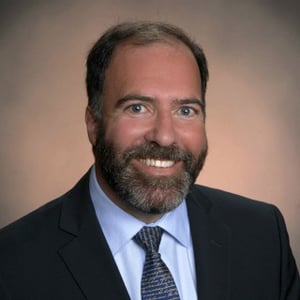
Professor of Law, Widener University Commonwealth Law School
Professor of Law, Widener University Commonwealth Law School
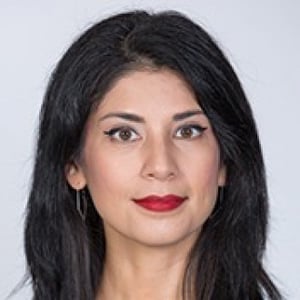
Professor of Law and Michael R. Klein Distinguished Scholar Chair, University of Miami School of Law
Mary Anne Franks, Professor of Law and Michael R. Klein Distinguished Scholar Chair, is a nationally and internationally recognized expert on the intersection of civil rights and technology. She teaches classes on criminal law, criminal procedure, First Amendment law, Second Amendment law, family law, and law and technology. Professor Franks is also an Affiliated Faculty member of the University of Miami Department of Philosophy and an Affiliate Fellow of the Yale Law School Information Society Project (ISP).
Dr. Franks is the author of the award-winning book, The Cult of the Constitution: Our Deadly Devotion to Guns and Free Speech (Stanford Press, 2019). In 2020, she was awarded a grant from the Knight Foundation to support research for her second book, Fearless Speech (expected 2022). Her scholarship has appeared in the Harvard Law Review, the California Law Review, and UCLA Law Review, among others. Dr. Franks has also authored numerous articles for the popular press, including the New York Times, the Atlantic, the Washington Post, and Newsweek. She has delivered more than a hundred lectures to a range of audiences around the world, including law schools, domestic violence organizations, law firms, and tech companies. She was named a member of the American Law Institute in October 2018.
Dr. Franks is the President and Legislative & Tech Policy Director of the Cyber Civil Rights Initiative, a nonprofit organization dedicated to combating online abuse and discrimination. In 2013, she drafted the first model criminal statute on nonconsensual pornography (sometimes referred to as “revenge porn”), which has served as the template for multiple state laws and for pending federal legislation on the issue. She also served as the reporter for the Uniform Law Commission’s 2018 Uniform Civil Remedies for the Unauthorized Disclosure of Intimate Images Act. Dr. Franks is a principal investigator for a 2020 National Science Foundation grant project, COVID-19 and sexual cyberviolence: Impact on general users and vulnerable populations. She regularly advises legislators, tech industry leaders, and advocacy organizations on issues relating to online privacy, sexual exploitation, extortion, harassment, and threats.
Dr. Franks holds a J.D. from Harvard Law School as well as a doctorate and a master’s degree from Oxford University, where she studied as a Rhodes Scholar. She previously taught at the University of Chicago Law School as a Bigelow Fellow and Lecturer in Law and at Harvard University as a lecturer in social studies and philosophy.
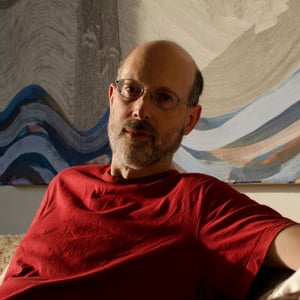
Maurice and Hilda Friedman Professor of Law, Columbia Law School; CEO, New Civil Liberties Alliance
Philip Hamburger is the Maurice and Hilda Friedman Professor of Law at Columbia Law School, and Chief Executive Officer at the New Civil Liberties Alliance. Before coming to Columbia, he was the John P. Wilson Professor at the University of Chicago Law School.
He writes on constitutional law and its history—with particular emphasis on religious liberty, freedom of speech and the press, judicial office, administrative power, and unconstitutional conditions.
His books are Separation of Church and State (Harvard 2002), Law and Judicial Duty (Harvard 2008), Is Administrative Law Unlawful? (Chicago 2014), The Administrative Threat (Encounter 2017), and Liberal Suppression: Section 501(c)(3) and the Taxation of Speech (Chicago 2018). A forthcoming book is Purchasing Submission: Conditions, Power, and Freedom (Harvard 2021).
He is a member of the American Academy of Arts and Sciences, and he has served on the board of directors of the American Society for Legal History. He has twice received the Sutherland Prize for the most significant contribution to English legal history, and has been awarded the Henry Paolucci - Walter Bagehot Book Award, the Hayek Book Prize, and the Bradley Prize.
Judge, United States Court of Appeals, District of Columbia Circuit
Judge Katsas was appointed to the D.C. Circuit in December 2017. He graduated from Princeton University and Harvard Law School, where he was an executive editor on the Harvard Law Review. Between 1989 and 1992, he served as a law clerk to Judge Edward Becker on the Third Circuit, to then-Judge Clarence Thomas on the D.C. Circuit, and to Justice Thomas on the Supreme Court. Between 1992 and 2001, he was an associate and then partner in the Washington office of Jones Day, where he specialized in appellate and complex civil litigation. Between 2001 and 2009, he served in many senior positions in the Department of Justice, including as Assistant Attorney General for the Civil Division and as Acting Associate Attorney General. In 2009, he returned to Jones Day. From January to December 2017, he served as Deputy Assistant to the President and Deputy Counsel to the President.
Before joining the bench, Judge Katsas argued more than 75 appeals, including three cases in the Supreme Court, 13 cases in the D.C. Circuit, and cases in every other federal court of appeals. By appointment of the Chief Justice, he served on the Advisory Committee on Appellate Rules from 2013 to 2017. In 2016, he was elected to membership in the American Academy of Appellate Lawyers.

Thomas M. Siebel Senior Fellow, The Hoover Institution, Stanford University; Gary T. Schwartz Distinguished Professor of Law Emeritus, UCLA School of Law
Eugene Volokh is the Thomas M. Siebel Senior Fellow at the Hoover Institution (Stanford), as well as the Gary T. Schwartz Distinguished Professor of Law Emeritus and Distinguished Research Professor at UCLA School of Law. He recently retired from teaching at UCLA, after 30 years there, and is now focusing on research.
Volokh is the author of the textbooks The First Amendment and Related Statutes (8th ed. 2023), and Academic Legal Writing (5th ed. 2016), as well as over 100 academic law journal articles, mostly on First Amendment law. He is a member of The American Law Institute; the editor-in-chief of the Journal of Free Speech Law; and the creator and coauthor of The Volokh Conspiracy, a leading legal blog founded in 2002 (hosted at the Washington Post from 2014 to 2017 and now at Reason Magazine).
Professor of Law and Michael R. Klein Distinguished Scholar Chair, University of Miami School of Law
Mary Anne Franks, Professor of Law and Michael R. Klein Distinguished Scholar Chair, is a nationally and internationally recognized expert on the intersection of civil rights and technology. She teaches classes on criminal law, criminal procedure, First Amendment law, Second Amendment law, family law, and law and technology. Professor Franks is also an Affiliated Faculty member of the University of Miami Department of Philosophy and an Affiliate Fellow of the Yale Law School Information Society Project (ISP).
Dr. Franks is the author of the award-winning book, The Cult of the Constitution: Our Deadly Devotion to Guns and Free Speech (Stanford Press, 2019). In 2020, she was awarded a grant from the Knight Foundation to support research for her second book, Fearless Speech (expected 2022). Her scholarship has appeared in the Harvard Law Review, the California Law Review, and UCLA Law Review, among others. Dr. Franks has also authored numerous articles for the popular press, including the New York Times, the Atlantic, the Washington Post, and Newsweek. She has delivered more than a hundred lectures to a range of audiences around the world, including law schools, domestic violence organizations, law firms, and tech companies. She was named a member of the American Law Institute in October 2018.
Dr. Franks is the President and Legislative & Tech Policy Director of the Cyber Civil Rights Initiative, a nonprofit organization dedicated to combating online abuse and discrimination. In 2013, she drafted the first model criminal statute on nonconsensual pornography (sometimes referred to as “revenge porn”), which has served as the template for multiple state laws and for pending federal legislation on the issue. She also served as the reporter for the Uniform Law Commission’s 2018 Uniform Civil Remedies for the Unauthorized Disclosure of Intimate Images Act. Dr. Franks is a principal investigator for a 2020 National Science Foundation grant project, COVID-19 and sexual cyberviolence: Impact on general users and vulnerable populations. She regularly advises legislators, tech industry leaders, and advocacy organizations on issues relating to online privacy, sexual exploitation, extortion, harassment, and threats.
Dr. Franks holds a J.D. from Harvard Law School as well as a doctorate and a master’s degree from Oxford University, where she studied as a Rhodes Scholar. She previously taught at the University of Chicago Law School as a Bigelow Fellow and Lecturer in Law and at Harvard University as a lecturer in social studies and philosophy.
Maurice and Hilda Friedman Professor of Law, Columbia Law School; CEO, New Civil Liberties Alliance
Philip Hamburger is the Maurice and Hilda Friedman Professor of Law at Columbia Law School, and Chief Executive Officer at the New Civil Liberties Alliance. Before coming to Columbia, he was the John P. Wilson Professor at the University of Chicago Law School.
He writes on constitutional law and its history—with particular emphasis on religious liberty, freedom of speech and the press, judicial office, administrative power, and unconstitutional conditions.
His books are Separation of Church and State (Harvard 2002), Law and Judicial Duty (Harvard 2008), Is Administrative Law Unlawful? (Chicago 2014), The Administrative Threat (Encounter 2017), and Liberal Suppression: Section 501(c)(3) and the Taxation of Speech (Chicago 2018). A forthcoming book is Purchasing Submission: Conditions, Power, and Freedom (Harvard 2021).
He is a member of the American Academy of Arts and Sciences, and he has served on the board of directors of the American Society for Legal History. He has twice received the Sutherland Prize for the most significant contribution to English legal history, and has been awarded the Henry Paolucci - Walter Bagehot Book Award, the Hayek Book Prize, and the Bradley Prize.
Judge, United States Court of Appeals, District of Columbia Circuit
Judge Katsas was appointed to the D.C. Circuit in December 2017. He graduated from Princeton University and Harvard Law School, where he was an executive editor on the Harvard Law Review. Between 1989 and 1992, he served as a law clerk to Judge Edward Becker on the Third Circuit, to then-Judge Clarence Thomas on the D.C. Circuit, and to Justice Thomas on the Supreme Court. Between 1992 and 2001, he was an associate and then partner in the Washington office of Jones Day, where he specialized in appellate and complex civil litigation. Between 2001 and 2009, he served in many senior positions in the Department of Justice, including as Assistant Attorney General for the Civil Division and as Acting Associate Attorney General. In 2009, he returned to Jones Day. From January to December 2017, he served as Deputy Assistant to the President and Deputy Counsel to the President.
Before joining the bench, Judge Katsas argued more than 75 appeals, including three cases in the Supreme Court, 13 cases in the D.C. Circuit, and cases in every other federal court of appeals. By appointment of the Chief Justice, he served on the Advisory Committee on Appellate Rules from 2013 to 2017. In 2016, he was elected to membership in the American Academy of Appellate Lawyers.
Thomas M. Siebel Senior Fellow, The Hoover Institution, Stanford University; Gary T. Schwartz Distinguished Professor of Law Emeritus, UCLA School of Law
Eugene Volokh is the Thomas M. Siebel Senior Fellow at the Hoover Institution (Stanford), as well as the Gary T. Schwartz Distinguished Professor of Law Emeritus and Distinguished Research Professor at UCLA School of Law. He recently retired from teaching at UCLA, after 30 years there, and is now focusing on research.
Volokh is the author of the textbooks The First Amendment and Related Statutes (8th ed. 2023), and Academic Legal Writing (5th ed. 2016), as well as over 100 academic law journal articles, mostly on First Amendment law. He is a member of The American Law Institute; the editor-in-chief of the Journal of Free Speech Law; and the creator and coauthor of The Volokh Conspiracy, a leading legal blog founded in 2002 (hosted at the Washington Post from 2014 to 2017 and now at Reason Magazine).
Professor of Law and Michael R. Klein Distinguished Scholar Chair, University of Miami School of Law
Mary Anne Franks, Professor of Law and Michael R. Klein Distinguished Scholar Chair, is a nationally and internationally recognized expert on the intersection of civil rights and technology. She teaches classes on criminal law, criminal procedure, First Amendment law, Second Amendment law, family law, and law and technology. Professor Franks is also an Affiliated Faculty member of the University of Miami Department of Philosophy and an Affiliate Fellow of the Yale Law School Information Society Project (ISP).
Dr. Franks is the author of the award-winning book, The Cult of the Constitution: Our Deadly Devotion to Guns and Free Speech (Stanford Press, 2019). In 2020, she was awarded a grant from the Knight Foundation to support research for her second book, Fearless Speech (expected 2022). Her scholarship has appeared in the Harvard Law Review, the California Law Review, and UCLA Law Review, among others. Dr. Franks has also authored numerous articles for the popular press, including the New York Times, the Atlantic, the Washington Post, and Newsweek. She has delivered more than a hundred lectures to a range of audiences around the world, including law schools, domestic violence organizations, law firms, and tech companies. She was named a member of the American Law Institute in October 2018.
Dr. Franks is the President and Legislative & Tech Policy Director of the Cyber Civil Rights Initiative, a nonprofit organization dedicated to combating online abuse and discrimination. In 2013, she drafted the first model criminal statute on nonconsensual pornography (sometimes referred to as “revenge porn”), which has served as the template for multiple state laws and for pending federal legislation on the issue. She also served as the reporter for the Uniform Law Commission’s 2018 Uniform Civil Remedies for the Unauthorized Disclosure of Intimate Images Act. Dr. Franks is a principal investigator for a 2020 National Science Foundation grant project, COVID-19 and sexual cyberviolence: Impact on general users and vulnerable populations. She regularly advises legislators, tech industry leaders, and advocacy organizations on issues relating to online privacy, sexual exploitation, extortion, harassment, and threats.
Dr. Franks holds a J.D. from Harvard Law School as well as a doctorate and a master’s degree from Oxford University, where she studied as a Rhodes Scholar. She previously taught at the University of Chicago Law School as a Bigelow Fellow and Lecturer in Law and at Harvard University as a lecturer in social studies and philosophy.
Judge, United States Court of Appeals, District of Columbia Circuit
Judge Katsas was appointed to the D.C. Circuit in December 2017. He graduated from Princeton University and Harvard Law School, where he was an executive editor on the Harvard Law Review. Between 1989 and 1992, he served as a law clerk to Judge Edward Becker on the Third Circuit, to then-Judge Clarence Thomas on the D.C. Circuit, and to Justice Thomas on the Supreme Court. Between 1992 and 2001, he was an associate and then partner in the Washington office of Jones Day, where he specialized in appellate and complex civil litigation. Between 2001 and 2009, he served in many senior positions in the Department of Justice, including as Assistant Attorney General for the Civil Division and as Acting Associate Attorney General. In 2009, he returned to Jones Day. From January to December 2017, he served as Deputy Assistant to the President and Deputy Counsel to the President.
Before joining the bench, Judge Katsas argued more than 75 appeals, including three cases in the Supreme Court, 13 cases in the D.C. Circuit, and cases in every other federal court of appeals. By appointment of the Chief Justice, he served on the Advisory Committee on Appellate Rules from 2013 to 2017. In 2016, he was elected to membership in the American Academy of Appellate Lawyers.
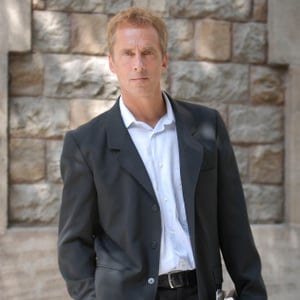
Thomas M. Siebel Senior Fellow, The Hoover Institution, Stanford University; Gary T. Schwartz Distinguished Professor of Law Emeritus, UCLA School of Law
Eugene Volokh is the Thomas M. Siebel Senior Fellow at the Hoover Institution (Stanford), as well as the Gary T. Schwartz Distinguished Professor of Law Emeritus and Distinguished Research Professor at UCLA School of Law. He recently retired from teaching at UCLA, after 30 years there, and is now focusing on research.
Volokh is the author of the textbooks The First Amendment and Related Statutes (8th ed. 2023), and Academic Legal Writing (5th ed. 2016), as well as over 100 academic law journal articles, mostly on First Amendment law. He is a member of The American Law Institute; the editor-in-chief of the Journal of Free Speech Law; and the creator and coauthor of The Volokh Conspiracy, a leading legal blog founded in 2002 (hosted at the Washington Post from 2014 to 2017 and now at Reason Magazine).

Navigating High Profile Defamation
Barry Anderson, Libby Locke
Practice Groups Teleforum
The rise in cancel culture aided by online activity—and more recently by the national press—can...
Navigating High Profile Defamation
Barry Anderson, Libby Locke
Practice Groups Teleforum
The rise in cancel culture aided by online activity—and more recently by the national press—can...
Limiting the Right to Exclude: Common Carrier and Market Dominance
Adam Candeub, Gregory G. Katsas, Geoffrey A. Manne, Olivier Sylvain, Charles M. Miller
Freedom of Thought Six-Part Zoom Webinar Series: Part 3
The recent concurrence by Justice Thomas in Biden v. Knight First Amendment Institute has raised new questions about how...
Limiting the Right to Exclude: Common Carrier and Market Dominance
Adam Candeub, Gregory G. Katsas, Geoffrey A. Manne, Olivier Sylvain, Charles M. Miller
Freedom of Thought Six-Part Zoom Webinar Series: Part 3
The recent concurrence by Justice Thomas in Biden v. Knight First Amendment Institute has raised new questions about how...
Courthouse Steps Decision Webinar: Mahanoy Area School District v. B.L.
Michael R. Dimino
Free Speech & Election Law Practice Group Teleforum
On June 23, 2021, the Supreme Court decided Mahanoy Area School District v. B.L., a...
Courthouse Steps Decision Webinar: Mahanoy Area School District v. B.L.
Michael R. Dimino
Free Speech & Election Law Practice Group Teleforum
On June 23, 2021, the Supreme Court decided Mahanoy Area School District v. B.L., a...
Topics
A Sober Analysis of the PRO-SPEECH Act
On June 10, 2021, Senator Roger Wicker introduced the Promoting Rights and Online Speech Protections...
Textual Challenges of Section 230
Mary Anne Franks, Philip A. Hamburger, Gregory G. Katsas, Eugene Volokh
Freedom of Thought Six-Part Zoom Webinar Series: Part 2
This panel addressed the textual questions of §230: is the statute correctly understood to permit...
Textual Challenges of Section 230
Mary Anne Franks, Philip A. Hamburger, Gregory G. Katsas, Eugene Volokh
Freedom of Thought Six-Part Zoom Webinar Series: Part 2
This panel addressed the textual questions of §230: is the statute correctly understood to permit...
Free Speech and Compelled Speech: First Amendment Challenges to a Marketplace of Ideas
Mary Anne Franks, Gregory G. Katsas, Jed Rubenfeld, Eugene Volokh
Freedom of Thought Six-Part Series: Part 1
Section 230 has been understood to shield internet platforms from liability for content posted by...