
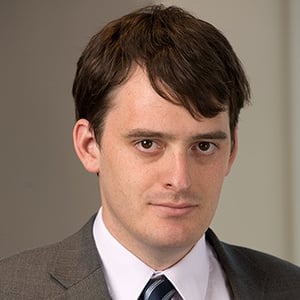
Head of Tech & Innovation, Centre for Policy Studies
Matthew Feeney is Head of Tech & Innovation at Centre for Policy Studies. Before joining CPS, Matthew was the director of Cato Institute’s Project on Emerging Technologies. His writing has appeared in The New York Times, The Washington Post, City A.M., and others. He received both his BA and MA in philosophy from the University of Reading.
Head of Tech & Innovation, Centre for Policy Studies
Matthew Feeney is Head of Tech & Innovation at Centre for Policy Studies. Before joining CPS, Matthew was the director of Cato Institute’s Project on Emerging Technologies. His writing has appeared in The New York Times, The Washington Post, City A.M., and others. He received both his BA and MA in philosophy from the University of Reading.
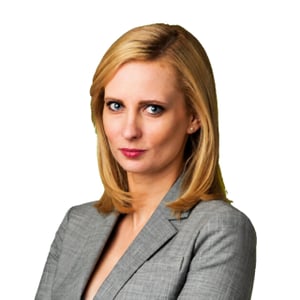
Executive Director, Committee for Justice
Ashley Baker is Executive Director of the Committee for Justice and founder of the Alliance on Antitrust coalition. Her work focuses on antitrust law, technology regulation, administrative-agency authority, the Supreme Court, and judicial nominations. She closely follows the Federal Trade Commission and the Department of Justice’s Antitrust Division, with particular attention to merger review, agency procedure, and the effects of regulation on American innovation and competitiveness. She is also founder of the Alliance on Antitrust Coalition.
Ashley has testified before the United States Senate on antitrust law. Her writing has appeared in Fox News, USA Today, The Boston Globe, The Hill, RealClearPolitics, The American Spectator, and other national publications. She also provides policy analysis through congressional testimony and correspondence, regulatory comments, and public commentary.
Ashley serves on the Federalist Society’s Regulatory Transparency Project and Antitrust and Consumer Protection Practice Group Executive Committee. She is also active in the Republican National Lawyers Association and has spoken on the Supreme Court and the federal judiciary. An authority on the judicial-confirmation process, she worked closely on the successful confirmation efforts for Justices Neil Gorsuch and Brett Kavanaugh, as well as multiple federal appellate judges.
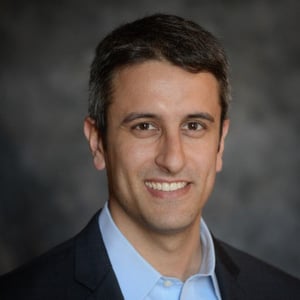
Senior Staff Attorney, Knight First Amendment Institute
Alex Abdo is a senior staff attorney at the Knight First Amendment Institute. Prior to joining the Institute, he was a senior staff attorney at the ACLU. He has been at the forefront of litigation relating to NSA surveillance, encryption, anonymous speech online, government transparency, and the post-9/11 abuse of detainees in U.S. custody. In 2015, he argued the closely watched appeal that resulted in the Second Circuit invalidating the NSA’s call-records program. He graduated from Yale College and Harvard Law School. After law school, Alex clerked for the Hon. Barbara M.G. Lynn, United States District Judge for the Northern District of Texas, and for the Hon. Rosemary Barkett, United States Circuit Judge for the Eleventh Circuit Court of Appeals.
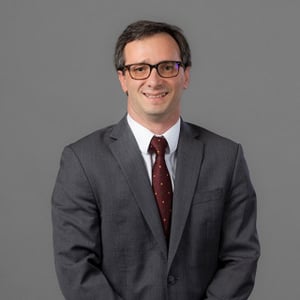
Assistant Professor of Law, George Mason University, Antonin Scalia Law School
Robert Leider is an Assistant Professor of Law at Antonin Scalia Law School, George Mason University. His scholarly interests are in criminal law, criminal procedure, and constitutional law, especially concerning questions about the use of force and the rule of law. He has written on the law of self-defense, the constitutional allocation of military power, and gun control. Among other places, he has published in the Florida Law Review (forthcoming), the Indiana Law Journal, and the Wall Street Journal.
Before joining Antonin Scalia Law School, Professor Leider was at Arnold & Porter in Washington, DC. He was previously with Mayer Brown LLP and was an Olin-Searle-Smith Fellow at the University of Pennsylvania Law School. He has clerked for Judge Diane S. Sykes, of the U.S. Court of Appeals for the Seventh Circuit, and Justice Clarence Thomas. Professor Leider earned a BA, summa cum laude, from The George Washington University, a JD from Yale Law School, and a PhD in Philosophy (dissertation defended with distinction) from Georgetown University. While at Yale, he served as an articles editor for the Yale Law Journal.
Professor Leider teaches criminal law and torts.

Executive Director, State and Local Legal Center
Lisa Soronen is the Executive Director of the SLLC. Prior to joining the SLLC, Lisa worked for the National School Boards Association, the Wisconsin Association of School Boards, and clerked for the Wisconsin Court of Appeals. She earned her J.D. at the University of Wisconsin Law School and is a graduate of Central Michigan University.
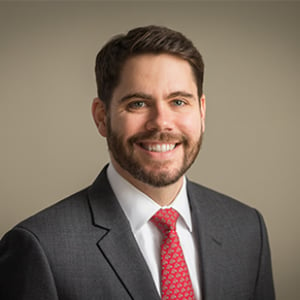
Partner, Consovoy McCarthy PLLC
Mr. Weir is an experienced litigator who focuses on constitutional and regulatory matters. He has particular expertise in cases involving the First and Fourteenth Amendments, civil rights statutes, and challenges to federal agency actions. He has briefed and presented oral argument in state and federal courts across the country, including in the Supreme Court of the United States. He was trial counsel and part of the team that prevailed before the Supreme Court in the landmark case Students for Fair Admissions, Inc. v. Harvard College and University of North Carolina.
Since 2015, Mr. Weir has been an adjunct professor for the Administrative Law and Supreme court clinics at the Antonin Scalia Law School at George Mason University. He is a former law clerk to Judge Carlos T. Bea of the United States Court of Appeals for the Ninth Circuit and Judge Anthony J. Trenga of the United States District Court for the Eastern District of Virginia. He earned his A.B. cum laude from Georgetown University and his J.D. summa cum laude from George Mason University School of Law.
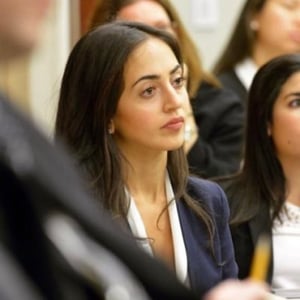
Judicial Law Clerk, United States Court of Appeals
Natasha Babazadeh is a judicial law clerk for the United States Court of Appeals. She was the 2017 EPIC Law Fellow in Appellate Advocacy at the Electronic Privacy Information Center. She is a graduate from UCLA School of Law's David J. Epstein Program in Public Interest Law and Policy. Natasha has worked on First and Fourth Amendment issues related to national security, privacy, technology and criminal justice as an intern for the ACLU's Speech Privacy and Technology Project, the Brennan Center for Justice at NYU School of Law, and Amnesty International USA. At UCLA, she served as the Editor-in-Chief for the Journal of International Law and Foreign Affairs. She also co-Founded and served as co-President of the Digital Governance and Technology Association of Law, where she organized events surrounding Russia's involvement in the U.S. election and ICANN's transition out of U.S. government oversight. Natasha is a 2014 summa cum laude graduate of New York University, where she studied international politics and human rights and received the NYU President's Service Award.
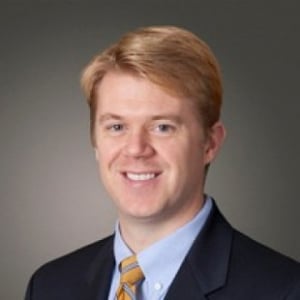
Partner, McGuireWoods LLP
Matt is a co-chair of the firm’s Appeals and Issues group. His practice focuses on appellate matters, constitutional issues, and major motions. Matt previously served as a law clerk to Justice Clarence Thomas of the Supreme Court of the United States and Chief Judge Edward E. Carnes of the U.S. Court of Appeals for the Eleventh Circuit in Montgomery, Alabama.
In January 2018, Matt presented argument in the U.S. Supreme Court on behalf of the petitioner in Collins v. Virginia, No. 16-1027. The case has been widely noted as an important Fourth Amendment case in which the Court will address the scope of the automobile exception to the warrant requirement. Over the past several years, Matt has also argued complex cases in the Second, Fourth, Sixth, Eighth, Ninth, Eleventh, and D.C. Circuits as well as the Supreme Court of Virginia and the Georgia Supreme Court (pro hac vice).
His practice also focuses on sharp and efficient legal writing. Matt has written dozens of appellate briefs, white papers, and important strategic motions such as those opposing class certification and attempting to quash subpoenas. On the topic of effective written advocacy in particular, Matt devotes time to mentoring associates, including presenting a writing CLE that has received excellent reviews.
Matt graduated magna cum laude from the University of Virginia School of Law. At Virginia, he served as a Dillard Fellow and worked on the editorial and managing boards of the Virginia Law Review.

Senior Fellow and Director of Constitutional Studies, Manhattan Institute
Ilya Shapiro is a senior fellow and director of constitutional studies at the Manhattan Institute and a contributing editor of City Journal. Previously he was executive director and senior lecturer at the Georgetown Center for the Constitution, and before that a vice president of the Cato Institute.
Shapiro is the author of Lawless: The Miseducation of America’s Elites (2025) and Supreme Disorder: Judicial Nominations and the Politics of America’s Highest Court (2020), coauthor of Religious Liberties for Corporations? (2014), and editor of 11 volumes of the Cato Supreme Court Review (2008-18). He has contributed to a variety of academic, popular, and professional publications, including the Wall Street Journal, Harvard Journal of Law & Public Policy, Washington Post, Los Angeles Times, USA Today, National Review, and Newsweek. He also regularly provides commentary for various media outlets, writes the Shapiro’s Gavel newsletter on Substack, and once appeared on the Colbert Report.
Shapiro has testified many times before Congress and state legislatures and has filed more than 500 amicus curiae “friend of the court” briefs in the Supreme Court. He lectures regularly on behalf of the Federalist Society, is a member of the board of fellows of the Jewish Policy Center, was an inaugural Washington Fellow at the National Review Institute, and has been an adjunct law professor at the George Washington University and University of Mississippi. He is also the chairman of the board of advisers of the Mississippi Justice Institute, a barrister in the Edward Coke Appellate Inn of Court, and a former member of the Virginia Advisory Committee to the U.S. Commission on Civil Rights.
Earlier in his career, Shapiro was a special assistant/adviser to the Multi-National Force in Iraq on rule-of-law issues and practiced at Patton Boggs and Cleary Gottlieb. Before entering private practice, he clerked for Judge E. Grady Jolly of the U.S. Court of Appeals for the Fifth Circuit. He holds an AB from Princeton University, an MSc from the London School of Economics, and a JD from the University of Chicago Law School.

Martinez-Fuerte: 40 Years Later [Landmark Edition]
Matthew Feeney
Short video featuring Matthew Feeney
In 1976, the Supreme Court decided United States v. Martinez-Fuerte, a case that examined “fixed,...
Can Border Patrol Search Your Phone Without a Warrant? [POLICYbrief]
Matthew Feeney
Short video featuring Matthew Feeney
The long-standing “Border Search Exception” to the Fourth Amendment allows Customs and Border Protection to...
Justice Gorsuch, Carpenter, & the Fourth Amendment [POLICYbrief]
Ashley Baker
Short video featuring Ashley Baker
Though Justice Neil Gorsuch filed one of the four dissenting opinions in Carpenter v. United...
The FISA Court: History, Purpose, and Controversy [No. 86]
Alex Abdo
Short video featuring Alex Abdo
In their fight against international terrorism, the United States intelligence community will at times conduct...
Kisela v. Hughes - Post-Decision SCOTUScast
Robert Leider
SCOTUScast featuring Robert Leider
On April 2, 2018, the Supreme Court decided Kisela v. Hughes. In 2010, Andrew Kisela,...
City of Hays, Kansas v. Vogt: The Limits of Self-Incrimination [SCOTUSbrief]
Lisa Soronen
Short video featuring Lisa Soronen
What are the limits of self-incrimination under the Constitution? Lisa Soronen, Executive Director of the...
Courthouse Steps Decision: District of Columbia v. Wesby
Bryan Weir
Criminal Law & Procedure Practice Group Teleforum
On January 22th, the Supreme Court handed down a decision for District of Columbia v....
Byrd v. United States [SCOTUSbrief]
Natasha Babazadeh
Short video featuring Natasha Babazadeh
What is the expectation of privacy when you’re driving someone else’s rental car? Natasha Babazadeh...
Collins v. Virginia [SCOTUSbrief]
Matthew A. Fitzgerald
Short video featuring Matt Fitzgerald
Matt Fitzgerald, a partner at McGuireWoods, discusses the tension between the Fourth Amendment and the...
Carpenter v. United States [SCOTUSbrief]
Ilya Shapiro
Short video featuring Ilya Shapiro
Does the Fourth Amendment allow for a warrantless search and seizure of cellphone location data...