
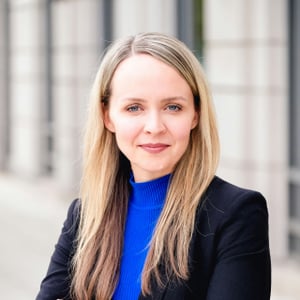
Professor of Law and Faculty Director for the Georgetown Center for the Constitution, Georgetown University Law Center
Stephanie Barclay is a Professor of Law at Georgetown Law School, and the Faculty Director of the Georgetown Center for the Constitution. Her research focuses on the role our different democratic institutions play in protecting minority rights, particularly at the intersection of free speech and religious exercise. Barclay‘s work is published or is forthcoming in leading journals such as the Harvard Law Review, the Chicago Law Review, the University of Pennsylvania Law Review, and the Yale Law Journal Forum. One of her articles was also selected for the 2020 Stanford/Harvard/Yale Junior Faculty Forum. Her work has been featured in many media outlets, including The New York Times, The Wall Street Journal, The Washington Post, USA Today, Bloomberg BNA, The Hill, and Law 360. And her work has also been cited by the U.S. Supreme Court.
Prior to joining Georgetown, Barclay was twice voted Professor of the Year. Barclay has also litigated constitutional cases at both the trial and appellate level, including before the U.S. Supreme Court. Barclay served as a law clerk to Judge N. Randy Smith on the U.S. Court of Appeals for the Ninth Circuit, and to Justice Neil M. Gorsuch of the U.S. Supreme Court.
Barclay is a Faculty Affiliate at the Constitutional Law Center at Stanford Law School; and she is a Nootbaar Fellow at the Nootbaar Institute on Law, Religion, and Ethics at Pepperdine University. She currently serves as the Chair for the AALS Law and Religion Section and as a Member of the Executive Committee for the AALS Constitutional Law Section. She graduated summa cum laude from BYU Law School, where she was elected to the Order of the Coif. She is completing a Ph.D. in Law at Oxford University as a Clarendon Scholar and a Tang Scholar.
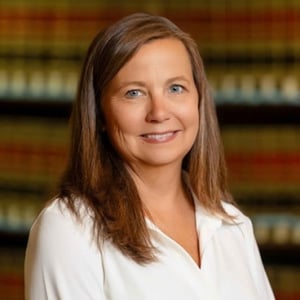
John P. Murphy Foundation Professor of Law and Associate Dean for External Engagement, University of Notre Dame Law School
Nicole Stelle Garnett is the John P. Murphy Foundation Professor of Law at Notre Dame Law School, where she also serves as the Associate Dean for External Engagement and directs the Notre Dame Education Law Project. Her teaching and research focus on education law and policy, religious liberty, and topics related to property law (especially land use and urban development policies). In addition to dozens of articles on these subjects, she is the author of Lost Classroom, Lost Community: Catholic Schools' Importance in Urban America (University of Chicago Press, 2014) and Ordering the City: Land Use, Policing and the Restoration of Urban America (Yale University Press, 2009).
Garnett received her B.A. with distinction in Political Science from Stanford University and her J.D. from Yale Law School. After law school, she clerked for the Honorable Morris S. Arnold of the United States Court of Appeals for the Eighth Circuit and for Associate Justice Clarence Thomas of the Supreme Court of the United States. Before joining the law school faculty in 1999, she worked for two years as a staff attorney at the Institute for Justice, a non-profit public-interest law firm in Washington, D.C., where she helped to defend the constitutionality of the nation's first private-school-choice programs.
At Notre Dame, Garnett is a faculty fellow in the Institute for Educational Initiatives, Kellogg Institute for International Studies, Fitzgerald Institute for Real Estate, and deNicola Center for Ethics and Culture. She also is an elected member of the American Law Institute and a Senior Fellow at the Manhattan Institute.
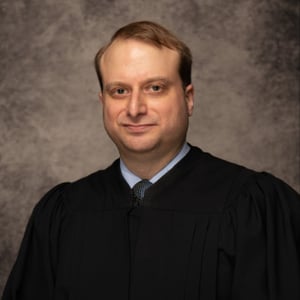
Judge, United States Court of Appeals, Second Circuit
Judge Menashi was appointed to the U.S. Court of Appeals for the Second Circuit on November 14, 2019. Previously, he served as special assistant and associate counsel to the President in the White House and as acting general counsel at the U.S. Department of Education. He was assistant professor of law at Scalia Law School, George Mason University, where he taught administrative law and civil procedure, and a research fellow at New York University School of Law and Georgetown University Law Center. He was also a partner at Kirkland & Ellis LLP in New York, where he practiced appellate and commercial litigation, and served as a law clerk to Justice Samuel Alito on the Supreme Court of the United States and to Judge Douglas Ginsburg on the U.S. Court of Appeals for the District of Columbia Circuit. He graduated from Stanford Law School, where he was elected to Order of the Coif and served as senior articles editor of the Stanford Law Review, and from Dartmouth College, where he was elected to Phi Beta Kappa.
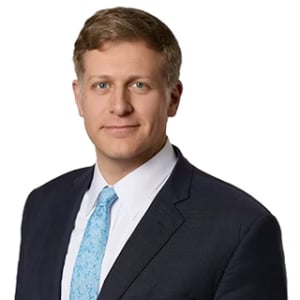
Partner, Sullivan & Cromwell LLP
Matthew Schwartz is a partner in the Firm’s Litigation Group. He joined the Firm in 2007 after clerking for Justice Samuel A. Alito, Jr. of the U.S. Supreme Court. He was elected partner in 2011.
Mr. Schwartz’s wide-ranging practice comprises complex litigation, arbitration, and government investigations in the areas of securities law, M&A, derivative suits, antitrust, bank regulation, contracts, constitutional law, administrative law and general commercial litigation. He has represented some of the world’s leading corporations, financial institutions, and industry organizations. Mr. Schwartz provides regular advice on legislation and regulations in the AI, banking, FinTech, and payments fields.
Matt also regularly speaks and writes on legal ethics issues.
Professor of Law and Faculty Director for the Georgetown Center for the Constitution, Georgetown University Law Center
Stephanie Barclay is a Professor of Law at Georgetown Law School, and the Faculty Director of the Georgetown Center for the Constitution. Her research focuses on the role our different democratic institutions play in protecting minority rights, particularly at the intersection of free speech and religious exercise. Barclay‘s work is published or is forthcoming in leading journals such as the Harvard Law Review, the Chicago Law Review, the University of Pennsylvania Law Review, and the Yale Law Journal Forum. One of her articles was also selected for the 2020 Stanford/Harvard/Yale Junior Faculty Forum. Her work has been featured in many media outlets, including The New York Times, The Wall Street Journal, The Washington Post, USA Today, Bloomberg BNA, The Hill, and Law 360. And her work has also been cited by the U.S. Supreme Court.
Prior to joining Georgetown, Barclay was twice voted Professor of the Year. Barclay has also litigated constitutional cases at both the trial and appellate level, including before the U.S. Supreme Court. Barclay served as a law clerk to Judge N. Randy Smith on the U.S. Court of Appeals for the Ninth Circuit, and to Justice Neil M. Gorsuch of the U.S. Supreme Court.
Barclay is a Faculty Affiliate at the Constitutional Law Center at Stanford Law School; and she is a Nootbaar Fellow at the Nootbaar Institute on Law, Religion, and Ethics at Pepperdine University. She currently serves as the Chair for the AALS Law and Religion Section and as a Member of the Executive Committee for the AALS Constitutional Law Section. She graduated summa cum laude from BYU Law School, where she was elected to the Order of the Coif. She is completing a Ph.D. in Law at Oxford University as a Clarendon Scholar and a Tang Scholar.
John P. Murphy Foundation Professor of Law and Associate Dean for External Engagement, University of Notre Dame Law School
Nicole Stelle Garnett is the John P. Murphy Foundation Professor of Law at Notre Dame Law School, where she also serves as the Associate Dean for External Engagement and directs the Notre Dame Education Law Project. Her teaching and research focus on education law and policy, religious liberty, and topics related to property law (especially land use and urban development policies). In addition to dozens of articles on these subjects, she is the author of Lost Classroom, Lost Community: Catholic Schools' Importance in Urban America (University of Chicago Press, 2014) and Ordering the City: Land Use, Policing and the Restoration of Urban America (Yale University Press, 2009).
Garnett received her B.A. with distinction in Political Science from Stanford University and her J.D. from Yale Law School. After law school, she clerked for the Honorable Morris S. Arnold of the United States Court of Appeals for the Eighth Circuit and for Associate Justice Clarence Thomas of the Supreme Court of the United States. Before joining the law school faculty in 1999, she worked for two years as a staff attorney at the Institute for Justice, a non-profit public-interest law firm in Washington, D.C., where she helped to defend the constitutionality of the nation's first private-school-choice programs.
At Notre Dame, Garnett is a faculty fellow in the Institute for Educational Initiatives, Kellogg Institute for International Studies, Fitzgerald Institute for Real Estate, and deNicola Center for Ethics and Culture. She also is an elected member of the American Law Institute and a Senior Fellow at the Manhattan Institute.
Judge, United States Court of Appeals, Second Circuit
Judge Menashi was appointed to the U.S. Court of Appeals for the Second Circuit on November 14, 2019. Previously, he served as special assistant and associate counsel to the President in the White House and as acting general counsel at the U.S. Department of Education. He was assistant professor of law at Scalia Law School, George Mason University, where he taught administrative law and civil procedure, and a research fellow at New York University School of Law and Georgetown University Law Center. He was also a partner at Kirkland & Ellis LLP in New York, where he practiced appellate and commercial litigation, and served as a law clerk to Justice Samuel Alito on the Supreme Court of the United States and to Judge Douglas Ginsburg on the U.S. Court of Appeals for the District of Columbia Circuit. He graduated from Stanford Law School, where he was elected to Order of the Coif and served as senior articles editor of the Stanford Law Review, and from Dartmouth College, where he was elected to Phi Beta Kappa.
Partner, Sullivan & Cromwell LLP
Matthew Schwartz is a partner in the Firm’s Litigation Group. He joined the Firm in 2007 after clerking for Justice Samuel A. Alito, Jr. of the U.S. Supreme Court. He was elected partner in 2011.
Mr. Schwartz’s wide-ranging practice comprises complex litigation, arbitration, and government investigations in the areas of securities law, M&A, derivative suits, antitrust, bank regulation, contracts, constitutional law, administrative law and general commercial litigation. He has represented some of the world’s leading corporations, financial institutions, and industry organizations. Mr. Schwartz provides regular advice on legislation and regulations in the AI, banking, FinTech, and payments fields.
Matt also regularly speaks and writes on legal ethics issues.
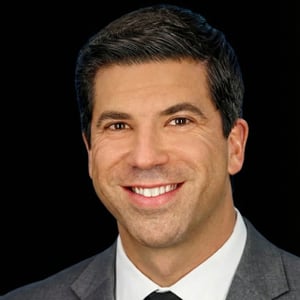
Judge, United States District Court, Southern District of Florida
On April 4, 2019, Judge Altman was confirmed to a seat on the U.S. District Court for the Southern District of Florida. At 36, he became the youngest federal district court judge in the country—and the youngest federal judge ever appointed in the Southern District of Florida.
Judge Altman received a BA from Columbia University, where he played quarterback on the football team and pitched for the baseball team—earning All-Ivy honors. Judge Altman received his JD from the Yale Law School, where he was projects editor of the Yale Law Journal. After law school, the Judge clerked on the 11th Circuit Court of Appeals for the Honorable Stanley Marcus.
Judge Altman then became a federal prosecutor at the U.S. Attorney’s Office in Miami, where he twice received the Director of the Executive Office of U.S. Attorneys’ Award for Superior Performance by a federal prosecutor. In 2013, Judge Altman was named “Federal Prosecutor of the Year” by the Miami-Dade Chiefs of Police and the Law Enforcement Officers’ Charitable Foundation.
In 2014, Judge Altman became a partner at the Miami law firm of Podhurst Orseck, where he represented the victims of airplane crashes and bank fraud conspiracies.
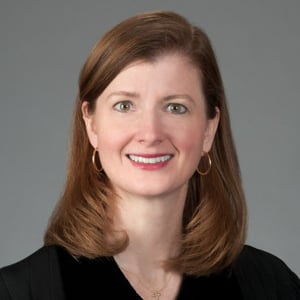
Judge, United States Court of Appeals, Eleventh Circuit
On March 20, 2018, Judge Elizabeth L. Branch (Lisa) was sworn in as a United States Circuit Judge for the Eleventh Circuit.
Judge Branch attended and graduated from Davidson College in North Carolina (B.A., cum laude, 1990), and Emory University School of Law (J.D., with distinction, 1994).
After graduating from law school, Judge Branch served as a federal law clerk to The Honorable J. Owen Forrester of the U.S. District Court for the Northern District of Georgia from 1994 to 1996. Following her clerkship, Judge Branch joined the litigation department of Smith, Gambrell & Russell, LLP in Atlanta as an associate and then a partner.
From 2004 to 2008, Judge Branch was a senior official in the Administration of President George W. Bush in Washington, D.C. She served first as the Associate General Counsel for Rules and Legislation at the U.S. Department of Homeland Security and then as the Counselor to the Administrator of the Office of Information and Regulatory Affairs at the U. S. Office of Management and Budget.
She returned to Smith Gambrell in 2008 as a litigation partner. Judge Branch then was appointed to the Court of Appeals of Georgia by Governor Nathan Deal, taking office on September 4, 2012, where she served until March 19, 2018.
Judge Branch is a member of the Board of Advisors of the Atlanta Lawyers Chapter for the Federalist Society for Law and Public Policy Studies.
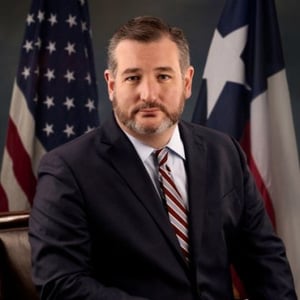
United States Senator, Texas
Ted Cruz represents 28 million Texans in the U.S. Senate as a passionate fighter for limited government and economic growth. He has authored 39 legislative measures signed into law. Recent victories include expanding 529 college savings accounts to allow parents to save for K–12 public, private, and religious education, leading the effort to repeal Obamacare’s individual mandate, imposing sanctions on terrorists who use civilians as human shields, designating North Korea as a state sponsor of terrorism, reauthorizing and reforming NASA, ensuring the availability of additional records to help solve civil rights cold cases, supporting thousands of Texas jobs, and leading the fight to confirm principled constitutionalists to our courts.
Senator Cruz is a graduate of Princeton University and Harvard Law School, a former law clerk to Chief Justice William Rehnquist, and former solicitor general of Texas. He has argued nine cases before the Supreme Court. In November of 2018, he was re-elected to the Senate by the people of Texas.
Judge, United States Court of Appeals, Eighth Circuit
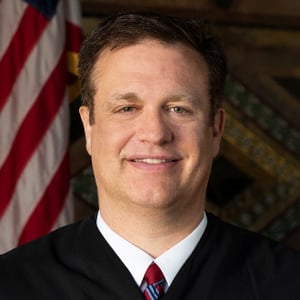
Judge, United States Court of Appeals, Ninth Circuit
Judge Nelson was confirmed to the Ninth Circuit in October 2018, as the youngest Circuit Judge to serve from Idaho and he has chambers in his hometown of Idaho Falls. Prior to his confirmation, Judge Nelson served for nine years as General Counsel of Idaho Falls-based Melaleuca, Inc., a consumer goods company. He previously worked in Washington, DC, where he served in all three branches of the federal government, including as Special Counsel for Supreme Court nominations to the Ranking Member of the Senate Judiciary Committee; Deputy General Counsel to the White House Office of Management and Budget; Deputy Assistant Attorney General in the Environment and Natural Resources Division of the United States Department of Justice; and a law clerk to Judge Henderson of the United States Court of Appeals for the D.C. Circuit. He has argued in most of the federal courts of appeals and worked on dozens of Supreme Court briefs. He started in the Washington, DC office of Sidley Austin as an appellate lawyer, after clerking for Judges Mosk and Brower of the Iran-U.S. Claims Tribunal at The Hague, and for now-Judge Tom Griffith, then-Senate Legal Counsel, during the impeachment trial of President Clinton. Judge Nelson earned his B.A. from Brigham Young University and his J.D., with honors, from BYU Law School. Judge Nelson has been a member of the Federalist Society since 1998.
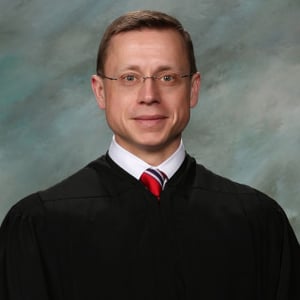
Judge, United States Court of Appeals, Fifth Circuit
Andrew Oldham is a Circuit Judge on the United States Court of Appeals for the Fifth Circuit. Before ascending to the bench, Judge Oldham served as General Counsel to Texas Governor Greg Abbott, where he advised the Governor on a range of issues under federal and state law and managed litigation in which the Governor was an interested party. Before that he served as Deputy Solicitor General for the State of Texas, where he represented Texas in federal courts across the country, including twice before the United States Supreme Court. Before moving to Texas, Judge Oldham was an attorney at Kellogg Hansen Todd Figel & Frederick in Washington, D.C. His practice focused on appellate litigation in federal courts of appeals throughout the country. Before entering private practice, Judge Oldham served as a law clerk to Justice Samuel A. Alito, Jr., at the Supreme Court of the United States and to Judge David B. Sentelle of the U.S. Court of Appeals for the District of Columbia Circuit. He also worked as an attorney-adviser in the Office of Legal Counsel at the U.S. Department of Justice from 2006 to 2008. Judge Oldham earned a B.A. from the University of Virginia with highest honors, a Truman Scholarship for graduate school, an M. Phil., first class (with distinction), from Cambridge University, and a J.D., magna cum laude, from Harvard Law School.
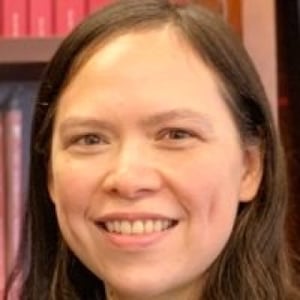
United States District Judge, Northern District of Illinois
Prior to being appointed judge, Hon. Martha Pacold served as Deputy General Counsel of the U.S. Department of the Treasury. Before that, Ms. Pacold was an associate and then a partner in the Chicago office of Bartlit Beck Herman Palenchar & Scott, LLP. She also was a Lecturer in Law at the University of Chicago Law School. Earlier in her career, Judge Pacold served as a Special Assistant U.S. Attorney for the Eastern District of Virginia and as Counsel to the Attorney General at the U.S. Department of Justice. Judge Pacold served as a law clerk to Justice Clarence Thomas of the Supreme Court of the United States, to Judge Jay S. Bybee of the U.S. Court of Appeals for the Ninth Circuit, and to Judge A. Raymond Randolph of the U.S. Court of Appeals for the District of Columbia Circuit. Judge Pacold earned her B.A., with highest distinction, from Indiana University, where she was inducted into Phi Beta Kappa, and her J.D., with honors, from the University of Chicago Law School, where she was inducted into the Order of the Coif and served as Editor-in-Chief of the University of Chicago Law Review.
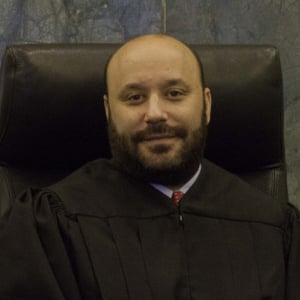
Judge, United States District Court, Eastern District of Arkansas
Lee Philip Rudofsky is a judge on the United States District Court for the Eastern District of Arkansas. Prior to his 2019 appointment by President Trump, Judge Rudofsky served as the Solicitor General of Arkansas, an Assistant General Counsel at Walmart, a Senior Litigation Associate at Kirkland & Ellis, and counsel to several Republican political campaigns. Today, in addition to his judicial service, Judge Rudofsky teaches law school classes on founding-era constitutional history and, separately, speaks to students across the country about the October 7th Massacre and the subsequent Israeli response. In 2024, Judge Rudofsky helped establish an annual judicial education mission to Israel that offers American judges the opportunity to learn first-hand about the Israeli legal system, Israeli society, and legal issues related to the Israel-Hamas war.

Judge, United States Court of Appeals, Eighth Circuit
David Stras became a judge on the United States Court of Appeals for the Eighth Circuit on January 31, 2018. Before serving on the Eighth Circuit, Judge Stras was an Associate Justice of the Minnesota Supreme Court, a position he occupied from July 1, 2010 until his appointment to the Eighth Circuit.
Prior to becoming a judge, Stras was a member of the faculty of the University of Minnesota Law School from 2004 through 2010. He taught and wrote in the areas of federal courts and jurisdiction, constitutional law, criminal law, and law and politics.
Judge Stras received his Bachelor of Arts degree, with highest distinction, in 1995 and his Master of Business Administration in 1999, both from the University of Kansas. He also received his law degree from the University of Kansas School of Law in 1999, where he served as Editor-in-Chief of the Criminal Procedure Edition of the Kansas Law Review.
Following law school, Stras clerked for The Honorable Melvin Brunetti of the United States Court of Appeals for the Ninth Circuit and then for The Honorable J. Michael Luttig of the United States Court of Appeals for the Fourth Circuit.
From 2001 to 2002, he practiced white-collar criminal and appellate litigation with the Washington, D.C., office of Sidley Austin Brown & Wood. Following his year in practice, he clerked for The Honorable Clarence Thomas of the Supreme Court of the United States.
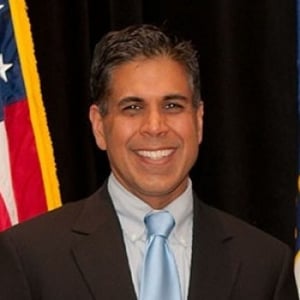
Judge, United States Court of Appeals, Sixth Circuit
Amul R. Thapar serves as a judge on the United States Court of Appeals for the Sixth Circuit. His judicial career began in 2007 when President George W. Bush nominated him to serve on the Eastern District of Kentucky, making him the first South Asian Article III judge in American history. In 2017, he became President Donald J. Trump’s first appellate court nominee.
Before joining the bench, Judge Thapar served as the United States Attorney for the Eastern District of Kentucky. While United States Attorney, Judge Thapar worked on the Attorney General’s Advisory Committee (“AGAC”) and chaired the AGAC’s Controlled Substances and Asset Forfeiture subcommittee. He also served on the Terrorism and National Security subcommittee, the Violent Crime subcommittee, and the Child Exploitation working group.
Judge Thapar has worked in private practice, at Williams & Connolly in Washington, D.C., and Squire, Sanders & Dempsey in Cincinnati, Ohio. He also served as an Assistant United States Attorney in both the Southern District of Ohio and the District of Columbia.
Judge Thapar received his undergraduate degree from Boston College and his law degree from the University of California, Berkeley. After graduating, Judge Thapar worked as a law clerk to the Honorable S. Arthur Spiegel of the United States District Court for the Southern District of Ohio, and the Honorable Nathaniel R. Jones of the United States Court of Appeals for the Sixth Circuit.
Judge Thapar has also published in the Yale Law Journal, Michigan Law Review, and Catholic University Law Review. He teaches courses on originalism, the Federalists and Anti-Federalists, and legal writing at Notre Dame Law School, the University of Virginia School of Law, and Vanderbilt Law School.
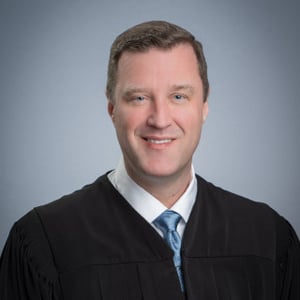
Justice, Texas Supreme Court
Evan Young is a Justice of the Supreme Court of Texas. Governor Greg Abbott, who appointed Young to fill an unexpired term, swore him into office on November 10, 2021. Justice Young was elected to a full term in November 2022.
Young graduated summa cum laude from Duke University in 1999, where he was inducted into Phi Beta Kappa. He was a British Marshall Scholar at Oxford University, where he completed his studies in 2001 and earned a First Class Honours degree in Modern History, focusing on British constitutional history. He earned his law degree from Yale Law School in 2004.
Young then worked as a lawyer in the judicial and executive branches of the federal government. He first served as a law clerk to Judge J. Harvie Wilkinson III of the U.S. Court of Appeals for the Fourth Circuit, and then to Justice Antonin Scalia at the U.S. Supreme Court. In 2006, after his clerkship with Justice Scalia ended, Justice Young became Counsel to the Attorney General at the U.S. Department of Justice, serving in the Office of the Attorney General under Attorneys General Alberto R. Gonzales and Michael B. Mukasey. While on the Attorney General’s staff, he accepted a detail to the U.S. Embassy in Baghdad, Iraq, where he was the Deputy Rule of Law Coordinator. In that position he worked to assist the Iraqi government in its efforts to strengthen its legal regime, including, for example, its courts and prison system.
Young returned to Texas and joined the Austin office of Baker Botts L.L.P. in 2009. His practice focused on trial and appellate litigation. He argued cases before both the Supreme Court of the United States and the Supreme Court of Texas, as well as many federal and state appellate courts. He represented clients across the country before every level of the state and federal judiciary.
Before joining the Texas Supreme Court, Young was appointed in 2017 by Governor Abbott and confirmed by the Texas Senate to serve as a member of the Texas Judicial Council, which is the policy-making body for the Texas Judiciary. In 2015, the Texas Supreme Court appointed him to the Supreme Court Advisory Committee, which assists the Court in drafting the rules that govern litigation in Texas courts. He served on both until his elevation to the bench.
Justice Young is an elected member of the American Law Institute and a member of the Texas Philosophical Society. He has been an adjunct law professor for many years at the University of Texas School of Law, where he has frequently taught the Federal Courts and Religious Liberty courses. He also has been an adjunct professor at the Unversity of Austin (UATX) and at the University of Mississippi School of Law. He served as Chair of the State Bar of Texas Business Law Section, Chair of the National Center for Missing and Exploited Children's Texas Regional Office, and Trustee of the Texas Supreme Court Historical Society.
Justice Young and his wife, Tobi, live in Austin with their daughter.
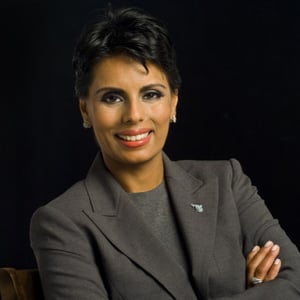
Senior Fellow, Independent Women's Forum; Clinical Associate Professor, NYU Grossman Long Island School of Medicine
Dr. Ahmed is a physician, non-fiction author and broadcast media commentator. Her work has been published in The Guardian, The Wall Street Journal, The Spectator, Al Jazeera, The Independent, USA Today, The Daily Beast, the World Policy Journal, Fox News, CNN, and many others.
Dr. Ahmed is the first physician, and first Muslim woman, to be awarded the Templeton-Cambridge Fellowship in Journalism at the University of Cambridge, England.
In 2012, she testified to Congress on Radical Islam in the United States. She subsequently has provided Congressional Briefings at the invitation of Congressional Staff on the issues of Palestinian child radicalization in the Disputed Territories. In 2016, she was nominated to Life Membership at the Council on Foreign Relations in the United States in recognition of her journalistic work focusing on Islamism.
A graduate of the University of Nottingham, Dr. Ahmed has practiced subspecialty medicine in the United Kingdom, the United States and the Kingdom of Saudi Arabia. Currently, a triple board-certified pulmonologist and sleep disorders specialist, Dr. Ahmed is currently appointed Clinical Associate Professor at NYU Grossman Long Island School of Medicine, an Honorary Professor at the School of Health and Life Sciences at Glasgow Caledonian University and an Honorary Fellow at the Technion-Israel Institute of Science and Technology. She is a Fellow of the American College of Chest Physicians, a Fellow of the American College of Physicians and a Fellow of the American Academy of Sleep Medicine.
In December 2015 Dr. Ahmed was naturalized as an American citizen. Today, she maintains dual British and U.S. citizenship and lives in New York where she continues to write and practice medicine.
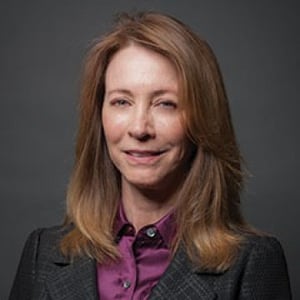
Founder, Libertas-West Project
Karen Lugo is a constitutional law consultant and national security analyst. She was Director of the Center for Tenth Amendment at Texas Public Policy Foundation from 2013 to 2015. When living in California, she was Co-Director of the Center for Constitutional Jurisprudence Center. From 2005 – 2012, she was a clinical visiting and adjunct professor at Chapman University School of Law where she co-taught the advanced Constitutional Law Clinic. Karen has co-authored and written circuit-level and Supreme Court amicus briefs on such issues as FISA Surveillance, Healthcare Reform, Arizona’s Border Security, Gay Marriage, The Ten Commandments, Eminent Domain, Christian Clubs on University Campuses, and Material Support for Terrorists.
Karen is the founder of the Libertas-West Project, a center for study Islamic integration and radicalization issues. In this capacity, she consulted with the Center for Security Policy to write a book on local over-watch of mosque construction and community engagement called: Mosques in America: A Guide to Accountable Permit Hearings and Continuing Citizen Oversight.
Karen writes and speaks for European and American groups on the importance of basing assimilation efforts on principles of Western exceptionalism. She presented a policy brief to the French Conseil d’Etat analyzing the legal implications of banning the burqa. Ms. Lugo has written one of the most comprehensive overviews of sharia law in American courts, American Family Law and Sharia-Compliant Marriages, for the Federalist Society law journal, Engage. She has written several white papers on the American Law for American Courts legislation and sharia tribunals in America.
Ms. Lugo was an appointee to the California Advisory Committee to the U.S. Commission on Civil Rights. She also taught a Human Rights law course on the contrast between French and English Enlightenment theories in Strasbourg, France.
Until moving from California, Ms. Lugo was a member of the David Horowitz Freedom Center Board of Directors. She was also a regular guest on the Orange County PBS local issues debate program, Inside OC, and she is a contributor to Pajamas Media, National Review Online, City Journal, American Spectator, American Greatness, Townhall.com, American Thinker, Daily Caller, and Family Security Matters. She has been interviewed by dozens of radio hosts and has spoken for civic groups on constitutional and cultural concerns.

Thomas M. Siebel Senior Fellow, The Hoover Institution, Stanford University; Gary T. Schwartz Distinguished Professor of Law Emeritus, UCLA School of Law
Eugene Volokh is the Thomas M. Siebel Senior Fellow at the Hoover Institution (Stanford), as well as the Gary T. Schwartz Distinguished Professor of Law Emeritus and Distinguished Research Professor at UCLA School of Law. He recently retired from teaching at UCLA, after 30 years there, and is now focusing on research.
Volokh is the author of the textbooks The First Amendment and Related Statutes (8th ed. 2023), and Academic Legal Writing (5th ed. 2016), as well as over 100 academic law journal articles, mostly on First Amendment law. He is a member of The American Law Institute; the editor-in-chief of the Journal of Free Speech Law; and the creator and coauthor of The Volokh Conspiracy, a leading legal blog founded in 2002 (hosted at the Washington Post from 2014 to 2017 and now at Reason Magazine).
Senior Fellow, Independent Women's Forum; Clinical Associate Professor, NYU Grossman Long Island School of Medicine
Dr. Ahmed is a physician, non-fiction author and broadcast media commentator. Her work has been published in The Guardian, The Wall Street Journal, The Spectator, Al Jazeera, The Independent, USA Today, The Daily Beast, the World Policy Journal, Fox News, CNN, and many others.
Dr. Ahmed is the first physician, and first Muslim woman, to be awarded the Templeton-Cambridge Fellowship in Journalism at the University of Cambridge, England.
In 2012, she testified to Congress on Radical Islam in the United States. She subsequently has provided Congressional Briefings at the invitation of Congressional Staff on the issues of Palestinian child radicalization in the Disputed Territories. In 2016, she was nominated to Life Membership at the Council on Foreign Relations in the United States in recognition of her journalistic work focusing on Islamism.
A graduate of the University of Nottingham, Dr. Ahmed has practiced subspecialty medicine in the United Kingdom, the United States and the Kingdom of Saudi Arabia. Currently, a triple board-certified pulmonologist and sleep disorders specialist, Dr. Ahmed is currently appointed Clinical Associate Professor at NYU Grossman Long Island School of Medicine, an Honorary Professor at the School of Health and Life Sciences at Glasgow Caledonian University and an Honorary Fellow at the Technion-Israel Institute of Science and Technology. She is a Fellow of the American College of Chest Physicians, a Fellow of the American College of Physicians and a Fellow of the American Academy of Sleep Medicine.
In December 2015 Dr. Ahmed was naturalized as an American citizen. Today, she maintains dual British and U.S. citizenship and lives in New York where she continues to write and practice medicine.
Founder, Libertas-West Project
Karen Lugo is a constitutional law consultant and national security analyst. She was Director of the Center for Tenth Amendment at Texas Public Policy Foundation from 2013 to 2015. When living in California, she was Co-Director of the Center for Constitutional Jurisprudence Center. From 2005 – 2012, she was a clinical visiting and adjunct professor at Chapman University School of Law where she co-taught the advanced Constitutional Law Clinic. Karen has co-authored and written circuit-level and Supreme Court amicus briefs on such issues as FISA Surveillance, Healthcare Reform, Arizona’s Border Security, Gay Marriage, The Ten Commandments, Eminent Domain, Christian Clubs on University Campuses, and Material Support for Terrorists.
Karen is the founder of the Libertas-West Project, a center for study Islamic integration and radicalization issues. In this capacity, she consulted with the Center for Security Policy to write a book on local over-watch of mosque construction and community engagement called: Mosques in America: A Guide to Accountable Permit Hearings and Continuing Citizen Oversight.
Karen writes and speaks for European and American groups on the importance of basing assimilation efforts on principles of Western exceptionalism. She presented a policy brief to the French Conseil d’Etat analyzing the legal implications of banning the burqa. Ms. Lugo has written one of the most comprehensive overviews of sharia law in American courts, American Family Law and Sharia-Compliant Marriages, for the Federalist Society law journal, Engage. She has written several white papers on the American Law for American Courts legislation and sharia tribunals in America.
Ms. Lugo was an appointee to the California Advisory Committee to the U.S. Commission on Civil Rights. She also taught a Human Rights law course on the contrast between French and English Enlightenment theories in Strasbourg, France.
Until moving from California, Ms. Lugo was a member of the David Horowitz Freedom Center Board of Directors. She was also a regular guest on the Orange County PBS local issues debate program, Inside OC, and she is a contributor to Pajamas Media, National Review Online, City Journal, American Spectator, American Greatness, Townhall.com, American Thinker, Daily Caller, and Family Security Matters. She has been interviewed by dozens of radio hosts and has spoken for civic groups on constitutional and cultural concerns.
Thomas M. Siebel Senior Fellow, The Hoover Institution, Stanford University; Gary T. Schwartz Distinguished Professor of Law Emeritus, UCLA School of Law
Eugene Volokh is the Thomas M. Siebel Senior Fellow at the Hoover Institution (Stanford), as well as the Gary T. Schwartz Distinguished Professor of Law Emeritus and Distinguished Research Professor at UCLA School of Law. He recently retired from teaching at UCLA, after 30 years there, and is now focusing on research.
Volokh is the author of the textbooks The First Amendment and Related Statutes (8th ed. 2023), and Academic Legal Writing (5th ed. 2016), as well as over 100 academic law journal articles, mostly on First Amendment law. He is a member of The American Law Institute; the editor-in-chief of the Journal of Free Speech Law; and the creator and coauthor of The Volokh Conspiracy, a leading legal blog founded in 2002 (hosted at the Washington Post from 2014 to 2017 and now at Reason Magazine).
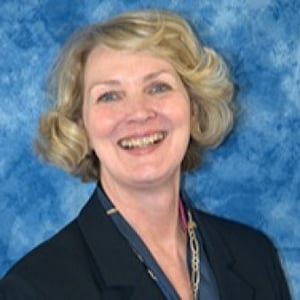
Professor and Director, Prolife Center, University of St. Thomas School of Law
Teresa Collett, J.D., is professor at the University of St. Thomas School of Law, where she serves as director of the school's Prolife Center. Collett received her doctorate at the University of Oklahoma College of Law. As a well-known advocate for the protection of human life and the family, Collett specializes in the subjects of marriage, religion and bioethics in her research.
Collett has published numerous legal articles and is the co-author of a law casebook on professional responsibility and co-editor of a collection of essays exploring “catholic” and “Catholic” perspectives on American law. She is an elected member of the American Law Institute, and has testified before committees of the U.S. Senate and House of Representatives, as well as before legislative committees in several states.
In 2009, Pope Benedict XVI appointed Collett to a five-year term on the Pontifical Council for the Family. Her appointment was renewed by His Holiness Pope Francis until 2016 when the responsibilities of the Council were assumed by the Dicastery for the Laity, Family and Life. In 2013, she served as a delegate to the International Conference on Population and Development (ICPD) for the Mission of the Holy See to the United Nations.
She represented Congressman Ron Paul and various medical groups in the defense of the U.S. federal ban of partial-birth abortion, and the governors of Minnesota and North Dakota defending the N.H. requirement of state parental involvement prior to performance of an abortion on a minor before the U.S. Supreme Court. Collett is often asked to represent the interests of government officials before federal appellate courts. She has served as special attorney general for the states of Oklahoma and Kansas, as well as assisting other state attorneys general in defending laws protecting human life and marriage. Prior to joining St. Thomas in 2003, Collett taught at the South Texas College of Law, where she established the nation's first annual symposium on legal ethics.
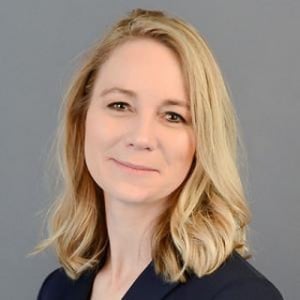
Supreme Court & Appellate Litigation Chair, Lex Politica; Of Counsel, Alliance Defending Freedom
Erin Morrow Hawley serves as Chair of Lex Politica's Supreme Court and Appellate Practice overseeing the firm’s strategic appellate litigation and critical motions practice in the trial courts. Erin is an experienced litigator who represents clients in constitutional, regulatory, and appellate matters in federal and state courts throughout the country.
Erin has represented dozens of clients before the Supreme Court of the United States, served as lead counsel in high-profile cases raising novel constitutional and statutory issues, and authored numerous successful petitions for certiorari and briefs in opposition. She has argued in state and federal appellate and trial courts throughout the country, including the Supreme Court of the United States. Erin represents diverse clients in high-stakes litigation from state governments to faith-based nonprofits to Fortune 100 companies. She possesses expertise on a wide range of subject matters including administrative law, the First Amendment, religious liberty, federal jurisdiction, federal preemption, equitable jurisdiction, tax law, the Affordable Care Act, and Title IX.
Erin represents clients in cases where public communications strategy is paramount. She is a sought-after speaker and writer, has testified multiple times before Congress, and is a frequent presenter on constitutional and administrative law issues, including at the Oxford Union, the National Federalist Society Convention, and university campuses across the country. She is a frequent commentator to media outlets, including Fox News, MSNBC, the Wall Street Journal, WORLD, USA Today, the Federalist, and the Hill.
Erin previously oversaw Alliance Defending Freedom’s--where she still serves as Of Counsel--litigation strategies to empower women and protect the dignity of life, defend pregnancy centers’ First Amendment rights from government overreach, and safeguard Americans’ freedoms from the ever-encroaching administrative state.
Professor and Director, Prolife Center, University of St. Thomas School of Law
Teresa Collett, J.D., is professor at the University of St. Thomas School of Law, where she serves as director of the school's Prolife Center. Collett received her doctorate at the University of Oklahoma College of Law. As a well-known advocate for the protection of human life and the family, Collett specializes in the subjects of marriage, religion and bioethics in her research.
Collett has published numerous legal articles and is the co-author of a law casebook on professional responsibility and co-editor of a collection of essays exploring “catholic” and “Catholic” perspectives on American law. She is an elected member of the American Law Institute, and has testified before committees of the U.S. Senate and House of Representatives, as well as before legislative committees in several states.
In 2009, Pope Benedict XVI appointed Collett to a five-year term on the Pontifical Council for the Family. Her appointment was renewed by His Holiness Pope Francis until 2016 when the responsibilities of the Council were assumed by the Dicastery for the Laity, Family and Life. In 2013, she served as a delegate to the International Conference on Population and Development (ICPD) for the Mission of the Holy See to the United Nations.
She represented Congressman Ron Paul and various medical groups in the defense of the U.S. federal ban of partial-birth abortion, and the governors of Minnesota and North Dakota defending the N.H. requirement of state parental involvement prior to performance of an abortion on a minor before the U.S. Supreme Court. Collett is often asked to represent the interests of government officials before federal appellate courts. She has served as special attorney general for the states of Oklahoma and Kansas, as well as assisting other state attorneys general in defending laws protecting human life and marriage. Prior to joining St. Thomas in 2003, Collett taught at the South Texas College of Law, where she established the nation's first annual symposium on legal ethics.
Supreme Court & Appellate Litigation Chair, Lex Politica; Of Counsel, Alliance Defending Freedom
Erin Morrow Hawley serves as Chair of Lex Politica's Supreme Court and Appellate Practice overseeing the firm’s strategic appellate litigation and critical motions practice in the trial courts. Erin is an experienced litigator who represents clients in constitutional, regulatory, and appellate matters in federal and state courts throughout the country.
Erin has represented dozens of clients before the Supreme Court of the United States, served as lead counsel in high-profile cases raising novel constitutional and statutory issues, and authored numerous successful petitions for certiorari and briefs in opposition. She has argued in state and federal appellate and trial courts throughout the country, including the Supreme Court of the United States. Erin represents diverse clients in high-stakes litigation from state governments to faith-based nonprofits to Fortune 100 companies. She possesses expertise on a wide range of subject matters including administrative law, the First Amendment, religious liberty, federal jurisdiction, federal preemption, equitable jurisdiction, tax law, the Affordable Care Act, and Title IX.
Erin represents clients in cases where public communications strategy is paramount. She is a sought-after speaker and writer, has testified multiple times before Congress, and is a frequent presenter on constitutional and administrative law issues, including at the Oxford Union, the National Federalist Society Convention, and university campuses across the country. She is a frequent commentator to media outlets, including Fox News, MSNBC, the Wall Street Journal, WORLD, USA Today, the Federalist, and the Hill.
Erin previously oversaw Alliance Defending Freedom’s--where she still serves as Of Counsel--litigation strategies to empower women and protect the dignity of life, defend pregnancy centers’ First Amendment rights from government overreach, and safeguard Americans’ freedoms from the ever-encroaching administrative state.
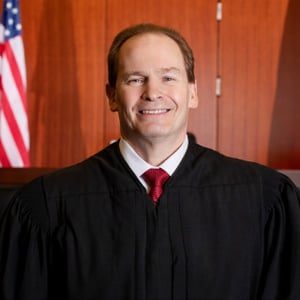
Judge, United States District Court for the Eastern District of Texas
Judge Sean Jordan is a federal district judge for the Eastern District of Texas, Sherman
Division. Prior to taking the bench, Judge Jordan worked on complex civil litigation and
appellate cases for twenty-five years in both government service and private practice.
He has managed the appellate sections of two large law firms and previously served as
Principal Deputy Solicitor General in the Office of the Solicitor General of Texas.
Judge Jordan received his B.A., summa cum laude, from the University of Texas at
Austin and his J.D., with honors, from the University of Texas School of Law. Prior to
attending UT Austin, he served in the U.S. Army as an infantryman and paratrooper in
the 82nd Airborne Division.
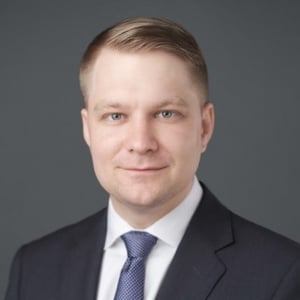
Principal Deputy Solicitor General, Alabama Office of the Attorney General
Robert M. Overing is the Principal Deputy Solicitor General for the State of Alabama and Adjunct Professor at Faulkner University's Jones School of Law. He previously served as a law clerk to Judge Diarmuid F. O'Scannlain on the U.S. Courts of Appeals for the Ninth Circuit and as Special Counsel to the U.S. Senate Judiciary Committee. He received his J.D. from Yale Law School and graduated summa cum laude from the University of Southern California with a masters degree in Philosophy and Law.
Judge, United States District Court for the Eastern District of Texas
Judge Sean Jordan is a federal district judge for the Eastern District of Texas, Sherman
Division. Prior to taking the bench, Judge Jordan worked on complex civil litigation and
appellate cases for twenty-five years in both government service and private practice.
He has managed the appellate sections of two large law firms and previously served as
Principal Deputy Solicitor General in the Office of the Solicitor General of Texas.
Judge Jordan received his B.A., summa cum laude, from the University of Texas at
Austin and his J.D., with honors, from the University of Texas School of Law. Prior to
attending UT Austin, he served in the U.S. Army as an infantryman and paratrooper in
the 82nd Airborne Division.
Principal Deputy Solicitor General, Alabama Office of the Attorney General
Robert M. Overing is the Principal Deputy Solicitor General for the State of Alabama and Adjunct Professor at Faulkner University's Jones School of Law. He previously served as a law clerk to Judge Diarmuid F. O'Scannlain on the U.S. Courts of Appeals for the Ninth Circuit and as Special Counsel to the U.S. Senate Judiciary Committee. He received his J.D. from Yale Law School and graduated summa cum laude from the University of Southern California with a masters degree in Philosophy and Law.
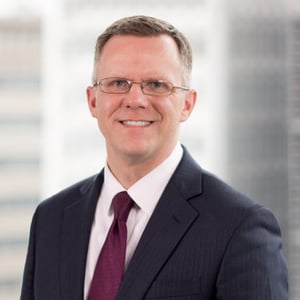
Partner, WilmerHale LLP
Matthew Martens represents clients in their toughest civil and criminal investigations and litigation. He is one of the few lawyers who has appeared—and won—at trial at “all four tables”: civil plaintiff, civil defendant, criminal prosecution, and criminal defendant. In all, he has tried 26 cases ranging from securities fraud to patent infringement to consumer fraud to murder to employment law to money laundering, in New York, California, Illinois, Texas, Florida, Washington, South Dakota, New Jersey, and North Carolina. He has also argued 18 appeals in federal and state appellate courts across the country. Martens joined WilmerHale after a long career of government service, including both as Chief Litigation Counsel for the SEC’s Division of Enforcement and, earlier, as Chief of Staff for the Criminal Division at the US Department of Justice during the Bush Administration. He has been recognized as an AmLaw Daily Litigator of the Week, a National Law Journal Litigation Trailblazer and a Law360 Securities Law MVP.
At the SEC, Martens led the Enforcement Division's litigation program, managing cases nationwide and supervising a trial unit of approximately 40 attorneys in Washington DC, as well as coordinating the activity of litigators throughout the SEC's 11 regional offices. He personally developed and directed the Commission's nationwide litigation response to the Supreme Court's decision in Janus Capital, for which he received the SEC's prestigious Chairman's Award for Excellence.
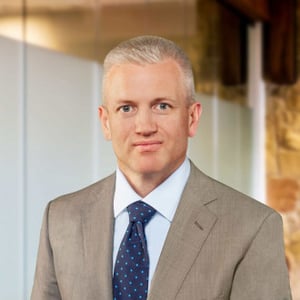
Executive General Counsel, First Liberty Institute
Hiram Sasser is Executive General Counsel for First Liberty Institute, where he oversees First Liberty’s litigation and media efforts. Sasser’s practice focuses on First Amendment and other constitutional and civil rights issues relating to religious liberty. Sasser served as co-counsel in seven victories before the United States Supreme Court, including Groff v. DeJoy (landmark case overturning the “de minimis cost” test for Title VII in place almost 50 years), Kennedy v. Bremerton (landmark case overturning 50 years of Establishment Clause precedent), Carson v. Makin (overturning 40 years of Maine’s discrimination against parents choosing faith-based schools), American Legion v. American Humanist Association (landmark case ending Establishment Clause attacks on veterans’ memorials with religious imagery), Klein v. Oregon Bureau of Labor and Industries (granted, vacated, and remanded (twice) in religious wedding service case), and Sause v. Bauer (summary reversal revoking qualified immunity for police who ordered a citizen not to pray in her own home).
In addition to his legal duties, Sasser develops, coordinates, and implements successful media strategies on behalf of his clients. This includes numerous appearances on ABC, NBC, CBS, Fox News, CNN, and the BBC as well as being heard on various radio stations throughout the United States, Asia, Africa, and Europe.
In 2016, Sasser took a leave of absence to serve a temporary assignment as the Chief of Staff for the Attorney General of Texas. He currently serves as an Adjunct Professor of Law at both The University of Texas at Austin School of Law (teaching Religious Liberty) and Oklahoma City University School of Law (teaching Civil Rights Procedure).

Plenary Panel 4: Justice Alito’s Impact on Religious Liberties & Speech
Stephanie Barclay, Nicole Stelle Garnett, Steven J. Menashi, Matthew A. Schwartz
An Examination of the Jurisprudence of Supreme Court Associate Justice Samuel Alito
This panel will analyze Justice Alito’s contributions to the Supreme Court’s religious liberty and free...
Plenary Panel 4: Justice Alito’s Impact on Religious Liberties & Speech
Stephanie Barclay, Nicole Stelle Garnett, Steven J. Menashi, Matthew A. Schwartz
An Examination of the Jurisprudence of Supreme Court Associate Justice Samuel Alito
This panel will analyze Justice Alito’s contributions to the Supreme Court’s religious liberty and free...
Hon. Robert H. Bork Memorial Roundtable: "A Person Without Prejudice Against Any Group"— The American Tradition of Religious Respect
Roy Kalman Altman, Lisa Branch, Ted Cruz, Ray Gruender, Ryan D. Nelson, Andrew Oldham, Martha M. Pacold, Lee Rudofsky, David R. Stras, Amul R. Thapar, Evan A. Young
2025 National Lawyers Convention
CLE credit for this event is available at On-Demand CLE. In 1987, Howard G. Crane —...
Religious Arbitration, Family Law, and Constitutional Limits in Texas
Qanta A. Ahmed, Karen J. Lugo, Eugene Volokh
In recent months, Texas Governor Greg Abbott announced a ban on “Sharia law and Sharia...
Religious Arbitration, Family Law, and Constitutional Limits in Texas
Qanta A. Ahmed, Karen J. Lugo, Eugene Volokh
In recent months, Texas Governor Greg Abbott announced a ban on “Sharia law and Sharia...
Courthouse Steps Preview: First Choice Women’s Resource Centers, Inc. v. Platkin
Teresa Stanton Collett, Erin M. Hawley
In First Choice Women’s Resource Centers, Inc. v. Platkin, the New Jersey Attorney General, Matthew...
Courthouse Steps Preview: First Choice Women’s Resource Centers, Inc. v. Platkin
Teresa Stanton Collett, Erin M. Hawley
In First Choice Women’s Resource Centers, Inc. v. Platkin, the New Jersey Attorney General, Matthew...
Litigation Update: Miller v. McDonald
Sean D. Jordan, Robert M. Overing
All fifty states mandate certain vaccinations for schoolchildren. Forty-six of them allow religious exemptions. New...
Litigation Update: Miller v. McDonald
Sean D. Jordan, Robert M. Overing
All fifty states mandate certain vaccinations for schoolchildren. Forty-six of them allow religious exemptions. New...
Litigation Update: Etienne v. Ferguson
Matthew T. Martens, Hiram Sasser
The ongoing case of Etienne v. Ferguson raises profound questions about the interplay between religious...