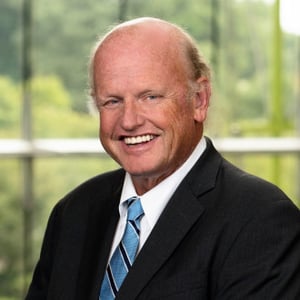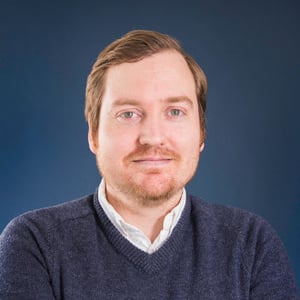
Professor of Law and Executive Director, Law and Economics Center, Antonin Scalia Law School, George Mason University
Donald Kochan is Professor of Law and Executive Director of the Law & Economics Center (LEC). Professor Kochan is an elected member of the American Law Institute (ALI) and serves as an Adviser to ALI's Restatement of the Law Fourth, Property project. Professor Kochan is a Nonresident Scholar at the Center for the Constitution at Georgetown University Law Center, where he was a Visiting Scholar in residence during Fall 2018. Before joining the Antonin Scalia Law School faculty, he was the Parker S. Kennedy Professor in Law at Chapman University’s Dale E. Fowler School of Law from 2004 to 2020. From 2003 to 2004, Professor Kochan was an Olin Fellow at the University of Virginia School of Law. During 2002-2003, he was a Visiting Assistant Professor of Law at George Mason’s Scalia Law School.
Professor Kochan’s scholarship focuses on areas of property law, constitutional law, administrative law, local government law, natural resources and environmental law, and law & economics. He has published several books and more than 50 scholarly articles and essays in well-regarded law journals. His work has been cited in more than a dozen state and federal court opinions, in more than 75 briefs filed in state and federal courts including more than 25 filed in the U.S. Supreme Court, in dozens of books and treatises, and in more than 800 scholarly articles.
Professor Kochan received his JD from Cornell Law School, where he was a John M. Olin Scholar in Law and Economics and managing editor of the Cornell International Law Journal. During law school, he also served as editor and executive editor of the Harvard Journal of Law & Public Policy symposium issues in 1997 and 1998. He received his BA from Western Michigan University, magna cum laude, with majors in both political science and philosophy, where he studied as the John W. Gill Medallion Scholar and was honored as the Presidential Scholar (awarded to the top graduate in the political science department).
After graduating from law school, Professor Kochan was a law clerk to The Honorable Richard F. Suhrheinrich of the United States Court of Appeals for the Sixth Circuit. Following his clerkship, Professor Kochan was an associate with the firm of Crowell & Moring LLP in Washington, D.C., where he specialized in natural resources & environmental law as well as tort, products, and consumer civil litigation & legislative affairs.
Denver Managing Partner, Wilkinson Barker Knauer LLP
Raymond L. Gifford counsels communications, electric and gas utilities, and information technology companies on state and federal aspects of regulation, administrative law, and competition policy. He is an expert in public utilities law, and the law and economics of regulation of network industries. Mr. Gifford’s law and policy work focuses on the convergence of broadband communications and energy, as well as environmental policy as it applies to the electric industry. He represents clients in state and federal courts and agencies, and serves as an expert witness on utility regulation and its history. He is also a Senior Adjunct Fellow at the Silicon Flatirons Center for Law, Technology and Entrepreneurship, and Co-Directs the Institute for Regulatory Law & Economics at University of Colorado Law School.
Mr. Gifford served as Chairman of the Colorado Public Utilities Commission from 1999-2003. Following that, he served as President of The Progress & Freedom Foundation, a Washington DC-based think-tank that studied the digital revolution as it relates to regulation of network industries. He entered the regulatory law world as First Assistant Attorney General in the Colorado Attorney General’s Office. He clerked for the Honorable Richard P. Matsch of the United States District Court for the District of Colorado. Mr. Gifford has authored a number of articles on communications law, public utility regulation and competition policy in network industries. He is a graduate of University of Chicago Law School and St. John’s College in Annapolis, Maryland. He is an elected member of the American Law Institute
Under Secretary of Energy, United States Department of Energy
The Honorable Mark Wesley Menezes, Under Secretary of Energy serves as the Department’s principal advisor on energy policy and on a wide array of existing and emerging energy technologies. The Under Secretary is responsible for driving transformative energy policy, and technology solutions through coordinated planning, management and performance of the Department’s energy programs.
Prior to being confirmed as Under Secretary of Energy, Mr. Menezes was an executive with Berkshire Hathaway Energy in its Washington, D.C. office. Before joining BHE, Mr. Menezes was a partner at Hunton & Williams LLP, where he headed the Regulated Markets and Energy Infrastructure practice group. Prior to Hunton, he served as Chief Counsel, Energy and Environment, U.S. House of Representatives Committee on Energy and Commerce, serving as chief negotiator for the House Majority in the enactment of the Energy Policy Act of 2005. Before his service with House Energy & Commerce, he was Vice President with Central and South West, and upon its merger with American Electric Power, served as Vice President and Associate General Counsel for federal and state legislative and regulatory affairs.
Mr. Menezes has been named in National Journal’s “Hill 100”—top Congressional staff for his work on both energy and environmental matters. He has been frequent guest speaker and lecturer before numerous associations and civic groups, including legal education seminars where he has been called on to address the nation’s energy and environmental policies, utility restructuring, telecommunications, ethics, merger and acquisition practices, and regulatory and legislative processes. He has co-authored numerous articles, a practice manual, and been quoted in the New York Times, Law360, Oil and Gas Journal, Politico as well as interviewed by E&ETV. He’s been listed Best Lawyers in America 2013–2016, Corporate Counsel’s Top Lawyers 2006–2011, Washington Post’s Top Lawyers 2008–2016, and DC Super Lawyers 2012–2016.
Mr. Menezes is a graduate of Louisiana State University receiving both his undergraduate and juris doctor degree. Until joining the government he was a charter member of the Advisory Council, Louisiana State University Law John P. Laborde Energy Law Center, and served on the Board of Directors of the Congressional Chorus & American Youth Chorus.
Distinguished Visiting Fellow, Project for Economic Growth, Institute for Economic Freedom and Opportunity
Stephen Moore, who formerly wrote on the economy and public policy for The Wall Street Journal, is the Distinguished Visiting Fellow, Project for Economic Growth, at The Heritage Foundation. Mr. Moore, who also was a member of The Journal’s editorial board, returned to Heritage in January 2014 -- about 25 years after his tenure as the leading conservative think tank’s Grover M. Hermann Fellow in Budgetary Affairs from 1984 to 1987.
As Distinguished Visiting Fellow at Heritage, Mr. Moore focuses on advancing public policies that increase the rate of economic growth to help the United States retain its position as the global economic superpower. He also works on budget, fiscal and monetary policy and showcases states that get fiscal houses in order.
"One of the projects I’m going to be working on is how President Obama has discredited liberal ideas more than anyone,” Mr. Moore said in an interview with The Foundry upon his return to Heritage. “Everything he’s done has been such a massive failure — from the [economic] stimulus to health-care reform to bailouts to green energy.
Mr. Moore’s early career was shaped by three people who had a profound influence on him: Julian Simon, the late Cato Institute scholar; Edwin J. Feulner, a co-founder of Heritage; and Art Laffer, the economist best known for the Laffer curve.
“What makes them so great is they were willing to take on the conventional wisdom. They were subject to a lot of criticism for doing that,” Mr. Moore told The Foundry. “Those are the real change-makers.”
Mr. Moore calls his creation of the Club for Growth the defining moment of his career. The organization, which he left in 2004, helps elect conservative members of Congress (including Heritage President Jim DeMint when he first ran for Senate).
Mr. Moore next founded the Free Enterprise Fund before joining The Wall Street Journal. As senior economics writer for the newspaper’s editorial board, he covered Washington policy debates and state issues.
“Because I’ve been a consumer of think tank material and policy research, I think I have a pretty good sense of what reporters want and how to get it to them in the way they want it,” Mr. Moore said. “Being timely — and not just offering opinion but giving them the facts and data is really critical.”
Mr. Moore, who grew up in New Trier Township, Ill., received a bachelor of arts degree from University of Illinois at Urbana-Champaign. He holds a master’s of arts in economics from George Mason University.
Partner, Boyden Gray PLLC
Jimmy Conde is partner at Boyden Gray PLLC, specializing in energy, environmental, and administrative law, with particular expertise in the Clean Air Act. He has protected clients against agency overreach in cutting-edge and complex legal proceedings, including challenges to EPA, DOE, DOT, and California rules seeking to compel electrification of motor vehicles, the FCC’s universal service fund, Department of Labor Wage & Hour Division rules, and HHS rules interfering with the practice of medicine and sound insurance practices. His written commentary has been published and referenced in the Wall Street Journal, the Washington Examiner, Concurrences (an antitrust publication), and Newsweek, among others.
Mr. Conde began his legal career as an associate with Boyden Gray PLLC. He clerked for Judge Douglas H. Ginsburg in the U.S. Court of Appeals for the D.C. Circuit and Judge David J. Porter in the U.S. Court of Appeals for the Third Circuit.
Partner, Donahue & Goldberg LLP
Sean H. Donahue's practice is focused on appellate litigation, including environmental cases in federal and state appellate courts, legal counseling, and helping clients communicate effectively to courts, agencies, and other audiences. He is a member of the bars of the District of Columbia and the State of California.
A 1992 graduate of University of Chicago Law School, Sean served as law clerk to Ruth Bader Ginsburg, then of the U.S. Court of Appeals for the D.C. Circuit, and to Justice John Paul Stevens. He entered private practice at Jenner & Block's Washington office, where he worked on civil matters including in telecommunications and First Amendment law. He then spent four years at the Department of Justice, Environmental and Natural Resources Division, Appellate Section, briefing and arguing cases in the United States Courts of Appeals, and state supreme courts concerning federal environmental and natural resources law, federal property law, takings, and Indian law.
Sean has argued approximately 50 cases in federal and state appellate courts. Since first establishing his own practice in 2002, he has represented environmental and public health organization parties in numerous major environmental and clean energy cases in the Supreme Court and the courts of appeals. His current practice includes representation of public interest organizations, governmental bodies, and private entities in environmental, energy, natural resources, and other cases. Sean has taught courses in environmental law, civil procedure, constitutional law and other subjects at Washington & Lee University School of Law, Iowa College of Law, and Georgetown University Law Center, and currently teaches climate change law and policy as a lecturer at Stanford Law School. He has given presentations at law schools including Berkeley, Columbia, Fordham, Harvard, Duke, Georgetown, Maryland, NYU, Northwestern, Stanford, University of Chicago, University of Florida, Vermont Law School, and Washington & Lee.
Partner, King & Spalding, LLP
Jacqueline Glassman specializes in motor vehicle and consumer safety, vehicle fuel economy and other transportation issues. She works with companies to resolve enforcement problems, find business opportunities in emerging initiatives and build healthy relations with regulators. Jacqueline frequently works with crisis management teams to find solutions that build consumer confidence and minimize corporate pain. As a partner in King & Spalding's Government Advocacy practice, Jacqueline helps lead the Automotive and Transportation Initiative.
Jacqueline's career has spanned corporate, government and private practice.
While in-house at a major automaker, Jacqueline developed the instinct for finding solutions to legal problems while advancing business objectives. As Chief Counsel at the National Highway Traffic Safety Administration, Jacqueline spearheaded the reform of the vehicle fuel efficiency program. She also oversaw scores of rule-making and enforcement actions, including the initial implementation of the TREAD Act. As NHTSA's Acting Administrator, Jacqueline worked with the White House and congressional staff to develop policy and legislation impacting the auto industry.
Jacqueline has worked with companies to create credit opportunities for frontier technologies in fuel efficiency and safety. She is actively involved with numerous companies developing and implementing automated technology for motor vehicles. Jacqueline has negotiated Consent Orders and helped companies pilot their implementation. Jacqueline frequently works hand-in-glove with litigators, engineers, crisis management firms, congressional relations staff and corporate executives. Jacqueline counsels clients on compliance, government relations, litigation strategy and building robust corporate safety programs.
Partner, Steptoe LLP
Shannen W. Coffin is a partner in Steptoe’s Washington office, where co-chairs the firm’s appellate practice and is a member of the regulatory litigation practice group. He frequently represents clients in trial and appellate courts in matters involving constitutional and administrative law challenges to state and federal government regulatory action.
Mr. Coffin previously served as a senior lawyer in the Executive Branch. He was Counsel to Vice President Cheney in the Office of the Vice President of the United States, where, among other things, he served on the White House’s judicial selection committee. Before that, Mr. Coffin served as Deputy Assistant Attorney General in the US Justice Department’s Civil Division, where he was responsible for overseeing and coordinating trial litigation on behalf of the federal government for constitutional challenges to federal statutes, statutory and constitutional challenges to agency programs, and defense of national security and anti-terrorism programs.
CEO, Pebble Partnership
Tom Collier leads the Pebble Partnership as its CEO. Mr. Collier is the former U.S. Department of the Interior chief of staff during the Clinton administration. He holds extensive experience in navigating the federal environmental permitting process. Prior to joining the Partnership in 2014, Mr. Collier spent 40 years serving as a partner for the law firm Steptoe & Johnson in Washington, D.C. As a senior leader in environmental law and permitting, Mr. Collier has worked on Alaska related projects in his career including development of Alpine, CD-5, and the reauthorization of the Trans-Alaska Pipeline System.
Director, Center for Energy and Environment, Competitive Enterprise Institute
Myron Ebell is director of the Center for Energy and Environment at the Competitive Enterprise Institute. Ebell also chairs the Cooler Heads Coalition, which comprises representatives from more than two dozen non-profit organizations based in the United States and abroad that challenge global warming alarmism and oppose energy rationing policies.
Ebell has worked on energy and environment issues for more than two decades, spending more than 15 years at CEI researching and advocating for sensible energy policies that benefit everyone. Instead of policies that simply reacts to alarmism, Ebell advocates for climate policies that reflect the scientifically-supported view that affordable, plentiful, and reliable energy make the world safer, the environment more livable, and should be should be accessible to those who need it most.
Ebell's writings have appeared in a variety of publications, including the New York Post, Wall Street Journal, USA Today, Washington Post, Forbes, London’s Guardian, Standpoint Magazine, Riverside Press Enterprise, Philadelphia Inquirer, and Environmental Law Forum. He has appeared as a guest on numerous television shows, including the ABC Evening News, NBC Nightly News, PBS News Hour, BBC Newsnight, BBC World, CNBC, CNN, C-SPAN’s Washington Journal, MSNBC, ITN, Voice of America, Televisa, Sky TV, Al Jazeera, PBS’s NOW, Fox News's Special Report with Bret Baier, O'Reilly Factor, and Hannity and Colmes. He has spoken frequently on a variety of BBC radio news programs and on hundreds of radio talk shows.
Ebell holds a Bachelor of Arts from Colorado College and an Master of Science from the London School of Economics. He also did graduate work at the University of California at San Diego and at Peterhouse, Cambridge University.
President, Center for Climate and Energy Solutions
Robert Perciasepe serves as president of the nonprofit Center for Climate and Energy Solutions. He served as the Deputy Administrator of the U.S. Environmental Protection Agency during the administration of Barack Obama. Prior to joining the Obama administration, Perciasepe was Chief Operating Officer for the environmental conservation non-profit National Audubon Society. Before that, he served in the administration of President Bill Clinton as the EPA's Assistant Administrator for clean water and then later as the Assistant Administrator for clean air.
Leadership Counsel, Washington State Senate Republican Caucus
Daniel Himebaugh serves as Leadership Counsel for the Washington State Senate Republican Caucus.
Attorney, Briscoe Ivester & Bazel LLP
Peter Prows counsels public agencies, private clients, and sovereigns on all manner of water, land use, and environmental issues, from neighbor disputes and development-permit issues to national-profile bet-the-company federal litigation. He is experienced in California’s water rights and quality laws, the Clean Water Act and wetlands regulation, the Coastal Act, CEQA and NEPA, the public trust doctrine, real property, and the law of the sea. He litigates in state and federal trial and appellate courts, including the California and U.S. Supreme Courts, while also counseling clients on compliance matters to avoid disputes and help projects proceed. Mr. Prows also defends clients in environmental enforcement matters, whether administrative, civil, or criminal. Representative matters include:
Drakes Bay Oyster Company v. Jewell. Won an injunction from the Ninth Circuit keeping historic family oyster farm, which the federal and state governments wanted shut down, in business for an extra nearly 2 1/2 years. Organized amicus and other material litigation support from a national coalition of sustainable food advocates, environmentalists, scientists, historians, community members, and affected employees.
Duarte Nursery, Inc. v. United States. With some 600 jobs at risk, settled high-profile federal Clean Water Act enforcement action against wheat farmer for tiny fraction of government’s demand. Organized national coalition of farming interests to support defense. Discussed prosecution with federal elected representatives and staffs; opposition to prosecution became a talking point for federal officials interested in regulatory reform.
American Farm Bureau and California Farm Bureau (various matters). Filed U.S. Supreme Court amicus briefs, at both certiorari and merits stages, on Due Process concerns with the Clean Water Act. Those concerns were picked up by Justice Kennedy in his concurrence in one of these cases, Hawkes v. United States.
The Republic of Palau. Represented Palau in United Nations negotiations over destructive fishing practices in the high seas, the security and resource implications of climate change, and the extended continental shelf.
Bay Island Club v. California Coastal Commission. Complete win in Court of Appeal for client challenging a public-access condition in a coastal development permit.
Mark Pasternak d/b/a Devil’s Gulch Ranch (various matters). Successfully tried, through judgment, neighbor dispute over client’s historic farm road. Successfully challenged Marin County decision to restrict client’s use permit for agriculturally related activities on property. Successfully co-defended client in misdemeanor Fish & Game Code charge, resulting in complete dismissal of charge on the day of trial.
Prior to coming to Briscoe Ivester & Bazel in 2008, Mr. Prows clerked for Judge Charles N. Brower of 20 Essex Street Chambers, London, in his private international arbitration practice, and for Judge Abdul G. Koroma of Sierra Leone at the International Court of Justice in The Hague.
Counsel, Venable LLP
Tyler Welti is counsel in Venable's Environmental Practice in the San Francisco office. Drawing on his experience with the U.S. Department of Justice's Environment & Natural Resources Division, he represents clients in a wide range of federal and state environmental, natural resources, land use, and other litigation matters, including government enforcement actions, citizen suits, California Environmental Quality Act petitions, and Administrative Procedure Act challenges and appeals. He has particular expertise in counseling and defending project developments involving a federal or state nexus, including transportation, renewable and conventional energy development, timber, mining, water, and other infrastructure projects.
Mr. Welti's experience includes counseling and litigation involving the National Environmental Policy Act (NEPA), Endangered Species Act (ESA), Clean Water Act (CWA), Clean Air Act (CAA), Marine Mammal Protection Act (MMPA), Indian Gaming Regulatory Act (IGRA), National Historic Preservation Act (NHPA), Federal Land Policy and Management Act (FLPMA), National Forest Management Act (NFMA), Outer Continental Shelf Lands Act (OCSLA), Mining Law, Mineral Leasing Act, Antiquities Act, Migratory Bird Treaty Act, and many other state and federal laws and regulations.
He began his career as a trial attorney with the U.S. Department of Justice's Environment & Natural Resources Division, where he served as lead counsel on a number of major environmental cases. He received a special distinction award for tireless efforts on behalf of the American public for his work on the Deepwater Horizon litigation. He also served as a judicial law clerk to the Honorable Consuelo M. Callahan for the U.S. Court of Appeals for the Ninth Circuit.
Vice President of Law & Policy, Property and Environment Research Center
Jonathan Wood is vice president of law and policy at the Property and Environment Research Center (PERC). An attorney, Jonathan has litigated environmental and property-rights cases in the Supreme Court of the United States, federal and state appellate courts, and trial courts across the country. His writing has appeared in the Wall Street Journal, Washington Post, National Review, Reason, and other outlets. And his research has been published in journals such as Environmental Law Reporter, Yale Journal on Regulation Notice & Comment, Pace Environmental Law Review, and California Western Law Review.
Prior to coming to PERC, Jonathan was a senior attorney at Pacific Legal Foundation, where he litigated cases concerning the Endangered Species Act, Clean Water Act, and other federal environmental laws. He was co-counsel for forest landowners in Weyerhaeuser Co. v. U.S. Fish and Wildlife Service, in which the Supreme Court ruled unanimously that private land could not be arbitrarily regulated as critical habitat under the ESA. He also led a successful effort to reform regulation of threatened species to better align the incentives of private landowners with the interests of rare species.
Jonathan has testified before several congressional committees on wildlife conservation and endangered species topics. He has also appeared on national television and radio, including NPR’s All Things Considered, C-Span’s Washington Journal, Stossel, Fox News, and Hill.TV.
Jonathan has a law degree from the New York University School of Law, a masters degree in economic policy from the London School of Economics, and a bachelor’s degree in economics from the University of Texas. He is on the executive committee for the Federalist Society’s Environmental Law and Property Rights Practice Group and a steering committee member for the Environmental Law Institute’s Emerging Leaders Initiative.
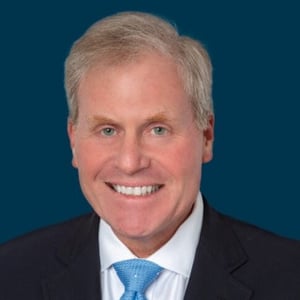
Partner, Briscoe Prows Kao Ivester & Bazel LLP
Tony Francois is experienced in Water and Real Property Law, Land Use and Zoning, Environmental Regulation, Natural Resources Development, Agricultural Law, and Constitutional Law. He has represented homeowners, builders, farmers and ranchers, trade associations, and water districts in administrative, civil, and criminal proceedings before state and federal administrative agencies and state and federal trial and appellate courts. He is a member of the California State Bar and the Northern, Eastern, and Central Districts of California and the Districts of New Mexico and North Dakota, and has litigated cases in federal courts in California, Oregon, Washington, Idaho, Montana, Nevada, Arizona, New Mexico, Colorado, North and South Dakota, Minnesota, Massachusetts, Maryland, South Carolina, and the District of Columbia, as well as the Sixth, Eighth, Ninth, and Tenth Circuit Courts of Appeals. He has appeared before the Supreme Courts of California, Idaho, Nevada, and the United States.
Prior to attending law school, he served as an infantry officer in the United States Army, and was stationed in the former West Germany during the fall of the Berlin Wall.
Tony was an Attorney at Pacific Legal Foundation from 2012 to 2021. He was a lobbyist for 10 years, first with California Farm Bureau Federation from 2003 to 2007, and then with KP Public Affairs from 2007 to 2012. He was an attorney at McQuaid, Bedford & Van Zandt in San Francisco from 1999 – 2003.
Topics
Another Court Rules Against Regulation-by-Litigation in Climate Change Public Nuisance Lawsuits
On July 19, the U.S. District Court for the Southern District of New York dismissed...
Topics
N. District of California: Elected Branches of Government Are the Proper Channels for Addressing Climate Change
In a trenchant Los Angeles Times opinion piece, Chapman University law professor and constitutional law expert Donald Kochan assesses...
Municipality Lawsuit on Climate Change and Public Nuisance: Litigation Update
Donald J. Kochan
Environmental Law & Property Rights Practice Group Teleforum
Should climate change responsibility be assessed in the courts or by the elected policymaking branches? ...
The Department of Energy’s Actions to Save Nuclear and Coal
Raymond L. Gifford, Mark W. Menezes, Stephen Moore
Environmental Law & Property Rights Practice Group Teleforum
Last month, Bloomberg News revealed a leaked memorandum from the Department of Energy purporting to...
EPA’s CAFE: What's on the Menu for Fuel Economy and Greenhouse Gas Standards?
James Conde, Sean H. Donahue, Jacqueline Glassman
Regulatory Transparency Project Teleforum
EPA Administrator Scott Pruitt and Secretary of Transportation Elaine Chao are proposing to roll back...
Executive Overreach at the EPA? The Pebble Mine Clean Water Act Dispute
Shannen W. Coffin, Tom Collier, Myron Ebell, Robert Perciasepe
Environmental Law & Property Rights Practice Group Teleforum
Perhaps in no area was President Obama’s expansive approach to executive authority more apparent than...
Topics
Docket Watch: Colorado Oil & Gas Conservation Commission v. Martinez
Are concerns over climate change sufficient to prevent all new oil and gas development in...
Extraterritorial Ambition: State Energy Taxes and the Question of Imported Electricity
Daniel Himebaugh
Federalist Society Review, Volume 19
Note from the Editor: This article discusses the extraterritoriality doctrine and whether and how it...
Topics
Why is EPA’s Transparency Proposal Controversial?
EPA recently proposed a new rule it calls “Strengthening Transparency in Regulatory Science.” Its stated...
The Clean Water Act’s 404(f) Exemptions
Peter Prows, Tyler G. Welti, Jonathan Wood, Tony Francois
The Clean Water Act’s geographic scope has demanded much attention recently, with high profile efforts...