
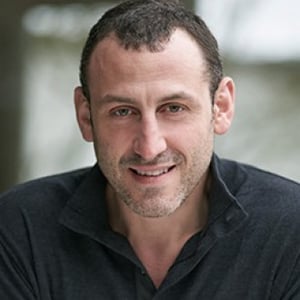
Professor of Law, Northwestern University Pritzker School of Law
Joshua Kleinfeld teaches and writes about political, legal, and moral philosophy, criminal law, and criminal procedure. He also practices law in Northwestern's Juvenile Criminal Defense Clinic. He is a full professor with tenure at the Northwestern Pritzker School of the Law and (by courtesy) in Northwestern’s philosophy department. In 2017-18, he was a visiting professor at Harvard and Stanford Law Schools. He is the recipient of the Bator Award, given annually to one American law professor under the age of 40 who has demonstrated "excellence in legal scholarship, a commitment to teaching, a concern for students, and who has made a significant public impact."
In philosophy, Kleinfeld's research focuses on the idea of "embodied ethical life," as developed in the socio-theoretic tradition of Hegel, Weber, and Durkheim. This tradition aims to understand and critique social life by bringing to light the normative ideas implicit in social practices and institutions. In law, this means that the most interesting philosophical concepts are often those reflected or actualized in legal practice – in the law as judges and lawyers think of it and wield it.
In criminal law and procedure, Kleinfeld has developed a theory known as "reconstructivism," which holds that the chief office of criminal law is not to dole out retributive justice, nor to optimize crime and cost control, but to reconstruct a violated normative order in the wake of a crime. This work, which draws on the thought of Hegel, Durkheim, Jean Hampton, and Antony Duff, develops an alternative to retributive and utilitarian theories of criminal law by focusing on the distinctive social function and sense of justice at work in the criminal system.
Kleinfeld is also involved in practical criminal justice reform. In this vein, he defends children accused of homicide in the Northwestern Juvenile Criminal Defense clinic and assists in litigation efforts meant to reform American criminal law through the courts. He has also developed a view of criminal justice reform known as "democratization," which holds that the root of the American criminal justice crisis is a set of bureaucratic attitudes, structures, and incentives divorced from the American public’s concerns and sense of justice, and that the primary solution is to make criminal justice more community-focused and responsive to lay influences. Working with others, he has developed a number of policy proposals meant to reform American criminal justice in a democratic direction.
Kleinfeld holds a JD from Yale Law School, a PhD in philosophy from the Goethe University of Frankfurt (supervised by Axel Honneth, Klaus Günther, and Rainer Forst), and a BA in philosophy from Yale College. He clerked for Judge J. Harvie Wilkinson on the United States Court of Appeals for the Fourth Circuit; Judge Janice Rogers Brown on the United States Court of Appeals for the D.C. Circuit; and President (chief justice) Aharon Barak of the Supreme Court of Israel. He worked as an Associate at Debevoise & Plimpton LLP in Frankfurt, Germany, in the area of corporate criminal law. Before law school, he worked as a Senior Research Analyst at the White House’s Council on Bioethics.

Director of Research, American Economic Liberties Project
Matt Stoller is a public intellectual who writes about the American anti-monopoly
tradition. He is the author of the Simon and Schuster book Goliath: The Hundred Year
War Between Monopoly Power and Democracy. Stoller is the Director of Research at
the American Economic Liberties Project. He publishes an email newsletter called BIG.
Stoller is a former policy advisor to the Senate Budget Committee, and worked in the House of Representatives on the Dodd–Frank Wall Street Reform Act.
He has lectured on competition policy and media at Columbia University, Harvard Law, Duke Law, Bertelsmann Foundation, Vrije Universiteit Brussel, West Point and the National Communications Commission of Taiwan. His writing has appeared in the Washington Post, the New York Times, Fast Company, Foreign Policy, the Guardian, Vice, The American Conservative, and the Baffler.
He has also produced for MSNBC and starred in a short-lived television show on FX called Brand X with Russell Brand.
Professor of Law, Northwestern University Pritzker School of Law
Joshua Kleinfeld teaches and writes about political, legal, and moral philosophy, criminal law, and criminal procedure. He also practices law in Northwestern's Juvenile Criminal Defense Clinic. He is a full professor with tenure at the Northwestern Pritzker School of the Law and (by courtesy) in Northwestern’s philosophy department. In 2017-18, he was a visiting professor at Harvard and Stanford Law Schools. He is the recipient of the Bator Award, given annually to one American law professor under the age of 40 who has demonstrated "excellence in legal scholarship, a commitment to teaching, a concern for students, and who has made a significant public impact."
In philosophy, Kleinfeld's research focuses on the idea of "embodied ethical life," as developed in the socio-theoretic tradition of Hegel, Weber, and Durkheim. This tradition aims to understand and critique social life by bringing to light the normative ideas implicit in social practices and institutions. In law, this means that the most interesting philosophical concepts are often those reflected or actualized in legal practice – in the law as judges and lawyers think of it and wield it.
In criminal law and procedure, Kleinfeld has developed a theory known as "reconstructivism," which holds that the chief office of criminal law is not to dole out retributive justice, nor to optimize crime and cost control, but to reconstruct a violated normative order in the wake of a crime. This work, which draws on the thought of Hegel, Durkheim, Jean Hampton, and Antony Duff, develops an alternative to retributive and utilitarian theories of criminal law by focusing on the distinctive social function and sense of justice at work in the criminal system.
Kleinfeld is also involved in practical criminal justice reform. In this vein, he defends children accused of homicide in the Northwestern Juvenile Criminal Defense clinic and assists in litigation efforts meant to reform American criminal law through the courts. He has also developed a view of criminal justice reform known as "democratization," which holds that the root of the American criminal justice crisis is a set of bureaucratic attitudes, structures, and incentives divorced from the American public’s concerns and sense of justice, and that the primary solution is to make criminal justice more community-focused and responsive to lay influences. Working with others, he has developed a number of policy proposals meant to reform American criminal justice in a democratic direction.
Kleinfeld holds a JD from Yale Law School, a PhD in philosophy from the Goethe University of Frankfurt (supervised by Axel Honneth, Klaus Günther, and Rainer Forst), and a BA in philosophy from Yale College. He clerked for Judge J. Harvie Wilkinson on the United States Court of Appeals for the Fourth Circuit; Judge Janice Rogers Brown on the United States Court of Appeals for the D.C. Circuit; and President (chief justice) Aharon Barak of the Supreme Court of Israel. He worked as an Associate at Debevoise & Plimpton LLP in Frankfurt, Germany, in the area of corporate criminal law. Before law school, he worked as a Senior Research Analyst at the White House’s Council on Bioethics.
Director of Research, American Economic Liberties Project
Matt Stoller is a public intellectual who writes about the American anti-monopoly
tradition. He is the author of the Simon and Schuster book Goliath: The Hundred Year
War Between Monopoly Power and Democracy. Stoller is the Director of Research at
the American Economic Liberties Project. He publishes an email newsletter called BIG.
Stoller is a former policy advisor to the Senate Budget Committee, and worked in the House of Representatives on the Dodd–Frank Wall Street Reform Act.
He has lectured on competition policy and media at Columbia University, Harvard Law, Duke Law, Bertelsmann Foundation, Vrije Universiteit Brussel, West Point and the National Communications Commission of Taiwan. His writing has appeared in the Washington Post, the New York Times, Fast Company, Foreign Policy, the Guardian, Vice, The American Conservative, and the Baffler.
He has also produced for MSNBC and starred in a short-lived television show on FX called Brand X with Russell Brand.
Professor of Law, Northwestern University Pritzker School of Law
Joshua Kleinfeld teaches and writes about political, legal, and moral philosophy, criminal law, and criminal procedure. He also practices law in Northwestern's Juvenile Criminal Defense Clinic. He is a full professor with tenure at the Northwestern Pritzker School of the Law and (by courtesy) in Northwestern’s philosophy department. In 2017-18, he was a visiting professor at Harvard and Stanford Law Schools. He is the recipient of the Bator Award, given annually to one American law professor under the age of 40 who has demonstrated "excellence in legal scholarship, a commitment to teaching, a concern for students, and who has made a significant public impact."
In philosophy, Kleinfeld's research focuses on the idea of "embodied ethical life," as developed in the socio-theoretic tradition of Hegel, Weber, and Durkheim. This tradition aims to understand and critique social life by bringing to light the normative ideas implicit in social practices and institutions. In law, this means that the most interesting philosophical concepts are often those reflected or actualized in legal practice – in the law as judges and lawyers think of it and wield it.
In criminal law and procedure, Kleinfeld has developed a theory known as "reconstructivism," which holds that the chief office of criminal law is not to dole out retributive justice, nor to optimize crime and cost control, but to reconstruct a violated normative order in the wake of a crime. This work, which draws on the thought of Hegel, Durkheim, Jean Hampton, and Antony Duff, develops an alternative to retributive and utilitarian theories of criminal law by focusing on the distinctive social function and sense of justice at work in the criminal system.
Kleinfeld is also involved in practical criminal justice reform. In this vein, he defends children accused of homicide in the Northwestern Juvenile Criminal Defense clinic and assists in litigation efforts meant to reform American criminal law through the courts. He has also developed a view of criminal justice reform known as "democratization," which holds that the root of the American criminal justice crisis is a set of bureaucratic attitudes, structures, and incentives divorced from the American public’s concerns and sense of justice, and that the primary solution is to make criminal justice more community-focused and responsive to lay influences. Working with others, he has developed a number of policy proposals meant to reform American criminal justice in a democratic direction.
Kleinfeld holds a JD from Yale Law School, a PhD in philosophy from the Goethe University of Frankfurt (supervised by Axel Honneth, Klaus Günther, and Rainer Forst), and a BA in philosophy from Yale College. He clerked for Judge J. Harvie Wilkinson on the United States Court of Appeals for the Fourth Circuit; Judge Janice Rogers Brown on the United States Court of Appeals for the D.C. Circuit; and President (chief justice) Aharon Barak of the Supreme Court of Israel. He worked as an Associate at Debevoise & Plimpton LLP in Frankfurt, Germany, in the area of corporate criminal law. Before law school, he worked as a Senior Research Analyst at the White House’s Council on Bioethics.

Patrick Hotung Professor of Constitutional Law, Georgetown University Law Center
Randy Barnett is the Patrick Hotung Professor of Constitutional Law at Georgetown University Law Center. He has argued before the United States Supreme Court, tried murder cases to juries as a prosecutor in Chicago, and appeared as a prosecutor in the feature film Inalienable. He is the author of numerous books, including Restoring the Lost Constitution, The Structure of Liberty, Our Republican Constitution, and The Original Meaning of the Fourteenth Amendment. He has published two memoirs, A Life for Liberty: The Making of an American Originalist, and Felony Review: Tales of True Crime and Corruption in Chicago. He is currently working on a new book, Freedom and Flourishing: Libertarianism for the Real World.

General Counsel, Strive
Before joining Strive, Alexandra served as the Director of Regulatory Affairs at River Financial, where she handled all regulatory and government matters and served as product counsel. Prior to her time at River, Alexandra worked at the U.S. Department of Treasury, first in the General Counsel’s office and then as the youngest-ever Executive Secretary, where she worked directly with Secretary Mnuchin. Alexandra previously worked as an associate in the Washington, D.C. office of Akin Gump. She clerked for then-Justice Allison Eid on the Colorado Supreme Court and Judge Jennifer Elrod on the U.S. Court of Appeals for the Fifth Circuit. She holds a J.D. from the University of Texas and a B.A. from The King’s College.
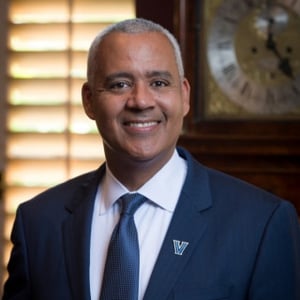
Arthur J. Kania Dean and Professor of Law, Villanova University, Charles Widger School of Law
Mark C. Alexander, JD is the Arthur J. Kania Dean and Professor of Law at the Villanova University Charles Widger School of Law. As the School’s chief administrator and chairperson of the faculty, Alexander is responsible for all facets of the Law School, including its long-term strategic and academic planning, curricular initiatives, faculty research and teaching support, student services, and fundraising and alumni relations.
Alexander previously served as Associate Dean for Academics at Seton Hall University’s School of Law. His responsibilities included oversight of the curriculum’s academic components, collaboration with the faculty and administration on implementation of the School’s strategic plan, and management of the career, enrollment and student services offices. A member of Seton Hall’s Law School faculty for two decades, he was honored as Professor of the Year on numerous occasions.
Alexander’s areas of expertise include constitution law, election law, the First Amendment and criminal procedure. His research interests focus on the constitutional dimensions of election law and campaign reform. Alexander has authored several books on the First Amendment and constitutional law, and his scholarship has been published in leading journals such as Harvard Journal of Law & Public Policy, Stanford Law & Policy Review and NYU Review of Law & Social Change.
Regularly interviewed by national print and broadcast media, Alexander is a sought-after speaker and panelist for national and international law symposiums and academic forums. He possesses significant international experience, having spent a year in Spain teaching American law and politics on a Fulbright Scholarship, as well as teaching in the Seton Hall Law-in-Italy program. He is also a fellow of the U.S.-Japan Leadership Program. Alexander served on the J. William Fulbright Foreign Scholarship Board from 2010 to 2014, having been appointed by President Barack Obama.
In addition to his leadership in academia, Alexander has also served as an adviser and issues director for several high-profile political campaigns. Prior to joining the Seton Hall Law School faculty in 1996, he clerked for Chief Judge Thelton Henderson of the United States District Court for the Northern District of California and was a litigator with Gibson, Dunn & Crutcher in San Francisco. Alexander earned a Juris Doctor from Yale University Law School and a Bachelor of Arts in Architecture from Yale University.
Professor of Law, Northwestern University Pritzker School of Law
Joshua Kleinfeld teaches and writes about political, legal, and moral philosophy, criminal law, and criminal procedure. He also practices law in Northwestern's Juvenile Criminal Defense Clinic. He is a full professor with tenure at the Northwestern Pritzker School of the Law and (by courtesy) in Northwestern’s philosophy department. In 2017-18, he was a visiting professor at Harvard and Stanford Law Schools. He is the recipient of the Bator Award, given annually to one American law professor under the age of 40 who has demonstrated "excellence in legal scholarship, a commitment to teaching, a concern for students, and who has made a significant public impact."
In philosophy, Kleinfeld's research focuses on the idea of "embodied ethical life," as developed in the socio-theoretic tradition of Hegel, Weber, and Durkheim. This tradition aims to understand and critique social life by bringing to light the normative ideas implicit in social practices and institutions. In law, this means that the most interesting philosophical concepts are often those reflected or actualized in legal practice – in the law as judges and lawyers think of it and wield it.
In criminal law and procedure, Kleinfeld has developed a theory known as "reconstructivism," which holds that the chief office of criminal law is not to dole out retributive justice, nor to optimize crime and cost control, but to reconstruct a violated normative order in the wake of a crime. This work, which draws on the thought of Hegel, Durkheim, Jean Hampton, and Antony Duff, develops an alternative to retributive and utilitarian theories of criminal law by focusing on the distinctive social function and sense of justice at work in the criminal system.
Kleinfeld is also involved in practical criminal justice reform. In this vein, he defends children accused of homicide in the Northwestern Juvenile Criminal Defense clinic and assists in litigation efforts meant to reform American criminal law through the courts. He has also developed a view of criminal justice reform known as "democratization," which holds that the root of the American criminal justice crisis is a set of bureaucratic attitudes, structures, and incentives divorced from the American public’s concerns and sense of justice, and that the primary solution is to make criminal justice more community-focused and responsive to lay influences. Working with others, he has developed a number of policy proposals meant to reform American criminal justice in a democratic direction.
Kleinfeld holds a JD from Yale Law School, a PhD in philosophy from the Goethe University of Frankfurt (supervised by Axel Honneth, Klaus Günther, and Rainer Forst), and a BA in philosophy from Yale College. He clerked for Judge J. Harvie Wilkinson on the United States Court of Appeals for the Fourth Circuit; Judge Janice Rogers Brown on the United States Court of Appeals for the D.C. Circuit; and President (chief justice) Aharon Barak of the Supreme Court of Israel. He worked as an Associate at Debevoise & Plimpton LLP in Frankfurt, Germany, in the area of corporate criminal law. Before law school, he worked as a Senior Research Analyst at the White House’s Council on Bioethics.
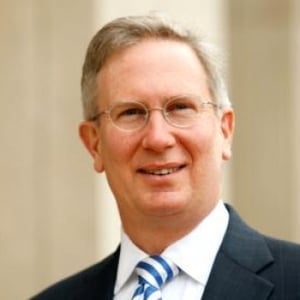
David and Mary Harrison Distinguished Professor of Law, University of Virginia School of Law
Paul G. Mahoney is a David and Mary Harrison Distinguished Professor and served as dean of the Law School from 2008-16. Mahoney's teaching and research areas are securities regulation, law and economic development, corporate finance, financial derivatives and contracts. He has published widely in law reviews and peer-reviewed finance and law and economics journals. His book, “Wasting a Crisis: Why Securities Regulation Fails,” was published by the University of Chicago Press in 2015.
Mahoney joined the Law School faculty in 1990 after practicing law with the New York firm of Sullivan & Cromwell and clerking for Judge Ralph K. Winter, Jr. of the U.S. Court of Appeals for the Second Circuit and Justice Thurgood Marshall of the U.S. Supreme Court. He served as academic associate dean at the Law School from 1999 to 2004 and has held the Albert C. BeVier Research Chair and the Brokaw Chair in Corporate Law. He has been a visiting professor at the University of Chicago Law School, the University of Southern California Law School and the University of Toronto Faculty of Law. He has also worked on legal reform projects in Kazakhstan, Kyrgyzstan, Mongolia and Nepal.
Mahoney is a member of the Council on Foreign Relations and a fellow of the American Academy of Arts and Sciences. In 2018 he joined Securities and Exchange Commission’s Investor Advisory Committee. He served as an associate editor of the Journal of Economic Perspectives from 2004 to 2007 and as a director of the American Law and Economics Association from 2002 to 2004. He is a past recipient of the All-University Outstanding Teacher Award and the Law School's Traynor Award for excellence in faculty scholarship.

Dean and Harold H. Greene Professor of Law, The George Washington University School of Law
Dayna Bowen Matthew, JD, PhD, is the Dean and Harold H. Greene Professor of Law at the George Washington University Law School. A leader in public health and civil rights law who focuses on disparities in health, health care, and the social determinants of health, Dean Matthew joined GW Law in 2020. She is the author of the bestselling book Just Medicine: A Cure for Racial Inequality in American Health Care and the newly released Just Health: Treating Structural Racism to Heal America.
Dean Matthew previously served on the faculty of the University of Virginia School of Law, where she was Co-Founder and Inaugural Director of The Equity Center, a transdisciplinary research center that seeks to build better relationships between UVA and the Charlottesville community through community engaged scholarship that tangibly redresses racial and socioeconomic inequality.
Earlier in her career, Dean Matthew served on the University of Colorado law faculty as a Professor, Vice Dean, and Associate Dean of Academic Affairs. She was a member of the Center for Bioethics and Humanities on the Anschutz Medical Campus. Dean Matthew held a joint appointment at the Colorado School of Public Health.
Dean Matthew also has taken on many public policy roles. In 2013, she co-founded the Colorado Health Equity Project, a medical-legal partnership incubator aimed at removing barriers to good health for low-income clients by providing legal representation, research, and policy advocacy. In 2015, she served as the Senior Adviser to the Director of the Office of Civil Rights for the US Environmental Protection Agency, where she expedited cases on behalf of historically vulnerable communities besieged by pollution. She then became a member of the health policy team for US Senator Debbie Stabenow of Michigan and worked on public health issues.
During 2015-16, she was a Robert Wood Johnson Foundation Health Policy Fellow in Residence in Washington, DC, and pivoted her work toward population-level clients. She forged relationships with influential policy groups such as the Brookings Institution, where she is currently a Non-resident Senior Fellow, and the Congressional Black Caucus Foundation.
She also is a member of the American Law Institute and currently serves on several public health boards including the CDC’s Advisory Committee on Immunization Practices’ COVID-19 Vaccine Working Group, the American Society of Law, Medicine, and Ethics, and the Scientific Advisory Council of the Foundation for Opioid Response Efforts
Before entering academia, Dean Matthew practiced as a civil litigator both in Kentucky, at the law firm of Greenebaum, Doll & McDonald, and in Virginia, at McGuireWoods, where her work primarily focused on the defense of medical care providers and corporate manufacturers in state courts, federal courts, and before administrative and licensing tribunals.
Dean Matthew graduated with an AB in economics from Harvard-Radcliffe and, after a brief stint as a commercial real estate banker, obtained a JD from the University of Virginia. While studying at Virginia, Dean Matthew served as an Editor of the Virginia Law Review, won the law school’s William Minor Lile Moot Court Competition, and taught as a Hardy Dillard Writing Fellow. Following graduation, she clerked for Justice John Charles Thomas, the first African American justice to sit on the Virginia Supreme Court. She taught at Virginia as an assistant professor from 1991 to 1994. In 2018, she received a PhD in health and behavioral sciences from the University of Colorado at Denver.
She has written numerous articles and book chapters on health and antitrust law topics that have appeared in the Virginia Law Review, the Georgetown Journal of Law, and the American Journal of Law and Medicine, among others.
Dean Matthew lives in Washington, DC with her partner, Thomas Matthew MD, and enjoys all things outdoors including running, alpine skiing, travel, and spending time with family and friends.

Judge, United States Court of Appeals, District of Columbia Circuit
Judge Rao was appointed to the United States Court of Appeals for the District of Columbia Circuit in March 2019. She graduated from Yale College in 1995 and the University of Chicago Law School in 1999. Following graduation, she served as a law clerk to Judge J. Harvie Wilkinson III of the U.S. Court of Appeals for the Fourth Circuit and, in the 2001 October Term, as law clerk to Justice Clarence Thomas of the U.S. Supreme Court. Between her clerkships, Judge Rao served as counsel for nominations and constitutional law to the U.S. Senate Committee on the Judiciary. In 2002, she joined the international arbitration group of Clifford Chance LLP in London, England. From 2005-2006, she served as Special Assistant and Associate White House Counsel to President George W. Bush. From 2006 to 2017, Judge Rao was a professor at the Antonin Scalia Law School at George Mason University, where she taught constitutional law, legislation and statutory interpretation, and the history and foundations of the administrative state. In 2014, she founded the Center for the Study of the Administrative State, a non-profit Center that promotes academic scholarship and public policy debates about administrative law. In July 2017, she was appointed to serve as the Administrator of the Office of Information and Regulatory Affairs in the Office of Management Budget. She served in this position until her appointment to the D.C. Circuit.
Arthur J. Kania Dean and Professor of Law, Villanova University, Charles Widger School of Law
Mark C. Alexander, JD is the Arthur J. Kania Dean and Professor of Law at the Villanova University Charles Widger School of Law. As the School’s chief administrator and chairperson of the faculty, Alexander is responsible for all facets of the Law School, including its long-term strategic and academic planning, curricular initiatives, faculty research and teaching support, student services, and fundraising and alumni relations.
Alexander previously served as Associate Dean for Academics at Seton Hall University’s School of Law. His responsibilities included oversight of the curriculum’s academic components, collaboration with the faculty and administration on implementation of the School’s strategic plan, and management of the career, enrollment and student services offices. A member of Seton Hall’s Law School faculty for two decades, he was honored as Professor of the Year on numerous occasions.
Alexander’s areas of expertise include constitution law, election law, the First Amendment and criminal procedure. His research interests focus on the constitutional dimensions of election law and campaign reform. Alexander has authored several books on the First Amendment and constitutional law, and his scholarship has been published in leading journals such as Harvard Journal of Law & Public Policy, Stanford Law & Policy Review and NYU Review of Law & Social Change.
Regularly interviewed by national print and broadcast media, Alexander is a sought-after speaker and panelist for national and international law symposiums and academic forums. He possesses significant international experience, having spent a year in Spain teaching American law and politics on a Fulbright Scholarship, as well as teaching in the Seton Hall Law-in-Italy program. He is also a fellow of the U.S.-Japan Leadership Program. Alexander served on the J. William Fulbright Foreign Scholarship Board from 2010 to 2014, having been appointed by President Barack Obama.
In addition to his leadership in academia, Alexander has also served as an adviser and issues director for several high-profile political campaigns. Prior to joining the Seton Hall Law School faculty in 1996, he clerked for Chief Judge Thelton Henderson of the United States District Court for the Northern District of California and was a litigator with Gibson, Dunn & Crutcher in San Francisco. Alexander earned a Juris Doctor from Yale University Law School and a Bachelor of Arts in Architecture from Yale University.
Professor of Law, Northwestern University Pritzker School of Law
Joshua Kleinfeld teaches and writes about political, legal, and moral philosophy, criminal law, and criminal procedure. He also practices law in Northwestern's Juvenile Criminal Defense Clinic. He is a full professor with tenure at the Northwestern Pritzker School of the Law and (by courtesy) in Northwestern’s philosophy department. In 2017-18, he was a visiting professor at Harvard and Stanford Law Schools. He is the recipient of the Bator Award, given annually to one American law professor under the age of 40 who has demonstrated "excellence in legal scholarship, a commitment to teaching, a concern for students, and who has made a significant public impact."
In philosophy, Kleinfeld's research focuses on the idea of "embodied ethical life," as developed in the socio-theoretic tradition of Hegel, Weber, and Durkheim. This tradition aims to understand and critique social life by bringing to light the normative ideas implicit in social practices and institutions. In law, this means that the most interesting philosophical concepts are often those reflected or actualized in legal practice – in the law as judges and lawyers think of it and wield it.
In criminal law and procedure, Kleinfeld has developed a theory known as "reconstructivism," which holds that the chief office of criminal law is not to dole out retributive justice, nor to optimize crime and cost control, but to reconstruct a violated normative order in the wake of a crime. This work, which draws on the thought of Hegel, Durkheim, Jean Hampton, and Antony Duff, develops an alternative to retributive and utilitarian theories of criminal law by focusing on the distinctive social function and sense of justice at work in the criminal system.
Kleinfeld is also involved in practical criminal justice reform. In this vein, he defends children accused of homicide in the Northwestern Juvenile Criminal Defense clinic and assists in litigation efforts meant to reform American criminal law through the courts. He has also developed a view of criminal justice reform known as "democratization," which holds that the root of the American criminal justice crisis is a set of bureaucratic attitudes, structures, and incentives divorced from the American public’s concerns and sense of justice, and that the primary solution is to make criminal justice more community-focused and responsive to lay influences. Working with others, he has developed a number of policy proposals meant to reform American criminal justice in a democratic direction.
Kleinfeld holds a JD from Yale Law School, a PhD in philosophy from the Goethe University of Frankfurt (supervised by Axel Honneth, Klaus Günther, and Rainer Forst), and a BA in philosophy from Yale College. He clerked for Judge J. Harvie Wilkinson on the United States Court of Appeals for the Fourth Circuit; Judge Janice Rogers Brown on the United States Court of Appeals for the D.C. Circuit; and President (chief justice) Aharon Barak of the Supreme Court of Israel. He worked as an Associate at Debevoise & Plimpton LLP in Frankfurt, Germany, in the area of corporate criminal law. Before law school, he worked as a Senior Research Analyst at the White House’s Council on Bioethics.
David and Mary Harrison Distinguished Professor of Law, University of Virginia School of Law
Paul G. Mahoney is a David and Mary Harrison Distinguished Professor and served as dean of the Law School from 2008-16. Mahoney's teaching and research areas are securities regulation, law and economic development, corporate finance, financial derivatives and contracts. He has published widely in law reviews and peer-reviewed finance and law and economics journals. His book, “Wasting a Crisis: Why Securities Regulation Fails,” was published by the University of Chicago Press in 2015.
Mahoney joined the Law School faculty in 1990 after practicing law with the New York firm of Sullivan & Cromwell and clerking for Judge Ralph K. Winter, Jr. of the U.S. Court of Appeals for the Second Circuit and Justice Thurgood Marshall of the U.S. Supreme Court. He served as academic associate dean at the Law School from 1999 to 2004 and has held the Albert C. BeVier Research Chair and the Brokaw Chair in Corporate Law. He has been a visiting professor at the University of Chicago Law School, the University of Southern California Law School and the University of Toronto Faculty of Law. He has also worked on legal reform projects in Kazakhstan, Kyrgyzstan, Mongolia and Nepal.
Mahoney is a member of the Council on Foreign Relations and a fellow of the American Academy of Arts and Sciences. In 2018 he joined Securities and Exchange Commission’s Investor Advisory Committee. He served as an associate editor of the Journal of Economic Perspectives from 2004 to 2007 and as a director of the American Law and Economics Association from 2002 to 2004. He is a past recipient of the All-University Outstanding Teacher Award and the Law School's Traynor Award for excellence in faculty scholarship.
Dean and Harold H. Greene Professor of Law, The George Washington University School of Law
Dayna Bowen Matthew, JD, PhD, is the Dean and Harold H. Greene Professor of Law at the George Washington University Law School. A leader in public health and civil rights law who focuses on disparities in health, health care, and the social determinants of health, Dean Matthew joined GW Law in 2020. She is the author of the bestselling book Just Medicine: A Cure for Racial Inequality in American Health Care and the newly released Just Health: Treating Structural Racism to Heal America.
Dean Matthew previously served on the faculty of the University of Virginia School of Law, where she was Co-Founder and Inaugural Director of The Equity Center, a transdisciplinary research center that seeks to build better relationships between UVA and the Charlottesville community through community engaged scholarship that tangibly redresses racial and socioeconomic inequality.
Earlier in her career, Dean Matthew served on the University of Colorado law faculty as a Professor, Vice Dean, and Associate Dean of Academic Affairs. She was a member of the Center for Bioethics and Humanities on the Anschutz Medical Campus. Dean Matthew held a joint appointment at the Colorado School of Public Health.
Dean Matthew also has taken on many public policy roles. In 2013, she co-founded the Colorado Health Equity Project, a medical-legal partnership incubator aimed at removing barriers to good health for low-income clients by providing legal representation, research, and policy advocacy. In 2015, she served as the Senior Adviser to the Director of the Office of Civil Rights for the US Environmental Protection Agency, where she expedited cases on behalf of historically vulnerable communities besieged by pollution. She then became a member of the health policy team for US Senator Debbie Stabenow of Michigan and worked on public health issues.
During 2015-16, she was a Robert Wood Johnson Foundation Health Policy Fellow in Residence in Washington, DC, and pivoted her work toward population-level clients. She forged relationships with influential policy groups such as the Brookings Institution, where she is currently a Non-resident Senior Fellow, and the Congressional Black Caucus Foundation.
She also is a member of the American Law Institute and currently serves on several public health boards including the CDC’s Advisory Committee on Immunization Practices’ COVID-19 Vaccine Working Group, the American Society of Law, Medicine, and Ethics, and the Scientific Advisory Council of the Foundation for Opioid Response Efforts
Before entering academia, Dean Matthew practiced as a civil litigator both in Kentucky, at the law firm of Greenebaum, Doll & McDonald, and in Virginia, at McGuireWoods, where her work primarily focused on the defense of medical care providers and corporate manufacturers in state courts, federal courts, and before administrative and licensing tribunals.
Dean Matthew graduated with an AB in economics from Harvard-Radcliffe and, after a brief stint as a commercial real estate banker, obtained a JD from the University of Virginia. While studying at Virginia, Dean Matthew served as an Editor of the Virginia Law Review, won the law school’s William Minor Lile Moot Court Competition, and taught as a Hardy Dillard Writing Fellow. Following graduation, she clerked for Justice John Charles Thomas, the first African American justice to sit on the Virginia Supreme Court. She taught at Virginia as an assistant professor from 1991 to 1994. In 2018, she received a PhD in health and behavioral sciences from the University of Colorado at Denver.
She has written numerous articles and book chapters on health and antitrust law topics that have appeared in the Virginia Law Review, the Georgetown Journal of Law, and the American Journal of Law and Medicine, among others.
Dean Matthew lives in Washington, DC with her partner, Thomas Matthew MD, and enjoys all things outdoors including running, alpine skiing, travel, and spending time with family and friends.
Judge, United States Court of Appeals, District of Columbia Circuit
Judge Rao was appointed to the United States Court of Appeals for the District of Columbia Circuit in March 2019. She graduated from Yale College in 1995 and the University of Chicago Law School in 1999. Following graduation, she served as a law clerk to Judge J. Harvie Wilkinson III of the U.S. Court of Appeals for the Fourth Circuit and, in the 2001 October Term, as law clerk to Justice Clarence Thomas of the U.S. Supreme Court. Between her clerkships, Judge Rao served as counsel for nominations and constitutional law to the U.S. Senate Committee on the Judiciary. In 2002, she joined the international arbitration group of Clifford Chance LLP in London, England. From 2005-2006, she served as Special Assistant and Associate White House Counsel to President George W. Bush. From 2006 to 2017, Judge Rao was a professor at the Antonin Scalia Law School at George Mason University, where she taught constitutional law, legislation and statutory interpretation, and the history and foundations of the administrative state. In 2014, she founded the Center for the Study of the Administrative State, a non-profit Center that promotes academic scholarship and public policy debates about administrative law. In July 2017, she was appointed to serve as the Administrator of the Office of Information and Regulatory Affairs in the Office of Management Budget. She served in this position until her appointment to the D.C. Circuit.
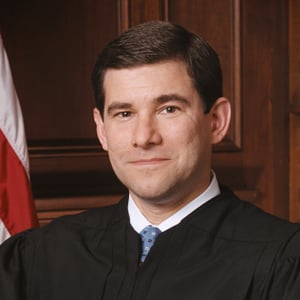
Chief Judge, United States Court of Appeals, Eleventh Circuit
William H. Pryor Jr. serves as Chief Circuit Judge on the United States Court of Appeals for the Eleventh Circuit.
In 2013–18, he served on the United States Sentencing Commission and, in 2017–18, served as Acting Chair.
He has taught as a visiting professor at the University of Alabama School of Law and previously taught as an adjunct professor at the Cumberland School of Law of Samford University.
He served as the 45th Attorney General of Alabama from 1997 to 2004. When he took office, he was the youngest attorney general in the nation. In his reelection, he received the highest percentage of votes of any statewide candidate.
He graduated magna cum laude from Tulane Law School where he finished first in the common-law curriculum and was editor in chief of the Tulane Law Review. He then served as a law clerk for Judge John Minor Wisdom of the U.S. Court of Appeals for the Fifth Circuit.
He is a member of The American Law Institute and an Adviser for the RESTATEMENT OF THE LAW THIRD, CONFLICT OF LAWS. He is a coauthor with Bryan Garner, Justices Gorsuch and Kavanaugh, and several other judges of a treatise, THE LAW OF JUDICIAL PRECEDENT. He has published in the Yale Law Journal, Columbia Law Review, Virginia Law Review, Notre Dame Law Review, Harvard Journal of Law & Public Policy, Yale Law & Policy Review, George Mason Law Review, Florida Law Review, Alabama Law Review, Case Western Reserve Law Review, and Tulane Law Review. He has published op-eds in The Wall Street Journal, The New York Times, National Review, and USA Today. He has debated at National Lawyers’ Conventions of the Federalist Society (including on National Public Radio) and at the Oxford Union in the United Kingdom. And he is listed among several “widely admired judicial writers” in Bryan Garner’s The Redbook: A Manual on Legal Style.
He is a member of the Tulane Law School Hall of Fame and has received the Defender of the Constitution Award from the Heritage Foundation, the Jurist of the Year Award from the Texas Review of Law & Politics, and the St. Thomas More Award from the St. Thomas More Society of Atlanta. Judge Pryor is also a proud member of the National Society of the Sons of the American Revolution.
Chief Judge, United States Court of Appeals, Eleventh Circuit
William H. Pryor Jr. serves as Chief Circuit Judge on the United States Court of Appeals for the Eleventh Circuit.
In 2013–18, he served on the United States Sentencing Commission and, in 2017–18, served as Acting Chair.
He has taught as a visiting professor at the University of Alabama School of Law and previously taught as an adjunct professor at the Cumberland School of Law of Samford University.
He served as the 45th Attorney General of Alabama from 1997 to 2004. When he took office, he was the youngest attorney general in the nation. In his reelection, he received the highest percentage of votes of any statewide candidate.
He graduated magna cum laude from Tulane Law School where he finished first in the common-law curriculum and was editor in chief of the Tulane Law Review. He then served as a law clerk for Judge John Minor Wisdom of the U.S. Court of Appeals for the Fifth Circuit.
He is a member of The American Law Institute and an Adviser for the RESTATEMENT OF THE LAW THIRD, CONFLICT OF LAWS. He is a coauthor with Bryan Garner, Justices Gorsuch and Kavanaugh, and several other judges of a treatise, THE LAW OF JUDICIAL PRECEDENT. He has published in the Yale Law Journal, Columbia Law Review, Virginia Law Review, Notre Dame Law Review, Harvard Journal of Law & Public Policy, Yale Law & Policy Review, George Mason Law Review, Florida Law Review, Alabama Law Review, Case Western Reserve Law Review, and Tulane Law Review. He has published op-eds in The Wall Street Journal, The New York Times, National Review, and USA Today. He has debated at National Lawyers’ Conventions of the Federalist Society (including on National Public Radio) and at the Oxford Union in the United Kingdom. And he is listed among several “widely admired judicial writers” in Bryan Garner’s The Redbook: A Manual on Legal Style.
He is a member of the Tulane Law School Hall of Fame and has received the Defender of the Constitution Award from the Heritage Foundation, the Jurist of the Year Award from the Texas Review of Law & Politics, and the St. Thomas More Award from the St. Thomas More Society of Atlanta. Judge Pryor is also a proud member of the National Society of the Sons of the American Revolution.

University Professor of Law and Executive Director, Liberty & Law Center, Antonin Scalia Law School, George Mason University
David Bernstein holds a University Professorship chair at the Antonin Scalia Law School, where he has been teaching since 1995. He has also been a visiting professor at the University of Michigan, Georgetown University, William & Mary, Brooklyn Law School, the University of Turin, and Hebrew University. Professor Bernstein teaches Constitutional Law, Evidence, and Products Liability.
A prolific author, Professor Bernstein often challenges the conventional wisdom with prodigious research and sharp, original analysis. He is the author of five books, and coauthor of two more. Professor Bernstein’s book Rehabilitating Lochner was praised across the political spectrum as “intellectual history in its highest form,” a “fresh perspective and a cogent analysis,” “delightful and informative,” “sharp and iconoclastic,” and “a terrific work of historical revisionism.” Columnist George Will praised Bernstein’s most recent book, Classified, The Untold Story of Racial Classification in America, as “perhaps the most consequential American book of 2022.”
Professor Bernstein has also written dozens of articles and essays published in major law reviews, including the California Law Review, Columbia Law Review, Michigan Law Review, and Yale Law Journal. An article he coauthored, Defending Daubert: It’s Time to Amend Federal Rule of Evidence 702, directly inspired a pending amendment to Rule 702.
Professor Bernstein blogs at the Instapundit.com, the Times of Israel, and the Volokh Conspiracy. He is a graduate of the Yale Law School, where he was senior editor of the Yale Law Journal and a John M. Olin Fellow in Law, Economics, and Public Policy.

Director, Independent Women's Law Center, Independent Women's
Jennifer C. Braceras, a member of the Federalist Society Board of Visitors, is the director of Independent Women’s Law Center and a former member of the U.S. Commission on Civil Rights.
Ms. Braceras is a graduate of the Harvard Law School, where she served as an editor of the Law Review. After law school, she clerked for two federal judges and practiced labor and employment law with the Boston law firm Ropes & Gray.
A long time political columnist and editor, Ms. Braceras's writing has appeared in a variety of publications, including the Wall Street Journal, the Boston Globe, the Hill, and National Review Online. She co-hosts At the Bar, a bimonthly virtual happy hour discussion about issues at the intersection of law, politics, and culture.
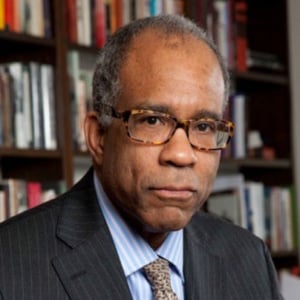
Michael R. Klein Professor of Law, Harvard Law School
Randall Kennedy is Michael R. Klein Professor at Harvard Law School where he teaches courses on contracts, criminal law, and the regulation of race relations. He was born in Columbia, South Carolina. For his education he attended St. Albans School, Princeton University, Oxford University, and Yale Law School. He served as a law clerk for Judge J. Skelly Wright of the United States Court of Appeals and for Justice Thurgood Marshall of the United States Supreme Court. He is a member of the bar of the District of Columbia and the Supreme Court of the United States. Awarded the 1998 Robert F. Kennedy Book Award for Race, Crime, and the Law, Mr Kennedy writes for a wide range of scholarly and general interest publications. His other books are For Discrimination: Race, Affirmative Action, and the Law (2013), The Persistence of the Color Line: Racial Politics and the Obama Presidency (2011), Sellout: The Politics of Racial Betrayal (2008), Interracial Intimacies: Sex, Marriage, Identity, and Adoption (2003), and Nigger: The Strange Career of a Troublesome Word (2002). A member of the American Law Institute, the American Academy of Arts and Sciences, and the American Philosophical Association, Mr. Kennedy is also a Trustee emeritus of Princeton University.

Open Minds: Who is Exercising Private Power and What Do They Control? Part 2
Joshua Kleinfeld, Matt Stoller
In the second part of this interview, Matt and Prof. Kleinfeld discuss the roots of...
Open Minds: What Sparked the Fascination With Economics and Government? Part 1
Joshua Kleinfeld, Matt Stoller
In Part 1 of Open Minds with Matt Stoller, we hear about how Matt's formative...
Open Minds: Applying Libertarian Convictions in The Real World
Joshua Kleinfeld, Randy E. Barnett
Prof. Randy Barnett joins Prof. Joshua Kleinfeld to discuss how his life experiences have informed his libertarian...
Crypto and the Feds [The FedSoc Films Podcast]
Alexandra Gaiser
In this episode of the FedSoc Films Podcast, we spoke with Alexandra Gaiser, Director of...
Showcase Panel II: The Mission of Law Schools
Mark C. Alexander, Joshua Kleinfeld, Paul G. Mahoney, Dayna Matthew, Neomi Rao
2022 National Lawyers Convention
Law schools are the gatekeepers of the legal profession and thus wield substantial influence on...
Showcase Panel II: The Mission of Law Schools
Mark C. Alexander, Joshua Kleinfeld, Paul G. Mahoney, Dayna Matthew, Neomi Rao
2022 National Lawyers Convention
Law schools are the gatekeepers of the legal profession and thus wield substantial influence on...
Opening Address by Hon. William H. Pryor Jr.
William H. Pryor
2022 National Lawyers Convention
The 2022 National Lawyers Convention took place Thursday, November 10 through Saturday, November 12 at...
Opening Address by Hon. William H. Pryor Jr.
William H. Pryor
2022 National Lawyers Convention
The 2022 National Lawyers Convention took place Thursday, November 10 through Saturday, November 12 at...
Topics
SCOTUS Preview: Brackeen v. Haaland (Part I)
The Supreme Court will hear arguments next month about the constitutionality of the Indian Child...
Feddie Night Fights: Classified: Can We Separate Race And State?
David Bernstein, Jennifer C. Braceras, Randall Kennedy
Notre Dame Student Chapter
The Federalist Society’s Student Division & Notre Dame Student Chapter present Feddie Night Fights:Classified: Can We...