

President and Managing Director, The Arctic Institute
Dr. Romain Chuffart is the President and Managing Director of The Arctic Institute.
He is one of the co-hosts of The Arctic Institute’s Bookshelf Podcast. Before his appointment as Managing Director in September 2022, Romain served as Internal Communication Manager on The Arctic Institute’s Leadership board. Romain was also a contributing writer to the Institute’s weekly publication, The Arctic This Week App. He also serves as the TAI project manager for the “Challenges to Ocean Governance: Regional Disputes, Global Consequences? (OceanGov)” and Arctic Geopolitics in a New Era (GEOARC) in partnership with the Fridtjof Nansen Institute.
His research interests include human rights and the rights of Indigenous Peoples, international environmental law, Arctic cooperation and ocean governance. Romain also conducts more theoretical research on public international law combining insights from political theory, international relations, political geography, and other social sciences.
Romain is the current Nansen Professor in Arctic Studies (2024/2025) at the University of Akureyri, Iceland. He holds a PhD in law from Durham University in the United Kingdom. Between 2019 and 2023, Romain was part of the Durham Arctic Research Centre for Training and Interdisciplinary Collaboration (DurhamARCTIC). At Durham, his research focused on Indigenous rights and Arctic environmental governance. Romain also holds a MA in Polar Law from the University of Akureyri, Iceland.
He has published several articles in Arctic-specific journals on Arctic governance and Indigenous rights, such as The Yearbook of Polar Law, the Arctic Yearbook, and the Polar Journa
Senior Fellow in National Security Affairs, American Foreign Policy Council
Alexander Gray joined AFPC as a Senior Fellow in National Security Affairs in February 2021. His work focuses on U.S. security and defense strategy in the Indo-Pacific; U.S.-China competition globally, particularly in the Pacific Islands and the Polar Regions; U.S. defense strategy and modernization for an era of Great Power competition; and the intersection of U.S. national and economic security.
Mr. Gray most recently served as Deputy Assistant to the President and Chief of Staff of the National Security Council (NSC) at the White House, where he was responsible for the management of the National Security Advisor’s Front Office and the budget, security, and personnel functions of the NSC. Previously, Mr. Gray served as Special Assistant to the President for the Defense Industrial Base at the White House National Economic Council (NEC). He was the principal Executive Office of the President official focused on the health and resiliency of the defense and manufacturing industrial base and U.S. maritime industry. Mr. Gray played a key role in Executive Order 13806, the first-ever whole-of-government assessment of the U.S. defense industrial base.
Additionally, Mr. Gray was the Director for Oceania & Indo-Pacific Security at the NSC, the first NSC Director ever focused primarily on Australia, New Zealand, and the Pacific Islands. Mr. Gray represented the U.S. at the 2019 Presidential Inauguration in the Federated States of Micronesia; the 2019 Pacific Islands Forum in Tuvalu; and at numerous U.S.-Australia-New Zealand strategic dialogues and intelligence exchanges.
Earlier in his career, Mr. Gray was a Member of the 2016 Presidential Transition Team at the U.S. Department of State and served as Senior Advisor to former U.S. Rep. J. Randy Forbes, a senior Member of the House Armed Services Committee. Mr. Gray is currently a Member of the Board of Visitors of the U.S. Coast Guard Academy for a three-year term. He is a recipient of the Secretary of Defense Medal for Outstanding Public Service and the National Security Council’s Outstanding Service Award.
Mr. Gray’s writings have appeared in Foreign Policy, The National Interest, National Review Online, The Weekly Standard, Naval War College Review, Strategic Studies Quarterly, and the Proceedings of the U.S. Naval Institute. He is a graduate of the Elliott School of International Affairs at George Washington University.
Judicial Law Clerk, U.S. District Court for the Southern District of Florida
Nitin is a recent graduate of Cornell Law School. Before his time in Ithaca, he majored in International Studies and Political Science at Johns Hopkins University and focused on power competition in South Asia during his graduate studies at the University of Oxford.

Tazewell Taylor Professor of Law and William H. Cabell Research Professor, William & Mary Law School
Jonathan H. Adler joined the William & Mary law faculty as the Tazwell Taylor Professor of Law and William H. Cabell Research Professor in 2025. Prior to joining the faculty, he was the inaugural Johan Verheij Memorial Professor of Law and the founding Director of the Coleman P. Burke Center for Environmental Law at the Case Western Reserve University School of Law.
Professor Adler is the author or editor of seven books, including Climate Liberalism: Perspectives on Liberty, Property and Pollution (Palgrave, 2023), Marijuana Federalism: Uncle Sam and Mary Jane (Brookings Institution Press, 2020), Business and the Roberts Court (Oxford University Press, 2016) and Rebuilding the Ark: New Perspectives on Endangered Species Act Reform (AEI Press, 2011).
His articles have appeared in publications ranging from the Harvard Environmental Law Review and Yale Journal on Regulation to the Wall Street Journal, New York Times, and Washington Post. He has testified before Congress a dozen times, and his work has been cited in the U.S. Supreme Court. A 2024 study identified Professor Adler as the seventh most cited legal academic in administrative and environmental law from 2019 to 2023.
Professor Adler is a contributing editor to Civitas Outlook and a regular contributor to the popular legal blog, The Volokh Conspiracy. A regular commentator on constitutional and regulatory issues, he has appeared on numerous radio and television programs, ranging from the PBS Newshour and National Public Radio to the Fox News Channel and Entertainment Tonight.
Professor Adler is a senior fellow at the Property & Environment Research Center in Bozeman, Montana. In 2018, Professor Adler was elected to membership in the American Law Institute and helped co-found the organization Checks and Balances. In 2024, Professor Adler was appointed a public member of the Administrative Conference of the United States.
Professor Adler clerked for the Honorable David B. Sentelle on the U.S. Court of Appeals for the District of Columbia Circuit.
United States House of Representatives, Michigan
Representative Justin Amash represents Michigan's Third District in the 112th United States Congress. Justin serves on the House Budget Committee and the House Oversight and Government Reform Committee. He was elected to his first term on November 2, 2010.
Justin was born in Grand Rapids, Michigan, and raised in the city of Kentwood. He received his bachelor's degree with High Honors in Economics from the University of Michigan and his Juris Doctor from the University of Michigan Law School. Justin worked as a business lawyer and a Michigan state representative before his election to Congress.
Justin has been a leader in the incorporation of Facebook and other social media into his work as a public official. He also set new standards for transparency and accountability in the Michigan state House.
In October 2010, TIME Magazine named Justin one of its "40 under 40 - Rising Stars of U.S. Politics."
Justin lives in Cascade Charter Township with his wife Kara, a graduate of Calvin College and a former elementary school teacher. Justin and Kara have three children, Alexander, Anwen, and Evelyn.
Professor of Law, Cornell Law School
Josh Chafetz received his B.A. from Yale University, his doctorate in Politics from Oxford (where he studied as a Rhodes Scholar), and his J.D. from Yale Law School. Following law school, he clerked for Judge Guido Calabresi of the United States Court of Appeals for the Second Circuit.
His research interests include structural constitutional law, American and British constitutional history, legislation and legislative procedure, American political development, and the intersection of law and politics. His second book, Congress's Constitution: Legislative Authority and the Separation of Powers, was published by Yale University Press in 2017. He is also the author of Democracy's Privileged Few: Legislative Privilege and Democratic Norms in the British and American Constitutions (Yale University Press, 2007) and is a co-editor (along with William N. Eskridge, Jr., Elizabeth Garrett, and James Brudney) of the leading casebook in Legislation, Cases and Materials on Legislation and Regulation: Statutes and the Creation of Public Policy, published by West.
His scholarship has been published in a number of top law reviews, including the Harvard Law Review, Yale Law Journal, University of Chicago Law Review, University of Pennsylvania Law Review, Duke Law Journal, Notre Dame Law Review, and Yale Journal of Law & the Humanities, among others. He has also written for a number of popular press outlets, including the New York Times, the Washington Post, Politico, Slate, and the New Republic. He is currently a Contributing Writer for the Capitol Hill newspaper The Hill.
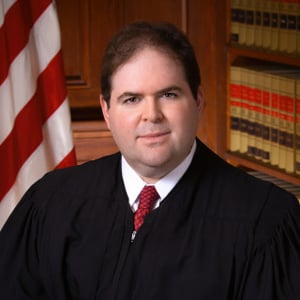
Judge, United States Court of Appeals, Eleventh Circuit
On November 19, 2019, Judge Robert J. Luck was appointed to the United States Court of Appeals for the Eleventh Circuit by President Donald Trump. Prior to serving on the federal bench, he was appointed to the Florida Supreme Court by Governor Ron DeSantis on January 14, 2019. He previously served on the Third District Court of Appeal in Miami after his appointment there by Governor Rick Scott in March 2017.
Earlier, Judge Luck served on the Eleventh Judicial Circuit Court of Florida from September 2013 to March 2017. He presided in the Criminal, Civil, and Appellate Divisions. Judge Luck, in his years as a trial court judge, tried seventy jury trials, and heard dozens of appeals from the county court and municipal agencies. Judge Luck was appointed to the circuit court in 2013 and was elected by the voters of Miami-Dade County to retain his seat in 2016.
Prior to his service on the bench, Judge Luck was an Assistant United States Attorney for the Southern District of Florida. In his years as a federal prosecutor, he was assigned to the Appeals, Major Crimes, and Economic Crimes Sections of the U.S. Attorney’s Office. Judge Luck tried nineteen jury trials before the federal district court and argued three appeals to the United States Court of Appeals for the Eleventh Circuit. In his final year in the Office, he was a Deputy Chief in the Major Crimes Section.
Earlier in his career, Judge Luck was a legislative correspondent for two United States Senators, a law clerk and staff attorney to Circuit Judge Edward E. Carnes on the United States Court of Appeals for the Eleventh Circuit, and a part of the Greenberg Traurig firm’s appellate section. Judge Luck received his Juris Doctor from the University of Florida Levin College of Law magna cum laude and was asked to join the Order of the Coif. Judge Luck also served as Editor-in-Chief of the Florida Law Review. Judge Luck received his Bachelor of Arts in Economics from the University of Florida with highest honors.
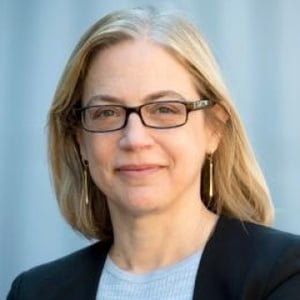
Harlan Fiske Stone Professor of Constitutional Law, Columbia Law School
A leading administrative and constitutional law scholar, Gillian Metzger ’96 writes and teaches in the areas of administrative law, constitutional law, and federal courts, with an emphasis on federalism and privatization. In 2023-2024, she served as Acting Assistant Attorney General and Deputy Assistant Attorney General in the Office of Legal Counsel in the Department of Justice.
Metzger's recent work covers topics ranging from constitutional attacks on the administrative state to appropriations, administrative law under the Roberts Court, and the role of administrative agencies in a polarized world. In 2015, Metzger won the American Bar Association Administrative Law Section Annual Scholarship Award for “The Constitutional Duty to Supervise,” which examined presidential control and oversight of the modern administrative state. She is a co-editor of Gellhorn & Byse’s Administrative Law: Cases and Comments, 13th ed. (Foundation Press, 2023), a seminal administrative law casebook.
Professor Metzger was recently elected to the American Academy of Arts & Sciences and is a Senior Fellow of the Administrative Conference of the United States. In 2020, she was awarded Columbia University's Faculty Mentorship Award and in 2014, the Law School’s graduating class awarded Metzger the Willis L.M. Reese Prize for Excellence in Teaching, recognizing, among many other accomplishments, her commitment to mentoring new generations of law students.
In 2012, Metzger helped launch Columbia Law School’s Center for Constitutional Governance (CCG)—where she now serves as faculty director—a nonpartisan legal and policy organization devoted to the study of constitutional structure and authority. CCG brings together a diverse group of constitutional scholars to explore policy areas such as health care, civil rights, immigration, financial regulation, and national security.
Metzger also has co-authored and filed numerous amicus briefs in major constitutional and administrative law challenges before the Supreme Court and other courts. Most recently, Metzger filed a brief in Seila Law Center v. CFPB, a separation of powers challenge, and in Kisor v. Wilkie, a case involving judicial deference to agencies. She has also filed briefs in cases involving reproductive rights and the Affordable Care Act, among others.
Previously, Metzger served as vice dean of intellectual life at Columbia Law School. Before joining the Law School, she worked as an attorney with the Brennan Center for Justice. Metzger also clerked for U.S. Supreme Court Justice Ruth Bader Ginsburg ’59 and Judge Patricia M. Wald of the U.S. Circuit Court of Appeals for the District of Columbia. In 2018, Metzger moderated a panel discussion with Justice Ginsburg on impact litigation at Columbia Law School.

Of Counsel, Gibson Dunn & Crutcher
Amanda H. Neely is of counsel in the Washington, D.C. office of Gibson, Dunn & Crutcher and is a member of the Public Policy, Congressional Investigations, White Collar, and National Security practice groups.
Ms. Neely has extensive experience working on Capitol Hill. She leverages that expertise to advise clients regarding their interactions with Congress and the executive branch. Over the course of ten years, Ms. Neely held several senior staff positions in Congress. She served as Director of Governmental Affairs for the Senate Homeland Security and Governmental Affairs and General Counsel to Senator Rob Portman. Under Senator Portman’s chairmanship, she also served as Deputy Chief Counsel for the Permanent Subcommittee on Investigations. In those roles, she managed Senator Portman’s regulatory reform agenda and led oversight of federal government agencies and investigations into private entities. She previously served in several other Capitol Hill offices including as Oversight Counsel for the House of Representatives Committee on Ways and Means.
Congressional Investigations: At Gibson Dunn, Ms. Neely has represented clients undergoing investigations by numerous congressional committees, including the Senate Permanent Subcommittee on Investigations; Senate Finance Committee; Senate Judiciary Committee; Senate Health, Education, Labor, and Pensions Committee; House Committee on Oversight and Accountability; House Judiciary Committee; and the House Energy and Commerce Committee. In the course of those representations, Ms. Neely assists clients in all stages of investigations, including responding to letter requests and subpoenas to preparing witnesses for interviews, depositions, and congressional hearings. She also has assisted clients appearing before independent commissions such as the Financial Crisis Inquiry Commission and the Commission on Wartime Contracting.
Public Policy: Ms. Neely also works with clients to advance their legislative interests on Capitol Hill by gathering intelligence, formulating strategic plans, and executing lobbying campaigns. In those matters, she has represented a wide range of clients from the fields of technology, healthcare, finance, and energy.
Regulatory Counseling: Ms. Neely regularly advises clients regarding their interests before regulatory agencies. Her expertise in the CHIPS and Science Act allows her to help clients comply with the Department of Commerce’s regulations and assist them in commenting on agency rules and applying for funding. She also works with clients to engage in the rulemaking process at agencies ranging from the Consumer Financial Protection Bureau to the Commodity Futures Trading Commission to the Securities and Exchange Commission.
Ms. Neely also has participated in a variety of litigation matters before state and federal trial and appellate courts, including several class action defense and False Claims Act cases.
Ms. Neely clerked for the Honorable David B. Sentelle, then-Chief Judge of the United States Court of Appeals for the District of Columbia Circuit. She earned her law degree cum laude from Duke University School of Law, where she served as the Articles Editor for both the Alaska Law Review and the Duke Journal of Constitutional Law & Public Policy. She was a member of the Duke Law Moot Court Board and served on the executive board of the Duke Law Federalist Society.
Ms. Neely graduated cum laude from Princeton University, where she majored in English and earned a certificate in Medieval Studies. She served for two years on United States Senator Elizabeth Dole’s staff as a legislative correspondent, focusing on banking, housing, budget, and tax issues. Ms. Neely is admitted to practice law in the District of Columbia and before the United States Courts of Appeals for the District of Columbia Circuit.
Tazewell Taylor Professor of Law and William H. Cabell Research Professor, William & Mary Law School
Jonathan H. Adler joined the William & Mary law faculty as the Tazwell Taylor Professor of Law and William H. Cabell Research Professor in 2025. Prior to joining the faculty, he was the inaugural Johan Verheij Memorial Professor of Law and the founding Director of the Coleman P. Burke Center for Environmental Law at the Case Western Reserve University School of Law.
Professor Adler is the author or editor of seven books, including Climate Liberalism: Perspectives on Liberty, Property and Pollution (Palgrave, 2023), Marijuana Federalism: Uncle Sam and Mary Jane (Brookings Institution Press, 2020), Business and the Roberts Court (Oxford University Press, 2016) and Rebuilding the Ark: New Perspectives on Endangered Species Act Reform (AEI Press, 2011).
His articles have appeared in publications ranging from the Harvard Environmental Law Review and Yale Journal on Regulation to the Wall Street Journal, New York Times, and Washington Post. He has testified before Congress a dozen times, and his work has been cited in the U.S. Supreme Court. A 2024 study identified Professor Adler as the seventh most cited legal academic in administrative and environmental law from 2019 to 2023.
Professor Adler is a contributing editor to Civitas Outlook and a regular contributor to the popular legal blog, The Volokh Conspiracy. A regular commentator on constitutional and regulatory issues, he has appeared on numerous radio and television programs, ranging from the PBS Newshour and National Public Radio to the Fox News Channel and Entertainment Tonight.
Professor Adler is a senior fellow at the Property & Environment Research Center in Bozeman, Montana. In 2018, Professor Adler was elected to membership in the American Law Institute and helped co-found the organization Checks and Balances. In 2024, Professor Adler was appointed a public member of the Administrative Conference of the United States.
Professor Adler clerked for the Honorable David B. Sentelle on the U.S. Court of Appeals for the District of Columbia Circuit.
United States House of Representatives, Michigan
Representative Justin Amash represents Michigan's Third District in the 112th United States Congress. Justin serves on the House Budget Committee and the House Oversight and Government Reform Committee. He was elected to his first term on November 2, 2010.
Justin was born in Grand Rapids, Michigan, and raised in the city of Kentwood. He received his bachelor's degree with High Honors in Economics from the University of Michigan and his Juris Doctor from the University of Michigan Law School. Justin worked as a business lawyer and a Michigan state representative before his election to Congress.
Justin has been a leader in the incorporation of Facebook and other social media into his work as a public official. He also set new standards for transparency and accountability in the Michigan state House.
In October 2010, TIME Magazine named Justin one of its "40 under 40 - Rising Stars of U.S. Politics."
Justin lives in Cascade Charter Township with his wife Kara, a graduate of Calvin College and a former elementary school teacher. Justin and Kara have three children, Alexander, Anwen, and Evelyn.
Professor of Law, Cornell Law School
Josh Chafetz received his B.A. from Yale University, his doctorate in Politics from Oxford (where he studied as a Rhodes Scholar), and his J.D. from Yale Law School. Following law school, he clerked for Judge Guido Calabresi of the United States Court of Appeals for the Second Circuit.
His research interests include structural constitutional law, American and British constitutional history, legislation and legislative procedure, American political development, and the intersection of law and politics. His second book, Congress's Constitution: Legislative Authority and the Separation of Powers, was published by Yale University Press in 2017. He is also the author of Democracy's Privileged Few: Legislative Privilege and Democratic Norms in the British and American Constitutions (Yale University Press, 2007) and is a co-editor (along with William N. Eskridge, Jr., Elizabeth Garrett, and James Brudney) of the leading casebook in Legislation, Cases and Materials on Legislation and Regulation: Statutes and the Creation of Public Policy, published by West.
His scholarship has been published in a number of top law reviews, including the Harvard Law Review, Yale Law Journal, University of Chicago Law Review, University of Pennsylvania Law Review, Duke Law Journal, Notre Dame Law Review, and Yale Journal of Law & the Humanities, among others. He has also written for a number of popular press outlets, including the New York Times, the Washington Post, Politico, Slate, and the New Republic. He is currently a Contributing Writer for the Capitol Hill newspaper The Hill.
Judge, United States Court of Appeals, Eleventh Circuit
On November 19, 2019, Judge Robert J. Luck was appointed to the United States Court of Appeals for the Eleventh Circuit by President Donald Trump. Prior to serving on the federal bench, he was appointed to the Florida Supreme Court by Governor Ron DeSantis on January 14, 2019. He previously served on the Third District Court of Appeal in Miami after his appointment there by Governor Rick Scott in March 2017.
Earlier, Judge Luck served on the Eleventh Judicial Circuit Court of Florida from September 2013 to March 2017. He presided in the Criminal, Civil, and Appellate Divisions. Judge Luck, in his years as a trial court judge, tried seventy jury trials, and heard dozens of appeals from the county court and municipal agencies. Judge Luck was appointed to the circuit court in 2013 and was elected by the voters of Miami-Dade County to retain his seat in 2016.
Prior to his service on the bench, Judge Luck was an Assistant United States Attorney for the Southern District of Florida. In his years as a federal prosecutor, he was assigned to the Appeals, Major Crimes, and Economic Crimes Sections of the U.S. Attorney’s Office. Judge Luck tried nineteen jury trials before the federal district court and argued three appeals to the United States Court of Appeals for the Eleventh Circuit. In his final year in the Office, he was a Deputy Chief in the Major Crimes Section.
Earlier in his career, Judge Luck was a legislative correspondent for two United States Senators, a law clerk and staff attorney to Circuit Judge Edward E. Carnes on the United States Court of Appeals for the Eleventh Circuit, and a part of the Greenberg Traurig firm’s appellate section. Judge Luck received his Juris Doctor from the University of Florida Levin College of Law magna cum laude and was asked to join the Order of the Coif. Judge Luck also served as Editor-in-Chief of the Florida Law Review. Judge Luck received his Bachelor of Arts in Economics from the University of Florida with highest honors.
Harlan Fiske Stone Professor of Constitutional Law, Columbia Law School
A leading administrative and constitutional law scholar, Gillian Metzger ’96 writes and teaches in the areas of administrative law, constitutional law, and federal courts, with an emphasis on federalism and privatization. In 2023-2024, she served as Acting Assistant Attorney General and Deputy Assistant Attorney General in the Office of Legal Counsel in the Department of Justice.
Metzger's recent work covers topics ranging from constitutional attacks on the administrative state to appropriations, administrative law under the Roberts Court, and the role of administrative agencies in a polarized world. In 2015, Metzger won the American Bar Association Administrative Law Section Annual Scholarship Award for “The Constitutional Duty to Supervise,” which examined presidential control and oversight of the modern administrative state. She is a co-editor of Gellhorn & Byse’s Administrative Law: Cases and Comments, 13th ed. (Foundation Press, 2023), a seminal administrative law casebook.
Professor Metzger was recently elected to the American Academy of Arts & Sciences and is a Senior Fellow of the Administrative Conference of the United States. In 2020, she was awarded Columbia University's Faculty Mentorship Award and in 2014, the Law School’s graduating class awarded Metzger the Willis L.M. Reese Prize for Excellence in Teaching, recognizing, among many other accomplishments, her commitment to mentoring new generations of law students.
In 2012, Metzger helped launch Columbia Law School’s Center for Constitutional Governance (CCG)—where she now serves as faculty director—a nonpartisan legal and policy organization devoted to the study of constitutional structure and authority. CCG brings together a diverse group of constitutional scholars to explore policy areas such as health care, civil rights, immigration, financial regulation, and national security.
Metzger also has co-authored and filed numerous amicus briefs in major constitutional and administrative law challenges before the Supreme Court and other courts. Most recently, Metzger filed a brief in Seila Law Center v. CFPB, a separation of powers challenge, and in Kisor v. Wilkie, a case involving judicial deference to agencies. She has also filed briefs in cases involving reproductive rights and the Affordable Care Act, among others.
Previously, Metzger served as vice dean of intellectual life at Columbia Law School. Before joining the Law School, she worked as an attorney with the Brennan Center for Justice. Metzger also clerked for U.S. Supreme Court Justice Ruth Bader Ginsburg ’59 and Judge Patricia M. Wald of the U.S. Circuit Court of Appeals for the District of Columbia. In 2018, Metzger moderated a panel discussion with Justice Ginsburg on impact litigation at Columbia Law School.
Of Counsel, Gibson Dunn & Crutcher
Amanda H. Neely is of counsel in the Washington, D.C. office of Gibson, Dunn & Crutcher and is a member of the Public Policy, Congressional Investigations, White Collar, and National Security practice groups.
Ms. Neely has extensive experience working on Capitol Hill. She leverages that expertise to advise clients regarding their interactions with Congress and the executive branch. Over the course of ten years, Ms. Neely held several senior staff positions in Congress. She served as Director of Governmental Affairs for the Senate Homeland Security and Governmental Affairs and General Counsel to Senator Rob Portman. Under Senator Portman’s chairmanship, she also served as Deputy Chief Counsel for the Permanent Subcommittee on Investigations. In those roles, she managed Senator Portman’s regulatory reform agenda and led oversight of federal government agencies and investigations into private entities. She previously served in several other Capitol Hill offices including as Oversight Counsel for the House of Representatives Committee on Ways and Means.
Congressional Investigations: At Gibson Dunn, Ms. Neely has represented clients undergoing investigations by numerous congressional committees, including the Senate Permanent Subcommittee on Investigations; Senate Finance Committee; Senate Judiciary Committee; Senate Health, Education, Labor, and Pensions Committee; House Committee on Oversight and Accountability; House Judiciary Committee; and the House Energy and Commerce Committee. In the course of those representations, Ms. Neely assists clients in all stages of investigations, including responding to letter requests and subpoenas to preparing witnesses for interviews, depositions, and congressional hearings. She also has assisted clients appearing before independent commissions such as the Financial Crisis Inquiry Commission and the Commission on Wartime Contracting.
Public Policy: Ms. Neely also works with clients to advance their legislative interests on Capitol Hill by gathering intelligence, formulating strategic plans, and executing lobbying campaigns. In those matters, she has represented a wide range of clients from the fields of technology, healthcare, finance, and energy.
Regulatory Counseling: Ms. Neely regularly advises clients regarding their interests before regulatory agencies. Her expertise in the CHIPS and Science Act allows her to help clients comply with the Department of Commerce’s regulations and assist them in commenting on agency rules and applying for funding. She also works with clients to engage in the rulemaking process at agencies ranging from the Consumer Financial Protection Bureau to the Commodity Futures Trading Commission to the Securities and Exchange Commission.
Ms. Neely also has participated in a variety of litigation matters before state and federal trial and appellate courts, including several class action defense and False Claims Act cases.
Ms. Neely clerked for the Honorable David B. Sentelle, then-Chief Judge of the United States Court of Appeals for the District of Columbia Circuit. She earned her law degree cum laude from Duke University School of Law, where she served as the Articles Editor for both the Alaska Law Review and the Duke Journal of Constitutional Law & Public Policy. She was a member of the Duke Law Moot Court Board and served on the executive board of the Duke Law Federalist Society.
Ms. Neely graduated cum laude from Princeton University, where she majored in English and earned a certificate in Medieval Studies. She served for two years on United States Senator Elizabeth Dole’s staff as a legislative correspondent, focusing on banking, housing, budget, and tax issues. Ms. Neely is admitted to practice law in the District of Columbia and before the United States Courts of Appeals for the District of Columbia Circuit.
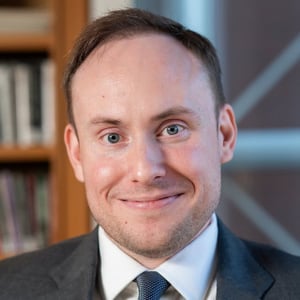
Director, Robert A. Levy Center for Constitutional Studies, Cato Institute
Thomas Berry is the director in the Cato Institute’s Robert A. Levy Center for Constitutional Studies and editor in chief of the Cato Supreme Court Review. Before joining Cato, he was an attorney at Pacific Legal Foundation and clerked for Judge E. Grady Jolly of the U.S. Court of Appeals for the Fifth Circuit. His academic work has appeared in NYU Journal of Law and Liberty, Washington and Lee Law Review Online, and Federalist Society Review. His popular writing has appeared in The Wall Street Journal, National Law Journal, Investor’s Business Daily, National Review Online, and The Hill Online. He has testified before the U.S. Senate, and his work has been cited by the U.S. District Court for the District of Columbia.
Berry holds a J.D. from Stanford Law School, where he was a senior editor on the Stanford Law and Policy Review and a Bradley Student Fellow in the Stanford Constitutional Law Center. He graduated with a B.A. in Liberal Arts from St. John’s College, Santa Fe.
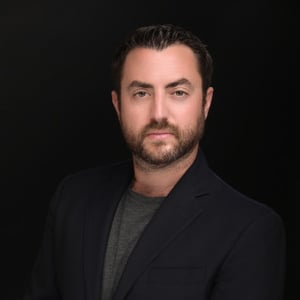
Newsweek Senior Editor-at-Large, Syndicated Columnist, Host of "The Josh Hammer Show," Article III Project Senior Counsel, Newsweek, Salem Media, Article III Project, David Horowitz Freedom Center
Josh Hammer is the senior editor-at-large of Newsweek and host of "The Josh Hammer Show," a podcast, a syndicated radio show, and TV program on Salem News Channel. A syndicated columnist through Creators Syndicate, Josh is a frequent pundit and essayist on political, legal, and cultural issues. He is also senior counsel for the Article III Project and Internet Accountability Project, as well as a Shillman Fellow with the David Horowitz Freedom Center and a fellow with the Palm Beach Freedom Institute.
An outspoken conservative, Josh opines on conservative intellectual trends, contemporary domestic and foreign policy debates, constitutional and legal issues, and the intersection of law, politics and culture. He has been published by many leading outlets, including the Los Angeles Times, the New York Post, Daily Mail, Newsweek, the Claremont Review of Books, National Affairs, American Affairs, The New Criterion, The National Interest, National Review, RealClearPolitics, First Things, City Journal, Public Discourse, Law & Liberty, Tablet Magazine, Deseret Magazine, Compact Magazine, Chronicles Magazine, The Spectator, The American Mind, The American Conservative, The European Conservative, American Greatness, American Compass, The Federalist, Blaze Media, TomKlingenstein.com, Townhall, The Daily Wire, The Daily Signal, The Daily Caller, The Epoch Times, Anchoring Truths, Fortune, Fox Business, The Jerusalem Post, The Times of Israel, The Forward, Jewish Telegraphic Agency and the Jewish Journal. He has also had legal scholarship published by the Harvard Journal of Law & Public Policy and the University of St. Thomas Law Journal.
Josh is a college campus speaker through Young America's Foundation and the Intercollegiate Studies Institute, and a law school campus speaker through the Federalist Society. Prior to Newsweek and The Daily Wire, where he was an editor, Josh worked at Kirkland & Ellis LLP and clerked for the Hon. James C. Ho on the U.S. Court of Appeals for the Fifth Circuit. Josh has also served as a John Marshall Fellow with the Claremont Institute and as a Fellow with the James Wilson Institute. He is the former host of "America on Trial with Josh Hammer," a one-season daily podcast with The First that covered the unique legal issues surrounding the 2024 presidential election.
Josh graduated from Duke University, where he majored in economics, and from the University of Chicago Law School. He lives in Florida, but remains an active member of the State Bar of Texas.

Chief Judge, United States Court of Appeals, Eleventh Circuit
William H. Pryor Jr. serves as Chief Circuit Judge on the United States Court of Appeals for the Eleventh Circuit.
In 2013–18, he served on the United States Sentencing Commission and, in 2017–18, served as Acting Chair.
He has taught as a visiting professor at the University of Alabama School of Law and previously taught as an adjunct professor at the Cumberland School of Law of Samford University.
He served as the 45th Attorney General of Alabama from 1997 to 2004. When he took office, he was the youngest attorney general in the nation. In his reelection, he received the highest percentage of votes of any statewide candidate.
He graduated magna cum laude from Tulane Law School where he finished first in the common-law curriculum and was editor in chief of the Tulane Law Review. He then served as a law clerk for Judge John Minor Wisdom of the U.S. Court of Appeals for the Fifth Circuit.
He is a member of The American Law Institute and an Adviser for the RESTATEMENT OF THE LAW THIRD, CONFLICT OF LAWS. He is a coauthor with Bryan Garner, Justices Gorsuch and Kavanaugh, and several other judges of a treatise, THE LAW OF JUDICIAL PRECEDENT. He has published in the Yale Law Journal, Columbia Law Review, Virginia Law Review, Notre Dame Law Review, Harvard Journal of Law & Public Policy, Yale Law & Policy Review, George Mason Law Review, Florida Law Review, Alabama Law Review, Case Western Reserve Law Review, and Tulane Law Review. He has published op-eds in The Wall Street Journal, The New York Times, National Review, and USA Today. He has debated at National Lawyers’ Conventions of the Federalist Society (including on National Public Radio) and at the Oxford Union in the United Kingdom. And he is listed among several “widely admired judicial writers” in Bryan Garner’s The Redbook: A Manual on Legal Style.
He is a member of the Tulane Law School Hall of Fame and has received the Defender of the Constitution Award from the Heritage Foundation, the Jurist of the Year Award from the Texas Review of Law & Politics, and the St. Thomas More Award from the St. Thomas More Society of Atlanta. Judge Pryor is also a proud member of the National Society of the Sons of the American Revolution.
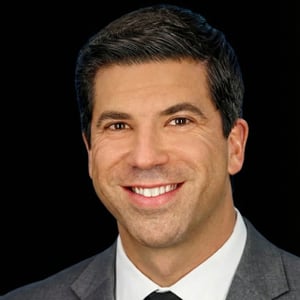
Judge, United States District Court, Southern District of Florida
On April 4, 2019, Judge Altman was confirmed to a seat on the U.S. District Court for the Southern District of Florida. At 36, he became the youngest federal district court judge in the country—and the youngest federal judge ever appointed in the Southern District of Florida.
Judge Altman received a BA from Columbia University, where he played quarterback on the football team and pitched for the baseball team—earning All-Ivy honors. Judge Altman received his JD from the Yale Law School, where he was projects editor of the Yale Law Journal. After law school, the Judge clerked on the 11th Circuit Court of Appeals for the Honorable Stanley Marcus.
Judge Altman then became a federal prosecutor at the U.S. Attorney’s Office in Miami, where he twice received the Director of the Executive Office of U.S. Attorneys’ Award for Superior Performance by a federal prosecutor. In 2013, Judge Altman was named “Federal Prosecutor of the Year” by the Miami-Dade Chiefs of Police and the Law Enforcement Officers’ Charitable Foundation.
In 2014, Judge Altman became a partner at the Miami law firm of Podhurst Orseck, where he represented the victims of airplane crashes and bank fraud conspiracies.

Senior Research Fellow, Pembroke College, University of Oxford; Director, the Quill Project
Dr. Nicholas Cole (MA MPhil DPhil Oxf) studies the political thought of the eighteenth and early nineteenth century, and is working on a digitial project that looks at the way constitutions and treaties have been negotiated over the last two hundred years.
Newsweek Senior Editor-at-Large, Syndicated Columnist, Host of "The Josh Hammer Show," Article III Project Senior Counsel, Newsweek, Salem Media, Article III Project, David Horowitz Freedom Center
Josh Hammer is the senior editor-at-large of Newsweek and host of "The Josh Hammer Show," a podcast, a syndicated radio show, and TV program on Salem News Channel. A syndicated columnist through Creators Syndicate, Josh is a frequent pundit and essayist on political, legal, and cultural issues. He is also senior counsel for the Article III Project and Internet Accountability Project, as well as a Shillman Fellow with the David Horowitz Freedom Center and a fellow with the Palm Beach Freedom Institute.
An outspoken conservative, Josh opines on conservative intellectual trends, contemporary domestic and foreign policy debates, constitutional and legal issues, and the intersection of law, politics and culture. He has been published by many leading outlets, including the Los Angeles Times, the New York Post, Daily Mail, Newsweek, the Claremont Review of Books, National Affairs, American Affairs, The New Criterion, The National Interest, National Review, RealClearPolitics, First Things, City Journal, Public Discourse, Law & Liberty, Tablet Magazine, Deseret Magazine, Compact Magazine, Chronicles Magazine, The Spectator, The American Mind, The American Conservative, The European Conservative, American Greatness, American Compass, The Federalist, Blaze Media, TomKlingenstein.com, Townhall, The Daily Wire, The Daily Signal, The Daily Caller, The Epoch Times, Anchoring Truths, Fortune, Fox Business, The Jerusalem Post, The Times of Israel, The Forward, Jewish Telegraphic Agency and the Jewish Journal. He has also had legal scholarship published by the Harvard Journal of Law & Public Policy and the University of St. Thomas Law Journal.
Josh is a college campus speaker through Young America's Foundation and the Intercollegiate Studies Institute, and a law school campus speaker through the Federalist Society. Prior to Newsweek and The Daily Wire, where he was an editor, Josh worked at Kirkland & Ellis LLP and clerked for the Hon. James C. Ho on the U.S. Court of Appeals for the Fifth Circuit. Josh has also served as a John Marshall Fellow with the Claremont Institute and as a Fellow with the James Wilson Institute. He is the former host of "America on Trial with Josh Hammer," a one-season daily podcast with The First that covered the unique legal issues surrounding the 2024 presidential election.
Josh graduated from Duke University, where he majored in economics, and from the University of Chicago Law School. He lives in Florida, but remains an active member of the State Bar of Texas.
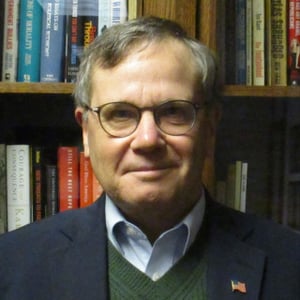
Senior Fellow in Constitutional Jurisprudence, Independence Institute
Professor Robert G. Natelson is a constitutional scholar and author.
Rob’s constitutional scholarship has been cited repeatedly by justices and parties at the U.S. Supreme Court—as well as by federal appeals courts, and at least 18 state supreme courts.
Rob’s research into the Constitution’s original meaning has carried him to libraries throughout the United States and in Britain, including four months at Oxford University. His books and articles span many different parts of the Constitution, including groundbreaking studies of the Necessary and Proper Clause, the Indian Commerce Clause, federalism, Founding-Era interpretation, regulation of elections, and the amendment process of Article V. He created the first-ever online bibliography for 18th century materials used in constitutional research. He is a contributing author to the Encyclopedia of the Supreme Court of the United States (on Magna Carta). He contributed eight essays to the third edition of the Heritage Guide to the Constitution: five on the amendment procedure and one each on the Guarantee Clause, the Postal Clause, and the Recess Appointments Clause.
U.S. Supreme Court justices have relied explicitly on Rob’s research in 41 citations in 13 separate cases.
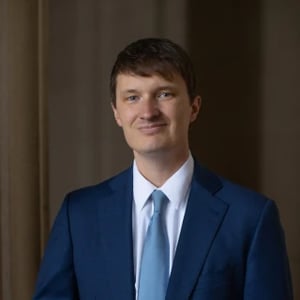
Partner, Boyden Gray PLLC
Trent McCotter is a partner with Boyden Gray PLLC. He previously served as Deputy Associate Attorney General of the United States and as an Assistant U.S. Attorney.
Mr. McCotter maintains an extensive appellate practice. He has considerable experience identifying and briefing cases that draw the Supreme Court’s attention, having persuaded the Court to grant certiorari in numerous cases raising issues of sovereignty, constitutional rights, due process, and criminal law. He has authored and submitted over 60 briefs at the Court.
He has also personally argued more than fifteen federal appeals across the Second, Fourth, Fifth, Sixth, Ninth, Eleventh, Federal, and D.C. Circuits—including once arguing three separate appeals in just four days. He has also twice argued before the 17-judge en banc Fifth Circuit. He has been counsel in over 50 other appeals raising matters from FOIA and the APA to constitutional rights and statutory construction.
As Deputy Associate Attorney General, Mr. McCotter oversaw DOJ’s Civil Appellate and Federal Programs branches, which are responsible for defending nearly all major litigation against the federal government. During his three years as a federal trial attorney in the Eastern District of Virginia’s “Rocket Docket,” Mr. McCotter won the Attorney General’s Award for Distinguished Service.
During his DOJ tenures, Mr. McCotter also assisted with the confirmations of two Supreme Court justices and over a dozen lower-court judges.
Mr. McCotter served as an inaugural clerk to the Hon. Steven J. Menashi on the U.S. Court of Appeals for the Second Circuit and also clerked for the Hon. R. Lanier Anderson III on the U.S. Court of Appeals for the Eleventh Circuit.

Professor of Law, Antonin Scalia Law School, George Mason University
ILYA SOMIN is Professor of Law at George Mason University and the B. Kenneth Simon Chair in Constitutional Studies at the Cato Institute. His research focuses on constitutional law, property law, democratic theory, federalism, and migration rights. He is the author of Free to Move: Foot Voting, Migration, and Political Freedom (Oxford University Press, revised and expanded edition, 2022), Democracy and Political Ignorance: Why Smaller Government is Smarter (Stanford University Press, revised and expanded second edition, 2016), and The Grasping Hand: Kelo v. City of New London and the Limits of Eminent Domain (University of Chicago Press, 2015, rev. paperback ed., 2016), coauthor of A Conspiracy Against Obamacare: The Volokh Conspiracy and the Health Care Case (Palgrave Macmillan, 2013), and co-editor of Eminent Domain: A Comparative Perspective (Cambridge University Press, 2017). Democracy and Political Ignorance has been translated into Italian and Japanese.
Somin’s work has appeared in numerous scholarly journals, including the Yale Law Journal, Stanford Law Review, Northwestern University Law Review, Georgetown Law Journal, Critical Review, and others. Somin has also published articles in a variety of popular press outlets, including the New York Times, Washington Post, Wall Street Journal, Los Angeles Times, CNN, NBC, The Atlantic, USA Today, Boston Globe, US News and World Report, South China Morning Post, National Law Journal and Reason. He has been quoted or interviewed by the New York Times, Washington Post, Wall Street Journal, Time, Newsweek, The Economist, the Christian Science Monitor, the Financial Times, The Guardian, the Associated Press, CBS, MSNBC, NPR, BBC, Reuters, the Canadian Broadcasting Corporation, the Australian Broadcasting Corporation, Radio Free Europe/Radio Liberty, Al Jazeera, and the Voice of America, among other media.
Somin’s writings have been cited in decisions by the United States Supreme Court, multiple state supreme courts and lower federal courts, and the Supreme Court of Israel. He is co-counsel for the plaintiffs in VOS Selections, Inc. v. Trump, a case challenging the constitutionality of President Trump’s “Liberation Day” tariffs. Somin has testified on the use of drones for targeted killing in the War on Terror before the US Senate Judiciary Subcommittee on the Constitution, Civil Rights, and Human Rights. In 2009, he testified on property rights issues at the United States Senate Judiciary Committee confirmation hearings for Supreme Court Justice Sonia Sotomayor. Somin writes regularly for the popular Volokh Conspiracy law and politics blog, now affiliated with Reason magazine (previously affiliated with the Washington Post from 2014 to 2017). From 2006 to 2013, he served as Co-Editor of the Supreme Court Economic Review, one of the country’s top-rated law and economics journals.
Somin has served as a visiting professor at the University of Pennsylvania Law School. He has also been a visiting professor or scholar at the Georgetown University Law Center, the University of Hamburg, Germany, the University of Torcuato Di Tella in Buenos Aires, Argentina, Uriel Reichman University in Israel, and Zhengzhou University in China. He is a University Affiliate of the Schar School of Policy and Government at George Mason University, and an affiliated faculty member of the George Mason University Institute for Immigration Research. Before joining the faculty at George Mason, Somin was the John M. Olin Fellow in Law at Northwestern University Law School in 2002-2003. In 2001-2002, he clerked for the Hon. Judge Jerry E. Smith of the U.S. Court of Appeals for the Fifth Circuit. Professor Somin earned his B.A., Summa Cum Laude, at Amherst College, M.A. in Political Science from Harvard University, and J.D. from Yale Law School.

Ice to Meet You, Greenland? U.S. Acquisition Attempts
Romain Chuffart, Alexander Gray, Nitin R. Nainani
Discussions about the United States acquiring Greenland have re-emerged in public discourse, particularly during the...
Panel II: Congress and the Constitution: The Separation of Powers in Action
Jonathan H. Adler, Justin Amash, Josh Chafetz, Robert J. Luck, Gillian E. Metzger, Amanda H. Neely
2025 National Student Symposium
Featuring: Prof. Jonathan H. Adler, Johan Verheij Memorial Professor of Law and Director of the...
Panel II: Congress and the Constitution: The Separation of Powers in Action
Jonathan H. Adler, Justin Amash, Josh Chafetz, Robert J. Luck, Gillian E. Metzger, Amanda H. Neely
2025 National Student Symposium
Featuring: Prof. Jonathan H. Adler, Johan Verheij Memorial Professor of Law and Director of the...
Daniel Webster Debate Series: Should Americans Embrace Common-Good Constitutionalism?
Thomas Berry, Josh Hammer, William H. Pryor
The Federalist Society's Georgetown Law Chapter'sDaniel Webster Debate Series presents Daniel Webster Debate Series:Should...
Jewish, Greek, and Roman Influences on Western Legal Tradition
Roy Kalman Altman, Nicholas Cole, Josh Hammer
Join us for an examination of the contributions of Jewish, Greek, and Roman influences and...
Topics
From the Department of Education, With Love: Valentine’s Day “Dear Colleague” Missive Forces ABA to Reassess Law School Diversity Standard
The U.S. Department of Education recognizes the Council of the ABA Section of Legal Education...
Applying the Founders' Originalism
Robert G. Natelson
Federalist Society Review, Volume 26
The 1787 Federal Convention drafted, and the ratifiers approved, the United States Constitution under the...
Topics
Defending Our Pro-Worker Constitution: Senator Hawley’s Labor Framework Fits Squarely Within the American Constitutional Tradition
In recent years, a number of conservative leaders have begun building relationships with organized labor....
Daniel Webster Debate Series: Does the Fourteenth Amendment Guarantee Birthright Citizenship to All?
Trent McCotter, Ilya Somin
The Federalist Society's Georgetown Law Chapter'sDaniel Webster Debate Series presents Daniel Webster Debate Series:Does...
Topics
Lofstad v. Raimondo: Government Accountability and Constitutional Fidelity
Commercial fishing is a tough way to make a living. The industry is highly competitive;...