
Principal and CEO, Borgelt Law
Roger B. Borgelt is a highly regarded Austin lawyer with 24 years’ experience primarily in the practice of environmental, energy, administrative, utility and professional licensure law. He is listed in Best Lawyers in America® and Texas' Best Lawyers. His firm, Borgelt Law, is listed in Best Law Firms byU.S. News & World Report -- Best Lawyers®. He represents individuals, landowners, suburban areas, businesses, political subdivisions and large institutions before state and federal regulatory agencies, the courts, local governments and the Texas Legislature with consistently favorable and unprecedented results.
Mr. Borgelt is licensed to practice law in Texas and admitted to practice before the U.S. District Court, Western District of Texas. Prior to establishing Borgelt Law in June 2010, he held senior positions in Texas government and excelled as partner at a major regional litigation firm where he led an extensive administrative and regulatory practice focused on environmental, energy, local government, annexation, zoning and permitting, land use and property law matters. He also developed the firm's ethics advising, campaign finance and election law counsel as well as experienced defense of Deceptive Trade Practices Act claims and advising on Texas Public Information Act requests.
His law practice has received high profile media coverage for the past two years through his representation of Homeowners United for Rate Fairness in its appeal of Austin Energy's rate increase to the Texas Public Utility Commission, which resulted in an unprecedented rate discount for his client's suburban customers and cost the City of Austin $1.6 million to defend.
Prior to entering private practice in 2006, he served for seven years in the Office of the Attorney General as Deputy Chief of the Consumer Protection Division and then as an Assistant Attorney General, actively defending consumer interests in the area of deceptive trade, and where he represented major public entities, including Texas A&M University and The UT System, in major gas and electric utilities matters which resulted in significant multi-million dollar savings annually for these institutions and the citizens of Texas. During this period as Assistant Attorney General he appeared frequently before the Texas Public Utility Commission, Railroad Commission and Federal Communications Commission in rulemakings and contested case hearings and appeals, often winning favorable rulings which furthered the Texas public interest and business climate.
He began his law practice as a law clerk at the Railroad Commission in 1989 before becoming a national authority in pesticide law and policy matters as general counsel of a small state environmental agency. During these earliest years of his law practice, he worked extensively with state and federal regulators and legislative and congressional committees examining and resolving complex environmental policy and impacts, including that of NAFTA on states bordering Mexico.
Roger attended UT as a National Merit Scholar. He earned a Bachelor of Arts Degree in Psychology from UT in 1984 before graduating from The University of Texas School of Law in 1988. He is a member of the UT Chancellor's Council, UT Littlefield Society and UT Longhorn Foundation. A lifelong Austinite, he and his wife, Mary Ellen, are active in the Austin community.
State Representative, District 61, Texas House of Representatives
As State Representative for the 61st District, Phil King represents the people of Parker and Wise counties in the Texas Legislature. He has earned a reputation as a principle-driven conservative who consistently provides key leadership in passing some of Texas’ most sweeping public policy legislation.
King currently serves as Chair of the State and Federal Power and Responsibility Committee. He also serves on the Energy Resources Committee, Environmental Regulation Committee and the Select Committee on Federal Environmental Regulation.
King serves on the National Board of Directors for the American Legislative Exchange Council and was the 2015 National Chair. He also Chairs ALEC’s Center for Innovation and Technology. King also serves on the Board of Directors of the Texas Conservative Coalition Research Institute.
As chair of the Regulated Industries Committee for three legislative sessions, he worked to promote competition in the electricity and telecommunications markets. King is a frequent speaker on public policy issues impacting Texas.
King serves as a Colonel in the Texas State Guard, one of three branches of the Military Forces of the State of Texas. The Guard assists and augments the Texas National Guard and Texas civil authorities during state emergencies and in homeland security.
He is a practicing attorney with the firm of Eggleston King, LLP. Representative King and his family are active members of Trinity Bible Church. Phil and his wife Terry are the proud parents of six children, eight granddaughters and four grandsons.

Co-Chairman, The Federalist Society for Law and Public Policy Studies
Leonard is Co-Chairman and former Executive Vice President of the Federalist Society, joining the organization over 25 years ago. Since that time he has been instrumental in helping the organization top 70,000, focusing on the growth of lawyers membership, operations and activities advancing limited, constitutional government. In addition to his work at the Society, Leonard has advised President Trump on judicial selection, assisted with the Gorsuch and Kavanaugh Supreme Court selection and confirmation process, and served as a member of the transition team. He also organized the outside coalition efforts in support of the Roberts and Alito U.S. Supreme Court confirmations. Leonard was appointed by President George W. Bush to three terms to the U.S. Commission on International Religious Freedom as chairman. He was also a U.S. Delegate to the UN Council and UN Commission on Human Rights during the Bush Administration. Leonard was the recipient of the 2009 Bradley Prize, along with the other founders and directors of the Federalist Society, for his work in advancing freedom and the rule of law. He is the coeditor of Presidential Leadership: Rating the Best and the Worst in the White House, as well as the author of opinion editorials in the New York Times,The Wall Street Journal, and Washington Post. Leonard holds degrees from Cornell University and Cornell Law School. He presently resides in Northern Virginia, where he and his wife Sally have raised their seven children.
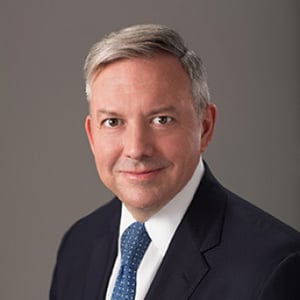
First Court of Appeals, Texas
Michael Massengale was appointed to the First Court of Appeals by Governor Rick Perry on June 15, 2009. He was elected in 2010 and re-elected to a full term in 2012.
Justice Massengale is board certified in civil appellate law by the Texas Board of Legal Specialization. Before joining the court, he was a partner in the trial department at Baker Botts L.L.P. where he specialized in commercial litigation involving corporate mergers and acquisitions, fraudulent transfers, securities fraud, and antitrust. He has also tried a number of personal injury and property damage lawsuits to jury verdicts.
He graduated with honors from The University of Texas School of Law. He earned the Outstanding Editor Award from the Texas Law Review, having published his student note, served as Book Review Editor, and edited the ninth edition of Texas Rules of Form. After law school, he clerked for Judge Harold R. DeMoss, Jr. of the United States Court of Appeals for the Fifth Circuit. He is a graduate of Dartmouth College and an Eagle Scout.
Among other civic and professional activities, Justice Massengale serves as a commissioner on the Permanent Judicial Commission For Children, Youth & Families where he chairs the Training Committee and oversees the Commission's judicial and attorney training programs. He is an elected member of the American Law Institute. He also curates a blog on the history of the Texas Constitution, atwww.texconst.wordpress.com. His wife, Lindsey, is a board-certified ophthalmologist specializing in diseases of the vitreous and retina.
Andrew P. Morriss is Dean and Anthony G. Buzbee Dean's Endowed Chairholder at Texas A&M School of Law and a member of the Board of Advisors for the Center on Culture and Civil Society at the Independent Institute. He is also a Research Fellow at the Center for Labor and Employment Law at New York University; Senior Fellow at the Property & Environment Research Center; Senior Scholar at the Mercatus Center at George Mason University; and a regular Visiting Professor at Universidad Francisco Marroquín, in Guatemala. Prior to coming to the University of Illinois, he served as Galen J. Roush Professor of Business Law and Regulation at Case Western Reserve University.
He received his A.B. degree from Princeton University, his J.D. and a masters degree in public affairs from the University of Texas at Austin, and his Ph.D. (economics) from the Massachusetts Institute of Technology. After law school he clerked for U.S. District Judge Barefoot Sanders in the Northern District of Texas and worked for two years at Texas Rural Legal Aid in Hereford and Plainview, Texas.
Professor Morriss is the author or coauthor of more than forty book chapters and scholarly articles, and he is the co-editor of Cross-Border Human Resources, Labor and Employment Issues: Proceedings of the New York University 54th Annual Conference on Labor (with Samuel Estreicher); Property Stories (with Gerald Korngold); and The Common Law and the Environment (with Roger Meiners). He is the author of the book, Regulation by Litigation (with Bruce Yandle and Andrew Dorchak), and he also regularly writes for The Freeman: Ideas on Liberty and Books & Culture: A Christian Review.
Professor Morriss was recently named one of the Reporters for the Restatement of Employment Law by the American Law Institute (ALI), Senior Fellow for the Institute for Energy Research, and a Reporter for the Restatement of Employment Law by the American Law Institute.
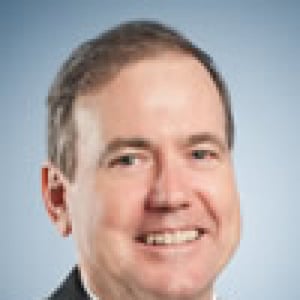
Council Member, District 6, Austin
Council Member Don Zimmerman is a software engineer who is best known for his efforts to fight various tax proposals. In 2002, Zimmerman was elected president of the Northwest Austin Municipal Utility District (MUD) No. 1, where he waged a legal battle against a practice that he maintained was unlawful—combining City property taxes and (MUD) property taxes. Zimmerman won when a court sided with the MUD, thereby successfully defeating the City and the City’s additional tax. In that process, property taxpayers in that area saved $18 million.
Soon thereafter, Zimmerman founded the Travis County Taxpayers Union Special Political Action Committee to fight various local tax proposals. He was extremely active in defeating the 2012 proposed Housing Bonds with nearly 120,000 voters turning out. On December 16, 2014, Zimmerman was elected to District 6, the single-member District that covers Northwest Austin in the City’s new 10-1 Council structure. He was sworn into office on January 6, 2015. He drew a two-year term in the Council lottery and, therefore, will be up for re-election in November of 2016.
Don Zimmerman, a 5th generation Texan, was born minutes from the Alamo in San Antonio. Zimmerman credits his constant battle for liberty and equity under the law to the men and women who fought and died at the Alamo. Zimmerman graduated from Texas A&M with a B.S. in Mechanical Engineering and went on to receive his M.S. the following year. He has lived in Canyon Creek Subdivision of Northwest Austin since 2000. He is married to Jennifer W. Zimmerman.
Principal and CEO, Borgelt Law
Roger B. Borgelt is a highly regarded Austin lawyer with 24 years’ experience primarily in the practice of environmental, energy, administrative, utility and professional licensure law. He is listed in Best Lawyers in America® and Texas' Best Lawyers. His firm, Borgelt Law, is listed in Best Law Firms byU.S. News & World Report -- Best Lawyers®. He represents individuals, landowners, suburban areas, businesses, political subdivisions and large institutions before state and federal regulatory agencies, the courts, local governments and the Texas Legislature with consistently favorable and unprecedented results.
Mr. Borgelt is licensed to practice law in Texas and admitted to practice before the U.S. District Court, Western District of Texas. Prior to establishing Borgelt Law in June 2010, he held senior positions in Texas government and excelled as partner at a major regional litigation firm where he led an extensive administrative and regulatory practice focused on environmental, energy, local government, annexation, zoning and permitting, land use and property law matters. He also developed the firm's ethics advising, campaign finance and election law counsel as well as experienced defense of Deceptive Trade Practices Act claims and advising on Texas Public Information Act requests.
His law practice has received high profile media coverage for the past two years through his representation of Homeowners United for Rate Fairness in its appeal of Austin Energy's rate increase to the Texas Public Utility Commission, which resulted in an unprecedented rate discount for his client's suburban customers and cost the City of Austin $1.6 million to defend.
Prior to entering private practice in 2006, he served for seven years in the Office of the Attorney General as Deputy Chief of the Consumer Protection Division and then as an Assistant Attorney General, actively defending consumer interests in the area of deceptive trade, and where he represented major public entities, including Texas A&M University and The UT System, in major gas and electric utilities matters which resulted in significant multi-million dollar savings annually for these institutions and the citizens of Texas. During this period as Assistant Attorney General he appeared frequently before the Texas Public Utility Commission, Railroad Commission and Federal Communications Commission in rulemakings and contested case hearings and appeals, often winning favorable rulings which furthered the Texas public interest and business climate.
He began his law practice as a law clerk at the Railroad Commission in 1989 before becoming a national authority in pesticide law and policy matters as general counsel of a small state environmental agency. During these earliest years of his law practice, he worked extensively with state and federal regulators and legislative and congressional committees examining and resolving complex environmental policy and impacts, including that of NAFTA on states bordering Mexico.
Roger attended UT as a National Merit Scholar. He earned a Bachelor of Arts Degree in Psychology from UT in 1984 before graduating from The University of Texas School of Law in 1988. He is a member of the UT Chancellor's Council, UT Littlefield Society and UT Longhorn Foundation. A lifelong Austinite, he and his wife, Mary Ellen, are active in the Austin community.
State Representative, District 61, Texas House of Representatives
As State Representative for the 61st District, Phil King represents the people of Parker and Wise counties in the Texas Legislature. He has earned a reputation as a principle-driven conservative who consistently provides key leadership in passing some of Texas’ most sweeping public policy legislation.
King currently serves as Chair of the State and Federal Power and Responsibility Committee. He also serves on the Energy Resources Committee, Environmental Regulation Committee and the Select Committee on Federal Environmental Regulation.
King serves on the National Board of Directors for the American Legislative Exchange Council and was the 2015 National Chair. He also Chairs ALEC’s Center for Innovation and Technology. King also serves on the Board of Directors of the Texas Conservative Coalition Research Institute.
As chair of the Regulated Industries Committee for three legislative sessions, he worked to promote competition in the electricity and telecommunications markets. King is a frequent speaker on public policy issues impacting Texas.
King serves as a Colonel in the Texas State Guard, one of three branches of the Military Forces of the State of Texas. The Guard assists and augments the Texas National Guard and Texas civil authorities during state emergencies and in homeland security.
He is a practicing attorney with the firm of Eggleston King, LLP. Representative King and his family are active members of Trinity Bible Church. Phil and his wife Terry are the proud parents of six children, eight granddaughters and four grandsons.
Co-Chairman, The Federalist Society for Law and Public Policy Studies
Leonard is Co-Chairman and former Executive Vice President of the Federalist Society, joining the organization over 25 years ago. Since that time he has been instrumental in helping the organization top 70,000, focusing on the growth of lawyers membership, operations and activities advancing limited, constitutional government. In addition to his work at the Society, Leonard has advised President Trump on judicial selection, assisted with the Gorsuch and Kavanaugh Supreme Court selection and confirmation process, and served as a member of the transition team. He also organized the outside coalition efforts in support of the Roberts and Alito U.S. Supreme Court confirmations. Leonard was appointed by President George W. Bush to three terms to the U.S. Commission on International Religious Freedom as chairman. He was also a U.S. Delegate to the UN Council and UN Commission on Human Rights during the Bush Administration. Leonard was the recipient of the 2009 Bradley Prize, along with the other founders and directors of the Federalist Society, for his work in advancing freedom and the rule of law. He is the coeditor of Presidential Leadership: Rating the Best and the Worst in the White House, as well as the author of opinion editorials in the New York Times,The Wall Street Journal, and Washington Post. Leonard holds degrees from Cornell University and Cornell Law School. He presently resides in Northern Virginia, where he and his wife Sally have raised their seven children.
First Court of Appeals, Texas
Michael Massengale was appointed to the First Court of Appeals by Governor Rick Perry on June 15, 2009. He was elected in 2010 and re-elected to a full term in 2012.
Justice Massengale is board certified in civil appellate law by the Texas Board of Legal Specialization. Before joining the court, he was a partner in the trial department at Baker Botts L.L.P. where he specialized in commercial litigation involving corporate mergers and acquisitions, fraudulent transfers, securities fraud, and antitrust. He has also tried a number of personal injury and property damage lawsuits to jury verdicts.
He graduated with honors from The University of Texas School of Law. He earned the Outstanding Editor Award from the Texas Law Review, having published his student note, served as Book Review Editor, and edited the ninth edition of Texas Rules of Form. After law school, he clerked for Judge Harold R. DeMoss, Jr. of the United States Court of Appeals for the Fifth Circuit. He is a graduate of Dartmouth College and an Eagle Scout.
Among other civic and professional activities, Justice Massengale serves as a commissioner on the Permanent Judicial Commission For Children, Youth & Families where he chairs the Training Committee and oversees the Commission's judicial and attorney training programs. He is an elected member of the American Law Institute. He also curates a blog on the history of the Texas Constitution, atwww.texconst.wordpress.com. His wife, Lindsey, is a board-certified ophthalmologist specializing in diseases of the vitreous and retina.
Andrew P. Morriss is Dean and Anthony G. Buzbee Dean's Endowed Chairholder at Texas A&M School of Law and a member of the Board of Advisors for the Center on Culture and Civil Society at the Independent Institute. He is also a Research Fellow at the Center for Labor and Employment Law at New York University; Senior Fellow at the Property & Environment Research Center; Senior Scholar at the Mercatus Center at George Mason University; and a regular Visiting Professor at Universidad Francisco Marroquín, in Guatemala. Prior to coming to the University of Illinois, he served as Galen J. Roush Professor of Business Law and Regulation at Case Western Reserve University.
He received his A.B. degree from Princeton University, his J.D. and a masters degree in public affairs from the University of Texas at Austin, and his Ph.D. (economics) from the Massachusetts Institute of Technology. After law school he clerked for U.S. District Judge Barefoot Sanders in the Northern District of Texas and worked for two years at Texas Rural Legal Aid in Hereford and Plainview, Texas.
Professor Morriss is the author or coauthor of more than forty book chapters and scholarly articles, and he is the co-editor of Cross-Border Human Resources, Labor and Employment Issues: Proceedings of the New York University 54th Annual Conference on Labor (with Samuel Estreicher); Property Stories (with Gerald Korngold); and The Common Law and the Environment (with Roger Meiners). He is the author of the book, Regulation by Litigation (with Bruce Yandle and Andrew Dorchak), and he also regularly writes for The Freeman: Ideas on Liberty and Books & Culture: A Christian Review.
Professor Morriss was recently named one of the Reporters for the Restatement of Employment Law by the American Law Institute (ALI), Senior Fellow for the Institute for Energy Research, and a Reporter for the Restatement of Employment Law by the American Law Institute.
Council Member, District 6, Austin
Council Member Don Zimmerman is a software engineer who is best known for his efforts to fight various tax proposals. In 2002, Zimmerman was elected president of the Northwest Austin Municipal Utility District (MUD) No. 1, where he waged a legal battle against a practice that he maintained was unlawful—combining City property taxes and (MUD) property taxes. Zimmerman won when a court sided with the MUD, thereby successfully defeating the City and the City’s additional tax. In that process, property taxpayers in that area saved $18 million.
Soon thereafter, Zimmerman founded the Travis County Taxpayers Union Special Political Action Committee to fight various local tax proposals. He was extremely active in defeating the 2012 proposed Housing Bonds with nearly 120,000 voters turning out. On December 16, 2014, Zimmerman was elected to District 6, the single-member District that covers Northwest Austin in the City’s new 10-1 Council structure. He was sworn into office on January 6, 2015. He drew a two-year term in the Council lottery and, therefore, will be up for re-election in November of 2016.
Don Zimmerman, a 5th generation Texan, was born minutes from the Alamo in San Antonio. Zimmerman credits his constant battle for liberty and equity under the law to the men and women who fought and died at the Alamo. Zimmerman graduated from Texas A&M with a B.S. in Mechanical Engineering and went on to receive his M.S. the following year. He has lived in Canyon Creek Subdivision of Northwest Austin since 2000. He is married to Jennifer W. Zimmerman.
Vice President, Practice Groups, The Federalist Society

Topics
Religious Liberty and Nondiscrimination Norms: Is Peaceful Coexistence Possible? (Part 2)
In my first blog post discussing the U.S. Commission on Civil Rights’ new report on...
Local Control or Abdication of Individual Rights?
Roger Borgelt, Phil King, Leonard A. Leo, Michael C. Massengale, Andrew P. Morriss, Don Zimmerman
Second Annual Texas Chapters Conference
A growing number of Texas municipalities are passing so-called "nanny state" restrictions and regulations that may...
Local Control or Abdication of Individual Rights?
Roger Borgelt, Phil King, Leonard A. Leo, Michael C. Massengale, Andrew P. Morriss, Don Zimmerman
Second Annual Texas Chapters Conference
A growing number of Texas municipalities are passing so-called "nanny state" restrictions and regulations that may...
Topics
Religious Liberty and Nondiscrimination Norms: Is Peaceful Coexistence Possible? (Part 1)
In March 2013, the U.S. Commission on Civil Rights held a briefing to examine conflicts...
Topics
Peruta, Flanagan, and the Right to Bear Arms in the Ninth Circuit
On June 9, 2016, an en banc panel of the Ninth Circuit Court of Appeals...
Topics
New Heterodox Academy initiative
Here's the latest from the Heterodox Academy: Over at Heterodox Academy, we have been hearing from...
Topics
(Temporary?) Reprieve for Students at California Religious Colleges
Students at California’s religious colleges have dodged a very large caliber bullet . . ....
Fisher v. UT–Austin and the Future of Racial Preferences in College Admissions
Elizabeth Slattery
Federalist Society Review, Volume 17, Issue 2
Note from the Editor: This article discusses the Supreme Court’s recent decision in Fisher v. University...
Topics
Keyes v. Lynch: A successful as-applied challenge to the federal firearms ban for the mentally ill
Federal law (18 U.S.C. § 922(g)(4)) prohibits any person “who has been adjudicated as a...
Topics
The Department of Education's Misguided Consumer Protection Initiative
Inside Higher Ed is reporting that the National Advisory Committee on Institutional Quality and Integrity...