
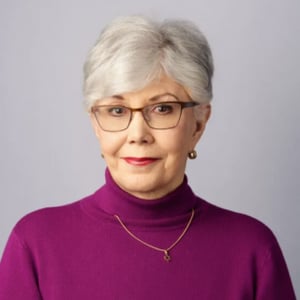
Chairman, Center for Equal Opportunity
Linda Chavez is Chairman of the Center for Equal Opportunity. She has published opinions and columns in newspapers across the country and appears regularly on cable news. Chavez is the author of the three books: Out of the Barrio: Toward a New Politics of Hispanic Assimilation, An Unlikely Conservative: The Transformation of an Ex-Liberal, and Betrayal: How Union Bosses Shake Down Their Members and Corrupt American Politics. She has been honored by the Library of Congress as a "Living Legend" and as nominee for Secretary of Labor by President George W. Bush.
Chavez has held many appointed positions and has served on numerous corporate and nonprofit boards. Among her appointed positions has been Chairman, National Commission on Migrant Education (1988-1992); White House Director of Public Liaison (1985); Staff Director of the U.S. Commission on Civil Rights (1983-1985); and member of the Administrative Conference of the United States (1984-1986). Chavez was also the Republican nominee for U.S. Senator from Maryland in 1986 and was elected by the United Nations' Human Rights Commission to serve a four-year term as U.S. Expert to the U.N. Sub-commission on the Prevention of Discrimination and Protection of Minorities.
Chavez earned her BA from the University of Colorado.
Professor of History, Brooklyn College and the CUNY Graduate Center
KC Johnson is professor of history at Brooklyn College and the CUNY Graduate Center, where he has taught since 1999. He has written 13 books on topics in U.S. political history, U.S. foreign policy, and legal and policy debates surrounding campus due process and civil liberties. His Duke lacrosse case blog, Durham-in-Wonderland, was named ABA Journal’s Best Ethics Blog in 2007; and he continues to blog on higher-ed matters at the blog Minding the Campus.
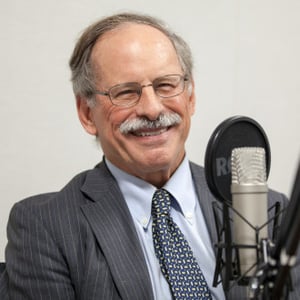
Freelance Journalist and Author
Stuart Taylor, Jr. is a Washington writer focusing on legal and policy issues and a National Journal contributing editor. He occasionally practices law.
Taylor has coauthored three books. All have been acclaimed by commentators across the ideological spectrum. In January 2017, KC Johnson and Taylor authored The Campus Rape Frenzy: The Attack on Due Process at America's Universities. In 2012, Richard Sander and Taylor authored Mismatch: How Affirmative Action Hurts Students It's Intended to Help, and Why Universities Won't Admit It. In 2007, Taylor and Johnson authored Until Proven Innocent: Political Correctness and the Shameful Injustices of the Duke Lacrosse Rape Fraud. Sander and Taylor have also filed amicus briefs in Supreme Court cases involving admissions preferences.
Since 1980, Taylor has done reporting and commentary about issues ranging from the biggest Supreme Court cases to race, voting rights, mindlessly excessive criminal penalties, guilt-presuming campus rape processes, journalistic bias, the death penalty, war powers, gerrymandering, guns, polarization, civil liberties, national security, torture, campaign finance, education, impeachment, and other issues. He has often been called one of the nation's best legal journalists and is known for challenging both liberal and conservative conventional wisdom.
Taylor was a reporter for The New York Times from 1980-1988, covering legal affairs and then the Supreme Court. He wrote commentaries and long features for The American Lawyer, Legal Times and their affiliates from 1989-1997, and for National Journal and Newsweek from 1998 through 2010. He has written (less often) on a freelance basis for numerous publications since 2010. He has written op-eds for The Washington Post, The New York Times, The Wall Street Journal, The Los Angeles Times, USA Today, and The New York Daily News and longer commentaries for RealClearPolitics, The Atlantic, The New Republic, the (late) Weekly Standard, National Review, Slate, The Daily Beast, Harper’s, Reader’s Digest, Time and other magazines. He has been interviewed on all major television and radio networks. He taught “Law and the News Media” at Stanford Law School in 2011 and 2012 and practices law on occasion.
Taylor graduated from Princeton University in 1970 with an A.B. in History. After working as a reporter for the Baltimore Evening Sun and Sun from 1971-1974, he moved to Harvard Law School, was a Harvard Law Review note editor, and graduated in 1977 at the top of his class, with high honors. He also won a Frederick Sheldon Traveling Fellowship and traveled around the world in 1977-1978 while studying freedom of the press in the United Kingdom and Kenya.
Taylor practiced law with Wilmer, Cutler & Pickering, in Washington, D.C., from 1977-1980 before returning to journalism in 1980 by joining the Washington Bureau of The New York Times.
Taylor's journalism honors include the 2009 Northern California Innocence Project Media Award for his work on the Duke lacrosse rape fraud; a 2002 National Headliner Award for best special magazine column on one subject; and a share of The American Lawyer’s National Magazine Award for a March 1990 special issue on the drug war. He was a National Magazine Award finalist in 1993 and 1997 and was nominated by The New York Times for a Pulitzer Prize in 1988.
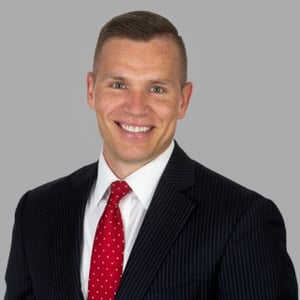
Assistant Professor of Law, Campbell University School of Law
Zachary C. Bolitho joined the Campbell Law School faculty after developing a reputation as a skilled trial and appellate lawyer. He teaches courses in Criminal Procedure, Criminal Law, Evidence, Federal Courts, and Trial Advocacy. Bolitho is an accomplished teacher, having been named “Professor of the Year” in both 2014-15 and 2015-16 following a vote of the third-year class.
He took a leave of absence during the 2017-18 academic year to work on the staff of Deputy Attorney General Rod Rosenstein at the U.S. Department of Justice in Washington, D.C. Bolitho was ultimately promoted to Chief of Staff and Associate Deputy Attorney General, serving as one of the Deputy Attorney General’s principal legal and policy advisors. Additionally, the Attorney General appointed Bolitho to serve as the Department of Justice’s ex officio member of the U.S. Sentencing Commission.
Prior to Campbell Law, Bolitho served as a federal prosecutor with the U.S. Attorney’s Office for the Eastern District of Tennessee. During his time as a federal prosecutor, Bolitho handled a wide variety of cases including several high profile matters. In addition to prosecuting cases in U.S. District Court, he briefed and argued cases before the U.S. Court of Appeals for the Sixth Circuit.
Before becoming a federal prosecutor, Bolitho was a litigation associate with the law firm Jones Day. He also completed a judicial clerkship with Judge David W. McKeague of the U.S. Court of Appeals for the Sixth Circuit.
Bolitho received his J.D. from The Ohio State University, Moritz College of Law. He graduated summa cum laude, was elected to the Order of the Coif, served as a law review editor, and won a national moot court championship. Before attending law school, Bolitho graduated from Mount Union College where he was the top student in his graduating class.
17th Lt. Governor of Florida and President, Jeff Kottkamp, PA
Jeff Kottkamp, P.A. is a law firm strategically positioned in Florida's Capital City.
The President and Founder of the firm, Jeff Kottkamp, is an AV rated attorney who has been licensed to practice law for 25 years. He specializes in Legislative and Governmental affairs. In November of 2006 he was elected as Florida's 17th Lieutenant Governor and served the citizens of Florida in that capacity from 2007-2011. On June 18, 2008 he served as Acting Governor of the State of Florida.
Prior to serving as Lt. Governor, Governor Kottkamp served in the Florida House of Representatives for three terms from 2000 to 2006 representing portions of Lee, Charlotte and Sarasota Counties. While in the House, Governor Kottkamp served as Chairman of the powerful Judiciary Committee, Chairman of the Government Operations Committee, and Vice-Chairman of the Rules Committee. Governor Kottkamp was also Chairman of the Lee County Legislative Delegation.
Governor Kottkamp has extensive experience with the state budget process. As a member of the Legislature he served as Chairman of the Judicial Appropriations Committee and also served on the Fiscal Council. He had direct responsibility for more than $1 billion in the state budget. As Lt. Governor he worked with the Governor's Office of Policy and Budget to help shape Florida's $70+ billion budget.
Governor Kottkamp's experience in State government is unique in the halls of the State Capitol. Having served both in the Executive Office of the Governor and as a Member of the House of Representatives, Governor Kottkamp has firsthand experience in the process that few have. Moreover, many of the current members and staff in the Legislature, as well as members of the staff in the Governor's office, worked alongside Governor Kottkamp when he was in office.
Since leaving public office in January of 2011, Governor Kottkamp has used his knowledge and experience in state government to help clients successfully pursue their goals and objectives.
Professor of Psychobiology, Harvard Medical School; Department of Psychiatry, McLean Hospital
Bertha Madras, PhD is a Professor of Psychobiology at Harvard Medical School (Harvard faculty 40 years) She is based at McLean Hospital and cross-appointed at the Massachusetts General Hospital
Scientific Research. Dr. Madras’s translational and multidisciplinary research focuses on the neurobiology of addiction, neuropsychiatric disorders, and drug policy
Authorship. She is author of more than 500 scientific manuscripts, reviews, book chapters, abstracts. She also is co-editor of academic books including “The Cell Biology of Addiction”; “Effects of Drug Abuse on the Human Nervous System”; “Imaging of the Human Brain in Health and Disease”
Intellectual Property. Inventor, co-inventor on 19 issued U.S. patents and 27 issued international patents
Government, other Service
• 2018-present, National Academy of Medicine Opioid Collaborative. Member
• 2024. United Nations Office on Drugs and Crime. Panel on Consequences of Drug Use
• 2017. President’s Commission on Combating Drug Addiction and the Opioid Crisis. Appointed by President Trump as one of six Commission members: Gov. C. Baker (MA); Attorney General P. Bondi (FL); Gov. C. Christie, (Chair, NJ); Gov. R. Cooper (NC), Congressman P. Kennedy (RI), Prof. Madras (MA). She was charged with shepherding, writing major components of Report
• 2016. Vatican Pontifical Academy of Sciences. Panelist on Narcotics; co-author of final report
• 2014-2015. U.S. Department of Justice. Sole expert witness DoJ, on marijuana re-scheduling
• 2015. World Health Organization. Sole author of report commissioned by World Health Organization, “Update of Cannabis and its Medical Use”; co-author of “The Health and Social Effects of Nonmedical Cannabis Use
• 2014. National Football League (NFL). Member, Committee on prescription drugs
• 2006-2008. Deputy Director for Demand Reduction in the White House Office of National Drug Control Policy (ONDCP), Executive Office of the President; a presidential appointment confirmed with unanimous consent (99-0) by U.S. Senate
Educational Outreach
• 2023-2025 HARVARD X. Developer of course for parents on drug prevention
• 2001-. Cold Spring Harbor Laboratories. Developer, international course on Cell Biology of Addiction. Course is offered biannually to present
• 1991-2004. Museum of Science, Boston. Directed production of a museum exhibit, a CD (licensed by Disney) “Changing Your Mind: Drugs in the Brain” and play
• 1995. DEA-NIDA Museum Exhibit. Wrote draft of storyboard for exhibit, 1 Times Square, NYC, NY
• 1991-2005. Addiction biology. Developed, instructor 4th year HMS medical students
Honors, awards
• 2026: Barry Prize, American Academy of Sciences and Letters
• 2025: Asteroid 147703MADRAS named for BK Madras by the International Astronomical Union
• 2024: American Academy of Sciences and Letters, inductee
• Research and public service awards (partial list): NIDA Public Service Award, NIH MERIT Award, CPDD Innovator Award, American Academy of Addiction Psychiatry, Jack H. Mendelson Memorial Research Award, CPDD Fischman Award, Adler Distinguished Service Award, CADCA National Leadership Award, Nils Bejerot Award, others
• 2006: Better World Report designated her brain imaging invention as “one of 25 technology transfer innovations (university to industry) that changed the world”.
Her experiences in neuroscience research, drug addiction, education, government and public service offer a unique perspective at the intersection of science and public policy.
Chair of the Medical Cannabis and Hemp Commercialization Group, Dean Mead Law Firm
Mr. Russell focuses his practice on civil and administrative litigation, government relations, and regulated industries. He regularly represents clients before federal and circuit courts and, with respect to regulatory matters, before the State of Florida’s Division of Administrative Hearings. He advises a number of executive branch agencies on issues ranging from challenges to proposed agency rules, up to and including complex federal class action litigation.
During his career, Mr. Russell has served as general counsel of the Florida Lottery, where he managed the legal affairs of the lottery’s $5.5 billion per year operation. As general counsel, Mr. Russell was responsible for handling bid protests, administrative, state and federal litigation, and all other legal matters.
Mr. Russell is a member of the International Masters of Gaming Law, an invitation-only, non-profit association of gaming attorneys, regulators, educators, executives, and consultants from around the world who are dedicated to education and the exchange of professional information concerning all aspects of gaming law. He frequently serves on panels and speaks at national and international gaming conferences.
Mr. Russell also is the former general counsel for Gulfstream Park, Florida’s premier thoroughbred track and casino. He was responsible for all legal, compliance, regulatory, and risk management at the 150-acre facility, which included a horse race track, two casinos, a poker room, and an outdoor shopping mall.
This year, Mr. Russell was appointed to the Florida Medical Cannabis Advisory Board by Agriculture Commissioner, Nikki Fried. In addition, he was appointed to the Second Circuit Judicial Nominating Commission by Governor Ron DeSantis.
Partner, Holland & Knight
William Shepherd is a trial lawyer in Holland & Knight's West Palm Beach and Washington, D.C., offices. Mr. Shepherd, who also serves as executive partner of the firm's West Palm Beach office, represents clients involved in civil and criminal government investigations. He also assists the general counsel of public and private companies in conducting sensitive internal investigations and compliance matters. In addition to his enforcement practice, Mr. Shepherd handles complex civil litigation in related subject matters. Prior to joining the firm, Mr. Shepherd served, at the appointment of the attorney general, as the statewide prosecutor of Florida and earlier in his career, as a prosecutor in Miami, Florida.
Chambers USA – America's Leading Business Lawyers guide has recognized Mr. Shepherd since 2013 for Litigation: White Collar Crime & Government Investigations.
Mr. Shepherd was elected to serve as chair of the 20,000 member Criminal Justice Section of the American Bar Association and served as a member of its Global Anti-Corruption Task Force and as division director of its White Collar Crime Division.
Assistant Professor of Law, Campbell University School of Law
Zachary C. Bolitho joined the Campbell Law School faculty after developing a reputation as a skilled trial and appellate lawyer. He teaches courses in Criminal Procedure, Criminal Law, Evidence, Federal Courts, and Trial Advocacy. Bolitho is an accomplished teacher, having been named “Professor of the Year” in both 2014-15 and 2015-16 following a vote of the third-year class.
He took a leave of absence during the 2017-18 academic year to work on the staff of Deputy Attorney General Rod Rosenstein at the U.S. Department of Justice in Washington, D.C. Bolitho was ultimately promoted to Chief of Staff and Associate Deputy Attorney General, serving as one of the Deputy Attorney General’s principal legal and policy advisors. Additionally, the Attorney General appointed Bolitho to serve as the Department of Justice’s ex officio member of the U.S. Sentencing Commission.
Prior to Campbell Law, Bolitho served as a federal prosecutor with the U.S. Attorney’s Office for the Eastern District of Tennessee. During his time as a federal prosecutor, Bolitho handled a wide variety of cases including several high profile matters. In addition to prosecuting cases in U.S. District Court, he briefed and argued cases before the U.S. Court of Appeals for the Sixth Circuit.
Before becoming a federal prosecutor, Bolitho was a litigation associate with the law firm Jones Day. He also completed a judicial clerkship with Judge David W. McKeague of the U.S. Court of Appeals for the Sixth Circuit.
Bolitho received his J.D. from The Ohio State University, Moritz College of Law. He graduated summa cum laude, was elected to the Order of the Coif, served as a law review editor, and won a national moot court championship. Before attending law school, Bolitho graduated from Mount Union College where he was the top student in his graduating class.
17th Lt. Governor of Florida and President, Jeff Kottkamp, PA
Jeff Kottkamp, P.A. is a law firm strategically positioned in Florida's Capital City.
The President and Founder of the firm, Jeff Kottkamp, is an AV rated attorney who has been licensed to practice law for 25 years. He specializes in Legislative and Governmental affairs. In November of 2006 he was elected as Florida's 17th Lieutenant Governor and served the citizens of Florida in that capacity from 2007-2011. On June 18, 2008 he served as Acting Governor of the State of Florida.
Prior to serving as Lt. Governor, Governor Kottkamp served in the Florida House of Representatives for three terms from 2000 to 2006 representing portions of Lee, Charlotte and Sarasota Counties. While in the House, Governor Kottkamp served as Chairman of the powerful Judiciary Committee, Chairman of the Government Operations Committee, and Vice-Chairman of the Rules Committee. Governor Kottkamp was also Chairman of the Lee County Legislative Delegation.
Governor Kottkamp has extensive experience with the state budget process. As a member of the Legislature he served as Chairman of the Judicial Appropriations Committee and also served on the Fiscal Council. He had direct responsibility for more than $1 billion in the state budget. As Lt. Governor he worked with the Governor's Office of Policy and Budget to help shape Florida's $70+ billion budget.
Governor Kottkamp's experience in State government is unique in the halls of the State Capitol. Having served both in the Executive Office of the Governor and as a Member of the House of Representatives, Governor Kottkamp has firsthand experience in the process that few have. Moreover, many of the current members and staff in the Legislature, as well as members of the staff in the Governor's office, worked alongside Governor Kottkamp when he was in office.
Since leaving public office in January of 2011, Governor Kottkamp has used his knowledge and experience in state government to help clients successfully pursue their goals and objectives.
Professor of Psychobiology, Harvard Medical School; Department of Psychiatry, McLean Hospital
Bertha Madras, PhD is a Professor of Psychobiology at Harvard Medical School (Harvard faculty 40 years) She is based at McLean Hospital and cross-appointed at the Massachusetts General Hospital
Scientific Research. Dr. Madras’s translational and multidisciplinary research focuses on the neurobiology of addiction, neuropsychiatric disorders, and drug policy
Authorship. She is author of more than 500 scientific manuscripts, reviews, book chapters, abstracts. She also is co-editor of academic books including “The Cell Biology of Addiction”; “Effects of Drug Abuse on the Human Nervous System”; “Imaging of the Human Brain in Health and Disease”
Intellectual Property. Inventor, co-inventor on 19 issued U.S. patents and 27 issued international patents
Government, other Service
• 2018-present, National Academy of Medicine Opioid Collaborative. Member
• 2024. United Nations Office on Drugs and Crime. Panel on Consequences of Drug Use
• 2017. President’s Commission on Combating Drug Addiction and the Opioid Crisis. Appointed by President Trump as one of six Commission members: Gov. C. Baker (MA); Attorney General P. Bondi (FL); Gov. C. Christie, (Chair, NJ); Gov. R. Cooper (NC), Congressman P. Kennedy (RI), Prof. Madras (MA). She was charged with shepherding, writing major components of Report
• 2016. Vatican Pontifical Academy of Sciences. Panelist on Narcotics; co-author of final report
• 2014-2015. U.S. Department of Justice. Sole expert witness DoJ, on marijuana re-scheduling
• 2015. World Health Organization. Sole author of report commissioned by World Health Organization, “Update of Cannabis and its Medical Use”; co-author of “The Health and Social Effects of Nonmedical Cannabis Use
• 2014. National Football League (NFL). Member, Committee on prescription drugs
• 2006-2008. Deputy Director for Demand Reduction in the White House Office of National Drug Control Policy (ONDCP), Executive Office of the President; a presidential appointment confirmed with unanimous consent (99-0) by U.S. Senate
Educational Outreach
• 2023-2025 HARVARD X. Developer of course for parents on drug prevention
• 2001-. Cold Spring Harbor Laboratories. Developer, international course on Cell Biology of Addiction. Course is offered biannually to present
• 1991-2004. Museum of Science, Boston. Directed production of a museum exhibit, a CD (licensed by Disney) “Changing Your Mind: Drugs in the Brain” and play
• 1995. DEA-NIDA Museum Exhibit. Wrote draft of storyboard for exhibit, 1 Times Square, NYC, NY
• 1991-2005. Addiction biology. Developed, instructor 4th year HMS medical students
Honors, awards
• 2026: Barry Prize, American Academy of Sciences and Letters
• 2025: Asteroid 147703MADRAS named for BK Madras by the International Astronomical Union
• 2024: American Academy of Sciences and Letters, inductee
• Research and public service awards (partial list): NIDA Public Service Award, NIH MERIT Award, CPDD Innovator Award, American Academy of Addiction Psychiatry, Jack H. Mendelson Memorial Research Award, CPDD Fischman Award, Adler Distinguished Service Award, CADCA National Leadership Award, Nils Bejerot Award, others
• 2006: Better World Report designated her brain imaging invention as “one of 25 technology transfer innovations (university to industry) that changed the world”.
Her experiences in neuroscience research, drug addiction, education, government and public service offer a unique perspective at the intersection of science and public policy.
Chair of the Medical Cannabis and Hemp Commercialization Group, Dean Mead Law Firm
Mr. Russell focuses his practice on civil and administrative litigation, government relations, and regulated industries. He regularly represents clients before federal and circuit courts and, with respect to regulatory matters, before the State of Florida’s Division of Administrative Hearings. He advises a number of executive branch agencies on issues ranging from challenges to proposed agency rules, up to and including complex federal class action litigation.
During his career, Mr. Russell has served as general counsel of the Florida Lottery, where he managed the legal affairs of the lottery’s $5.5 billion per year operation. As general counsel, Mr. Russell was responsible for handling bid protests, administrative, state and federal litigation, and all other legal matters.
Mr. Russell is a member of the International Masters of Gaming Law, an invitation-only, non-profit association of gaming attorneys, regulators, educators, executives, and consultants from around the world who are dedicated to education and the exchange of professional information concerning all aspects of gaming law. He frequently serves on panels and speaks at national and international gaming conferences.
Mr. Russell also is the former general counsel for Gulfstream Park, Florida’s premier thoroughbred track and casino. He was responsible for all legal, compliance, regulatory, and risk management at the 150-acre facility, which included a horse race track, two casinos, a poker room, and an outdoor shopping mall.
This year, Mr. Russell was appointed to the Florida Medical Cannabis Advisory Board by Agriculture Commissioner, Nikki Fried. In addition, he was appointed to the Second Circuit Judicial Nominating Commission by Governor Ron DeSantis.
Partner, Holland & Knight
William Shepherd is a trial lawyer in Holland & Knight's West Palm Beach and Washington, D.C., offices. Mr. Shepherd, who also serves as executive partner of the firm's West Palm Beach office, represents clients involved in civil and criminal government investigations. He also assists the general counsel of public and private companies in conducting sensitive internal investigations and compliance matters. In addition to his enforcement practice, Mr. Shepherd handles complex civil litigation in related subject matters. Prior to joining the firm, Mr. Shepherd served, at the appointment of the attorney general, as the statewide prosecutor of Florida and earlier in his career, as a prosecutor in Miami, Florida.
Chambers USA – America's Leading Business Lawyers guide has recognized Mr. Shepherd since 2013 for Litigation: White Collar Crime & Government Investigations.
Mr. Shepherd was elected to serve as chair of the 20,000 member Criminal Justice Section of the American Bar Association and served as a member of its Global Anti-Corruption Task Force and as division director of its White Collar Crime Division.
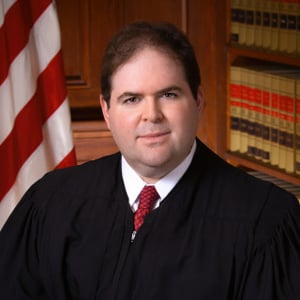
Judge, United States Court of Appeals, Eleventh Circuit
On November 19, 2019, Judge Robert J. Luck was appointed to the United States Court of Appeals for the Eleventh Circuit by President Donald Trump. Prior to serving on the federal bench, he was appointed to the Florida Supreme Court by Governor Ron DeSantis on January 14, 2019. He previously served on the Third District Court of Appeal in Miami after his appointment there by Governor Rick Scott in March 2017.
Earlier, Judge Luck served on the Eleventh Judicial Circuit Court of Florida from September 2013 to March 2017. He presided in the Criminal, Civil, and Appellate Divisions. Judge Luck, in his years as a trial court judge, tried seventy jury trials, and heard dozens of appeals from the county court and municipal agencies. Judge Luck was appointed to the circuit court in 2013 and was elected by the voters of Miami-Dade County to retain his seat in 2016.
Prior to his service on the bench, Judge Luck was an Assistant United States Attorney for the Southern District of Florida. In his years as a federal prosecutor, he was assigned to the Appeals, Major Crimes, and Economic Crimes Sections of the U.S. Attorney’s Office. Judge Luck tried nineteen jury trials before the federal district court and argued three appeals to the United States Court of Appeals for the Eleventh Circuit. In his final year in the Office, he was a Deputy Chief in the Major Crimes Section.
Earlier in his career, Judge Luck was a legislative correspondent for two United States Senators, a law clerk and staff attorney to Circuit Judge Edward E. Carnes on the United States Court of Appeals for the Eleventh Circuit, and a part of the Greenberg Traurig firm’s appellate section. Judge Luck received his Juris Doctor from the University of Florida Levin College of Law magna cum laude and was asked to join the Order of the Coif. Judge Luck also served as Editor-in-Chief of the Florida Law Review. Judge Luck received his Bachelor of Arts in Economics from the University of Florida with highest honors.
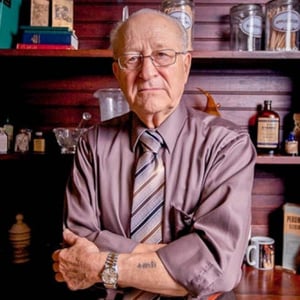
Director, Holocaust Resource Center at the Temple Judea of Manhasset, New York
IRVING ROTH is the Director of the Holocaust Resource Center at the Temple Judea of Manhasset, New York, and is the former education director of the Holocaust Memorial and Education Center of Nassau County. An internationally known educator, Mr. Roth has endeavored to teach people about the Holocaust and the lessons that can be learned from that experience. Through his participation in programs such as Adopt A Survivor, in which young people ‘adopt’ a Holocaust survivor and learn of his or her experiences, and the March of the Living, Mr. Roth has worked to ensure that an atrocity like the Holocaust never happens again. Many people throughout his community owe their knowledge of the Holocaust to Mr. Roth. Mr. Roth has been the recipient of numerous awards and accolades for his work promoting a more accepting and diverse world. It is his life’s mission to make the world a better place that has earned Mr. Roth the Spirit of Anne Frank Award.
Judge, United States Court of Appeals, Eleventh Circuit
On November 19, 2019, Judge Robert J. Luck was appointed to the United States Court of Appeals for the Eleventh Circuit by President Donald Trump. Prior to serving on the federal bench, he was appointed to the Florida Supreme Court by Governor Ron DeSantis on January 14, 2019. He previously served on the Third District Court of Appeal in Miami after his appointment there by Governor Rick Scott in March 2017.
Earlier, Judge Luck served on the Eleventh Judicial Circuit Court of Florida from September 2013 to March 2017. He presided in the Criminal, Civil, and Appellate Divisions. Judge Luck, in his years as a trial court judge, tried seventy jury trials, and heard dozens of appeals from the county court and municipal agencies. Judge Luck was appointed to the circuit court in 2013 and was elected by the voters of Miami-Dade County to retain his seat in 2016.
Prior to his service on the bench, Judge Luck was an Assistant United States Attorney for the Southern District of Florida. In his years as a federal prosecutor, he was assigned to the Appeals, Major Crimes, and Economic Crimes Sections of the U.S. Attorney’s Office. Judge Luck tried nineteen jury trials before the federal district court and argued three appeals to the United States Court of Appeals for the Eleventh Circuit. In his final year in the Office, he was a Deputy Chief in the Major Crimes Section.
Earlier in his career, Judge Luck was a legislative correspondent for two United States Senators, a law clerk and staff attorney to Circuit Judge Edward E. Carnes on the United States Court of Appeals for the Eleventh Circuit, and a part of the Greenberg Traurig firm’s appellate section. Judge Luck received his Juris Doctor from the University of Florida Levin College of Law magna cum laude and was asked to join the Order of the Coif. Judge Luck also served as Editor-in-Chief of the Florida Law Review. Judge Luck received his Bachelor of Arts in Economics from the University of Florida with highest honors.
Director, Holocaust Resource Center at the Temple Judea of Manhasset, New York
IRVING ROTH is the Director of the Holocaust Resource Center at the Temple Judea of Manhasset, New York, and is the former education director of the Holocaust Memorial and Education Center of Nassau County. An internationally known educator, Mr. Roth has endeavored to teach people about the Holocaust and the lessons that can be learned from that experience. Through his participation in programs such as Adopt A Survivor, in which young people ‘adopt’ a Holocaust survivor and learn of his or her experiences, and the March of the Living, Mr. Roth has worked to ensure that an atrocity like the Holocaust never happens again. Many people throughout his community owe their knowledge of the Holocaust to Mr. Roth. Mr. Roth has been the recipient of numerous awards and accolades for his work promoting a more accepting and diverse world. It is his life’s mission to make the world a better place that has earned Mr. Roth the Spirit of Anne Frank Award.
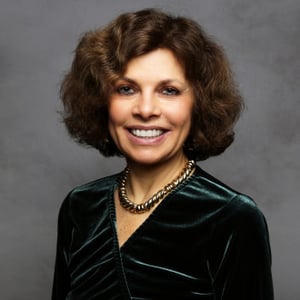
John Marshall Harlan II Professor of Law Emerita, New York Law School; Former President, American Civil Liberties Union
Nadine Strossen, New York Law School Professor Emerita and Senior Fellow at FIRE (the Foundation for Individual Rights and Expression), was national President of the American Civil Liberties Union from 1991 to 2008. An internationally acclaimed free speech scholar and advocate, who regularly addresses diverse audiences and provides media commentary around the world, Strossen is also the Host and Project Consultant for Free To Speak, a 3-hour documentary film series distributed on public television in 2023. Her books about free speech include: Free Speech: What Everyone Needs to Know® (Oxford University Press 2023); HATE: Why We Should Resist It with Free Speech, Not Censorship (Oxford University Press 2018); and Defending Pornography: Free Speech, Sex, and the Fight for Women’s Rights (Scribner 1995), which was republished with a new Preface in 2024 as part of the NYU Classics Series. Her many honors and awards include the National Coalition Against Censorship’s Judy Blume Lifetime Achievement Award for Free Speech. She serves on the Advisory Boards of several organizations that do free speech work, including: ACLU, Academic Freedom Alliance, Foundation Against Intolerance and Racism (FAIR), Heterodox Academy, National Coalition Against Censorship, and the University of Austin.
Senior Fellow, Claremont Institute and Adjunct Professor, John Hopkins University
Ken Masugi, non-resident Senior Fellow at the Claremont Institute, has had diverse careers in academia, think-tanks, and government. He teaches graduate courses for Johns Hopkins University’s Center for Advanced Studies in American Government in Washington, DC. He has held positions at a variety of universities and college programs, including a federal prison and Princeton University. He taught for three years at the U.S. Air Force Academy, where he was John M. Olin Distinguished Visiting Professor.
Masugi has also served in the federal government for ten years, as a special assistant and speechwriter to the heads of the Departments of Labor and Justice and the U.S. Equal Employment Opportunity Commission. He is the co-author, co-editor, or editor of 10 books on American politics and author of over 100 articles and reviews on American politics, political philosophy, constitutional development, and films. He is a regular columnist for the web magazine American Greatness. He has recorded CDs of lectures on American presidential rhetoric and Tocqueville’s Democracy in America. He has helped develop the Claremont Institute as Director of the Bicentennial of the Constitution project, Editor of The Claremont Review of Books, and inaugural director of the Center for Local Government.
Masugi is currently preparing a monograph on Alexis de Tocqueville’s Democracy in America and a series of studies on Aristotle’s political philosophy. He is working on a book on the Declaration of Independence and changing American diversity. He is the recipient of several academic honors, including a Fulbright scholarship to the University of Cologne, Germany (1975-76), and has lectured at a variety of American and international institutions. He holds his B.A., with honors, from Claremont McKenna College and his Ph.D. from The New School for Social Research.
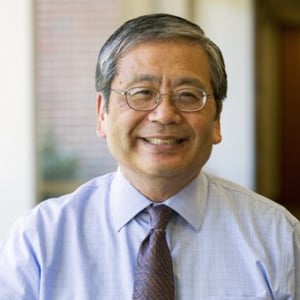
Associate Professor, Boston College Law School
The scholarship of Dean Hashimoto focuses on the interface of law, science and medicine, especially in the areas of health care policy and the role of scientific evidence in the courtroom. Educated as both an attorney and physician, he teaches torts, environmental litigation, health care law, and evidence. He has also studied the internment of citizens and aliens of Japanese heritage in World War II and written about the constitutional law cases decided in that era. Professor Hashimoto is the faculty director for the Boston College Law School's JD/MPH dual degree program with Tufts School of Medicine.
Professor Hashimoto served as a Notes Editor on the Yale Law Journal and, after graduating from law school, as a law clerk to Justice William Brennan of the U.S. Supreme Court and Judge David Bazelon of the U.S. Court of Appeals in Washington, D.C. He also practiced as a litigator for the Williams & Connolly law firm in Washington, D.C. and as a health care attorney for Ropes & Gray in Boston before joining the Boston College faculty.
Professor Hashimoto received his postgraduate medical training at the Brigham and Women's Hospital and the Harvard School of Public Health. He is a board-certified specialist in occupational and environmental medicine and serves as the chief of this specialty at the Massachusetts General Hospital and the Brigham and Women's Hospital.
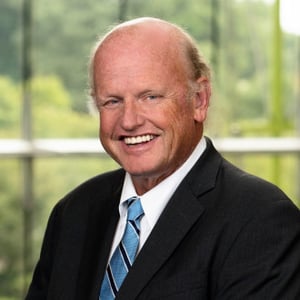
In his 35 years at the Justice Department and in private practice, Mike Carvin was one of the leading appellate and trial lawyers challenging state and federal regulations on constitutional and statutory grounds, with 10 Supreme Court arguments and numerous high-profile victories. In addition to his numerous cases in the United States Supreme Court, he argued in virtually every federal appeals court. His major cases include the recent constitutional challenge to the Affordable Care Act and the decisions invalidating Sarbanes-Oxley's accounting board, preventing the Justice Department from obtaining monetary relief against the tobacco industry under RICO, overturning the federal government's plan to statistically adjust the census, limiting the Justice Department's ability to create "majority-minority" districts, and upholding Proposition 209's ban on racial preferences in California.
Mike was one of the lead lawyers, and argued before the Florida Supreme Court, on behalf of George W. Bush in the 2000 presidential election Florida recount controversy. He also has represented state governments, financial institutions, telecommunications, and energy companies in "takings," First Amendment, civil rights, and statutory challenges to federal government actions.
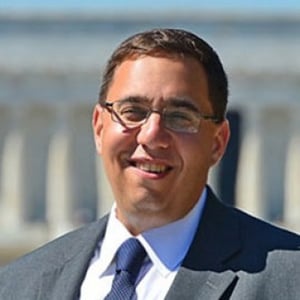
Partner, Consovoy McCarthy Park PLLC
Mr. Consovoy assists clients on a broad range of litigation and appellate issues primarily before the Supreme Court of the United States and federal appellate and district courts, as well as before federal agencies. Mr. Consovoy represents clients in cases involving constitutional issues, interpretation and enforcement of federal statutes, administrative law, civil rights disputes, and a variety of other civil litigation issues. Mr. Consovoy recently argued two cases—Spokeo v. Robbins and Evenwel v. Abbott—before the Supreme Court of the United States.
Mr. Consovoy is a former law clerk to Supreme Court Justice Clarence Thomas, Judge Edith H. Jones of the United States Court of Appeals for the Fifth Circuit, and the 17th Judicial Circuit of Virginia. Mr. Consovoy is a member of the Edward Coke Appellate Inn of Court and was named by Law360 as a “rising star” in appellate law for 2013. Since 2011, Mr. Consovoy has been the co-director of the Supreme Court Clinic at the Antonin Scalia Law School at George Mason University, where he also is the co-director of the Administrative Law Clinic.
Mr. Consovoy earned his B.A. from Monmouth University, and his J.D. magna cum laude from George Mason University School of Law. Mr. Consovoy is a member of the Virginia and District of Columbia bars.
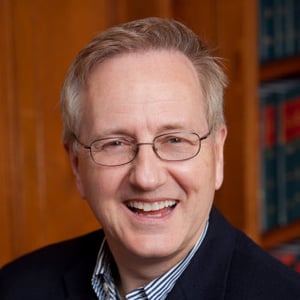
Alexander M. Bickel Professor of Public Law, Yale Law School
Degrees from Davidson College, B.A. summa cum laude, 1973; Harvard University, M.A., 1974; Yale Law School, J.D, 1978. Clerked for Edward Weinfeld, 1978-79; Attorney at Shea & Gardner, 1979-82; Law Professor since 1982, tenured at Georgetown and Yale, visiting professor at Stanford, NYU, Toronto, Harvard, Columbia, Penn, Fordham, Vanderbilt. Author of casebooks on legislation and sexuality, gender and law, as well as monographs on statutory interpretation and the rights of sexual and gender minorities. Author of dozens of articles, by one empirical count a top ten most cited law professors.
Professor of Law, Georgia State University College of Law
Neil Kinkopf is Professor of Law at the Georgia State University College of Law. He has also taught at the law schools at Case Western Reserve and Duke Universities. Neil teaches courses on constitutional law, civil procedure, and legislation. His research and writing focuses on separation of powers, with an emphasis on presidential power. The fourth edition of his book, Separation of Powers Law, (co-authored with Peter Shane and Harold Bruff) was published last winter. Professor Kinkopf has also held appointments in the Office of Legal Counsel and the Office of Legal Policy, both in the Department of Justice.
Distinguished University Professor, Antonin Scalia Law School, George Mason University
University Professor Nelson Lund is the author of Rousseau’s Rejuvenation of Political Philosophy: A New Introduction. He has also written widely in the field of constitutional law, including articles on constitutional interpretation, federalism, separation of powers, the Second Amendment, the Commerce Clause, the Speech or Debate Clause, the Equal Protection Clause, and the Uniformity Clause. In addition, he has published articles in the fields of employment discrimination and civil rights, the legal regulation of medical ethics, and the application of economic analysis to legal institutions and legal ethics.
Professor Lund graduated from St. John's College in Annapolis, Maryland, after which he received an MA in philosophy from the Catholic University of America and a PhD in political science from Harvard University. He left the faculty of the University of Chicago to attend its law school, where he served as executive editor of the University of Chicago Law Review and chapter chairman of the Federalist Society for Law and Public Policy Studies. After law school, he held positions at the United States Department of Justice in the Office of the Solicitor General and the Office of Legal Counsel. He also served as a law clerk to the Honorable Patrick E. Higginbotham of the United States Court of Appeals for the Fifth Circuit and to the Honorable Sandra Day O'Connor of the United States Supreme Court. Following his clerkship with Justice O'Connor, Professor Lund served in the White House as associate counsel to the president from 1989 to 1992.
Since joining the faculty at George Mason University's Antonin Scalia Law School, Professor Lund has taught Constitutional Law, Legislation, Federal Election Law, Employment Discrimination, State and Local Government, and seminars on the Second Amendment and on a variety of topics in Jurisprudence.
Judge, United States Court of Appeals, Seventh Circuit
Judge Sykes was nominated to the Seventh Circuit by President George W. Bush and confirmed by the Senate in 2004. Prior to her appointment to the federal bench, Judge Sykes served as a justice on the Wisconsin Supreme Court. Governor Tommy G. Thompson appointed her in September 1999 to fill a mid-term vacancy on the state supreme court, and she was elected to a full ten-year term in April 2000. From 1992-1999, Judge Sykes served on the state trial bench in Milwaukee County (elected in 1992 and re-elected in 1998). From 1985-1992, Judge Sykes practiced law with the Milwaukee firm of Whyte & Hirschboeck, S.C., and from 1984-1985, was a law clerk to Federal Judge Terence T. Evans.
Born and raised in the Milwaukee area, Judge Sykes earned a bachelor’s degree in journalism from Northwestern University in 1980 and a law degree from Marquette University Law School in 1984. Between college and law school, Judge Sykes worked as a reporter for The Milwaukee Journal.
Judge Sykes has two sons.
In his 35 years at the Justice Department and in private practice, Mike Carvin was one of the leading appellate and trial lawyers challenging state and federal regulations on constitutional and statutory grounds, with 10 Supreme Court arguments and numerous high-profile victories. In addition to his numerous cases in the United States Supreme Court, he argued in virtually every federal appeals court. His major cases include the recent constitutional challenge to the Affordable Care Act and the decisions invalidating Sarbanes-Oxley's accounting board, preventing the Justice Department from obtaining monetary relief against the tobacco industry under RICO, overturning the federal government's plan to statistically adjust the census, limiting the Justice Department's ability to create "majority-minority" districts, and upholding Proposition 209's ban on racial preferences in California.
Mike was one of the lead lawyers, and argued before the Florida Supreme Court, on behalf of George W. Bush in the 2000 presidential election Florida recount controversy. He also has represented state governments, financial institutions, telecommunications, and energy companies in "takings," First Amendment, civil rights, and statutory challenges to federal government actions.
Partner, Consovoy McCarthy Park PLLC
Mr. Consovoy assists clients on a broad range of litigation and appellate issues primarily before the Supreme Court of the United States and federal appellate and district courts, as well as before federal agencies. Mr. Consovoy represents clients in cases involving constitutional issues, interpretation and enforcement of federal statutes, administrative law, civil rights disputes, and a variety of other civil litigation issues. Mr. Consovoy recently argued two cases—Spokeo v. Robbins and Evenwel v. Abbott—before the Supreme Court of the United States.
Mr. Consovoy is a former law clerk to Supreme Court Justice Clarence Thomas, Judge Edith H. Jones of the United States Court of Appeals for the Fifth Circuit, and the 17th Judicial Circuit of Virginia. Mr. Consovoy is a member of the Edward Coke Appellate Inn of Court and was named by Law360 as a “rising star” in appellate law for 2013. Since 2011, Mr. Consovoy has been the co-director of the Supreme Court Clinic at the Antonin Scalia Law School at George Mason University, where he also is the co-director of the Administrative Law Clinic.
Mr. Consovoy earned his B.A. from Monmouth University, and his J.D. magna cum laude from George Mason University School of Law. Mr. Consovoy is a member of the Virginia and District of Columbia bars.
Alexander M. Bickel Professor of Public Law, Yale Law School
Degrees from Davidson College, B.A. summa cum laude, 1973; Harvard University, M.A., 1974; Yale Law School, J.D, 1978. Clerked for Edward Weinfeld, 1978-79; Attorney at Shea & Gardner, 1979-82; Law Professor since 1982, tenured at Georgetown and Yale, visiting professor at Stanford, NYU, Toronto, Harvard, Columbia, Penn, Fordham, Vanderbilt. Author of casebooks on legislation and sexuality, gender and law, as well as monographs on statutory interpretation and the rights of sexual and gender minorities. Author of dozens of articles, by one empirical count a top ten most cited law professors.
Professor of Law, Georgia State University College of Law
Neil Kinkopf is Professor of Law at the Georgia State University College of Law. He has also taught at the law schools at Case Western Reserve and Duke Universities. Neil teaches courses on constitutional law, civil procedure, and legislation. His research and writing focuses on separation of powers, with an emphasis on presidential power. The fourth edition of his book, Separation of Powers Law, (co-authored with Peter Shane and Harold Bruff) was published last winter. Professor Kinkopf has also held appointments in the Office of Legal Counsel and the Office of Legal Policy, both in the Department of Justice.
Distinguished University Professor, Antonin Scalia Law School, George Mason University
University Professor Nelson Lund is the author of Rousseau’s Rejuvenation of Political Philosophy: A New Introduction. He has also written widely in the field of constitutional law, including articles on constitutional interpretation, federalism, separation of powers, the Second Amendment, the Commerce Clause, the Speech or Debate Clause, the Equal Protection Clause, and the Uniformity Clause. In addition, he has published articles in the fields of employment discrimination and civil rights, the legal regulation of medical ethics, and the application of economic analysis to legal institutions and legal ethics.
Professor Lund graduated from St. John's College in Annapolis, Maryland, after which he received an MA in philosophy from the Catholic University of America and a PhD in political science from Harvard University. He left the faculty of the University of Chicago to attend its law school, where he served as executive editor of the University of Chicago Law Review and chapter chairman of the Federalist Society for Law and Public Policy Studies. After law school, he held positions at the United States Department of Justice in the Office of the Solicitor General and the Office of Legal Counsel. He also served as a law clerk to the Honorable Patrick E. Higginbotham of the United States Court of Appeals for the Fifth Circuit and to the Honorable Sandra Day O'Connor of the United States Supreme Court. Following his clerkship with Justice O'Connor, Professor Lund served in the White House as associate counsel to the president from 1989 to 1992.
Since joining the faculty at George Mason University's Antonin Scalia Law School, Professor Lund has taught Constitutional Law, Legislation, Federal Election Law, Employment Discrimination, State and Local Government, and seminars on the Second Amendment and on a variety of topics in Jurisprudence.
Judge, United States Court of Appeals, Seventh Circuit
Judge Sykes was nominated to the Seventh Circuit by President George W. Bush and confirmed by the Senate in 2004. Prior to her appointment to the federal bench, Judge Sykes served as a justice on the Wisconsin Supreme Court. Governor Tommy G. Thompson appointed her in September 1999 to fill a mid-term vacancy on the state supreme court, and she was elected to a full ten-year term in April 2000. From 1992-1999, Judge Sykes served on the state trial bench in Milwaukee County (elected in 1992 and re-elected in 1998). From 1985-1992, Judge Sykes practiced law with the Milwaukee firm of Whyte & Hirschboeck, S.C., and from 1984-1985, was a law clerk to Federal Judge Terence T. Evans.
Born and raised in the Milwaukee area, Judge Sykes earned a bachelor’s degree in journalism from Northwestern University in 1980 and a law degree from Marquette University Law School in 1984. Between college and law school, Judge Sykes worked as a reporter for The Milwaukee Journal.
Judge Sykes has two sons.
Professor of Law and Faculty Director for the Georgetown Center for the Constitution, Georgetown University Law Center
Stephanie Barclay is a Professor of Law at Georgetown Law School, and the Faculty Director of the Georgetown Center for the Constitution. Her research focuses on the role our different democratic institutions play in protecting minority rights, particularly at the intersection of free speech and religious exercise. Barclay‘s work is published or is forthcoming in leading journals such as the Harvard Law Review, the Chicago Law Review, the University of Pennsylvania Law Review, and the Yale Law Journal Forum. One of her articles was also selected for the 2020 Stanford/Harvard/Yale Junior Faculty Forum. Her work has been featured in many media outlets, including The New York Times, The Wall Street Journal, The Washington Post, USA Today, Bloomberg BNA, The Hill, and Law 360. And her work has also been cited by the U.S. Supreme Court.
Prior to joining Georgetown, Barclay was twice voted Professor of the Year. Barclay has also litigated constitutional cases at both the trial and appellate level, including before the U.S. Supreme Court. Barclay served as a law clerk to Judge N. Randy Smith on the U.S. Court of Appeals for the Ninth Circuit, and to Justice Neil M. Gorsuch of the U.S. Supreme Court.
Barclay is a Faculty Affiliate at the Constitutional Law Center at Stanford Law School; and she is a Nootbaar Fellow at the Nootbaar Institute on Law, Religion, and Ethics at Pepperdine University. She currently serves as the Chair for the AALS Law and Religion Section and as a Member of the Executive Committee for the AALS Constitutional Law Section. She graduated summa cum laude from BYU Law School, where she was elected to the Order of the Coif. She is completing a Ph.D. in Law at Oxford University as a Clarendon Scholar and a Tang Scholar.
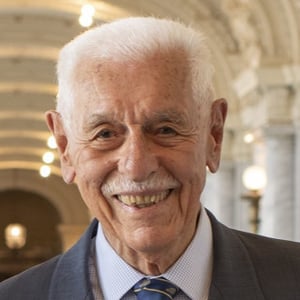
Judge, United States Court of Appeals, Ninth Circuit
Judge Carlos Bea serves as a judge on the United States Court of Appeals for the Ninth Circuit. He received his Bachelor's Degree from Stanford University in 1956 and his J.D. from Stanford Law School in 1958. Judge Bea was born in San Sebastian, Spain, and immigrated with his family to Cuba in 1939. In 1952, he represented Cuba on the Cuban National basketball team in the Helsinki Olympics. Judge Bea became a naturalized citizen of the United States in 1958. He engaged in private practice in San Francisco, principally in the area of civil trials (jury and non-jury), from 1959-75 at Dunne, Phelps & Mills and from 1975-90 at Carlos Bea, A Law Corporation. He taught courses in civil litigation advocacy at Hastings College of Law and Stanford Law School. From 1990 to 2003, Judge Bea served as a judge of the San Francisco Superior Court. He was nominated by President George W. Bush to the United States Court of Appeals for the Ninth Circuit and was confirmed in 2003.
Judge Bea and his wife Louise reside in San Francisco, where they raised their four sons, Sebastian, Alexander, Nicholas, and Dominic.
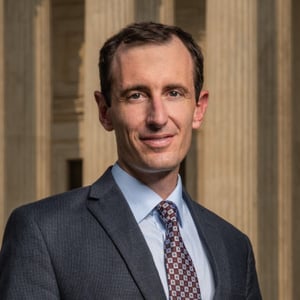
Vice President & Senior Counsel, Becket
Luke Goodrich is the author of Free to Believe: The Battle over Religious Liberty in America and vice president and senior counsel at the Becket Fund for Religious Liberty.
While at Becket, Luke has argued and won precedent-setting cases in the Third, Fifth, Seventh, Ninth, and Eleventh Circuits, and has helped Becket win four major Supreme Court cases in the last seven years: including victories for the Little Sisters of the Poor and Hobby Lobby against the contraception mandate, a victory for a Muslim prisoner under the Religious Land Use and Institutionalized Persons Act, and a unanimous victory in the Supreme Court’s first decision ever on the ministerial exception, which The Wall Street Journal called one of “the most important religious liberty cases in a half century.”
He frequently discusses religious freedom on networks such as CNN, Fox News, ABC, and NPR, and in publications like the Wall Street Journal, USA Today, and New York Times magazine. He also serves as an adjunct professor at the University of Utah S.J. Quinney College of Law, where he teaches constitutional law.
Before joining Becket, he clerked for Judge Michael W. McConnell on the U.S. Court of Appeals for the Tenth Circuit and graduated from the University of Chicago Law School with high honors as a member of the Law Review and the Order of the Coif.
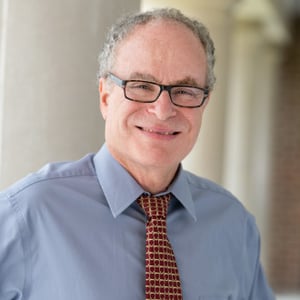
William Rand Kenan, Jr. Distinguished Professor of Law, University of North Carolina School of Law
William (Bill) Marshall joined the Carolina Law faculty in 2001 and serves as the William R. Kenan Jr. Distinguished Professor of Law. His teaching and research interests include the first amendment, presidential power, election law, federal jurisdiction, federal judicial selection, civil procedure, and media law. Marshall is the author of numerous book chapters, articles, and essays on free speech, separation of powers, the Establishment Clause, and the Free Exercise Clause. His work has appeared in the Harvard Law Review, the Yale Law Journal, the Supreme Court Review, and the University of Chicago Law Review, among others.
Marshall received his law degree from the University of Chicago and his undergraduate degree from the University of Pennsylvania. Marshall was Deputy Counsel to the President and Deputy Assistant to the President during the Clinton Administration and also served as the Solicitor General for the State of Ohio. He has taught at the Northwestern, Boston University, Vanderbilt, Ohio State, DePaul, Case Western Reserve, William and Mary, and the University Connecticut law schools. Prior to beginning his teaching career, Marshall was a Special Assistant Attorney General for the State of Minnesota.
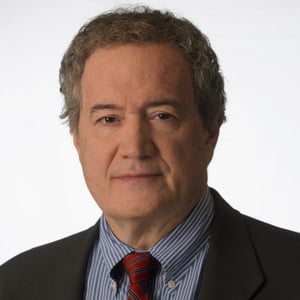
Director of the Program in Human Rights, Catholic University of America
William L. Saunders is Chair Emeritus of the Religious Liberties Practice Group of the Federalist Society. He is also a religious liberty and human rights scholar as well as director of the Center for Human rights at The Catholic University of America. He is Law Fellow with the Institute for Human Ecology, Professor and Director of the Program in Human Rights in the School of Arts & Sciences and Co-director of the Center for Religious Liberty at the Columbus School of Law. Before joining The Catholic University of America, Mr. Saunders served as Senior Vice President and Senior Counsel with Americans United for Life for ten years. From 1999 to 2009, he was Senior Fellow in Bioethics and Human Rights Counsel at the Family Research Council.
Mr. Saunders attended the University of North Carolina at Chapel Hill on a Morehead scholarship. He obtained his degree in law from the Harvard Law School.
Mr. Saunders was featured in Harvard’s first Guide to Conservative Public Interest Law in 2003 and again in the 2008 edition. He served on Harvard’s Advisory Committee for its 2008 celebration of public interest law. A member of the Supreme Court bar, he has authored numerous legal briefs in state, federal, foreign, and international courts.
Mr. Saunders’ book, Unborn Human Life and Fundamental Rights: Leading Constitutional Cases Under Scrutiny, was published in 2019. His articles and book chapters have been published by the university presses of Harvard, Villanova, Brigham Young, Fordham, Georgetown, Houston, Scranton, and the Catholic University of America, as well as by the Intercollegiate Studies Institute, Freedom House, Greenhaven Press, Rowan & Littlefield, Praeger, St. Augustine’s, and Intervarsity press. He has given lectures and participated in debates at many colleges, universities, and law schools, including Princeton, Harvard, Georgetown, and Notre Dame. He delivered the annual J. Michael Miller Lecture at the University of St. Thomas (on international law) in February 2007, the annual R. Wayne Kraft Memorial Lecture (on bioethics) at DeSales University in February 2004 and the annual James Moore Lecture (on human rights violations in Sudan) at Millikin University in 1999. He has also lectured, and/or has been published, in many foreign countries, including Italy, Germany, Poland, Austria, Spain, Greece, Slovakia, Mexico, Qatar, Malaysia, Romania, the Philippines, Hong Kong, and the United Kingdom.
In addition to speaking and writing frequently on bioethics topics, Mr. Saunders has submitted testimony to the President’s Council on Bioethics, as well as to UNESCO’s Committee on Bioethics, and has briefed Congressional staff and state legislatures. He is a regular columnist for the National Catholic Bioethics Quarterly.
Mr. Saunders has appeared often in the media, including BBC World News, CNN, Fox News, Vatican Radio, and National Public Radio. His articles on issues have appeared in a variety of journals, such as First Things, Human Events, Human Life Review, The Legal Times, Communio, The Family in America: A Journal of Public Policy, Ethics & Medics, and Touchstone.
Mr. Saunders served on the official United States delegation to the UN Special Session on Children in 2001/02. In 2011, he was a speaker at an official briefing at the UN, addressing the topic, why euthanasia is not a human right.
In 2004, he served on the NGO Working Committee in connection with the Doha Intergovernmental Conference for the Family.
Mr. Saunders is Senior Fellow with the Religious Freedom Institute, and Affiliated Scholar with the Pellegrino Center for Clinical Ethics at the Georgetown University School of Medicine. He is President of the Fellowship of Catholic Scholars and a member of the boards of the International Association of Catholic Bioethicists, the International Right to Life Federation, the Institute on Religion and Democracy, and the Society of Catholic Social Scientists.
In 1999, Mr. Saunders founded Sudan Relief and Rescue, Inc., to aid the persecuted church in Sudan. He has worked for and written on behalf of the persecuted church for many years.
Hardy Cross Dillard Professor of Law; Martha Lubin Karsh and Bruce A. Karsh Bicentennial Professor of Law; Director, Karsh Center for Law and Democracy, University of Virginia School of Law
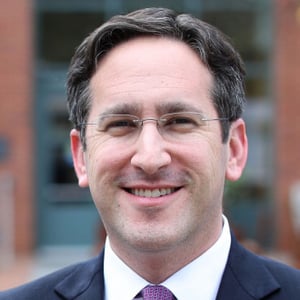
Micah Schwartzman is the Hardy Cross Dillard Professor of Law, a Martha Lubin Karsh and Bruce A. Karsh Bicentennial Professor of Law, and director of the Karsh Center for Law and Democracy at the University of Virginia School of Law. Schwartzman’s scholarship focuses on law and religion, jurisprudence, and constitutional law. He co-edited The Rise of Corporate Religious Liberty (Oxford University Press) and is co-authoring a forthcoming casebook on Constitutional Law and Religion.

Topics
When Missing the Point is the Point: The U.S. Civil Rights Commission Demonstrates Why We Have Recusal Norms
Sometimes, a part of our government goes off-the-rails and pursues policies directly divergent from its...
Deep Dive Episode 91 – The Expected New Title IX Rules
Linda L. Chavez, KC Johnson, Stuart S. Taylor
Regulatory Transparency Project Teleforum
The Education Department’s Office for Civil Rights (OCR) is expected to issue in the coming...
Session III: The Law and Policy of Marijuana in Florida
Zachary Bolitho, Jeff D. Kottkamp, Bertha K. Madras, Daniel R. Russell, William N. Shepherd
2020 Annual Florida Chapters Conference
On January 31-February 1, 2020, The Federalist Society's Florida lawyers chapters hosted their annual Florida...
Session III: The Law and Policy of Marijuana in Florida
Zachary Bolitho, Jeff D. Kottkamp, Bertha K. Madras, Daniel R. Russell, William N. Shepherd
2020 Annual Florida Chapters Conference
On January 31-February 1, 2020, The Federalist Society's Florida lawyers chapters hosted their annual Florida...
Address by Irving Roth
Robert J. Luck, Irving Roth
2020 Annual Florida Chapters Conference
On January 31-February 1, 2020, The Federalist Society's Florida lawyers chapters hosted their annual Florida...
Address by Irving Roth
Robert J. Luck, Irving Roth
2020 Annual Florida Chapters Conference
On January 31-February 1, 2020, The Federalist Society's Florida lawyers chapters hosted their annual Florida...
KOREMATSU VERSUS US
Nadine Strossen, Ken Masugi, Dean M. Hashimoto
Documentary short featuring Nadine Strossen, Dean Hashimoto and Ken Masugi
Seventy-five years ago, the Supreme Court issued one of its most controversial decisions--in Korematsu v....
Stare Decisis in Civil Rights Cases
Michael A. Carvin, William S. Consovoy, William N. Eskridge, Neil J. Kinkopf, Nelson Lund, Diane S. Sykes
2019 National Lawyers Convention
On November 15, 2019, the Federalist Society's Civil Rights Practice Group hosted a panel for...
Stare Decisis in Civil Rights Cases
Michael A. Carvin, William S. Consovoy, William N. Eskridge, Neil J. Kinkopf, Nelson Lund, Diane S. Sykes
2019 National Lawyers Convention
On November 15, 2019, the Federalist Society's Civil Rights Practice Group hosted a panel for...
The Future of the Establishment Clause in the Roberts Court
Stephanie Barclay, Carlos T. Bea, Luke Goodrich, William P. Marshall, William L. Saunders, Micah J. Schwartzman
2019 National Lawyers Convention
On November 14, 2019, the Federalist Society's Religious Liberty Practice Group held a panel for...