
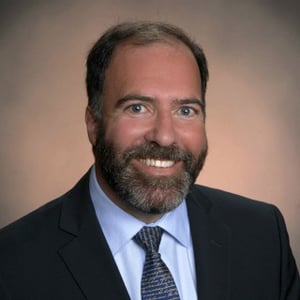
Professor of Law, Widener University Commonwealth Law School
Professor of Law, Widener University Commonwealth Law School
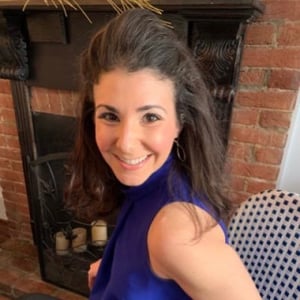
Vice President, Policy & Advocacy, USTelecom
Diana Eisner joined USTelecom from Frontier Communications where she served as Director, Federal Regulatory Affairs and helped develop the communications company’s regulatory strategy on broadband deployment, robocalls and cybersecurity, among others. Previously Eisner worked as an associate attorney at Manatt, Phelps & Phillips, LLP. She is a graduate of Rutgers University and earned her JD from Temple University Beasley School of Law.
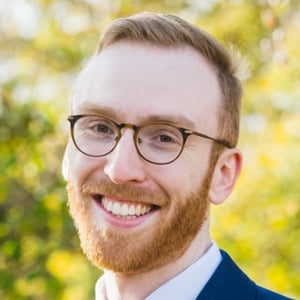
Director of Broadband and Spectrum Policy, Information Technology and Innovation Foundation
Joe Kane is director of broadband and spectrum policy at ITIF. Previously, he was a technology policy fellow at the R Street Institute, where he covered spectrum policy, broadband deployment and regulation, competition, and consumer protection. Earlier, Joe was a graduate research fellow at the Mercatus Center, where he worked on Internet policy issues, telecom regulation, and the role of the FCC.
Joe interned in the office of FCC Chairman Ajit Pai. He also interned with the satellite and terrestrial network provider SES, the Satellite Industry Association, the Competitive Enterprise Institute, and the American Action Forum. Joe holds a J.D. from The Catholic University of America, a master’s in economics from George Mason University, and a bachelor’s in political science from Grove City College.
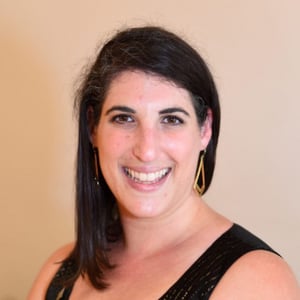
Senior Policy Counsel, Public Knowledge
Jenna is a Senior Policy Counsel, where she focuses on promoting Public Knowledge’s mission through government affairs.
Prior to joining Public Knowledge, Jenna served as a Senior Policy Analyst for the Workforce Data Quality Campaign (WDQC) at the National Skills Coalition, where she led WDQC’s state policy advocacy and technical assistance efforts on state data system development and use. She also served as an Associate at Upturn, where she analyzed the civil rights implications of new technologies, and as Manager and Legal Counsel of the International Intellectual Property Institute, where she led the organization’s efforts to utilize intellectual property for international economic development. Jenna has also held internships with the American Civil Liberties Union and Senator Sherrod Brown (D-OH).
Jenna received her J.D, cum laude, and B.A from Case Western Reserve University. In her free time, Jenna enjoys yoga, international travel, and experimenting with new recipes.

Deputy Staff Director, United States Senate Committee on Commerce, Science & Transportation
Crystal Tully is the Deputy Staff Director at the United States Senate Committee on Commerce, Science & Transportation. Tully had previously led the Commerce Committee’s communications and technology policy team since September 2017. Prior to her current role, Ms. Tully served as counsel to Chairman Thune and senior advisor to Chairman Roger Wicker (R-MS) of the Commerce Subcommittee on Communications, Technology, Innovation and the Internet. Ms. Tully previously worked in the cable and mobile wireless industries advocating before Congress and Federal agencies. She also served as legislative aide to Senator John E. Sununu (R-NH) and as a law clerk at the Federal Communications Commission and Federal Trade Commission. Ms. Tully holds a JD from the George Washington University School of Law and a BA from the University of New Hampshire.
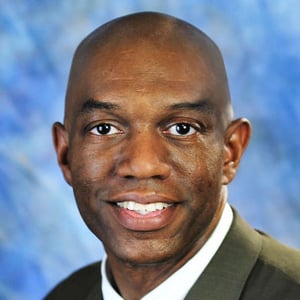
Special Advisor to Chairwoman Rosenworcel and Deputy Managing Director, The Office of the Managing Director, Federal Communications Commission
Sanford S. Williams has worked at the FCC since 1999, and is currently both a Special Advisor to FCC Chairwoman Jessica Rosenworcel and a Deputy Managing Director of the FCC. Mr. Williams is also a Lecturer in Law at UCLA School of Law.
Mr. Williams received his B.S. in Operations Research and Industrial Engineering and an MBA from Cornell University, and his J.D. from the University of Virginia School of Law where he was a member of the Virginia Law Review.
Mr. Williams was elected three times to the Manassas City Virginia School Board, and is the first African American Board Chair in the history of Manassas. Mr. Williams most recently wrote an article published in Medium, "It's Not Just About George Floyd."
Vice President, Policy & Advocacy, USTelecom
Diana Eisner joined USTelecom from Frontier Communications where she served as Director, Federal Regulatory Affairs and helped develop the communications company’s regulatory strategy on broadband deployment, robocalls and cybersecurity, among others. Previously Eisner worked as an associate attorney at Manatt, Phelps & Phillips, LLP. She is a graduate of Rutgers University and earned her JD from Temple University Beasley School of Law.
Director of Broadband and Spectrum Policy, Information Technology and Innovation Foundation
Joe Kane is director of broadband and spectrum policy at ITIF. Previously, he was a technology policy fellow at the R Street Institute, where he covered spectrum policy, broadband deployment and regulation, competition, and consumer protection. Earlier, Joe was a graduate research fellow at the Mercatus Center, where he worked on Internet policy issues, telecom regulation, and the role of the FCC.
Joe interned in the office of FCC Chairman Ajit Pai. He also interned with the satellite and terrestrial network provider SES, the Satellite Industry Association, the Competitive Enterprise Institute, and the American Action Forum. Joe holds a J.D. from The Catholic University of America, a master’s in economics from George Mason University, and a bachelor’s in political science from Grove City College.
Senior Policy Counsel, Public Knowledge
Jenna is a Senior Policy Counsel, where she focuses on promoting Public Knowledge’s mission through government affairs.
Prior to joining Public Knowledge, Jenna served as a Senior Policy Analyst for the Workforce Data Quality Campaign (WDQC) at the National Skills Coalition, where she led WDQC’s state policy advocacy and technical assistance efforts on state data system development and use. She also served as an Associate at Upturn, where she analyzed the civil rights implications of new technologies, and as Manager and Legal Counsel of the International Intellectual Property Institute, where she led the organization’s efforts to utilize intellectual property for international economic development. Jenna has also held internships with the American Civil Liberties Union and Senator Sherrod Brown (D-OH).
Jenna received her J.D, cum laude, and B.A from Case Western Reserve University. In her free time, Jenna enjoys yoga, international travel, and experimenting with new recipes.
Deputy Staff Director, United States Senate Committee on Commerce, Science & Transportation
Crystal Tully is the Deputy Staff Director at the United States Senate Committee on Commerce, Science & Transportation. Tully had previously led the Commerce Committee’s communications and technology policy team since September 2017. Prior to her current role, Ms. Tully served as counsel to Chairman Thune and senior advisor to Chairman Roger Wicker (R-MS) of the Commerce Subcommittee on Communications, Technology, Innovation and the Internet. Ms. Tully previously worked in the cable and mobile wireless industries advocating before Congress and Federal agencies. She also served as legislative aide to Senator John E. Sununu (R-NH) and as a law clerk at the Federal Communications Commission and Federal Trade Commission. Ms. Tully holds a JD from the George Washington University School of Law and a BA from the University of New Hampshire.
Special Advisor to Chairwoman Rosenworcel and Deputy Managing Director, The Office of the Managing Director, Federal Communications Commission
Sanford S. Williams has worked at the FCC since 1999, and is currently both a Special Advisor to FCC Chairwoman Jessica Rosenworcel and a Deputy Managing Director of the FCC. Mr. Williams is also a Lecturer in Law at UCLA School of Law.
Mr. Williams received his B.S. in Operations Research and Industrial Engineering and an MBA from Cornell University, and his J.D. from the University of Virginia School of Law where he was a member of the Virginia Law Review.
Mr. Williams was elected three times to the Manassas City Virginia School Board, and is the first African American Board Chair in the history of Manassas. Mr. Williams most recently wrote an article published in Medium, "It's Not Just About George Floyd."
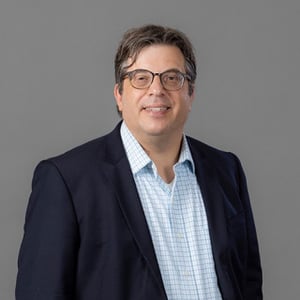
University Professor of Law and Executive Director, Liberty & Law Center, Antonin Scalia Law School, George Mason University
David Bernstein holds a University Professorship chair at the Antonin Scalia Law School, where he has been teaching since 1995. He has also been a visiting professor at the University of Michigan, Georgetown University, William & Mary, Brooklyn Law School, the University of Turin, and Hebrew University. Professor Bernstein teaches Constitutional Law, Evidence, and Products Liability.
A prolific author, Professor Bernstein often challenges the conventional wisdom with prodigious research and sharp, original analysis. He is the author of five books, and coauthor of two more. Professor Bernstein’s book Rehabilitating Lochner was praised across the political spectrum as “intellectual history in its highest form,” a “fresh perspective and a cogent analysis,” “delightful and informative,” “sharp and iconoclastic,” and “a terrific work of historical revisionism.” Columnist George Will praised Bernstein’s most recent book, Classified, The Untold Story of Racial Classification in America, as “perhaps the most consequential American book of 2022.”
Professor Bernstein has also written dozens of articles and essays published in major law reviews, including the California Law Review, Columbia Law Review, Michigan Law Review, and Yale Law Journal. An article he coauthored, Defending Daubert: It’s Time to Amend Federal Rule of Evidence 702, directly inspired a pending amendment to Rule 702.
Professor Bernstein blogs at the Instapundit.com, the Times of Israel, and the Volokh Conspiracy. He is a graduate of the Yale Law School, where he was senior editor of the Yale Law Journal and a John M. Olin Fellow in Law, Economics, and Public Policy.
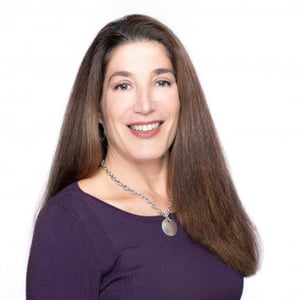
Director, Independent Women's Law Center, Independent Women's
Jennifer C. Braceras, a member of the Federalist Society Board of Visitors, is the director of Independent Women’s Law Center and a former member of the U.S. Commission on Civil Rights.
Ms. Braceras is a graduate of the Harvard Law School, where she served as an editor of the Law Review. After law school, she clerked for two federal judges and practiced labor and employment law with the Boston law firm Ropes & Gray.
A long time political columnist and editor, Ms. Braceras's writing has appeared in a variety of publications, including the Wall Street Journal, the Boston Globe, the Hill, and National Review Online. She co-hosts At the Bar, a bimonthly virtual happy hour discussion about issues at the intersection of law, politics, and culture.
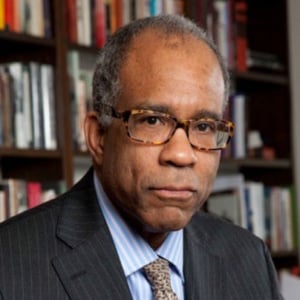
Michael R. Klein Professor of Law, Harvard Law School
Randall Kennedy is Michael R. Klein Professor at Harvard Law School where he teaches courses on contracts, criminal law, and the regulation of race relations. He was born in Columbia, South Carolina. For his education he attended St. Albans School, Princeton University, Oxford University, and Yale Law School. He served as a law clerk for Judge J. Skelly Wright of the United States Court of Appeals and for Justice Thurgood Marshall of the United States Supreme Court. He is a member of the bar of the District of Columbia and the Supreme Court of the United States. Awarded the 1998 Robert F. Kennedy Book Award for Race, Crime, and the Law, Mr Kennedy writes for a wide range of scholarly and general interest publications. His other books are For Discrimination: Race, Affirmative Action, and the Law (2013), The Persistence of the Color Line: Racial Politics and the Obama Presidency (2011), Sellout: The Politics of Racial Betrayal (2008), Interracial Intimacies: Sex, Marriage, Identity, and Adoption (2003), and Nigger: The Strange Career of a Troublesome Word (2002). A member of the American Law Institute, the American Academy of Arts and Sciences, and the American Philosophical Association, Mr. Kennedy is also a Trustee emeritus of Princeton University.

Topics
SCOTUS Preview: Brackeen v. Haaland (Part 2)
As explained in my previous post, the Supreme Court must decide in Brackeen whether the...
Topics
SCOTUS Preview: Brackeen v. Haaland (Part I)
The Supreme Court will hear arguments next month about the constitutionality of the Indian Child...
Topics
State Attorneys General Write to AG Garland
In 2021, the National School Boards Association wrote a letter to Attorney General Merrick Garland...
Courthouse Steps Oral Argument: Merrill v. Milligan
Michael R. Dimino
On October 4, 2022 the U.S. Supreme Court will hear oral argument in Merrill v....
Courthouse Steps Oral Argument: Merrill v. Milligan
Michael R. Dimino
On October 4, 2022 the U.S. Supreme Court will hear oral argument in Merrill v....
Topics
New Civil Rights Report on FEMA Hurricane Response
Every year, by law, the United States Commission on Civil Rights publishes a statutory enforcement...
"Digital Discrimination" Under the Infrastructure Investment and Jobs Act
Diana Eisner, Joe Kane, Jenna Leventoff, Crystal L. Tully, Sanford Williams
The 2021 Infrastructure Investment and Jobs Act requires the Federal Communications Commission and the Department...
"Digital Discrimination" Under the Infrastructure Investment and Jobs Act
Diana Eisner, Joe Kane, Jenna Leventoff, Crystal L. Tully, Sanford Williams
The 2021 Infrastructure Investment and Jobs Act requires the Federal Communications Commission and the Department...
Feddie Night Fights: Classified: Can We Separate Race And State?
David Bernstein, Jennifer C. Braceras, Randall Kennedy
Notre Dame Student Chapter
The Federalist Society’s Student Division & Notre Dame Student Chapter present Feddie Night Fights:Classified: Can We...
Topics
Title IX NPRM: Due Process and Potential Challenges
The U.S. Department of Education’s (ED) proposed rulemaking (NPRM) pursuant to Title IX’s anti-sex discrimination...