
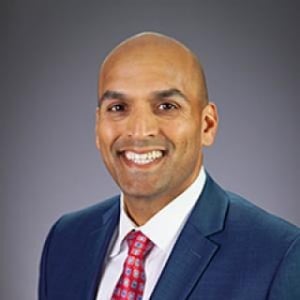
Senior Counsel, Alliance Defending Freedom
Erik Baptist serves as senior counsel at Alliance Defending Freedom, focusing on administrative litigation and regulatory advocacy.
Before joining ADF, Baptist was a partner at Wiley Rein LLP—one of the largest law firms in Washington, D.C.—where he employed his expertise in administrative and environmental law to represent clients on litigation, regulatory, and enforcement matters.
Prior to working at Wiley, Baptist served as a senior executive service appointee at the U.S. Environmental Protection Agency. As the senior deputy general counsel and deputy assistant administrator, he directed EPA’s litigation, implemented groundbreaking rulemakings and policies, represented EPA and defended witnesses in response to congressional inquiries, and collectively helped oversee the work of more than 1,100 EPA lawyers, scientists, and staff.
Baptist began his career in the Trial Department of the international law firm McDermott, Will & Emery LLP. He earned his B.A. from Vanderbilt University and his J.D. from The George Washington University Law School. During law school, Baptist externed for the Honorable Ricardo M. Urbina of the U.S. District Court for the District of Columbia, interned for the Honorable Eric T. Washington of the D.C. Court of Appeals, and served on The George Washington International Law Review.
Baptist is an active member of the D.C. Bar and is admitted to practice before the U.S. Supreme Court and various federal courts of appeal.
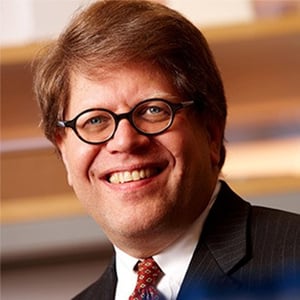
Faculty Fellow, Center for Law, Science & Innovation, Sandra Day O'Connor College of Law, Arizona State University
Dr. Klein is a Faculty Fellow at the Center for Law, Science & Innovation at the Sandra Day O'Connor College of Law at Arizona State University. He is also Principal at Roger D. Klein, MD JD Consulting and Klein & Klein Co., L.P.A. He was formerly Chief Medical Officer at OmniSeq, an oncology focused genomic profiling company that was recently acquired by LabCorp. Previously, Roger was the Medical Director at the Molecular Oncology division at the Cleveland Clinic. He was also the Chair of the Professional Relations Committee at the Association for Molecular Pathology. Prior to joining the Cleveland Clinic, he served as Medical Director of Molecular Oncology at the BloodCenter of Wisconsin where he led the center’s Diagnostic Laboratories’ initiative focused on DNA- and RNA-based testing for evaluation of cancer patients.
Dr. Klein has been an advisor to the Department of Health and Human Services (HHS), the Food and Drug Administration (FDA), the Centers for Medicare and Medicaid Services (CMS), and the Centers for Disease Control and Prevention (CDC). He has participated in and assumed leadership roles in many professional society committees and corporate advisory boards and is a policy advisor to the Heartland Institute.
Dr. Klein is licensed to practice medicine in Ohio, Florida, and Wisconsin. Additionally, he is licensed to practice law in the District of Columbia and Ohio. Roger obtained his Molecular Genetic Pathology certification at Mayo Medical School following completion of his M.D. Yale University School of Medicine. He obtained his J.D. from Yale Law School.
Senior Counsel, Alliance Defending Freedom
Erik Baptist serves as senior counsel at Alliance Defending Freedom, focusing on administrative litigation and regulatory advocacy.
Before joining ADF, Baptist was a partner at Wiley Rein LLP—one of the largest law firms in Washington, D.C.—where he employed his expertise in administrative and environmental law to represent clients on litigation, regulatory, and enforcement matters.
Prior to working at Wiley, Baptist served as a senior executive service appointee at the U.S. Environmental Protection Agency. As the senior deputy general counsel and deputy assistant administrator, he directed EPA’s litigation, implemented groundbreaking rulemakings and policies, represented EPA and defended witnesses in response to congressional inquiries, and collectively helped oversee the work of more than 1,100 EPA lawyers, scientists, and staff.
Baptist began his career in the Trial Department of the international law firm McDermott, Will & Emery LLP. He earned his B.A. from Vanderbilt University and his J.D. from The George Washington University Law School. During law school, Baptist externed for the Honorable Ricardo M. Urbina of the U.S. District Court for the District of Columbia, interned for the Honorable Eric T. Washington of the D.C. Court of Appeals, and served on The George Washington International Law Review.
Baptist is an active member of the D.C. Bar and is admitted to practice before the U.S. Supreme Court and various federal courts of appeal.
Faculty Fellow, Center for Law, Science & Innovation, Sandra Day O'Connor College of Law, Arizona State University
Dr. Klein is a Faculty Fellow at the Center for Law, Science & Innovation at the Sandra Day O'Connor College of Law at Arizona State University. He is also Principal at Roger D. Klein, MD JD Consulting and Klein & Klein Co., L.P.A. He was formerly Chief Medical Officer at OmniSeq, an oncology focused genomic profiling company that was recently acquired by LabCorp. Previously, Roger was the Medical Director at the Molecular Oncology division at the Cleveland Clinic. He was also the Chair of the Professional Relations Committee at the Association for Molecular Pathology. Prior to joining the Cleveland Clinic, he served as Medical Director of Molecular Oncology at the BloodCenter of Wisconsin where he led the center’s Diagnostic Laboratories’ initiative focused on DNA- and RNA-based testing for evaluation of cancer patients.
Dr. Klein has been an advisor to the Department of Health and Human Services (HHS), the Food and Drug Administration (FDA), the Centers for Medicare and Medicaid Services (CMS), and the Centers for Disease Control and Prevention (CDC). He has participated in and assumed leadership roles in many professional society committees and corporate advisory boards and is a policy advisor to the Heartland Institute.
Dr. Klein is licensed to practice medicine in Ohio, Florida, and Wisconsin. Additionally, he is licensed to practice law in the District of Columbia and Ohio. Roger obtained his Molecular Genetic Pathology certification at Mayo Medical School following completion of his M.D. Yale University School of Medicine. He obtained his J.D. from Yale Law School.
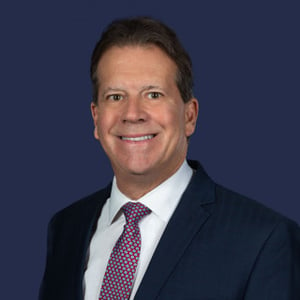
Arbitrator, American Arbitration Association & Former Deputy Director, Office of Federal Contract Compliance Programs (OFCCP), U.S. Department of Labor
Bob Gaglione is an Arbitrator for the American Arbitration Association based in San Diego, California. He also teaches law and politics courses at several universities in Southern California.
From 2019-2021, Mr. Gaglione was a Presidential appointee serving as Deputy Director of the Office of Federal Contract Compliance Programs (OFCCP) at the U.S. Department of Labor.
Mr. Gaglione has over 30 years of legal experience, including most recently, serving as founder and principal of Gaglione Law Group in San Diego, CA, where he practiced civil litigation including business, employment, insurance, real estate, and tort litigation. He previously served as a partner at the law firm of McInnis, Fitzgerald, Rees & Sharkey – one of San Diego’s largest law firms at the time.
For more than a decade, Mr. Gaglione has been as a member of the American Arbitration Association National Roster of Neutrals and Panel of Arbitrators. He served as an Arbitrator or Mediator in close to 100 cases before he went to work for the Department of Labor. .
Mr. Gaglione was elected by his peers to a three-year term on the San Diego County Bar Association Board of Directors from 2011-2014. He is a founding Director of the San Diego Chapter of the Federalist Society and a Chair of the Board of Advisors of this chapter. Mr. Gaglione is a Past President of the Todd American Inn of Court and a past Chair of the Bar History Committee and Litigation Section of the San Diego County Bar Association. He has also served on the Board of Directors of the San Diego-Imperial Council of Boy Scouts of America.
Mr. Gaglione is AV-rated by Martindale Hubbell and has been featured in Best’s Directory of Recommended Insurance Attorneys, Law & Business Directory of Environmental Attorneys and Who’s Who in American Law. Mr. Gaglione has been included in the San Diego Daily Transcript Top Attorneys, was named a Super Lawyer numerous times, and has made the list of Top Lawyers in San Diego Magazine.
Mr. Gaglione has taught law and political science courses at DeVry University, Keller Graduate School of Management, and JP Catholic University. He is also a frequent lecturer at the University of San Diego School of Law, San Diego State University, and California Western School of Law.
Mr. Gaglione hosted a radio show known as Independent Counsel: the news from a legal perspective for over seven years. He is also a frequent legal commentator on radio and television news programs.
Mr. Gaglione received a Bachelor of Science degree in Business Administration from the University of Southern California and a Juris Doctor degree from the University of San Diego School of Law. He is a member of the California, District of Columbia, and New York Bars. He is also admitted to practice before the United States Supreme Court, the Ninth Circuit Court of Appeals, and all United States District Courts in California.
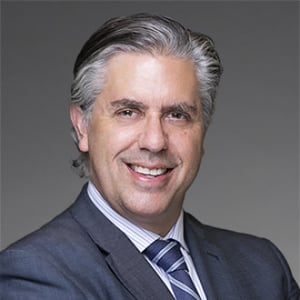
Associate Judge, Superior Court of the District of Columbia and President of the Bar Association of the District of Columbia
Craig E. Leen is an Associate Judge of the Superior Court of the District of Columbia. He also serves as the 139th President of the Bar Association of the District of Columbia and a Professorial Lecturer in Law at George Washington University School of Law.
Prior to being sworn in, Judge Leen was a partner at K&L Gates in the Washington, DC office focused on labor & employment, litigation, government contracts, and administrative & regulatory law. He was also the pro bono coordinator for the DC office.
Judge Leen was formerly a federal agency head, serving as Director of the Office of Federal Contract Compliance Programs (OFCCP) at the U.S. Department of Labor.
Prior to his federal service at OFCCP, Judge Leen was the City Attorney of the City of Coral Gables, and before that was Chief of the Appeals Section and then Chief of the Federal Litigation Section at the Miami-Dade County Attorney's Office. Earlier in his career, Judge Leen served as a law clerk to the Honorable Robert E. Keeton, United States District Judge, District of Massachusetts.
In recognition of his public service, Judge Leen received the Secretary's Exceptional Achievement Award - Professional while at the U.S. Department of Labor, and the Paul S. Buchman Award for Outstanding Contribution in the Area of Legal Public Service while in local government.
Judge Leen received his Juris Doctor from Columbia Law School, graduating as a Harlan Fiske Stone Scholar, and having served as a teaching fellow in both Contracts and Torts. Judge Leen received his Bachelor of Arts, cum laude, from Georgetown University, where he majored in both Government and Economics.
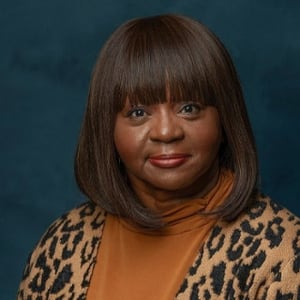
Executive Director, American Association for Access Equity and Diversity (AAAED)
Shirley J. Wilcher, Mount Holyoke Class of 1973, is a leading authority on equal opportunity and diversity policy. After graduating from Mount Holyoke cum laude with a degree in Philosophy and French, she went on to receive her MA in Urban Affairs and Policy Analysis from the New School for Social Research and her Juris Doctor degree from Harvard Law School. While a student at Mount Holyoke she received a certificat pratique de langue Francaise from the Université de Paris. While a student at Harvard, Wilcher began a career in civil rights as clerk for the NAACP Legal Defense and Educational Fund, Inc.
After earning her law degree, she became staff attorney for the National Women’s Law Center in Washington, D.C. She later moved to Capitol Hill as Associate Counsel for Civil Rights for the House Committee on Education and Labor. There, she was responsible for legislation and oversight of the federal agencies charged with enforcement of Title IX of the Education Amendments of 1972, Titles VI and VII of the Civil Rights Act of 1964, the Age Discrimination in Employment Act and other laws relating to equal employment opportunity and labor standards. She served as principal staff person on major investigations of the civil rights enforcement activities of the Equal Employment Opportunity Commission, the Office of Federal Contract Compliance Programs, U.S. Department of Labor, and the Office for Civil Rights, U.S. Department of Education. Wilcher left Capitol Hill to serve as the Director for State Relations and General Counsel for the National Association of Independent Colleges and Universities.
During the Clinton Administration, Wilcher served a near seven-year term as Deputy Assistant Secretary for the Office of Federal Contract Compliance Programs in the Labor Department. There she directed a federal program that emphasized the elimination of systemic barriers to equal employment opportunity, the glass ceiling, and inequities in corporate compensation systems, testifying before both House and Senate Labor Committees. Following her service in the Clinton Administration, Wilcher established her consulting firm, Wilcher Global LLC, and served as Executive Director of Americans for a Fair Chance, a consortium of six civil rights legal organizations formed to serve as an educational resource on affirmative action. Wilcher also taught as adjunct Associate Professor of Law at Washington College of Law of American University and worked as Attorney Advisor for the Equal Employment Opportunity Commission.
Currently, Wilcher is the Executive Director of the American Association for Access Equity and Diversity (AAAED), formerly the American Association for Affirmative Action (AAAA), founded in 1974. AAAED is an organization of equal opportunity, diversity and affirmative action professionals working for academic institutions, the private sector and government. Wilcher is also President and CEO of the Fund for Leadership, Equity, Access and Diversity (LEAD Fund), the nonprofit affiliate of AAAED.
Shirley is the recipient of the NAACP’s Keeper of the Flame Award, AAAED’s Rosa Parks Award and the special Drum Major for Justice and President’s Awards for AAAA/AAAED. Wilcher also served as the first Recording Secretary of the National Political Congress of Black Women, founded in 1984 by former U.S. Representative Shirley Chisholm, and was on the board of Wider Opportunities for Women. Wilcher is an Advisory Board Member, Oxford Women’s Leadership Program, Oxford, UK. In 2018, Shirley Wilcher received an Honorary Doctor of Laws from her alma mater, Mount Holyoke College.
Arbitrator, American Arbitration Association & Former Deputy Director, Office of Federal Contract Compliance Programs (OFCCP), U.S. Department of Labor
Bob Gaglione is an Arbitrator for the American Arbitration Association based in San Diego, California. He also teaches law and politics courses at several universities in Southern California.
From 2019-2021, Mr. Gaglione was a Presidential appointee serving as Deputy Director of the Office of Federal Contract Compliance Programs (OFCCP) at the U.S. Department of Labor.
Mr. Gaglione has over 30 years of legal experience, including most recently, serving as founder and principal of Gaglione Law Group in San Diego, CA, where he practiced civil litigation including business, employment, insurance, real estate, and tort litigation. He previously served as a partner at the law firm of McInnis, Fitzgerald, Rees & Sharkey – one of San Diego’s largest law firms at the time.
For more than a decade, Mr. Gaglione has been as a member of the American Arbitration Association National Roster of Neutrals and Panel of Arbitrators. He served as an Arbitrator or Mediator in close to 100 cases before he went to work for the Department of Labor. .
Mr. Gaglione was elected by his peers to a three-year term on the San Diego County Bar Association Board of Directors from 2011-2014. He is a founding Director of the San Diego Chapter of the Federalist Society and a Chair of the Board of Advisors of this chapter. Mr. Gaglione is a Past President of the Todd American Inn of Court and a past Chair of the Bar History Committee and Litigation Section of the San Diego County Bar Association. He has also served on the Board of Directors of the San Diego-Imperial Council of Boy Scouts of America.
Mr. Gaglione is AV-rated by Martindale Hubbell and has been featured in Best’s Directory of Recommended Insurance Attorneys, Law & Business Directory of Environmental Attorneys and Who’s Who in American Law. Mr. Gaglione has been included in the San Diego Daily Transcript Top Attorneys, was named a Super Lawyer numerous times, and has made the list of Top Lawyers in San Diego Magazine.
Mr. Gaglione has taught law and political science courses at DeVry University, Keller Graduate School of Management, and JP Catholic University. He is also a frequent lecturer at the University of San Diego School of Law, San Diego State University, and California Western School of Law.
Mr. Gaglione hosted a radio show known as Independent Counsel: the news from a legal perspective for over seven years. He is also a frequent legal commentator on radio and television news programs.
Mr. Gaglione received a Bachelor of Science degree in Business Administration from the University of Southern California and a Juris Doctor degree from the University of San Diego School of Law. He is a member of the California, District of Columbia, and New York Bars. He is also admitted to practice before the United States Supreme Court, the Ninth Circuit Court of Appeals, and all United States District Courts in California.
Associate Judge, Superior Court of the District of Columbia and President of the Bar Association of the District of Columbia
Craig E. Leen is an Associate Judge of the Superior Court of the District of Columbia. He also serves as the 139th President of the Bar Association of the District of Columbia and a Professorial Lecturer in Law at George Washington University School of Law.
Prior to being sworn in, Judge Leen was a partner at K&L Gates in the Washington, DC office focused on labor & employment, litigation, government contracts, and administrative & regulatory law. He was also the pro bono coordinator for the DC office.
Judge Leen was formerly a federal agency head, serving as Director of the Office of Federal Contract Compliance Programs (OFCCP) at the U.S. Department of Labor.
Prior to his federal service at OFCCP, Judge Leen was the City Attorney of the City of Coral Gables, and before that was Chief of the Appeals Section and then Chief of the Federal Litigation Section at the Miami-Dade County Attorney's Office. Earlier in his career, Judge Leen served as a law clerk to the Honorable Robert E. Keeton, United States District Judge, District of Massachusetts.
In recognition of his public service, Judge Leen received the Secretary's Exceptional Achievement Award - Professional while at the U.S. Department of Labor, and the Paul S. Buchman Award for Outstanding Contribution in the Area of Legal Public Service while in local government.
Judge Leen received his Juris Doctor from Columbia Law School, graduating as a Harlan Fiske Stone Scholar, and having served as a teaching fellow in both Contracts and Torts. Judge Leen received his Bachelor of Arts, cum laude, from Georgetown University, where he majored in both Government and Economics.
Executive Director, American Association for Access Equity and Diversity (AAAED)
Shirley J. Wilcher, Mount Holyoke Class of 1973, is a leading authority on equal opportunity and diversity policy. After graduating from Mount Holyoke cum laude with a degree in Philosophy and French, she went on to receive her MA in Urban Affairs and Policy Analysis from the New School for Social Research and her Juris Doctor degree from Harvard Law School. While a student at Mount Holyoke she received a certificat pratique de langue Francaise from the Université de Paris. While a student at Harvard, Wilcher began a career in civil rights as clerk for the NAACP Legal Defense and Educational Fund, Inc.
After earning her law degree, she became staff attorney for the National Women’s Law Center in Washington, D.C. She later moved to Capitol Hill as Associate Counsel for Civil Rights for the House Committee on Education and Labor. There, she was responsible for legislation and oversight of the federal agencies charged with enforcement of Title IX of the Education Amendments of 1972, Titles VI and VII of the Civil Rights Act of 1964, the Age Discrimination in Employment Act and other laws relating to equal employment opportunity and labor standards. She served as principal staff person on major investigations of the civil rights enforcement activities of the Equal Employment Opportunity Commission, the Office of Federal Contract Compliance Programs, U.S. Department of Labor, and the Office for Civil Rights, U.S. Department of Education. Wilcher left Capitol Hill to serve as the Director for State Relations and General Counsel for the National Association of Independent Colleges and Universities.
During the Clinton Administration, Wilcher served a near seven-year term as Deputy Assistant Secretary for the Office of Federal Contract Compliance Programs in the Labor Department. There she directed a federal program that emphasized the elimination of systemic barriers to equal employment opportunity, the glass ceiling, and inequities in corporate compensation systems, testifying before both House and Senate Labor Committees. Following her service in the Clinton Administration, Wilcher established her consulting firm, Wilcher Global LLC, and served as Executive Director of Americans for a Fair Chance, a consortium of six civil rights legal organizations formed to serve as an educational resource on affirmative action. Wilcher also taught as adjunct Associate Professor of Law at Washington College of Law of American University and worked as Attorney Advisor for the Equal Employment Opportunity Commission.
Currently, Wilcher is the Executive Director of the American Association for Access Equity and Diversity (AAAED), formerly the American Association for Affirmative Action (AAAA), founded in 1974. AAAED is an organization of equal opportunity, diversity and affirmative action professionals working for academic institutions, the private sector and government. Wilcher is also President and CEO of the Fund for Leadership, Equity, Access and Diversity (LEAD Fund), the nonprofit affiliate of AAAED.
Shirley is the recipient of the NAACP’s Keeper of the Flame Award, AAAED’s Rosa Parks Award and the special Drum Major for Justice and President’s Awards for AAAA/AAAED. Wilcher also served as the first Recording Secretary of the National Political Congress of Black Women, founded in 1984 by former U.S. Representative Shirley Chisholm, and was on the board of Wider Opportunities for Women. Wilcher is an Advisory Board Member, Oxford Women’s Leadership Program, Oxford, UK. In 2018, Shirley Wilcher received an Honorary Doctor of Laws from her alma mater, Mount Holyoke College.

Senior Fellow, American Enterprise Institute
Mark J. Perry is concurrently a senior fellow at AEI and a professor emeritus of economics at the University of Michigan. He is best known as the creator and editor of the popular economics blog Carpe Diem. At AEI, Perry writes about economic and financial issues for American.com and the AEIdeas blog.
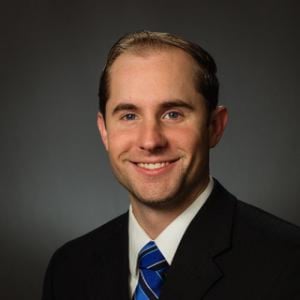
Senior Counsel, Alliance Defending Freedom
Caleb Dalton serves as senior counsel with Alliance Defending Freedom, where he plays a key role at the Center for Academic Freedom representing clients seeking to speak freely on campus without fear of unconstitutional government censorship. In this role, he has served as lead counsel in cases such as Queens College Students for Life v. City University of New York Board of Trustees, Ratio Christi v. University of Houston—Clear Lake, and Apodaca v. White (California State University) successfully representing students in eliminating restrictive “speech zones” and discriminatory student organization funding and recognition policies.
Since joining ADF in 2013, Dalton has served on multiple teams representing private individuals and government entities to affirm the fundamental freedoms of speech and religious liberty. With ADF’s Center for Conscience initiatives, he played a key role in the successful petition for certiorari in Masterpiece Cakeshop v. Colorado Civil Rights Commission at the U.S. Supreme Court. He has also been appointed special assistant attorney general to represent the state of Arizona’s interests in multiple complex constitutional matters.
Dalton earned his Juris Doctor, cum laude, from Regent University School of Law, where he served as an editor of the Regent Law Review and a member of the Trial Advocacy Board. He is the co-author of Kendall-Hunt’s textbook, Moot Court: Making Your Case and Pleasing the Court. Dalton has appeared on national news outlets and been published in news and law journals. He is a member of the bar in Arizona, Virginia, and the District of Columbia; he is also admitted to practice before multiple federal district and appellate courts, including the U.S. Supreme Court.

Litigation Update: AHM v. FDA: Challenging the FDA on “Chemical Abortion Drugs"
Erik Baptist, Roger D. Klein
A Regulatory Transparency Project Webinar
In November 2022, the Alliance Defending Freedom (ADF) filed a federal lawsuit in the U.S....
Litigation Update: AHM v. FDA: Challenging the FDA on “Chemical Abortion Drugs"
Erik Baptist, Roger D. Klein
A Regulatory Transparency Project Webinar
In November 2022, the Alliance Defending Freedom (ADF) filed a federal lawsuit in the U.S....
The OFCCP Under the Current Administration
Robert J. Gaglione, Craig E. Leen, Shirley J. Wilcher
The Office of Federal Contract Compliance Programs (OFCCP) reports to the Secretary of Labor and...
The OFCCP Under the Current Administration
Robert J. Gaglione, Craig E. Leen, Shirley J. Wilcher
The Office of Federal Contract Compliance Programs (OFCCP) reports to the Secretary of Labor and...
Topics
Victory for Common Sense: Federal Court Holds Title IX Religious Exemption Not Discriminatory
Title IX of the Education Amendments Act of 1972 is the little statute inviting big...
Topics
Adams v. School Board of St. Johns County, Florida: The Eleventh Circuit Creates a Circuit Split on Transgender Rights Under Title IX
On December 31, 2022, the U.S. Court of Appeals for the Eleventh Circuit issued a...
Topics
Slavery Reparations in California
Following the death of George Floyd in 2020, Governor Gavin Newsom of California signed a...
Explainer Episode 47 - The Procedure of Title VI & IX Complaints
Mark J. Perry
Regulatory Transparency Project's Fourth Branch Podcast
Title VI and IX apply to all colleges and universities that accept federal funds, which,...
State Court Docket Watch: Rouch World v. Department of Civil Rights
Caleb Dalton
Michigan Supreme Court rules that discrimination on the basis of sexual orientation is prohibited by the state's civil rights law.
In Rouch World, LLC v. Department of Civil Rights, the Michigan Supreme Court expounded on...
Topics
The Biden Administration’s Proposed Changes to Title IX Threaten Parental Rights
The U.S. Department of Education (ED) issued a notice of proposed rulemaking (NPRM) for Title...